Indian Ocean Crossing Guide
Indian Ocean Crossing Guide. The Cape of Good Hope route is the alternative to the Red Sea/Suez Canal passage for yachts transiting from SE Asia and Australia toward the Atlantic. The route is broadly divided into a northern route originating from Thailand, Malaysia or Sri Lanka, and a southern route from Darwin or Bali. Both routes converge at Madagascar or the Mascarene Islands (Réunion/Mauritius) before the passage to South Africa. From Richards Bay, the South African coast is coast hopped in weather windows to Cape Town. Total distance from Phuket or Darwin to Cape Town is approximately 8,000–9,000 nm depending on the route and stops made.
The primary planning constraints are: (1) the southern Indian Ocean cyclone season, which runs December through April and determines the earliest and latest dates for being in the Mascarenes and South Africa; (2) the SE trade wind regime, which makes westbound passages straightforward but imposes a seasonal structure; and (3) the Agulhas Current off the South African coast, which requires specific weather window management between Richards Bay and Cape Town. Most yachts complete the passage from SE Asia or Darwin to Cape Town in a single season of approximately six to eight months. Departure from SE Asia from January to March is the conventional starting window.
Indian Ocean Crossing
Guide - Routing
Overview
This hub page outlines all islands and territories that may be used during a transit. Each island group listed below will have its own full technical guide following your standard template. This hub provides the operational overview: routing logic, seasonal constraints, and the functional role of each island in a crossing plan. Indian Ocean crossing guide. The Indian Ocean crossing is defined by long ocean legs, limited diversion ports, and seasonal weather windows driven by monsoon systems and cyclone seasons. Yachts typically enter from the Australian west coast, Southeast Asia, or the South Pacific, then route westward toward the Mascarene Islands, Madagascar, and onward to Africa or the Red Sea. The basin contains large areas with no shelter, so route planning depends on accurate timing, fuel range, and knowledge of the few islands that provide secure anchorages, repair capability, and provisioning.
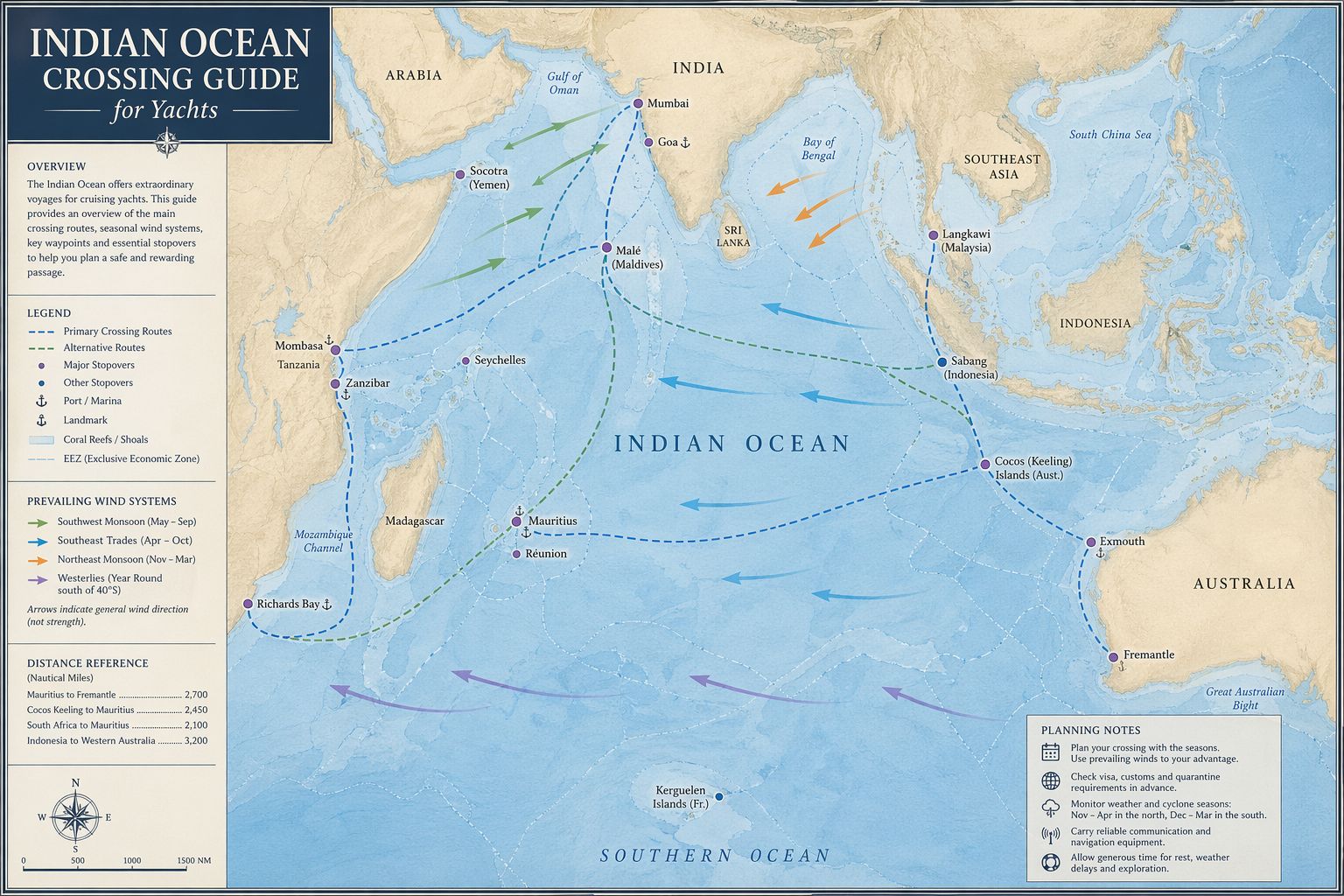
The Indian Ocean is typically crossed westbound due to prevailing wind systems. Eastbound passages are possible but require careful timing and are generally undertaken outside the main monsoon periods. The primary yacht routes include:
- Australia (Darwin or Dampier) → Cocos (Keeling) → Rodrigues → Mauritius → Réunion → Madagascar → Mozambique Channel → South Africa
- Southeast Asia (Indonesia) → Cocos (Keeling) → Mascarene Islands → Madagascar → South Africa
- Chagos → Seychelles → Comoros → Madagascar → Mozambique Channel → South Africa
- Chagos → Maldives → Sri Lanka → India → Oman → Red Sea (for yachts routing toward the Mediterranean)
Distances between islands are long, with several legs exceeding 1,000 NM. Fuel planning, weather routing, and spare parts planning and management are critical.
Indian Ocean Crossing
Guide - Seasonal
Weather & Ocean Conditions
The Indian Ocean is governed by monsoon systems:
- Southwest Monsoon (May–September) — SE trades dominate the southern basin; strong SW monsoon winds affect the northern basin.
- Northeast Monsoon (December–March) — NE winds dominate the northern basin; lighter SE trades persist in the south.
- Cyclone Season (November–April) — Affects the Mascarene Islands, Madagascar, Mozambique Channel, and occasionally Cocos (Keeling).
Sea states can be steep and confused where monsoon winds oppose the South Equatorial Current. The Mozambique Channel can produce strong eddies and counter‑currents.
Indian Ocean Crossing
Guide – Critical Timing Constraint
Yachts must be south of Madagascar and clear of the Mascarene Islands (Mauritius, Réunion) by mid-November at the latest. Cyclone season in the South Indian Ocean runs formally from 1 December to 30 April, with peak activity in January–March. The South African coast passage must be completed before the summer frontal systems in the Southern Ocean increase in frequency and severity.
Indian Ocean Crossing
Guide – Transit Island
Groups
Each island group below will receive its own full guide. The hub page lists them with a short operational definition only.
- Cocos (Keeling) Islands (Australia). Primary first stop after departing Australia. Offers a protected lagoon anchorage and limited but functional provisioning and fuel.
- Christmas Island (Australia). Used less frequently due to exposure and limited shelter, but remains a diversion option.
- Chagos Archipelago (British Indian Ocean Territory). Remote, no services, strict entry controls. Used only by yachts with prior authorisation. Chagos / BIOT — 2026 Update. BIOT announced in 2025 that cruising permits for Chagos would not be issued after April 2026. Verify current status with BIOT (biot.fcdo.gov.uk) before including Chagos in passage planning — access rules have been subject to significant change.
- Maldives. Chain of atolls with multiple anchorages, repair capability in Malé, and good provisioning. Useful for routing toward Sri Lanka, India, or the Red Sea.
- Galle Sri Lanka. Popular departure port and operational stop for repairs, provisioning, and crew changes. Galle is the primary port of entry.
- India (Selected Ports). Limited yacht infrastructure but viable for clearance and provisioning. Kochi is the most commonly used port.
- Seychelles. Granite islands with secure anchorages, good provisioning, and repair capability. Useful mid‑ocean staging point.
- Madagascar Nosy Be. Good repair and provisioning capability in Nosy Be, and a key staging point before the Mozambique Channel.
- Comoros (Moroni). Limited facilities but used as a diversion or staging point.
- Mayotte (Dzaoudzi) (France). Protected lagoon, reliable provisioning, and repair capability. Often used before crossing the Mozambique Channel.
- Réunion (France). Strong repair capability, secure marina, and a key stop before South Africa.
- Mauritius (Port Louis). Good provisioning, secure berthing, and a common stop before or after Rodrigues.
- Rodrigues (Port Mathurin). First landfall after Cocos (Keeling) for most westbound yachts. Limited facilities but reliable anchorage.
- Mozambique Channel Islands (Europa, Juan de Nova, Bassas da India). Restricted access; not used for provisioning but relevant for weather and routing awareness.
- Indian Ocean Islands. Tromelin Island is a French overseas territory, part of the French Southern and Antarctic Lands (TAAF). It is uninhabited except for rotating scientific staff. It lies roughly 450–800 km east of Madagascar and is one of the Scattered Islands. No value for yachts. Agaleda Island is extremely remote, access is restricted and logistically difficult. Treat Agaléga as an emergency or special‑permission landfall only.
- East African Ports. These include Mombasa in Kenya, Dar es Salaam and Tanga in Tanzania, and Maputo, Beira and Nacala in Mozambique. Generally avoided due to security issues and I have been several times to all these ports in my earlier merchant marine tramp ship days.
South Africa
- South Africa (Durban, Richards Bay). Primary exit point from the Indian Ocean. Full repair capability, provisioning, and staging for onward Atlantic routing.
- South Africa (East London). Secondary exit point from the Indian Ocean. Full repair capability, provisioning, and staging for onward Atlantic routing.
- South Africa (Port Elizabeth). Secondary exit point from the Indian Ocean. Full repair capability, provisioning, and staging for onward Atlantic routing.
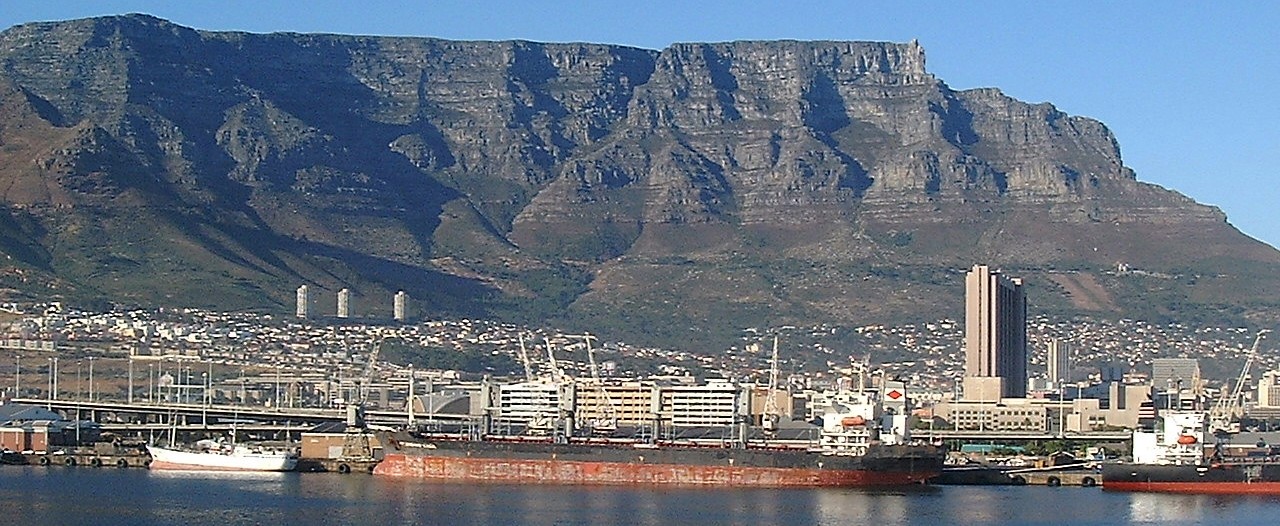
- South Africa (Cape Town). Full repair capability, provisioning, and staging for onward Atlantic routing.
- Other South Africa Ports. Port St. Francis; Knysna; Mossel Bay; Gordon's Bay, False Bay YC (Simon's Town); Hout Bay; Saldanha Bay; Port Owen.

Indian Ocean Crossing Guide - Currents
Ocean currents along the East African coast are dominated by the South Equatorial Current, which flows westward across the Indian Ocean and splits on reaching Madagascar. The northern branch forms the East African Coastal Current (EACC), flowing northward from Mozambique toward Somalia, typically at 1–3 knots, strengthening seasonally with the monsoon. This current feeds into the Somali Current, which is highly seasonal—flowing northward during the Southwest Monsoon (May–Oct) and reversing southward during the Northeast Monsoon (Nov–Mar). South of Madagascar, the flow turns into the Mozambique Current and eddy system, characterised by large rotating eddies rather than a single steady stream, before feeding the Agulhas Current further south along the African coast. Close inshore, currents are strongly influenced by wind, tides, and coastal geometry, with noticeable set and drift around headlands, channels, and island groups such as Zanzibar and the Comoros. For passage planning, understanding these seasonal reversals and regional accelerations is critical, particularly when transiting north–south along the coast or crossing the Mozambique Channel.
Indian Ocean Crossing
Guide - Operational
Considerations for a Basin Crossing
Approaches (Basin‑Level). Approaches to the Indian Ocean from Australia, Indonesia, or the South Pacific involve crossing continental shelves with depths decreasing from >3,000 m to <50 m near landfalls. Swell refracts around island groups, and unlit fishing vessels are common near Southeast Asia. Tidal ranges vary from <1 m in the central basin to >4 m in parts of the Seychelles and Madagascar.
Indian Ocean Crossing Guide - Wind Patterns
Wind patterns along the East African coastline are governed by the Indian Ocean monsoon system, producing a reliable seasonal reversal that strongly influences passage planning. From May to October, the Southwest Monsoon (Kusi) brings steady south to southeasterly winds, often 15–25 knots, with stronger conditions and building seas along exposed coasts—favourable for northbound passages but demanding when heading south. From November to March, the pattern reverses with the Northeast Monsoon (Kaskazi), delivering lighter north to northeasterly winds, generally 10–20 knots, creating more moderate sea states and favourable conditions for southbound sailing. The inter-monsoon periods (April and October/November) are typically lighter and more variable, with calms, thunderstorms, and shifting winds. Local effects are significant: coastal acceleration occurs around headlands and islands such as Zanzibar and Pemba, while land–sea breezes dominate nearshore during lighter conditions. Careful timing with the monsoon cycle is essential, as it effectively dictates the direction and ease of cruising along this coast.

Indian Ocean Crossing
Guide - Anchorage
(Basin‑Level)
Anchorage planning across the Indian Ocean must be treated as a passage requirement rather than a routine arrival decision. Many ocean islands provide few usable anchorages, and these are often exposed to ocean swell, seasonal monsoon winds, current, reef hazards or restricted swinging room. Outer-roadstead anchorages commonly carry depths of 15–40 m and may become untenable when wind direction changes or swell wraps around the island.
Lagoon anchorages at Cocos (Keeling), Mayotte and parts of the Seychelles provide more reliable shelter, with typical anchoring depths of 5–25 m. Entry channels, coral heads, tidal flow, local restrictions and chart accuracy must be checked before arrival. The skipper must confirm holding ground, available depth, under-keel clearance, swing radius and an exit route before committing the vessel, particularly where darkness, squalls or a change in monsoon conditions could prevent safe departure.
Indian Ocean Crossing Guide - Entry Formalities (Basin‑Level)
Entry procedures vary between Indian Ocean states and territories and must be confirmed before departure for each landfall. Mauritius and Réunion may require advance electronic notification or submission of vessel and crew information, while Madagascar, the Seychelles and other island states may require the skipper and crew to report in person to customs, immigration, port authorities and health or biosecurity officials on arrival.
Restrictions may apply to drones, satellite communication equipment, firearms, ammunition, spearfishing equipment, alcohol, medicines, animals, plants and organic produce. Controlled items must be declared, and some equipment may be sealed aboard or held by authorities until departure. The Chagos Archipelago is not an open cruising destination and requires a permit issued before entry. The skipper must carry printed and electronic copies of passports, vessel registration, insurance, crew lists, clearance from the previous port and any permits required for the intended route.
Indian Ocean Crossing
Guide - Marina
Facilities (Basin‑Level)
Marina availability across the Indian Ocean is concentrated around the main commercial and population centres. Full-service marina facilities are available in Mauritius, Réunion, the Seychelles, the Maldives and South Africa, although berth availability, accepted vessel size, approach depth and advance-booking requirements vary between ports. These locations provide the main options for secure berthing, shore power, potable water, diesel, provisioning, haul-out and access to mechanical, electrical and rigging services.
Facilities are limited or absent at Rodrigues, Cocos (Keeling), the Comoros and most ports in Madagascar outside the Nosy Be area. Yachts using these landfalls must expect to anchor, use local moorings or berth alongside commercial infrastructure where permission is granted. Shore access may depend on a dinghy landing, tidal conditions or port-authority approval. The skipper must confirm berth availability, maximum draft, clearance procedures, fuel arrangements and repair capability before arrival and must not assume that a charted marina provides operating facilities, secure berthing or space for a visiting yacht.
Indian Ocean Crossing Guide - Provisioning (Basin‑Level)
Provisioning capacity across the Indian Ocean varies by island, port and transport schedule. Mauritius, Réunion, the Seychelles, the Maldives and South Africa provide the main locations for loading passage stores, including packaged food, fresh produce, meat, dairy products, bottled water, cooking gas and general vessel supplies. Stock range and price vary outside the main population centres, so major resupply must be completed at established commercial ports rather than assumed at each island landfall.
Rodrigues, Cocos (Keeling) and Madagascar provide limited but workable provisioning. Supplies may depend on irregular freight deliveries, local market days, seasonal produce and transport from inland towns. Specialist foods, vacuum-packed meat, dairy products, medicines and marine consumables may be unavailable. Chagos has no provisioning facilities, shops, fuel, potable-water supply or waste-disposal service. A yacht entering the archipelago under permit must remain self-sufficient and carry enough food, water, fuel and essential stores for the complete stay and onward passage.
Indian Ocean Crossing
Guide - Local
Cuisine (Basin‑Level)
Local cuisine across the Indian Ocean reflects regional trade routes, migration and available produce. The Mascarene Islands, including Mauritius, Réunion and Rodrigues, use Creole cooking based on rice, curries, lentils, fish, chilli, pickles and French, African, Indian and Chinese influences. In the Maldives and Sri Lanka, meals rely heavily on rice, coconut, tuna, dried fish, flatbreads, dhal and spiced curries.
Madagascar and the Comoros combine East African, Arab and French influences, with rice, cassava, coconut, seafood, meat stews and locally grown spices forming the main diet. Cocos (Keeling) and Christmas Island have mixed Malay, Chinese, Indonesian and Australian food traditions. Outside the main towns, visiting crews must expect limited menus, seasonal ingredients and irregular availability rather than a full range of imported food.
Indian Ocean Crossing
Guide - Fuel
Supplies (Basin‑Level)
Diesel availability across the Indian Ocean is concentrated at the main commercial ports. Mauritius, Réunion, the Seychelles, the Maldives and South Africa provide the most reliable refuelling points, with diesel available from fuel docks, harbour suppliers, road tankers or service stations. Direct delivery to a yacht may require advance notice, port approval or a minimum purchase volume.
Rodrigues, Madagascar and the Comoros have limited diesel supplies. Fuel may need to be collected in jerry cans, transferred from drums or delivered by a local supplier. Availability can depend on island stocks, transport schedules and local demand. The skipper must confirm supply before arrival and carry clean transfer equipment, a filter funnel and spare primary fuel filters. Fuel taken from drums or informal suppliers must be treated as potentially contaminated with water, sediment or microbial growth.
Chagos has no diesel supply. A yacht entering under permit must carry enough fuel for the complete stay, generator use, adverse-current allowances, motoring through calms and the onward passage. Basin-crossing fuel calculations must include an operational reserve and must not depend on unconfirmed supplies at remote island landfalls.
Indian Ocean Crossing
Guide - Water
Supplies (Basin‑Level)
Potable water is generally available at the main commercial ports in Mauritius, Réunion, the Seychelles, the Maldives and South Africa. Supply may be provided from marina taps, harbour standpipes, road tankers or containers, and access can depend on berth location, port approval or local water restrictions. The skipper must confirm whether the water is potable, whether hoses and fittings are available and whether treatment is required before filling the vessel’s tanks.
Water supply becomes limited, seasonal or absent at remote islands and minor ports. Rodrigues, Cocos (Keeling), Madagascar and the Comoros cannot be treated as dependable sources without confirmation before arrival. Rain collection may supplement tank capacity but must not form the primary water plan for a basin crossing.
A serviceable watermaker is required for yachts undertaking long Indian Ocean legs without confirmed resupply. Carry sufficient stored water to cover watermaker failure, contamination, faults and delayed arrival. Keep drinking-water reserves separate from general-use water where tank layout permits, and carry spare prefilters, membrane treatment chemicals and the fittings required to repair the watermaker at sea.
Mechanical
and Electrical Repairs Resource
Why not get a copy of my book The Marine and Electrical and Electronics Bible 4th Edition. In Australia and New Zealand order a copy through Boat Books. UK and European boats can buy the UK Edition Here. US and Canadian boats can get the US Edition Order Here. Marine systems are my profession so let me help you. In South Africa you can buy the book through Amazon or Loot.co.za or Kobo.co.za


Indian Ocean Crossing
Guide - Marine
Services (Basin‑Level)
Marine service capability across the Indian Ocean is concentrated at the main commercial and yachting centres. Mauritius, Réunion, the Seychelles, the Maldives and South Africa provide the principal locations for diesel-engine work, electrical and electronic repairs, rigging, sailmaking, refrigeration, fibreglass repairs and haul-out. Service capacity varies between islands, and specialist parts may still require importation. Confirm yard capability, lifting limits, parts availability and contractor access before diverting for repairs.
Madagascar and the Comoros provide limited marine services. Local mechanics, welders and general engineering workshops may complete basic repairs, but marine-specific parts, diagnostic equipment, certified riggers and organised haul-out facilities cannot be assumed
Rodrigues and Chagos provide no dependable marine repair infrastructure for visiting yachts. A vessel using these landfalls must remain self-sufficient and carry the tools, consumables and critical spares required to complete essential repairs aboard. Basin-crossing preparation must include spare filters, belts, impellers, pumps, hoses, electrical components, rigging repair materials and service parts for equipment whose failure could prevent the yacht from continuing safely.
Indian Ocean Crossing
Guide - Local Etiquette and Customs (Basin‑Level)
Cultural norms vary: Islamic customs in Maldives and Comoros, French administrative norms in the Mascarene Islands, and local village protocols in Madagascar. Respectful dress and behaviour are expected in all ports.
Local customs across the Indian Ocean vary by country, island and community. In the Maldives and the Comoros, Islamic social norms influence dress, alcohol use, public behaviour and access to religious areas. Crews must dress conservatively when ashore outside resort or marina areas, avoid public intoxication and ask permission before photographing people, religious buildings or official facilities.
Mauritius, Réunion and Rodrigues operate through formal administrative systems influenced by French and local legal practice. Port, customs and immigration procedures may require written documentation, fixed reporting sequences and attendance during stated office hours. Maintain a formal manner when dealing with officials and do not treat verbal approval as a substitute for completed clearance.
In Madagascar and smaller island communities, access to anchorages, landing places and villages may depend on local protocols. Report to the recognised authority, village head or harbour representative before moving through community areas, collecting water, fishing or going ashore beyond the landing point. Respect private land, burial areas, sacred sites and local restrictions even where these are not marked.
Across the basin, crews must keep noise under control, dispose of waste only through approved channels and avoid assuming that marina behaviour is acceptable in villages or working ports. Conservative dress, restrained conduct and direct communication reduce conflict and support orderly dealings with officials and local communities.
Indian Ocean Crossing Guide - Summary
The Indian Ocean crossing relies on a small number of islands that provide shelter, fuel, water, repairs, and formalities during long ocean legs. Routing is shaped by monsoon seasons, cyclone risk, and the spacing between viable landfalls such as Cocos (Keeling), Rodrigues, Mauritius, Réunion, Seychelles, Maldives, Madagascar, and South Africa. This hub page defines the basin‑wide operational picture and the functional role of each island group in a westbound or northbound transit. Indian Ocean Crossing Guide for all you need to know.