Yacht Galley Cooking - Safety,
Provisioning, and Food Preparation at Sea
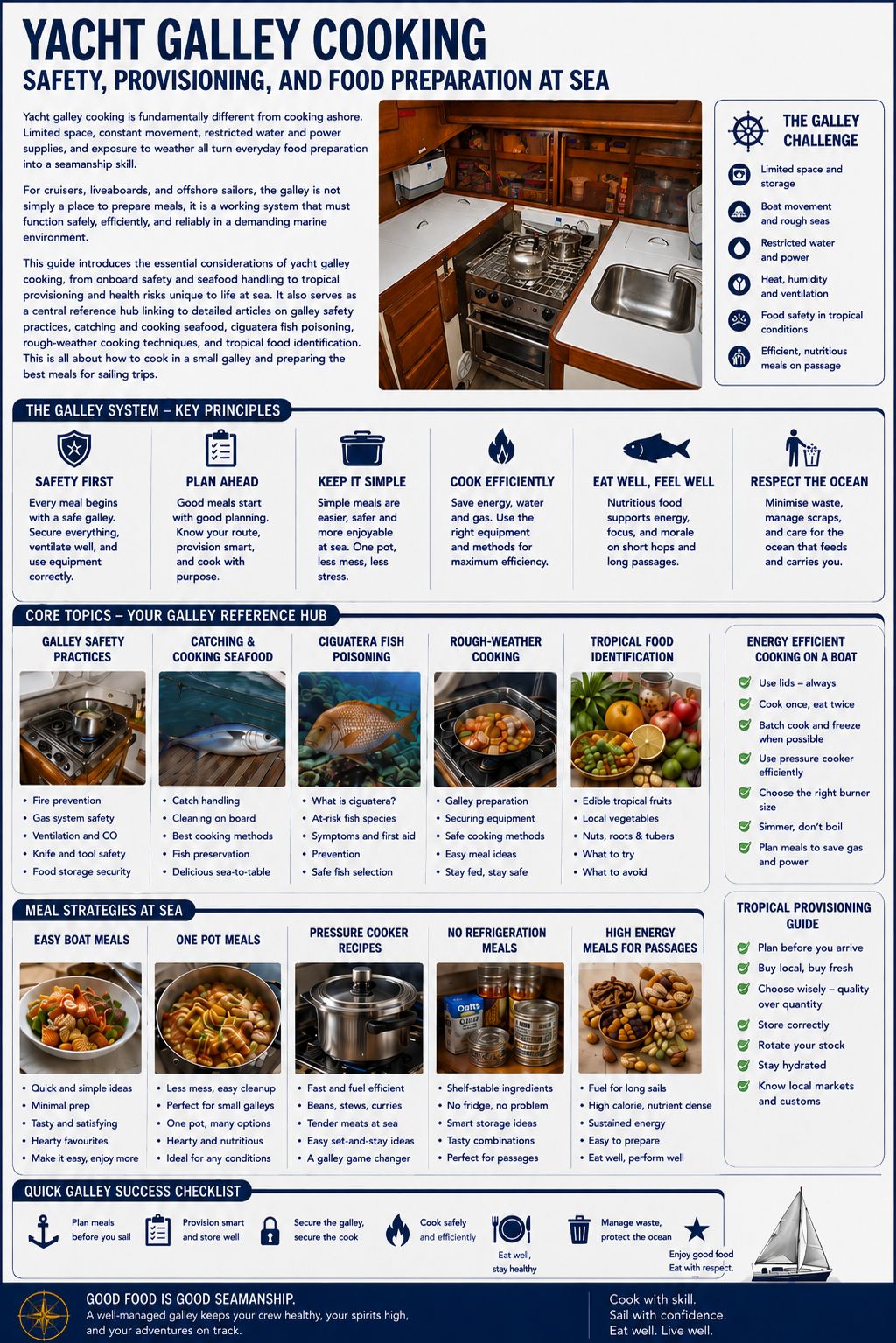
Yacht galley cooking is fundamentally different from cooking ashore. Limited space, constant movement, restricted water and power supplies, and exposure to weather all turn everyday food preparation into a seamanship skill. For cruisers, liveaboards, and offshore sailors, the galley is not simply a place to prepare meals, it is a working system that must function safely, efficiently, and reliably in a demanding marine environment.
This guide introduces the essential
considerations of yacht galley cooking, from onboard safety and seafood
handling to tropical provisioning and health risks unique to life at sea. It
also serves as a central reference hub linking to detailed articles on galley
safety practices, catching and cooking seafood, ciguatera fish poisoning,
rough-weather cooking techniques, and tropical food identification. This is all about how to cook in a small galley and preparing the best meals for sailing trips and what the options are for rough‑weather cooking tips. The other factors include the yacht galley equipment list and also energy‑efficient cooking on a boat and last but not least a tropical provisioning guide when you sail to paradise. You can be menu driven but the reality is being able to prepare easy boat meals and simple one‑pot meals for sailing and simple pressure cooker boat recipes and for simplicity there are no‑refrigeration meals and high‑energy meals for passages when it gets a bit bumpy.
The Real Constraints of Yacht Galley
Cooking
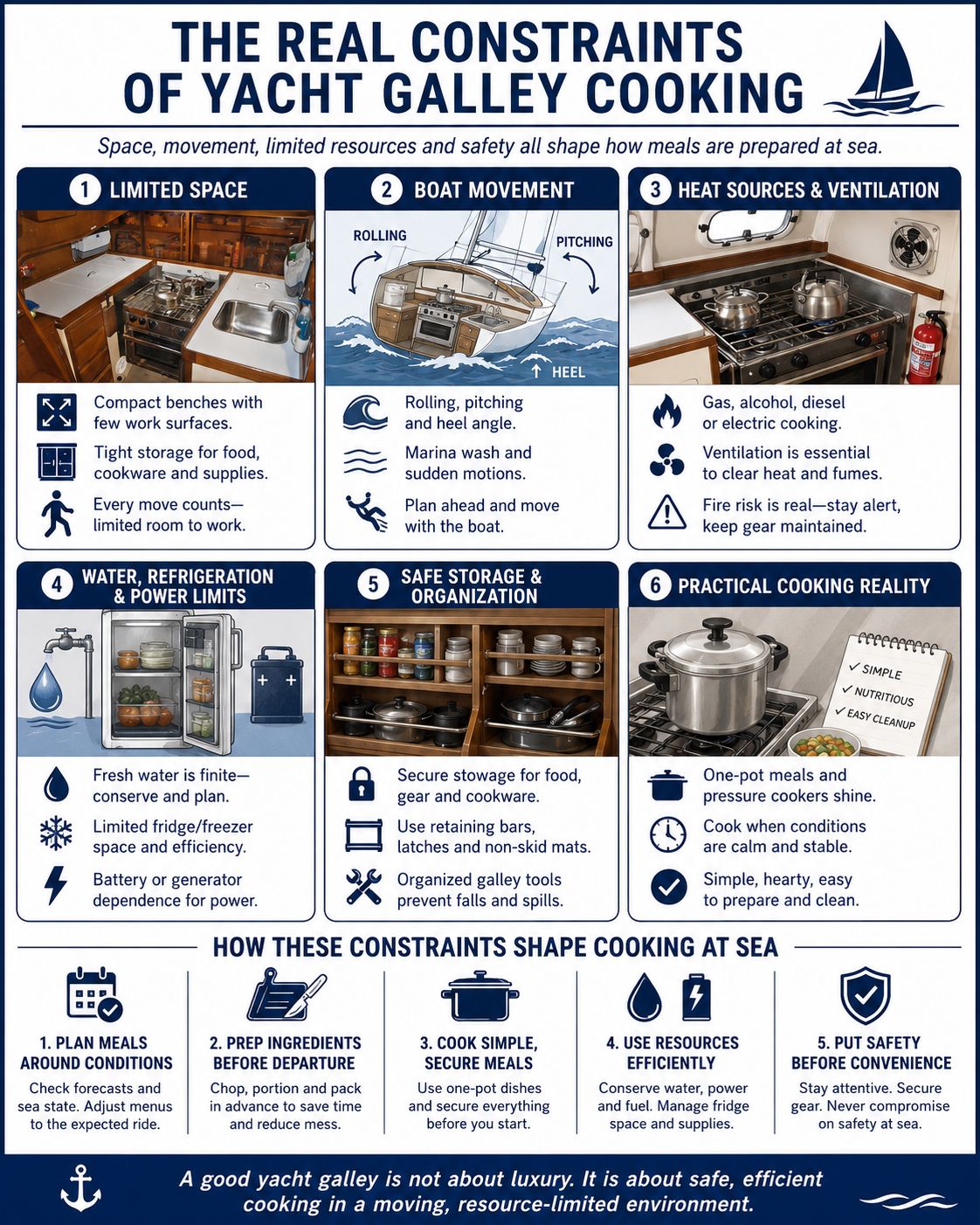
Yacht galleys operate under constraints that do not exist in land-based kitchens. Space is limited, work surfaces are compact, and storage is finite. Even at anchor, a yacht may roll or yaw unexpectedly or in a marina as passing vessel wash creates movement, even in strong winds in a marina, gusts can create movement on bare poles. Underway, heel angle, pitching, and sudden motion can quickly turn routine galley tasks into hazards. Cooking on a boat presents many challenges. You can get bogged down on yacht galley equipment and the best galley tools for boats. Depending on the boat you usually have to live with small galley organization and considering energy‑efficient cooking appliances and also marine stove and oven tips for safe cooking is essential. Refrigeration is essential for keeping food cold and drinks chilled.
Heat sources aboard, whether gas, alcohol, diesel, or electric, must be carefully controlled and properly ventilated. Open flames increase fire risk, while poor ventilation can lead to dangerous heat buildup or fumes. Fresh water, refrigeration capacity, and power availability are often limited, requiring careful planning of meals, washing routines, and ingredient selection.
These realities of cooking on the boat shape every aspect of yacht galley cooking and directly influence when it is safe to cook, what meals are practical, and how food should be prepared and stored at sea
Galley Safety and Food Handling on
Yachts
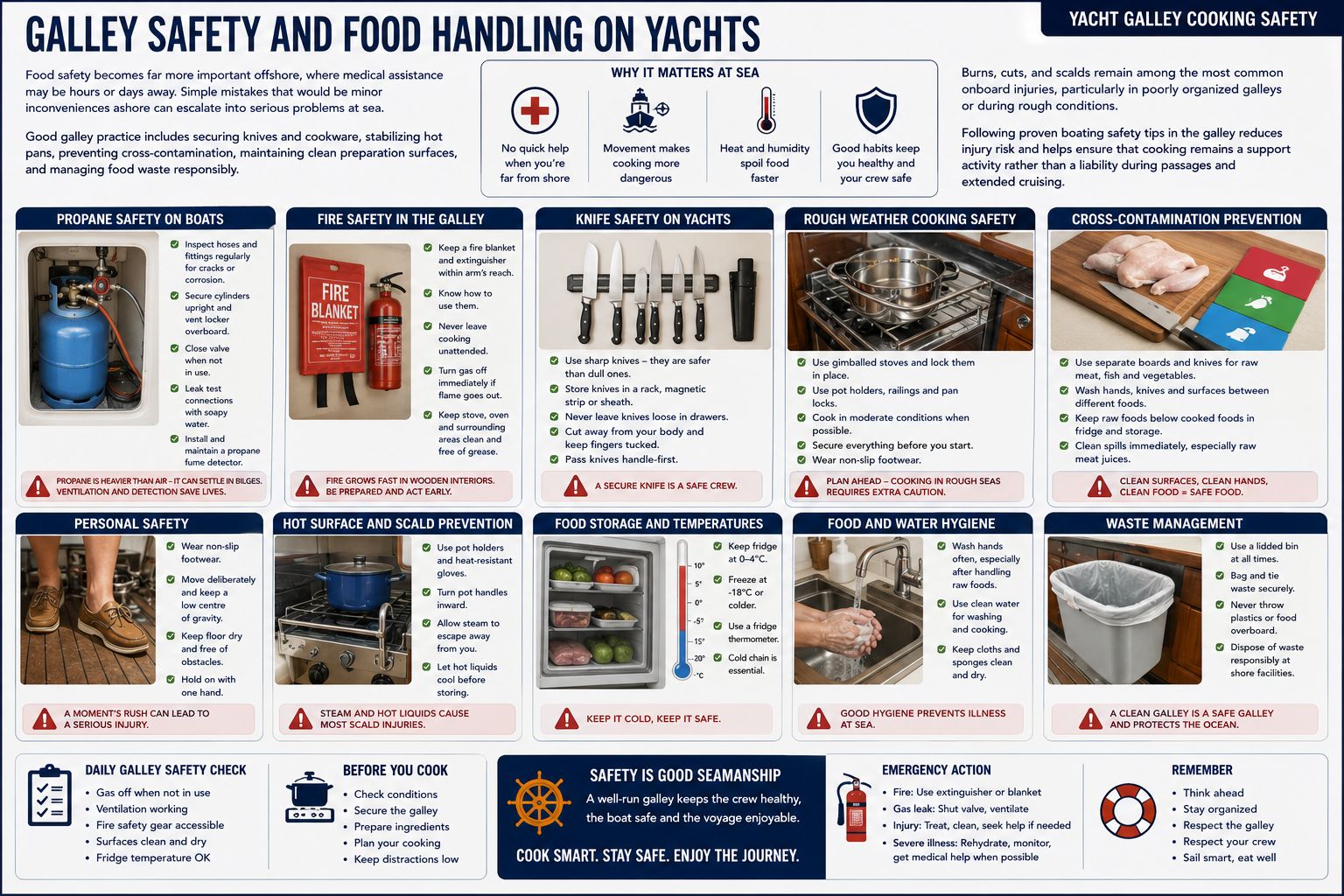
Food safety becomes far more important offshore, where medical assistance may be hours or days away. Simple mistakes that would be minor inconveniences ashore can escalate into serious problems at sea.
Good galley practice includes securing knives and cookware, stabilizing hot pans, preventing cross-contamination, maintaining clean preparation surfaces, and managing food waste responsibly. Burns, cuts, and scalds remain among the most common onboard injuries, particularly in poorly organized galleys or during rough conditions. Galley safety tips include propane safety on boats, fire safety in the galley and a really important topic is knife safety on yachts and all about rough‑weather cooking safety.
Following proven boating safety tips in the galley reduces injury risk and helps ensure that cooking remains a support activity rather than a liability during passages and extended cruising.
Ciguatera Fish Poisoning: A Critical
Risk for Cruising Sailors
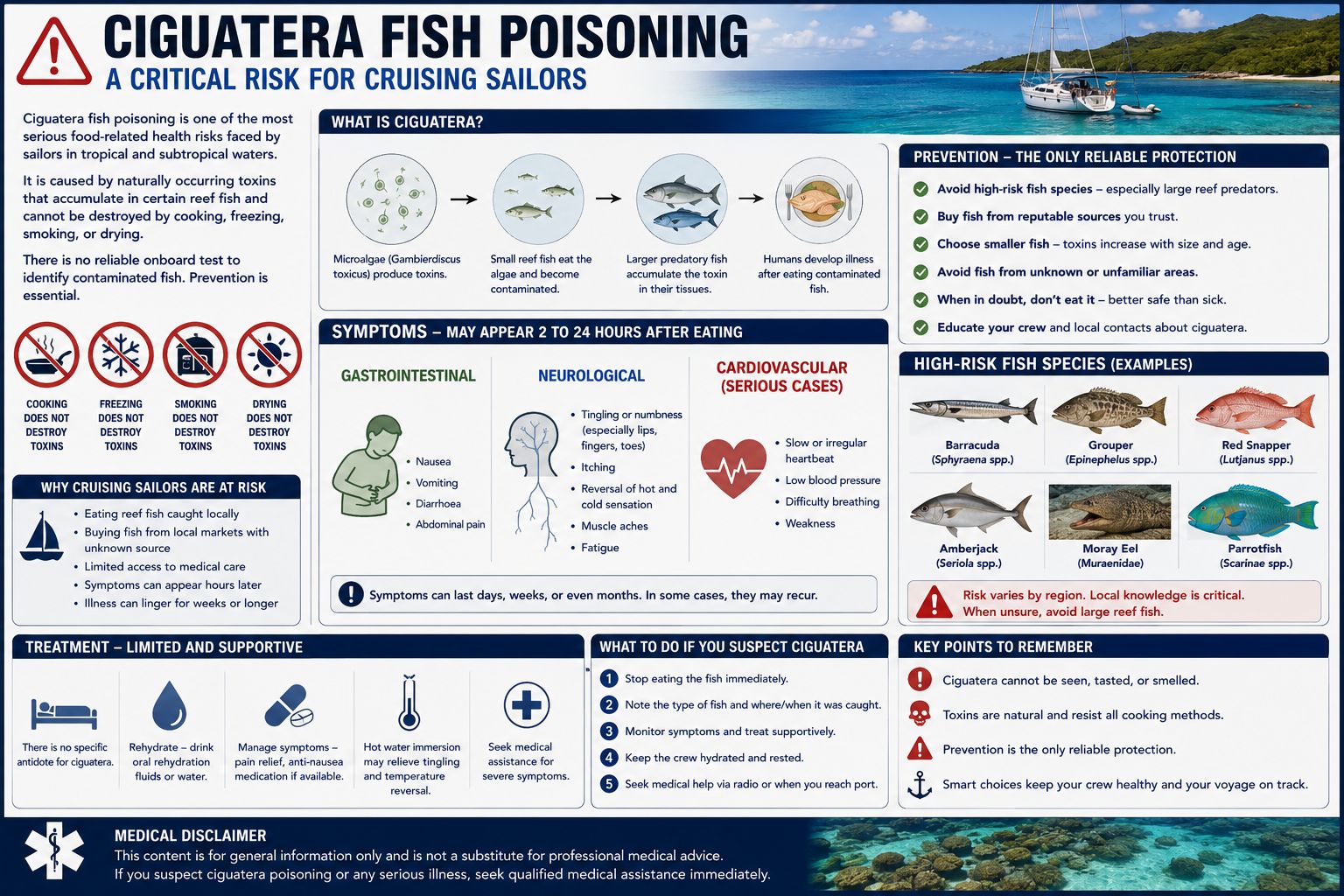
Ciguatera fish poisoning is one of the most serious food-related health risks faced by sailors operating in tropical and subtropical waters. Unlike bacterial food poisoning, ciguatera is caused by naturally occurring toxins that accumulate in certain reef fish and cannot be destroyed by cooking, freezing, smoking, or drying.
The risk is highest in reef environments where larger predatory fish consume smaller contaminated species. Symptoms may include gastrointestinal distress, neurological effects, and cardiovascular complications, with recovery sometimes taking weeks or longer. Importantly, there is no reliable onboard test to identify contaminated fish.
Because ciguatera fish poisoning cannot be detected by taste, smell, or appearance, prevention is essential. Understanding where ciguatera occurs, which species are commonly implicated, and why cruising sailors are particularly vulnerable is critical when catching or purchasing fish locally.
When poisoning does occur, ciguatera poisoning treatment options are limited and largely supportive. This makes education, avoidance strategies, and conservative decision-making the most effective protection for crews living and cooking aboard.
Medical Disclaimer
This content is for general information only and is not a substitute for professional medical advice. If you suspect ciguatera poisoning or any serious illness, seek qualified medical assistance immediately
Mechanical and Electrical Repairs
Resource
Why not get a copy of my book The Marine and Electrical and Electronics Bible 4th Edition. In Australia and New Zealand order a copy through Boat Books. UK and European boats can buy the UK Edition Here. US and Canadian boats can get the US Edition Order Here. Marine systems are my profession so let me help you.

Catching and Cooking Fresh Seafood
Aboard
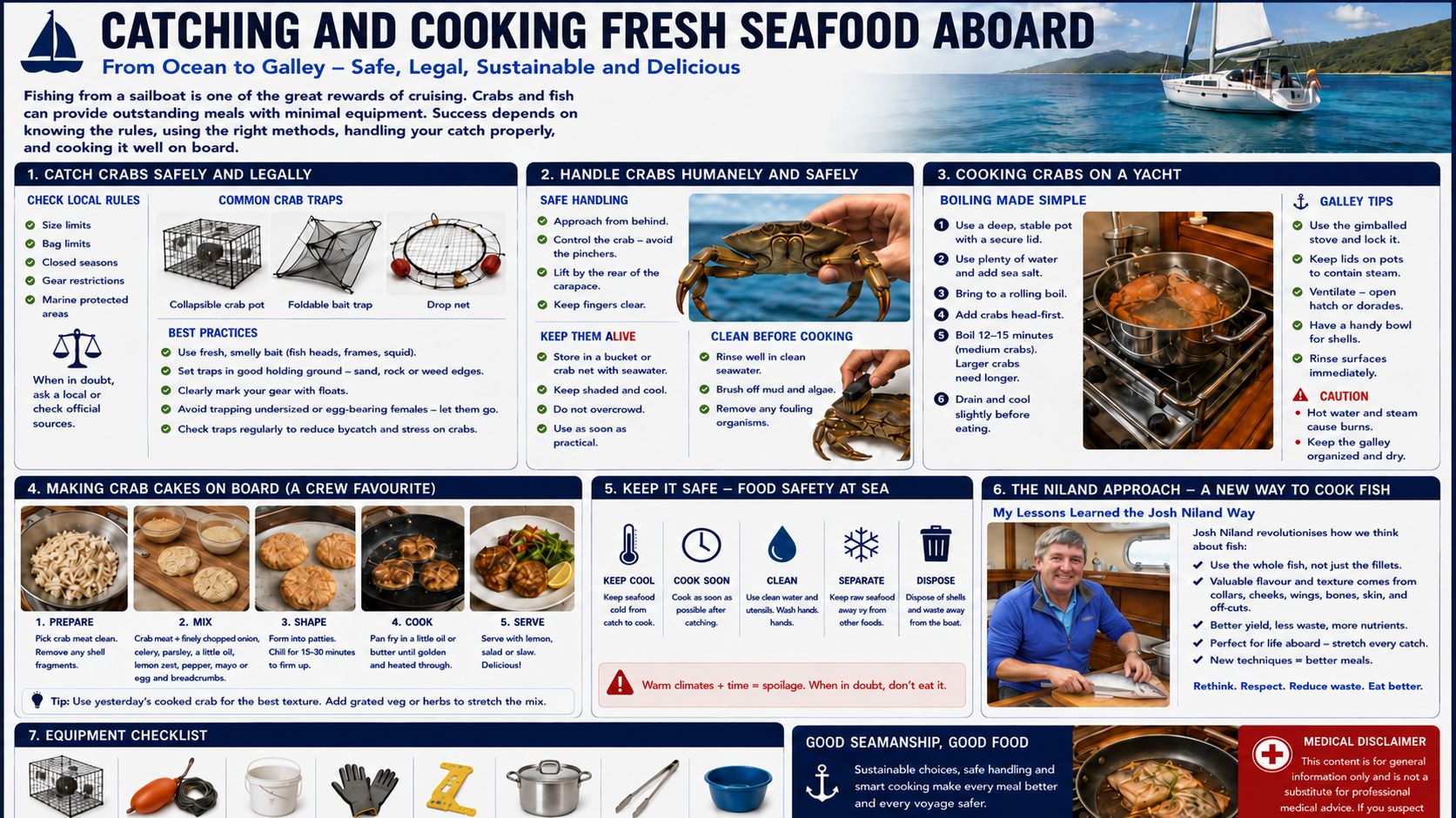
For many cruisers and liveaboards, fishing from a sailboat and catching seafood when sailing is an integral part of life afloat. Crabs, in particular, are commonly harvested in coastal and tropical regions and can provide excellent meals with minimal equipment. However, knowing how to catch crabs safely and legally requires familiarity with local regulations, correct capture methods, and safe handling practices.
Equally important is understanding how to cook crabs on a yacht, where boiling water, confined spaces, strong odors, and shell waste must all be managed carefully. Poor handling or undercooking can present health risks, especially in warm climates where spoilage occurs rapidly. Then there is my favorite, how to cook crab cakes on board.
Treating seafood sourcing and preparation as a single process, from catching through to cooking, reduces risk, conserves resources, and improves overall food safety aboard.
Yacht Galley Cooking in Rough Weather
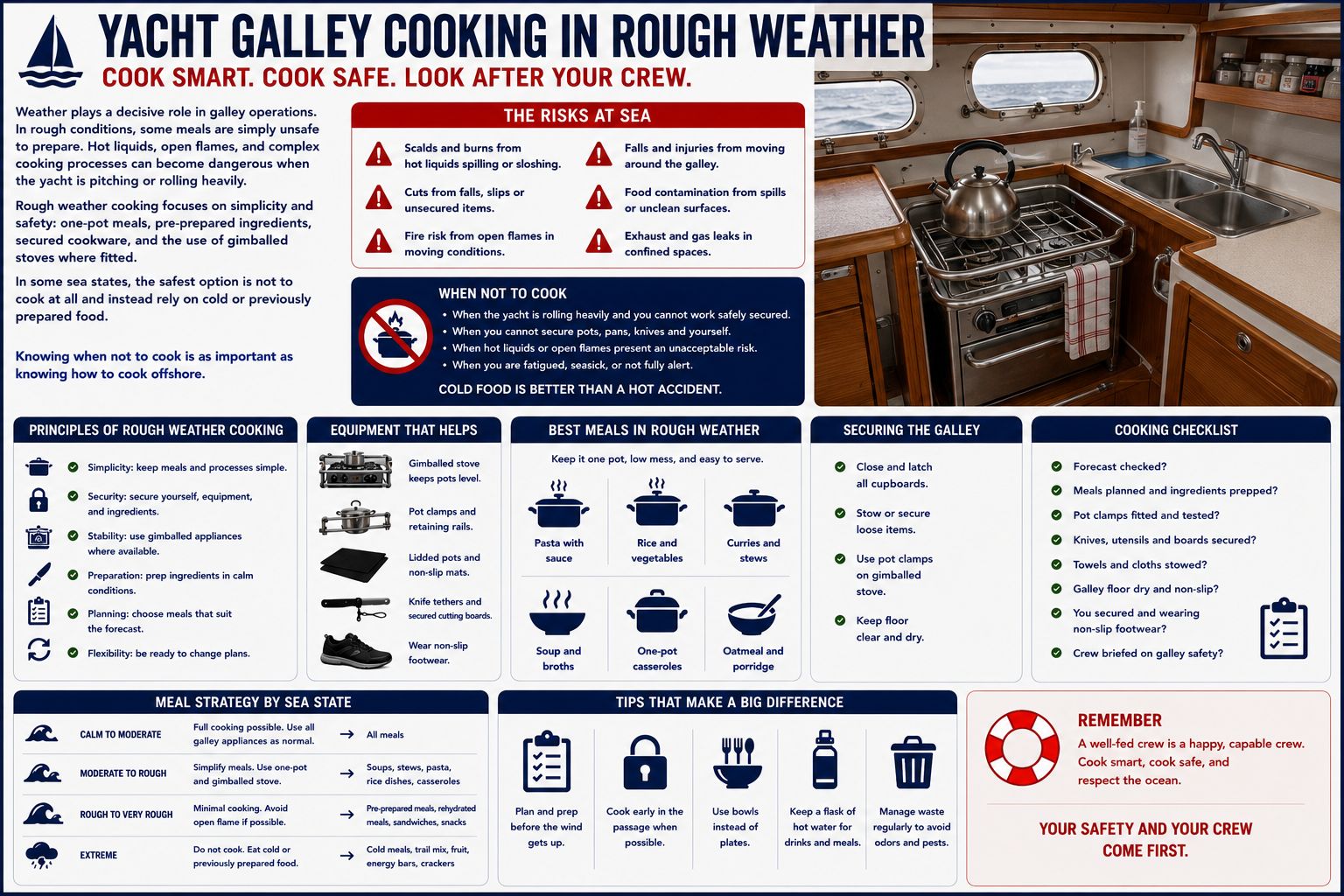
Weather plays a decisive role in galley operations. In rough conditions, some meals are simply unsafe to prepare. Hot liquids, open flames, and complex cooking processes can become dangerous when the yacht is pitching or rolling heavily.
Rough weather cooking focuses on simplicity and safety: one-pot meals, pre-prepared ingredients, secured cookware, and the use of gimballed stoves where fitted. In some sea states, the safest option is not to cook at all and instead rely on cold or previously prepared food.
Knowing when not to cook is as important as knowing how to cook offshore.
Tropical Provisioning and Fruit
Knowledge for Cruisers
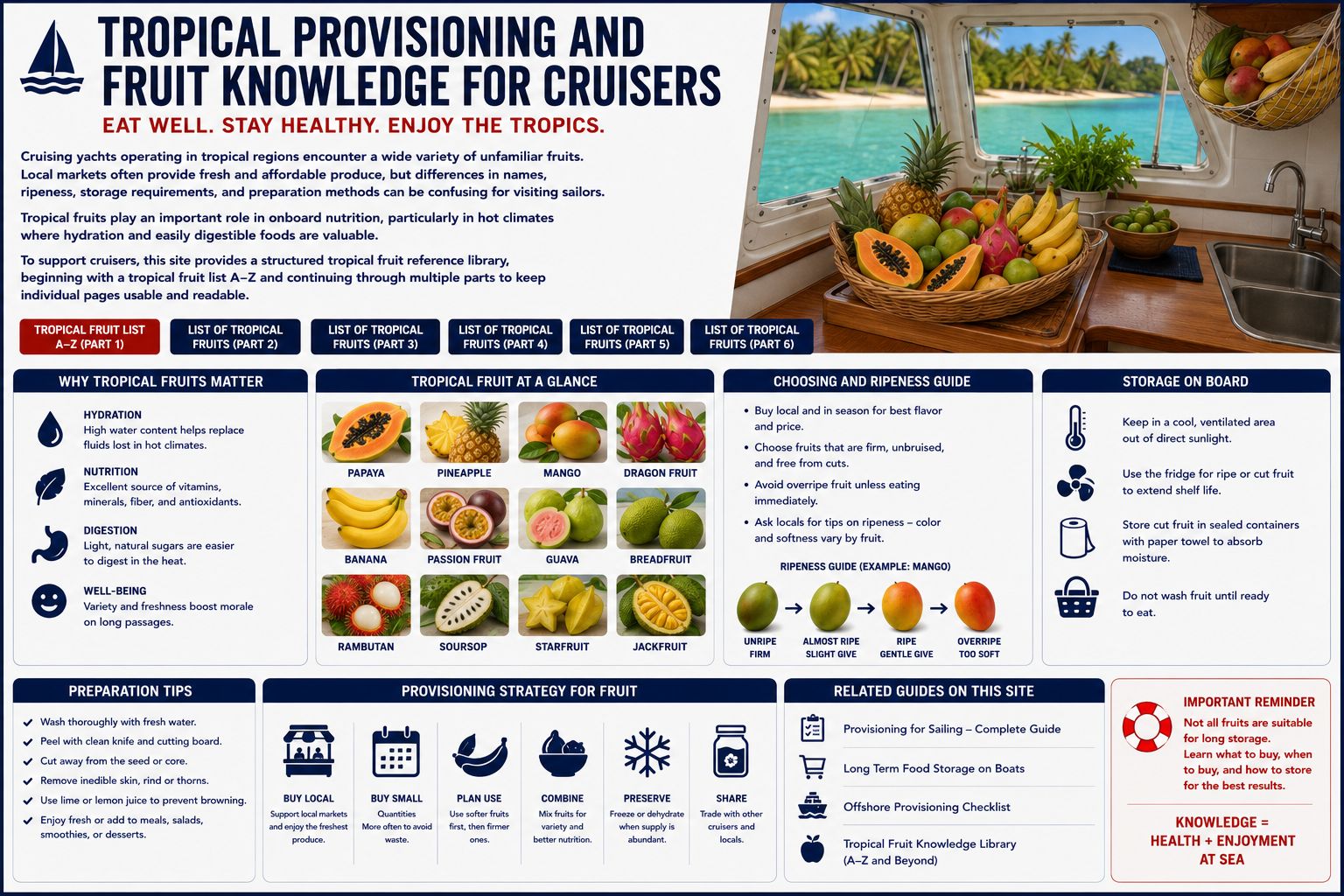
Cruising yachts operating in tropical regions encounter a wide variety of unfamiliar fruits. Local markets often provide fresh and affordable produce, but differences in names, ripeness, storage requirements, and preparation methods can be confusing for visiting sailors. Provisioning for sailing and long‑term food storage on boats along with tropical provisioning and offshore provisioning checklists all feature.
Tropical fruits play an important role in onboard nutrition, particularly in hot climates where hydration and easily digestible foods are valuable. To support cruisers, this site provides a structured tropical fruit reference library, beginning with a tropical fruit list A–Z and continuing through multiple parts to keep individual pages usable and readable. List of Tropical Fruits (Part 2) and List of Tropical Fruits (Part 3), List of Tropical Fruits (Part 4), List of Tropical Fruits (Part 5) and List of Tropical Fruits (Part 6).
Additional reference pages covering tropical fruit names, classifications, and types help sailors identify produce encountered in markets and understand how fruits are grouped, named, and commonly used.
Vegetables and Galley Staples for
Liveaboards
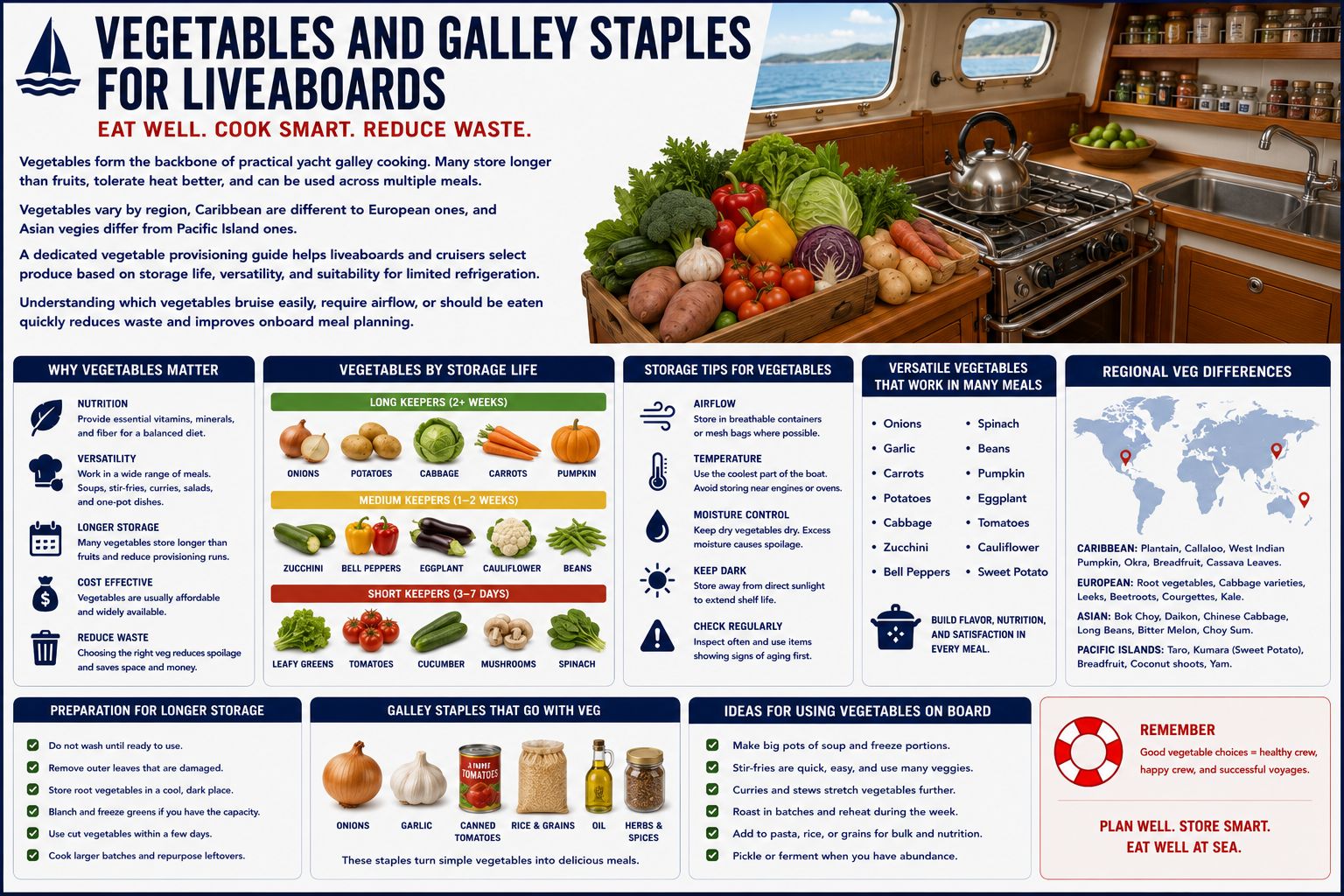
Vegetables form the backbone of practical yacht galley cooking. Many store longer than fruits, tolerate heat better, and can be used across multiple meals.
A dedicated vegetable provisioning guide helps liveaboards and cruisers select produce based on storage life, versatility, and suitability for limited refrigeration. Understanding which vegetables bruise easily, require airflow, or should be eaten quickly reduces waste and improves onboard meal planning.


Yacht Galley Cooking as an Integrated
System
Yacht galley cooking is not about recipes alone. It is an integrated system that combines safety awareness, health knowledge, sourcing decisions, storage limitations, weather judgment, and practical galley technique. What you cook, and when, depends as much on sea state and crew condition as it does on ingredients.
This start page serves as the gateway to a deeper reference library covering galley safety, seafood handling, ciguatera poisoning, tropical provisioning, and rough-weather cooking. Used together, these resources help ensure that the galley remains a reliable and safe support system for long-term life aboard.