Types of Tropical Fruits
The types of tropical fruits from Q to Z offer a fascinating glimpse into global biodiversity and culinary heritage. Quenepa, or Spanish lime, is tart and refreshing, popular in the Caribbean and Latin America. Rambutan, with its hairy shell and sweet flesh, thrives in Southeast Asia. Soursop (guanábana) blends citrus and cream, prized for juices and desserts. Tamarind adds tangy depth to savory dishes and sauces. Uvaria and Umbu are lesser-known South American fruits with unique flavors and cultural significance.
Voavanga, also called Spanish tamarind, is native to Madagascar. Wax Apple, crisp and juicy, is a favorite in tropical Asia. Vanilla, originally from Mexico, became a global staple through colonial trade. These fruits traveled with sailors, explorers, and traders, adapting to new climates and cuisines. Today, they enrich provisioning strategies, inspire flavor wheels and glossaries, and connect cultures through shared culinary traditions. Their names and stories reflect centuries of exploration, exchange, and ecological adaptation.
Quince (Marmeleiro)
The quince is traditionally a temperate fruit, but several cultivars adapt to warmer subtropical and tropical margins. Also known as Coing, Membrillo and Marmelo. These include varieties like Smyrna, Pineapple, Orange, Missouri Mammoth, and Van Deman, which are grown in regions such as Brazil, India, northern Australia, and subtropical Asia. The Smyrna Quince is large and smooth-skinned, with bright yellow fruit. It has a sweet, aromatic flavor. The pineapple Quince is smaller and has pineapple-like aroma and flavor. the Smyrna Quince is large, smooth-skinned, with bright yellow fruit. It has a sweet, aromatic flavor. The Orange Quince has an orange-yellow skin. It has a strong fragrance and popular in the warmer Mediterranean.
Quenepa see Guinepa
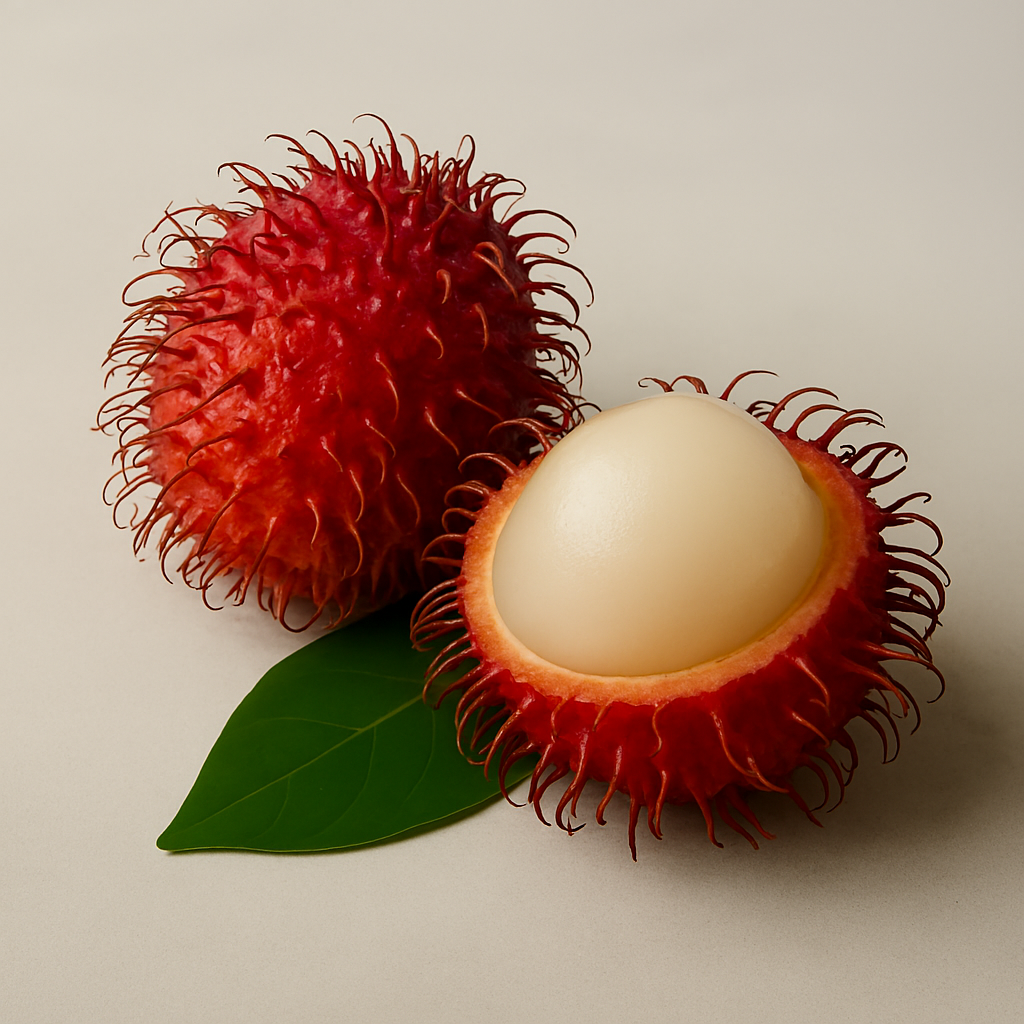
Rambutan (Hairy Lychees)
This has Southeast Asian origins and is widespread in Central America. Also known as Ramboutan, Ramboutanier and Mamon Chino. This is small hairy fruit and is the national fruit of Panama and very popular in Jamaica. It has varying colors that range from red, pink, or yellow depending on varieties, peel and eat. The size of a plum it has a sweet and translucent flesh like a lychee. Select fresh fruit that has bright colors, the fruit darkens with age. Peel and use in salads, sauces and so on.
Rambai (mafai-farang, lotkon)
This is a tropical fruit native to Southeast Asia, especially Malaysia, Thailand, Sumatra, and Borneo. The fruit grow in clusters on long branches, with yellow-brown skin and juicy. The pulp is translucent pulp with a sweet-sour slightly acidic taste. The fruit texture is a juicy, slippery pulp divided into 3–5 segments, each with a small seed. Eaten fresh, cooked into jams and jellies.
Raspberries (Tropical Raspberry)
True raspberries are temperate fruits, but there are tropical relatives and adaptations that thrive in warmer climates. These include species like Mysore Raspberry and the Hill Raspberry and other tropical species found in Asia, Africa, and Latin America. The Mysore Raspberry is native to southern Asia (India, Nepal, Sri Lanka). Other names are Mysore Raspberry, Hill Raspberry, Roseleaf Bramble. The fruits are dark purple to black, sweet-tart, and smaller than temperate raspberries. The Hill Raspberry is found in the Himalayas and Southeast Asia. It has a golden-yellow fruit, sweet but slightly resinous. The Rubus rosifolius (Roseleaf Bramble) is native to Southeast Asia and Australia. It has red fruits, tart flavor, and used in preserves and sometimes called “tropical raspberry.” Some eaten fresh and others turned into jams or smoothies.
Red Mombin (Spanish Plum)
A tropical fruit native to Central and South America, Mexico to northern Colombia and the Caribbean. Also known as Jocote, Ciruela, Hog Plum and Siniguelas). They produce small, oval fruits with glossy red, purple, or yellow skin. The flesh is fibrous, yellow and clinging to the seed. The flavor is aromatic, sweet-tart, sweet-sour, sometimes acidic. Eaten fresh or made into preserves and pickles.
Rollinia (Biribá)
This a tropical fruit from the Amazon basin. Now grown in tropical regions including Hawaii, Florida, Australia, and Southeast Asia. Also known as Wild Sugar Apple and Pacay de monte. The large fruit is yellow-green in color and covered in soft spikes or protuberances. The pulp is soft, sweet, creamy and custard-like in texture. The flavor is often compared to lemon meringue pie or lemon custard pie with citrusy notes. Eat fresh and scoop out the pulp or blend with citrus. Also used in juice and smoothies.
Rose Apple (Pomme Rose)
This is a tropical fruit tree native to Southeast Asia. Now naturalized in the Caribbean, Central America, and tropical Africa. Also known as Manzana Rosa, Jambo, Pomarrosa and Jambeiro . The fruit is round to oval, with a thin waxy skin, and color ranging from green, yellow, red, to purple depending on cultivar. The flesh is firm, crisp, juicy and sometimes spongy with 1-2 seeds. The taste is floral and lightly sweet with a distinct rose petal fragrance. Eaten raw and made into jellies and jams, and also candied or stewed in desserts
Rose Myrtle Berry (Myrtille Rose)
A tropical berry native to Southern and Southeast Asia, India, southern China, Vietnam, Thailand, Malaysia, Indonesia, and the Philippines. Also known as Mirto rosado, Murta-rosa, Kemunting, Downy Myrtle, Hill Gooseberry. They produce small, sweet-tart round berry fruits ripening from green to purple-black. The pulp is juicy with small seeds and they have a sweet-tart, sometimes resinous, with sweet berry-like notes flavor. Easten fresh or turned into jams and jellies.
Saba Banana (Plátano Saba)
This is a cooking banana cultivar from the Philippines. Also known as Banane Saba, Banana Saba, Cardaba. It is shorter, thicker, and squarer than common dessert bananas, with firm, sweet, starchy flesh that is ideal for frying, boiling, and stewing. These squarish, blocky bananas, ripen from green to golden yellow and the dense firm flesh holds shape when cooked. They are mildly sweet with a rich flavor when cooked. Fried into maruya (banana fritters) or turon (spring rolls). Boiled or stewed in savory dishes like pochero and nilaga. Also used in desserts, jams, and beverages.
Safou (African Butterfruit)
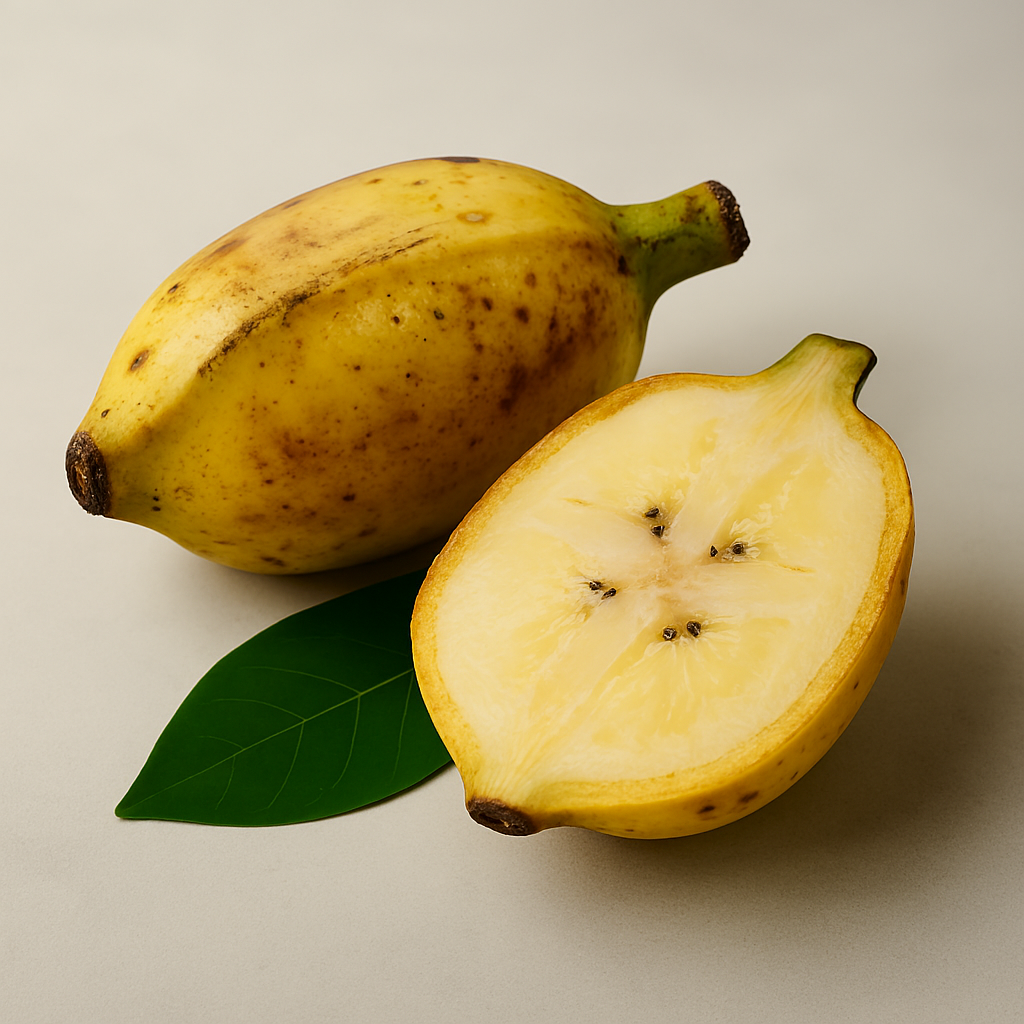
This is a tropical fruit native to Central and West Africa. Also known as the African Plum, Bush Butter Tree, Ube. It has a dark blue to violet skin. The pulp is oil and buttery pulp light green in color that softens when roasted or boiled. The taste is rich, oily, avocado like and slightly tangy, with a turpentine-like aroma when raw.
Santol (Cotton Fruit, Krathon)
This is a tropical fruit tree native to Southeast Asia. It’s widely grown in the Philippines, Thailand, Malaysia, and Indonesia, and has spread to other tropical regions. The fruit are round with a thick yellow or reddish skin. The soft, cottony pulp surrounds 3–5 large seeds. The taste is sweet-sour cottony, sometimes tangy or slightly bitter depending on variety and ripeness. Eaten fresh and often sucked off the seeds. Made into jams, jellies, and preserves.
Types
of Tropical Fruits
Refer to the listed fruits
- Sapodilla - See Chico SapoteSiriguela - See Red Mombin
- Star Apple – See Carambola
- Soursop – See Guanábana
- Sweetsop – See Chirimoya
- Surinam Cherry – See Pitanga
- Sugar Apple -See Atamoya
- Spanish Lime - see Guinepa
Types of Tropical Fruits - Sweet
Granadilla
A tropical passionfruit species native to the Andes. Gelatinous pulp filled with black seeds. Sweet, aromatic, less acidic than purple passionfruit. Eat fresh pulp with spoon, used in drinks and desserts.
Types of Tropical Fruits -Salak (Snake Fruit)
This is a tropical palm fruit native to Indonesia. It has a reddish-brown scaly skin, resembling snake scales. The flesh has a crisp and juicy flesh with a flavor blending apple-like crunch, pineapple-apple sweetness, and citrus tang. Eaten fresh after peeling. Pickled or candied in Indonesian cuisine and used in fruit salads, desserts, and savory dishes.
Sea
Grape (Uva Caleta)
This is a coastal fruit tree native to tropical South America and the Caribbean. This has Brazilian origins and reputed to have many medicinal benefits. The plant has many alternative regional names that include Bay Grape, Caracas Kino, Coccoloba Kino, Jamaican Kino, Mangrove Grape, Seaside Grape, Seaside Plum, Shore Grape, West Indian Kino, Wild Grape, Wild Mangrove Grape and Wild Seaside Grape, Uva de Playa, Beach Grape. In Barbados and Jamaica, the fruits are used in jams and rum infusions. It produces clusters of grape-like fruits that ripen from green to purple. The flavor is sweet-tart, similar to muscadine grapes. They are eaten fresh or made into jams, jellies, and wine. The pulp is edible when ripe and used in jams.
Types
of Tropical Fruits - Satsumas
These are very similar to tangerines and both belong to the mandarin orange group but satsumas are a distinct variety known for being seedless, extremely easy to peel, and sweeter than most tangerines. They originated in Japan (named after the Satsuma province), introduced to the West in the 19th century. The flavor is sweet, mild, low acidity, and often seedless.
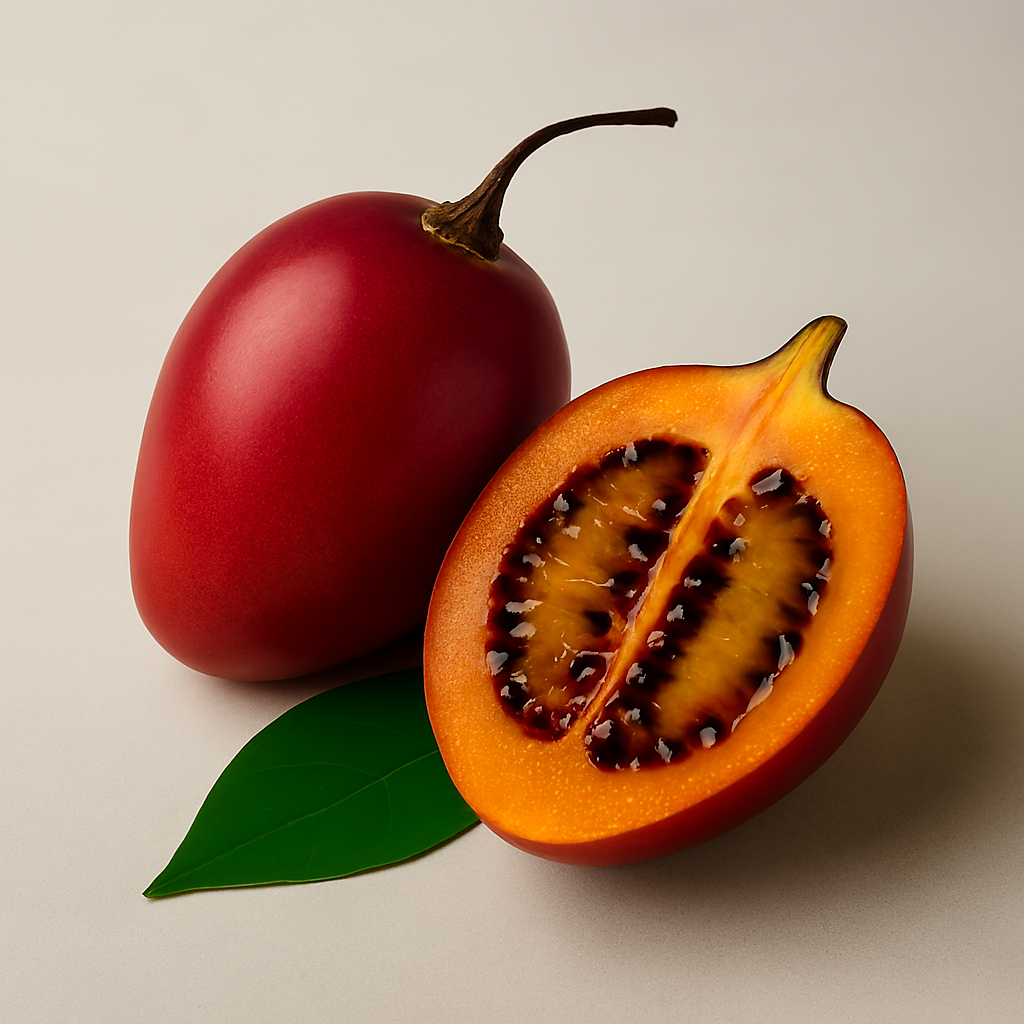
Tamarillo
(Blood Fruit, Tree Tomato)
The origins are in the Andes of Ecuador, Peru, and Colombia; cultivated in New Zealand, Africa, and Asia. Also known as Berenjena, Tomate de árbol, Tomate Andino, Tomate Serrano, Tomate de España. The fruit is egg-shaped, and has vibrant red, orange, or yellow skin. The pulp is juicy with edible seeds and is tangy sweet and sweetness varies between fruits. The taste is tangy sweet-sour with berry, passionfruit and tomato notes. They are eaten raw by scooping out the flesh and often sprinkled with sugar. They make great jams and chutneys.
Tamarind (Tamarindo)
This is a tropical leguminous tree native to Africa but widely cultivated in Asia and Latin America. It has pod-like fruits that contain seeds surrounded by a fibrous sticky pulp. The flavor is intensely sweet-tart and tangy with notes of dates, citrus and molasses undertones. Tamarind is essential in Indian curries, rasam, and chutneys. In Mexico & Central America Tamarindo agua fresca and candies are iconic. In Thailand it is a key ingredient in pad Thai sauce. In the Caribbean it is used in sauces and refreshing drinks. The tamarind is used in Worcestershire Sauce and Angostura Bitters.
Tangelo
(Ugli, Uglifruit, Uniq Fruit)
This has its origin in Jamaica and is a natural hybrid citrus fruit of tangerine or orange and a grapefruit (pomelo). Grown in Jamaica, the Caribbean, Mexico, Central America, and parts of South America. They have a rich, full flavor and are eaten raw or used in juices. It is marketed as Ugli fruit (from its rough, wrinkled look) and Uniq fruit highlighting its unique flavor. The skin is thick, loose, and often wrinkled or bumpy, making it easy to peel and ranges from greenish-yellow to orange. It is juicy, with large segments and few seeds. The flavor is sweet with mild tartness, less bitter than grapefruit, more complex than orange, mild grapefruit-like tang with sweet mandarin tones.
Tangerine (Mandarine, Mandarina,
Tangerina)
Indigenous to China and Southeast Asia. Tangerine comes from Tangier, Morocco, where mandarins were first exported to Europe. They are grown in more than 140 countries. The fruit is a flattened sphere, thin-skinned, bright orange to reddish-orange, and easily separated into segments. They are a small easy-to-peel citrus fruit belonging to the mandarin group. The flavor is sweet-tart, fragrant and juicy.
Tarap (Marang, Terap, Timadang)
This is a tropical fruit tree native to Borneo and the Philippines. Closely related to jackfruit, cempedak, and breadfruit. It produces large, spiny fruits. They contain numerous white, juicy arils surrounding seeds and has a soft, slippery, fragrant, custard-like pulp that is easily separated from seeds. It has a soft sweet aromatic pulp with creamy banana-custard flavor with hints of vanilla. It is eaten fresh as a delicacy and blended into juices, smoothies, and ice cream.
Tucumã Palm Fruit (Awarra Palm, Tucum
Palm)
This is a spiny Amazonian basin palm that produces bright orange fruits with a rich, oily pulp. The fruit is prized in northern Brazil and the Guianas for its nutty-fruity flavor. They produce an oval drupe, which is orange when ripe, with fibrous pulp surrounding a hard seed. The texture is oily and rich pulp with fibrous consistency. The flavor is a distinct blend of nutty and fruit notes similar to avocado with apricot notes. Eaten fresh in Amazonian markets. Used in juices, smoothies, and ice creams.
Thai Apple - See Malay Apple
Umbu (Imbú, Brazil Plum)
This is a small, juicy fruit native to the Caatinga semi-arid region of northeastern Brazil. It is related to the mango. When ripe the skin is a yellow green color and soft to touch. The skin is smooth, leathery, and the color alters from greenish-yellow to orange or red when ripe. The flesh has a very sweet and aromatic quality and is almost liquid when ripe. The flavor has a sweet-tart balance similar to tamarind or passionfruit, with slightly resinous hints, reminiscent of cashew apple or green mango. They are eaten raw or used in juice drinks or preserves.
Ubiu (Yellow Star Apple)
This has origins in the Amazon basin in Brazil and grown in many places including South East Asia, Hawaii and the Caribbean. Also known as Pouteria Caimito and Caimitt. It produces bright yellow fruits with translucent, jelly-like pulp, the flesh is translucent and the white jelly like texture is creamy. The pulp is slightly sweet, mild, and often compared to caramel or custard in flavor, with notes of vanilla and caramel. They are eaten fresh and the creamy white flesh is scooped out with a spoon
Types of Tropical Fruits -Uvaria Fruit (African climbing fruit)
These are climbing shrubs or lianas found across tropical Africa, Asia, and the Pacific. Their fruits resemble small clusters of grape or banana like fruit depending on the species and reddish to yellow when ripe. They are edible, sweet-tart, and juicy. Flavor is aromatic sweet acid flavor; juicy. Eaten fresh, jams, fermented drinks.
Types of Tropical Fruits -Vanilla Fruit (Vanilla Bean)
Native to Mexico and Central America, it is now cultivated globally in Madagascar, Tahiti, Réunion and elsewhere. First cultivated by the Aztecs in Mexico, who flavored cocoa with vanilla. In 1841, Edmond Albius (a 12-year-old enslaved boy on Réunion Island) discovered the hand-pollination technique that enabled worldwide cultivation. Vanilla is the second most expensive spice after saffron. Beans are harvested green, then cured through blanching, sweating, drying, and conditioning. This process develops the characteristic vanillin compound, responsible for vanilla’s sweet, floral spicy creamy aroma
Voavanga (Spanish Tamarind)
This is a tropical fruit tree native to Madagascar and other parts of Africa. Also known as Tamarind-of-the-Indies, Voa Vanga. It has a round, brownish fruit. The skin is thin, green when unripe, turning yellowish-brown to dark brown when ripe. The pulp has a creamy consistency with several large seeds embedded in the pulp. It has a sweet tangy tasty similar to tamarind. It is eaten fresh and used as pulp in relishes and beverages.
- Velvet Apple – See Mabolo
- Wax Apple – See Otaheite Apple
- Wild Plum - see Ambarella
- White Dragon Fruit – See Dragon Fruit
Water
Lemon (Yellow Grenadilla)
This is a tropical passionfruit species native to the tropical Americas. specifically, the Caribbean islands and northern South America. It grows wild in Jamaica, Guadeloupe, Martinique, Trinidad, Venezuela, Suriname, and Brazil. It is also known as Pomme de Liane, Jamaican Honeysuckle, Bay Leaf Passionflower, Liana Apple, Waterlemon Cay, Golden Bellapple and Orange Lilikoi. The golden orange-yellow fruits when ripe are juicy, perfumed, and less tart than common passionfruit. The pulp is a white-yellow with numerous gray-black seeds. The flavor is mild, perfumed sweetness without the sharp tartness of common passionfruit, possibly my favorite fruit. Found in some Caribbean markets. It is smaller than a normal passionfruit but the flow is intense. Great eaten fresh, and added to fruit salads.
Types of Tropical Fruits - Water Apple (Wax Apple)
It originates from Southeast Asia, particularly the Malay Peninsula, Indonesia, and surrounding regions. It has spread across tropical Asia, the Pacific Islands, northern Australia, and the Caribbean. It is also known as Jambu Air, Watery Rose Apple and Bell Fruit. It produces crisp, watery, bell-shaped fruits with thin waxy skin, ranging in color from pale pink to deep red. The skin is thin, waxy, smooth and colors range from pale pink to bright red. The flesh is crisp, watery, mildly sweet, sometimes bland. The flavor is crisp, mild, refreshing, hydrating, and has a floral taste. Eat fresh and good with chili salt or vinegar.
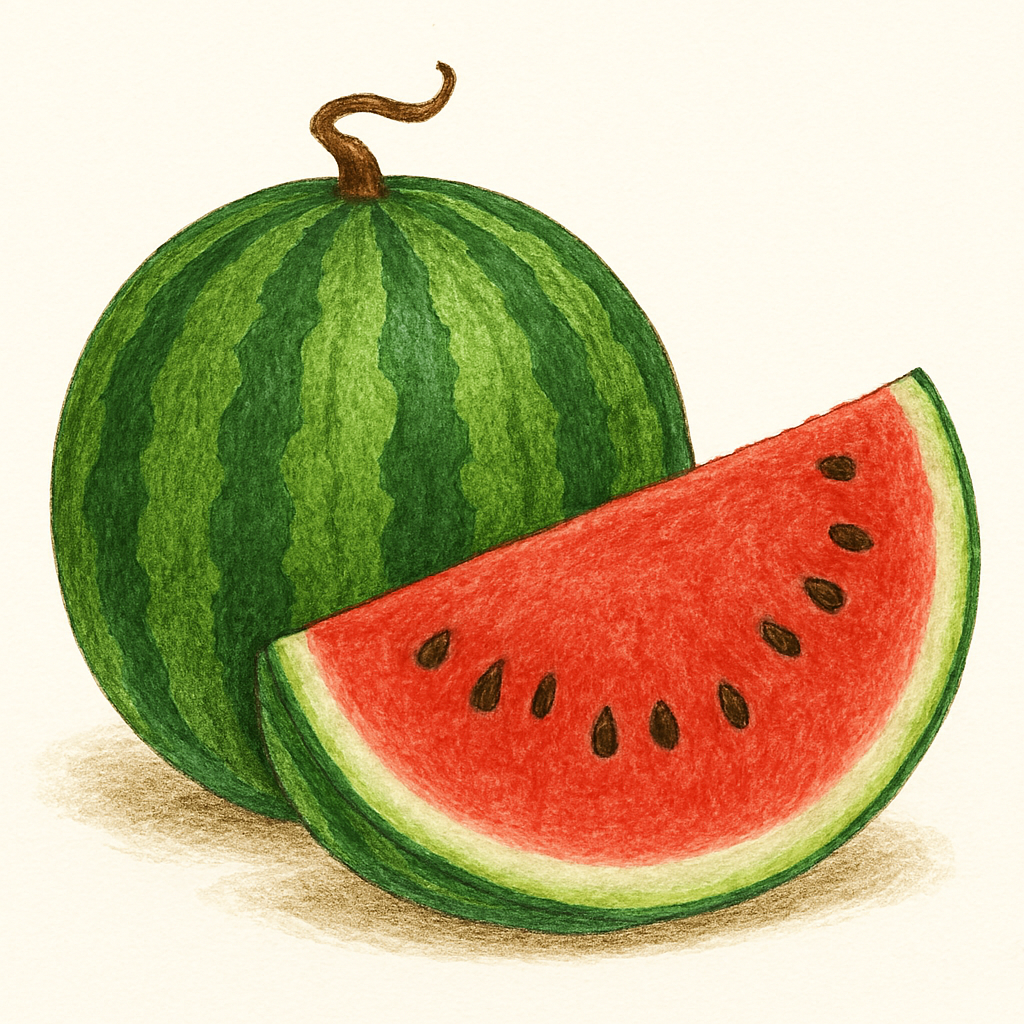
Watermelon (Sandia, Pastèque,
Melancia)
Watermelon is a large, sweet, and hydrating fruit native to tropical Africa, cultivated for over 4,000 years. Cultivated worldwide now with over 1,000 varieties, fruit colors and flavors. The flavor is sweet, juicy and cooling. I love watermelon especially chilled and so refreshing, and used in juices and smoothies.
White Sapote (Mexican Apple, Zapote
Blanco)
This is a subtropical fruit tree native to Mexico and Central America. They have round, greenish-yellow fruits have a creamy, custard-like texture. The flavor is sweet in flavor reminiscent of banana, peach, or vanilla custard. Eaten fresh, in smoothies, or desserts.
Types of Tropical Fruits - Wax Gourd (Winter Melon)
This is a large tropical vine fruit native to South and Southeast Asia and grown in the Pacific Islands. Also known as Ash Gourd, White Pumpkin and Chinese Watermelon. The skin is initially fuzzy, and later develops a waxy, ash-colored coating that gives the fruit its name. The flesh is white and firm. The taste is mildly flavored, reminiscent of cucumber. In Chinese cuisine, used in soups, stir-fries, and candied winter melon. In Indian cuisine, used in curries. In Southeast Asia, incorporated into stews.
Types of Tropical Fruits -Yantok (Rattan Fruit. Littuko)
It is native to Southeast Asia, especially the Philippines. The small, scaly fruits resemble miniature pinecones. They come in shades of orange, yellow, brown, and white. The pulp is cream-colored, watery, surrounding 1–3 seeds. The flavor is intensely sour, acidic, earthy; sometimes fermented to mellow sweetness.
Yellow Mombin (Hog Plum, Jobo, Taperebá)
Is a tropical fruit tree native to Central and South America, the Caribbean, and West Africa. They have a small, oval, yellow-orange fruits. They have a tangy-sweet tart apricot flavor, and compared to tamarind or sour plum. Widely used in juices, jams, chutneys. Refer to Ambarella.
Yellow Passionfruit (Golden
Passionfruit)
A tropical vine fruit from Brazil and known for its bright yellow skin, aromatic pulp, and tangy-sweet flavor. It is a variant of the common purple passionfruit, larger in size, more acidic, and widely cultivated in tropical and subtropical regions. The skin is thick, smooth, bright yellow when ripe. The flesh is juicy, aromatic pulp filled with numerous edible black seeds. The flavor is tangy, tropical, more acidic than purple passionfruit. Eaten fresh and scoop out the pulp, add to juice, desserts and fruit salad.
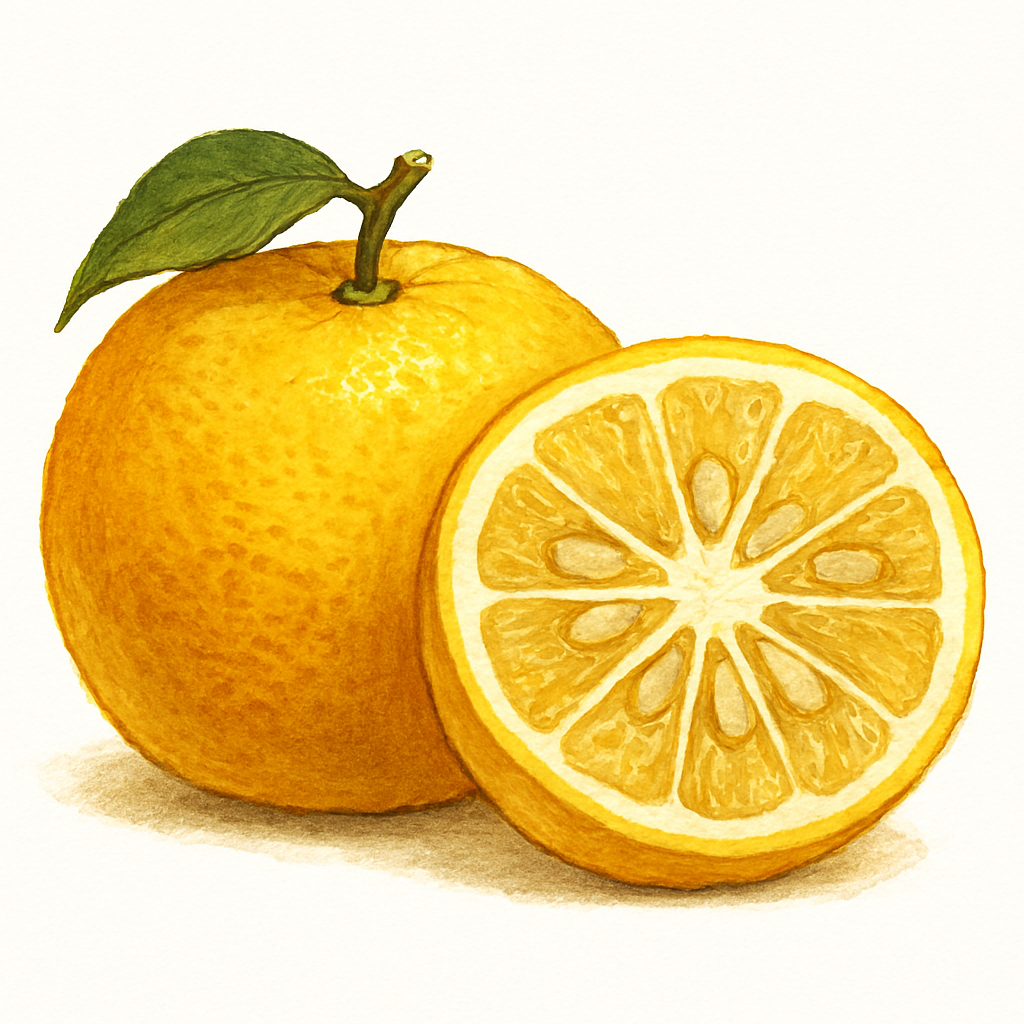
Types of Tropical Fruits -Yuzu (Citrus Junos)
This is a fragrant East Asian citrus fruit, originally from China but now most closely associated with Japan and Korea. It looks like a small, uneven-skinned yellow mandarin and has a flavor that blends lemon, grapefruit, and sweet orange. Believed to be a hybrid of mandarin orange and Ichang papeda. The skin is thick and uneven, yellow to green depending on ripeness. The flavor is tangy, aromatic, combining the sharpness of lemon, the bitterness of grapefruit and sweetness of the orange. Yuzu is prized for its aromatic zest and juice. In Japan, yuzu zest and juice flavor soups, sashimi, ponzu sauce, and sweets. Used in yuzu kosho (spicy paste of yuzu, chili, and salt).


Types of Tropical Fruits
Types of Tropical Fruits range from A to Z showcase extraordinary diversity, flavor, and cultural heritage. From Amazonian camu-camu and cherimoya to exotic feijoa, finger lime, gac fruit, guava, kiwi, and mango, each offers unique textures, nutrients, and culinary uses. Later alphabet gems like quenepa, rambutan, soursop, tamarind, uvaria, umbu, voavanga, wax apple, and vanilla highlight global exchange. Spread by sailors and explorers, these fruits enrich cuisines, inspire education, and connect cultures worldwide. What are the Types of Tropical Fruits that excite your taste buds?