Tropical Fruits Name List
The Tropical Fruits Name List is all about tropical fruits which are among the world’s most vibrant treasures, celebrated for their flavors, colors, and cultural significance. From the Amazon’s camu-camu and cupuaçu to Asia’s finger lime, feijoa, and wax apple, these fruits embody biodiversity and regional identity. Others, like cherimoya, gac fruit, guava, kiwi, mango, and vanilla, enrich cuisines with unique textures and aromas. This Tropical Fruits Name List gives all the information you need to sample tropical fruits.
Their global spread is deeply tied to the age of exploration. Sailors and explorers carried seeds and plants aboard ships, introducing them to new continents as part of trade and survival. Mangoes traveled from South Asia to Africa and the Caribbean, while guava spread from the Americas to Asia. Vanilla, native to Mexico, became a prized commodity in Europe and was transplanted to Madagascar and Tahiti. Kiwi, originally Chinese gooseberry, was renamed and cultivated in New Zealand before gaining worldwide popularity. These fruits were not only food but also symbols of exchange, resilience, and adaptation. They thrived in new soils, climates, and cultures, becoming staples in local diets and economies. The Tropical Fruits Name List shows how they have created agricultural industries.
Otaheite Apple
The origins are in South East Asia and the Pacific Islands, introduced to the Caribbean from Tahiti (formerly Otaheite) and this fruit arrived in the Caribbean with Captain Bligh along with the breadfruit. Also known by mamy other names, such as Malay Rose Apple, Jamaican Apple, Mountain Apple, Rose Apple, Plumrose, Pommerac, Coco Plum, Manzana de Agua and Poma Rosa. The fruit is a bell shaped glossy red fruit with a white juicy flesh and a rather mildly sweet, slightly tangy, and refreshing due to high water content. See listings under these alternative names.
Tropical Fruits Name List - Ortanique (Tangor)
This is a natural citrus hybrid discovered in Jamaica and is a cross between a tangerine and an orange. It has a fragrant and rich citrus flavor. The fruit is a medium, obovate shape, with a pebbled dark orange rind. The flesh is tender, juicy, and richly sweet and tangy and more complex than common oranges. Eaten fresh as a dessert fruit. Made into juice and cocktails (notably in Jamaica). Ortanique is celebrated as a national fruit, often marketed as “Jamaica’s unique citrus.”
Tropical Fruits Name List - Orange (Naranja, Laranja)
Oranges originated in Southeast Asia, specifically in a region spanning Southern China, Northeast India, and Myanmar. They are a hybrid between the pomelo and the mandarin with records of cultivation dating back over 2,500 years. The foothills of the Southeast Himalayas including Assam (India), northern Myanmar, and Yunnan (China) are considered the cradle of citrus diversity. Arab traders (10th–11th century) introduced oranges to North Africa and Spain. Then Portuguese explorers (15th century) carried sweet oranges to Europe and later to the Americas. By the 16th–17th centuries, oranges were established in the Caribbean, South America, and subtropical regions worldwide. There are over 400 orange varieties existing worldwide, many adapted to tropical and subtropical zones. Tropical orange varieties include sweet, juicy cultivars like Valencia, Washington Navel, Cara Cara, and Blood Orange, all adapted to warm climates. In the Caribbean and Latin America, the Valencia is widely grown for juice exports. In Mediterranean regions Blood oranges (Moro, Tarocco, Sanguinello) are iconic. The familiar sweet citrus acidity is known to everyone. Used in juices, marinating and eaten fresh.
Oil Palm Fruit (Palm Fruit. Palm Oil
Fruit. Elaeis Fruit. African Oil Palm Fruit)
The African Oil Palm has origins in West and Central Africa. Brought to Southeast Asia in the 19th century and Indonesia and Malaysia produce over 85% of global supply. This is a tropical tree whose fleshy fruit and kernel yield two of the world’s most widely used oils, palm oil and palm kernel oil. The skin is thin and reddish. The pulp is rich in oil, used to make crude palm oil. The shell is hard, and encases the kernel. The kernel yields palm kernel oil, chemically distinct from palm oil. The palm oil (from pulp) is used to make cooking oil, margarine, shortening. Also processed foods (snacks, baked goods, instant noodles) and also industrial uses for soap, cosmetics, candles, lubricants and tinplate coating. The Palm kernel oil (from seed) is used in confectionery fats, detergents, and cosmetics. Raw fruit flesh is rarely eaten and the oil must be purified before consumption. In West and Central Africa, the reddish pulp is traditionally boiled or pounded to extract oil, but it’s also eaten in stews and soups. The pulp has a rich, oily, slightly nutty flavor with a deep red color
Plantain (Cooking Banana, Plátano, Plátano Macho, Camote Banana)
This is a starchy cousin of the banana. They have origins in South East Asia (Malaysia, Indonesia, Papua New Guinea) and common in South America and the Caribbean. Traders introduced plantains from Southeast Asia into India. In 327 BC Alexander the Great brought them to Europe. Plantains reached Madagascar via Asian and Arab merchants. A Portuguese Franciscan monk introduced plantains to the Caribbean (Santo Domingo) after discovering them in the Canary Islands. Often called a cooking banana and is a food staple. Larger than bananas, they have a thicker skin. They can be green, yellow, or black depending on ripeness. When they are unripe (green) they are starchy and potato-like, they are boiled, fried, or baked in savory dishes. When ripe (yellow/black) they are sweeter and softer and often fried, grilled, or caramelized. In Africa they cook Plantain fufu, fried plantains and stews. In the Caribbean they have Tostones (twice-fried green plantains) and maduros (fried ripe plantains). In Latin America they have Plantain chips, soups, and side dishes.
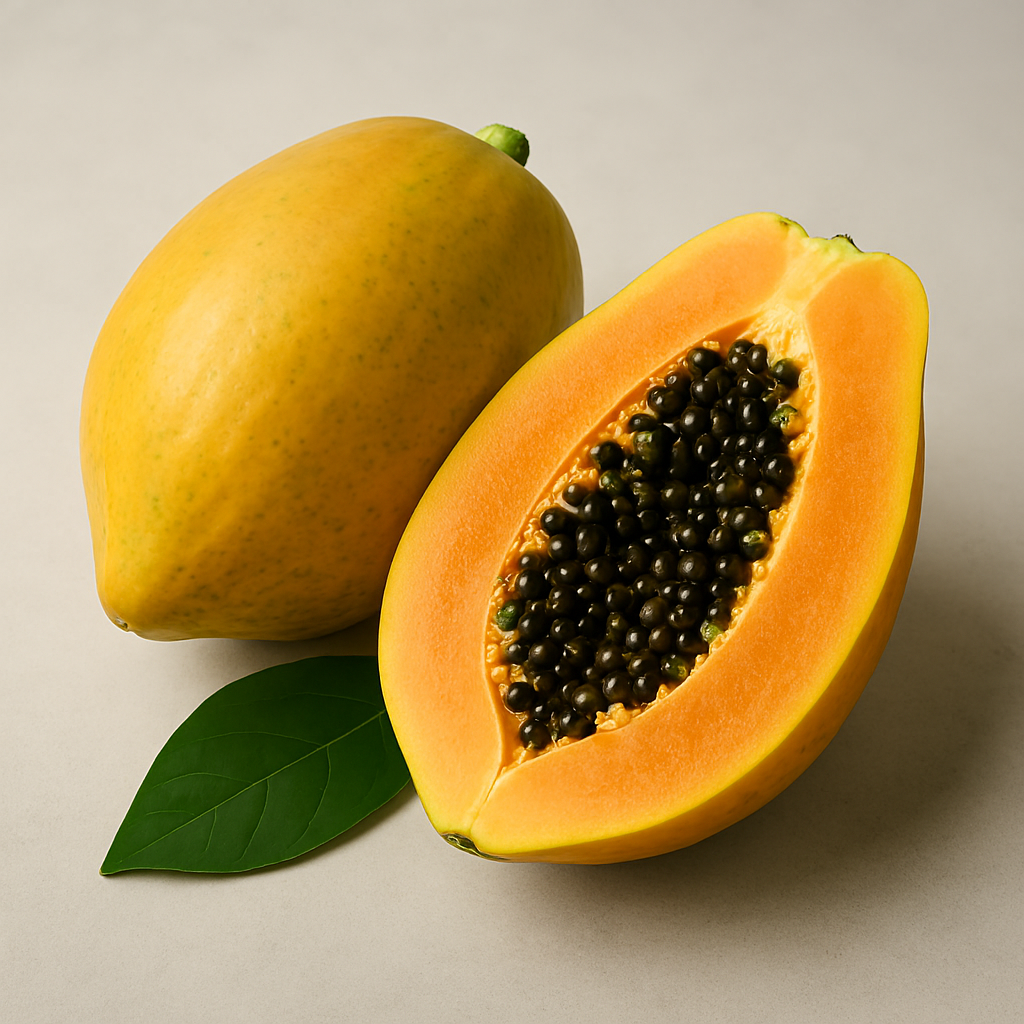
Papaya (Mamão, Fruta de Bomba, Lechosa, Paw paw, Papaia)
Origins in Southern Mexico and Central America. Christopher Columbus reportedly called papaya the “fruit of the angels. They have a smooth yellow skin and orange flesh, with black seeds. When ripe the skin turns to an orange-yellow color that is soft to touch when ripe. The fruit flesh is a vibrant orange color with black seeds in the cavity. They vary in size from small to very large as melons. The flesh has buttery, creamy flesh that melts in the mouth. Ripe papaya is intensely sweet, often compared to cantaloupe or peach. The taste is sweet, musky and buttery with tropical floral hints and aromatic. This changes between the many varieties. It has an enzyme called papain, which is used to tenderize meat by adding to a mash and flesh for 3 hours before cooking. I like it with a squeeze of lemon to compliment an otherwise relatively bland flavor. Green papayas ripen at room temperature in 3-5 days. Green papayas are used in salsa and soups. Eat as a fruit when ripe, or when green, cooked as a vegetable. Ripe fruits are delicious with rum. Note that the fruit pawpaw in the USA and that in the Caribbean are for completely different fruits.
Passion Fruit (Maracujá, Granadilla,
Maracudja, Maracuya, Lillikoi, Parcha, Chinola)
A native to the Amazon and grown worldwide. It is either the familiar purple or yellow in color. When ripe it has wrinkled skin. The acidic flesh is orange/yellow, with small black seeds, and smells divine. Eat raw or over fruit salads or desserts. The fruit has a wonderful sweet, perfumed and tart taste. The size of an egg, with a tough leathery shell, it has a juicy and colorful yellow to orange pulp with black seeds, all edible. The ideal topping to fruit salads or just eat them fresh. As a juice it is reputed to help you sleep. Eat raw and scoop it out or add it to fruit salads.
Tropical Fruits Name List - Peach Palm Fruit
(Pejibaye)
A tropical palm fruit native to Central and South America and found in Colombia, Venezuela, Brazil, Ecuador, Peru, and Bolivia. The fruit flesh is dry, mealy, and starchy and must be cooked for 30 minutes to 5 hours before eating. It has a sweet, nutty, chestnut-like taste once boiled. Stewed and eaten with salt or honey, ground into flour for breads and porridges.
Peanut Butter Fruit (Monk’s Plum,
Green Plum, Falso guaraná (false guarana), Café falso (false coffee), Ameishia)
This is a small tropical fruit native to Central and South America. In Brazil, the resemblance of the fruit to coffee berries led to names like caferana and falso guaraná. In Haiti and the Caribbean, “false coffee” reflects its berry-like appearance. In Japan, transliterations directly reference “peanut butter” due to its unique flavor. The fruit texture is thick, sticky pulp similar to a persimmon. The taste is sweet, nutty, with a distinct peanut butter-like aroma and flavor. Often compared to sweet potato or dried fig. Eaten fresh when ripe or added to smoothies, jams, ice cream toppings.
Pear (Nashi Pear, Apple Pear, Ulsan
Pear)
Asian tropical pear cultivars originate in Japan, China and Korea. They are larger and round, apple-like, with skin colors ranging from pale green and yellow to bronze and russet. They are crisp mild and sweet. Depending on the variety they are mild and melon-like (e.g., Shinseiki). Sweet caramel or butterscotch notes (e.g., Chojuro). Balanced sweet-tart (e.g., Hosui, Kosui). I really became addicted to them when living in South Korea.
Pineapple (Abacaxi, Ananás, Piña, Pines, Hala kahiki, Nanas)
The pineapple has origins in Brazil. Christopher Columbus encountered pineapple in 1493 in the Caribbean and brought it to Europe. From the Americas, pineapple cultivation expanded to Asia, Africa, and the Pacific islands during the colonial era. It is grown across nearly every tropical region, with Indonesia, the Philippines, Costa Rica, Brazil, Thailand and China the big producers. There are hundreds of different cultivars. Pineapple is a multiple fruit with individual flowers that fuse together around a central core. The texture is both juicy and fibrous. The flavor is sweet, tangy and has a refreshing acidity. East them fresh, or in juices and smoothies, sweet-and-sour sauces, grilled meats, canned pineapple and dried. Excellent with salt, chili, seafood. I am very partial to grilled pineapple. Grilled pineapple is a tropical treat where the fruit’s natural sugars caramelize over heat, creating a sweet, smoky, and tangy flavor. Heat draws out pineapple’s natural sugars, making it taste richer and more candy‑like. The char from grilling adds depth and balances the fruit’s acidity. In Thailand they are shallow‑fried in butter with palm sugar, topped with yogurt and coconut. Ine the Caribbean they are paired with rum or jerk‑seasoned meats. On Western BBQs they are brushed with brown sugar and cinnamon.
Tropical Fruits Name List - Persimmon (Caqui,
Kaki, Sharon Fruit)
This fruit is native to China and Japan. There are a number of varieties and cultivars. Ripe persimmons, have a vibrant orange color and glossy skin. The typical and typical taste has a honeyed apricot flavor. They range from firm, apple-like varieties (Fuyu) to soft, custard-like types (Hachiya). The astringent types (e.g., Hachiya) must be fully ripe and the flesh becomes jelly-like, sweet, and custardy. The non-astringent types (e.g., Fuyu) can be eaten firm like an apple and have a crisp, sweet, and mild flavor. Special cultivars such as the Vanilla Kaki persimmons have flavor notes of pear, apricot, and bourbon vanilla.
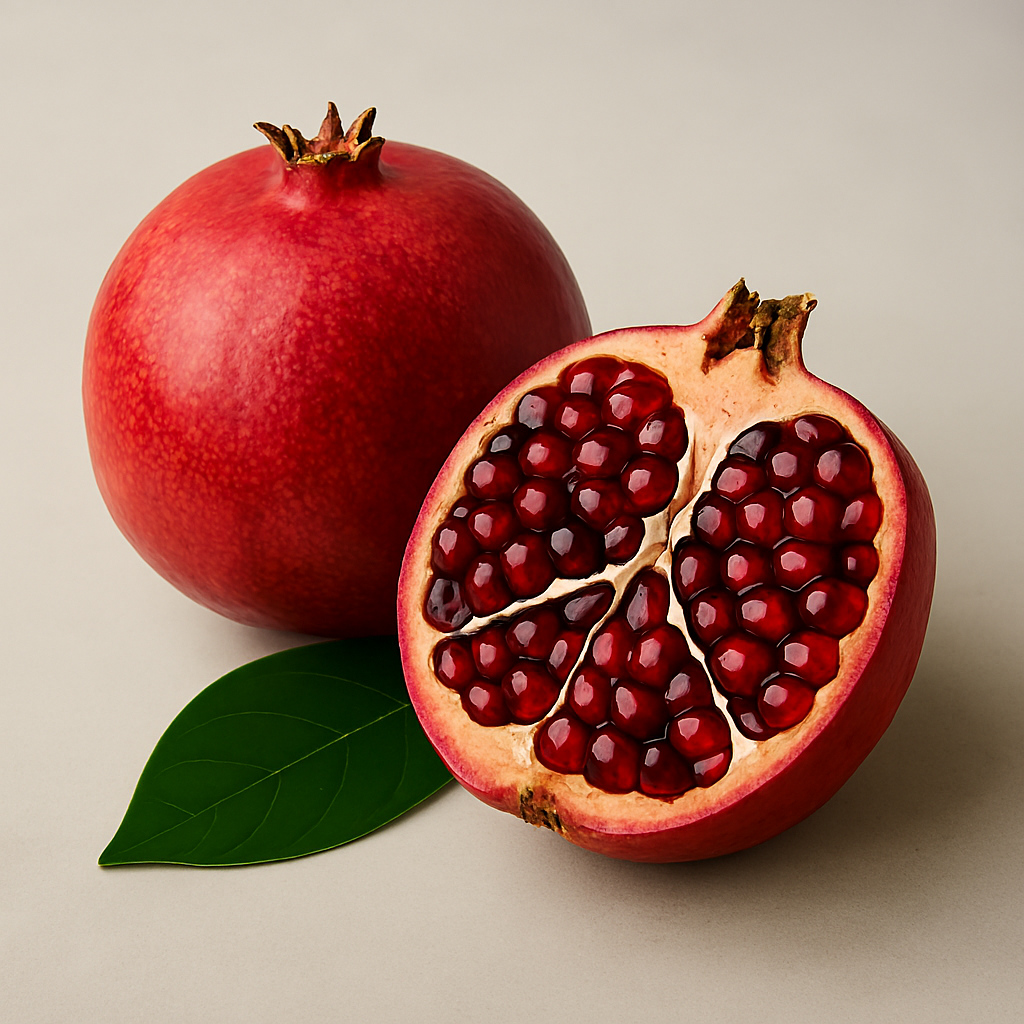
Pomegranate (Grenade, Romã, Granada, Chinese Apple, Melograno)
The pomegranate is an ancient fruit native to the Middle East (Persia) and South Asia. It is cultivated in the Mediterranean (Spain, Turkiye), India, Iran, and California. The fruit is round, with a leathery red rind enclosing hundreds of juicy seeds or sacs called arils. These jewel-like arils, have a sweet-tart flavor with a burst of acidity. The arils are eaten fresh or juiced. They are used in salads, yogurt, or desserts. Used in syrups and are the original ingredient for Grenadine. They are also used in savory dishes and Middle Eastern stews.


Persian Melon (Hami melon, Casaba
Melon)
The Persian melon is a muskmelon variety originating from Iran and Central Asia. As a sweet aromatic muskmelon variety, it resembles cantaloupe but is typically sweeter, aromatic, and more intensely flavored, with smooth or lightly netted skin and vibrant orange or green flesh. The fruit shapes range from round to elongated, with rind colors varying from golden yellow to green-gray, sometimes netted. The flesh can be bright orange, salmon, pale yellow, ivory, or green depending on cultivar. The flavor can be sweet, juicy, aromatic and often described as more intense than cantaloupe. The texture is tender, succulent, and sometimes crisp depending on ripeness. It is eaten fresh, or in salads and smoothies and chilled desserts. Same hygiene caution required as other melons, wash rind before slicing.
Plum (Marian Plum, Plango, Java Plum,
Jamun, Maprang)
Also known as Prune tropicale, Ciruela tropical, Ameixa tropical. The Marian Plum is native to Thailand, Malaysia, and Indonesia. In Thailand it is called the maprang. They have a small, oval, orange-yellow fruit resembling a tiny mango. The flavor is sweet-tart, juicy, with hints of apricot and mango, tropical sweetness balanced with acidity and a refreshing snack fruit. The Java Plum or Jamun is native to the Indian subcontinent and Southeast Asia. They have a dark purple to black fruit, oval-shaped, with a juicy pulp. The flavor is sweet, slightly astringent, with a wine-like aftertaste. Complex, sweet-tart with tannins is often used in drinks and desserts. You will find them in fresh fruit markets in Thailand, Malaysia, and Indonesia.
Paternas (Ice Cream Bean, Pacay,
Inga, Guaba)
This is a tropical legume native to Central and South America. They grow across the Amazon Basin (Peru, Ecuador, Colombia, Brazil, Venezuela). It produces long green pods filled with fluffy, fibrous, sweet white cottony pulp texture coated seeds. The flavor resembles vanilla ice cream. Eaten fresh straight from the seed pod.
Tropical Fruits Name List - Prickly Pear (Tuna)
The prickly pear is a cactus fruit native to the Americas, especially Mexico, now grown worldwide including the Mediterranean. The fruit is oval in shape and covered in spines or glochids (tiny hairs), with a flesh ranging from green to deep red or purple. The texture of the flesh is juicy with crunchy seeds. The flavor profile is sweet and melon-like, sometimes compared to watermelon or bubblegum, with subtle earthy notes. Eaten fresh after peeling and chilling. Also used in juices, jams and candies. In Mexico the prickly pear (tuna) is a national symbol, appearing on the Mexican flag with the eagle and cactus.
Pummelo (Pomelo, Shaddock, Pummelo, Suha)
This has Southeast Asian origins and is widespread in Central America. This is small hairy fruit and is the national fruit of Panama and very popular in Jamaica. It has varying colors that range from red, pink, or yellow depending on varieties, peel and eat. The size of a plum it has a sweet and translucent flesh like a lychee. Select fresh fruit that has bright colors, the fruit darkens with age. Peel and use in salads, sauces and so on
Pummelo (Pomelo, Shaddock, Pummelo, Suha)
Native to Southeast Asia and is the largest citrus fruit in the world. Very common in Malaysia, Thailand, and Indonesia. The fruit has a thick green-to-yellow rind, with a pale flesh ranging from white to pink. The flavor is sweet with mild flavor with less acidity than grapefruit and some varieties have floral notes. The texture is firm with juicy segments and thick membranes. On a maritime note, it is also known as “shaddock,” named after Captain Shaddock who introduced it to the West Indies in the 17th century.
Pitanga (Surinam Cherry, Brazilian
Cherry)
It is a tropical fruit native to South America. It has a small, ribbed berry that ripens from green to bright red, orange, or even dark purple with a juicy pulp with a single seed. The taste has a sweet-tart flavor sometimes with spicy or resinous notes depending on ripeness. Eaten fresh and chilled, or made into jams and jellies.
Pitaya – See Dragon Fruit
Pulasan (Kapulasan, Bulala,
ngoh-khonsan)
Native to Malaysia and Southeast Asia, widely grown in Malaysia, Indonesia, Thailand, and the Philippines. This fruit is closely related to rambutan and lychee. The skin is spiky red. The texture is translucent, with a soft flesh surrounding a single seed. The skin is easily peeled. It is sweeter than rambutan and lychee, less acidic, with a fruity, juicy taste. It has a lychee–rambutan richer sweetness. They are eaten like lychee or rambutan, used in sorbets and fruit salads
Tropical Fruits Name
List
On the tropical fruits name list are fruits such as camu-camu, cherimoya, cupuaçu, wax apple, vanilla, finger lime, gac fruit, feijoa, guava, kiwi, and mango showcase global diversity. Their spread through sailors and explorers enriched cuisines worldwide, inspiring flavor wheels, glossaries, and cultural storytelling. This name list highlights their nutritional value, culinary uses, and enduring role in provisioning and cross-cultural exchange. This Tropical Fruits Name List is all about what tropical fruits to taste.