List of Tropical Fruit
The list of tropical fruit is long. Tropical fruits represent one of nature’s richest collections of flavor and history. Across continents, they have flourished in warm climates, each with unique origins. Mangoes trace back to South Asia, pineapples to South America, and coconuts to Pacific islands, while bananas were first cultivated in Papua New Guinea. Cherimoya, lychee, papaya, guava, dragonfruit, and passionfruit add to the diversity, each offering distinct tastes: creamy, floral, tart, or refreshingly sweet.
Historically, these fruits were central to local diets and rituals, later carried across oceans by explorers and traders who spread them to new lands. Citrus fruits became vital for sailors against scurvy, while bananas and coconuts sustained long voyages. Over centuries, tropical fruits transformed from regional delicacies into global staples, enriching cuisines worldwide. Today, their flavors, ranging from honeyed lychee to tangy camu‑camu, reflect both their native soils and the journeys that made them part of everyday life.
Elderberry (tropical varieties)
These are generally temperate shrubs, but some species and related varieties thrive in subtropical and tropical regions, especially in the Americas and parts of Asia. Also known as Sureau tropical, Saúco tropical, Sabugueiro tropical. There are three main varieties, one is native to the Andes, Sambucus peruviana found in Peru, Ecuador, Colombia. Another Sambucus australis is found in South America, adapted to warmer climates. The Sambucus mexicana grows in Mexico and Central America, sometimes called “Mexican elderberry.” The flavor is tart and slightly bitter, often cooked before consumption. They are cooked into jams, jellies, syrups, and wines.
List of Tropical Fruit - Elephant Apple
(Dillenia)
The Elephant Apple is a large, knobbly tropical fruit native to South and Southeast Asia, valued for its sour flavor. It has a thick skin that turns from green to yellow when ripe. The flesh is fibrous, aromatic and sour. flavor is strongly acidic and compared to tamarind or sour apple. They must be harvested ripe (yellow), as it does not ripen further after picking. They are commonly used in Assamese and Bengali cuisine (ou tenga, chalta) for its sourness in curries and stews. Also used making pickles and chutneys, jellies and jams. They are called elephant apples because elephants consume large numbers of them and disperse the seeds.
List of Tropical Fruit - Eugenia
Varieties (Pitanga- Rose Apple Relatives)
The Eugenia genus covers a wide range of tropical fruits, from the tart Pitanga / Surinam Cherry, to the sweet Grumichama (Brazilian Cherry) to the Cherry of the Rio Grande, the Pitangatuba and the Uvalha and the Amazonian Araza. See separate listing for each of these.
Feijoa (Pineapple Guava, Guavasteen,
Brazilian guava, Fig guava)
Native to southern Brazil, Paraguay, and Uruguay, now widely grown in New Zealand and temperate-tropical climates. The fruit has a green, slightly rough skin, sometimes with a waxy bloom. The flesh is a creamy, aromatic pulp with edible seeds and a fragrant aroma. The flavor is a sweet tart flavor comprising a blend of mint, pineapple, pear, strawberry, and citrus, with floral undertones. Eat raw and cut in half and scoop out pulp with a spoon. Used in cakes, muffins, ice creams, and sorbets. Made into jams, jellies, chutneys, and syrups. Blended into smoothies, cocktails, and juices.
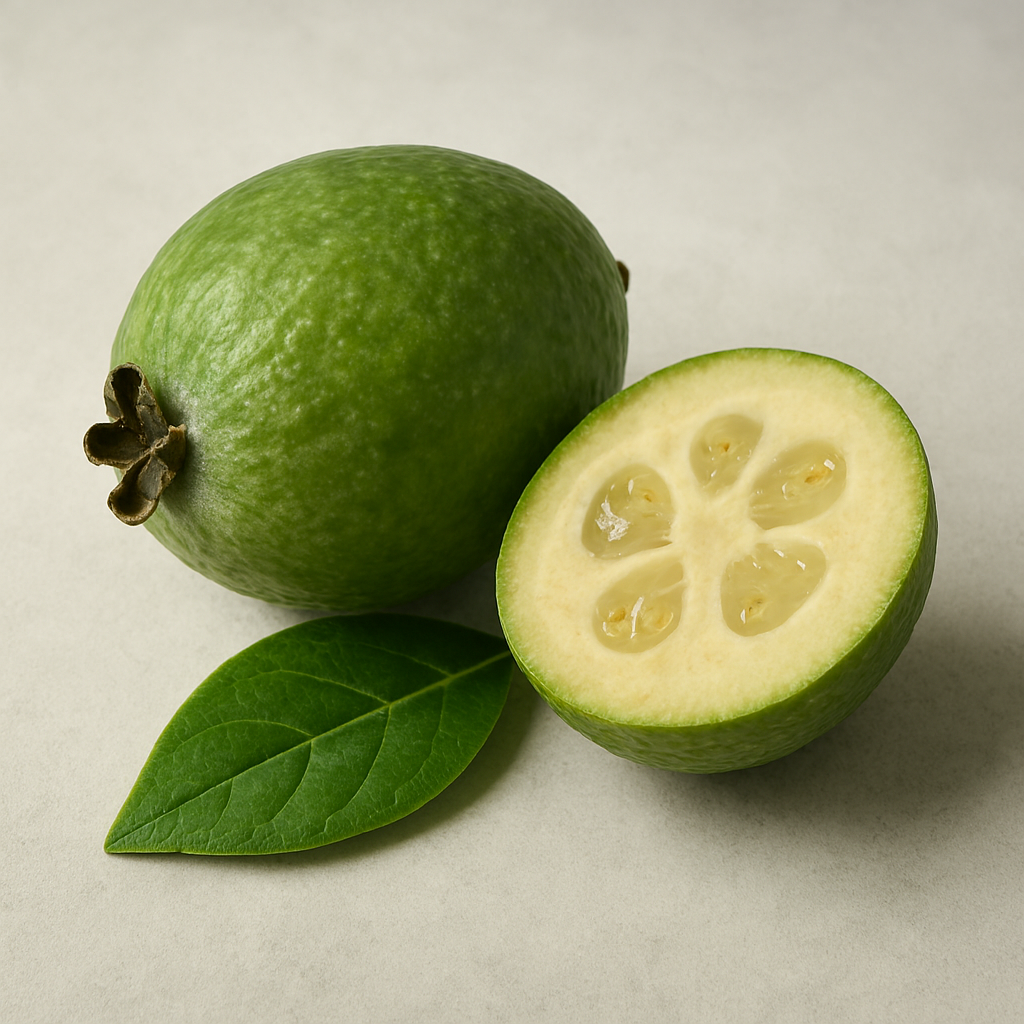
Fig (Tropical varieties)
One of the oldest cultivated fruits. Native to the Mediterranean and Middle East, but many cultivars thrive in tropical and subtropical climates including India and Brazil. Tropical figs are found across South and Southeast Asia, Africa, and South America. There are several varieties. Sweet tropical figs are eaten fresh and raw. Cluster figs are used in Indian curries and pickles. They have a flavor of honeyed sweetness, soft jam-like texture, and mild earthiness.
List of Tropical Fruit - Finger Lime
(Australian Caviar Lime)
This is a rare Australian native citrus fruit, celebrated for its unique “caviar-like” pulp and vibrant color. Indigenous to the Subtropical rainforests of Queensland and New South Wales, Australia. They are now specialty-grown in California and Southeast Asia. The thin skin is smooth to slightly rough, and colors range from green to yellow, red, purple, or black. The flavor has a sharp citrus pop similar to lime but more floral and the tiny juice vesicles or beads burst like caviar with tangy flavor. The taste is similar to lime but has a distinct aroma. Used as a gourmet garnish in fine dining for seafood, oysters, sushi, and cocktails. They add texture and acidity to cakes, sorbets, and parfaits. Very popular in sparkling water, gin, and champagne for a burst of citrus pearls. Made into jams, marmalades, and chutneys.

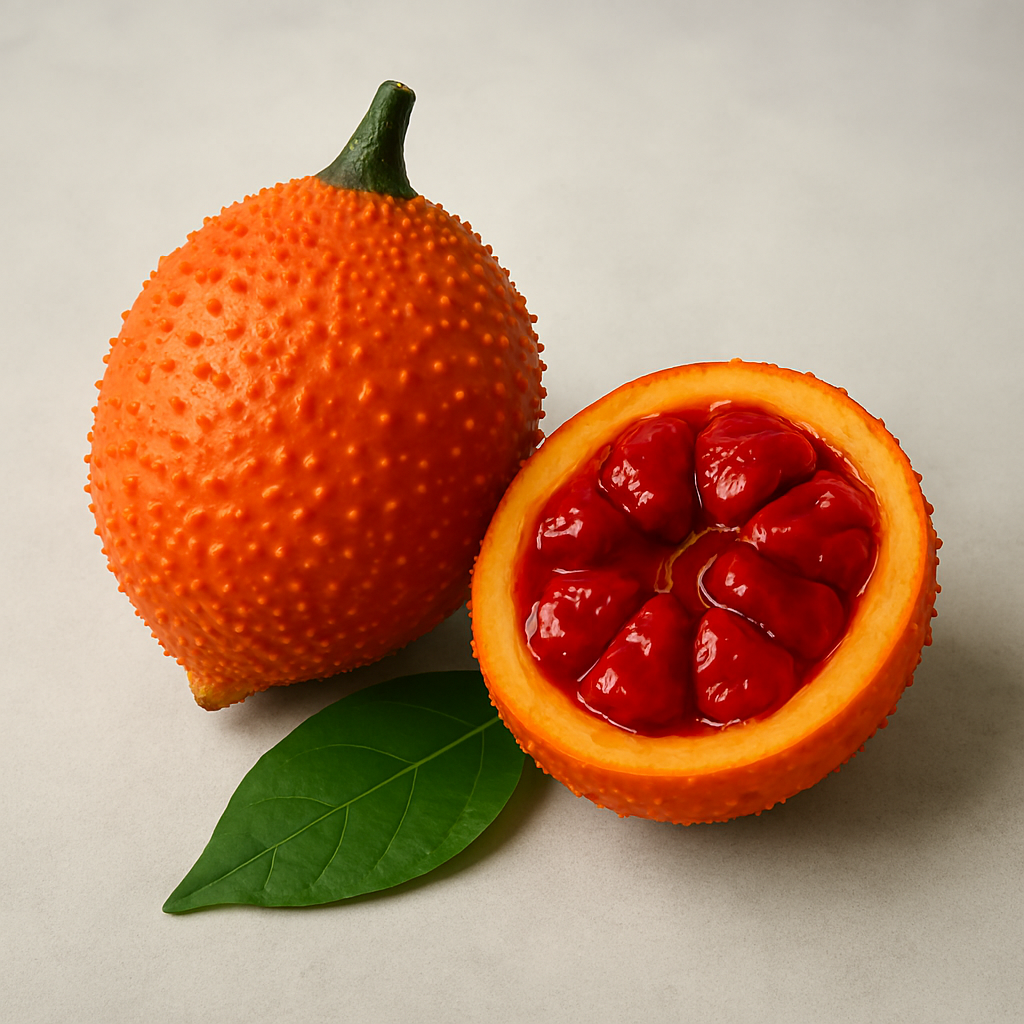
Gac Fruit (Baby Jackfruit, Spiny Bitter Gourd, Cochinchin Gourd)
This a rare tropical fruit native to Southeast Asia (Vietnam, Thailand). The fruit has a bright red to orange skin when ripe. The thick pumpkin like flesh has orange-red aril surrounding seeds and the pulp is soft and oily. It has rather bland flavor that is mild, and slightly sweet. Used in Vietnamese cuisine especially during Lunar New Year celebrations for its auspicious red color. Used in juices and smoothies. Often proclaimed a “superfruit” for the high antioxidant density.
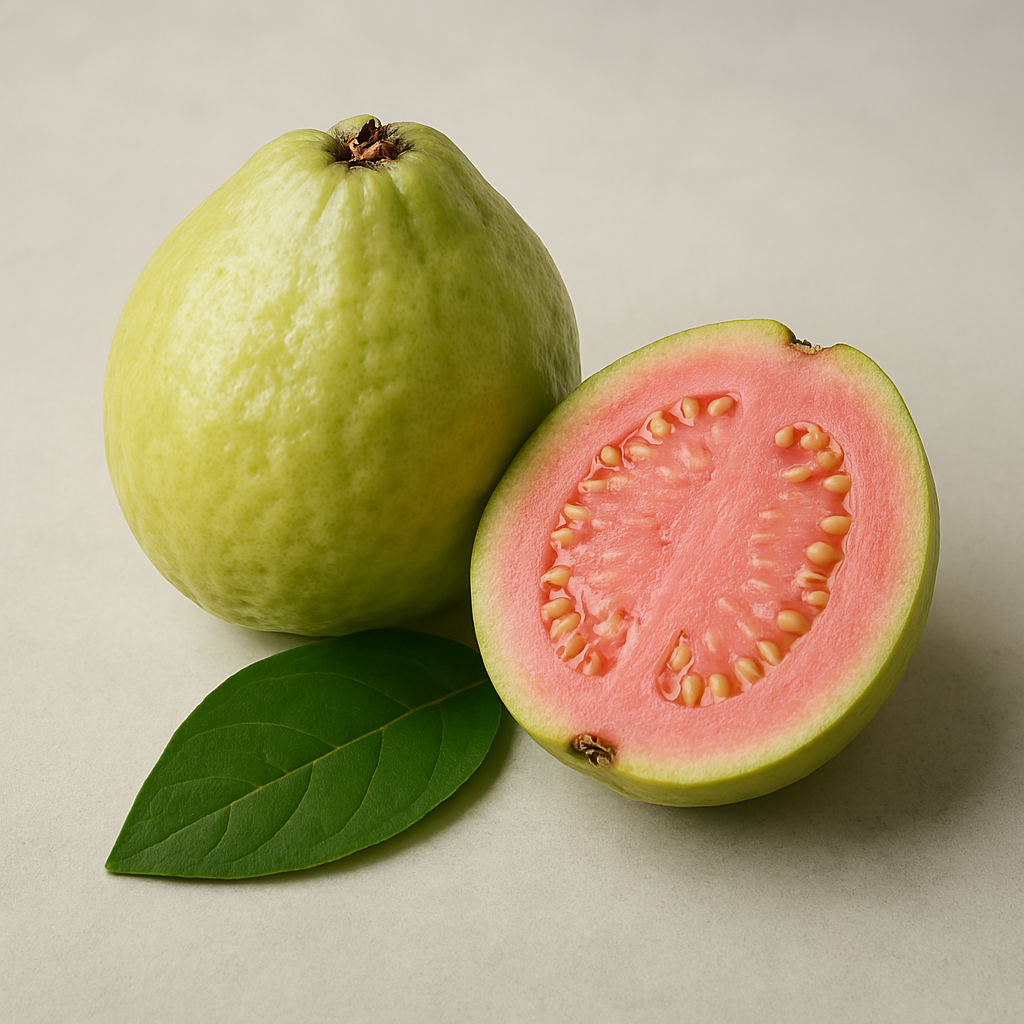
Guava (Goiaba, Guayaba, Goyave, Goyava)
It has origins in Central America, Mexico and the Caribbean with the Spanish and Portuguese spreading the fruit around the world. They come in various varieties and shapes with a fragrant smell. The fruit has a smooth to slightly rough skin ranging from green to yellow. They have a strong, fruity aroma when ripe. The flesh is white, pink or deep red and dotted with edible seeds. The flesh has a strong sweet to sour flavor and the flavor profile is something like pear, grapefruit and strawberry combined. It is often called a superfruit with many medicinal properties and is a great thirst quencher. Eaten raw, sliced or scooped. Popular in Latin America and Asia smoothies and juices. Used in jams, jellies, candies, and pastries. Incorporated into sauces and chutneys.
List of Tropical Fruit - Guarana
This is a Brazilian native and from the Amazon. It is known for its strong stimulative properties with 6 times the caffeine to coffee and you see it a lot in energy drinks these days. The guarana fruit is similar in appearance to coffee berries. The flavor is bitter, earthy, often processed into powder or extract.
Guinepa (Ackee, Quenette, Spanish
lime, Mamoncillo, Jenipapo, Genip, Canepaquenette, Limoncillo, Quenepa, Chenet)
This small oval or round green tropical fruit that originates from the Amazon and is common in Jamaica and throughout the Caribbean. The flesh is a light orange jelly like pulp. It has an edible, orange, juicy and gelatinous pulp. Grows in Central America, Colombia, Venezuela, Suriname and the West Indies. Called Genepa, Guenepa, Genip, Guinep in the West Indies; Ackee in Barbados; Limoncillo in the Dominican Republic; Canopi in Brazil; Quenepe in Haiti; Quenette in the French West Indies. (Name variations include genipe, Bajan ackee, chenet, kenèp, quenepa, quenepe, skinup, talpa jocote, kenepa, kinnip, huaya, jocote, mamón, canepa). -The flesh is a translucent, jelly-like pulp ranging from tart to sweet. The large central pit, is often sucked clean of pulp. The flavor is tangy-sweet, sometimes compared to lychee or lime. -Typically cracked open and pulp sucked directly from the seed. Used in juices and syrups and popular in Caribbean drinks.
Golden Apple (Pomme Cythere, June Plum, Jew Plum,
Ambarella)
A tropical fruit tree native to Polynesia and Melanesia, now widely cultivated across the Caribbean, Southeast Asia, and tropical Africa. This fruit has a variety of names. In Mauritius and the Seychelles, it is called Frisiter and Fruit de Cythère. On the island of Réunion is known as Evi. On Caribbean islands it is commonly called a Golden Apple. In Dominica it is called Ponm site or pomme cythère. Down on Martinique and Guadeloupe, Trinidad and Tobago, they call it Prune de Cythère or pommecythere. The Dominican Republic calls it Manzana de oro while Jamaica and Bermuda call it the June or Jew Plum. In the Pacific Polynesian islands of Samoa, Tonga and Niue they call it Vī, in the Cook Islands is known as Vi kavakava and in Fiji and Hawaii it is Wi. In Samoa and Tonga, it is used to make a drink called otai. It arrived in Jamaica around 1782 and is eaten fresh or made into preserves and pickles and added to salads, and used in sauces, soups and stews. It is quite crunchy with a slight sour sweet tangy flavor similar to pineapple and mango. Eaten fresh sprinkled with salt or chili. Used in juices and smoothies, pickles and chutneys and also used in curries, stews, and sauces in Southeast Asia and the Caribbean.
Granadilla (Sweet granadilla,
grenadia, granadilla dulce)
This a tropical passionfruit species, with origins in the Andes (Colombia, Ecuador, Bolivia, Peru). The skin is smooth, hard and turns orange to yellow when ripe. The flesh is translucent, with a jelly-like pulp surrounding black seeds. The flavor is sweet, aromatic, and less acidic than purple passionfruit. They have crunchy seeds in juicy pulp, eaten fresh with a spoon. Eat raw, split open and scoop pulp directly. Add it to smoothies and juices. Used in fruit salads, yogurts, and ice creams.
Grapefruit
(Toronja, Pomelo, Pamplemousse)
Discovered in the Caribbean (Barbados) in the 18th century as a natural hybrid. It is an accidental citrus hybrid between an orange and a pomelo that originates in Barbados and is common in Central America and the Caribbean. Use caution as they are known to have adverse reactions with some pharmaceuticals. The fruit contains juicy segments, ranging from pale yellow to deep ruby red. White grapefruit are mild and less sweet. Pink grapefruit have a balanced tartness and sweetness. Ruby red grapefruit are sweeter, popular in juices. The flavor is tart, juicy, tangy, slightly bitter-sweet, with sweeter varieties (ruby red, pink) and refreshing acidity. Eat raw halved and scooped, or peeled and segmented. A popular breakfast juice, often blended with orange. Adds tangy brightness to tropical fruit or seafood salads. Used in marinades, sauces, and desserts. Grapefruit juice pairs well with gin, tequila, and rum.
Governor’s Plum (Batoko plum, Indian
plum, Madagascar plum)
Native to Africa and Asia. Indigenous to Madagascar and tropical Africa. It has a white, yellow, or orange, both slippery and succulent. The flavor sweet-acidic, similar to European damson plums. Contains natural pectin, making it excellent for jams and jellies.
List of Tropical Fruit - Guanábana
(Soursop, Graviola)
A tropical fruit native to the Americas. It has a spiny green exterior, creamy white and fibrous pulp, and a flavor often described as a sweet tangy mix of mango, strawberry, pineapple, and citrus. Eaten raw or blended into smoothies. Popular in Caribbean and Latin American cuisine. Caribbean: Guanábana juice and ice cream, Brazil: Graviola smoothies. Known as Guyabano (Philippines), Corossol (French Caribbean), Sirsak (Indonesia).
List of Tropical Fruit - Grumichama
(Brazilian Cherry)
This is a tropical fruit tree native to southern Brazil. The French call it Cerise du Brésil, the Spanish: Cereza brasileña and the Portuguese: Grumixama. They are small, round fruits resembling cherries, borne in clusters. They have a purple-black or yellow color depending on variety. The flesh is a sweet, white pulp with a cherry-to-plum-like flavor with citrus notes. Eaten fresh off the tree and also made into jams, jellies, pies, and desserts.
Guama (Inga Fruit, Ice-Cream Bean,
Guaba, Joaquiniquil, Cuaniquil)
Has origins in the Amazon basin and is a tropical legume tree. Now all over Central and South America. The French called them Haricot glacé). They produce long green pods containing large seeds surrounded by a fluffy, sweet, cotton-like pulp. The flavor is like sweet vanilla ice cream. The pulp is eaten fresh.
List of Tropical Fruit - Huito
(Genipap, Genioa, Jenipapo)
This a tropical fruit tree native to the Amazon and Caribbean regions. Its fruit is known for its unique color-changing properties. It is a round fruit with a hard shell, green when unripe, turning grayish-brown when mature. The pulp changes color, the unripe flesh is white, but when exposed to air it oxidizes and turns blue-black within minutes, a property used for natural dyes and body art. The pulp flavor is sweet but slightly acidic and often used in beverages, jams, and desserts.
Jackfruit (Jaca, Yaca, Jacquier, Nangka)
Originates from southern Mexico, Central America, the Caribbean, and deep into the Amazon Basin of South America and very common in the Caribbean. They are cousins to the breadfruit and can produce huge fruits which are yellow in color. The flavor is bubblegum pineapple banana. They are boiled and baked. The ripe sweet flesh is used for desserts. The unripe fruit is shredded and sautéed as a meat substitute.
List of Tropical Fruit - Jabuticaba
(Brazilian Grape Tree)
Jabuticaba is a unique Brazilian fruit that grows directly on the trunk of its tree, especially common in Minas Gerais and São Paulo regions. The fruit has round, grape-sized berries with dark purple to black skin. The flesh is a white, gelatinous pulp with 1–4 seeds. The flavor is sweet-tart, often compared to muscadine grapes. It is very common in markets and it is eaten raw or used in jams and tarts.
List of Tropical Fruit - Jatoba (Locust
Fruit. Stinking Toe)
Tropical tree native to Central and South America (Brazil). Also known as the West Indian locust, South American cherry, Guapinol, Algarrobo, “stinking toe” (due to the odor of its pods). The fruit pods have a dry, powdery, beige pulp inside, rich in starch and protein. It dissolves in milk or water, often sweetened with sugar. The flavor is sweet but with a strong pungent smell, giving it the nickname “stinking toe.” Consumed raw or mixed into drinks.
Java Plum (Jambul, Jambolan. Indian
Blackberry. Black Plum. Malabar Plum)
A tropical fruit native to the Indian subcontinent and Southeast Asia. The French call it Jamblang, the Spanish Jamun and the Portuguese Jamelão. The fruit has a deep purple color The flavour is sweet-tart slightly astringent and leaves a purple stain on the tongue. It is eaten raw and sprinkled with salt or spices. It is also used in juices, jams, jellies, smoothies and yogurt.
List of Tropical Fruit - Jujube (Chinese
Date. Red Date. Ber)
It is a small, sweet fruit native to Asia that has been cultivated for over 3,000 years. The Spanish call this Azufaifa. It has a round to oval, cherry to plum-sized fruit. It has a smooth green skin when unripe, turning dark red or purple when mature. The texture is crisp like an apple when fresh, chewy and sweet when dried. It has a date like sweetness. It is eaten fresh, dried, candied, or processed into teas, syrups, and paste
Kaffir Lime (Makrut Lime. Thai Lime)
Also known as Mauritius Papeda, Leech Lime, Combava. This is a small, bumpy-skinned citrus fruit native to Southeast Asia. It has a very intense aromatic peel and very little juice compared to other limes. Intensely perfumed oils in the rind, highly valued in cooking and perfumery. Rind and leaves used in Thai, Indonesian, and Cambodian cuisine (curries, soups, stir-fries). Zest adds strong citrus fragrance to dishes, cocktails, and desserts.
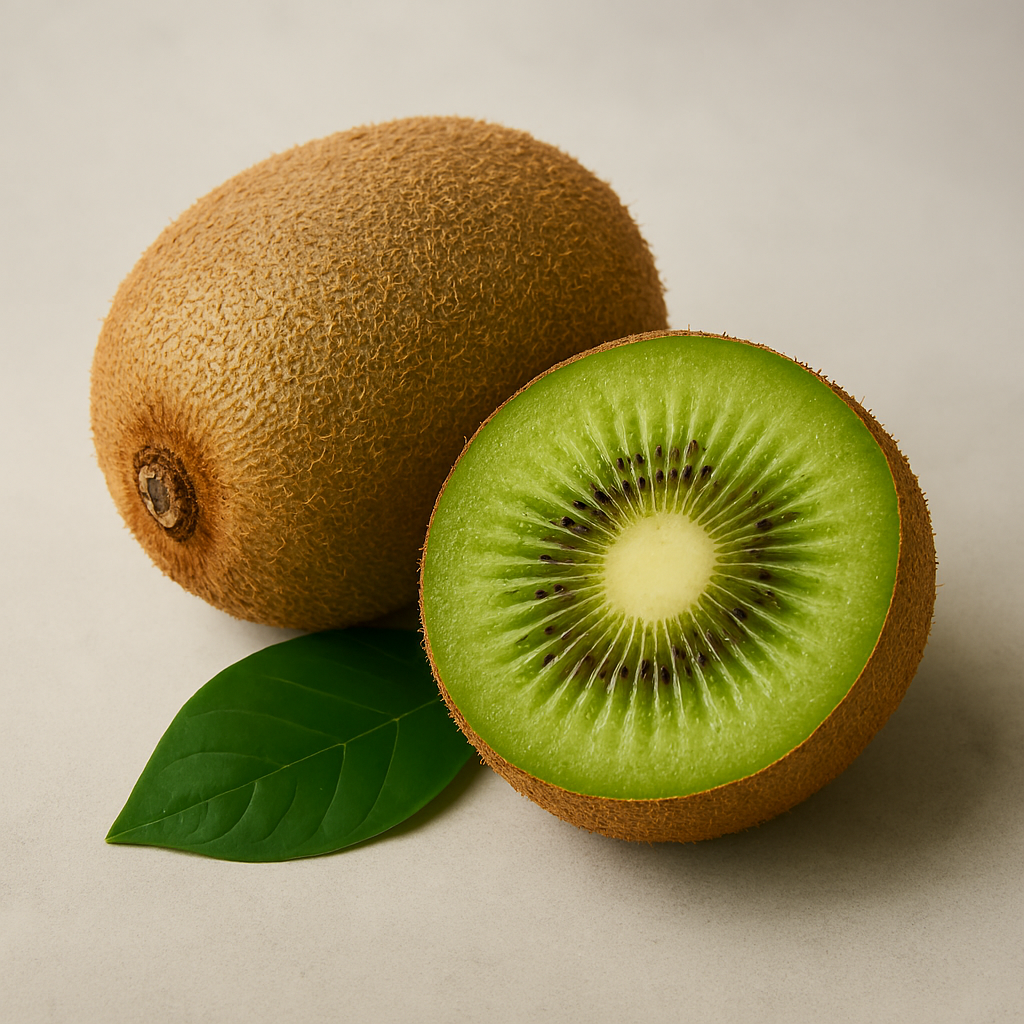
List of Tropical Fruit - Kiwi Fruit (Chinese
Gooseberry)
This has its origins in China. It was known as the Chinese gooseberry. It is a small, fuzzy brown skinned fruit. It has a vibrant bright green or golden flesh, soft texture and rows of small black edible seeds. It is packed with vitamin C, fiber, and antioxidants. It has a sweet, tangy tart flavor with a unique aroma. It is eaten raw, sliced into salads, desserts, or smoothies.
Kei Apple (Umkokolo. Kau Apple)
This is a thorny shrub or small tree native to southern Africa. The flesh is golden, soft, juicy, and aromatic, with 5–15 seeds inside. The flavor varies from extremely acidic to sweet-tart, with notes of apricot, mango, and starfruit. Often eaten with sugar due to tartness. Used to make jams, jellies, chutneys, and juices.
Keppel Fruit (Kepel, Burahol, Kepel Apple)
This is a rare tropical fruit native to Java, Indonesia, known for its aromatic qualities. The skin is leathery, rough, and green when young, turning yellow-brown when ripe. The flesh is creamy, smooth, semi-aqueous, yellow-orange when ripe, encasing 4–6 large seeds. The flavor is a coconut–mango-like, mildly sweet and aromatic. Some say it has a rumlike taste.
Kiwano (Horned Melon. African Horned
Cucumber. Jelly Melon)
Indigenous to sub-Saharan Africa, particularly Botswana, Namibia, Zimbabwe, and South Africa, now grown in New Zealand and California. The skin is thick, leathery, bright orange when ripe. The flesh is lime-green, jelly-like pulp filled with edible seeds. The flavor is mildly sweet-tart, often described as a mix of cucumber, kiwi, and banana. It is eaten by slicing it open and scoop the flesh out.
Kokum (Indian butter tree, Goa butter tree, Ratamba, Punarpuli)
This is native to India’s Western Ghats
(Kerala, Goa) and is a relative to the Mangisteen,
The fruits are small, spherical berries. They are green when unripe, turning
red to deep purple when ripe. The flesh is juicy, tangy-sweet, sour with
multiple seeds. The dried rind (aamsul) is used as a souring agent in curries,
dals, and fish dishes (especially in Konkan and Maharashtrian cuisine). Juice
(kokum sharbat) is a popular summer drink, cooling and refreshing.
Kumquat (tropical varieties)
Native to China and Southeast Asia. They are small, oval citrus fruit, eaten whole with their sweet peel and tart flesh. Tropical varieties include Nagami, Marumi, Meiwa, Fukushu, and hybrids like Limequat and Mandarinquat. Each has different eating and flavor profiles. The peel is sweet, fragrant, slightly floral. Unlike most citrus, the peel is the sweetest part. The flesh is tart, tangy, and juicy, with acidity similar to lemon or sour orange. Unlike most citrus, the peel is sweet and edible, balancing the tart flesh. Can be eaten fresh and whole. Also candied or preserved in syrup. Marmalades, chutneys, and baked goods.
List of Tropical Fruit - Lanzones (Langsat. Longkong. Duku)
A tropical fruit native to Southeast Asia, popular in the Philippines, Malaysia, Indonesia, and Thailand. The fruit is round to oval in shape, about the size of a grape or small plum. The skin is thin, leathery, yellowish-brown with small spots and easy to peel. The flesh is translucent white, segmented into 4–6 sections, similar to mangosteen. The flavor is sweet with a slight tang, sometimes compared to a mix of grape and lychee. Usually eaten fresh, peeled and enjoyed raw. Can be used in desserts, jams, and jellies.
List of Tropical Fruit - Longan
The Longan originated in the mountainous regions stretching from Myanmar (Burma) to Southern China. This is often called a “dragon’s eye,” due to the large shiny black seed. This is a tropical fruit closely related to the lychee and rambutan. It has a translucent juicy white flesh, a shiny black seed, and a sweet, mildly musky flavor similar to lychee. It is eaten fresh, peeled and enjoyed raw. Also used in desserts, fruit salads, sorbets, and jellies.
List of Tropical Fruit - Loquat
(Tropical sub-species)
This is a subtropical evergreen fruit tree native to southeastern China, but certain tropical-adapted subspecies and cultivars thrive in warmer, humid regions and now in Mediterranean, Brazil. They have a small, oval to pear-shaped fruit. The skin is smooth or slightly fuzzy, ranging from pale yellow to deep orange. The flesh is juicy, sweet-tart, with flavors that hint of peach, apricot, or citrus with light acidity. They are eaten fresh, peeled and eaten raw. Used in jams, jellies, chutneys, and syrups
Lychees (Lichee, Laichee, Alligator
Strawberry)
The lychee has a sweet fragrant and juicy flavor which the Chinese have enjoyed for thousands of years. Red fruit is fresh and ready to eat and the fragrant flesh is opaque white and sweet. Eat them raw or add to fruit salads or smoothies and dessert.
Limes
(Citron Verte, Lima, Limon, Makrut)
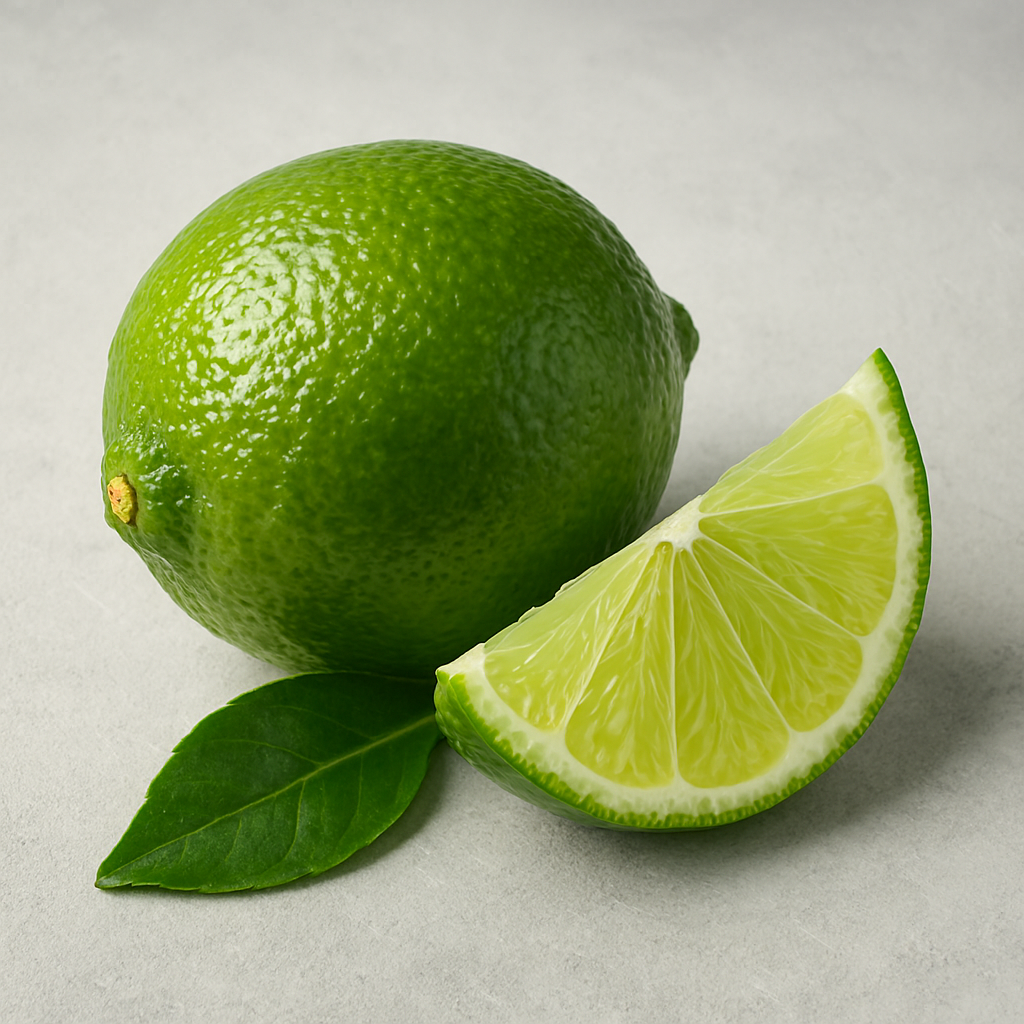
Limes originated in tropical Southeast Asia, particularly the Malay Archipelago (modern-day Malaysia, Indonesia, and the Philippines), and were cultivated over 4,000 years ago before spreading globally. Limes come with a variety of names and cultivars such as Key Limes, Calamansi Limes, Mexican Limes, Persian Limes, Tahitian limes, Rangpur Limes, Finger Limes, West Indian limes, Kaffir Limes and so on and they are a major influence on many recipes and cuisines. Sweet limes are green to yellow in color and have a strong scent. West Indian limes are bright green in color. As a flavor enhancer they are unbeatable, a squeeze of lime juice brightens soups, curries, tacos, and seafood dishes like ceviche. In marinades and dressings lime juice tenderizes meat and balances oils in vinaigrettes. They make great desserts, key lime pie, and lime sorbets. Then there are limeade, margaritas and mojitos. Lime juice prevents browning in fruits like apples and avocados. Personally, I love lime juice. They rose to prominence when the English Navy used them on board ships to combat scurvy, and where the term “limey” came from when referring to the English.


List
of Tropical Fruit
The list of Tropical Fruit is not short. Tropical fruits present a dazzling diversity, from tangy camu-camu and creamy cherimoya to exotic cupuaçu and refreshing wax apple. Their flavors range from sweet to tart, offering unique culinary possibilities and nutritional benefits. With varied storage needs and regional naming overlaps, they inspire glossaries, flavor wheels, and cultural exploration. This vibrant range enriches provisioning strategies, supports authentic sourcing, and enhances galley creativity with both practical and educational value. How many fruits on List of Tropical Fruit have you tasted?