Tropical Fruit List
a z
The Tropical Fruit List A Z has all you need to know. The tropics produce one of the world’s most diverse collections of fruit, from mangoes and bananas to papayas, guavas, pineapples and lychees. These fruits evolved in the equatorial regions of Asia, Africa, Central and South America, the Pacific and the Caribbean, shaped by warm climates and rich soils. Their flavours range from the creamy sweetness of bananas and custard apples to the tangy acidity of passionfruit and the fragrant, juicy flesh of mangoes.
Early sailors played a pivotal role in transforming global cuisine or is that cruisine and started the very first The Tropical Fruit List A Z. As explorers and traders travelled new sea routes, they carried seeds, saplings and preserved fruit aboard ships for food and barter. Pineapples crossed oceans, bananas spread across continents, and citrus fruits became essential to prevent scurvy. Over centuries, these exchanges reshaped agriculture and cuisine. Today, tropical fruits appear in all markets worldwide, eaten fresh, juiced or cooked, an enduring legacy of maritime exploration and the hunger for exotic flavours.
Tropical Fruit List A Z – Abiu (Luma, Caimito, Aboi)
An Amazonian tropical fruit, and grown in many areas in South East Asia, Florida and Australia, and is known as a dessert fruit. It has a smooth yellow skin, that becomes bright yellow when ripe. The pulp is creamy white, soft, with a jelly-like texture. The flavor is an earthy berry, with chocolate tones, while others say it has a sweet caramel-vanilla custard like sweet flavor. Abiu is sometimes mistakenly grouped with abacate (avocado) or açaí, but they are different fruits. Best eaten fresh.
Tropical Fruit List A Z - Acaí (Amazon Berry)
Am Amazonian superfruit high in antioxidants and flavonoids with many significant health benefits. They are a small, dark purple berry similar to a blueberry with a yellowish pulp surrounding a large seed. The flavour is often described as a blend of berries and chocolate, with a faint earthy or metallic note. They are an essential part of Frutas do Norte and Frutas do Amazonas smoothies. Slice in half, remove the seeds, spoon it out, add to salads or puree for drinks such as smoothies. Traditionally eaten in Brazil as a staple food, it’s now globally popular in smoothies and “açaí bowls”.
Ackee (Ankye, Achee, Akee, Ackee Apple, Aye)
Originating in West Africa and carried to the Caribbean by slaves around 1773 or earlier. When it is boiled and combined with saltfish it becomes Jamaica’s national dish of Ackee and Saltfish. It is the Jamaican national fruit and is considered a delicacy. The scientific name of Blighia sapida is in honor of Captain William Bligh who took it to the England. As the fruit is potentially poisonous is must be ripe and properly prepared. The fruit is allowed to open completely before picking to eliminate toxicity. The seeds are discarded and the arils are parboiled in salted water and get fried in butter. They get added to stews and soups and get baked. The national dish in Jamaica is Ackee and Saltfish.
Acerola (Barbados
Cherry, West Indian Cherry, Cereza)
Found in the Caribbean, South and Central America, it is eaten raw, or used in drinks and jams. It has a tart, tangy and slightly sweet flavor. It has an astounding 25 to 50 times the Vitamin C of an orange. Carotenoids, flavonoids, anthocyanins and linked to antioxidant and anti-inflammatory effect. It is good mixed with fresh orange juice or a fruit smoothie.
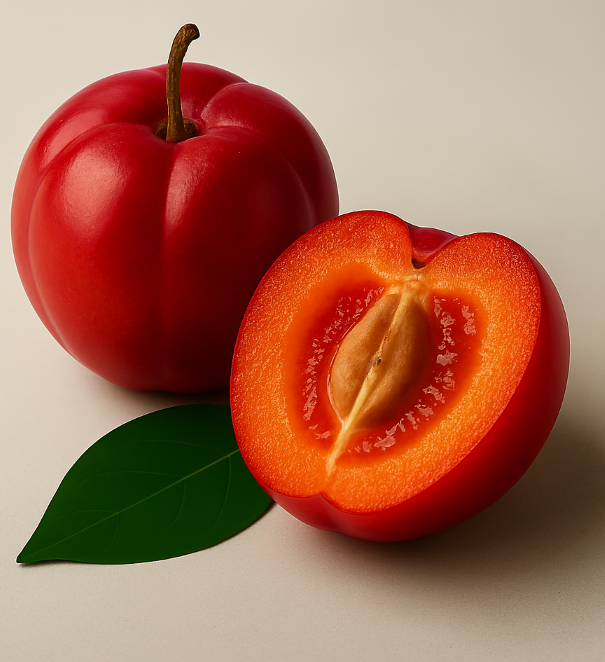
African Breadfruit (Treculia) (Pain africain, Fruta de pan Africana, Fruta-pão
Africana)
It has origins in West Africa from same family as figs and jackfruit. The trees have very large fibrous fruits, which contain edible seeds that are rich in oil and protein. The taste is nutty and potato-like. These seeds are widely consumed as snacks, flour, or cooked dishes in West and Central Africa.
African Horned Melon (Kiwano, African
Horned Cucumber, Jelly Melon)
This is a spiky orange fruit native to southern and central Africa. It has a bright lime green, jelly-like gelatinous pulp with many edible seeds. The flavor is mildly sweet-tart, often described as a mix of banana, cucumber, and lime with a hint of passionfruit. Scoop pulp for salads or smoothies.
African Mango (Bush Mango, Wild Mango)
A tropical tree native to West and Central Africa. The fruit resembles a small mango, but it is all about the seeds (called ogbono or dika nuts), which are rich in fat, protein, and fiber. It has a greenish-yellow, fibrous pulp, similar in appearance to mango but less sweet. These seeds are widely used in traditional cooking and medicine. The flesh eaten fresh or stewed, seed used ground for sauces.
Tropical Fruit List A Z - Almond Fruit (Green Almond)
The fruit is the immature stage of the almond before the shell hardens. Harvested in spring when the outer hull is still soft and green, and the seed inside is tender and jelly-like with a unique tart-nutty flavor. Unlike mature almonds, green almonds are eaten whole or used fresh in culinary traditions across the Mediterranean, Middle East, and parts of Asia.
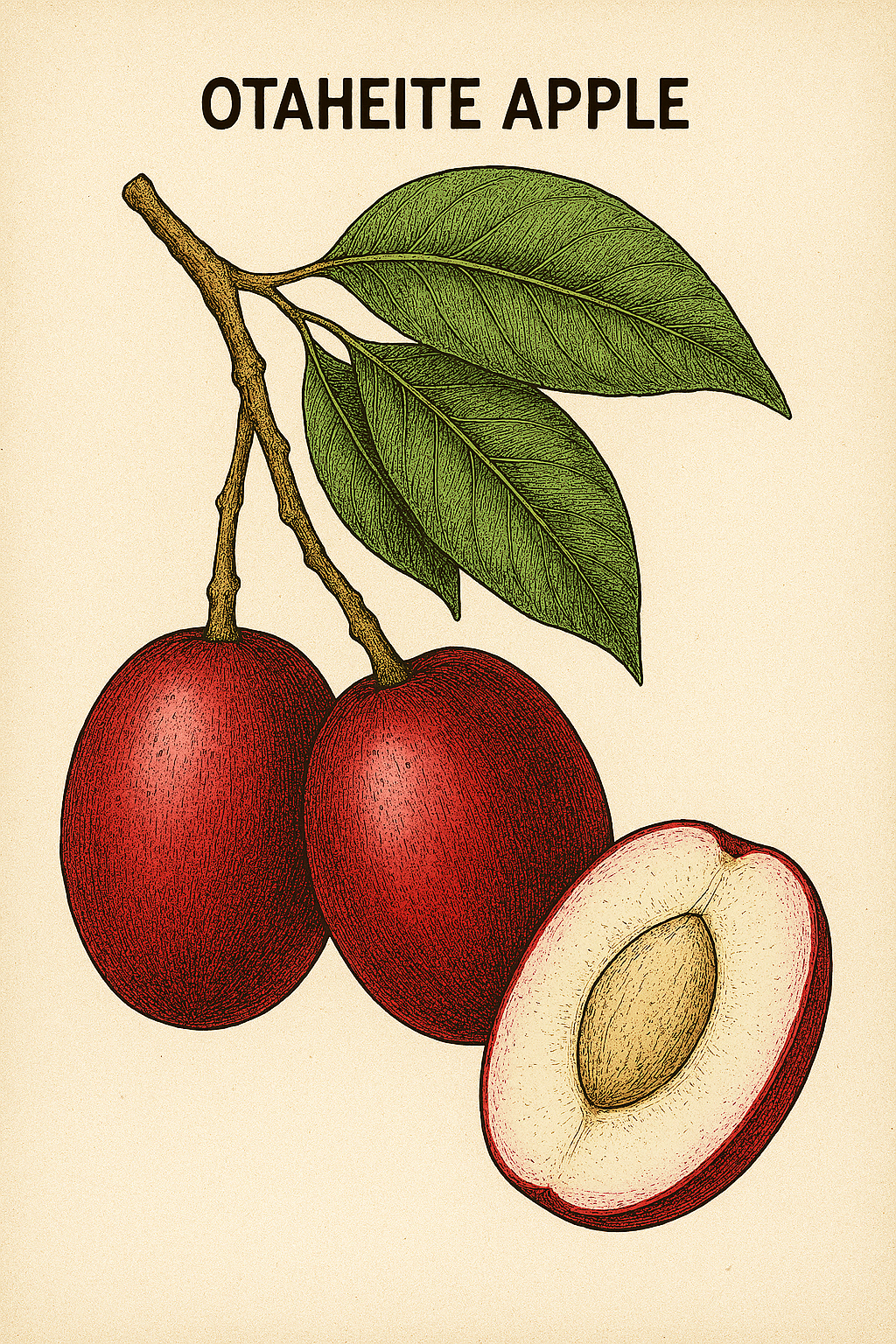
Ambarella (Hog Plum, Ciruela Tropical, Golden Apple, June Plum, Otaheite Apple)
This is a tropical fruit tree native to Melanesia and Polynesia, now widely grown in the Caribbean, Southeast Asia, and Africa. It has an oval, golden-yellow fruit with a crisp flesh. The taste is tart, tangy and slightly sweet, often compared to pineapple or mango with citrus notes. Peeled and eaten raw, sometimes sprinkled with salt or chili. Slice into pickles or chutney, add to curries.
Tropical Fruit List A Z -
Amla (Indian Gooseberry)
This is a small, greenish-yellow fruit native to India and Southeast Asia. Known for the exceptionally high vitamin C content, potent antioxidants, and its central role in Ayurvedic medicine for over 1,000 years. It has an extremely sour, bitter, and astringent flavor, often consumed as dried fruit, pickles, powders, or juices rather than raw. Caution: it may interact with certain medications (e.g., blood thinners, diabetes drugs).
Tropical Fruit List A Z - Apple Guava (Common Guava)
Native to the tropical Americas, and grown across Asia, Africa, and Oceania. This fruit is prized for its sweet aroma, versatility, and nutritional richness, making it a staple in tropical diets. It is green when unripe, turning yellowish at maturity. The flesh is white, pink, or red depending on cultivar with numerous small, hard seeds embedded in the pulp. The flavor has sweet-tart, aromatic, and often compared to a blend of pear and strawberry. Easten fresh sliced, or in juices, used in jams, candies, and guava paste (goiabada in Brazil).
Araca (Araçá, Araçá-boi, Araza, Amazonian Pear, Pichi)
This fruit is a Western Amazonian (Brazil, Colombia, Ecuador, Peru) super fruit. The fruit are small, round and yellow in color. It is very juicy with a sweet and slightly bitter sweet highly acidic flavor pulp. It is used as part of refreshing tropical fruit drinks. Too sour to eat raw but used in jams, icer cream and cocktails.
Tropical Fruit List A Z - Atemoya (Sugar Apple)
This fruit is found in the Caribbean and Central and South America. It is a hybrid fruit comprising the Sugar Apple and the Cherimoya. Atemoya is usually chilled and the flesh eaten directly from the shell. Both cherimoyas and atemoyas possess a delicate, creamy custard sweet flesh texture. The flavor is a blend of pineapple, strawberry and banana notes. It is commonly mixed with other fruits in salads and juices, and smoothies. When blended with pineapple and bananas with some coconut milk you have one delicious smoothie.
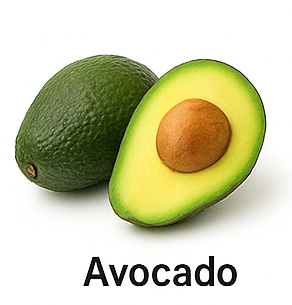
Avocado Pear (Aguacate, Butter Pear, Butter Fruit, Palta, Abacat, Alligator Pear, Midshipman’s Butter, Caboca, les Avocats, Zaboca)
The avocado has its origins in Mexico, and is available all over the world. The Spanish discovered the plant and transported seedlings to other tropical locations on their galleons and trading vessels. The avocado has a yellow-green flesh with a smooth, butter like consistency. Used with guacamole, salads, sushi, store at room temperature in a paper bag to hasten ripening, put with citrus to retard ripening, ripe ones yield to finger pressure, press them at the stem end to test. On a maritime note, the term was used informally among sailors and midshipmen (junior naval officers) because avocados could be spread on bread much like butter. Butter spoiled quickly on long voyages before refrigeration, but avocados, when harvested and stored properly, were more durable and provided a creamy, fatty alternative.
Tropical Fruit List A Z Tropical Fruit List A-Z - Bacuri
Another Amazonian rain forest superfruit. It has a color similar to a papaya with a white and fragrant creamy yellow, sticky and highly fragrant, aromatic pulp. It has a sweet and sour flavor similar to a blend of papaya and citrus. Popular in Brazilian desserts like bacuri mousse and bacuri ice cream.
Tropical Fruit List A Z -
Babaco (Mountain Papaya)
This fruit has origins in Ecuador. They have a bright yellow color. The taste is a mix of pineapple, strawberry and papaya. They are eaten raw or added to juices, sauces and jams. Eat fresh, poach, or dice into salads. Mildly laxative when underripe, moderate use only.
Buriti Palm (Moriche Palm, Ita, Ité Palm,
Acho, Aguaje, Muriti Canangucho)
This is a Brazilian superfruit and very popular both there and elsewhere in South America. Given the name of Tree of Life due to the many health benefits. It looks like a chestnut due to the color and outer appearance. The pulp is bright yellow and creamy with a complex flavor profile of sweet, tangy, salty and mild acidity. Although eaten raw it is used in preserves and jams, juices, ice cream and others.
Bacaba Palm Fruit (Brazil: bacaba
açu, bacaba-de-leque, bacaba verdadeira)
This is a small, dark-purple Amazonian fruit valued for its antioxidant-rich pulp. Other names are Colombia: manoco, punáma, Peru: ungurahui, French Guiana: camon, Suriname: koemboe. It is semi-thick, fibrous, rough, with shades of dark purple, violet, red, or black. The flesh is white, firm, slippery, saturated with pale-yellow oil, encasing a central seed. The taste is mild, earthy, slightly oily, with nutty berry chocolate notes, often compared to a less sweet version of açaí.
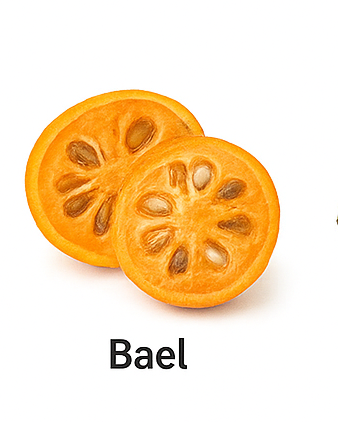
Bael Fruit (Wood Apple, Bengal Quince, Coing du Bengale, Fruta de bel, Fruto de bael)
This is a sacred tree fruit native to India and Southeast Asia, valued for its medicinal and nutritionally rich properties. The pulp is aromatic, yellow-orange, fibrous, and sticky. The flavor is sweet, slightly astringent, with notes of citrus and spice. The fresh pulp is eaten raw or mixed with milk and sugar. Used in a popular summer drink in India, known as bael sherbet. Also used in jams, candies, and syrups.
Breadfruit (Panapen, Pana de Pepita)
They have many differing names that include Spanish árbol de pan, Fruta de pan, Pan, Panape. Known as Arbre à pain, and Fruit à pain in French. In Portuguese it is Fruta pao, Pao de massa. In the Caribbean it has names that include Cow, Panbwa, Pain bois, Frutapan and Fruta de pan. Out in the Pacific they names vary, in Vanuatu they call it Beta and in the Solomon Islands it is Bia, Bulo and Nimbalu. In the Cook Islands it is Kuru. In the Federated States of Micronesia, Kiribati, Marshall Islands, Marquesas, Tonga and Tuvalu it goes by the name Mei or Mai. In Papua New Guinea it is Kapiak and in Guam and the Mariana Islands it is Lemai and Lemae while in Palau is Meduu and in Kosrae it is Mos. It is called ‘ulu in Hawaii, Samoa, Rotuma and Tuvalu, and ‘uru in the Society Islands. Finally in Fiji it is known as Uto or Buco. This famous fruit has origins in Malaysia and New Guinea and was made famous by the Bounty. It is widespread in the Pacific Islands, South America and West Africa. See the Breadfruit recipe chapter for more details. There are several hundred varieties. The breadfruit rind has a six-sided pattern and when smooth indicates it is ripe when it transforms to a yellow color from green – brown. They get baked whole, boiled like potatoes, mashed and fried. Breadfruit in coconut is a dish known as Oil Dong and is the national dish of Grenada.
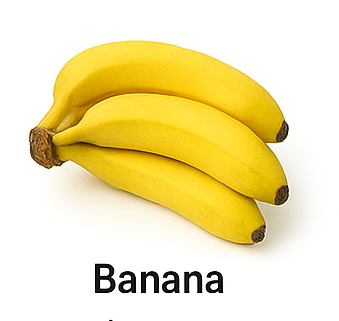


Banana (Banane, Plátano)
I must state I have a strong attachment to this fruit and served as an Electrical Officer on high tech banana boats carrying them out of Colombia, Ecuador, Honduras and Costa Rica up to the US and Europe. A banana a day keeps most everything away! Archaeological evidence points to the Kuk Valley in Papua New Guinea (around 8,000 BCE) as one of the first places bananas were cultivated. Bananas grew naturally across the Malaya Peninsula, Indonesia, and the Philippines. Probably one of the most consumed fruits globally Note the difference between dessert bananas (sweet, eaten raw) vs. cooking bananas called plantains. Common cultivars include Cavendish, red banana, apple banana, and plantain There are now over 1,000 varieties. Plantains are a staple in African, Caribbean, and Latin American cuisines. The taste is sweet or starchy depending on type. Used in banana bread, pancakes, fritters, curries, and plantain chips. Smoothies and desserts, or blended into shakes, ice creams, puddings. You can get baby bananas or Platano manzano throughout the Caribbean and Central America. In the Caribbean green or unripe bananas are known as figs. They are best blanched in boiling water to make peeling easy. See the banana recipe page for ideas.
Black Sapote (Chocolate Pudding Fruit) (Sapote noire, Zapote negro, Sapoti-preto)
This a tropical fruit native to Mexico and Central America, celebrated for its sweet, custard-like pulp that resembles chocolate mousse when ripe. The fruits are oval to round and glossy green which turns olive brown when ripe. The flesh is dark brown to black, with a soft, custard-like texture. It has a sweet, mild taste, similar to a chocolate pudding. It is often compared to chocolate pudding or dates. Chill and scoop soft flesh with a spoon, or add into desserts, pancakes or smoothies. Unripe fruit is astringent, wait until fully soft.
Bread Nuts (Katahar, Chataigne,
Maya Nut, Ramon, Pan De Fruta, Capomo Nut)
These are a tropical tree fruit native to Central and South America, and prized for its edible seed. LAlso known as Katahar/Chataigne in Trinidad & Tobago and in Guyana They are called a Maya Nut, Ramon, Ojoche or Ujushte in Central America. In Mexico and Guatemala they are known as Pan de Fruta or Capomo Nut. Common in the southern Caribbean, they have Philippine origins. Popular in Trinidad and Tobago and Guyana. These small, green and spiky looking fruit are not like breadfruit and the seeds are boiled and eaten with salt. They are cooked in coconut and made into curries. The white pulp surrounding the seeds is grated and braised. Roasted nuts have a coffee and chocolate flavor.
Blim Blim (Bilimbi, Sowry Fruit, Souri fruit, Tree Sorrel, Sour Barge, Cucumber Tree, Bimbling Plum, Belimbing)
This is found in Jamaica and throughout the Caribbean with Southeast Asian origins in the Maluku Islands and Sulawesi (Indonesia). The skin is smooth, thin and glossy, ripening from bright green to yellow-green, ivory, or nearly white. The flesh is jelly-like, juicy, crisp when unripe, and extremely acidic. The flavor is intensely sour, sharper than carambola, with a refreshing tang. It is very sour in taste and has many medical properties. Used in curries, fish soups, salads and pickles across India, Malaysia, and Indonesia.
Buddha’s Hand Citrus (Main de
Bouddha, Mano de Buda, Mão de Buda)
This striking citron variety is shaped like yellow fingers, and prized for its fragrance. It is closely related to the lemon. The fruit has its origins in China. There is no pulp or juice and unlike most citrus, is almost entirely rind and pith. It is intensely aromatic, often described as floral, with notes of violet and lemon. It is mildly sweet, lemon-like, without acidity. The rind is often candied and is popular in desserts and confections. Also used to infuse vodka, gin, syrups, and teas. Also made into marmalade or jam
Burmese Grape (Raisin birman, Uva de Birmania, Uva
birmanesa)
It has its origin in Burma (Myanmar) and common also in India, Bangladesh, Laos, Cambodia, Vietnam, and southern China. In India (Assam, Tripura, Bengal) it is known as latkan or bugi, sold in markets. The fruits are round to oval shaped, with smooth, thin yellow to pink-red when ripe. The pulp is translucent white, juicy, surrounding 3–5 seeds. The flavor is sweet-tart, similar to a sour-sweet plum and often compared to lychee or rambutan but more acidic. It is eaten raw with the pulp sucked from seeds. Also added into refreshing drinks, jams, and jellies. Sometimes used in local wines or vinegar. Added to curries and sauces in Myanmar and northeastern India.
Tropical Fruit List A Z
The Tropical Fruit List A Z is a comprehensive catalog highlighting diverse fruits from around the world. It spans familiar staples like mango and banana to rare exotics such as abiu and cupuaçu. Each entry showcases flavor, origin, and cultural significance, offering a vibrant guide to global tropical abundance.