The Marine Electrical and Electronics
Bible Review - The Definitive Guide for Cruising Sailors
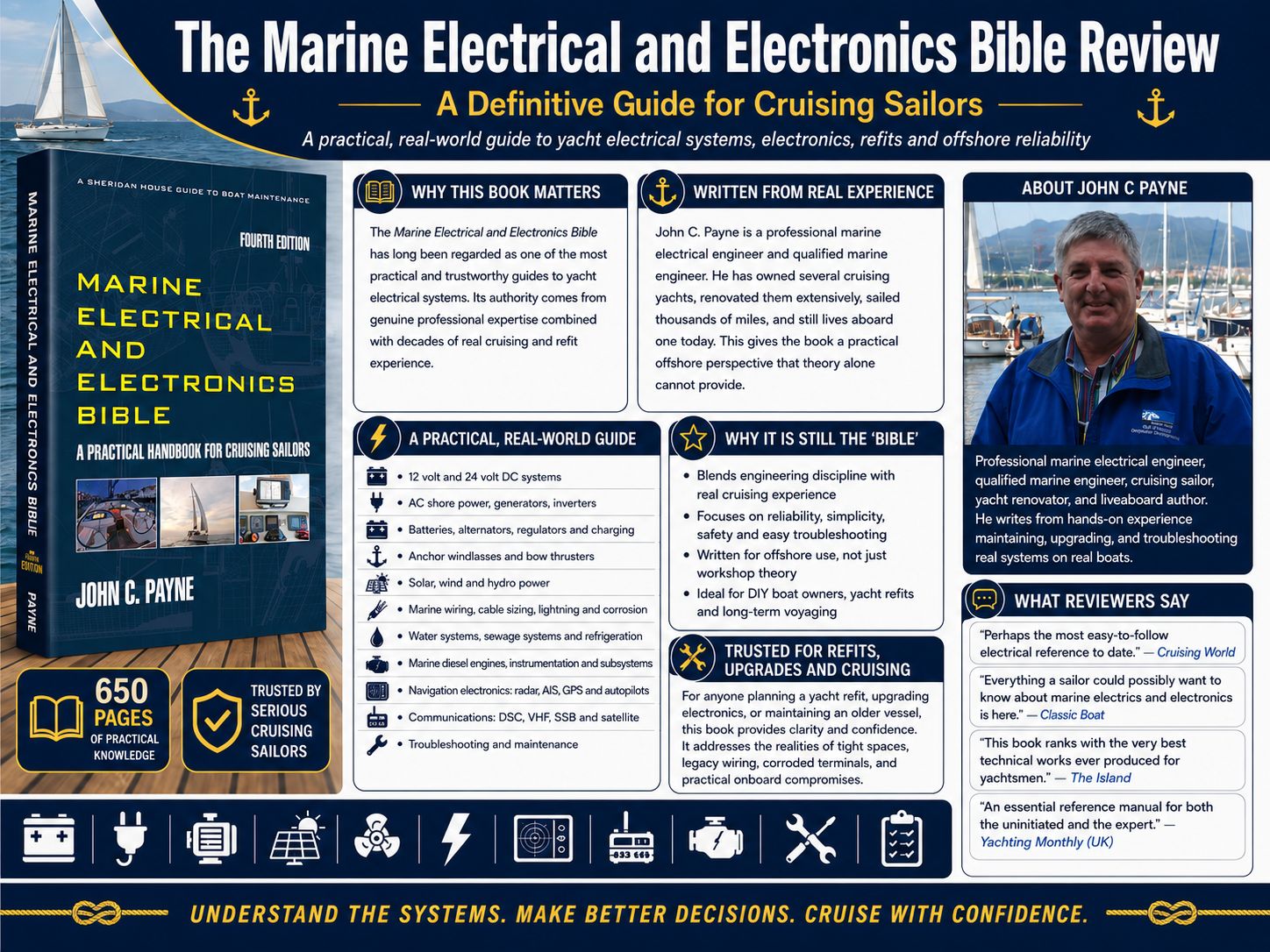
The Marine Electrical and Electronics Bible Review. John C. Payne’s Marine Electrical and Electronics Bible has long been regarded as the most practical and trustworthy guide to yacht electrical systems, and its authority comes from something many marine books lack, genuine, hard‑earned expertise. Payne is a professional marine electrical engineer, qualified marine engineer and yacht surveyor, not a self‑anointed guru or armchair commentator. He has owned several cruising yachts, renovated them extensively, sailed thousands of miles, and still lives aboard one today. This lived experience gives him a deep understanding of the context and nuances of cruising‑yacht electrical systems, something that simply can’t be replicated by theory alone.
Because Payne has spent decades maintaining, upgrading, and troubleshooting systems on real boats in real conditions, along with other peoples boats, and his writing speaks directly to the needs of cruising sailors, DIY boat owners, and anyone undertaking a yacht refit or long‑term voyage. He understands how systems behave when the boat is rolling, when batteries are low, when corrosion creeps in, and when the nearest marine electrician is hundreds of miles away. That perspective shapes every chapter.

A Practical, Real‑World Guide to
Marine Electrical Systems
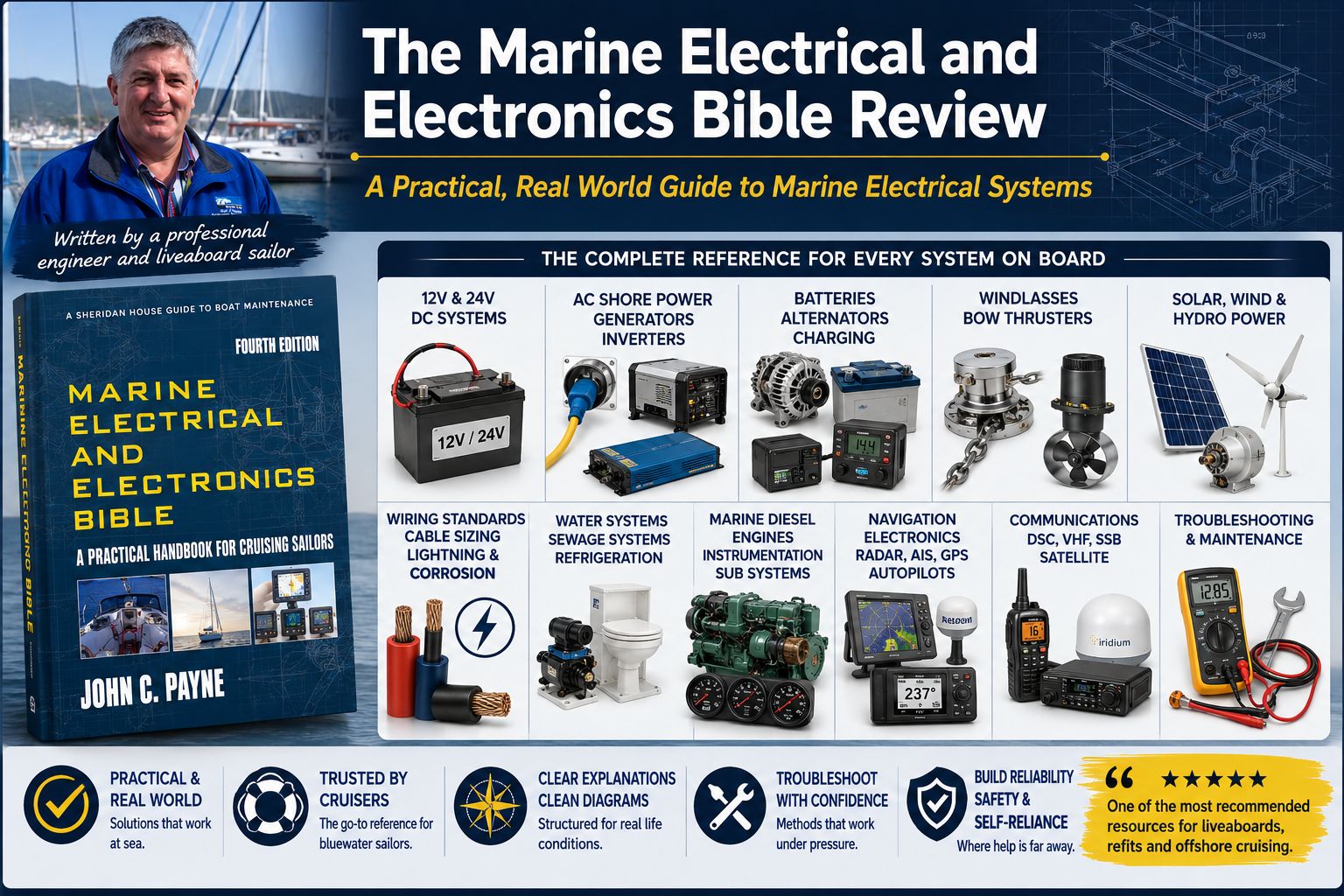
The book covers the full spectrum of onboard electrical and electronic systems, making it a go‑to reference for anyone searching for how to troubleshoot marine electrical problems, best books for yacht electrical systems, or practical guides to boat electronics for beginners. Payne explains:
- 12‑volt and 24‑volt DC systems
- AC shore‑power integration and safety
- Battery banks, alternators, regulators, and charging optimization
- Solar, wind, and hydro power for cruising yachts
- Marine wiring standards, cable sizing, and corrosion prevention
- Navigation electronics including radar, AIS, GPS, and autopilots
- Communication systems such as VHF, SSB, and satellite equipment
- Step‑by‑step fault‑finding and real‑world troubleshooting
His diagrams are clean, his explanations are clear, and his troubleshooting methods are structured for use under pressure. This is why the book consistently ranks among the most recommended resources for liveaboard sailors, Bluewater cruisers, and anyone wanting to understand boat electrical systems for offshore cruising.
Why Payne’s Book Is Still the “Bible” for Cruising Sailors
Many marine electrical guides are written by enthusiasts or generalists. Payne’s work stands apart because it blends professional engineering discipline with decades of real cruising experience. He has rebuilt electrical systems on his own boats, dealt with failures at sea, and lived with the long‑term consequences of design decisions. This gives him an instinctive understanding of what matters on a cruising yacht, reliability, simplicity, safety, and ease of troubleshooting. If you think about a marine electrical troubleshooting guide for cruisers, and how to wire a boat safely, or about understanding 12‑volt systems on yachts, and what is the best marine electronics book for refits, then these questions naturally align with the book’s content. Payne writes for people who need solutions that work offshore, not just in a workshop.
The latest edition includes more than 200 diagrams, tables, and illustrations, making it both a learning tool and a quick‑reference manual. It’s the kind of book that lives in the hand or on the saloon table rather than just the bookshelf.
Mechanical
and Electrical Repairs Resource
In Australia and New Zealand order a copy through Boat Books. UK and European boats can buy the UK Edition Here. US and Canadian boats can get the US Edition Order Here. Marine systems are my profession so let me help you. By a liveaboard boat owner for other boat owners
A Trusted Resource for Refits,
Upgrades, and Long‑Term Cruising
For anyone planning a yacht refit, upgrading electronics, or maintaining an older vessel, Payne’s book provides the clarity and confidence needed to make informed decisions. Topics like battery management, solar‑panel installation, inverter selection, and safe AC/DC integration are explained in a way that empowers owners rather than overwhelming them.
Because Payne has renovated several cruising yachts himself, he understands the realities of tight spaces, legacy wiring, corroded terminals, and the compromises required when working on older boats. His guidance reflects how systems actually behave after years of use, not how they look in a manufacturer’s brochure.
Cruisers appreciate the book because it helps them prevent failures and fix problems offshore. Marine technicians value it because it aligns with professional standards. New yacht owners find it accessible even if they have no electrical background.
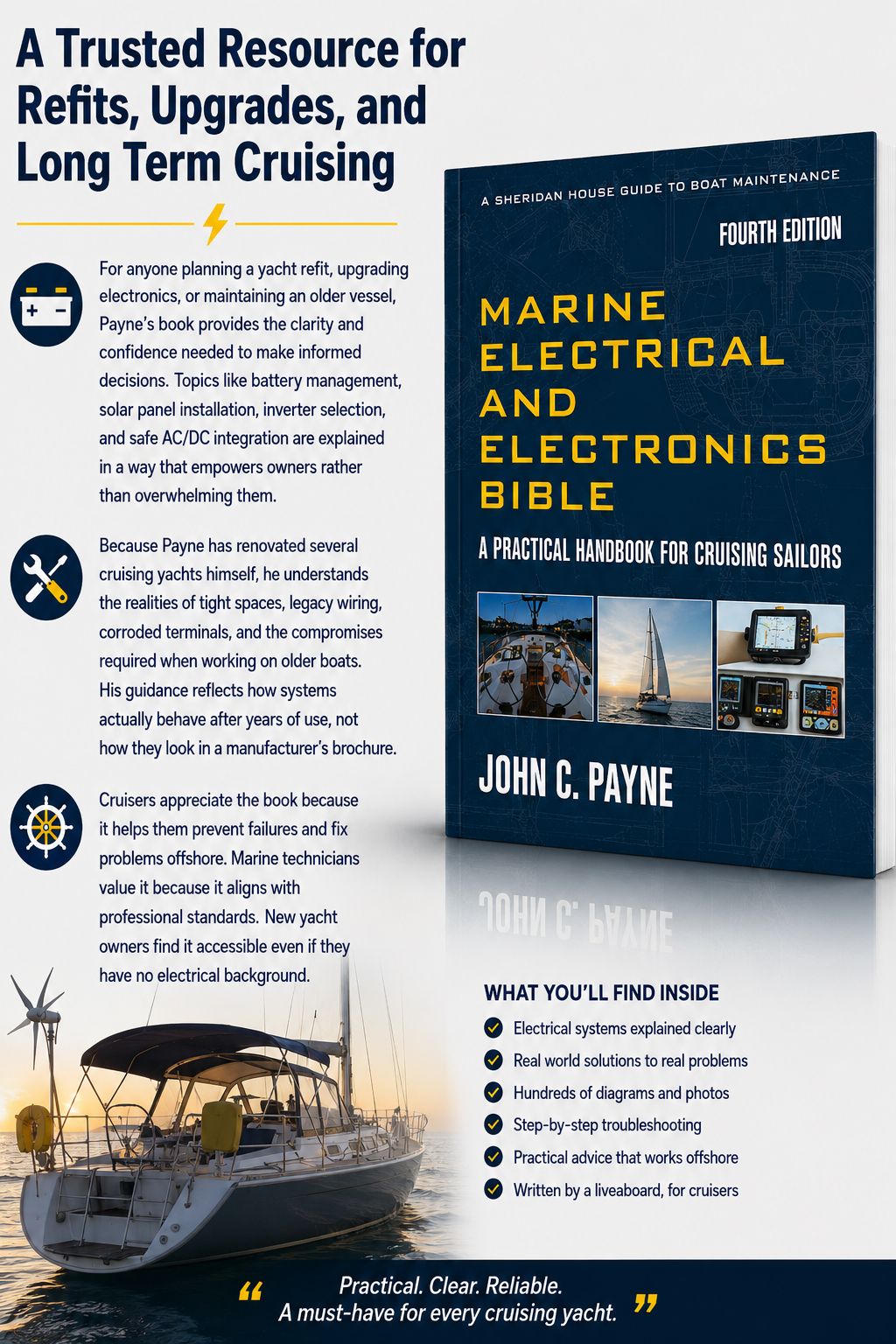
The UK and Australia Edition
The Marine Electrical and Electronics Bible Review
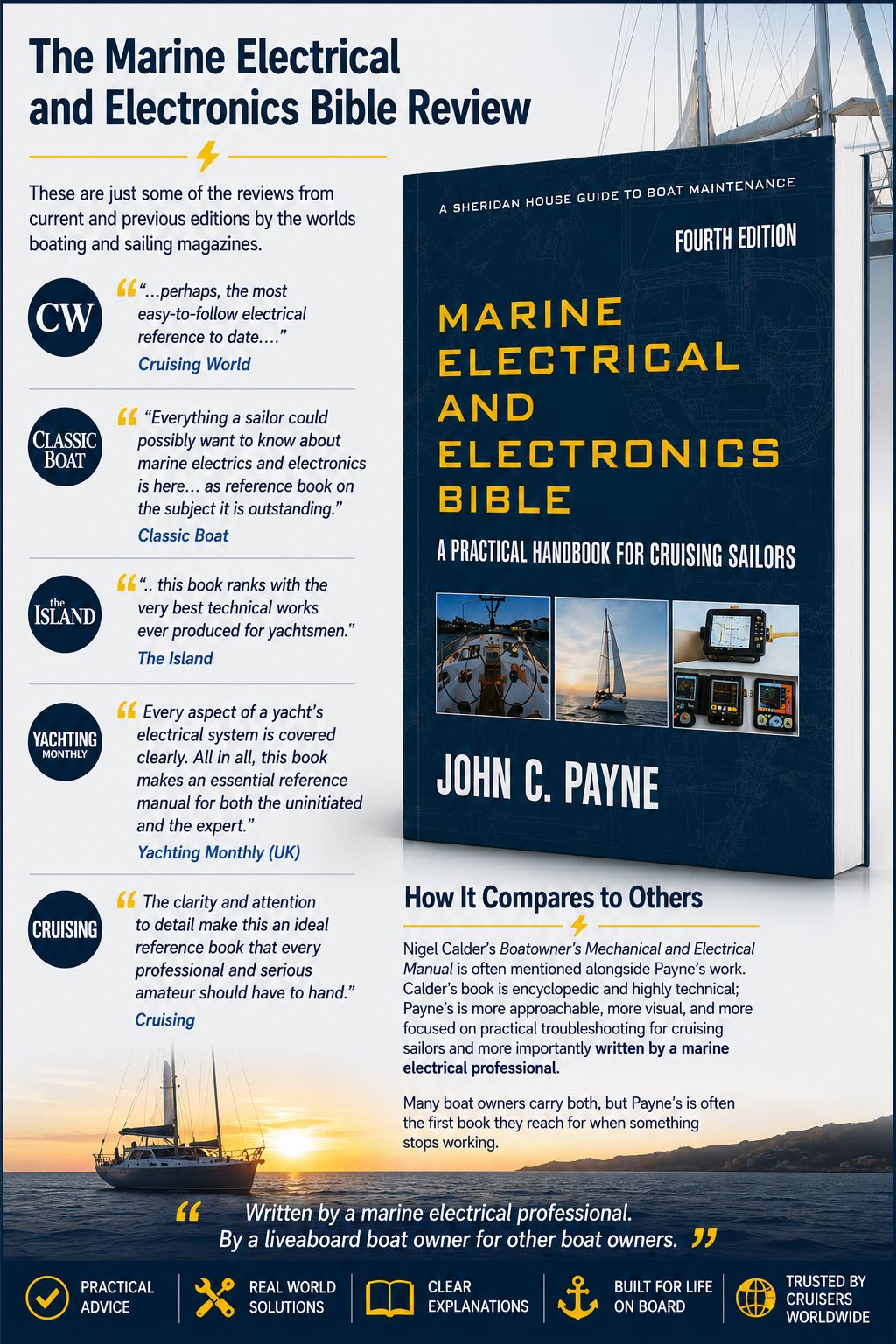
These are just some of the reviews from current and previous editions by the worlds boating and sailing magazines.
- “…perhaps, the most easy-to-follow electrical reference to date….” Cruising World
- “Everything a sailor could possibly want to know about marine electrics and electronics is here… as reference book on the subject it is outstanding.” Classic Boat.
- ”. this book ranks with the very best technical works ever produced for yachtsmen.” The Island
- Every aspect of a yacht’s electrical system is covered clearly. All in all, this book makes an essential reference manual for both the uninitiated and the expert. Yachting Monthly (UK)
- The clarity and attention to detail make this an ideal reference book that every professional and serious amateur should have to hand. Cruising
How It Compares to Others
Nigel Calder’s Boatowner’s Mechanical and Electrical Manual is often mentioned alongside Payne’s work. Calder’s book is encyclopedic and highly technical; Payne’s is more approachable, more visual, and more focused on practical troubleshooting for cruising sailors and more importantly written by a professional electrical professional. Many boat owners carry both, but Payne’s is often the first book they reach for when something stops working.
A Book Written by Someone Who Actually Lives with These Systems
One of the most important aspects of Payne’s work is that he writes from the perspective of someone who lives aboard a cruising yacht and has done so for years. He understands the day‑to‑day realities of power management, corrosion, vibration, and the constant balancing act between consumption and generation. He knows the difference between what works in theory and what works after a week of rain at anchor. This lived experience combined with professional engineering credentials makes the Marine Electrical and Electronics Bible uniquely trustworthy.


The Marine Electrical and Electronics Bible Review
The Marine Electrical and Electronics Bible remains the most practical, authoritative, and user‑friendly guide available for understanding and maintaining yacht electrical systems. Payne’s blend of engineering expertise, cruising experience, yacht ownership, and hands‑on refit knowledge makes this book an essential onboard reference for anyone who wants safe, reliable, and well‑understood systems. The Marine Electrical and Electronics Bible Review is because it applies to real world sailing.