Madagascar Nosy Be
Cruising Guide
Madagascar Nosy Be Cruising Guide. Nosy Be is the only location in Madagascar with the operational infrastructure required for an Indian Ocean departure. Crater Bay provides a protected anchorage with direct access to shore services, while Hell‑Ville contains the clearance offices, supermarkets, markets, fuel stations, and repair capability. No other region of Madagascar offers reliable provisioning, fuel, water, or administrative support.
Yachts use Nosy Be as a staging point for westbound routes toward Mozambique, Comoros, or Tanzania, or for northbound routes toward the Seychelles. All provisioning, fuel loading, water transfer, and formalities must be completed here, as the remainder of Madagascar’s coastline is low‑infrastructure with no yacht‑facing services.
Madagascar Nosy Be
Cruising Guide - Approaches
Approaches to Nosy Be are clear of offshore hazards, with deep water until close to the island. Tidal streams reach 2–3 kn in the channels between Nosy Be, Nosy Komba, and Nosy Tanikely and must be factored into arrival timing. Unlit fishing pirogues operate day and night and are the primary hazard. Reefs are fringing and visually identifiable in daylight with overhead sun. The seabed transitions from coral on the edges to sand inside the bays.
Madagascar Nosy Be
Cruising Guide - Anchorage
Crater Bay is the only consistently protected anchorage for yachts, with sand bottoms in 10–20 m and reliable holding. The bay provides dinghy access to shore services and remains usable in SE trade‑wind conditions. Hell‑Ville anchorage is deeper, exposed to commercial wash, and not suitable for overnighting. Anchorages around Nosy Komba, Nosy Tanikely, and Nosy Sakatia are suitable for short stays but offer no services.
Madagascar Nosy Be
Cruising Guide - Entry Formalities
Clearance is completed in Hell‑Ville through Immigration, Customs, Port Authority, and the Gendarmerie. Offices are in separate locations and require sequential visits. No agent is required, but using one reduces movement between offices. Biosecurity controls apply to fresh produce and meat. Firearms must be declared. Starlink and other satellite equipment must be declared. Drone use is restricted and requires prior approval.
Madagascar Nosy Be
Cruising Guide - Marina Facilities
Nosy Be has no marina. Crater Bay Yacht Club provides moorings, dinghy dock access, laundry, showers, and limited workshop capability. There are no pontoons, no haul‑out facilities for deep‑keel yachts, and no hard‑stand suitable for major work. Local workshops can handle fibreglass, woodwork, and basic mechanical repairs. Chandlery stock is minimal.
Madagascar Nosy Be
Cruising Guide - Local Weather
The SE trades dominate from May to October with 15–25 kn winds and stable conditions. The NW monsoon from December to March brings light winds, heavy rain, and cyclone exposure. Transition periods produce variable winds and squalls. Sea state outside the bays becomes steep when trades oppose tidal flow.
Madagascar Nosy Be
Cruising Guide - Provisioning
Supermarkets. Score Supermarché (Hell‑Ville). Full dry‑goods range, long‑life milk, flour, rice, pasta, tinned vegetables, tinned fish, sauces, oil, sugar, frozen chicken, frozen beef, frozen fish, yoghurt, butter, basic cheeses, bread, soft drinks, beer, cleaning products. Shoprite (Hell‑Ville). Strong on rice, pasta, noodles, tinned tomatoes, tinned beans, biscuits, snacks, sauces, UHT milk, soft drinks, basic frozen goods. Leader Price–type outlets (Hell‑Ville). Budget dry goods, tinned food, biscuits, frozen mixed vegetables, frozen chicken portions, basic dairy. Local groceries (Hell‑Ville, Ambatoloaka). Bottled water, eggs, onions, potatoes, bananas, limes, basic fruit, soft drinks, bread.
Markets. Hell‑Ville Central Market. Tomatoes, onions, garlic, ginger, leafy greens, aubergine, okra, beans, bananas, papaya, citrus, herbs, spices, fresh chillies, coconuts. Perimeter stalls. Additional fruit and vegetables with high turnover. Rice and pulse shops. Bulk rice, lentils, beans, chickpeas, dried maize, suitable for long‑passage provisioning.
Fish Markets. Hell‑Ville Fish Market. Tuna, kingfish, trevally, jobfish, reef species, squid. Crater Bay beach vendors. Reef fish and squid in small quantities.
Indian Ocean Crossing Deaths
A distress call in the Mozambique Channel led authorities to a yacht where two highly experienced sailors, 67‑year‑old Australian Deirdre Sibly and French sailor Pascal Mahé, were found dead aboard their 50‑foot catamaran during a passage from Réunion to Durban. Their deaths occurred on 27 November 2025, and the case has since been widely reported as a suspected food‑poisoning event, although investigations are still ongoing.
The couple departed Réunion Island bound for Durban, South Africa, a common westbound Indian Ocean transit route. While sailing between Madagascar and Mozambique, a distress alert was received. Responding vessels located the yacht adrift and found both sailors deceased onboard. Both were described as experienced blue‑water cruisers with extensive passage‑making history.
Cause of death. Authorities have not released a final forensic determination, but reporting indicates the working hypothesis is fatal food poisoning, consistent with the circumstances and absence of struggle or trauma. No official confirmation has been published regarding the specific toxin or food source. Although the exact toxin has not been publicly identified, the region is known for risks such as Ciguatera from reef fish (a well‑documented marine toxin illness), Marine biotoxins associated with algal blooms, which have caused other fatal food‑poisoning investigations in the region. These are consistent with the type of sudden, severe onset that can incapacitate a crew at sea.
Operational relevance for Indian Ocean sailors. This incident underscores several practical risks. Reef‑fish consumption in the western Indian Ocean carries non‑zero ciguatera risk, especially species like barracuda, trevally, grouper, and amberjack. Symptoms can be rapid and severe, and treatment options offshore are extremely limited. A two‑person crew is particularly vulnerable if both are affected simultaneously. Food‑handling, fish‑selection, and toxin‑avoidance protocols are critical on long passages.
Food‑Related Risk on Indian Ocean Passages
Marine‑toxin food poisoning is a recognised hazard across the western Indian Ocean, particularly on long passages where crews rely on self‑caught fish or locally sourced reef species. Toxins such as ciguatoxin occur naturally in reef ecosystems and are not destroyed by cooking, freezing, or cleaning. Illness can develop rapidly and incapacitate an entire crew if the same fish is consumed. Two‑person crews are especially vulnerable because simultaneous onset leaves the vessel unmanned.
High‑Risk Species. Reef‑associated predatory fish carry the highest toxin load. The following species are consistently identified as high‑risk in the western Indian Ocean, Barracuda, Grouper (all large species), Trevally, Amberjack, Snapper (large reef species) and Moray eel. These species should be avoided entirely on ocean passages. Pelagic species such as tuna, wahoo, and mahi‑mahi carry significantly lower risk and are the preferred option when fishing offshore.
Geographic Hotspots. Ciguatera risk is elevated around Madagascar’s west and northwest reefs. Comoros archipelago, Mayotte lagoon and fringing reefs, Mozambique Channel islands and banks. Seychelles outer islands. Risk increases near shallow reefs, coral rubble zones, and areas with algal growth following storms or warm‑water events.
Onboard Risk‑Reduction Protocols. These are operational guidelines, not medical instructions. Avoid all reef fish caught within 20–30 nm of land. Prioritise pelagic species caught in deep water. Do not consume fish if the flesh has an unusual smell, texture, or colour. Do not consume large or old fish; toxin load increases with size and age. Do not consume fish liver, roe, or head meat, where toxins concentrate. If one crew member becomes unwell after eating fish, all remaining portions should be discarded immediately.
Two‑Person Crew Vulnerability. A two‑person crew is at highest operational risk because: Both typically eat the same meal. Onset can be rapid, leaving no functional watchkeeper. Passage planning for two‑person crews should assume zero tolerance for reef‑fish consumption.
Passage‑Planning Implications. Provision sufficient protein to avoid reliance on reef fishing. Treat all reef‑caught fish as unsuitable for consumption. Maintain a conservative fishing policy offshore: pelagic species only. Ensure the vessel can maintain course and speed under autopilot if both crew are incapacitated. Maintain regular check‑ins with shore contacts during long legs.
Relevance to the Recent Fatality. The suspected food‑poisoning deaths of two experienced sailors in the Mozambique Channel highlight the operational reality: marine toxins can incapacitate a crew without warning, and a yacht at sea cannot rely on medical intervention. The case reinforces the need for strict fish‑selection protocols and conservative food‑safety practices on long passages.
Madagascar Nosy Be Cruising Guide - Local Cuisine
Ravitoto. Crushed cassava leaves cooked with pork or beef. Romazava. Beef or zebu broth with leafy greens and mild aromatics. Hen’omby ritra. Slow‑reduced zebu beef with ginger and garlic. Akoho sy voanio. Chicken cooked in coconut milk. Lasary. Pickled vegetables served as a side dish. Sakay. Chilli paste used as a condiment.
Local brew is the THB (Three Horses Beer) is the most quaffed. Do try the Madagascan Dzama and Madi rum ranges. Madagascar is world-famous for vanilla, cloves, pepper, and lychee honey.
Madagascar Nosy Be
Cruising Guide - Fuel Supplies
Diesel is available at fuel stations in Hell‑Ville and must be transferred by jerry can. Diesel quality is generally reliable. Petrol is available island‑wide. There is no fuel dock.
Madagascar Nosy Be
Cruising Guide - Water Supplies
Water is available at Crater Bay Yacht Club via jerry cans. Water quality is variable and most yachts use onboard filtration or water makers.
Mechanical and Electrical Repairs
Resource
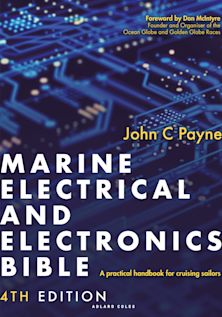
If you are headed somewhere remote consider the need to expand your knowledge base or have an information resource on board. Why not get a copy of my book The Marine and Electrical and Electronics Bible 4th Edition. By and for yachties, with everything from batteries and charging, solar and wind, diesel engines and marine electronics and so much more. Your complete systems guide. 650 pages of practical advice. In Australia and New Zealand order a copy through Boat Books. UK and European boats can buy the UK Edition Here. US and Canadian boats can get the US Edition Order Here. Marine systems are my profession so let me help you. By a liveaboard boat owner for other boat owners

Madagascar Nosy Be
Cruising Guide - Marine Services
Diesel mechanics, general electricians, fibreglass and woodwork repair, outboard servicing, and basic chandlery are available. There are no sailmakers, riggers, or authorised Volvo or Yanmar agents. Major repairs should not be attempted in Madagascar.
Madagascar Nosy Be
Cruising Guide - Local Customs
Transactions in markets and small shops are cash‑based. Prices are negotiated in some stalls. Photography of people requires permission. Village interactions are straightforward but formal; direct requests and clear explanations are expected. Operational delays are common and should be planned for.
Madagascar Nosy Be
Cruising Guide - Summary
Nosy Be is the only location in Madagascar capable of supporting an Indian Ocean departure. It provides protected anchorage, clearance, provisioning, fuel, water, and limited repair capability. All preparation must be completed here, as no other region of Madagascar offers comparable operational support. Madagascar Nosy Be Cruising Guide for all you need to know.