Tanga Yacht Harbour
Guide
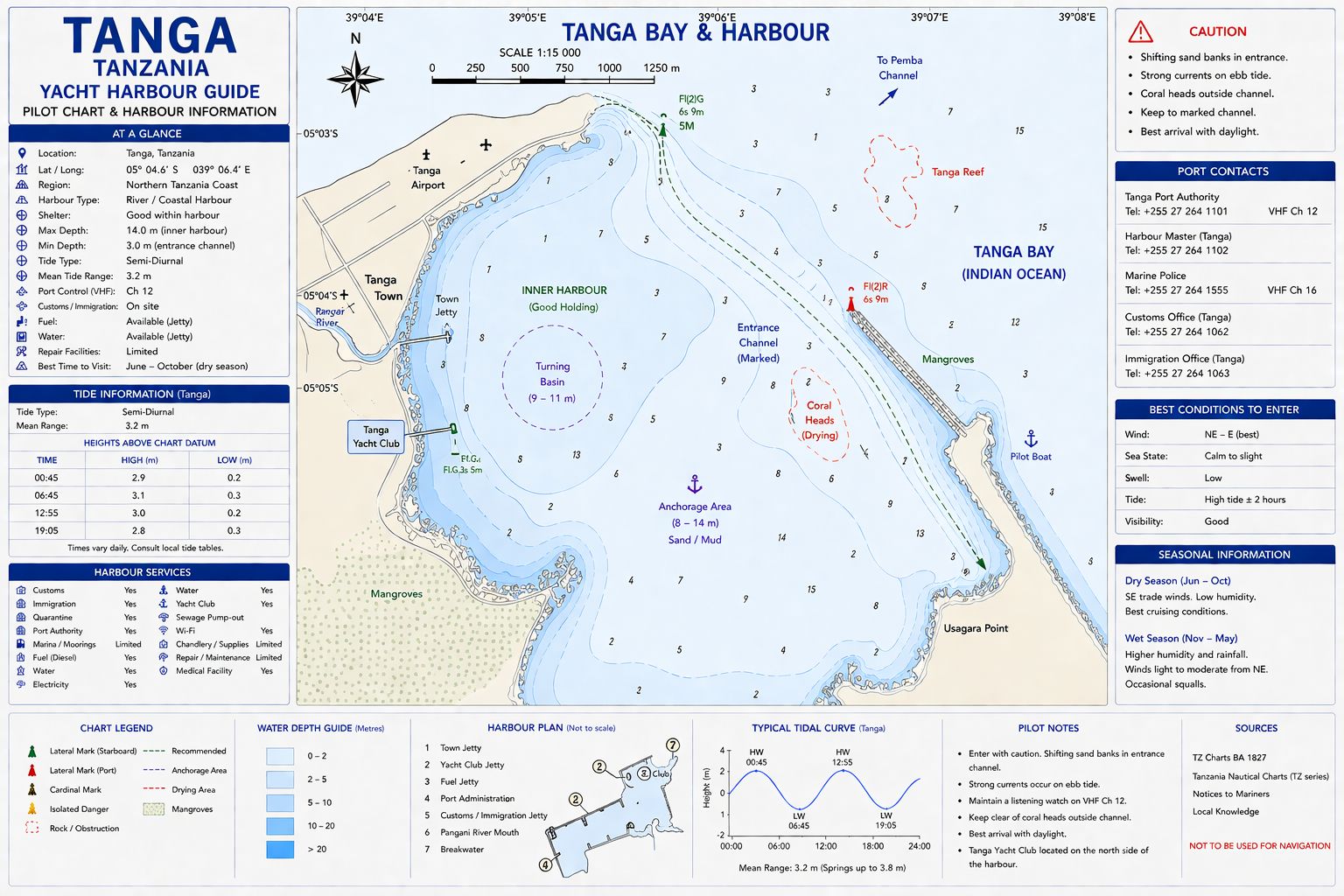
Tanga Yacht Harbour Guide. Tanga is a sheltered, low‑traffic harbour on the northern Tanzania coast, close to the Kenya border. It is a commercial port with two berths, controlled by the Tanzania Ports Authority, but unlike Dar es Salaam or Mombasa, it has a dedicated yacht access point through the Tanga Yacht Club (which is excellent and very friendly and hospitable), which provides a protected anchorage, shore access, and basic support for visiting yachts. The commercial port handles moderate cargo volumes, but vessel movements are predictable and low‑intensity compared to larger regional ports.
Yachts use Tanga as a clearance point, a repair stop, and a staging location for passages toward Pemba, Zanzibar, Kenya, and the wider western Indian Ocean. The harbour is calm year‑round, with minimal swell penetration and reliable holding. The town is compact, functional, and cruiser‑friendly, with hardware shops, fuel stations, and basic logistics support. I have been here a couple of times and a viable alternative to big ports.
Tanga Yacht Harbour
Guide - Approaches
Approaches to Tanga are straightforward, with deep water outside the bay and a gradual shoaling toward the harbour. The commercial port lists a 13 m depth at the main berths, confirming a deep‑water approach channel. Depths outside the entrance remain 20–30 m, reducing to 10–15 m inside the bay. The coastline is low and easy to identify, and the entrance is wide with no bar or surf.
Traffic density is low. Only a handful of commercial vessels arrive daily, and AIS targets are sparse. Local dhows and fishing boats operate near the shoreline but do not obstruct the approach channel. Visibility is good in most seasons, and daylight entry is recommended for identifying the yacht‑club mooring area and avoiding shallow patches near Toten Island.
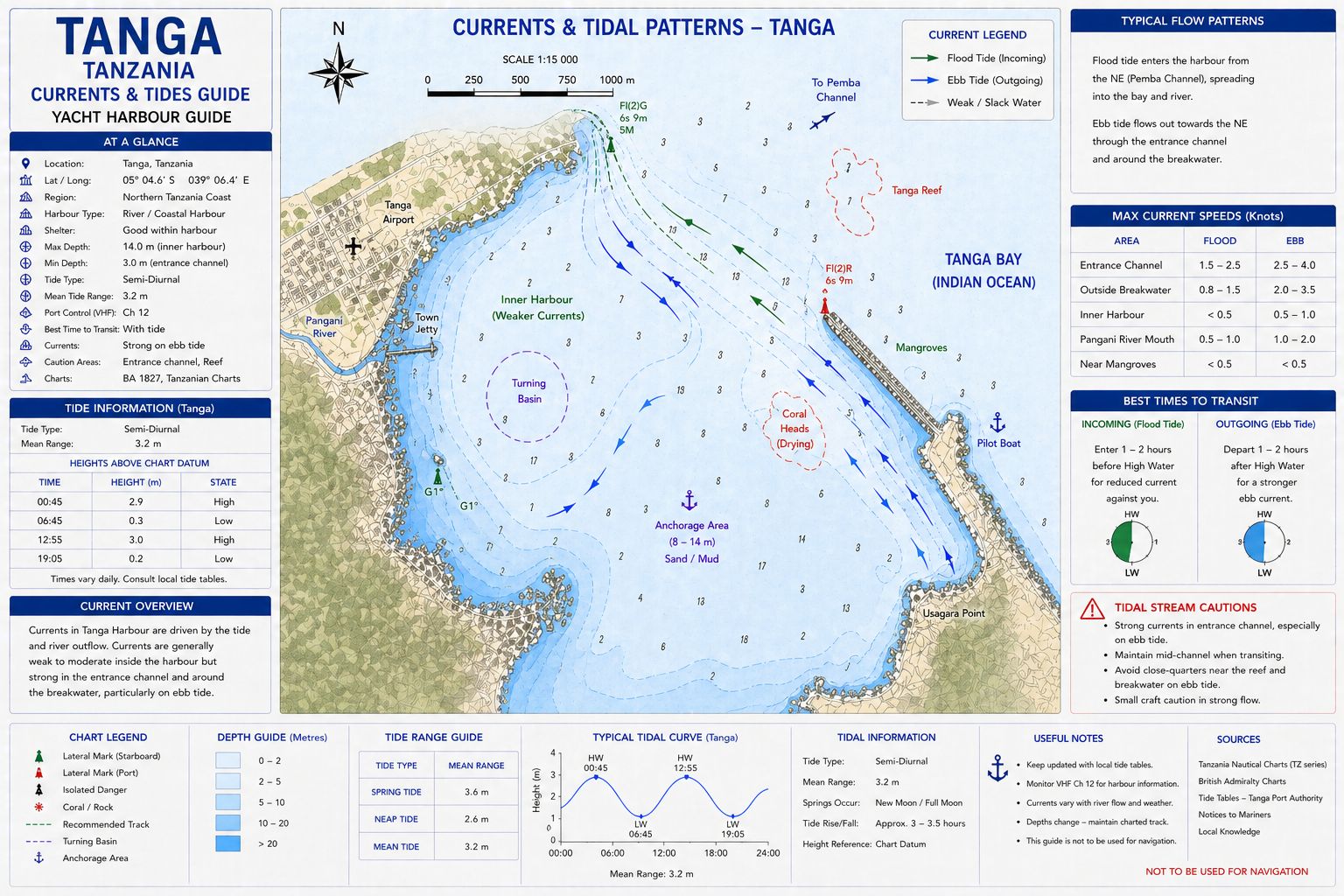
Tanga Yacht Harbour Guide – Ocean Currents and Tides
Tanga Yacht Harbour
Guide – Anchorage
The primary anchorage for yachts is directly off the Tanga Yacht Club, which provides a safe, protected anchorage year‑round. Depths in the anchorage are typically 6–10 m over mud and sand, with excellent holding. The bay is enclosed and unaffected by ocean swell, making it suitable for long‑term stays.
The anchorage is clear of commercial‑port traffic, and wash is minimal. Yachts must avoid the commercial berths and the turning basin to the south. Toten Island lies to the west of the anchorage and provides additional shelter from prevailing winds. Dinghy landing is at the yacht club, which offers secure access, showers, and a social environment for visiting crews.
Tanga Yacht Harbour
Guide – Entry and Clearance
Tanga is an official port of entry. Yachts anchor off the yacht club and proceed ashore for clearance. Immigration, Customs, and Port Authority procedures are handled in town. Documentation includes vessel registration, crew list, passports, and last port clearance. Fees are moderate and predictable. The commercial port is a controlled zone, and yachts do not enter the cargo‑berth area. All yacht movements occur within the northern section of the bay near the yacht club.
Tanga Yacht Harbour
Guide – Local Weather
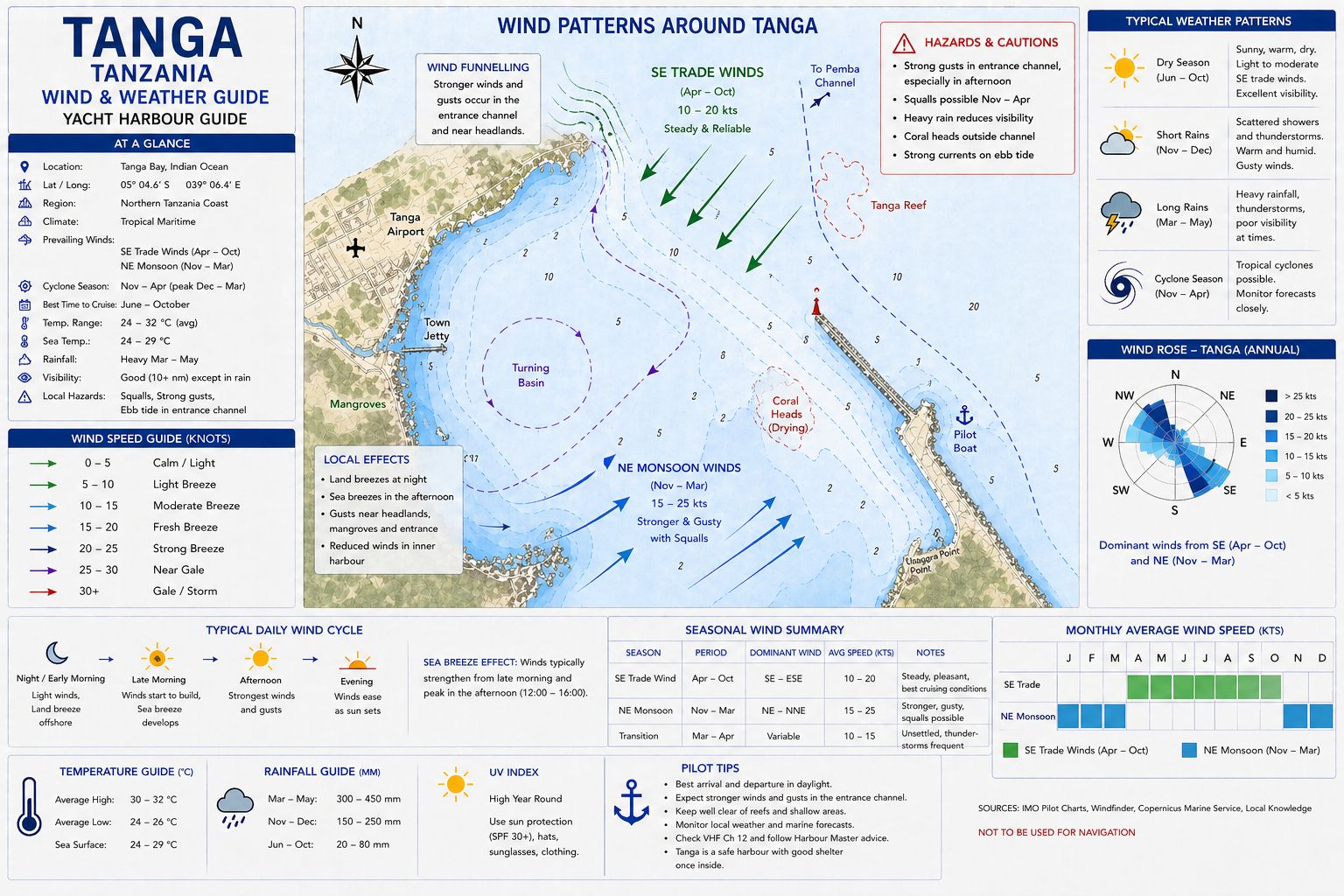
Tanga is sheltered from ocean swell and experiences stable conditions throughout the year.
- NE monsoon (Dec–Mar): light winds, calm seas, predictable anchorage.
- SE monsoon (May–Oct): stronger winds offshore, but the bay remains calm.
Rainfall peaks during the long rains (Mar–May), but visibility and holding remain reliable.
Tanga Yacht Harbour
Guide – Provisioning
Supermarkets. Mkwabi Supermarket. (Independence Avenue). Full‑range supermarket carrying dry goods, rice, flour, pasta, pulses, canned goods. One of the largest and most consistently stocked outlets in Tanga. S.D. Supermarket (Nasco). Mid‑scale supermarket with a broad mix of local and imported goods. Stocks fresh produce, packaged foods, Reliable for topping up staples and sourcing local spices. Central Supermarket (Street No. 3). General supermarket supplying dry goods, basic dairy. Okaz Centre. Mixed food‑and‑beverage retail outlet with packaged foods. These four outlets form the core provisioning footprint for yachts in Tanga. Stock levels are stable, and all are within short distance of the yacht club by tuk‑tuk or taxi.
Markets. Central Market (Market Street). Tanga’s main produce market. Supplies vegetables, fruit, herbs, spices, onions, tomatoes, leafy greens, bananas, citrus, root vegetables, and local staples. High turnover ensures fresh stock. Mgandini Market. Smaller neighbourhood market offering vegetables, fruit, and basic groceries. Useful for quick top‑ups when not needing the full Central Market run.
Seafood. Deep Sea Fish Market (Port Road). Main fish supply point in Tanga. Offers tuna, kingfish, snapper, reef fish, and seasonal species. Sold whole or cut to order. Turnover is steady due to local demand. Additional small‑scale fish sellers operate near the waterfront, but the Deep Sea Fish Market is the reliable, nameable source for yacht provisioning.
Tanga Yacht Harbour
Guide – Local Cuisine
Samaki wa kupaka. is fish grilled with coconut and spices. Mchuzi wa samaki is fish cooked in tomato, garlic, and ginger. Pilau is rice cooked with meat and whole spices. Mishkaki is skewered beef or chicken grilled over charcoal. Chapati is flatbread served with stews.
Tanga Yacht Harbour
Guide – Fuel Supplies
There is no yacht fuel dock, but fuel is easily obtained by jerry can from nearby roadside stations. Diesel and petrol quality is reliable. The yacht club provides secure dinghy access for fuel runs.
Tanga Yacht Harbour
Guide – Water Supplies
Potable water is available at the yacht club or by jerry can from shore facilities. Water quality varies, and most yachts rely on onboard filtration or water makers offshore.
Mechanical and Electrical Repairs
Resource
If you are headed somewhere remote consider the need to expand your knowledge base or have an information resource on board. Why not get a copy of my book The Marine and Electrical and Electronics Bible 4th Edition. By and for yachties, with everything from batteries and charging, solar and wind, diesel engines and marine electronics and so much more. Your complete systems guide. 650 pages of practical advice. In Australia and New Zealand order a copy through Boat Books. UK and European boats can buy the UK Edition Here. US and Canadian boats can get the US Edition Order Here. Marine systems are my profession so let me help you. By a liveaboard boat owner for other boat owners



Tanga Yacht Harbour
Guide – Marine Services
Tanga offers more yacht‑relevant services than most Tanzanian ports due to the yacht club’s hands‑on boatyard, which includes careening poles, a powered workshop, and a local team capable of basic repairs and maintenance. Hardware shops in town supply basic materials, and DHL operates locally for parts shipments. Haul‑out for large yachts is limited, but small‑craft careening is possible. Chandlery supply is minimal, and specialist work must be arranged through Dar es Salaam or imported.
Tanga Yacht Harbour
Guide – Local Customs
Tanga expects calm, polite interaction, and officials respond best to measured, respectful communication. A short greeting such as Habari or Mambo before any request is normal, and handing over documents, money, or goods is always done with the right hand. When dealing with Immigration, Customs, or Port Authority, the tone is formal, and it is customary to wait until an officer asks for documents rather than placing them on a desk uninvited. Photography of port facilities, vessels, or staff is not permitted, and entering any restricted area without explicit instruction is treated seriously. Clothing should be modest when visiting government offices, with shoulders and knees covered.
In town, Tanga is conservative, and modest dress is expected for both men and women. Public displays of affection are avoided, and loud or confrontational behaviour is frowned upon. When buying from markets, it is normal to inspect produce before purchase, but touching goods without acknowledgement is considered rude; the vendor will indicate when handling is acceptable. Cash is preferred, and small notes are appreciated. Declining an offer is done politely with a simple “Asante, hapana.” Photography of people requires permission, and photographing women without consent is considered disrespectful.
Near mosques and religious areas, shoes are removed before entering any prayer space, and visitors do not enter prayer halls unless invited. Passing directly in front of someone praying is avoided, and during the call to prayer, loud conversation near mosques is discouraged. Security awareness is part of normal behaviour in Tanga; valuables are kept out of sight, dinghies are secured when left ashore, and walking alone at night in unlit areas is avoided. Along the waterfront, local fishing access is respected, and tying a dinghy to any fishing boat or structure requires asking first, as nothing is assumed to be public.
Tanga Yacht Harbour
Guide – Summary
Tanga is a sheltered, cruiser‑friendly harbour with a reliable anchorage, straightforward clearance, and a functional yacht‑club support environment. It is quieter and more manageable than Dar es Salaam or Mombasa, with predictable traffic patterns and minimal swell. Provisioning, fuel, and water are accessible via short trips ashore, and basic repairs can be handled locally. For yachts moving along the northern Tanzania coast or staging for Kenya, Pemba, or Zanzibar, Tanga provides a secure and operationally efficient stop. Tanga Yacht Harbour Guide for all you need to know.