Greek Island Sailing Guide
Greek Island Sailing Guide. Greece is a multi‑basin cruising environment spanning the Ionian Sea, the Aegean Sea, the Saronic Gulf, the Cyclades, the Dodecanese, the Sporades, the northern Aegean and Crete, with each basin defined by steep depth gradients, narrow channels, engineered harbours and island passages shaped by seasonal wind regimes. The coastline is a mix of rocky headlands, deep natural bays, engineered breakwaters and compact marina basins, with port infrastructure ranging from large commercial harbours to small municipal quays. The operational environment is dominated by the Meltemi in the central and northern Aegean, the lighter thermal systems of the Saronic Gulf and the more stable summer patterns of the Ionian Sea.
The region functions as a continuous chain of interconnected basins where island spacing, fetch exposure, acceleration zones and harbour geometry determine routing and timing. The Ionian Sea provides wide approaches and predictable sea states, the Aegean Sea requires attention to strong northerlies and short‑period seas between islands, and Crete introduces long‑fetch northerlies along its north coast with variable conditions to the south. The entire coastline supports stern‑to mooring, anchor deployment in confined spaces and harbour entry through engineered breakwaters.
Greek Island Sailing
Guide - Primary Ports by Region
There are over 6000 Greek Islands and islets and at best count 227 are inhabited to cruise around and all are unique. There are many others which are great for anchoring and exploring. In addition to the many great archeological sites to visit, beautiful villages and places to hike, and there are many island specialties to try and buy. So many local foods to eat at tavernas, restaurants and kafeneia. From the Mediterranean, Cyclades, Ionian to the Aegean there many places to call into, one can never tire of the Greek Islands.
Ionian Sea: Corfu, Gouvia, Preveza, Lefkada, Sami, Argostoli, Zakynthos, Paxos, Antipaxos, Ithaca, Meganisi. Other Ionian Islands include Othonoi, Ereikoussa, Mathraki, Kalamos, Kastos, Kefalonia, Zakynthos, Kythira, Antikythira, Elafonisos. Other local destinations include Mourtos (Syvota) on the Mainland Epirus coast. Plataria on the Mainland Epirus coast. Palairos on Mainland Aetolia-Acarnania, Ionian (opposite Lefkada). Katakolo on the Western Peloponnese coast, Ionian side. Uninhabited / Private Islands worth a visit. Atokos (east of Ithaca), Arkoudi (south of Lefkada), Oxia (Echinades group), and Petalas (Echinades group)
Peloponnese: Patras, Kalamata, Pylos, Gytheio, Monemvasia.
Saronic and Argolic Gulfs: Piraeus, Lavrio, Rafina, Nafplio, Aegina, Poros, Hydra, Spetses. Other Saronic Gulf islands include Salamina, Agistri, Dokos and Methana. Porto Heli lies on the Argolic Gulf (Saronic region). Ermioni is on the Argolic Gulf (Saronic region) and Leonidio on the East Peloponnese coast (Myrtoan Sea, often grouped with Saronic cruising routes)
Cyclades: Mykonos, Paros, Naxos, Syros, Tinos, Andros, Santorini, Ios, Amorgos. The Cyclades also include Kea, Kythnos, Serifos, Sifnos, Milos, Kimolos, Folegandros, Sikinos, Thirasia, Anafi, Antiparos, Donousa, Schinoussa, Iraklia, Ano Koufonisi, Kato Koufonisi. Uninhabited / Remote Islands worth visiting. Polyaigos (near Milos), Despotiko (near Antiparos), Rinia (Rineia) (near Mykonos), Gyaros (between Syros & Kea) and Keros (Small Cyclades)
Dodecanese: Kos, Rhodes, Symi, Kalymnos, Leros, Patmos, Karpathos, Kasos. The Dodecanese also includes Astypalaia, Pserimos, Telendos, Nisyros, Gyali, Tilos, Chalki, Kastellorizo, Ro, Lipsi, Arkoi, Agathonisi, Farmakonisi, Kinaros, Leipsoi. Offshore Islets & Wild Anchorages, Uninhabited / Lightly Inhabited Islands & Islets worth visiting. Arki (north of Patmos, Marathos (tiny islet near Arki), Strongyli (Stroggyli) and Saria (north of Karpathos)
Sporades: Skiathos, Skopelos, Alonissos. The Sporades also include Skyros, Peristera. Uninhabited / Protected Islands. Kyra Panagia (Alonissos Marine Park), Gioura, Psathoura and Piperi (strictly protected core zone)
Northern Aegean: Chios, Lesvos, Samos, Alexandroupoli, Kavala. The North Aegean islands also include Thasos, Samothrace, Lemnos, Agios Efstratios, Oinousses, Psara, Antipsara, Ikaria, Fournoi, Thymaina. Uninhabited / Remote Islets worth a visit. Antipsara (near Psara) Fournoi Islets (minor islets around Fournoi excluding the main inhabited island).
Northern Greece (Central Macedonia / Thermaic Gulf). Thessaloniki, Perea, Nei Epivates, Michaniona, Nea Moudania and Nea Kallikratia
South Aegean. Crete. The Crete region also includes Gavdos, Gavdopoula, Chrissi, Dia, Koufonisi (Lefki), Paximadia
Mainland East Coast (Euboea sector): Euboea, Skyros, Skiropoula, Skantzoura, Kyra Panagia, Gioura, Piperi, Peristera, Psathoura.
Greek Island Sailing
Guide - Navigation
Navigation in Greece is shaped by a combination of open‑sea crossings, narrow channels, island clusters, and strong seasonal winds. The Ionian Sea offers sheltered passages with predictable depth profiles and minimal hazards, while the Peloponnese introduces exposed capes and long coastal stretches that require attention during strong westerlies. The Saronic Gulf provides protected waters with dense traffic and well‑marked approaches. The Cyclades form a more challenging environment, with open‑sea gaps, accelerated winds around headlands, and steep underwater profiles that influence anchoring decisions. The Dodecanese and eastern Aegean combine deep channels, volcanic shelves, and narrow straits that require precise pilotage. Traffic density varies by region, with higher concentrations around Athens, the Saronic islands, and major ferry routes throughout the Aegean.
Greek Island Sailing
Guide - Chart Accuracy
Greece benefits from modern hydrographic surveys in major ports and channels, while some smaller harbours and remote anchorages may show discrepancies between charted and actual depths. Official ENCs provide the most authoritative digital representation of surveyed depths and harbour layouts, though coverage varies by region. Navionics offers strong general accuracy but may show minor offsets in older marina basins or rapidly developing waterfronts, particularly in the Cyclades and Dodecanese. C‑Map behaves similarly, sometimes presenting more conservative depth shading in shallow approaches, while Garmin BlueChart typically aligns with Navionics but may lag in reflecting recent construction or dredging works. Satellite imagery remains the most reliable tool for identifying shoal patterns, volcanic shelves, sediment plumes, and unmarked obstructions, particularly around the Cyclades, the Dodecanese, and the northern Aegean. Cross‑checking electronic charts against visual references, depth trend logic, and updated notices ensures accurate pilotage when entering Greek ports or navigating nearshore features.
Greek Island Sailing
Guide - Weather
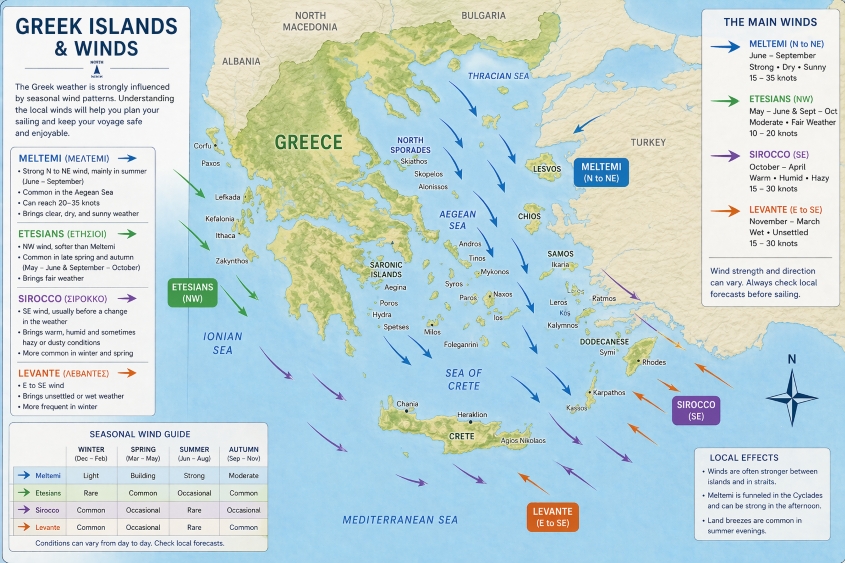
Weather in Greece is dominated by the Meltemi, a strong northerly wind that affects the Aegean during summer and can produce challenging conditions, particularly in the Cyclades and eastern Aegean. These events can persist for several days, creating steep seas and requiring conservative routing decisions. The Ionian Sea is more sheltered, with predictable thermal breezes and occasional strong westerlies influencing sea state. The Peloponnese introduces localised acceleration zones around major capes, while the Dodecanese experiences a mix of Meltemi influence and regional wind patterns shaped by nearby landmasses. Seasonal patterns are well‑defined, with stable summer conditions and more variable weather in spring and autumn. Localised effects around islands, channels, and headlands can influence wind strength and direction, requiring attention when planning passages.
The Meltemi is a strong, dry northerly wind that dominates the Aegean in summer, accelerating through channels and between islands to produce steep, short seas. It is most persistent in July and August, often blowing for several days with little diurnal variation, creating fast north‑to‑south passages and challenging return routes. Its strength is shaped by pressure gradients between the Balkans and Anatolia, with local acceleration zones around major island gaps.
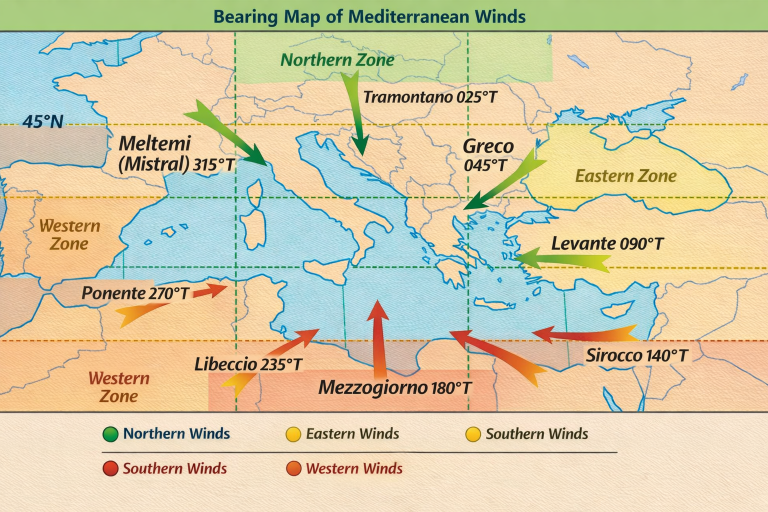
The Greco is a northeasterly wind that affects the central and western Mediterranean, flowing from the Balkans toward Italy and the Tyrrhenian basin. It is generally cool and dry, producing clear visibility and moderate seas aligned to its axis, though it can freshen rapidly when pressure gradients tighten between central Europe and the central Mediterranean. Its influence is most noticeable along Italy’s Adriatic and Tyrrhenian coasts, where it can create choppy, short‑period conditions on exposed approaches. The Greco often appears as part of wider regional patterns involving the Bora, Tramontane and Levante systems.
The Marine Electrical and Electronics Bible has a complete list of Greek VHF Radio Channel information and weather forecast times for Greece along with NAVTEX UK and Europe and NAVTEX Mediterranean for 490kHz and 518kHz.
Greek Island Sailing
Guide - Entry Formalities
Greece is part of the Schengen area, requiring yachts arriving from outside Schengen to complete immigration and customs procedures at designated ports of entry. Once formalities are completed, movement within Schengen is straightforward, with no additional immigration checks when continuing to Italy, Albania, Turkey, or Cyprus. Clearance procedures are consistent and well‑defined, with harbourmaster, immigration, and customs offices typically located within the same port complex. Greece requires a cruising log (DEKPA or TEPAI depending on vessel type and registration), and yachts must ensure compliance with local regulations regarding radio equipment, safety gear, and port reporting requirements.
Greek Island Sailing
Guide - Provisioning
Provisioning in Greece is reliable and comprehensive, with widespread access to supermarkets, markets, fuel stations, and marine services across both mainland and island sectors. Major ports such as Athens, Corfu, Lefkada, Preveza, Rhodes, and Kos offer extensive technical support, while smaller towns provide adequate supplies for routine needs. Fuel quality is consistent, and spare parts are readily available in larger centres. Island provisioning varies by location, with the larger islands offering strong networks, while smaller islands may require planning for seasonal availability. The density of provisioning points across Greece’s extensive maritime network supports both short‑range island hopping and longer offshore passages.
Greek Island Sailing Guide - Beverages
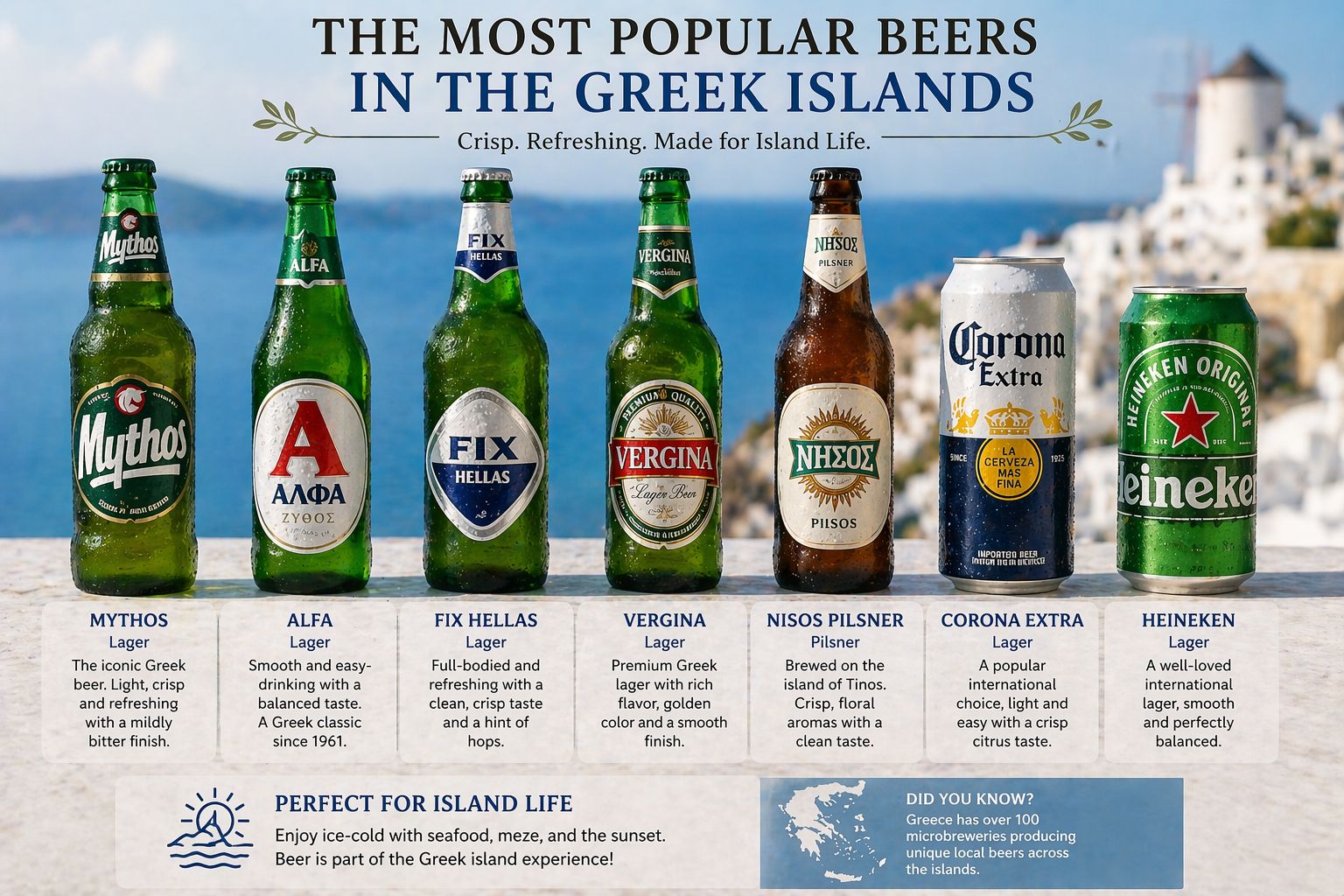
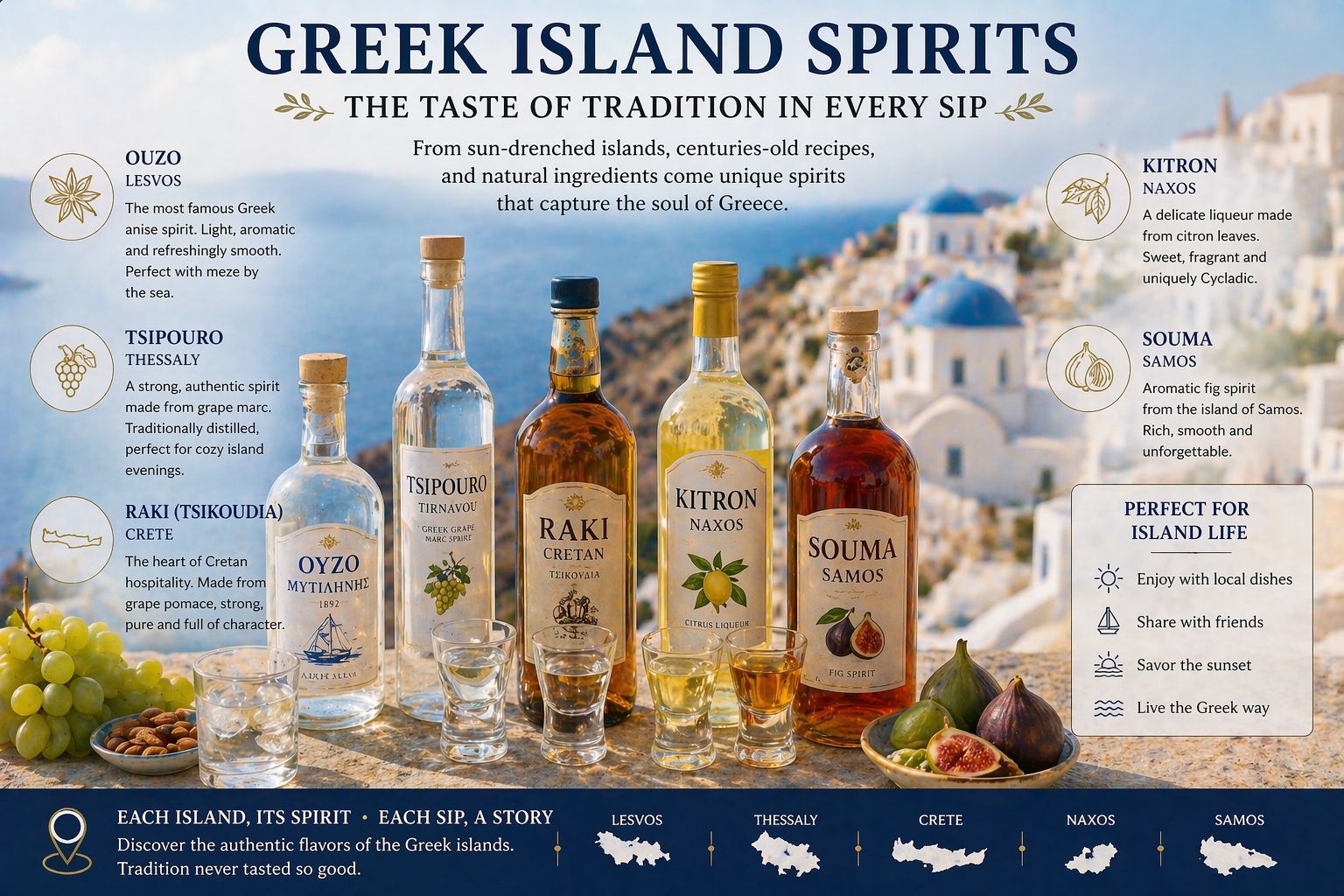
Beer, wine, and spirits across the Greek islands are locally produced and widely available through tavernas, small bars, and provisioning outlets. Beer is predominantly lager, with domestic brands including Mythos, Alfa, Fix, and Vergina alongside imported products; and over 100 microbreweries operate on several islands with limited distribution. Wine is region-specific, with white varieties dominant in the islands, including Assyrtiko, Moschofilero, and Roditis, alongside local table wines served in bulk; retsina remains in circulation as a resin-flavoured wine. Distilled products include ouzo (anise-based), tsipouro (grape marc distillate), raki or tsikoudia (Crete), souma (fig or grape distillate in eastern Aegean islands), and kitron (citrus liqueur from Naxos), with alcohol strength typically in the 37–45% range and higher for unregulated local distillations.
Greek Island Sailing Guide - About the Coffee
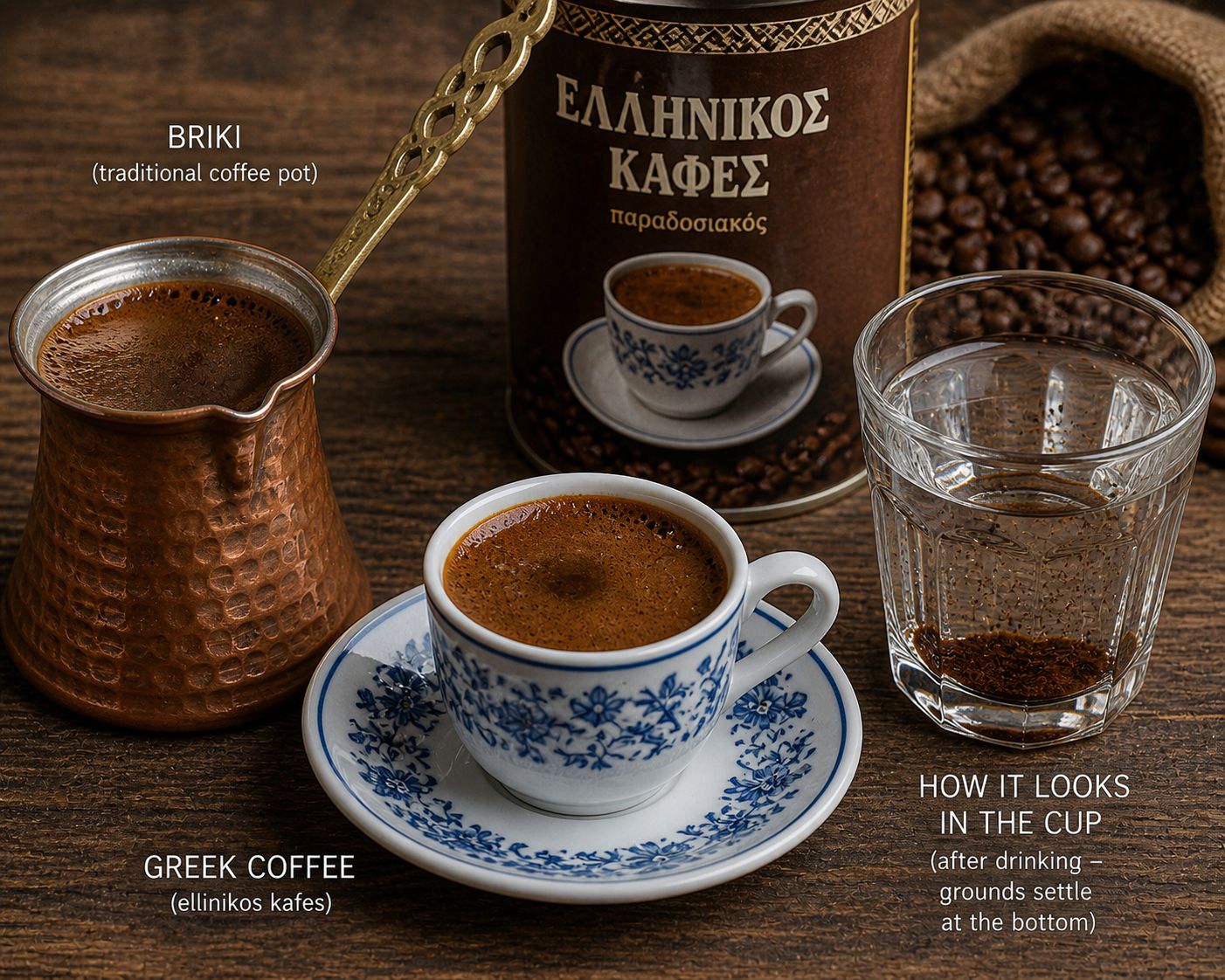
Greek coffee (ellinikos kafes) is a standard beverage throughout Greece, prepared by boiling very finely ground coffee with water in a small pot (briki) and served unfiltered in a small cup. The brew includes the grounds, which settle at the base, producing a dense liquid with a characteristic foam layer (kaimaki) on the surface. It is typically made to preference as unsweetened (sketos), medium (metrios), or sweet (glykos), and consumed slowly without stirring once served. For provisioning, it is widely available pre-ground in supermarkets and local shops, requires minimal equipment, and is well suited to onboard preparation due to its simple method and low storage requirements.
Mechanical and Electrical Repairs
Resource
If you are headed somewhere remote consider the need to expand your knowledge base or have an information resource on board. Why not get a copy of my book The Marine and Electrical and Electronics Bible 4th Edition. By and for yachties, with everything from batteries and charging, solar and wind, diesel engines and marine electronics and so much more. Your complete systems guide. 650 pages of practical advice. In Australia and New Zealand order a copy through Boat Books. UK and European boats can buy the UK Edition Here. US and Canadian boats can get the US Edition Order Here. Marine systems are my profession so let me help you. By a liveaboard boat owner for other boat owners



Greek Island Sailing
Guide - Summary
Greece functions as a multi‑basin cruising environment with distinct operational characteristics in each region, linked by a continuous chain of primary ports that support fuel, water, provisioning, marine services and inter‑island routing. The combination of deep natural bays, engineered harbours, predictable seasonal patterns and extensive port coverage makes Greece a fully integrated cruising hub with clear operational structure across all major basins. Greek Island Sailing Guide for all you need to know.