Kavala Greece
Sailing Guide
Kavala Greece Sailing Guide. Kavala is positioned on the northern Aegean coast of Greece at approximately 40°56′N 24°24′E, forming a significant regional port on the Thracian Sea. The town is built on a headland with harbour infrastructure extending along its southern and eastern faces. The port complex includes commercial quays, ferry terminals, and areas used by visiting yachts. The nearby island of Thasos lies to the east at a distance of approximately 6–10 nautical miles, providing partial geographic interruption to easterly sea states but not forming a fully sheltered basin.
The wider operating area includes open exposure to northerly and north-easterly wind systems, with no enclosing landmass to reduce fetch from these directions. The seabed profile offshore is relatively steep compared to deltaic regions further east, with depths reducing consistently toward the harbour approaches. There is negligible tidal influence, and all operational considerations are wind and traffic driven. The port functions as a working harbour, and yacht operations are secondary to commercial movement.
Kavala Greece
Sailing Guide History
Kavala has a continuous maritime history as a port on the northern Aegean coast within Greece, occupying a strategic position along east–west coastal trade routes. The site developed from the ancient city of Neapolis, serving as a harbour supporting inland connections to Macedonia and Thrace. It remained an active port through Roman and Byzantine periods, with infrastructure expanded under Ottoman administration, including aqueduct systems and fortified harbour structures. The port continued as a regional commercial and transport centre into the modern period, supporting tobacco trade and maritime logistics. Remaining features include the Ottoman aqueduct, fortifications above the harbour, and the established port layout reflecting long-term use as a coastal trading hub.
Kavala Greece
Sailing Guide - Approaches
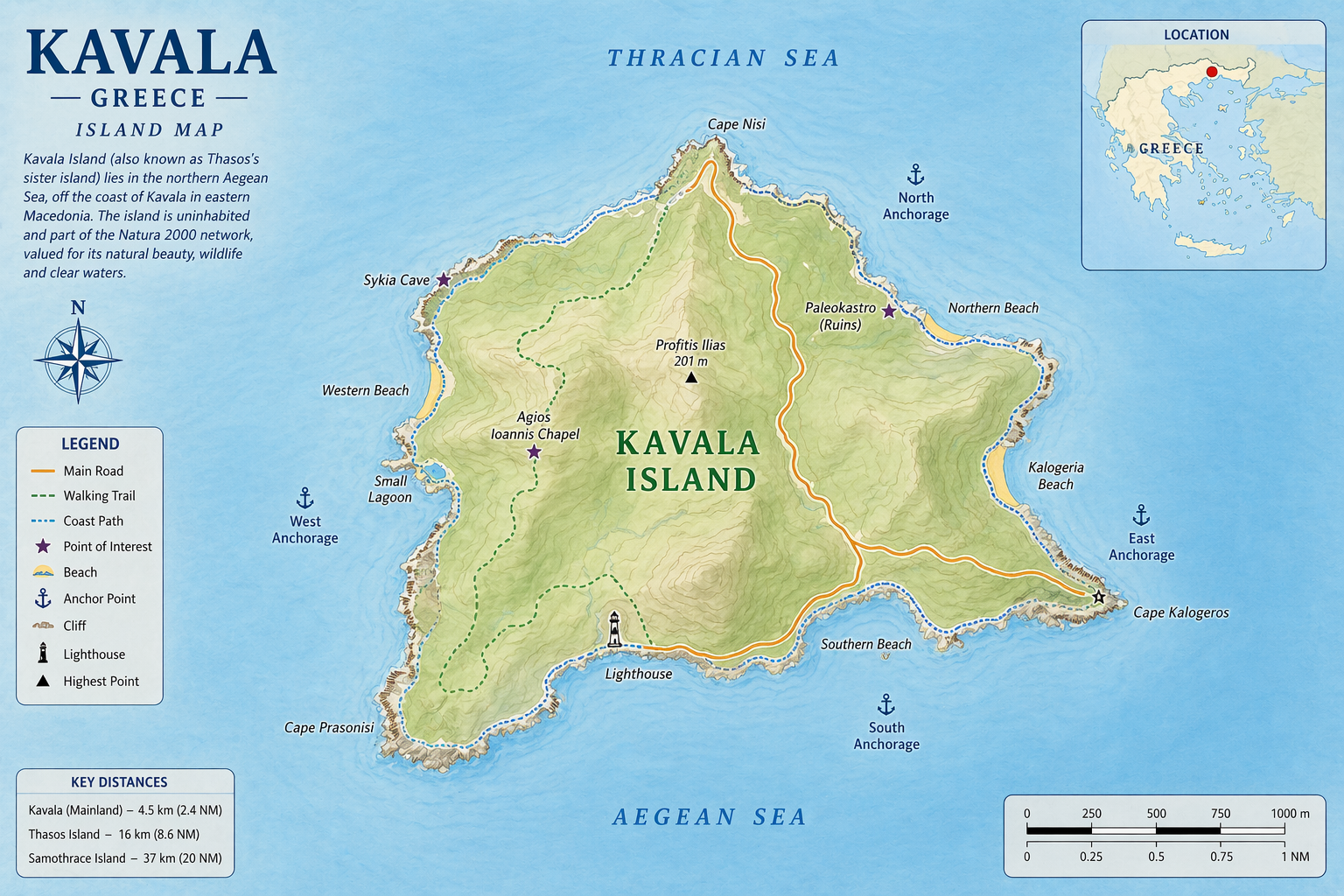
Approach to Kavala is direct from open water with no constrained channels or pilotage corridors. Offshore depths range from 40–80 m, decreasing steadily to 10–15 m within 0.5–1.0 NM of the harbour entrance. The seabed is generally consistent with no abrupt shoaling immediately outside the port, but attention is required to charted harbour limits. Sea state is governed by northerly and north-easterly winds, which produce short, steep waves in the approach sector. Easterly winds generate longer-period seas across the Thracian Sea. Southerly winds produce comparatively reduced sea state but may introduce crosswind components during harbour entry. Tidal range is typically 0.2–0.4 m with no operational tidal streams. No current-driven constraints exist, but wind-driven surface drift may affect low-speed manoeuvring.
Hazards include ferry traffic operating between Kavala, Thasos, and mainland ports, as well as commercial vessel movements within the harbour. Fishing activity is present along the coast, with nets and lines deployed without consistent marking.
Kavala Greece
Sailing Guide - Navigation
Navigation into Kavala Harbour is straightforward but requires continuous traffic assessment. Maintain watch on VHF Channel 16 and local port working channels. Commercial vessels have priority, and ferry movements follow fixed schedules with rapid turnaround. The harbour entrance is clearly defined by breakwaters, with adequate width for safe entry under normal conditions. Crosswinds can affect final approach alignment, particularly under northerly conditions. Internal manoeuvring space is sufficient for yachts but becomes constrained during peak ferry operations. Wash from ferries is significant and persistent within the harbour basin. Fishing gear may be encountered near coastal approaches and is not consistently marked.
Kavala Greece
Sailing Guide - Chart Accuracy
Charts issued by the Hellenic Navy Hydrographic Service are accurate for harbour layout, approaches, and depth soundings. ENC coverage aligns with official data. Local variations exist in quay usage, berth allocation, and temporary moorings. These are not always reflected in electronic chart systems. No significant discrepancies in depth data are reported in approach areas.
Kavala Greece
Sailing Guide - Anchorages
Anchoring in the immediate vicinity of Kavala Harbour is limited by traffic, exposure, and seabed conditions.
- West of the harbour, anchoring is possible in depths of 5–10 m over sand and mud with moderate holding. Shelter is dependent on wind direction, with exposure to northerly and easterly winds.
- East of the harbour, anchoring is influenced by traffic routes and reduced seabed consistency. Depths range from 6–12 m with mixed sand and mud and variable holding.
- Further shelter can be obtained by relocating toward Thasos, where lee conditions improve depending on wind direction.
No anchorage in the immediate Kavala area provides consistent protection across all conditions.
Kavala Greece
Sailing Guide - Entry Formalities
Kavala is a designated port of entry. Customs and immigration procedures apply to vessels arriving from outside the Schengen area. Documentation including vessel registration, crew lists, and identification must be available.
Movements involving nearby Turkish waters require full clearance procedures on departure and arrival. Harbour authority oversight applies within port limits. Drones are regulated under national aviation rules. Communications equipment must comply with Greek regulations. Waste discharge is controlled
Kavala Greece
Sailing Guide - Marina Facilities
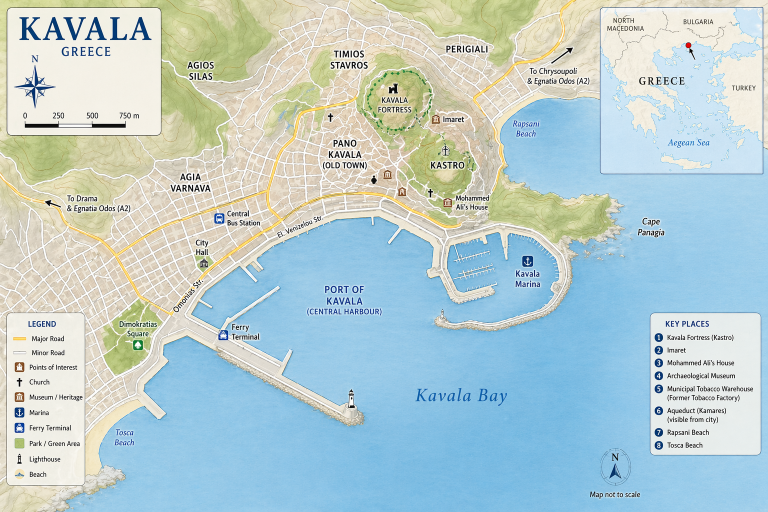
Berthing in Kavala is centred on Port of Kavala (Central Harbour) where vessels berth stern-to or alongside on town quays within the main harbour basin. Depths alongside are generally 5–8 m with adequate space for cruising vessels, though manoeuvring is constrained by commercial traffic and ferry operations. The harbour is sheltered with breakwater protection and controlled entry. Water and electricity are available at quay points with metered supply.
Additional berthing is available at Kavala Marina located within the harbour area, providing organised berths with laid lines, depths typically 3–5 m, and standard marina services including power and water. Facilities are more structured than the town quay with defined berthing arrangements.
Further options include Nea Peramos Harbour to the west, where vessels berth on fishing quays in depths of approximately 3–6 m with limited facilities and reduced traffic. Smaller coastal harbours provide additional berthing for shallow-draft vessels with basic access only.
Kavala Greece
Sailing Guide - Local Weather
Kavala operates under northern Aegean conditions with mixed continental and maritime influence. Summer conditions are generally moderate compared to the central and southern Aegean, with prevailing northerly to north-easterly winds typically 10–20 knots and occasional stronger periods reaching 20–25 knots. Sea state is moderate with shorter fetch inside Kavala Bay, providing more controlled conditions than exposed open Aegean areas.
The bay offers partial shelter, reducing wave height under northerly conditions, while local wind acceleration can occur around headlands and coastal features. Diurnal sea breeze effects develop in lighter conditions with winds increasing during the afternoon and easing overnight.
Winter conditions are more variable with passing systems bringing northerly and southerly winds, rain, and lower visibility. Stronger northerly outbreaks can produce short, steep seas in exposed areas, while southerly systems introduce longer-period swell into the bay. Tidal influence is negligible.
The Marine Electrical and Electronics Bible has a complete list of Greek VHF Radio Channel information and weather forecast times for Greece along with NAVTEX UK and Europe and NAVTEX Mediterranean for 490kHz and 518kHz.
Kavala Greece
Sailing Guide - Local Winds
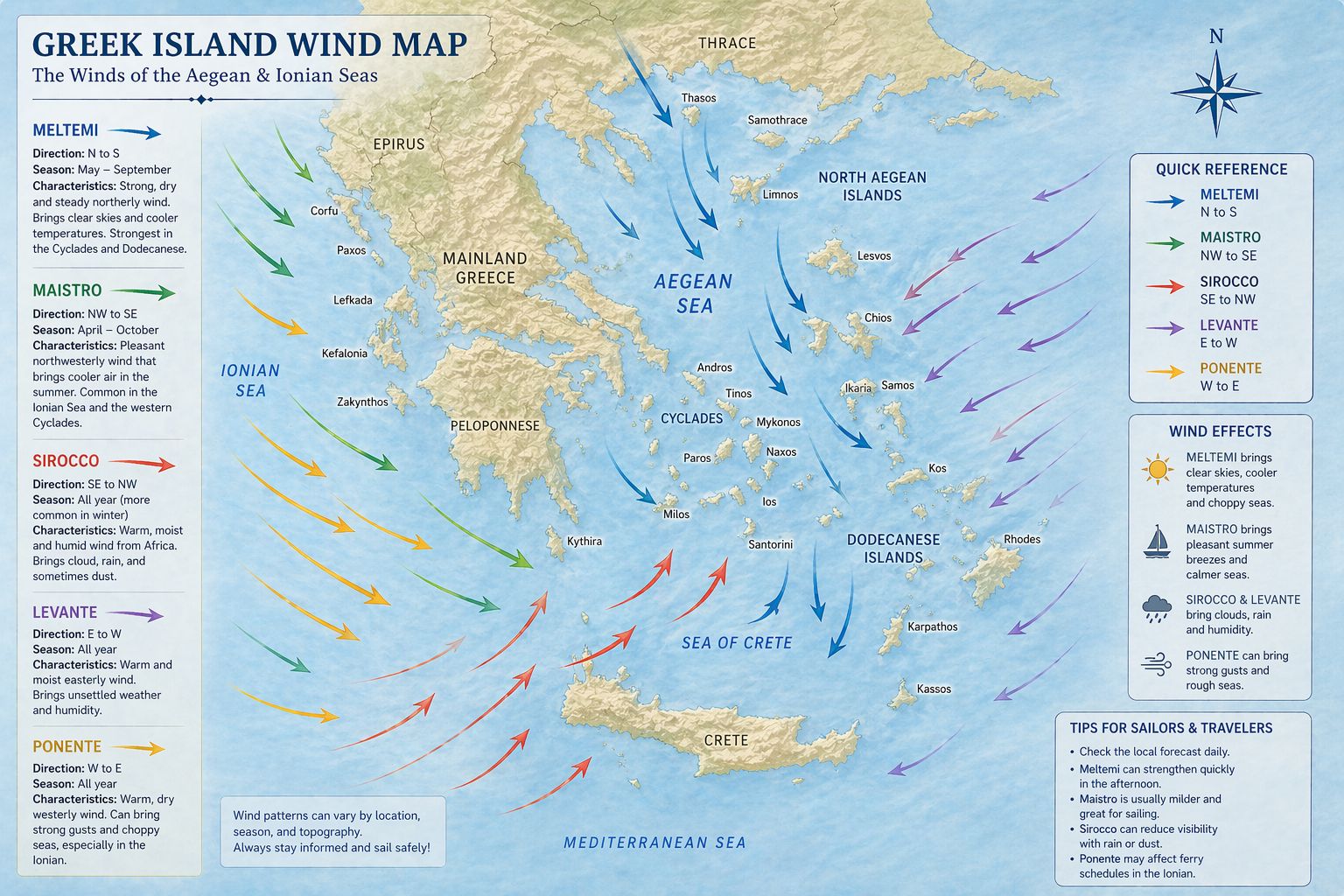
Kavala is influenced by northerly to north-easterly winds during summer, typically 10–20 knots with occasional increases to 20–25 knots under stronger regional patterns. These winds are moderated within Kavala Bay, though acceleration occurs around headlands and at the bay entrance, producing short, steep chop in exposed sectors.
Local sea breezes develop in lighter conditions, increasing through the afternoon and easing overnight, with variable direction close to shore. Northerly outbreaks can occur with stronger gradient flow, while southerly winds associated with passing systems bring longer-period swell into the bay and affect harbour conditions.
Kavala Greece
Sailing Guide - Provisioning
Supermarkets. Provisioning in Kavala is full-scale with multiple identified outlets. AB Vassilopoulos, Sklavenitis, Masoutis, and My Market operate large supermarkets across the town and along main access roads with consistent daily restocking suitable for complete reprovisioning. Additional independent supermarkets and minimarkets are distributed near the port and residential areas with stable turnover. Supply is supported by direct mainland logistics with no practical limitations on availability.
Markets. Produce distribution is centred on Kavala Municipal Market and surrounding greengrocers, bakeries, and specialist food shops. Supply includes vegetables, fruit, herbs, olive oil, cheeses, and dry goods sourced from regional agriculture in eastern Macedonia and Thrace. Local products include olives, olive oil, grapes, and vegetables with consistent availability. Weekly market activity supplements fixed outlets with seasonal produce and locally sourced goods.
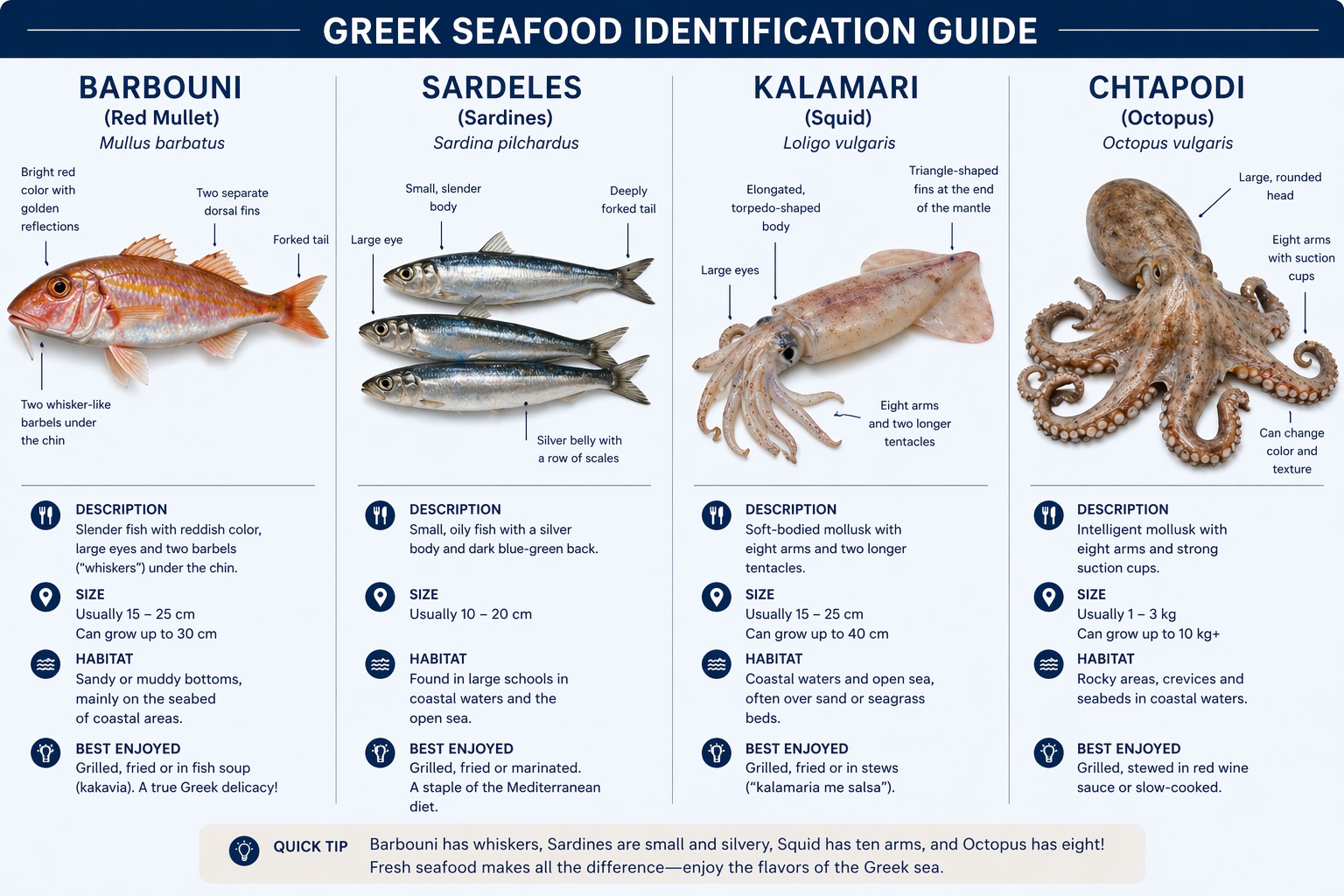
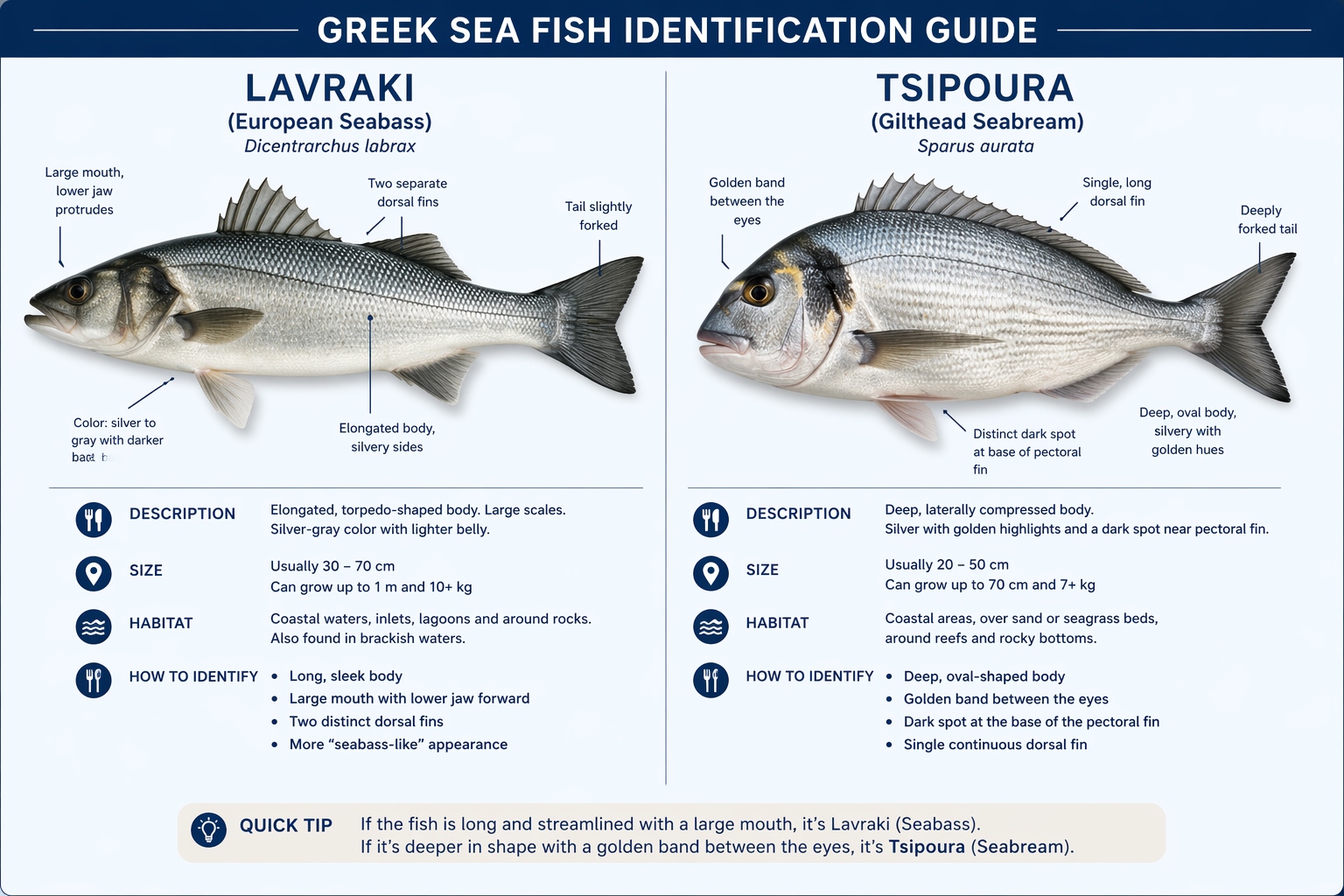
Fish Markets. Fish supply is available through fishmongers and vendors operating within the municipal market area and near the port. Species include lavraki (European seabass), tsipoura (gilthead seabream), barbouni (red mullet), sardines, anchovies, squid, and octopus, with consistent daily availability supported by regional fisheries. Volume is high relative to island locations with stable supply independent of local weather due to broader distribution networks.
Kavala Greece
Sailing Guide - Local Cuisine
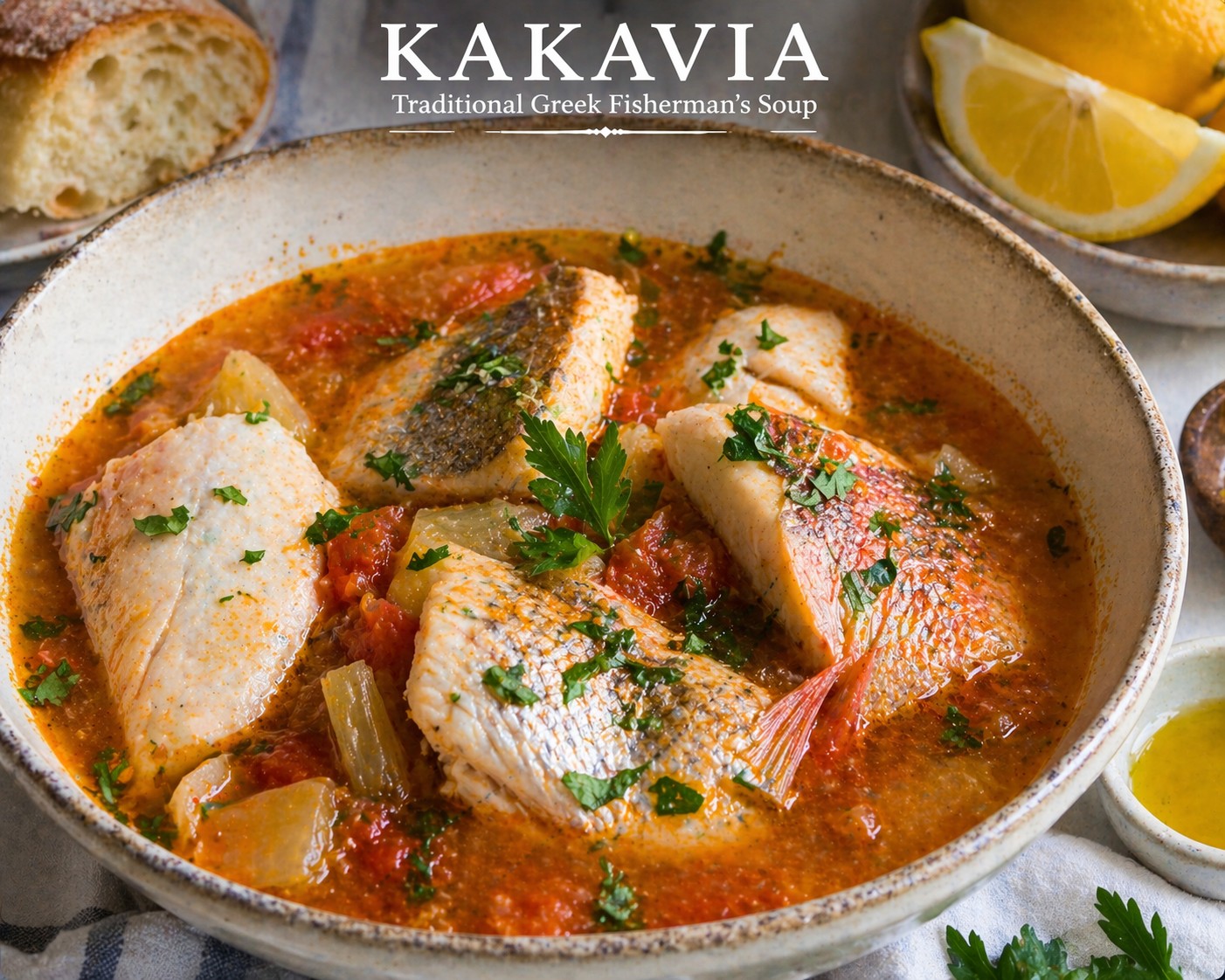
Kavala cuisine reflects northern Aegean and mainland Macedonia influence with emphasis on seafood, olive oil, vegetables, and preserved products. Signature dishes include grilled or baked lavraki (European seabass) and tsipoura (gilthead seabream), kakavia (fish soup), and seafood preparations using sardines, anchovies, squid, and octopus. Meat dishes include lamb and pork baked or slow-cooked with herbs, along with sausages and regional preparations influenced by inland Macedonian cuisine.
Vegetable dishes include greens, legumes, and tomato-based preparations, with olive oil as the primary cooking medium. Meals are structured around multiple small dishes combining seafood, meat, and vegetables, with simple preparation methods based on grilling, baking, and stewing.
Local products include olive oil, wine, and preserved foods. Kavala is historically associated with tobacco production, though this is not a food product, and with access to regional agricultural output including grapes, olives, and vegetables. Seafood supply is a defining component due to proximity to active fisheries in the northern Aegean.
Kavala Greece
Sailing Guide - Beverages
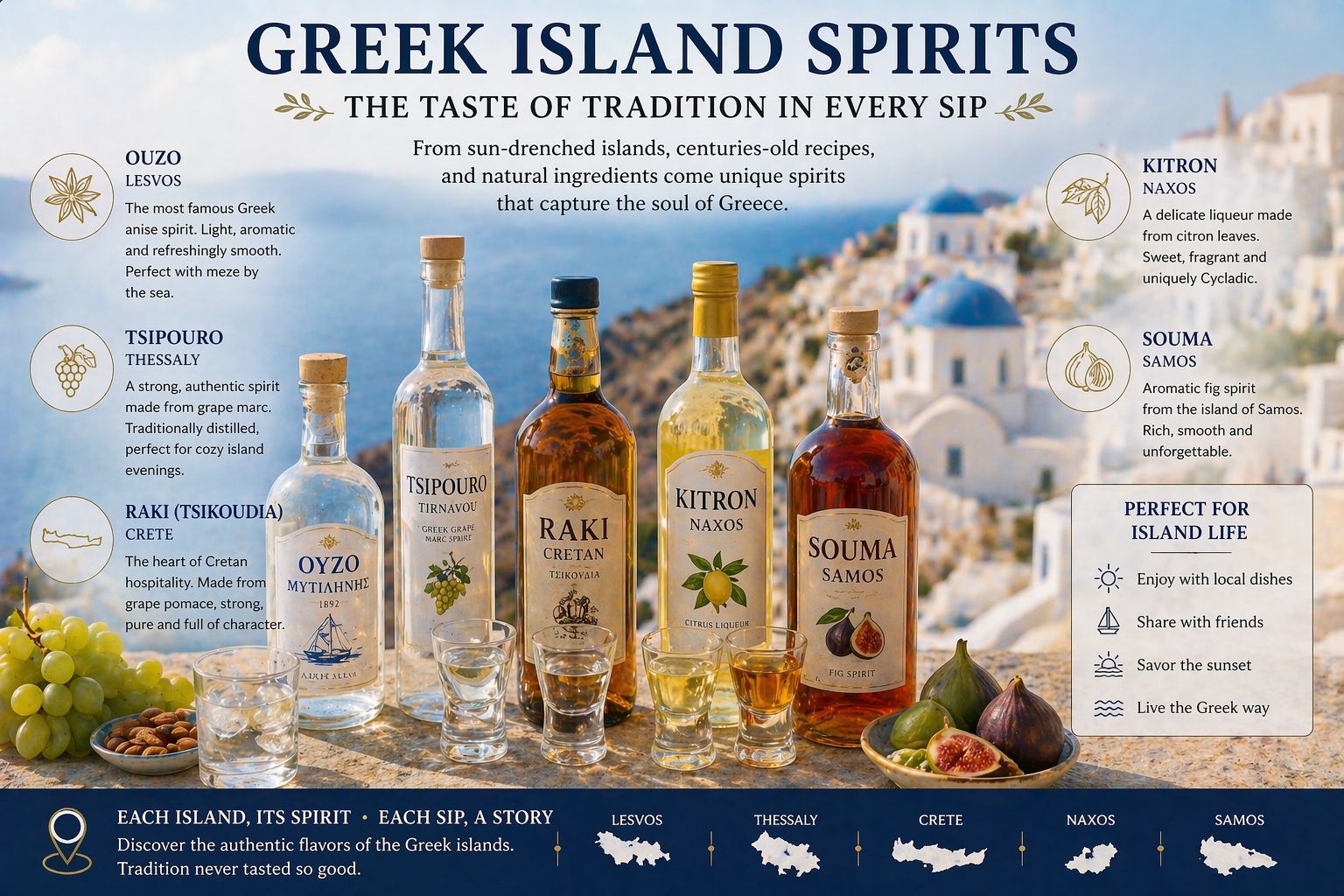
Beer, wine, and spirits across the Greek islands are locally produced and widely available through tavernas, small bars, and provisioning outlets. Beer is predominantly lager, with domestic brands including Mythos, Alfa, Fix, and Vergina alongside imported products; and over 100 microbreweries operate on several islands with limited distribution. Wine is region-specific, with white varieties dominant in the islands, including Assyrtiko, Moschofilero, and Roditis, alongside local table wines served in bulk; retsina remains in circulation as a resin-flavoured wine. Distilled products include ouzo (anise-based), tsipouro (grape marc distillate), raki or tsikoudia (Crete), souma (fig or grape distillate in eastern Aegean islands), and kitron (citrus liqueur from Naxos), with alcohol strength typically in the 37–45% range and higher for unregulated local distillations.
Kavala Greece
Sailing Guide - Fuel Supplies
Fuel in Kavala is available at Port of Kavala (Central Harbour) and Kavala Marina via fixed fuel berth and road tanker delivery, with marine diesel as the standard supply. Availability is consistent with high-volume mainland supply and minimal notice required. Fuel quality is standardised through regulated distribution. No fuel is available at anchorages or smaller secondary locations.
Kavala Greece
Sailing Guide - Water Supplies
Water is available at Port of Kavala (Central Harbour) and Kavala Marina via quay and marina connections with metered municipal supply. Pressure is stable and supply is continuous due to mainland infrastructure, with standard hose connections required. No water supply exists at anchorages or small secondary harbours.
Mechanical and Electrical Repairs
Resource
If you are headed to Kavala or somewhere remote consider the need to expand your knowledge base or have an information resource on board. Why not get a copy of my book The Marine and Electrical and Electronics Bible 4th Edition. By and for yachties, with everything from batteries and charging, solar and wind, diesel engines and marine electronics and so much more. Your complete systems guide. 650 pages of practical advice. In Australia and New Zealand order a copy through Boat Books. UK and European boats can buy the UK Edition Here. US and Canadian boats can get the US Edition Order Here. Marine systems are my profession so let me help you. By a liveaboard boat owner for other boat owners.


Kavala Greece
Sailing Guide - Marine Services
Marine services in Kavala are centred on Kavala with established support for diesel engines, electrical systems, and marine electronics. Local workshops and contractors provide servicing and repair for marine diesel engines, including support for Volvo Penta and Yanmar through authorised regional agents and parts supply networks. Electrical and electronics support is available for installation, diagnostics, and repair, including navigation systems such as Raymarine.
Kavala Greece
Sailing Guide - Local Customs
Interaction is direct and formal on first contact, with a greeting expected before any request or transaction. Conversation tone is measured and transactional, with limited small talk unless initiated locally. Personal space is closer than in northern Europe, but physical contact is minimal unless familiarity is established. Shore behaviour is conservative in non-tourist areas, particularly near churches and village centres where modest dress and low noise are expected.
In working environments such as quays, chandlers, and fuel delivery, communication is concise and task-focused; instructions from port staff or line handlers are followed without negotiation. Assistance between skippers is common but not assumed, and consent is required before handling lines, equipment, or boarding another vessel
Kavala Greece
Sailing Guide - Summary
Kavala is a northern Aegean commercial port with direct open-water approaches and moderate exposure. Harbour operations are influenced by traffic and wind rather than tidal effects. Anchorage options are limited and require wind assessment. Provisioning and basic services are available with reliance on regional centres for major support. Kavala Greece Sailing Guide for all you need to know.