Patras Greece
Sailing Guide
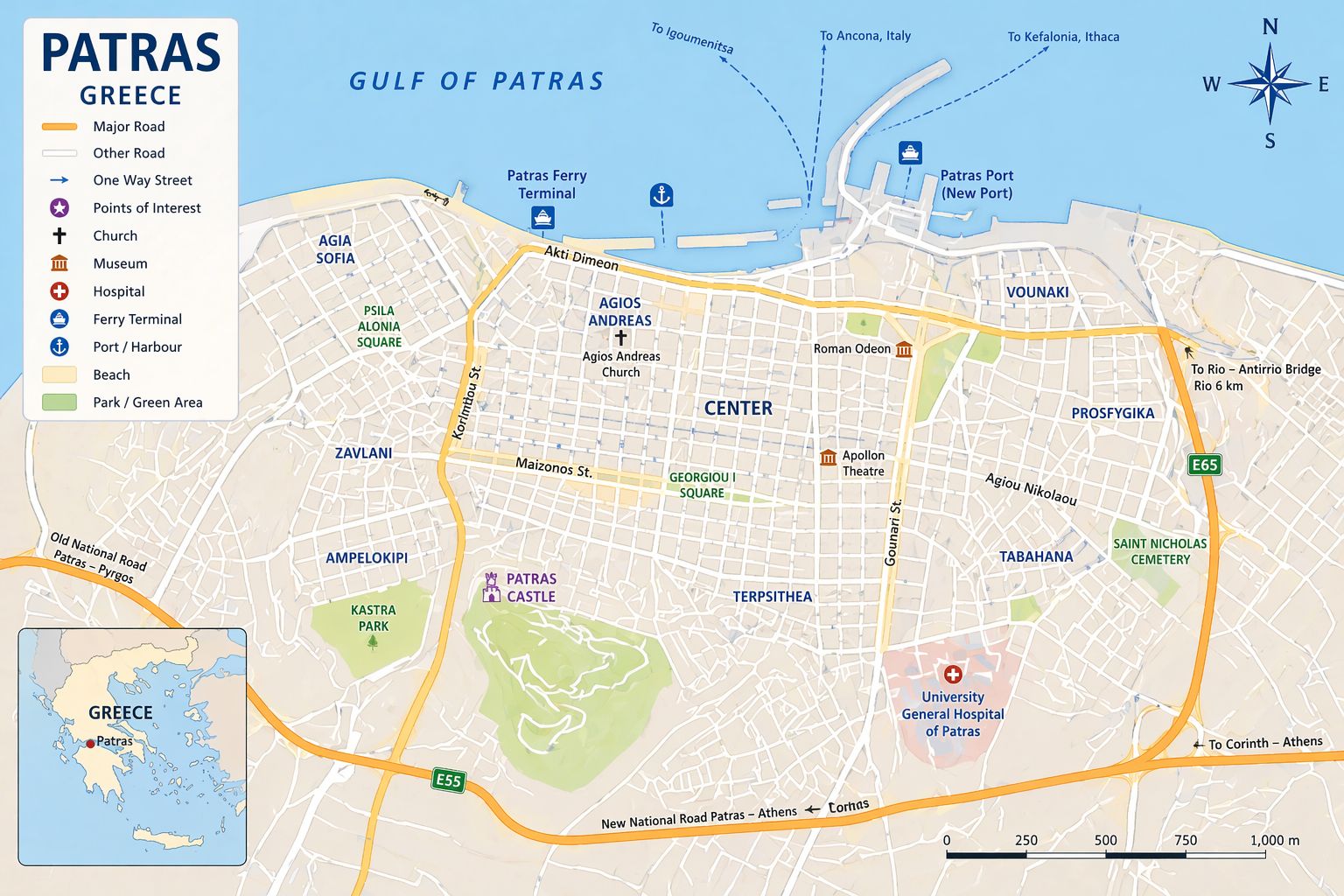
Patras Greece Sailing Guide. Patras is a major mainland port on the north-west Peloponnese within Gulf of Patras, forming a key gateway between the Ionian Sea and the Corinth Canal routes at approximately 38°15′N 21°44′E. The harbour is large and commercially active, handling international ferries, cargo vessels, and regional traffic, with associated marina and yacht berthing located within or adjacent to the port complex. The surrounding coastline is low-lying with extensive urban development, and approaches are made over generally deep water with well-defined navigation channels and port controls.
For cruising yachts, Patras functions primarily as a transit and logistics hub rather than a destination anchorage. Its position at the junction of west–east passage routes makes it a practical staging point for movements toward the Ionian Islands, the Corinth Canal, or the Saronic Gulf. Navigation is straightforward but requires awareness of heavy commercial traffic and adherence to port authority procedures. Facilities ashore are extensive, reflecting its role as one of Greece’s principal ports, with reliable access to services, provisioning, and transport links.
Patras Greece
Sailing Guide - History
Patras has a long history as a major port on the north-west Peloponnese within Greece, with origins in antiquity as part of the Achaean region. It developed as a coastal settlement supporting trade and maritime movement across the Gulf of Patras, linking inland agricultural production with wider Mediterranean routes. Under Roman rule, Patras expanded significantly as a colonial and commercial centre, with infrastructure and port activity increasing its regional importance.
In the Byzantine and later Venetian and Ottoman periods, the city continued to function as a strategic harbour, though control shifted between powers reflecting wider regional conflicts. Patras played a role in the early stages of the Greek War of Independence, after which it developed into a modern port city. In the 19th and 20th centuries, expansion of harbour facilities and transport links reinforced its position as a principal gateway between Greece and western Europe. Today, Patras remains one of the country’s major ports, supporting ferry routes, commercial shipping, and regional maritime activity.
Patras Greece
Sailing Guide - Approaches
Approach is made from the west via the Gulf of Patras or from the east via the Gulf of Corinth through the Rio–Antirrio strait. Depths in approach waters are generally 20–60 m, reducing to 8–15 m approaching harbour limits. The Rio–Antirrio strait is a constricted passage approximately 2 km wide with bridge clearance overhead. Currents can reach 2–3 knots depending on wind conditions and pressure differences between the two gulfs. Wind-against-current conditions produce short, steep seas in the strait. Sea state in the Gulf of Patras is influenced by westerly winds generating moderate fetch. Easterly winds produce reduced sea state in the western approach but increase conditions within the Gulf of Corinth. Tidal range is typically 0.2–0.5 m.
Hazards include dense ferry traffic crossing the strait, commercial shipping, and strong lateral set in the channel. Bridge transit requires attention to marked navigation spans and traffic separation. The port itself is large and heavily trafficked, with continuous ferry and commercial vessel movements requiring close attention to navigation and port procedures. Entry is through clearly defined breakwaters with dredged depths suitable for large vessels. Yachts should maintain a safe distance from commercial traffic lanes and monitor VHF as required. In moderate to strong winds, particularly westerlies, sea state can build within the gulf, while local effects near the harbour entrance may produce crosswinds and wash. Overall, the approach is straightforward but requires heightened awareness due to traffic density and port scale.
Patras Greece
Sailing Guide - Navigation
Navigation to Patras is straightforward in open water but requires careful pilotage within the Gulf of Patras and harbour approaches due to traffic density and local conditions. The gulf is well charted with generally deep water, allowing flexible routing, though attention is required for coastal shallows and harbour limits when closing the port. The Rio–Antirrio Bridge forms a key transit point when approaching from the east, with designated navigation spans clearly marked; strong currents and wind acceleration can occur in the strait, particularly under opposing wind and tidal flow conditions.
Pilotage becomes critical within the port area, where ferry movements, cargo vessels, and port operations are continuous. Entry channels are defined by breakwaters with maintained depths, and yacht movements should be planned to avoid interference with commercial traffic. Monitoring VHF and maintaining a clear situational awareness is essential. Manoeuvring space is adequate but affected by wash, crosswinds, and vessel movements.
Wind and sea conditions influence handling, with westerlies generating sea state within the gulf and gusts affecting harbour entry. Currents in the strait and near harbour approaches can create set and drift requiring correction on final approach. Standard navigation practice applies, with reliance on charted data, visual references, and electronic systems cross-checked
Harbour entry is controlled with designated approach lanes. The port includes multiple basins with restricted areas for commercial operations. Small craft movements must remain clear of ferry manoeuvring zones. Night navigation is supported by sector lights, lit buoys, and extensive shore lighting. Speed limits apply within harbour limits. Fishing activity occurs in coastal waters and near harbour approaches, with nets and lines not always clearly marked.
Patras Greece
Sailing Guide - Chart Accuracy
Charts issued by the Hellenic Navy Hydrographic Service are accurate for approaches, strait transit, and harbour areas. ENC data aligns with official charts for primary navigation features. Localised discrepancies may exist in small harbour installations, moorings, and minor shoreline detail. Current information from notices to mariners should be applied, particularly for traffic schemes and port works.
Patras Greece
Sailing Guide - Anchorages
Anchoring within the main commercial harbour is restricted. Limited anchoring is possible outside port limits. Offshore areas west of Patras provide depths of 10–20 m over mud with moderate holding but exposure to westerly winds. Sheltered anchorage options are limited due to commercial traffic density and coastline configuration. Within the Gulf of Corinth to the east, more sheltered anchorages exist but require transit of the Rio–Antirrio strait. Wind and current interaction is the primary factor affecting anchorage viability near the strait. Secondary harbours and anchorages exist around Patras but are influenced by exposure and proximity to the Rio–Antirrio strait.
- Nafpaktos Harbour lies east of the strait on the north shore of the Gulf of Corinth with a small enclosed basin, depths approximately 2–4 m, and limited space; anchoring is possible outside in 5–10 m over sand and mud with better shelter than Patras in westerlies.
- Rio Harbour is immediately adjacent to the bridge on the south side with depths approximately 3–6 m; it is affected by strong current and ferry wash, with limited suitability for overnight holding.
- Antirrio Harbour is on the north side of the strait with depths approximately 3–5 m and restricted space; conditions are directly influenced by current and traffic.
- Psathopyrgos Harbour north-east of the strait provides a small harbour with depths approximately 2–4 m and limited berthing; anchoring outside is possible in 5–10 m over sand and mud.
- Araxos Bay west of Patras provides open anchorage in depths 5–15 m over sand with moderate holding; exposure to westerly winds is direct.
- Kalogria Beach Anchorage offers anchoring in 4–10 m over sand with good holding in settled conditions but is exposed to westerlies.
No location in the immediate Patras area provides full protection. Conditions are governed by westerly winds in the gulf and current interaction near the strait
Patras Greece
Sailing Guide - Entry Formalities
Patras is a port of entry. Customs and immigration clearance is required for arrivals from outside Schengen areas. Harbour master clearance is required for all vessels. Vessel and crew documentation must be available for inspection. Traffic reporting may be required when transiting the strait or entering port areas. Drones are regulated under Greek aviation rules. Communications equipment must comply with national regulations. Waste discharge is controlled.
Patras Greece
Sailing Guide - Marina Facilities
Berthing in Patras is divided between a dedicated yacht marina and the wider commercial port complex, with facilities suited to both short-term stops and longer stays. The principal facility is Patras Marina, located in the northern port area, offering approximately 450 berths for vessels up to around 24–25 m LOA with typical depths of 2.5–3.5 m. The marina is protected by a substantial breakwater and includes fixed and floating pontoons, with stern-to and alongside berthing configurations. Shore services include electricity, potable water, sanitary facilities, Wi-Fi, and access to nearby restaurants, shops, and chandlery. Hardstand, crane (approx. 15-ton), and basic yard services are available for maintenance and lift-out.
Additional berthing is available within the commercial harbour and north port areas, where yachts may be accommodated on designated quays or in a mega-yacht anchorage zone with capacity for vessels up to approximately 35 m, offering water and electricity connections. These areas operate within an active port environment and require coordination with port authorities due to continuous ferry and cargo traffic.
Patras Greece
Sailing Guide - Local Weather
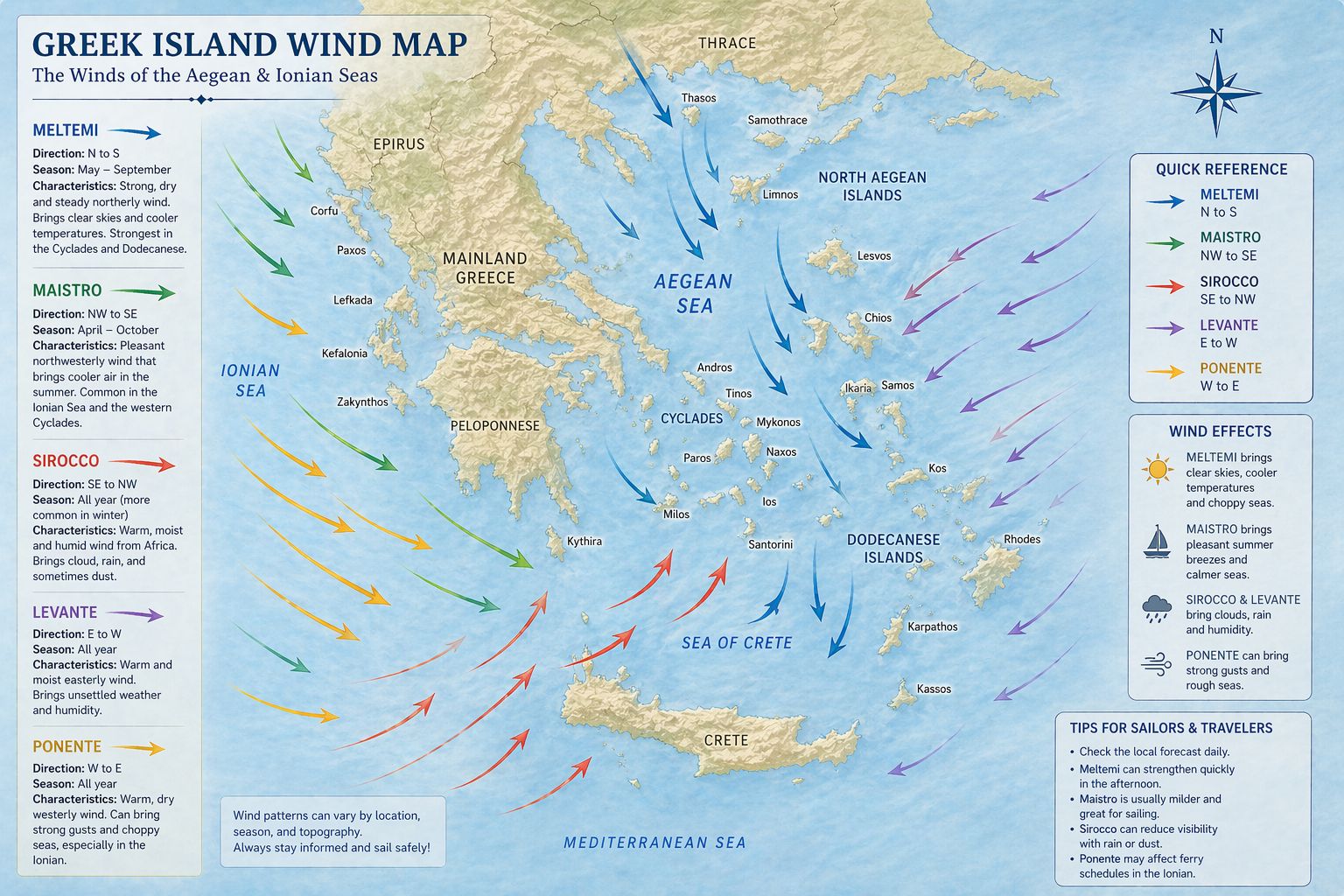
Weather in Patras is influenced by its position within the Gulf of Patras, creating a mix of Ionian and mainland climatic effects. Summer conditions are generally stable, with prevailing west to north-west winds typically 10–20 knots, occasionally increasing to 20–25 knots in the afternoon due to thermal effects. Sea breezes develop through the day and ease overnight, with moderate sea state building across the gulf under sustained winds.
The enclosed nature of the gulf reduces exposure compared to open Ionian waters, though fetch is sufficient to generate short to moderate waves, particularly under westerly flow. Local topography and the narrowing toward the Rio–Antirrio Strait can produce wind acceleration and gust variability, especially near the bridge and harbour approaches.
Outside the summer period, weather becomes more variable with passing systems bringing southerly and westerly winds, rainfall, and longer-period swell. Winter conditions can include strong winds and rapidly changing sea state within the gulf. Visibility is generally good outside frontal conditions, and tidal range is negligible.
The Marine Electrical and Electronics Bible has a complete list of Greek VHF Radio Channel information and weather forecast times for Greece along with NAVTEX UK and Europe and NAVTEX Mediterranean for 490kHz and 518kHz.
Patras Greece
Sailing Guide - Local Winds
Wind patterns around Patras are influenced by its position within the enclosed Gulf of Patras, producing a mix of Ionian and mainland wind systems with generally more moderate behaviour than the open Aegean. The prevailing summer winds are west to north-west, typically 10–20 knots, driven by regional pressure gradients and strong daytime thermal effects. These winds commonly freshen in the afternoon and ease overnight, creating a predictable daily cycle.
Unlike the central Aegean, the Meltemi (northerly Etesian wind system) has a reduced influence here, though it can occasionally extend into the region. When present, it remains weaker and less persistent than in the Cyclades, but still contributes to afternoon strengthening and gustiness. In general, Meltemi winds across Greece can reach 20–30 knots or more and persist for several days, though their impact in the Gulf of Patras is moderated by geography .
Localised wind effects are significant. The narrowing toward the Rio–Antirrio Strait produces acceleration and funneling, particularly under westerly or easterly flow, leading to gusts and short, confused seas. Westerly winds generate the most consistent sea state across the gulf, while easterly winds can create opposing conditions and irregular wave patterns.
Outside summer, wind conditions become more variable with passing weather systems. South-westerly winds (Lodos) can occur episodically, bringing stronger winds, squalls, and increased sea state . These events can produce rapid changes in conditions within the gulf and require careful monitoring.
Patras Greece
Sailing Guide - Provisioning
Supermarkets. Provisioning in Patras is full-scale and mainland-standard, with one of the most comprehensive supply networks of any Greek port. Large-format supermarkets are distributed throughout the city and within short distance of the marina and harbour. Identifiable chains include Sklavenitis, AB Vassilopoulos, My Market, Masoutis, and Lidl, all operating with continuous mainland logistics and daily restocking. These outlets provide complete provisioning capability including fresh produce, meat, dairy, frozen goods, dry stores, beverages, and household items suitable for extended offshore cruising. Smaller independent supermarkets and minimarkets are located near Patras Marina and within the town centre, offering convenient access for short-stay resupply. Bakeries, delicatessens, butchers, and specialist food stores operate throughout the urban area with high turnover and consistent quality.
Markets. Fresh produce distribution is centred on the Patras Central Market and surrounding retail streets, supported by numerous greengrocers and specialty suppliers. The market operates regularly with a wide range of vegetables, fruit, herbs, cheeses, olives, olive oil, and dry goods sourced from the Peloponnese and western Greece. There is an Organic Farmers market every Tuesday afternoon.
Weekly open-air street markets (laiki agora) operate in different districts of Patras, supplying seasonal produce, locally grown vegetables, and regional products. The Peloponnese hinterland provides consistent agricultural output including citrus, vegetables, olive oil, and wine, ensuring stable availability year-round.
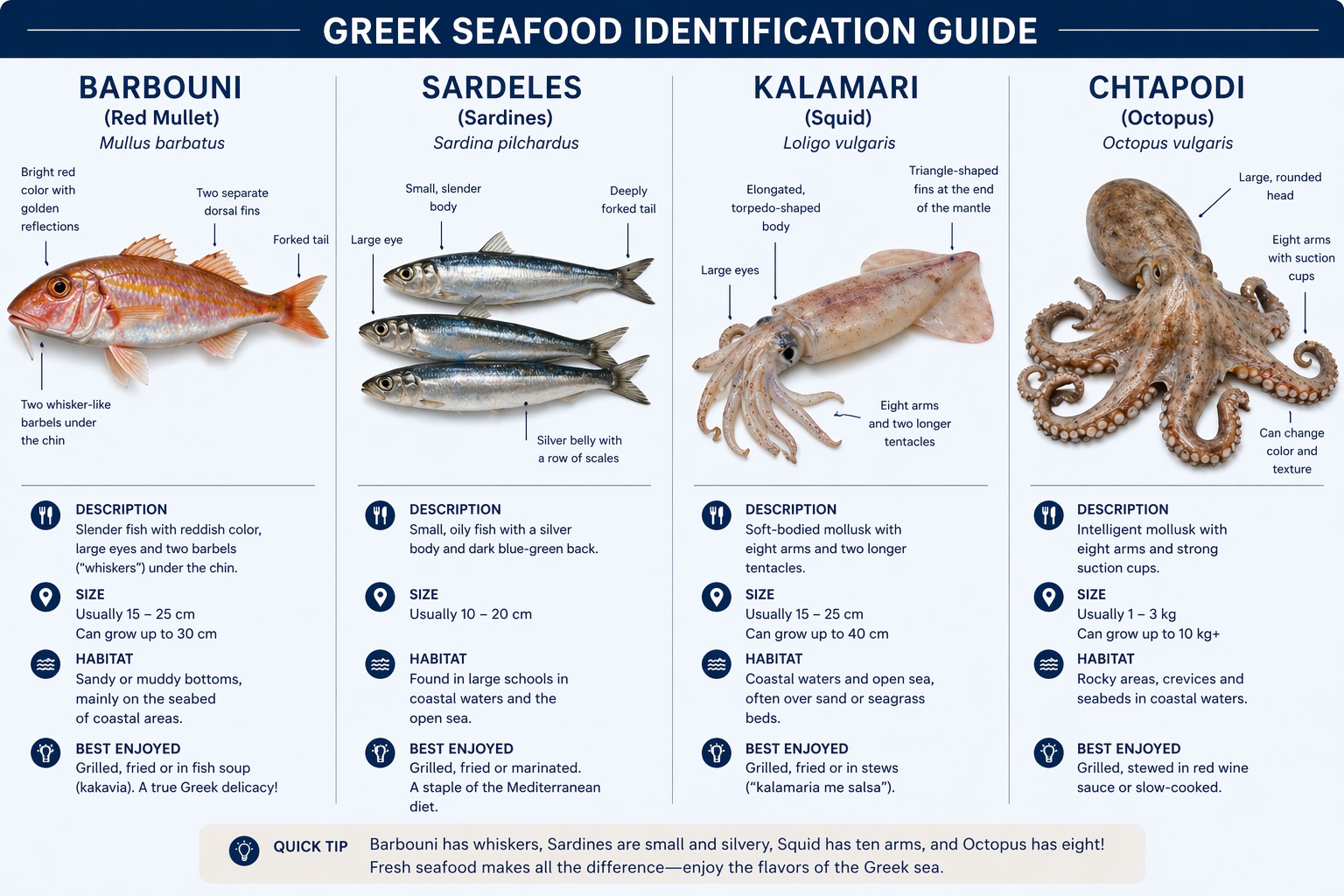
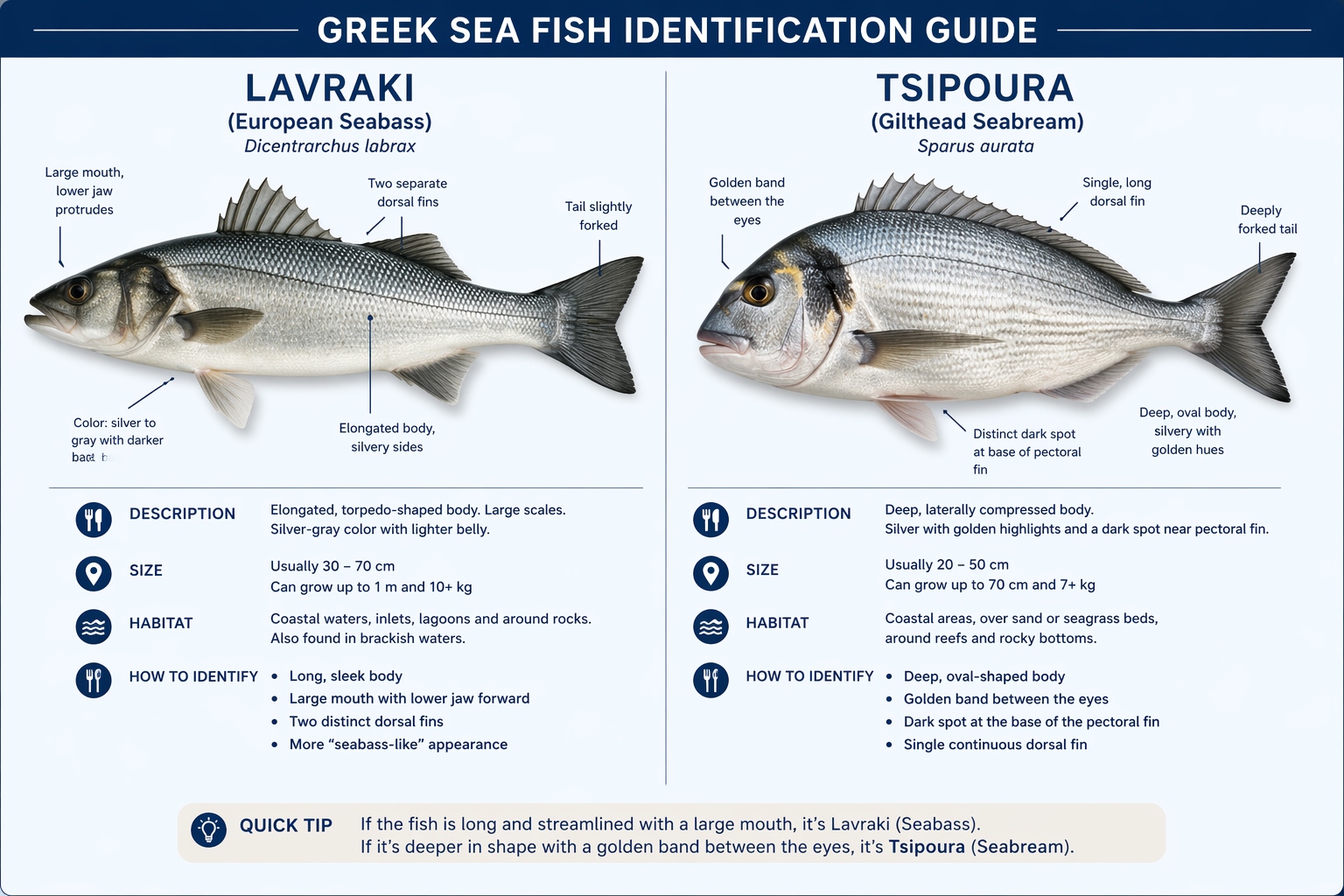
Fish Markets. Fish supply is strong and consistent, supported by both local fisheries in the Gulf of Patras and wider Ionian distribution networks. The primary supply point is the Patras fish market and harbour-side vendors, operating early morning aligned with landings. Species available include lavraki (European seabass), tsipoura (gilthead seabream), barbouni (red mullet), sardines, anchovies, squid, octopus, and seasonal varieties. Volume is moderate to high with reliable daily availability. Additional fishmongers are distributed across the city with consistent cold-chain supply.
Patras Greece
Sailing Guide - Local Cuisine
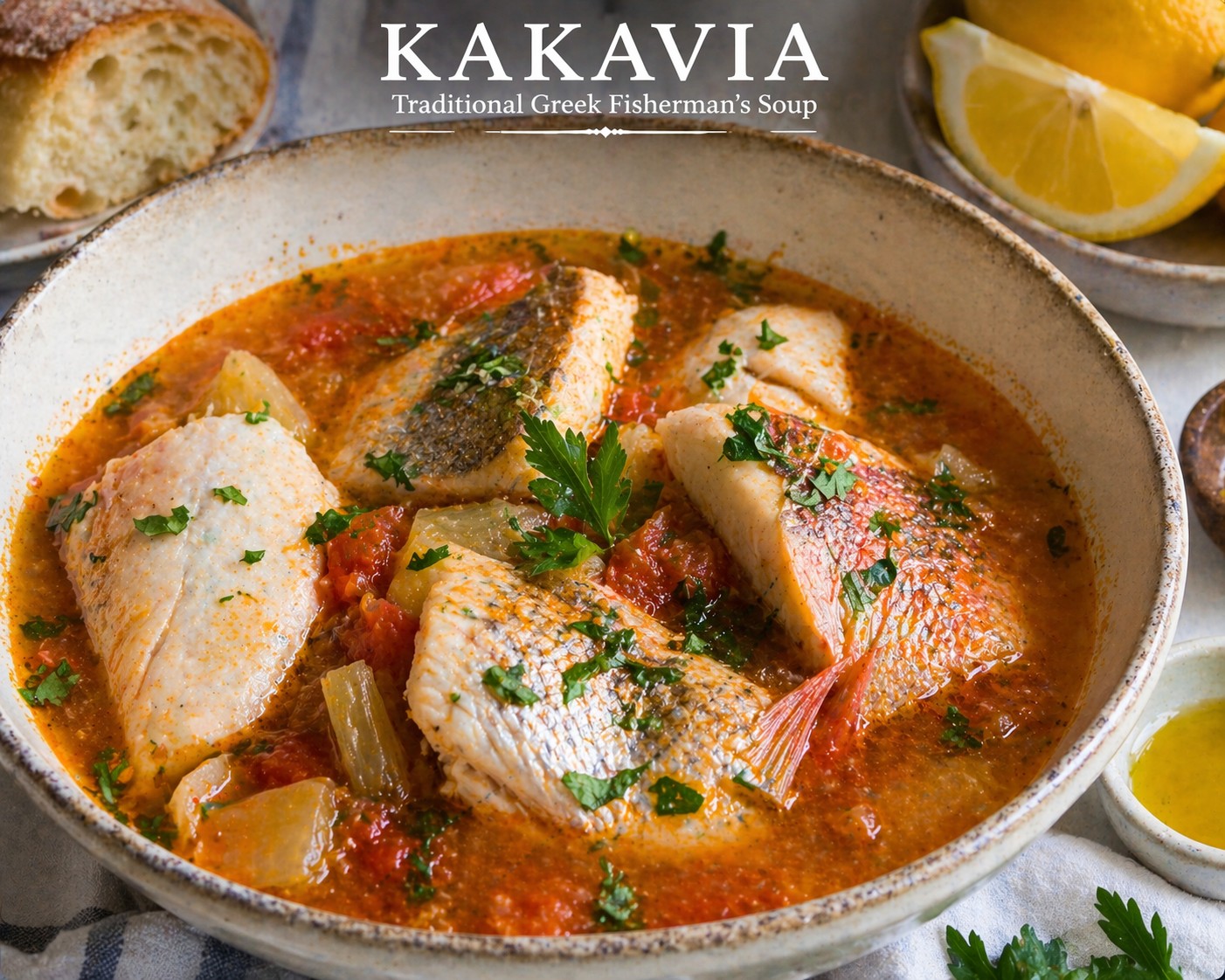
Cuisine in Patras reflects a mix of mainland Peloponnesian produce and Ionian coastal influence, with a number of identifiable dishes rather than a single defining style. Seafood is central but simply prepared, most commonly as grilled lavraki and tsipoura, whole fish cooked over charcoal with olive oil, lemon, and herbs. Traditional soups such as kakavia / psarosoupa are made from mixed fish, olive oil, vegetables, and herbs, forming a staple coastal dish. A more regional preparation is bourdeto, where fish is stewed in a sauce of red peppers, garlic, olive oil, and chilli.
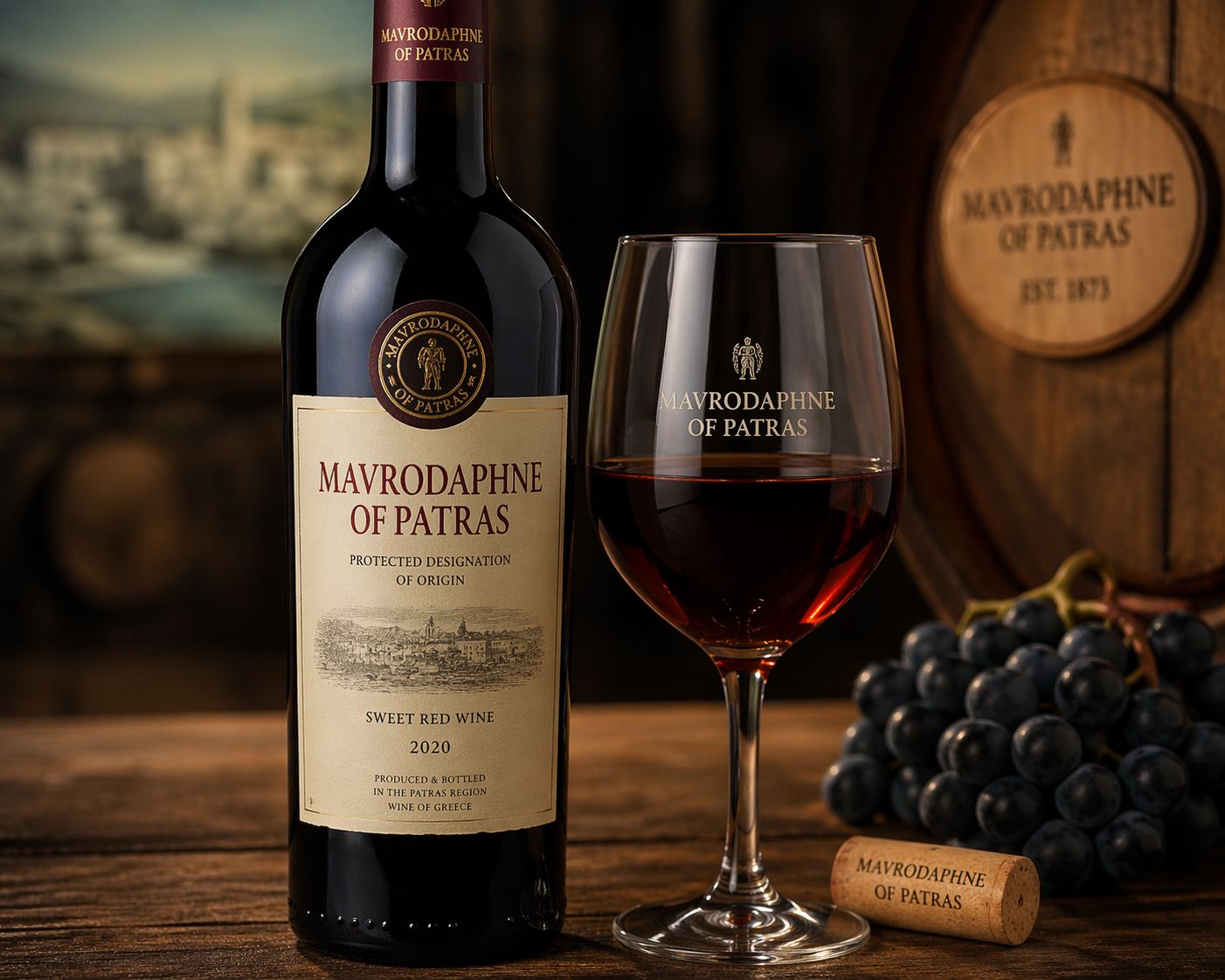
Meat dishes remain equally prominent, with souvlaki consisting of skewered pork or chicken grilled over charcoal and served with bread, while lamb or goat oven dishes are slow-cooked with potatoes, olive oil, garlic, and herbs. The region is particularly associated with its products, including Mavrodaphne, a sweet fortified red wine made from local grapes, and tentoura, a spiced liqueur produced from alcohol infused with cinnamon, clove, nutmeg, and citrus.
Desserts follow established Greek forms, including baklava made from layered pastry, nuts, and syrup, kadaifi using shredded pastry with nuts and syrup, and loukoumades, fried dough balls served with honey and sometimes cinnamon. Overall, cuisine in Patras is defined by these recognisable dishes and products, presented within a broader, consistent mainland Greek food culture.
The surrounding Achaea region also produces strong volumes of olive oil, made from locally grown olives, and citrus fruits, particularly oranges and lemons from the Peloponnese hinterland, which support both local cuisine and broader Greek supply chains. In addition, the area contributes to Greek wine production more broadly, with dry white and red wines produced alongside Mavrodaphne.
Patras Greece
Sailing Guide - Beverages
The most important local product is Mavrodaphne of Patras, a sweet fortified red wine made from the Mavrodaphne grape. It is produced in vineyards around Patras and is one of Greece’s most recognised wine styles, typically aged and characterised by dark fruit, spice, and a slightly oxidative profile. This is closely associated with the city is tentoura, a traditional local liqueur produced by macerating spices such as cinnamon, clove, and nutmeg with citrus peel in alcohol. It is distinctly Patras-based and widely consumed locally, often served after meals.
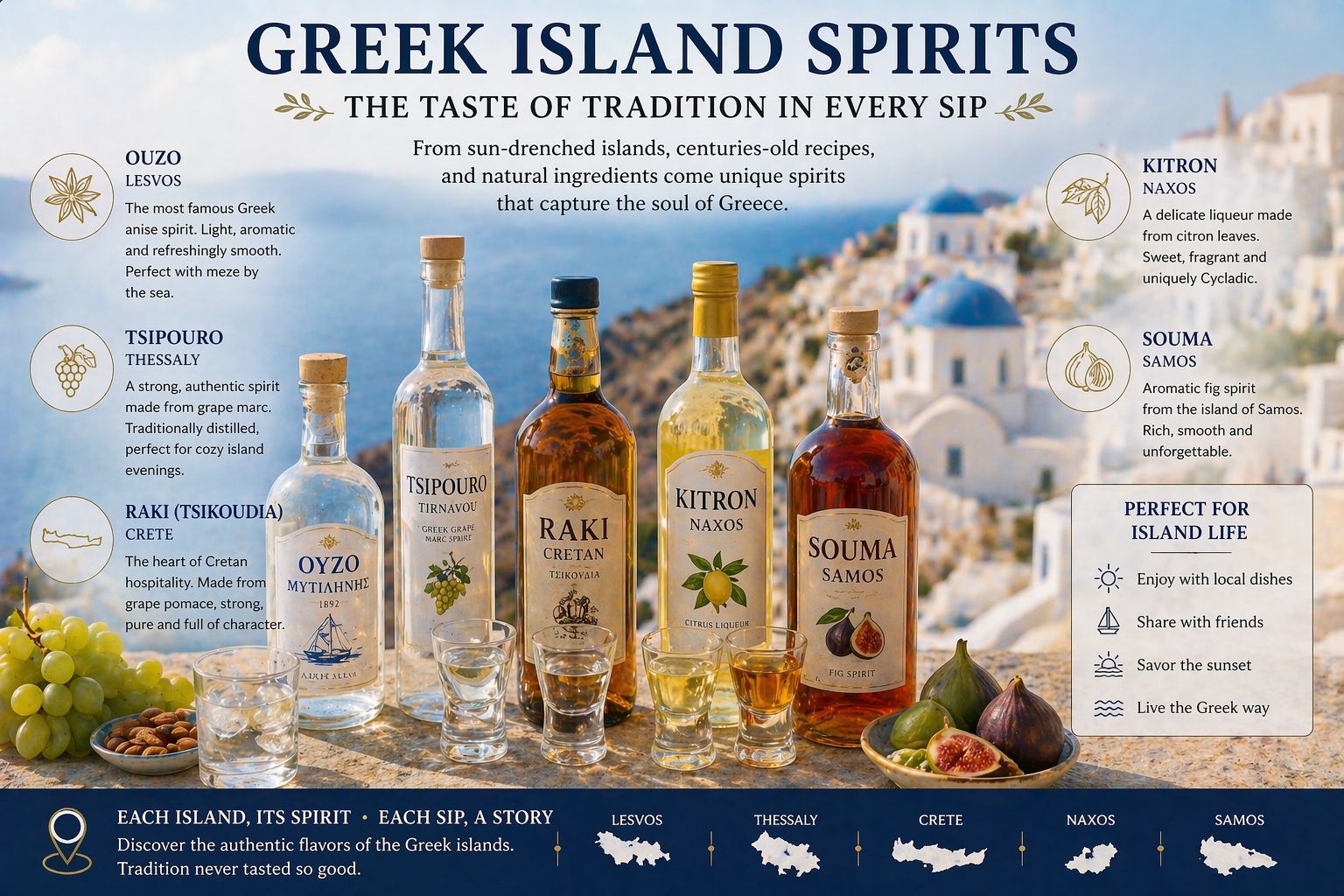
Beer, wine, and spirits across the Greek islands are locally produced and widely available through tavernas, small bars, and provisioning outlets. Beer is predominantly lager, with domestic brands including Mythos, Alfa, Fix, and Vergina alongside imported products; and over 100 microbreweries operate on several islands with limited distribution. Wine is region-specific, with white varieties dominant in the islands, including Assyrtiko, Moschofilero, and Roditis, alongside local table wines served in bulk; retsina remains in circulation as a resin-flavoured wine. Distilled products include ouzo (anise-based), tsipouro (grape marc distillate), raki or tsikoudia (Crete), souma (fig or grape distillate in eastern Aegean islands), and kitron (citrus liqueur from Naxos), with alcohol strength typically in the 37–45% range and higher for unregulated local distillations.
Patras Greece
Sailing Guide - Fuel Supplies
Fuel supply in Patras is reliable and fully developed, reflecting its role as a major commercial port. Marine diesel is available both by road tanker delivery to quay or marina berths and, in some cases, via designated fuel points within the port area, depending on berth allocation and port authority arrangements. At Patras Marina, fuel is typically supplied by tanker truck directly to the vessel, coordinated through marina management or local suppliers. Delivery is efficient and can usually be arranged on short notice, though advance booking is recommended during peak periods or for larger volumes.
Within the wider commercial harbour, fuel access is more controlled due to heavy ferry and cargo operations. Yachts may be directed to specific berths or service areas for refuelling, and coordination with port authorities is required. Fuel quality and availability are consistent with mainland standards, supported by continuous supply chains. In addition to diesel, petrol and LPG (bottled gas) are widely available ashore through fuel stations and suppliers within the city. Overall, Patras provides one of the most dependable fuel supply points in western Greece, suitable for full refuelling before extended passages toward the Ionian Islands or through the Corinth Canal.
Patras Greece
Sailing Guide - Water Supplies
Water supply in Patras is reliable and mainland-standard, with full availability at both marina and port berths. At Patras Marina, potable water is provided via fixed dock connections on pontoons, typically metered, with consistent pressure and easy access for yachts.
Within the commercial harbour, water is available on designated quays, though access depends on berth allocation and may require coordination with port authorities. Supply is drawn from the municipal network and is generally consistent year-round, without the seasonal limitations common on smaller islands.
Water quality is potable but, as in most Greek ports, can be relatively hard or mineral-rich, making onboard filtration or treatment advisable for drinking use. Overall, Patras offers one of the most dependable water resupply points in western Greece, suitable for full tank replenishment before onward passages
Mechanical and Electrical Repairs
Resource
If you are headed somewhere remote consider the need to expand your knowledge base or have an information resource on board. Why not get a copy of my book The Marine and Electrical and Electronics Bible 4th Edition. By and for yachties, with everything from batteries and charging, solar and wind, diesel engines and marine electronics and so much more. Your complete systems guide. 650 pages of practical advice. In Australia and New Zealand order a copy through Boat Books. UK and European boats can buy the UK Edition Here. US and Canadian boats can get the US Edition Order Here. Marine systems are my profession so let me help you. By a liveaboard boat owner for other boat owners.



Patras Greece
Sailing Guide - Marine Services
Marine services in Patras are extensive and mainland-level, reflecting its role as a major commercial and transport hub. Support is available for diesel engines, mechanical systems, electrical work, and general yacht maintenance through a network of local contractors and marine service providers operating in and around Patras Marina. Chandlery supply is strong, with access to marine equipment, spare parts, and consumables, supported by rapid mainland logistics. Lift-out and hardstand facilities are available within the marina area for smaller vessels, while more complex work and larger haul-outs can be arranged through regional yards with good transport links. Specialist services such as marine electronics installation and diagnostics are available, though brand-specific authorised agents may be limited. Overall, Patras functions as a fully capable service and logistics port, suitable for repairs, resupply, and technical support before or after extended cruising passages.
Patras Greece
Sailing Guide - Local Customs
Interaction is direct and formal on first contact, with a greeting expected before any request or transaction. Conversation tone is measured and transactional, with limited small talk unless initiated locally. Personal space is closer than in northern Europe, but physical contact is minimal unless familiarity is established. Shore behaviour is conservative in non-tourist areas, particularly near churches and village centres where modest dress and low noise are expected. In working environments such as quays, chandlers, and fuel delivery, communication is concise and task-focused; instructions from port staff or line handlers are followed without negotiation. Assistance between skippers is common but not assumed, and consent is required before handling lines, equipment, or boarding another vessel
Patras Greece
Sailing Guide - Summary
Patras is a major commercial port with significant traffic and controlled navigation. The Rio–Antirrio strait is the primary operational constraint due to current and traffic interaction. Anchorage options near the port are limited with better shelter available further east. Marina, provisioning, fuel, and marine services are available within the city. Patras Greece Sailing Guide for all you need to know.