Mykonos Greece
Sailing Guide
Mykonos Greece Sailing Guide. Mykonos is located in the central Cyclades within the Aegean Sea, at approximately 37°27′N 25°20′E. positioned between Tinos to the north and Naxos to the south-east. The island presents a low, rounded profile with limited elevation, rising to approximately 341 metres, and is characterised by an indented coastline with multiple bays, headlands, and exposed sectors. There is no extensive natural harbour system, and most anchorages are open to prevailing conditions. The island is low relief and exposed, with the primary port at Tourlos on the west coast immediately north of Mykonos town. Surrounding waters are open with limited natural shelter and rapid depth transition close to shore.
The principal settlement and port are located at Chora on the west coast, comprising the old harbour and the newer port facility at Tourlos, both serving as the island’s main maritime access points. The surrounding waters are open and exposed to Meltemi influence, particularly from the north and north-east, with limited shelter outside designated harbour areas. For navigation, Mykonos should be treated as an exposed island with defined harbour entry points rather than a naturally protected cruising ground.
Mykonos Greece
Sailing Guide History
Mykonos has a long but comparatively modest historical profile, traditionally linked to nearby Delos, one of the most important religious and commercial centres of the ancient Greek world. While Delos flourished as a major sanctuary and trading hub from the 1st millennium BCE, Mykonos functioned primarily as a supporting settlement and agricultural base, supplying labour and provisions. Following the decline of Delos, Mykonos remained a small, relatively isolated island through Byzantine and Ottoman periods, with its population engaged in fishing, small-scale trade, and coastal shipping. In the modern era, particularly from the mid-20th century onward, Mykonos transitioned from a subsistence economy to a tourism-driven centre, driven initially by its proximity to Delos and later by international travel. Despite this development, the island retains its traditional settlement pattern centred on Chora (Mykonos Town) and its harbour, which historically served as the primary maritime access point and focal area for local activity.
Mykonos Greece
Sailing Guide - Approaches
Approach is from open water with no constrained channels. Depths exceed 30–50 m offshore and reduce rapidly to 5–15 m approaching bays and harbour limits. The main entry is to Tourlos (New Port) on the west coast.
Sea state is wind driven. Meltemi (N–NE) produces short, steep seas with gusts exceeding mean wind strength and significant acceleration around exposed points. Southerly winds generate a different sea pattern with increased exposure on the south coast. Tidal range is typically 0.2–0.4 m with no operational tidal stream.
Hazards include continuous ferry and commercial traffic at Tourlos, strong crosswinds on final approach, and limited manoeuvring margins in gust conditions.
Mykonos Greece Sailing Guide - Currents and Tides
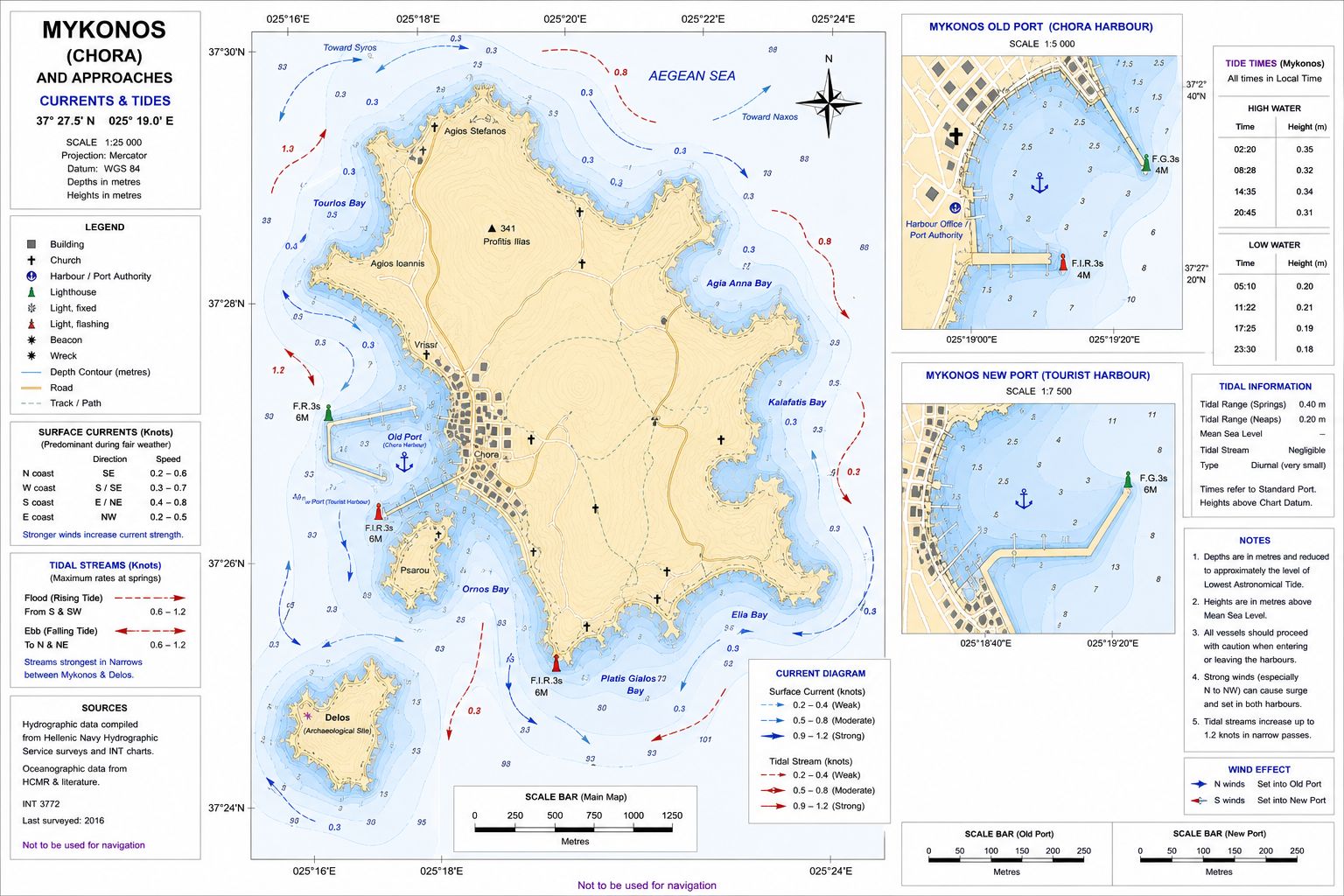
Currents around Mykonos are predominantly wind-driven, with negligible tidal influence. Tidal range is small, typically 0.1–0.3 metres and does not generate any consistent flood or ebb stream. Surface flow generally follows prevailing wind direction, with typical rates of 0.3–1.0 knots, increasing under strong Meltemi conditions.
During summer northerlies, a south to south-east setting current commonly develops, particularly through the channel between Mykonos and Delos, where local acceleration and overfalls can occur. In southerly or unsettled weather, flow may reverse or become irregular. Within harbour areas, current effect is minimal, but in exposed waters and narrow passages, currents should be treated as moderate, variable drift requiring allowance for set and sea state.
Mykonos Greece
Sailing Guide - Navigation
Approach to the main port area at Mykonos is made on the west coast, with separate entry to the Old Port (Chora Harbour) and the New Port at Tourlos just to the north. The Old Port is entered from the W–SW through a wide, unobstructed approach in depths generally exceeding 10–15 metres, with shoaling inside the basin to 2–5 metres; manoeuvring space is limited and congestion is common. The New Port at Tourlos is accessed via a well-defined breakwater entrance, with deeper water (typically 5–10 metres) and more controlled entry, but subject to strong crosswinds and gusting under Meltemi conditions. In both cases, navigation is straightforward in clear visibility, but requires allowance for wind-driven set, ferry traffic, and restricted manoeuvring room within the harbour areas.
Mykonos Greece
Sailing Guide - Chart Accuracy
Charts issued by the Hellenic Navy Hydrographic Service are the primary reference. ENC data aligns with official charts for approaches and harbour limits. Small-scale features including local moorings, laid ground tackle, and berth arrangements may not be consistently charted. Port layout and berth allocation areas may vary from electronic chart depiction.
Mykonos Greece
Sailing Guide - Anchorages
Mykonos provides limited secure anchorage. Depths increase rapidly from shore, restricting usable anchoring areas.
- South Coast Bays including Platis Gialos and Psarou provide temporary lee in northerly conditions with depths generally 5–15 m over sand and weed with variable holding. These areas are exposed to southerly winds.
- Ornos Bay (SW coast) provides the most used anchorage with depths 3–8 m over sand with weed patches and moderate holding. It is sheltered from Meltemi but subject to swell wrap and heavy traffic.
- Kalafati (E coast) provides depths 5–10 m over sand but is exposed to northerly and easterly winds and is not suitable in Meltemi conditions.
- Panormos (N coast) provides depths 5–12 m over sand with some shelter from westerly influence but is exposed to Meltemi and becomes uncomfortable in strong northerlies.
- Agios Stefanos (near Tourlos) provides limited anchoring in depths 5–10 m over sand and mud but is affected by ferry wash and port traffic.
North and east coast anchorages are exposed to Meltemi conditions and are not suitable in strong northerly winds. No anchorage around Mykonos provides consistent protection across wind directions. All locations are wind-dependent and require continuous reassessment.
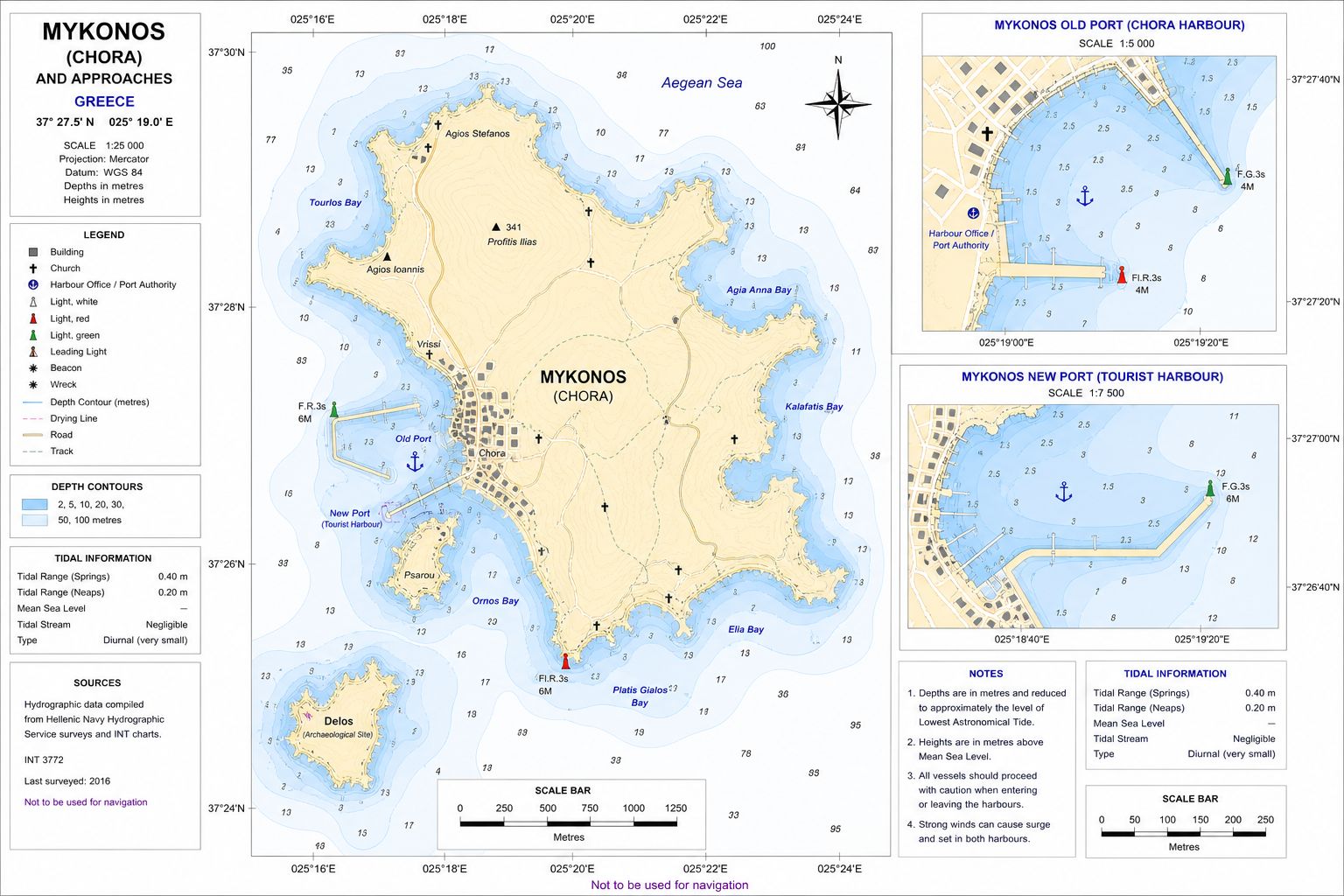
Chart Disclaimer. This chart is a schematic representation for illustrative purposes only and must not be used for navigation. Refer to official hydrographic charts for safe navigation. Be aware ENC charts may differ from official hydrographic charts. Both should be corrected and updated regularly.
Mykonos Greece
Sailing Guide - Entry Formalities
Mykonos is a designated port of entry and supports full clearance procedures for visiting yachts. Vessels arriving from outside Greece or the Schengen Area may clear in directly at Mykonos, subject to standard Greek entry requirements. Clearance is conducted through the local Port Authority (Limenarchio), with customs and immigration formalities handled in accordance with national procedures. All vessels must ensure that the Greek cruising tax (TEPAI) is valid and paid prior to or on arrival. Required vessel documentation, including registration papers and insurance, must be available. Non-EU vessels must hold a DEKPA cruising log or Transit Log, completed and presented for endorsement as required. Passports and crew documentation are subject to inspection, and clearance procedures should be completed promptly after arrival. For departures to non-Schengen countries, exit formalities are also conducted at Mykonos. As with all Greek ports of entry, procedures are formal but straightforward, with compliance dependent on correct documentation and adherence to reporting requirements on arrival and departure. Berthing at Tourlos requires prior application through the port authority system, with approval, payment, and arrival coordination required. Allocation is subject to availability and port authority control. Drones are regulated under Greek aviation authority rules. Communications equipment must comply with national regulations. Waste discharge is controlled.
Mykonos Greece
Sailing Guide - Marina Facilities
Mykonos does not have a large, fully developed marina in the conventional sense, but berthing is available across the Old Port (Chora), the New Port at Tourlos, and the small marina facility at Tourlos. The Old Port provides limited stern-to and alongside berthing with depths typically 2–5 metres, but is heavily constrained by ferry traffic and local vessels, making it unsuitable for extended stays. The New Port at Tourlos offers deep-water berthing (approximately 5–10 metres) along substantial quays primarily designed for ferries and larger vessels, though yachts may use sections when space permits.
Adjacent to the New Port is Mykonos Marina (Tourlos), which provides the closest facility to a marina environment, with stern-to berthing, laid moorings, and basic services. Water and shore power are available at some berths, though supply can be variable. There are no full-service repair yards or lift-out facilities on site, but basic technical support and chandlery access can be arranged locally. Shelter is generally good within the marina and port areas, though strong northerly Meltemi winds can produce gusting and surge, particularly in exposed berths. Overall, facilities should be regarded as functional but limited, with advance planning required during peak season.
Mykonos Greece
Sailing Guide - Local Weather
Mykonos is fully exposed to the central Aegean wind field and operates under sustained Meltemi conditions during summer. Northerly winds regularly reach 20–30 knots with higher gusts, accelerating between Mykonos, Tinos, and Delos and producing short, steep seas aligned north–south with rapid build and little attenuation. The west coast provides partial lee with reduced sea state but persistent wind, while the north and east coasts remain fully exposed; the south coast offers limited relief but becomes affected by swell when wind direction shifts. Katabatic gusts occur near land, particularly at night, and winter conditions introduce variable systems with southerly winds and longer-period swell affecting all anchorages.
The Marine Electrical and Electronics Bible has a complete list of Greek VHF Radio Channel information and weather forecast times for Greece along with NAVTEX UK and Europe and NAVTEX Mediterranean for 490kHz and 518kHz.
Mykonos Greece Sailing Guide -
Local Winds
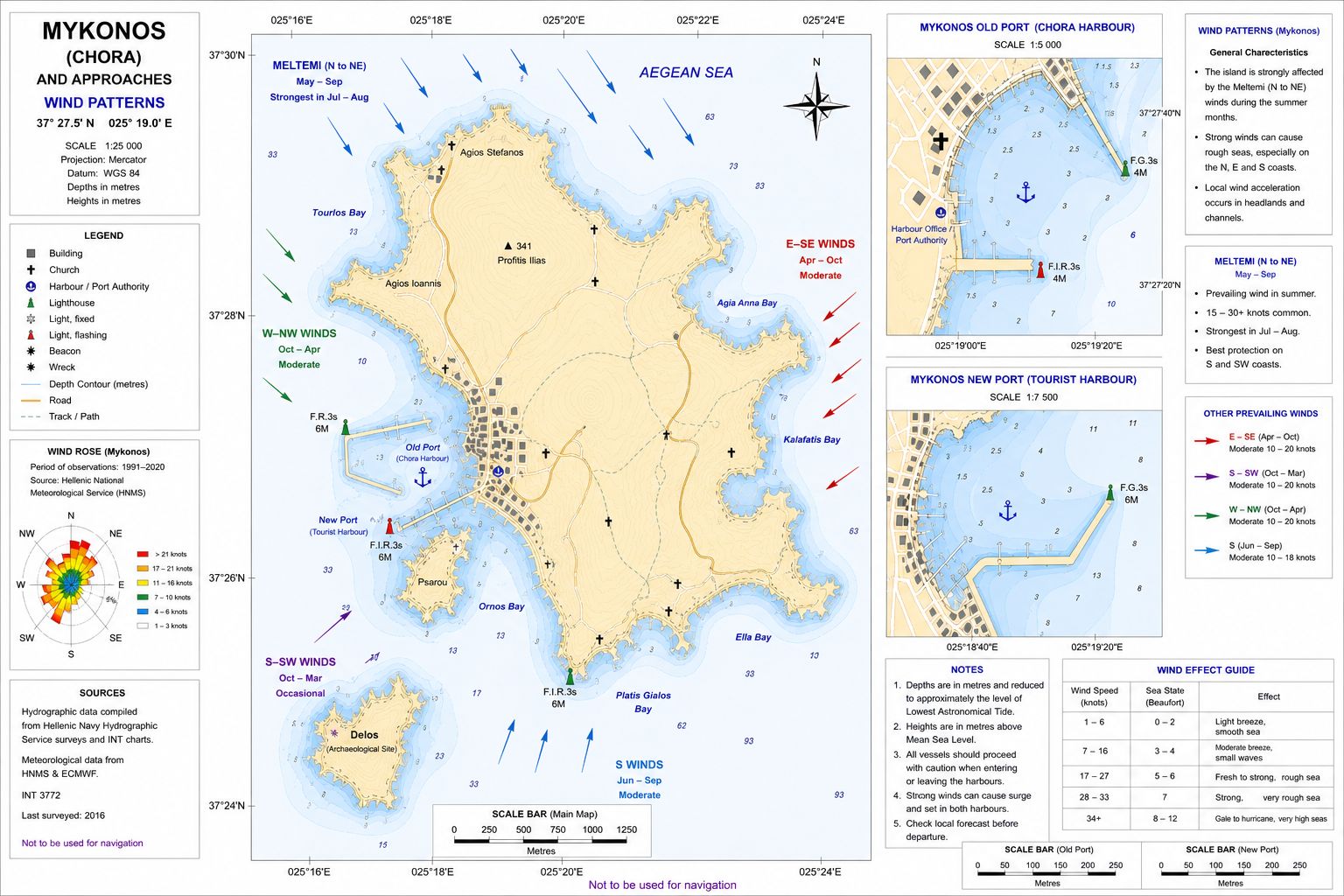
Meltemi (N–NE) is the dominant summer wind, sustained and often strong with gusting and acceleration around terrain. It defines sea state and harbour conditions. Southerly winds occur less frequently but create opposing sea conditions relative to typical northerly patterns.
The Meltemi is a strong, dry northerly wind that dominates the Aegean in summer, accelerating through channels and between islands to produce steep, short seas. It is most persistent in July and August, often blowing for several days with little diurnal variation, creating fast north‑to‑south passages and challenging return routes. Its strength is shaped by pressure gradients between the Balkans and Anatolia, with local acceleration zones around major island gaps.
Mykonos Greece
Sailing Guide - Provisioning
Supermarkets. Provisioning is centred on Mykonos Town and the Tourlos area where primary supply is concentrated. AB Vassilopoulos operates a full-scale store capable of complete reprovisioning with consistent daily restocking. Additional supply is provided by medium and small independent supermarkets including Flora Super Market in Tourlos, Ornos, and the ring road around Mykonos Towns. Other outlets include Arista, Delos, Carrefour Marinopoulos, along with many minimarts and grocery stores. All supply is dependent on ferry logistics, resulting in variability in stock depth during peak periods and weather disruption. South coast locations rely on small grocery outlets with limited stock and are not suitable for full provisioning.
Markets. There is no central wholesale or municipal market. Produce distribution is fragmented across small vendors and grocery outlets. Available items include vegetables, fruit, herbs, olive oil, and cheeses with supply largely imported from mainland Greece and nearby islands. Local agricultural output is limited, with only small quantities of seasonal produce available. Weekly street markets are minimal in scale and do not function as a primary provisioning source.
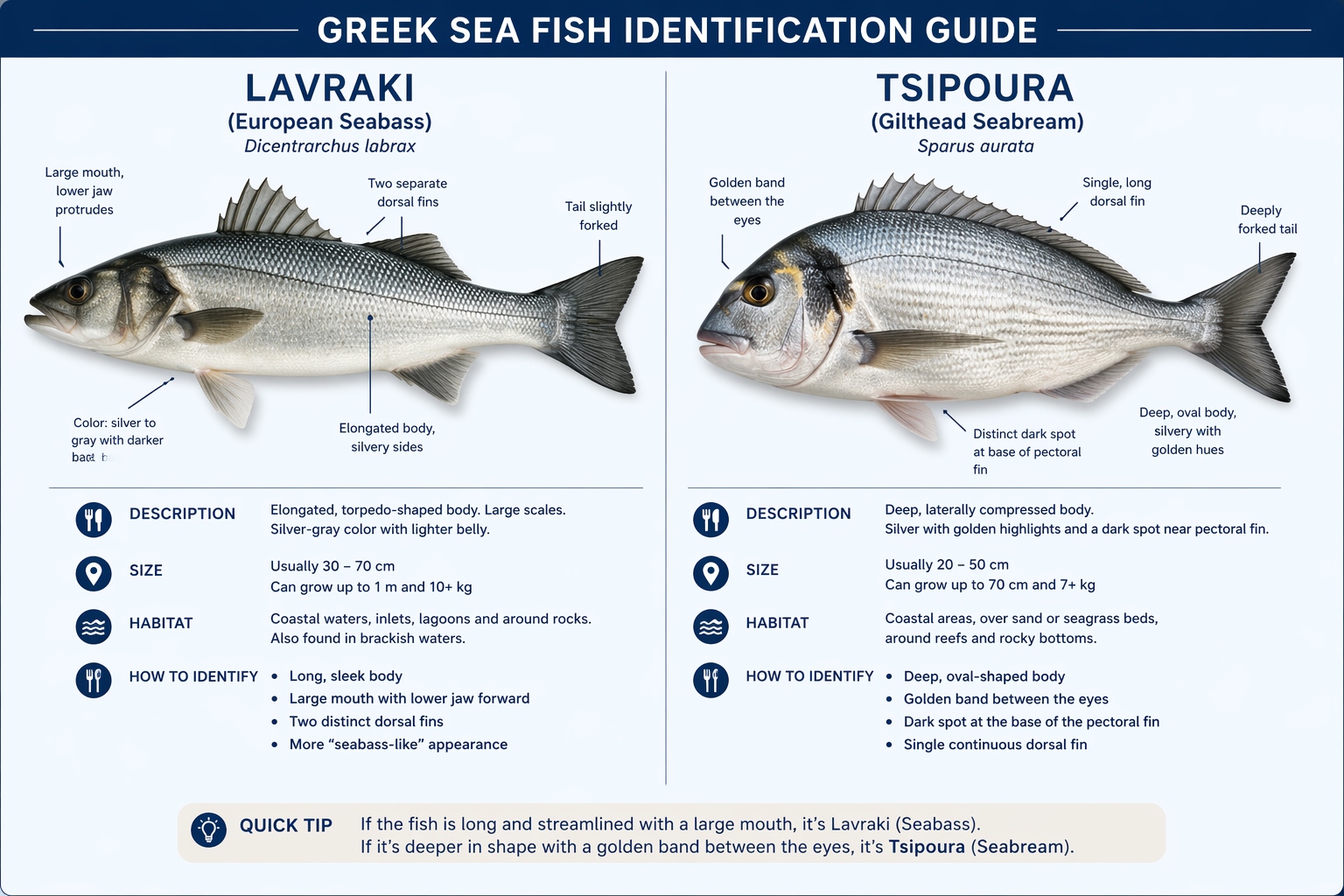
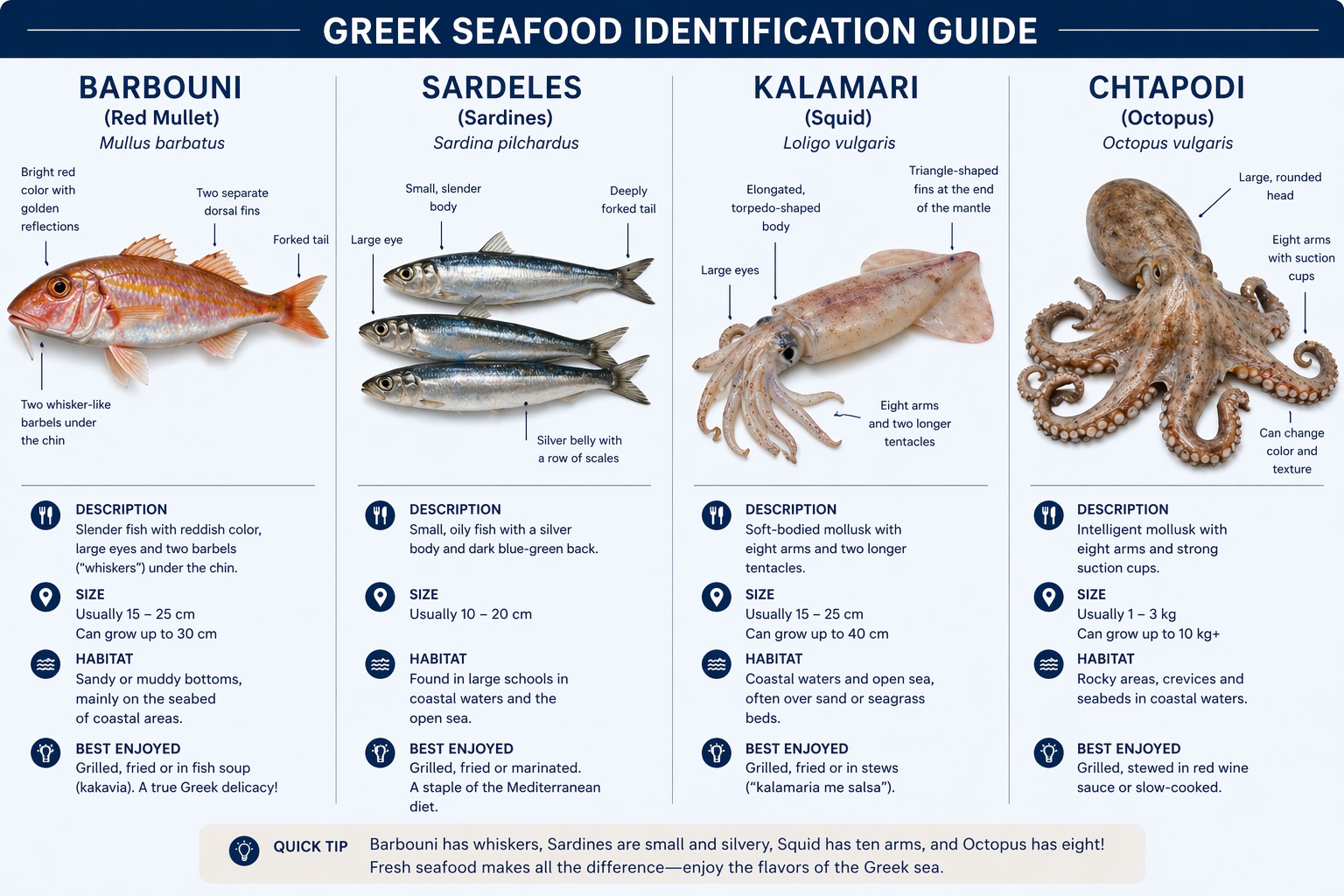
Fish Markets. There is no central fish market. Small fish market only with the daily catch every morning, really enjoyed the local cooked octopus. Fish supply is distributed through local fishmongers in Mykonos Town with daily availability dependent on local catch and imported supply. Species typically available include lavraki (European seabass), tsipoura (gilthead seabream), sardines, anchovies, squid, and octopus. Volume is limited and availability fluctuates with weather and fishing conditions, with reduced supply during periods of strong Meltemi.
Mykonos Greece Sailing Guide - Beverages
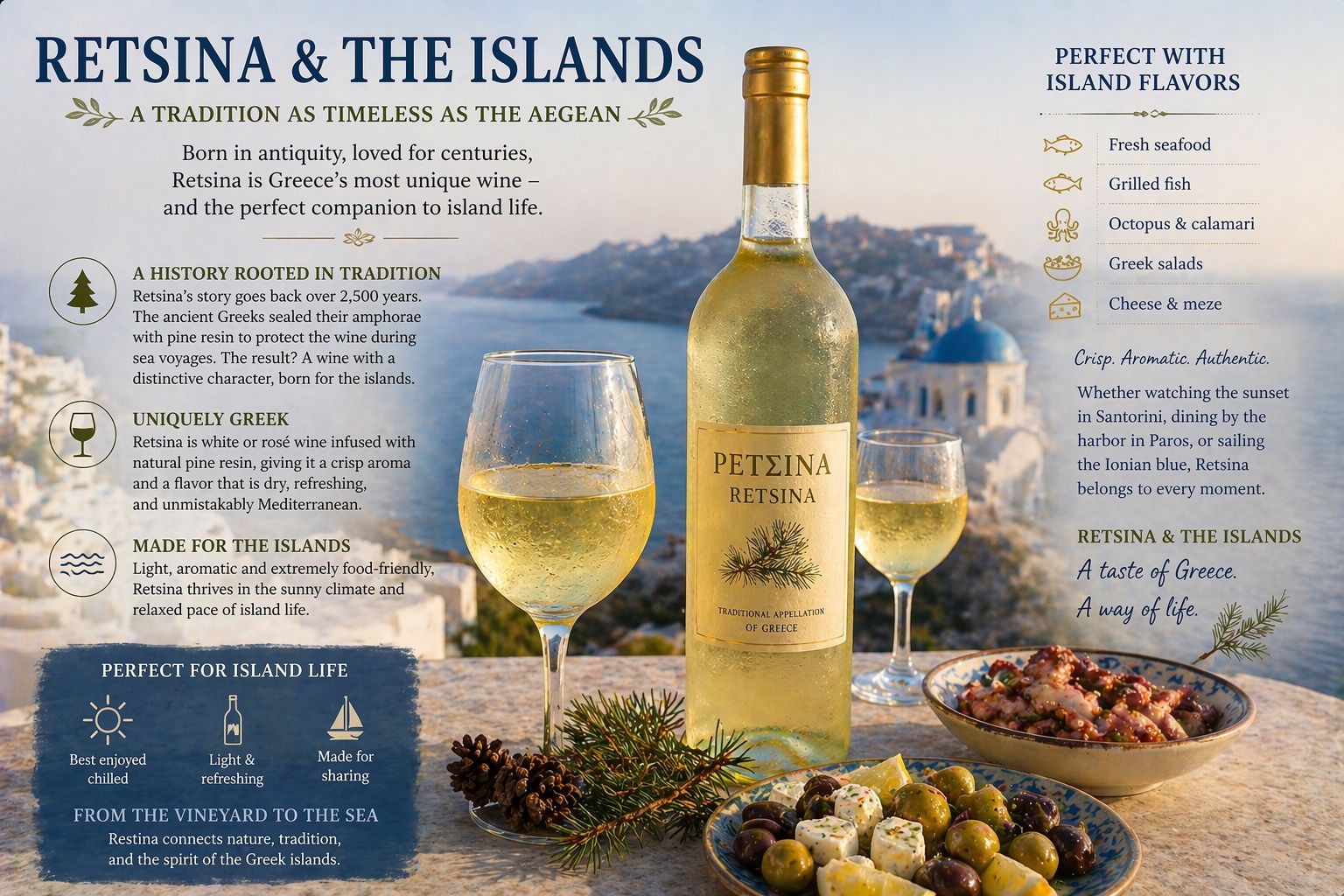
Beer, wine, and spirits across the Greek islands are locally produced and widely available through tavernas, small bars, and provisioning outlets. Beer is predominantly lager, with domestic brands including Mythos, Alfa, Fix, and Vergina alongside imported products; and over 100 microbreweries operate on several islands with limited distribution. Wine is region-specific, with white varieties dominant in the islands, including Assyrtiko, Moschofilero, and Roditis, alongside local table wines served in bulk; retsina remains in circulation as a resin-flavoured wine. Distilled products include ouzo (anise-based), tsipouro (grape marc distillate), raki or tsikoudia (Crete), souma (fig or grape distillate in eastern Aegean islands), and kitron (citrus liqueur from Naxos), with alcohol strength typically in the 37–45% range and higher for unregulated local distillations.
Mykonos Greece
Sailing Guide - Local Cuisine
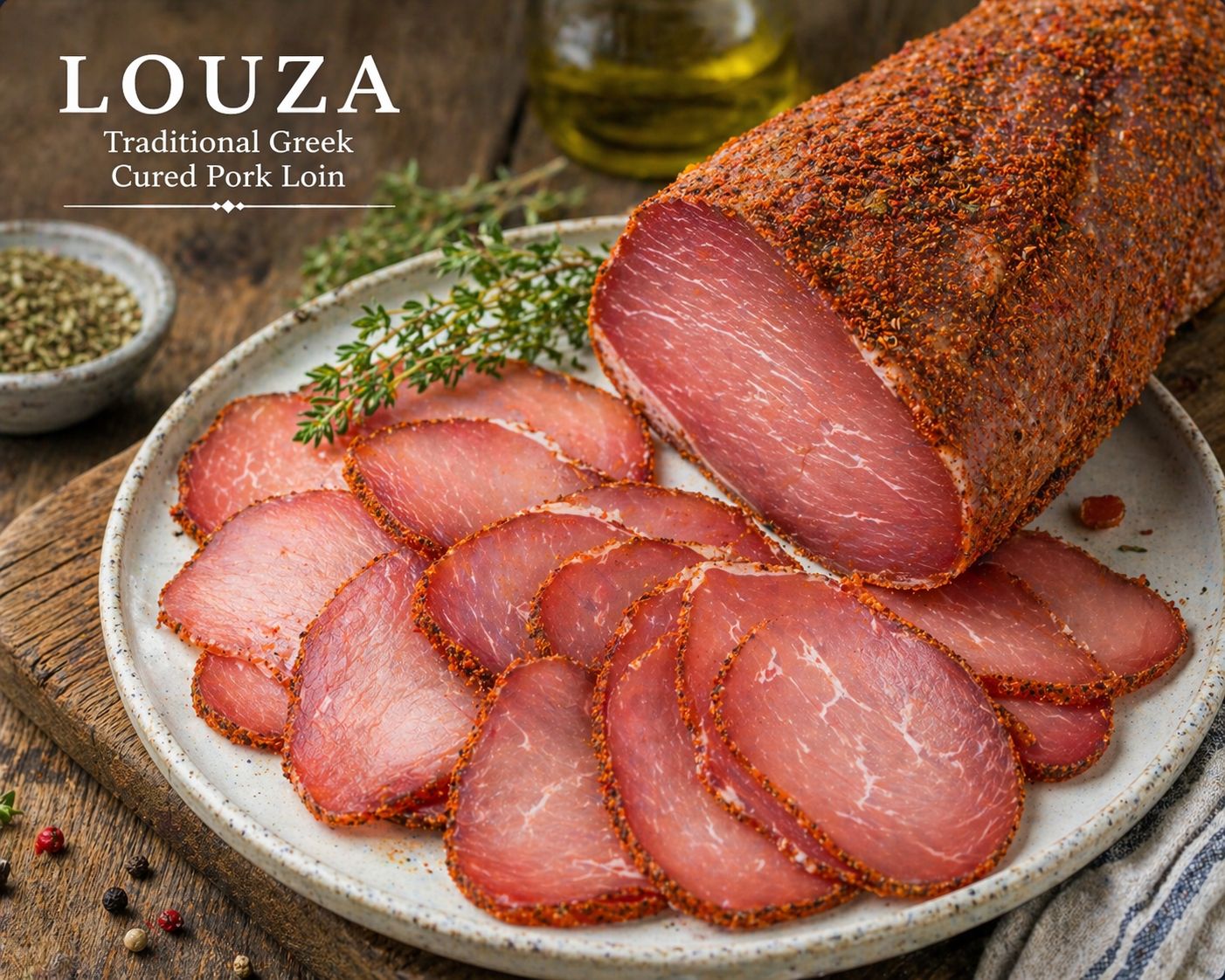
Mykonos does have a number of distinct local dishes and products, though its cuisine is less widely defined than some other Greek regions. The most recognisable is kopanisti, a soft, spicy cheese made from cow’s, sheep’s, or goat’s milk, with a strong, peppery flavour. It is typically served as a spread with bread or rusks. Another well-known product is louza, a cured pork fillet seasoned with spices and air-dried, reflecting Venetian-era influence. Traditional dishes include onion pie (kremmydopita), made with local herbs and cheese, and simple preparations of sun-dried fish and grilled seafood, aligned with island availability. Tyrovolia is a fresh soft cheese, and local sausages are produced with regional seasoning. Mostrous is a pork preparation cooked with wine and spices, typically served as a preserved or slow-cooked dish. Fish such as tsipoura (gilthead seabream) and lavraki (European seabass) are prepared grilled or simply cooked. Sweet dishes are also notable, particularly amygdalota (almond sweets) and honey-based pastries.
Mykonos Greece Sailing Guide -
Fuel Supplies
Diesel fuel is readily available at Mykonos, primarily at the New Port (Tourlos). Fuel is supplied by quay-side tanker delivery, which can be arranged through port agents, marina staff, or directly with local suppliers. Delivery is generally reliable but should be booked in advance, particularly during peak summer periods when demand is high.
There is no dedicated fixed fuel dock in the Old Port, and refuelling there is not practical. At the Tourlos marina and port area, fuel supply is the standard method for visiting yachts and commercial vessels. Small quantities can also be obtained from roadside fuel stations by container if required, but for operational purposes Mykonos should be treated as a well-serviced fuel location via organised tanker supply, suitable for full refuelling.
Mykonos Greece Sailing Guide -
Water Supplies
Potable water at Mykonos is available but controlled, with primary access at the New Port (Tourlos) and within the marina area. Water is supplied via quay connections or arranged delivery, depending on berth location. Supply is generally reliable, though pressure and availability can vary, particularly during peak summer demand.
Water is produced through desalination and local storage systems, and conservation measures may apply. Access in the Old Port is limited and not guaranteed, with most vessels relying on Tourlos facilities for tank replenishment. Bottled water is widely available ashore. For operational planning, Mykonos can be treated as a functional water supply location, suitable for full or partial tank filling with coordination.
Mechanical and Electrical Repairs
Resource
If you are headed somewhere remote consider the need to expand your knowledge base or have an information resource on board. Why not get a copy of my book The Marine and Electrical and Electronics Bible 4th Edition. By and for yachties, with everything from batteries and charging, solar and wind, diesel engines and marine electronics and so much more. Your complete systems guide. 650 pages of practical advice. In Australia and New Zealand order a copy through Boat Books. UK and European boats can buy the UK Edition Here. US and Canadian boats can get the US Edition Order Here. Marine systems are my profession so let me help you. By a liveaboard boat owner for other boat owners.



Mykonos Greece Sailing Guide -
Marine Services
Marine support is limited compared to major mainland centres. Routine service is available locally. Brand support for Yanmar and Volvo Penta is typically accessed through mainland Greece. Marine electronics support including Raymarine is available through regional service networks.
Mykonos Greece Sailing Guide -
Local Customs
On Mykonos, personal conduct ashore is generally informal but respectful, reflecting a mix of traditional Greek culture and high-volume international tourism. Dress is casual in most areas, but basic standards apply in towns, shops, and religious sites, where swimwear should be covered and behaviour kept appropriate. Politeness in interactions and greetings, patience in busy settings, and respect for service staff is expected, particularly during peak season when demand is high.
Despite the island’s reputation for nightlife, public behaviour is expected to remain controlled and respectful outside designated venues. Noise late at night in residential or harbour-adjacent areas should be minimised, and alcohol-related disturbance is not tolerated in public spaces. Photography of people or private property should be done with discretion. Overall, the standard is straightforward, informal setting, but with clear respect for local residents, businesses, and shared public space.
Mykonos Greece Sailing Guide -
Summary
Mykonos is an exposed Aegean location with strong wind dominance and limited shelter. Tourlos is the primary berthing point with controlled access and traffic constraints. Anchorage options are conditional and dependent on wind direction. Provisioning and basic marine support are available with reliance on mainland services for major work. Mykonos Greece Sailing Guide for all you need to know.