Kyushu Sailing Guide - A practical yacht
cruising guide to Kyushu
Kyushu Sailing Guide. Kyushu forms the southwestern corner of the Japanese archipelago, a region defined by warm currents, volcanic coastlines, deep bays, and a maritime culture that stretches back centuries. For cruising yachts, Kyushu offers some of the most diverse and rewarding waters in Japan, from the sheltered inland seas of northern Kyushu to the open‑ocean passages of Kagoshima, the Goto Islands, and the East China Sea approaches.
The region is large, varied, and operationally rich. Northern Kyushu provides dense port networks, industrial harbors, and predictable coastal routes. Western Kyushu opens into archipelagos, fishing villages, and long island chains. Southern Kyushu introduces active volcanic landscapes, strong tidal gates, and warm‑water cruising that feels closer to Okinawa than Honshu. Across all of Kyushu, the navigation is well‑charted, the communities are maritime‑friendly, and the coastline offers a mix of modern marinas, traditional fishing ports, and quiet anchorages.
Kyushu Sailing Guide
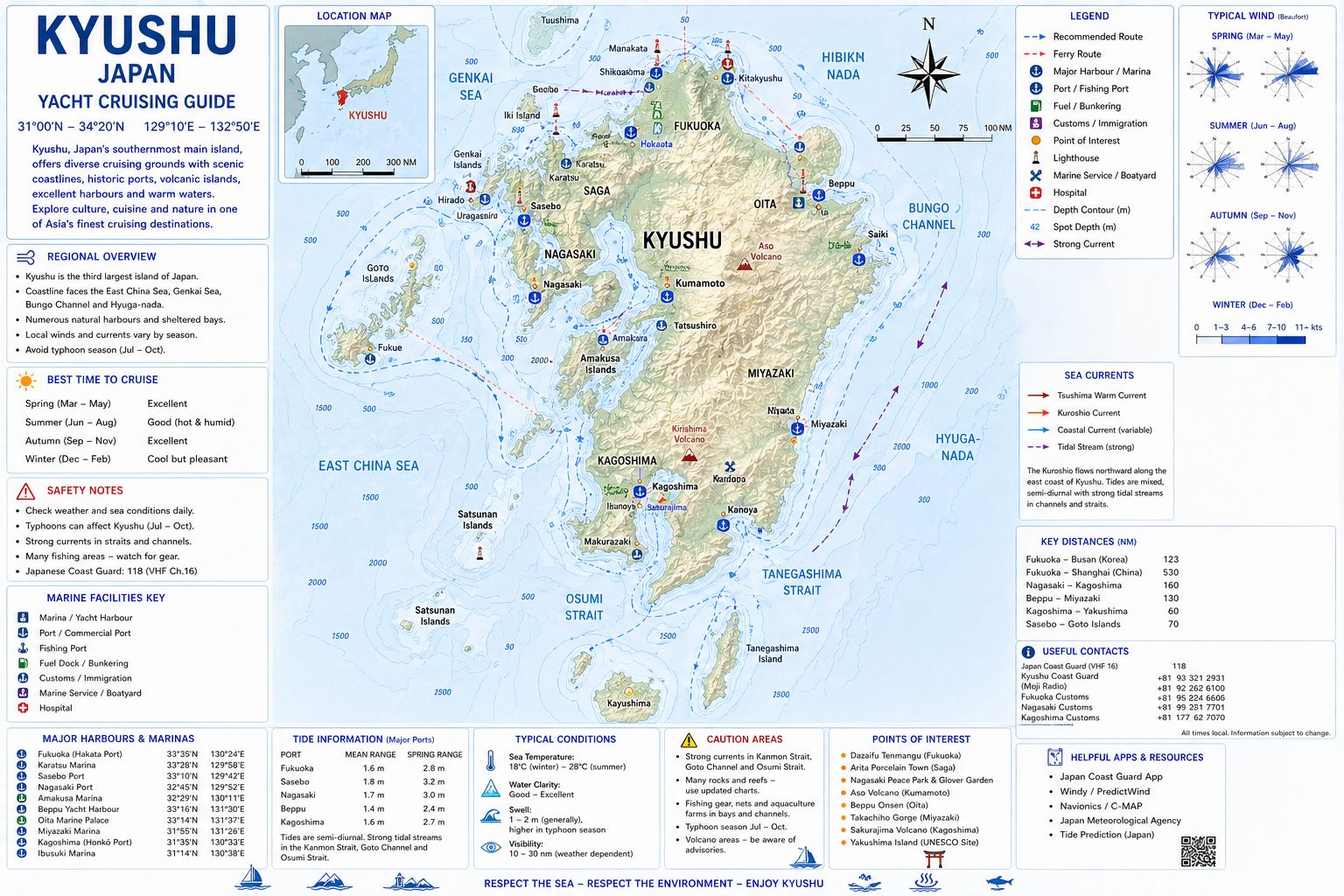
Kyushu is a natural progression for yachts moving west from the Seto Inland Sea or south from Honshu. It also serves as a gateway for vessels arriving from Korea, Okinawa, Taiwan, and the wider Pacific. Whether used as a transit region or a long‑stay cruising ground, Kyushu provides a balance of practicality, culture, and adventure that makes it one of Japan’s most compelling destinations for yachts. Kyushu is divided into several distinct cruising zones, each with its own operational character:
Northern Kyushu (Fukuoka, Kitakyushu,
Karatsu)
Northern Kyushu offers a mix of busy commercial waterways and straightforward coastal cruising, making it an engaging but manageable region for yachts. Fukuoka is the main hub, with a wide, well‑marked approach and steady ferry traffic that requires alert watchkeeping. Once inside, the bay is spacious and forgiving, with predictable conditions and good shelter.
To the east, Kitakyushu sits at the gateway to the Kanmon Strait, one of Japan’s most intense shipping corridors. Strong tidal streams, fast ferries, and large commercial vessels demand precise timing and disciplined navigation, but the channels are well marked and professionally managed.
Further west, Karatsu offers a calmer rhythm. Its open‑coast approach can carry some swell, but the harbour itself is sheltered, easy to enter, and less trafficked than the major cities. Fishing boats operate actively along this stretch, especially at dawn and dusk, so maintaining a sharp lookout is essential.
Imari sailing guide for yachts. Imari sits at the head of Imari Bay in northwest Kyushu. Iki lies north of Kyushu in the Tsushima Strait and provides a compact island with predictable approaches, deep bays, and well protected harbours.
Tsushima lies between Kyushu and Korea and forms a long, narrow island divided into northern and southern sections
Western Kyushu (Nagasaki, Goto
Islands, Hirado)
Western Kyushu offers some of the most atmospheric and rewarding cruising in Japan, shaped by deep bays, island chains, and centuries of maritime history. Nagasaki is the region’s natural hub, a long, sheltered inlet with excellent protection, clear navigation marks, and steady traffic from ferries and commercial vessels. Approaches are straightforward, but the density of shipping means yachts need to stay alert, especially near the harbour entrance.
Beyond Nagasaki, the Goto Islands provide a completely different rhythm: quiet anchorages, dramatic volcanic scenery, and a maze of channels that offer shelter in almost any wind direction. Tidal streams run through the island gaps, but conditions are predictable with good tide planning. Many coves have excellent holding and minimal swell, making the archipelago one of Kyushu’s best cruising grounds.
To the north, Hirado blends open‑coast sailing with well‑protected harbours. The strait between Hirado and Kyushu can run fast with the tide, and fishing activity is constant, but once inside the bays the water calms quickly. The area’s mix of historic ports, sheltered anchorages, and manageable navigation makes it a favourite stop for yachts moving between Kyushu and the East China Sea.
Southern Kyushu (Kagoshima, Satsuma Peninsula, Sakurajima)
Southern Kyushu delivers some of Japan’s most memorable cruising, blending sheltered volcanic waters with more exposed coastal stretches that demand thoughtful navigation. Kagoshima Bay is the region’s natural safe haven, a vast, enclosed caldera offering calm seas, excellent holding, and reliable protection even in strong weather. Traffic moves steadily across the bay, especially ferries, and the presence of Sakurajima adds unique considerations: volcanic ashfall can briefly reduce visibility, and exclusion zones must be respected.
Rounding the Satsuma Peninsula, conditions shift noticeably. The Pacific side is more exposed, with swell wrapping around headlands and wind acceleration zones developing along the cliffs. Careful timing around weather makes these passages smoother and more comfortable. Despite the exposure, the coastline offers several tucked‑away bays and fishing ports that provide secure stops when needed.
Together, Kagoshima Bay’s tranquillity, Sakurajima’s dramatic presence, and the peninsula’s open‑coast challenges create a varied and rewarding cruising environment — one that remains entirely manageable with attentive seamanship and good passage planning
Eastern Kyushu (Oita,
Beppu, Hyuga)
Navigation along eastern Kyushu demands attention to swell, traffic, and rapidly shifting conditions. The Pacific side around Hyuga is exposed, with long ocean swell and occasional strong set near headlands. Approaches to Oita and Beppu are more forgiving, but the bays funnel winds and can produce choppy, confused seas. Ferry traffic is frequent, especially near Beppu, and fishing boats operate close to shore at all hours. Harbour entrances are generally well marked, but timing passages around weather and visibility remains important.
Kyushu Sailing Guide - Navigation
Navigating Kyushu demands a thoughtful, tide‑aware approach, because the island sits at the crossroads of several major sea routes and complex coastal conditions. For cruising yachts, the region is entirely manageable but it rewards skippers who plan carefully, time their passages, and stay alert to local patterns.
Kyushu Sailing Guide - Currents, Tides & Sea Conditions
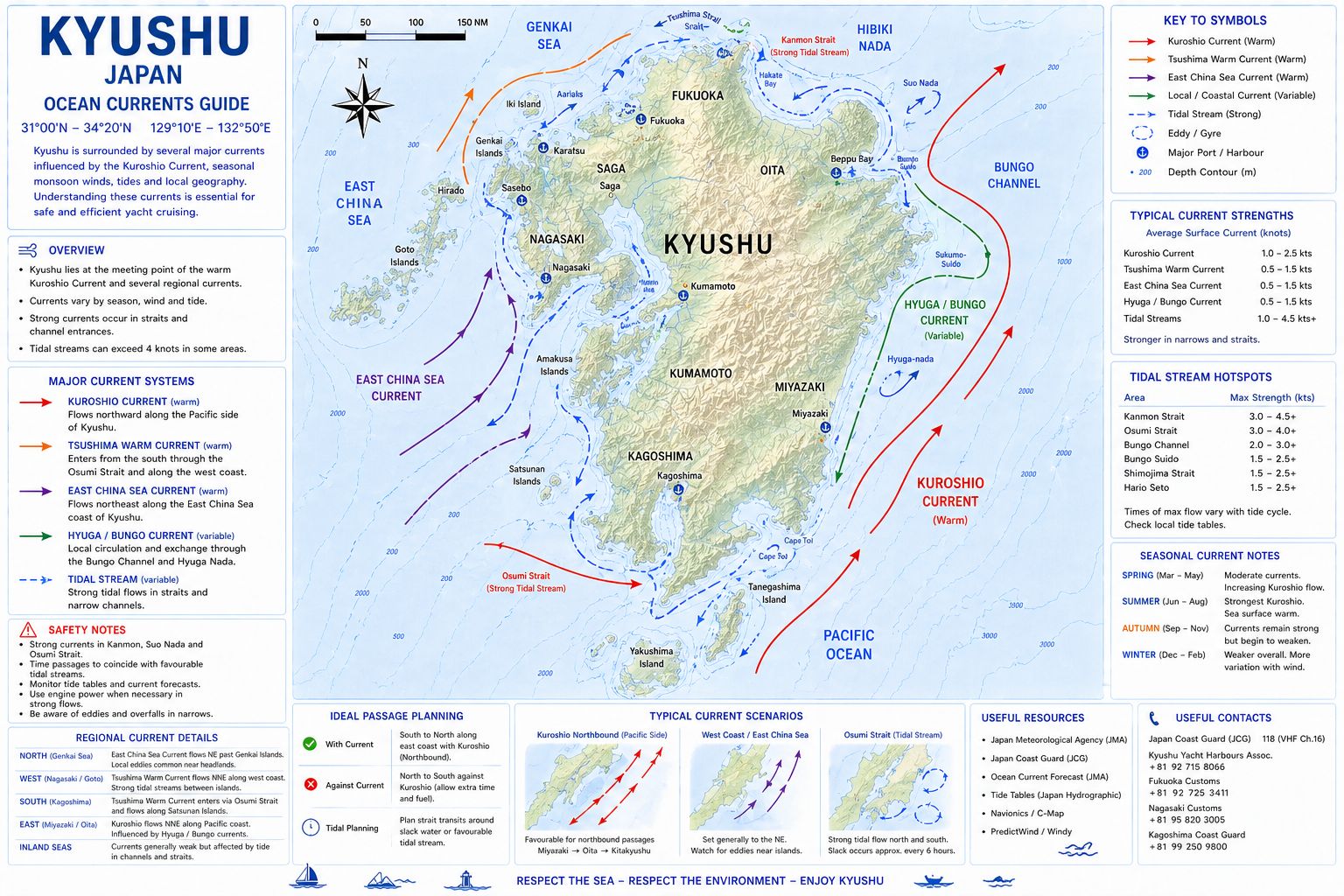
Kyushu’s waters are shaped by the Kuroshio Current, which sweeps up the Pacific side and can create strong set and drift, especially off Cape Ashizuri and the Osumi Peninsula. On the west side, tidal streams around the Goto Islands, Amakusa, and the Ariake Sea can run hard, forming rips, overfalls, and turbulent patches that slow smaller yachts. Timing entrances and exits with the tide makes a noticeable difference in comfort and speed. Tidal Gates are notable in the Kanmon Strait, Hirado Strait, and channels around the Goto Islands.
Kyushu Sailing Guide - Traffic Density & Shipping Routes
Kyushu sits on some of Japan’s busiest maritime corridors. The Kanmon Strait, between Kyushu and Honshu, is one of the most intense traffic zones in the country, with fast ferries, cargo ships, and fishing vessels operating in tight quarters. Even outside the strait, the west coast sees steady commercial traffic, while the east coast hosts numerous ferries linking Shikoku, Kyushu, and offshore islands. AIS is essential for seeing them and they your boat, but visual watchkeeping remains essential as many do not have AIS.
Kyushu Sailing Guide - Fishing Activity & Coastal Hazards
Fishing fleets are active year‑round, especially at dawn and dusk. Expect clusters of small boats, nets, and longlines near harbour entrances and along productive coastal shelves. Many fishing ports have narrow, dog‑leg entrances designed for local boats, and some are partially obscured by breakwaters. Night entries are possible but not recommended unless conditions are calm and charts are well‑studied.
Bridges, Cables &
Restricted Channels
Kyushu’s coastal infrastructure includes bridges, overhead power lines, and shallow channels that require careful chart checks. Mast height should be confirmed before passing under any structure, particularly in the Seto Inland Sea approaches and around the Amakusa archipelago. Some channels have strong cross‑currents that can push a yacht off track if not anticipated.
Weather Patterns &
Visibility
Weather can shift quickly. Summer brings fog banks, sudden squalls, and typhoon‑driven swell; winter introduces strong northerlies and steep seas on the Pacific side. Volcanic terrain creates microclimates, meaning conditions can vary dramatically between bays. Volcanic ashfall and reduced visibility near Sakurajima during active periods. Visibility can drop fast in rain or mist, and in volcanic ash conditions so radar and AIS are valuable tools.
Kyushu Sailing Guide Weather and
Seasonal Patterns
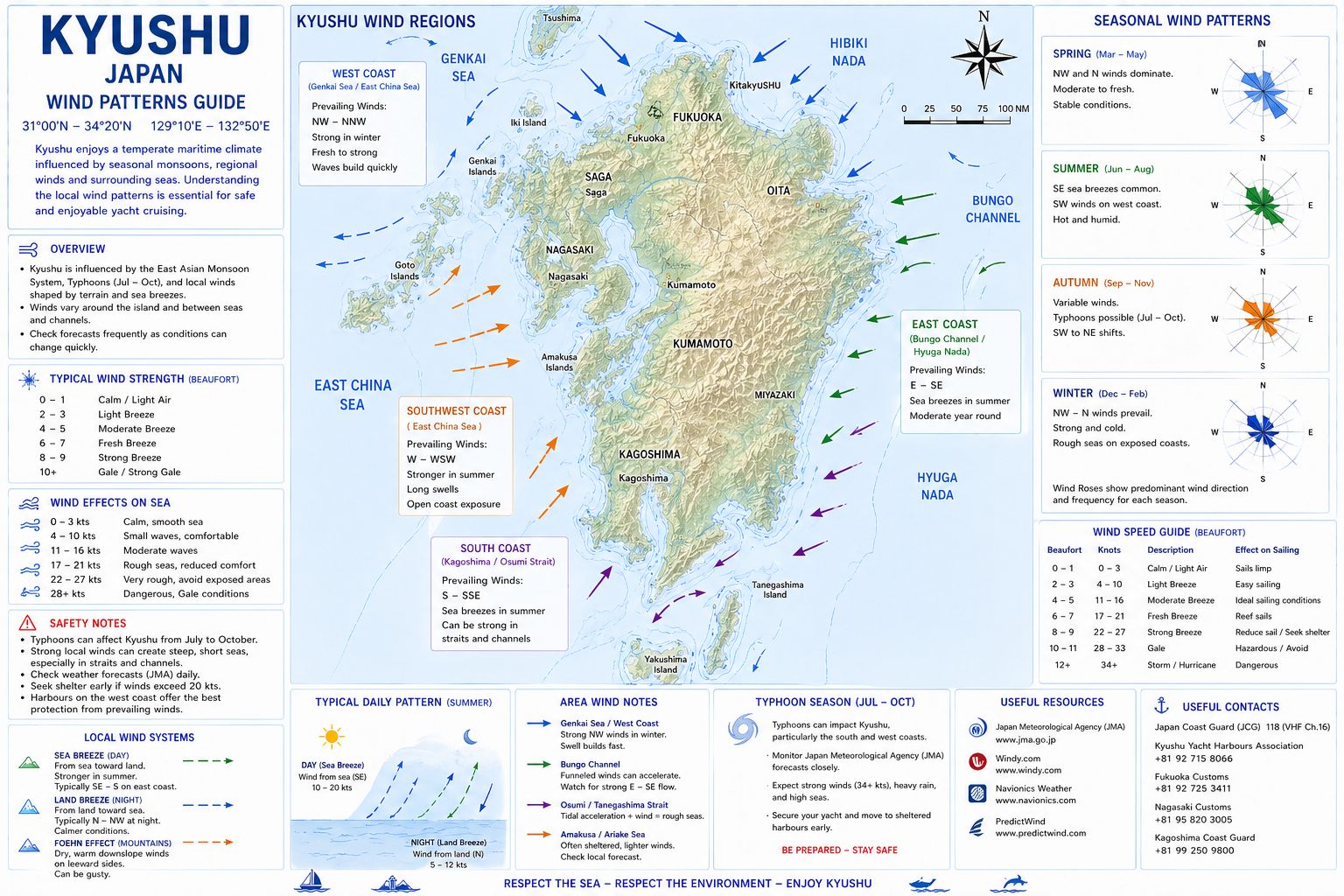
Kyushu’s climate is warmer and more humid than Honshu, with distinct seasonal patterns:
- Spring: Mild, stable, and ideal for cruising.
- Summer: Hot, humid, and occasionally hazy; typhoon season begins.
- Autumn: Clear, settled, and excellent for longer passages.
- Winter: Northerly winds can be strong, especially in the Kanmon Strait and northern coasts.
Typhoon planning is essential, particularly from July to October.
Kyushu Sailing Guide Harbour Approaches & Local Knowledge
Many smaller ports are designed for fishing fleets, not yachts. Depths are usually adequate, but turning basins can be tight, and floating pontoons are rare. Local harbour offices are helpful and accustomed to visiting yachts; a quick call or visit often provides the latest information on depths, berthing, and hazards.
Overall, Kyushu offers rewarding cruising, but it demands attentive seamanship, tide planning, traffic awareness, and careful harbour approaches. With good preparation, the region’s sheltered bays, volcanic coastlines, and island groups become some of Japan’s most enjoyable waters to navigate.
Kyushu Sailing Guide Berthing Options
Kyushu gives cruising yachts a wide range of berthing options, from full‑service marinas in the major cities to simple, inexpensive tie‑ups in fishing ports. It’s one of the more yacht‑friendly regions in Japan because the coastline is busy, well‑developed, and accustomed to visiting vessels.
Fukuoka, Nagasaki, Sasebo, and Kagoshima offer the most polished berthing choices, with marina‑style facilities, floating pontoons, electricity, water, and easy access to shops and transport. These are the best stops for longer stays, crew changes, or maintenance.
Outside the big cities, most yachts rely on fishing ports, which are plentiful and welcoming. These harbours typically provide solid concrete quays, good depth, and strong protection from swell. Fees are low, paperwork is simple, and harbourmasters are used to transient boats. While facilities are basic, usually no electricity or showers, they’re reliable, safe, and close to town services.
In more remote areas, especially around the Goto Islands, Amakusa, and the Osumi Peninsula, yachts can often berth inside small community ports or alongside breakwaters. These spots are quiet, secure, and ideal for weather waiting.
Overall, Kyushu offers excellent berthing coverage, with marinas for comfort and fishing ports for practicality, giving cruising yachts plenty of dependable options along every stretch of coast.
Kyushu Sailing Guide Anchorage Options
Kyushu offers a generous spread of safe, well‑protected anchorages that suit cruising yachts moving through Japan’s southern waters. The island’s deeply indented coastline, volcanic bays, and numerous offshore islands create natural shelter from swell and weather, making it one of the more forgiving regions for passage makers.
The west coast. Especially around Nagasaki, the Goto Islands, and Amakusa provides some of the best all‑weather anchorages in Japan. These bays are enclosed, quiet, and often surrounded by high terrain that blocks wind and swell. Many fishing ports also allow yachts to anchor just outside their breakwaters, giving additional protection.
On the south coast, Kagoshima Bay is a standout. This vast, almost landlocked caldera offers multiple secure anchorages with excellent holding, minimal swell, and easy access to towns and fuel. Even in strong weather, the bay remains calm, making it a reliable refuge.
The east and northeast coasts are more exposed to Pacific swell, but still offer pockets of safety. Nichinan, Saiki, and the smaller inlets of Oita Prefecture provide sheltered corners where yachts can anchor comfortably in settled conditions.
Overall, Kyushu’s geography gives cruising sailors a dependable network of anchorages, from volcanic bays to quiet island coves making it one of Japan’s most yacht‑friendly regions for safe overnight stops and weather waiting.
Kyushu Sailing Guide Provisioning
Kyushu is one of the easiest regions in Japan for yacht provisioning, thanks to its large cities, active fishing ports, and well‑stocked supermarkets. Fukuoka, Nagasaki, Kagoshima, and Kumamoto offer full provisioning opportunities with big grocery chains, department‑store food halls, fresh‑produce markets, and excellent seafood. Even smaller ports typically have a local supermarket and multiple convenience stores within walking distance, making day‑to‑day resupply simple. Fishing harbors often sell fresh catch in the mornings, and regional produce, citrus, sweet potatoes, greens, and rice is abundant. Overall, Kyushu provides reliable, high‑quality provisioning for cruising yachts with minimal effort.
Kyushu Sailing Guide Kyushu Cuisine
Kyushu’s cuisine is bold, regional, and deeply tied to its volcanic landscape and warm climate. Tonkotsu ramen from Fukuoka is the island’s signature dish, with rich pork broth and thin noodles. Kagoshima’s kurobuta pork, Nagasaki champon, and Sasebo burgers showcase the region’s diverse influences. Coastal towns offer exceptional sashimi, especially mackerel and amberjack, while Goto udon and karashi mentaiko add local character. With its mix of seafood, comfort dishes, and unique regional flavours, Kyushu is a standout culinary destination
Kyushu Sailing Guide Fuel and Water
Kyushu is one of the more convenient regions in Japan for yachts needing fuel and potable water, thanks to its mix of major ports, active fishing harbors, and well‑developed municipal infrastructure.
Potable water is widely available in most ports, usually through harbor offices, fishing‑cooperative taps, or clearly marked public supply points on the quay. Larger cities such as Fukuoka, Nagasaki, Kagoshima, and Sasebo often have marina‑style facilities with direct hose connections, while smaller towns may require jerry‑can runs — but the water quality is consistently reliable.
Diesel is equally straightforward. Dedicated fuel docks exist in a few major centers, but the standard method for cruising yachts is to fill jerry cans at nearby roadside gas stations. These are almost always within walking distance or a short taxi ride from the harbor, and staff are accustomed to filling portable containers for fishing crews. In busier commercial ports, fuel suppliers can sometimes arrange dockside delivery for larger quantities.
Mechanical and Electrical Repairs
Resource
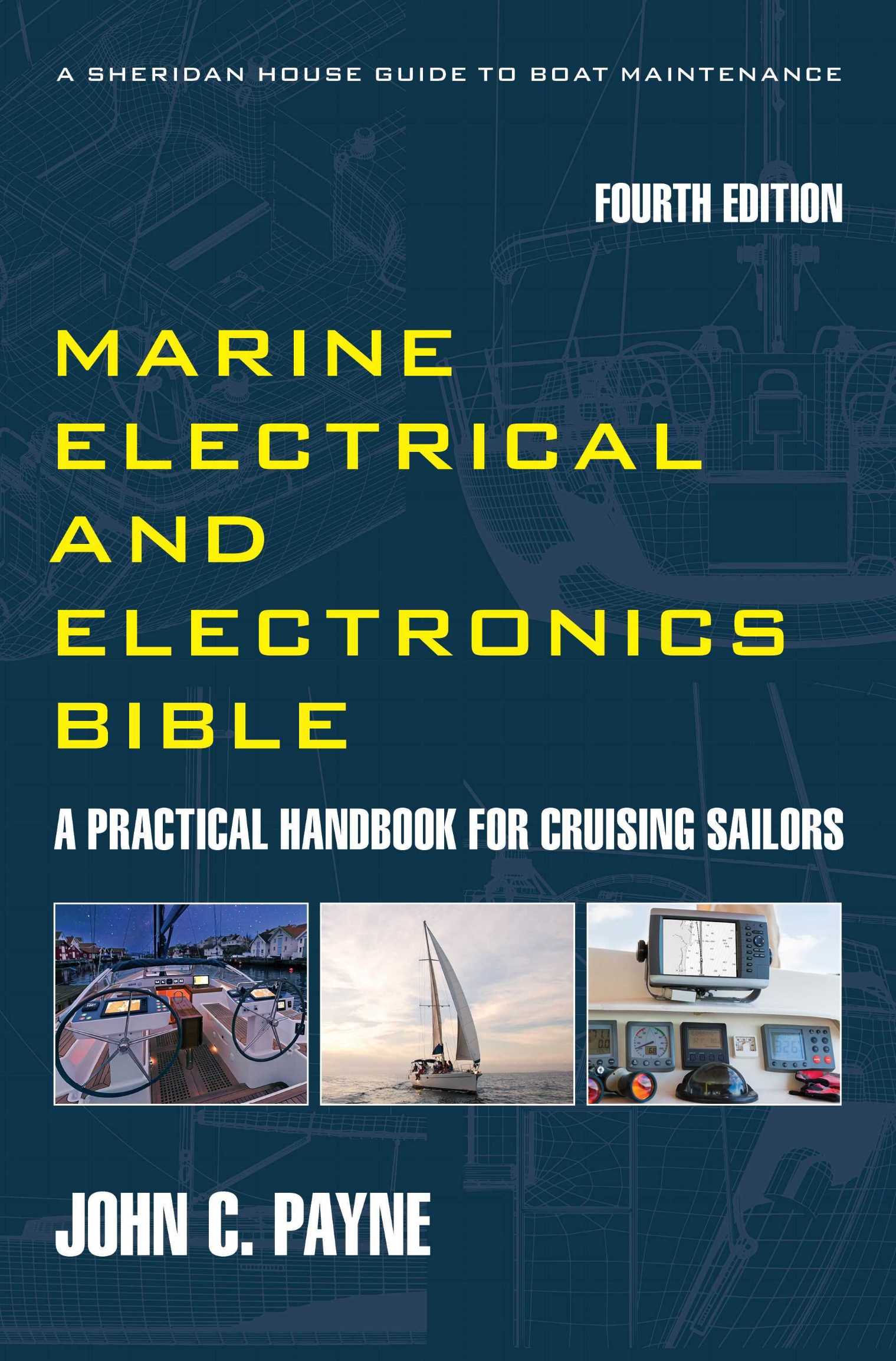
If you are headed somewhere remote consider the need to expand your knowledge base or have an information resource on board. Why not get a copy of my book The Marine and Electrical and Electronics Bible 4th Edition. By and for yachties, with everything from batteries and charging, solar and wind, diesel engines and marine electronics and so much more. Your complete systems guide. 650 pages of practical advice. In Australia and New Zealand order a copy through Boat Books. UK and European boats can buy the UK Edition Here. US and Canadian boats can get the US Edition Order Here. Marine systems are my profession so let me help you. By a liveaboard boat owner for other boat owners


Kyushu Sailing Guide Expectations
Kyushu’s cultural expectations are warm, polite, and shaped by a mix of deep tradition and easy .going southern character. Visitors who understand a few local norms will find interactions smoother and more welcoming.
Respectful Communication
- Politeness is valued, but Kyushu people are known for being open and friendly.
- A simple greeting — konnichiwa or ohayō gozaimasu — goes a long way in small ports.
- Speaking slowly and showing patience is appreciated, especially in rural areas.
Harbour Etiquette
- Fishing ports dominate the coastline; yachts are guests in working spaces.
- Always avoid obstructing fishing boats, gear, or fuel areas.
- A quick visit to the harbour office is expected and builds goodwill.
Community Awareness
- Small towns value quiet evenings. Keep noise low at night, especially near residential quays. Secure those noisy halyards slapping masts.
- Locals often watch over visiting boats; acknowledging their help with a smile or bow is customary.
Bathing & Onsen Culture
- Kyushu is famous for hot springs. Follow onsen etiquette: wash before entering, no swimwear, and keep towels out of the water.
- Tattoos may be restricted in some traditional baths, though many modern facilities are more relaxed.
Food & Market Behaviour
- Sampling local specialties is encouraged, but handling produce without permission is discouraged.
- Cash is still common in rural markets and small eateries.
Environmental Expectations
- Harbours are kept clean; disposing of rubbish properly is taken seriously.
- Avoid discharging greywater in small bays or fishing harbours.
General Attitude
- Kyushu residents are proud of their history and regional identity. Showing interest — whether in food, festivals, or local stories is warmly received.
This blend of courtesy, awareness, and genuine friendliness defines the social rhythm of Kyushu, making it an especially welcoming region for cruising yachts.
Kyushu Sailing Guide Summary
Kyushu is one of Japan’s most diverse and rewarding cruising regions, offering everything from sheltered inland routes to open‑ocean island chains. Its mix of modern marinas, traditional fishing ports, volcanic landscapes, and warm‑water passages creates a cruising environment that is both practical and adventurous. Whether used as a transit corridor or a long‑stay cruising ground, Kyushu provides the operational depth, cultural richness, and natural beauty that make it a standout destination for yachts exploring Japan. Sailing Kyushu yacht cruising guide.