Sailing the Seto Inland Sea Japan (Seto
Naikai)
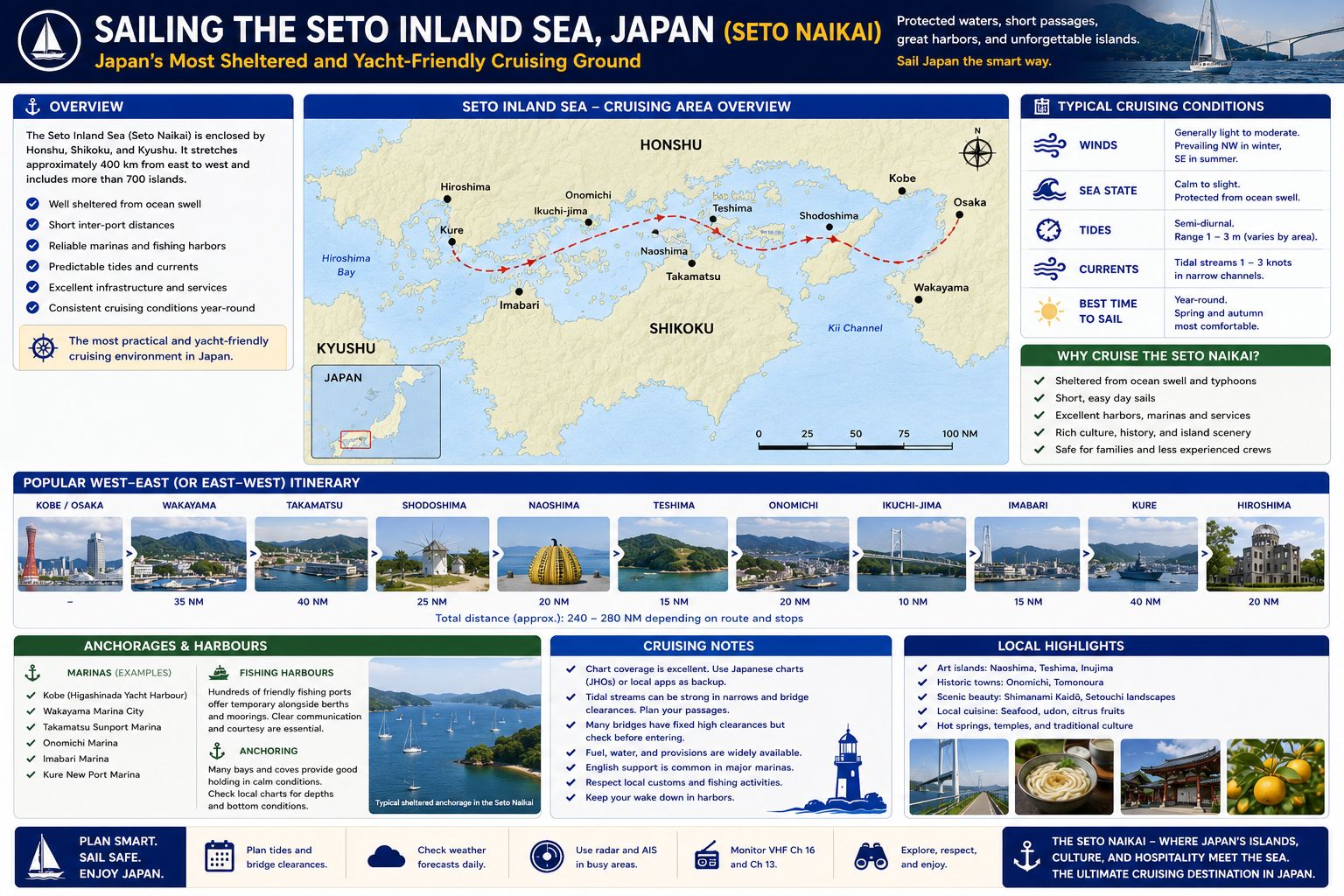
Sailing the Seto Inland Sea Japan. The Seto Inland Sea, known in Japan as the Seto Naikai, is the country’s most sheltered and consistently navigable cruising region. Enclosed by Honshu, Shikoku, and Kyushu, it forms a protected waterway stretching roughly 400 kilometers with more than 700 islands, short inter‑port distances, and reliable access to marinas and fishing harbors. For yachts, it offers predictable passages, manageable tidal planning, and a concentration of practical anchorages rarely found elsewhere in Japan
Most cruising itineraries follow a west–east or east–west route linking the region’s major ports and island groups. Yachts commonly begin in Kobe, Osaka, or Wakayama, then move west through Takamatsu, Shodoshima, Naoshima, Teshima, Onomichi, Ikuchi‑jima, Imabari, Kure, and Hiroshima. These ports provide a mix of marina berths, fishing harbors, provisioning access, and sheltered approaches. The central island chain of the Shimanami Kaidō is a core feature of most routes, offering protected channels and dependable moorings. With short legs and consistent infrastructure, the Seto Naikai is the most practical and yacht‑friendly cruising environment in Japan.
Sailing the Seto Inland Sea Japan - Kobe
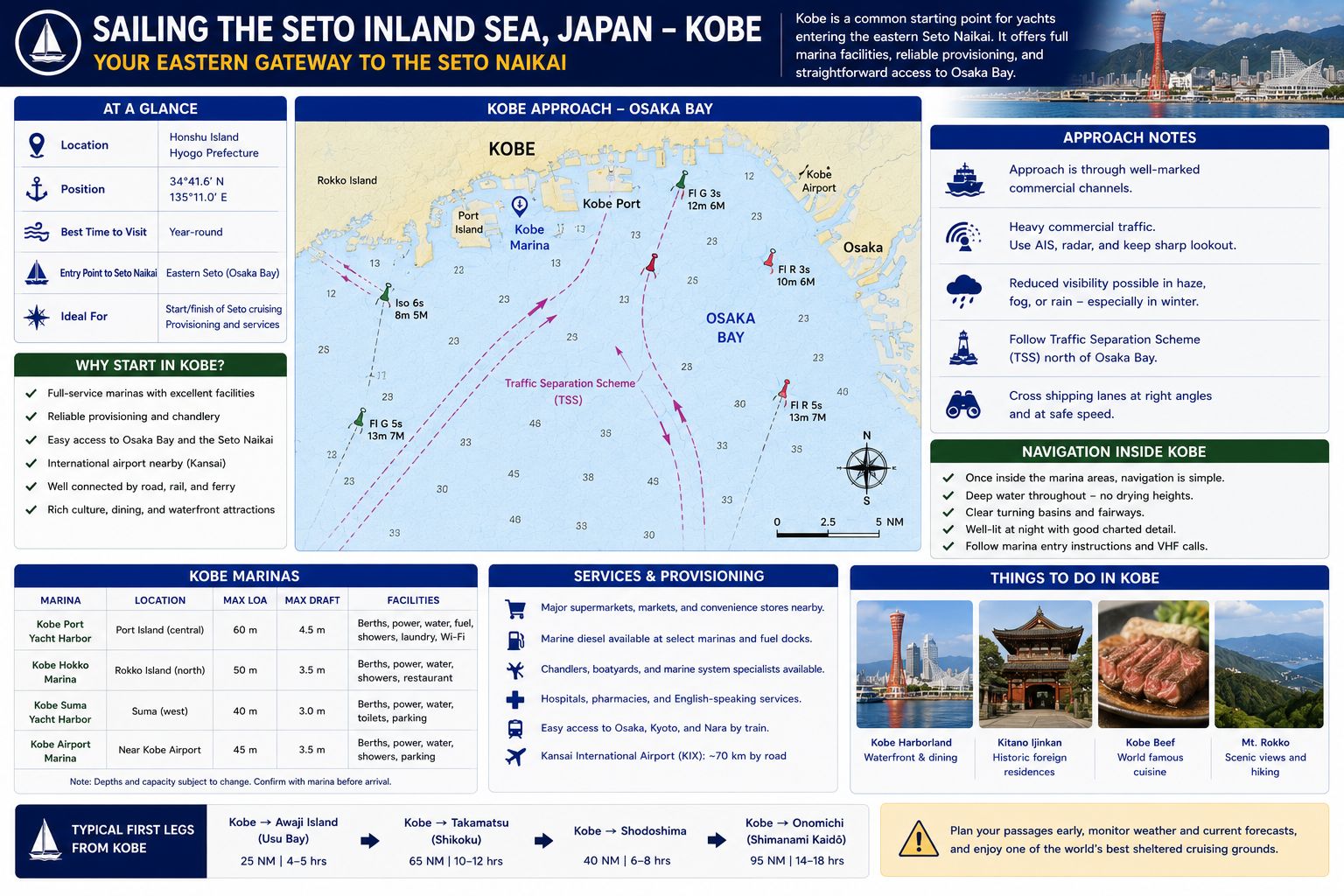
Kobe. Kobe is a common starting point for yachts entering the eastern Seto Naikai. It offers full marina facilities, reliable provisioning, and straightforward access to Osaka Bay. The approach is through well‑marked commercial channels with heavy traffic, requiring AIS and radar in reduced visibility. Once inside the marina areas, navigation is simple, with deep water and clear turning basins.
Sailing the Seto Inland Sea Japan - Osaka
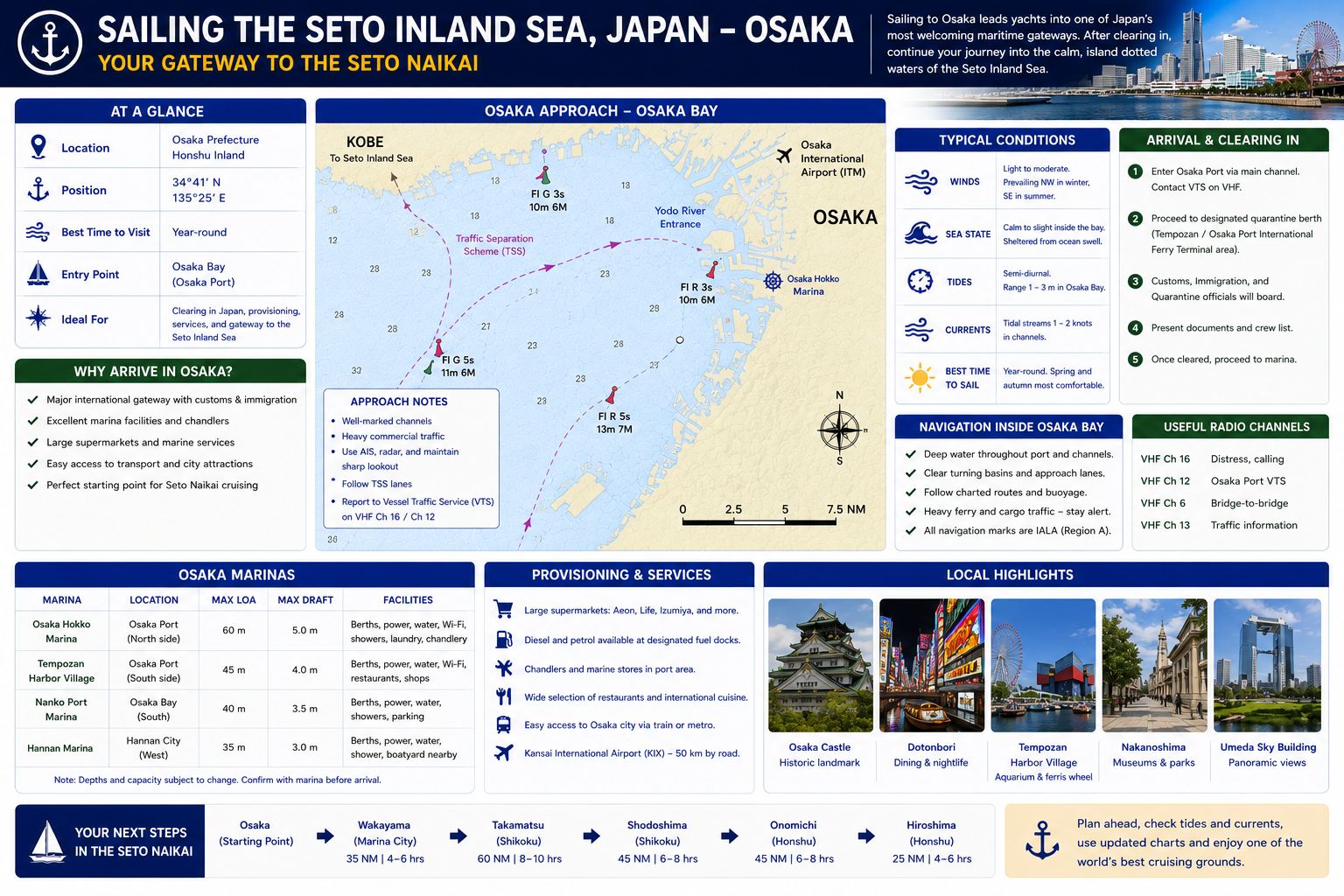
Sailing to Osaka leads yachts into one of Japan’s most welcoming maritime gateways. After clearing in, crews slip into the calm, island‑dotted waters of the Seto Inland Sea, a sheltered passage steeped in history and culture. Short hops link fishing towns, art islands, and quiet anchorages, with gentle tides guiding the route westward. Osaka provides modern marinas and easy provisioning, while the Inland Sea offers friendly harbours, and a sense of exploring Japan from the water’s edge.
Sailing the Seto Inland Sea Japan - Takamatsu
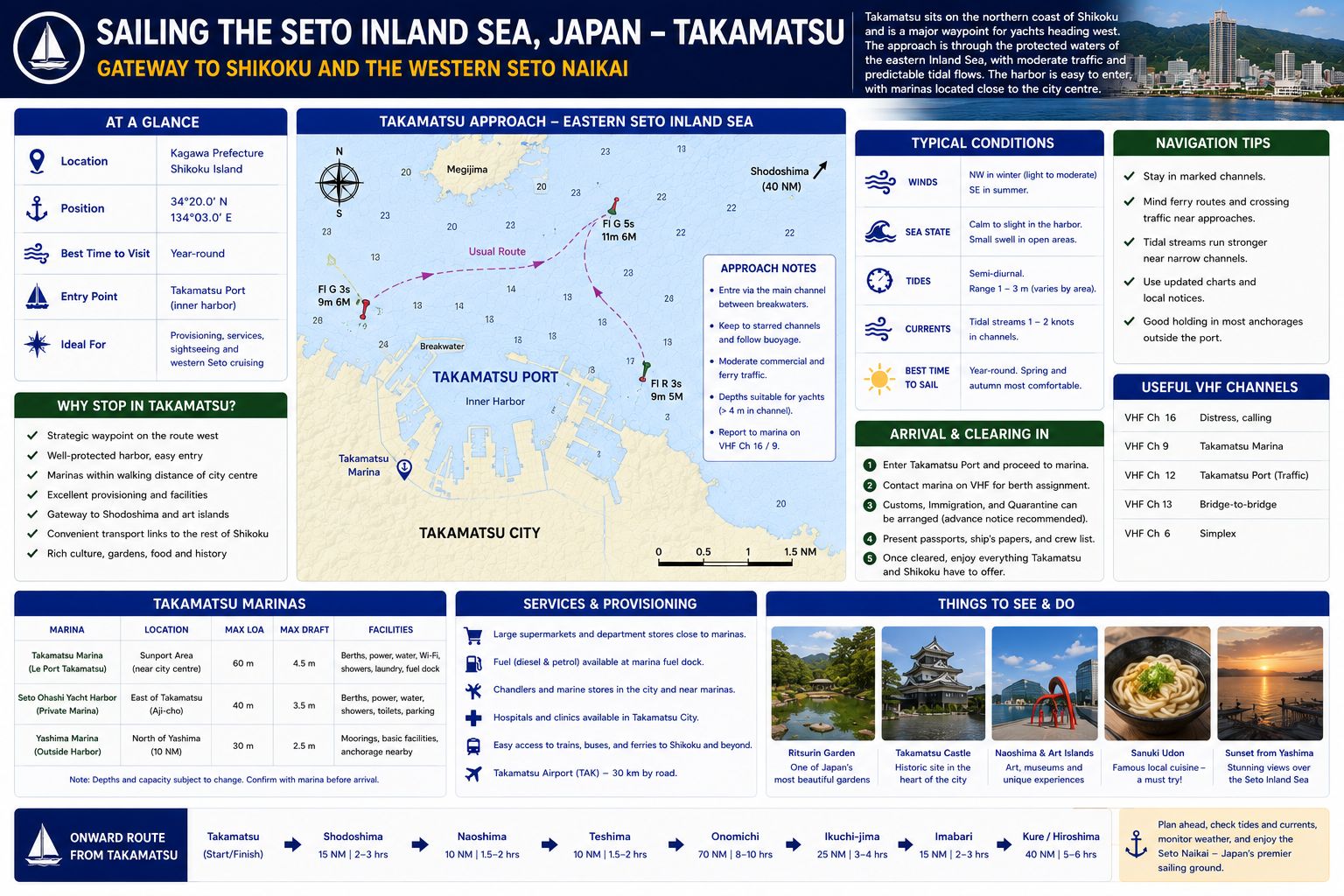
Takamatsu sits on the northern coast of Shikoku and is a major waypoint for yachts heading west. The approach is through the protected waters of the eastern Inland Sea, with moderate traffic and predictable tidal flows. The harbor is easy to enter, with marinas located close to the city Centre.
Sailing the Seto Inland Sea Japan - Shodoshima
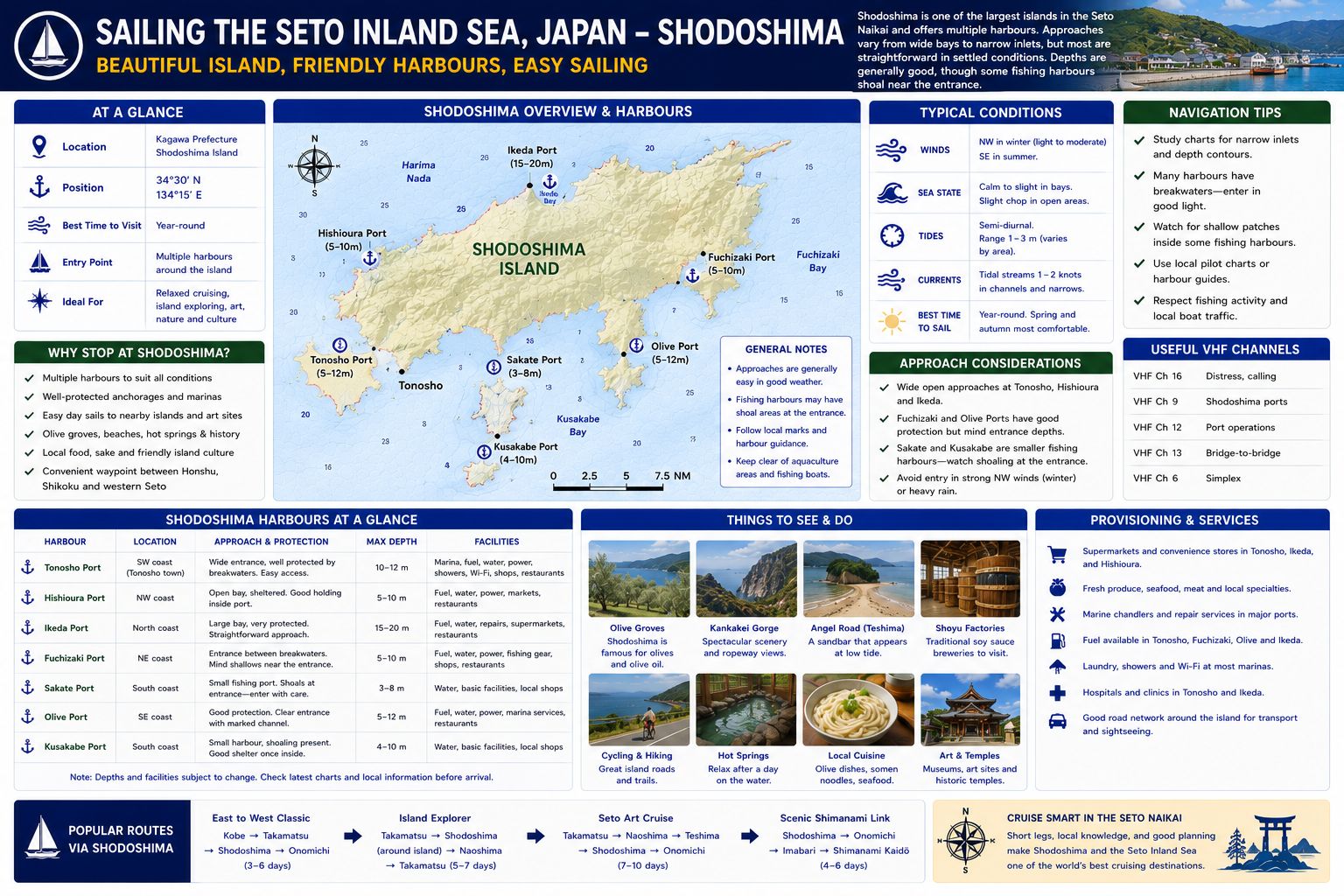
Shodoshima is one of the largest islands in the Seto Naikai and offers multiple harbors. Approaches vary from wide bays to narrow inlets, but most are straightforward in settled conditions. Depths are generally good, though some fishing harbors shoal near the entrance.
Sailing the Seto Inland Sea Japan -Naoshima and Teshima
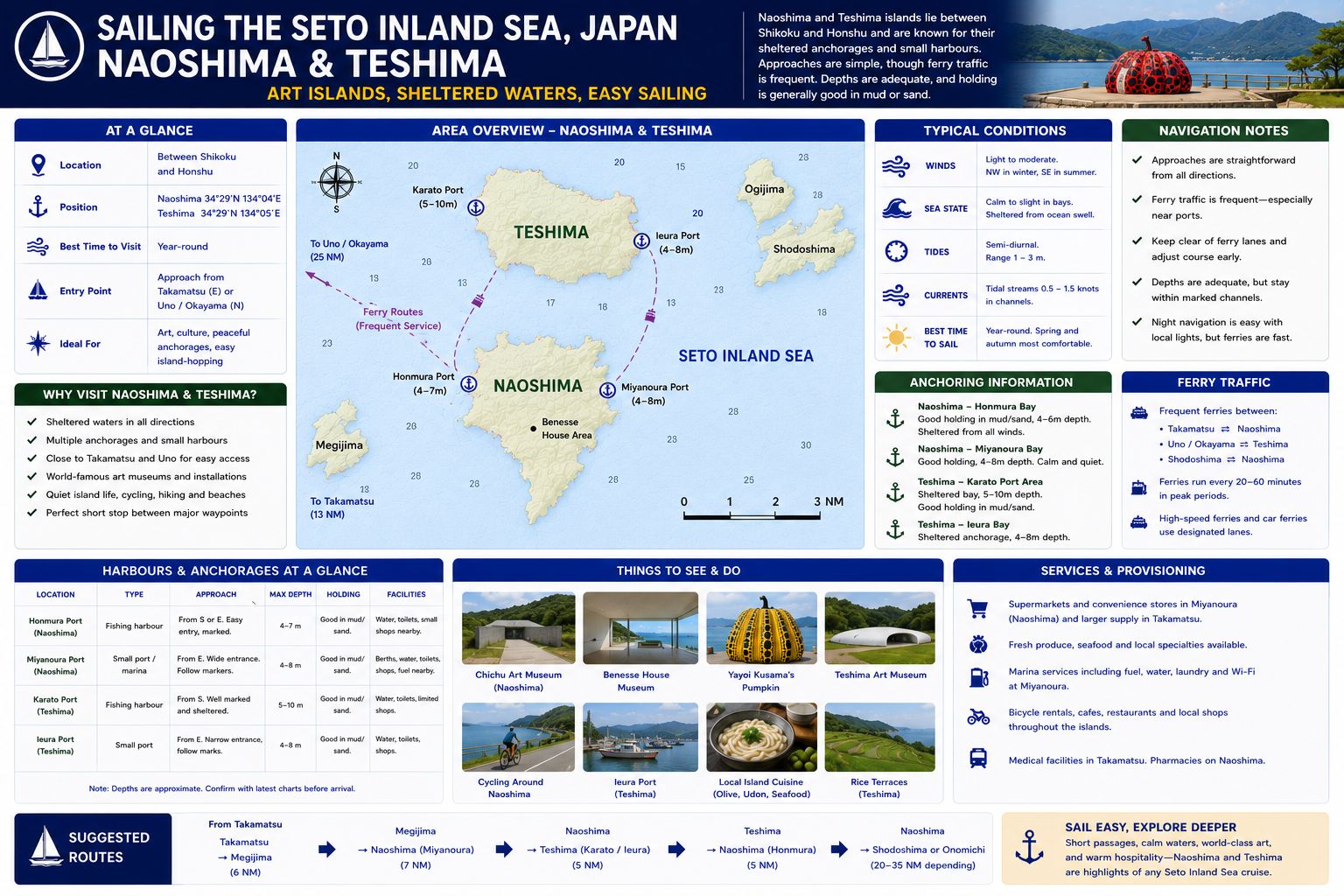
Naoshima and Teshima islands lie between Shikoku and Honshu and are known for their sheltered anchorages and small harbors. Approaches are simple, though ferry traffic is frequent. Depths are adequate, and holding is generally good in mud or sand.
Sailing the Seto Inland Sea Japan - Onomichi
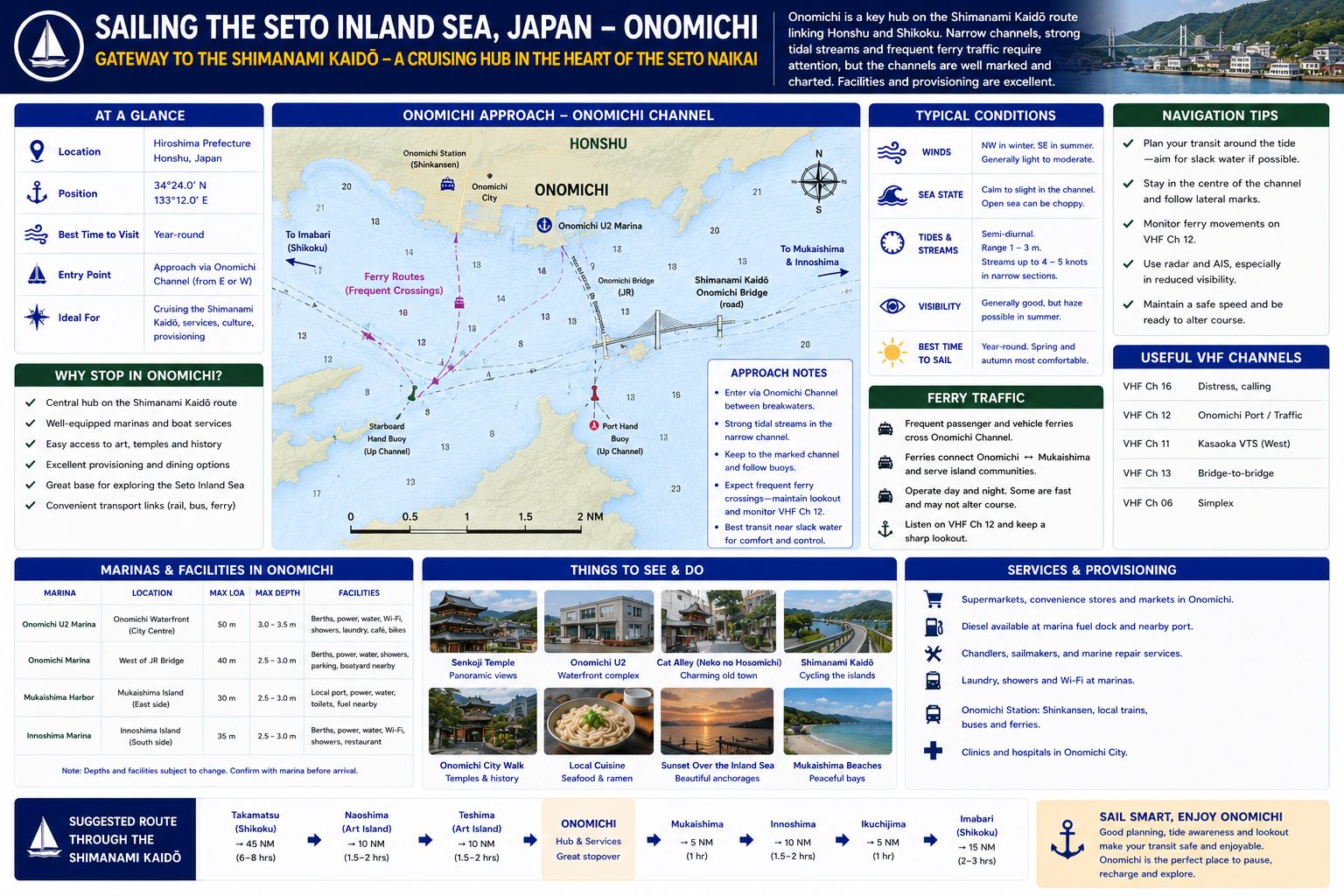
Onomichi is a central hub on the Shimanami Kaidō route. The approach is through narrow channels with strong tidal streams and frequent ferry crossings. Navigation requires attention, but the channels are well marked and charted.
Sailing the Seto Inland Sea Japan - Ikuchi‑jima (Setoda)
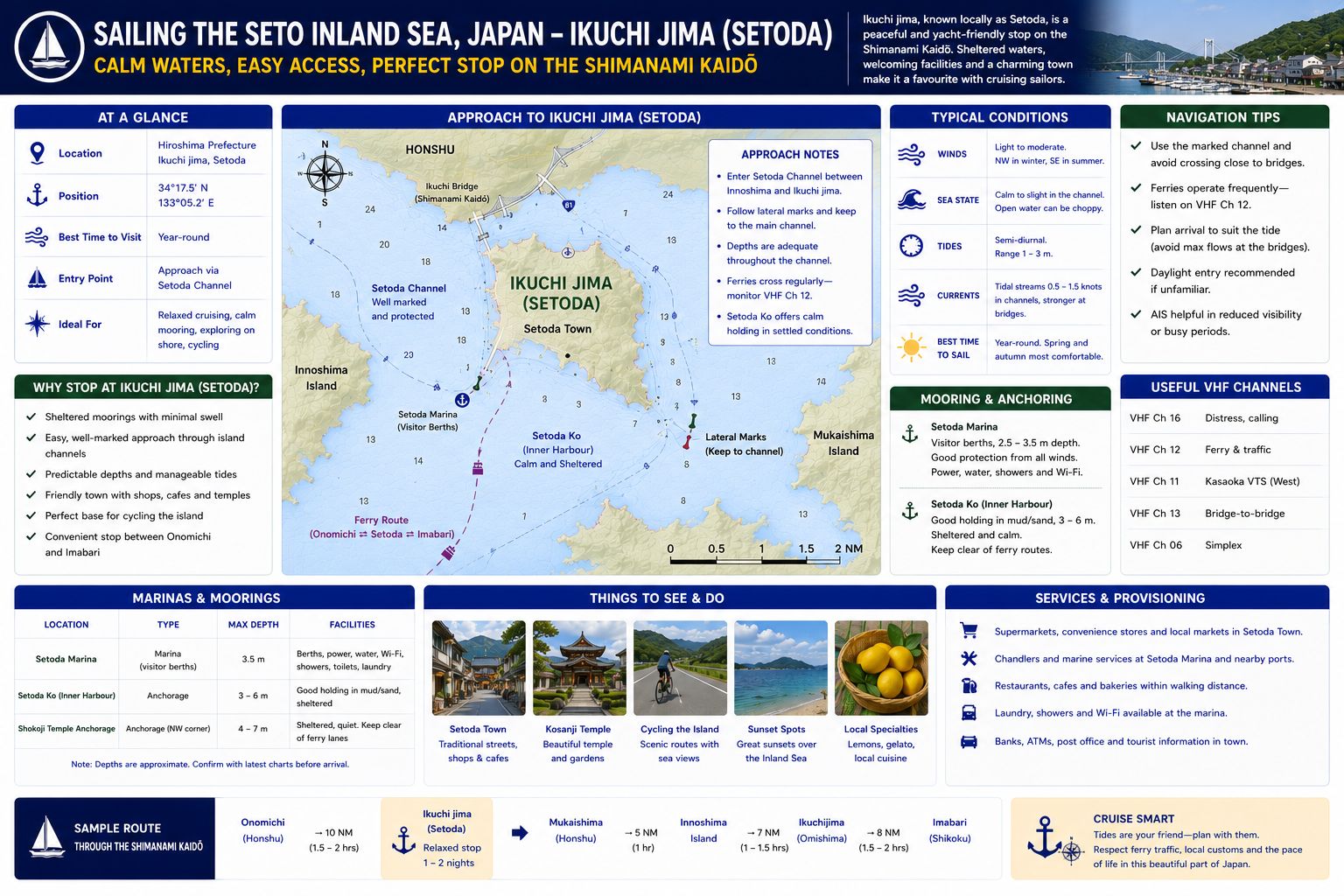
Setoda offers calm moorings and easy access to shore. The approach is through the protected island channels, with predictable depths and minimal swell. Tidal flow is present but manageable.
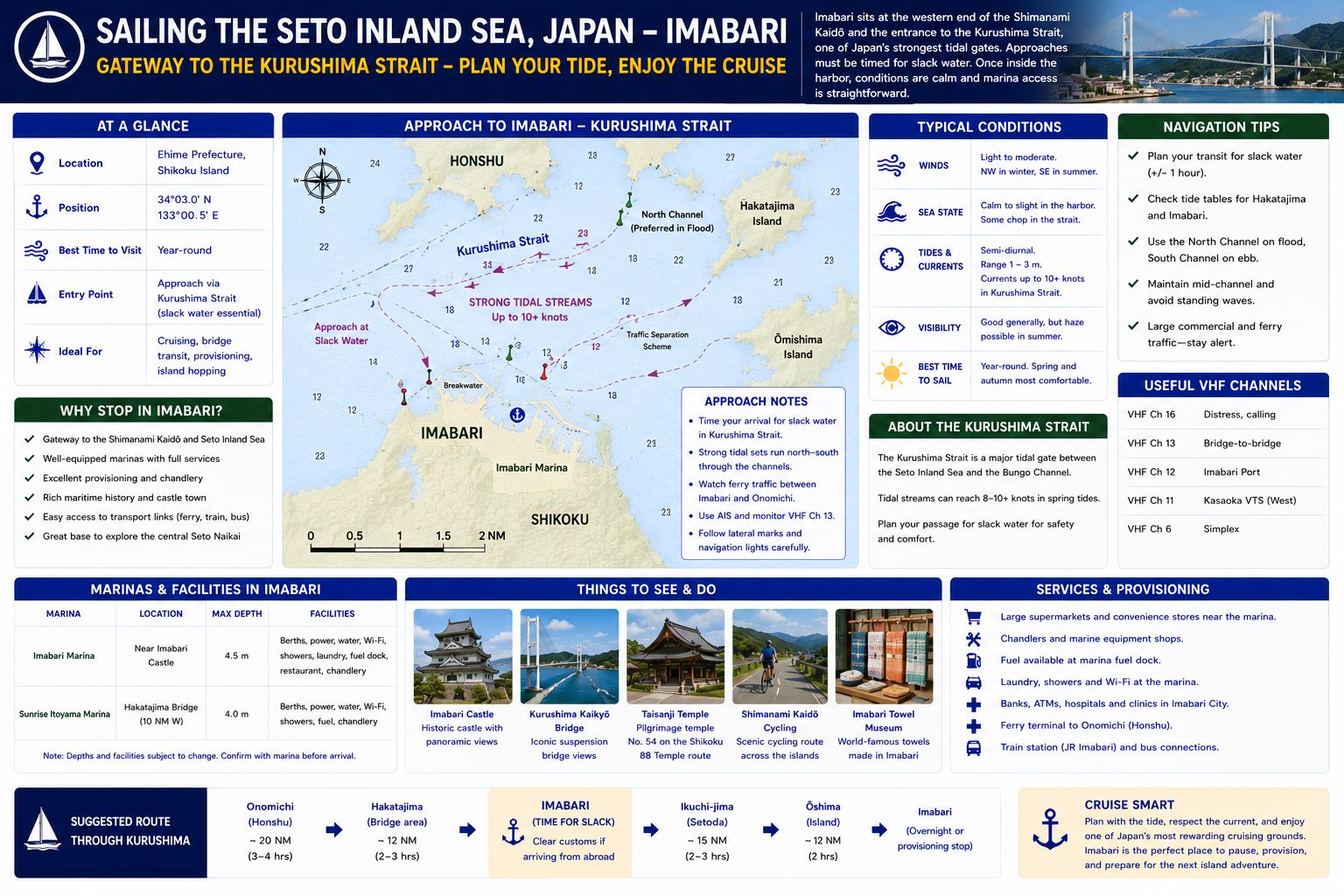
Sailing the Seto Inland Sea Japan - Imabari
Imabari sits near the Kurushima Strait, one of the strongest tidal gates in Japan. Approaches must be timed for slack water. Once inside the harbor, conditions are calm, and marina access is straightforward.
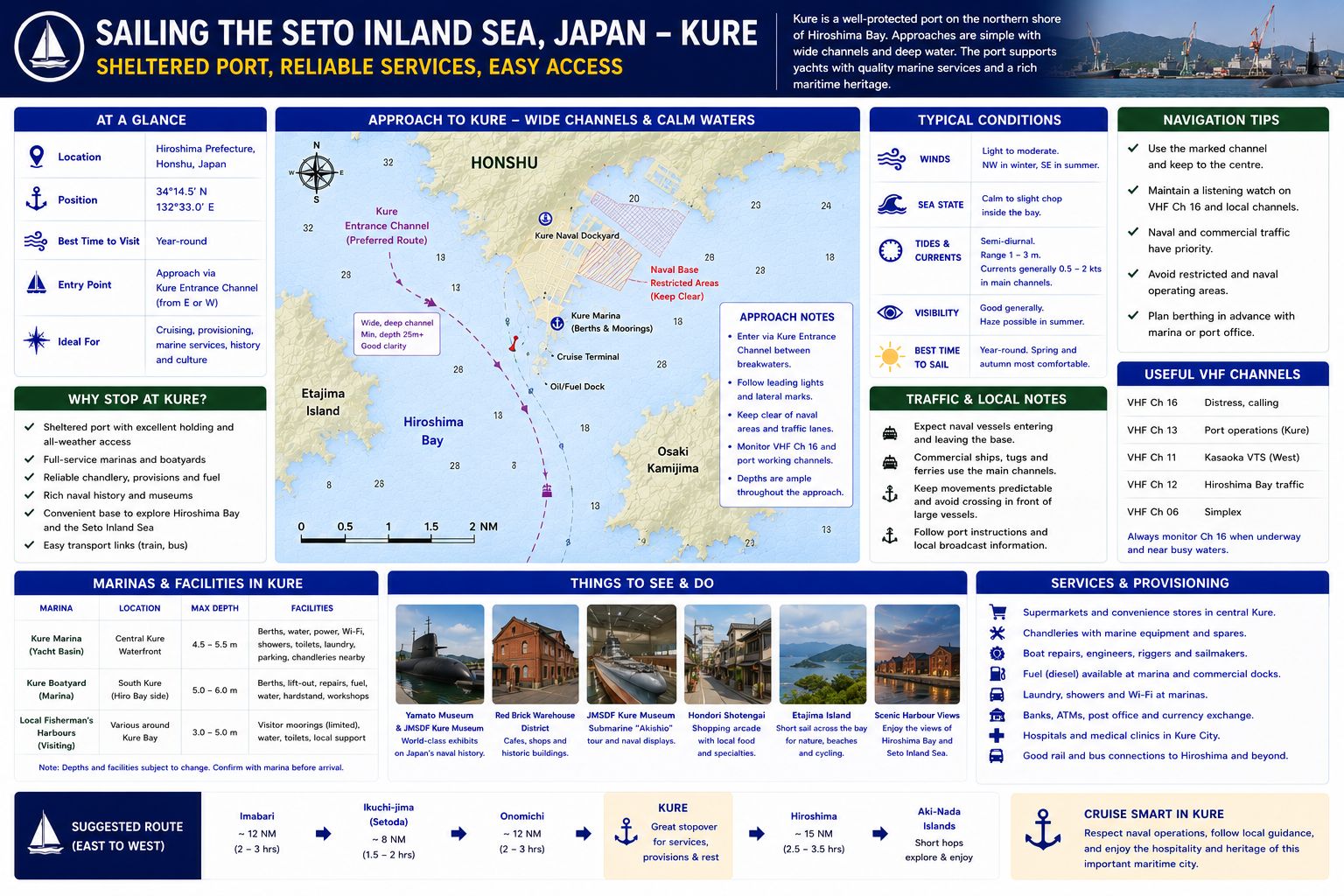
Sailing the Seto Inland Sea Japan - Kure
Kure is a sheltered port with reliable marine services. Approaches are simple, with wide channels and minimal swell. Traffic includes naval vessels, so yachts should maintain predictable movements.
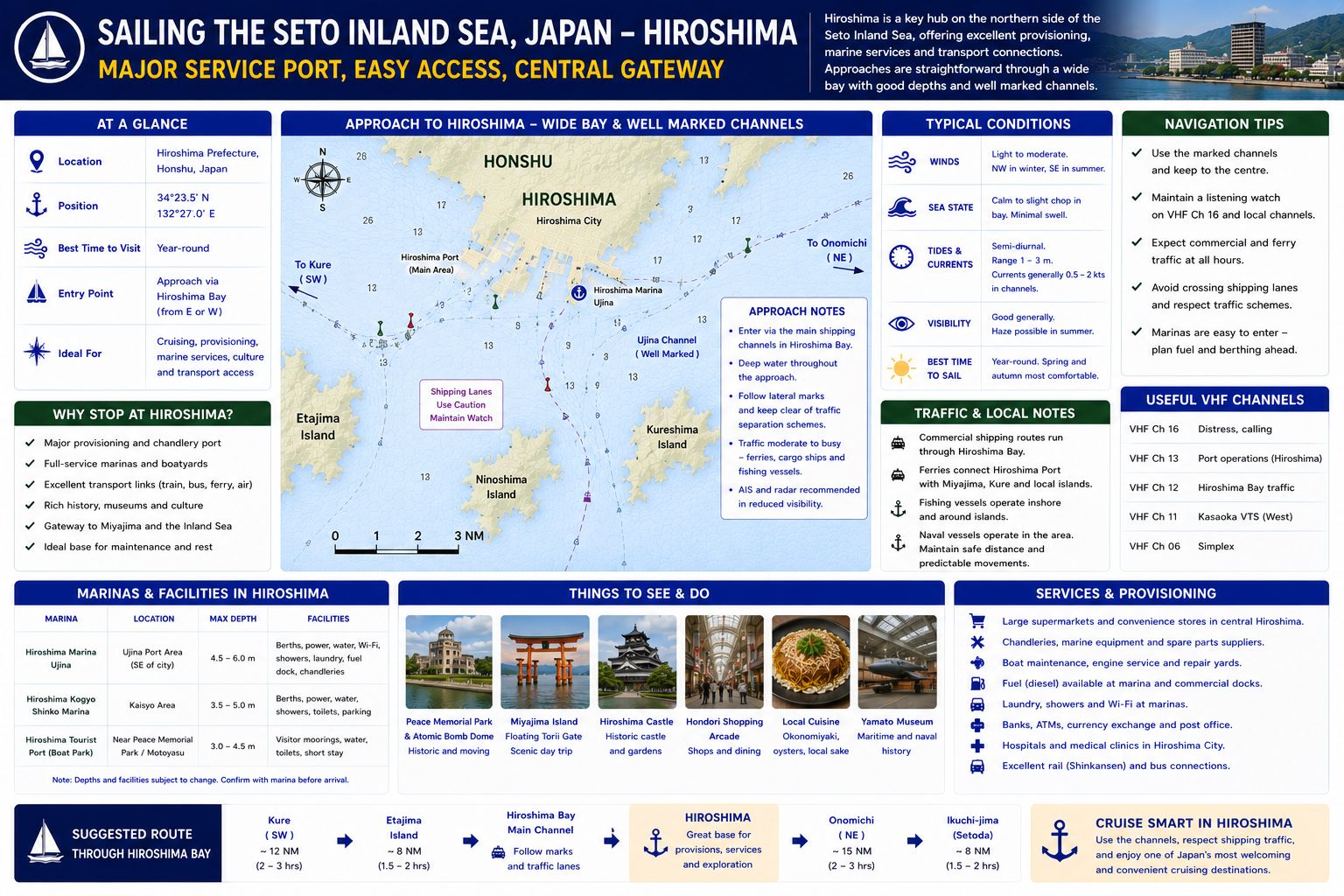
Sailing the Seto Inland Sea Japan - Hiroshima
Hiroshima is a major provisioning and service port. The approach is through a wide bay with moderate traffic and well‑marked channels. Depths are good, and marinas are easy to access.
Sailing the Seto Inland Sea Japan - Navigation
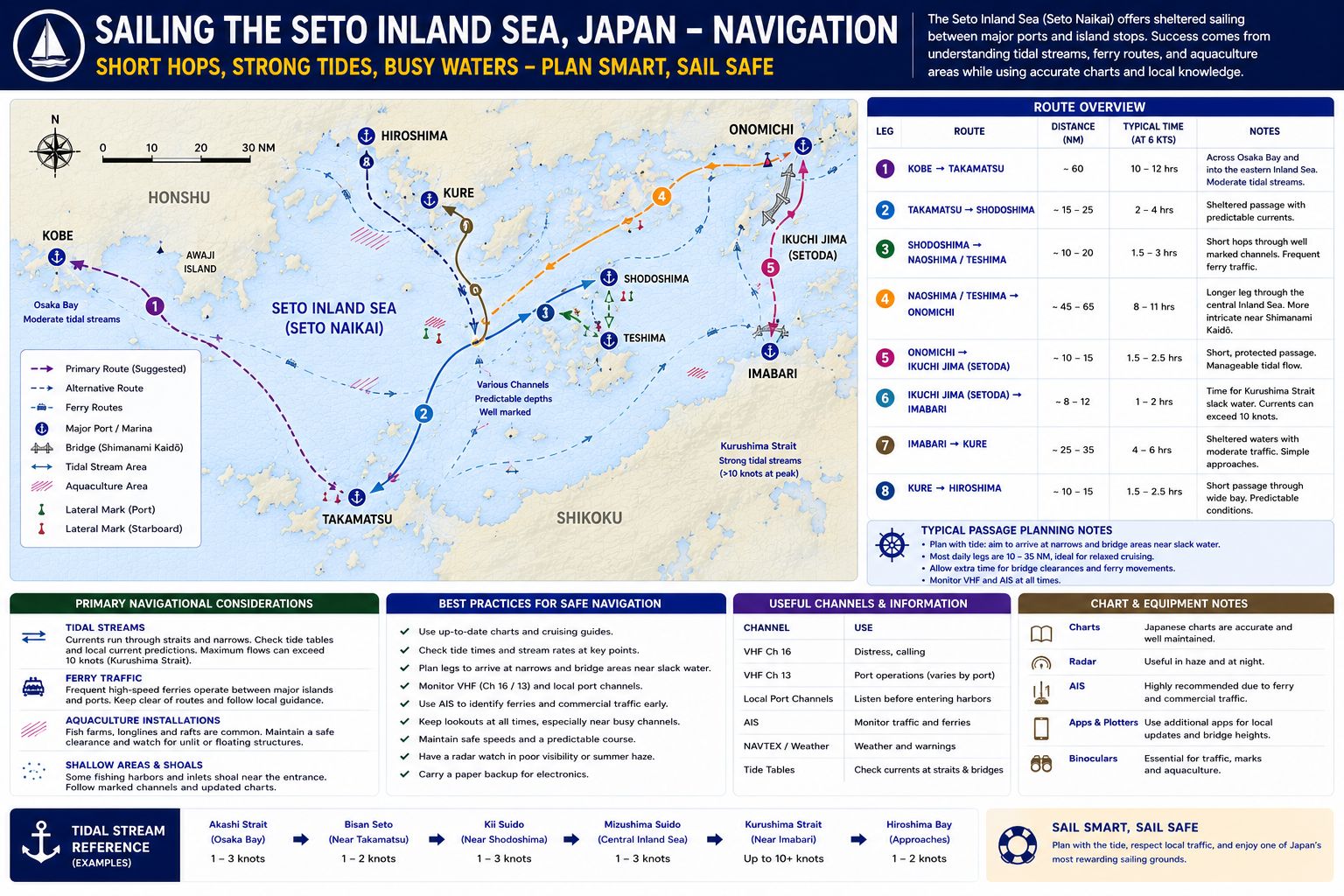
Sailing between these ports involves short legs, typically 10–35 nautical miles. The primary navigational considerations are tidal streams, ferry traffic, and aquaculture installations.
- Kobe to Takamatsu: A straightforward passage across Osaka Bay and into the eastern Inland Sea. Tidal streams are moderate, and traffic density decreases west of Awaji Island.
- Takamatsu to Shodoshima: Sheltered waters with predictable currents. Approaches to Shodoshima vary, but most are simple in settled weather.
- Shodoshima to Naoshima/Teshima: Short passages through well‑marked channels. Ferries operate frequently between islands.
- Naoshima/Teshima to Onomichi: A longer leg through the central Inland Sea. Navigation becomes more intricate near the Shimanami Kaidō due to narrow channels and bridges.
- Onomichi to Ikuchi‑jima: A short, protected passage with minimal swell. Tidal flow is present but manageable.
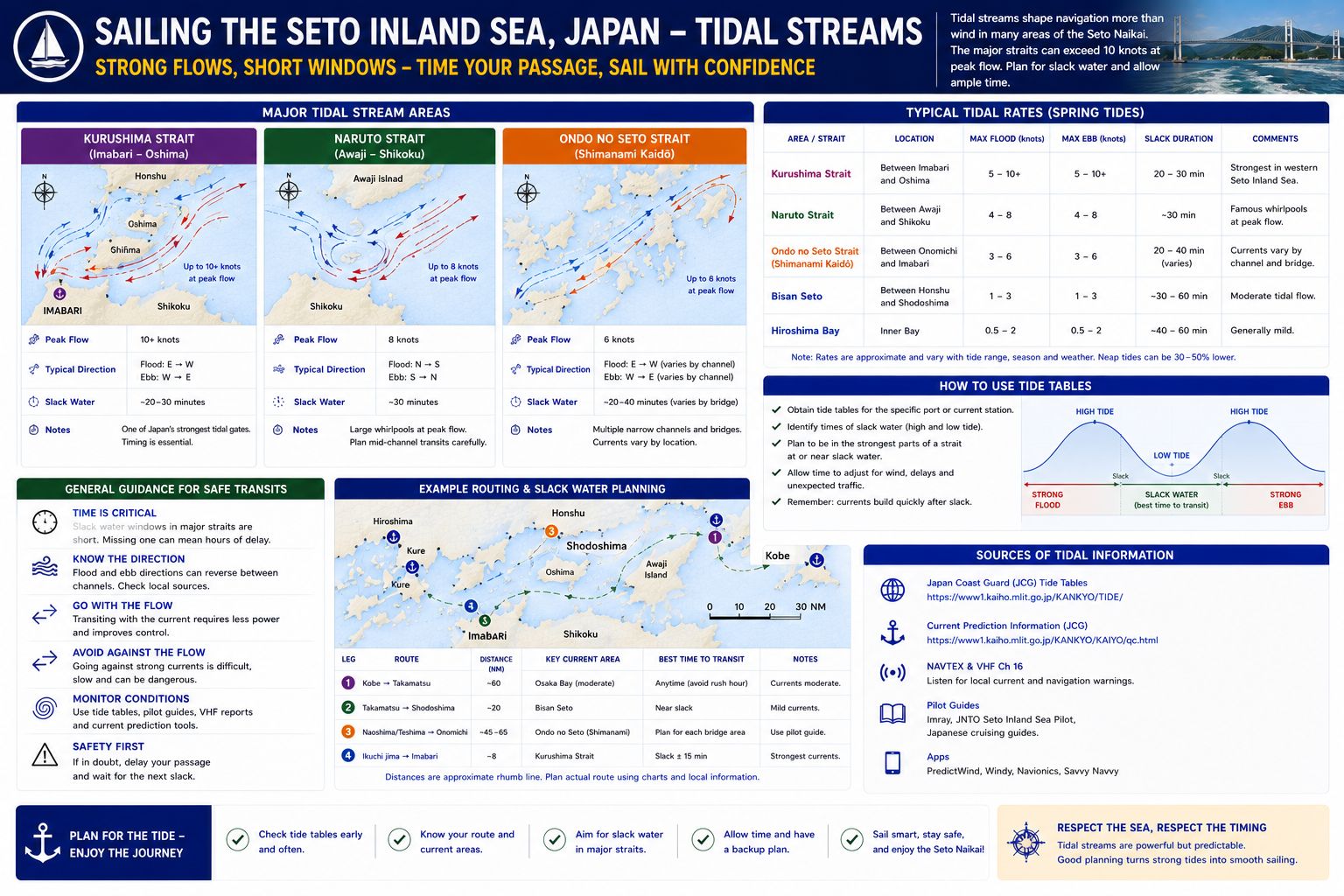
- Ikuchi‑jima to Imabari: Requires timing for the Kurushima Strait. Currents can exceed 10 knots at peak flow.
- Imabari to Kure: Sheltered waters with moderate traffic. Approaches to Kure are simple.
- Kure to Hiroshima: A short passage through a wide bay with predictable conditions.
Throughout the region, charts are accurate, and navigation marks are well maintained. Radar is useful in summer haze, and AIS is recommended due to ferry and commercial traffic.
Sailing the Seto Inland Sea Japan - Local
Weather
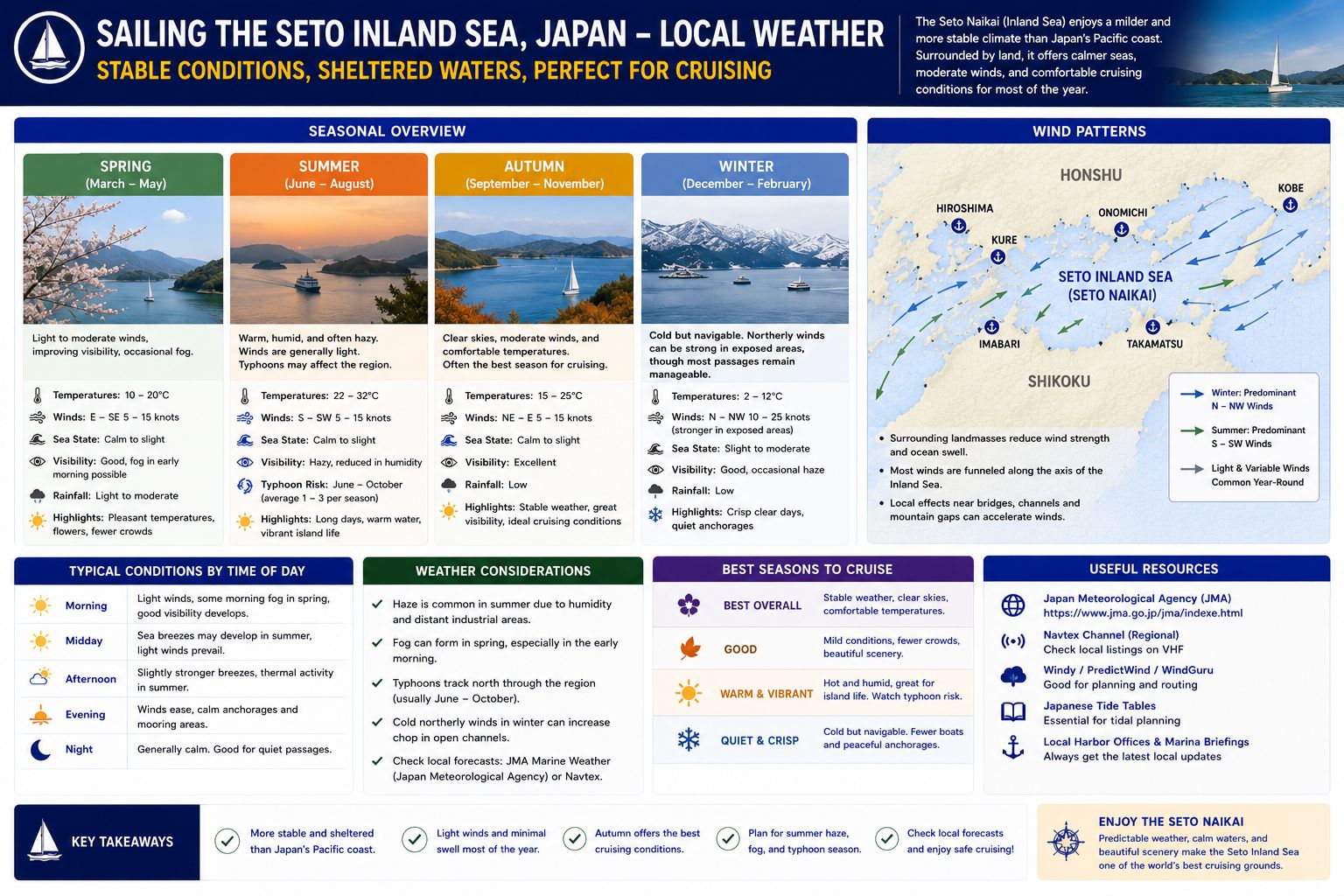
Weather in the Seto Naikai is more stable than on Japan’s Pacific coast. The surrounding landmasses reduce swell and moderate wind strength.
- Spring: Light to moderate winds, improving visibility, occasional fog.
- Summer: Warm, humid, and often hazy. Winds are generally light. Typhoons may affect the region, though the inland sea is more protected than coastal areas.
- Autumn: Clear skies, moderate winds, and comfortable temperatures. Often the best season for cruising.
- Winter: Cold but navigable. Northerly winds can be strong in exposed areas, though most passages remain manageable.
Sailing the Seto Inland Sea Japan - Tidal Streams
Tidal streams are a defining feature. The Kurushima, Naruto, and Ondo‑no‑Seto straits require careful timing. Slack water windows are short and missing them can result in delays or unsafe conditions.
Sailing the Seto Inland Sea Japan - Provisioning
More detailed coverage will be included at each port description.
- Kobe: Large supermarkets, specialty stores, and fresh markets are located near the marina areas. Seafood is widely available.
- Takamatsu: Excellent provisioning with major supermarkets, local markets, and seafood stalls. Easy access from marinas.
- Shodoshima: Good provisioning for an island. Local produce includes olives, soy sauce, and vegetables. Small supermarkets and markets are available.
- Naoshima and Teshima: Limited provisioning. Small shops offer basic supplies, fresh vegetables, and occasional seafood.
- Onomichi: Reliable provisioning with supermarkets, bakeries, and small specialty shops. Fresh seafood available near the waterfront.
- Ikuchi‑jima (Setoda): Small supermarkets and local produce stands. Citrus is a regional specialty.
- Imabari: Strong provisioning with large supermarkets and fresh markets. Seafood is widely available.
- Kure: Good provisioning with supermarkets and local markets. Fresh fish is common.
- Hiroshima: Excellent provisioning with large supermarkets, fresh markets, and specialty food stores.
Sailing the Seto Inland Sea Japan - Diesel
Fuel
- Kobe: Fuel available at marinas and nearby fuel docks.
- Takamatsu: Marina fuel docks and nearby commercial suppliers.
- Shodoshima: Fuel available in larger harbors; smaller ports may require jerry cans.
- Naoshima and Teshima: Limited fuel availability; jerry cans often required.
- Onomichi: Fuel available at marinas and nearby fishing ports.
- Ikuchi‑jima (Setoda): Limited fuel; jerry can runs may be necessary.
- Imabari: Reliable fuel supply at marinas and fishing ports.
- Kure: Fuel available at marinas and commercial docks.
- Hiroshima: Multiple fuel options at marinas and commercial docks.
Sailing the Seto Inland Sea Japan - Fresh
Water
- Kobe: Potable water at all marinas.
- Takamatsu: Reliable water supply at marina berths.
- Shodoshima: Water available at larger harbors.
- Naoshima and Teshima: Limited water; best to top up elsewhere.
- Onomichi: Water available at marinas.
- Ikuchi‑jima (Setoda): Water available at mooring facilities.
- Imabari: Reliable water supply at marinas.
- Kure: Water available at marina berths.
- Hiroshima: Potable water widely available.
Sailing the Seto Inland Sea Japan - Repairs
- Kobe: Full marine services, including haul‑out, engine work, electrical repairs, and chandlery access.
- Takamatsu: Moderate service availability; basic repairs and maintenance can be handled locally.
- Shodoshima: Limited services; minor repairs only.
- Naoshima and Teshima: No significant marine services.
- Onomichi: Good access to marine technicians and small repair facilities.
- Ikuchi‑jima (Setoda): Limited services; minor repairs only.
- Imabari: Strong service availability due to the city’s shipbuilding industry.
- Kure: Reliable marine services, including engine and electrical work.
- Hiroshima: Good service availability with access to technicians and chandlery supplies.
Mechanical and Electrical Repairs
Resource
If you are headed somewhere remote consider the need to expand your knowledge base or have an information resource on board. Why not get a copy of my book The Marine and Electrical and Electronics Bible 4th Edition. By and for yachties, with everything from batteries and charging, solar and wind, diesel engines and marine electronics and so much more. Your complete systems guide. 650 pages of practical advice. In Australia and New Zealand order a copy through Boat Books. UK and European boats can buy the UK Edition Here. US and Canadian boats can get the US Edition Order Here. Marine systems are my profession so let me help you. By a liveaboard boat owner for other boat owners

Sailing the Seto Inland Sea Japan - Local
Culture
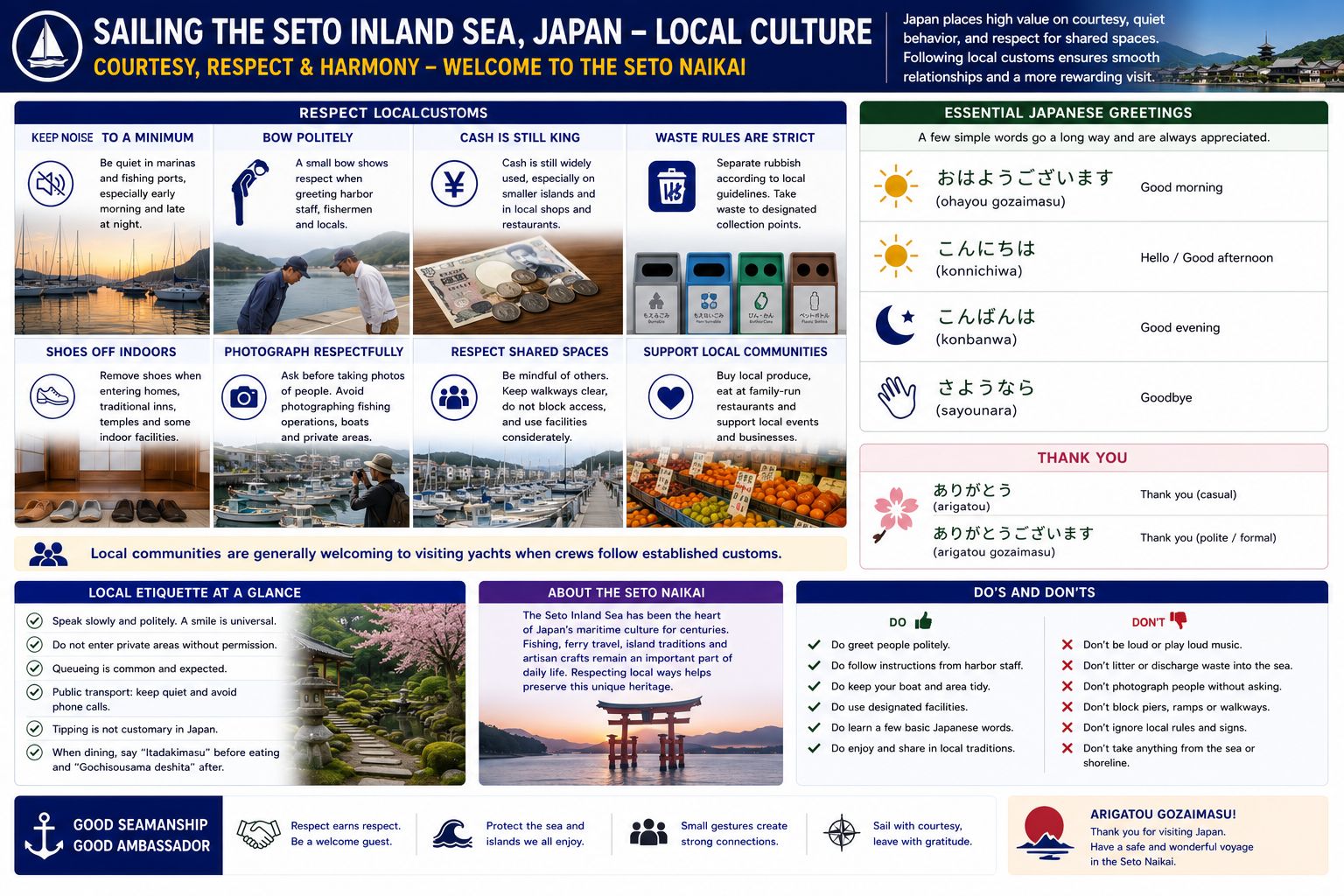
Japan places high value on courtesy, quiet behavior, and respect for shared spaces. Yachts visiting the Seto Naikai should be aware of the following:
- Keep noise to a minimum in marinas and fishing ports.
- Bow politely when interacting with harbor staff or fishermen.
- Cash is still widely used, especially on smaller islands.
- Waste disposal rules are strict; separate rubbish according to local guidelines.
- Shoes are removed when entering homes and some indoor facilities.
- Photography around fishing ports should be done respectfully.
Local communities are generally welcoming to visiting yachts when crews follow established customs.
Sailing the Seto Inland Sea Japan - Local
Cuisine
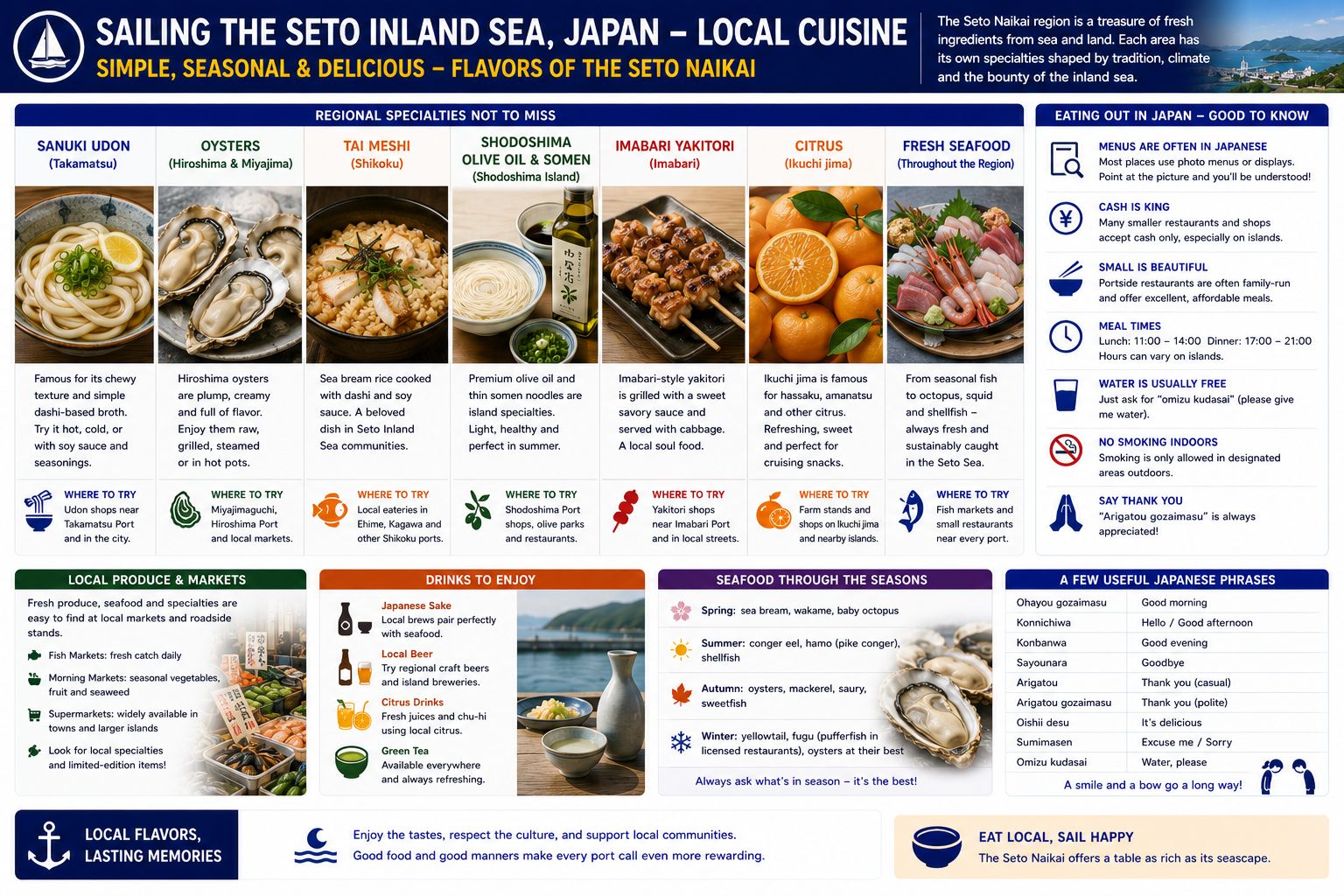
The Seto Naikai region is known for simple, high‑quality ingredients and regional specialties:
- Sanuki Udon (Takamatsu)
- Oysters (Hiroshima and Miyajima)
- Tai Meshi (sea bream rice, common in Shikoku)
- Shodoshima olive oil and somen noodles
- Imabari yakitori
- Citrus from Ikuchi‑jima
- Fresh seafood throughout the region
Small restaurants near ports often offer fresh, affordable meals, and local produce is widely available. You will have to point at the image based menus as most everything is in Japanese script, unless of course you speak Japanese


Sailing the Seto Inland Sea Japan - Summary
The Seto Inland Sea offers a structured, predictable, and well‑supported cruising environment for yachts. With short passages, sheltered waters, reliable provisioning, and access to marinas and fishing ports, it is the most practical cruising region in Japan. Navigation requires attention to tidal streams and ferry traffic, but charts are accurate and conditions are manageable. For yachts seeking a technically interesting yet accessible cruising ground, the Seto Naikai provides a balanced combination of infrastructure, cultural interest, and navigational variety suitable for extended coastal exploration. Sailing the Seto Inland Sea Japan has much to offer.