Sailboat Navigation Skills Guide
Sailboat Navigation Skills Guide. Navigation, routing and daily operations form the foundation of safe and controlled cruising. This section focuses on how sailors plan a route, establish their position, monitor progress and adjust decisions as conditions change. Effective navigation is not simply following a line on a chart plotter or screen; it requires continuous awareness of position, depth, hazards, vessel traffic, weather, time, vessel performance and available alternatives.
The fundamentals of sailboat navigation include understanding latitude and longitude, reading nautical charts, using Global Positioning System equipment appropriately and applying dead reckoning when required. Sailors should be able to identify and plot a position, take and interpret bearings, measure distance and course, assess charted depths and understand chart datum. Electronic navigation systems provide valuable support, but they should not replace core navigation knowledge. Dead reckoning remains an important backup and cross-checking method, using course steered, vessel speed, elapsed time and a last known position to estimate where the vessel should be.
Sailboat Navigation Skills Guide – About Charts
Charts are the primary reference for route planning, hazard identification, coastal navigation and pilotage. They provide the navigator with essential information about water depths, seabed features, drying areas, rocks, wrecks, navigation marks, restricted areas, traffic routes, anchorages, harbour approaches and shoreline detail. For sailboat skippers, charts are not just planning documents; they are operational tools used to assess risk, choose safe water, confirm position and make decisions as the vessel moves through changing conditions.
This subpage will explain the main chart formats used in sailboat navigation, including paper charts, raster charts and vector charts. Paper charts provide a fixed-scale overview and remain valuable for passage planning, cockpit reference and backup navigation. Raster charts are digital versions of paper charts, preserving the same visual layout and symbology. Vector charts are built from layers of electronic data, allowing information to be displayed, hidden, queried or adjusted depending on the system settings and zoom level. Each format has strengths and limitations, and sailors need to understand how chart type affects what information is visible, how it is interpreted and how easily important hazards can be missed.
A major focus of this subpage will be chart scale and scale logic. Large-scale charts show a smaller geographic area in greater detail and are normally required for harbour entrances, narrow channels, anchorages and pilotage in confined waters. Small-scale charts show a wider area with less detail and are better suited to passage planning and offshore route overview. This distinction is critical because simply zooming in on an electronic chart does not necessarily reveal more accurate or more detailed source data. In some systems, zooming may only enlarge existing information, reduce context or create a false sense of precision. Sailors must understand when to change to a more appropriate chart scale, check the source chart information and avoid treating electronic zoom as a substitute for proper chart selection. Chart Types, Electronic Charts & Scale Logic.
Sailboat Navigation Skills Guide - Daily Operations
Daily operations on a cruising sailboat are a control system that keeps the vessel, crew and passage plan under command. Watchkeeping structure, logbook entries, machinery checks, electrical management, water use, sail plan selection, trim routines, deck inspections and safety equipment readiness all provide information the skipper uses to make decisions. These routines are not separate tasks; they connect position, vessel condition, crew capacity and system endurance into one operating picture. When performed consistently, they expose developing faults before they affect navigation, propulsion, power supply, water availability or emergency response. Sailboat daily operations guide.
Sailboat Navigation Skills Guide - Position
Fixing
Accurate position fixing is central to safe sailboat navigation, particularly when operating near land, shallow water, navigation hazards, vessel traffic, harbour entrances or restricted channels. A position fix gives the skipper a confirmed understanding of where the vessel is in relation to the planned route, surrounding dangers and available safe water. It also supports decisions about course changes, depth expectations, tidal effects, clearing distances and when to begin pilotage procedures.
This subpage will cover the main methods used to establish and verify a sailboat’s position. Global Positioning System equipment provides fast and continuous position information, but it should be treated as one source of data rather than the only source. The page will explain how to use visual bearings, cross bearings, transits, leading lines and radar ranges to confirm position independently. These methods are especially important during coastal navigation, harbour approaches, poor visibility, night navigation or any situation where a small position error could place the vessel at risk.
The emphasis of this subpage will be position verification and cross-checking. A chartplotter may show a precise location, but that does not always mean the displayed position is correct, suitable or fully understood. Datum differences, chart inaccuracies, satellite errors, poor antenna placement, incorrect settings or user assumptions can all affect navigation decisions. By comparing Global Positioning System data with visual references, compass bearings, radar information, depth trends and expected vessel movement, sailors can build a more reliable picture of where the vessel is and whether it is tracking safely.
Position fixing is also a practical discipline for maintaining situational awareness over time. The subpage will explain how to record positions at suitable intervals, compare actual progress with the planned route, estimate future position and identify when the vessel is being affected by tide, current, leeway or steering error. Rather than relying on a single electronic display, the objective is to develop a structured approach to confirming position, recognising uncertainty and making navigation decisions with confidence. Position Fixing.
Sailboat Navigation Skills Guide - Routing & Passage Strategy
Routing and passage strategy is the discipline of shaping a safe, efficient track by integrating weather systems, sea state, tidal behaviour and the coastline’s inherent hazards into a single, continuously updated plan. It links large‑scale synoptic patterns with local effects such as acceleration zones, capes, and lee‑shore risks, then layers in tidal gates, traffic density, bailout harbours and fuel‑range contingencies to determine when and how a vessel should move. A good routing plan is never static: it evolves with new weather forecasts, changing crew readiness, daylight windows, and the real‑time behaviour of wind and swell, ensuring that every leg of the passage is both achievable and aligned with the skipper’s safety margins. Routing & Passage Strategy
Sailboat Navigation Skills Guide - Depth
Interpretation
Depth information must be interpreted in relation to chart datum, tide height, vessel draft and the required safety margin beneath the keel. This subpage will explain how charted depths relate to real-time water depth and how under-keel clearance should be assessed when anchoring, entering harbours, crossing bars or navigating shallow water. Depth Interpretation, Tides & Under-Keel Clearance.
Sailboat Navigation Skills Guide - Buoyage
Systems and Lights
Buoyage systems and lights provide essential information for identifying channels, hazards, safe water and special navigation areas during sailboat passages and harbour approaches. This subpage will focus on International Association of Marine Aids to Navigation and Lighthouse Authorities Region A buoyage, including lateral marks, cardinal marks, isolated danger marks, safe water marks, special marks, light rhythms and sector lights. It will explain how colours, shapes, top marks, numbers and light characteristics work together, helping sailors interpret marks correctly during pilotage, confirm safe water and avoid relying on a single visual cue when navigating close to hazards. Lights & Sector Navigation
Sailboat Navigation Skills Guide - Pilotage
Planning
Pilotage planning for sailboats converts chart information into a clear, practical approach plan for harbours, anchorages, channels and confined waters. This subpage will cover how to use approach lines, transits, danger bearings, clearing bearings, depth checks, decision points and contingency options to keep the vessel in safe water during close-quarters navigation. It will also explain how a well-prepared pilotage plan reduces cockpit workload, supports timely course changes and helps the skipper manage hazards, tidal effects, traffic and limited manoeuvring space during harbour approaches. Pilotage Planning for Sailboat Harbour Approaches.
Sailboat Navigation Skills Guide - Night
Navigation
Night navigation for sailboats requires careful light identification, disciplined cross-checking and awareness that visual cues are reduced after dark. This subpage will cover how to interpret light characteristics such as colour, rhythm, period, range and sectors, as well as how to recognise vessel navigation lights and assess traffic movement at night. It will also address background light contamination around harbours, marinas and built-up coastlines, where navigation aids can be confused with shore lighting. Sailors will learn how to manage night vision, reduce onboard glare and use radar, Automatic Identification System equipment, compass bearings, depth readings and Global Positioning System data together to confirm what is being observed and maintain safe navigation after dark. Night Navigation for Sailboats.
Sailboat Navigation Skills Guide - Radar
Use
Radar is a key tool for navigation, collision awareness and poor visibility operation, but it requires correct setup and interpretation. This subpage will cover range selection, gain, sea clutter, rain clutter, target interpretation, land returns, vessel echoes and the integration of radar with other navigation information. Radar Use for Sailboat Navigation
Sailboat Navigation Skills Guide - AIS &
Collision Assessment
Navigation, routing, and daily operations form the foundation of safe and confident cruising. This section focuses on how sailors plan where they are going, understand where they are, monitor progress, and adjust decisions as conditions develop. Navigation is not only about following a line on a chart or screen; it is about maintaining awareness of position, depth, hazards, traffic, weather, time, and available alternatives.
AIS supports traffic awareness by showing equipped vessels, their course, speed, CPA and TCPA. This subpage will explain how AIS data should be used in collision assessment, how to interpret CPA and TCPA, and why AIS must be supported by visual lookout, radar, compass bearings and radar reflectors where appropriate. AIS, CPA & Collision Avoidance for Sailboats
Electronic Navigation Risk Controls
Electronic navigation systems improve situational awareness, but they also introduce risks when sailors rely on a single device, GPS feed or chart display. This subpage will cover cross-checking, redundancy, backup power, paper chart use, failure modes, route verification and practical controls for maintaining navigation capability if systems fail. Electronic Navigation Risk Controls & Redundancy
Mechanical
and Electrical Repairs Resource
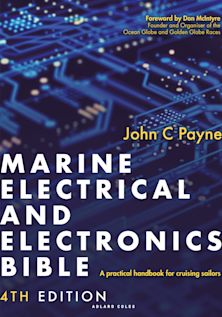
If you are headed somewhere remote consider the need to expand your knowledge base or have an information resource on board. Why not get a copy of my book The Marine and Electrical and Electronics Bible 4th Edition. By and for yachties, with everything from batteries and charging, solar and wind, diesel engines and marine electronics and so much more. Your complete systems guide. 650 pages of practical advice. In Australia and New Zealand order a copy through Boat Books. UK and European boats can buy the UK Edition Here. US and Canadian boats can get the US Edition Order Here. Marine systems are my profession so let me help you. By a liveaboard boat owner for other boat owners.

Sailboat Navigation Skills Guide - Summary
This sailboat navigation hub provides a structured entry point into the core skills required for coastal navigation, pilotage and electronic navigation management. The linked subpages will cover chart types and scale logic, position fixing, depth interpretation, IALA buoyage, pilotage planning, night navigation, radar use, AIS collision assessment and electronic navigation risk controls. For liveaboard sailors, the aim is to build a navigation system that combines traditional seamanship with modern technology, supported by cross-checking, redundancy and disciplined decision-making underway. Sailboat Navigation Skills Guide for all you need to know.