Common Corrosion Failure Points on Boats and Prevention
Common Corrosion Failure Points on Boats and Prevention. Corrosion rarely disables an entire yacht system by removing a large structural component first. The initial outage usually occurs at a small connection, terminal, fuse holder, hose clamp, valve spindle or electrical contact. These parts combine dissimilar metals, moisture, electrical current, heat and restricted ventilation. A few millimetres of corrosion at one connection can stop a pump, charger, engine, navigation network or refrigeration system while the remaining equipment appears intact. Read cascade failure page to understand this.
Visible corrosion is not a complete condition assessment. A battery terminal can appear clean while corrosion advances beneath the cable insulation. A fuse can remain unbroken while its holder develops enough resistance to stop a motor. A hose clamp can retain its external shape after the screw has lost section. Stainless steel can remain polished around a crevice where corrosion is active beneath a washer, seal or deposit.
Inspect corrosion by system consequence. Begin with components whose failure can cause flooding, fire, loss of propulsion, loss of charging, loss of steering, loss of navigation or loss of freshwater. Cosmetic staining and surface oxidation remain secondary until these outage points have been examined.
Common Corrosion
Failure Points on Boats - Battery Terminals and Main DC Connections
Battery posts, cable lugs, isolation switches, main fuses and busbar connections carry the yacht’s highest continuous and intermittent DC currents. Corrosion at one of these points creates electrical resistance. The connection heats under load, voltage falls downstream and equipment begins to reset or stop.
The first symptoms can include slow engine cranking, an inverter low-voltage alarm, reduced windlass speed, dimming lights or unstable navigation equipment. The battery may test at normal voltage when no load is applied because the failure is in the connection rather than the battery.
Inspect every high-current joint for discolouration, white or green deposits, softened insulation and heat damage. Check the cable where it enters the lug. Moisture can travel beneath the insulation and corrode the conductor beyond the visible terminal.
Disconnect, clean and inspect suspect connections after isolating all charging sources. Replace lugs containing corroded strands, cracked barrels or signs of heating. Crimp replacement lugs with the correct tool and seal the cable entry with adhesive-lined heat-shrink tubing. Protect the completed connection with a product intended for battery terminals without placing insulating material between the electrical contact faces
Prevent recurrence by keeping battery compartments dry, supporting cables so they do not load the terminals and preventing metal tools or stored equipment from contacting live connections.
Common Corrosion
Failure Points on Boats - Fuse Holders and Circuit-Breaker Terminals
Fuse holders fail before the fuse element where moisture reaches the contacts or the fuse is held with insufficient pressure. Corrosion and low contact force create resistance, heat and voltage loss. The fuse may remain intact while the connected equipment stops.
This failure is common in circuits supplying bilge pumps, pressure-water pumps, refrigeration, autopilots, radios and electronics. An intermittent pump fault can result from a corroded fuse holder rather than the pump motor
Inspect both ends of each fuse and the surfaces inside the holder. Look for darkening, pitting, green deposits, distorted plastic and reduced spring tension. Measure voltage across the holder while the circuit is under load. A voltage difference across a closed fuse connection indicates resistance.
Replace the complete holder if its contacts are pitted, loose or heat-damaged. Cleaning a contact does not restore lost spring tension or damaged plating. Mount replacements away from bilge water, leaking deck fittings and condensation paths. Use sealed holders where exposure cannot be removed and retain circuit protection close to the power source. It is worth considering use of a desiccant crystal bag in the back of enclosed switch panels to absorb moisture within the air.
Common Corrosion
Failure Points on Boats - Crimp Terminals and Wire Entry Points
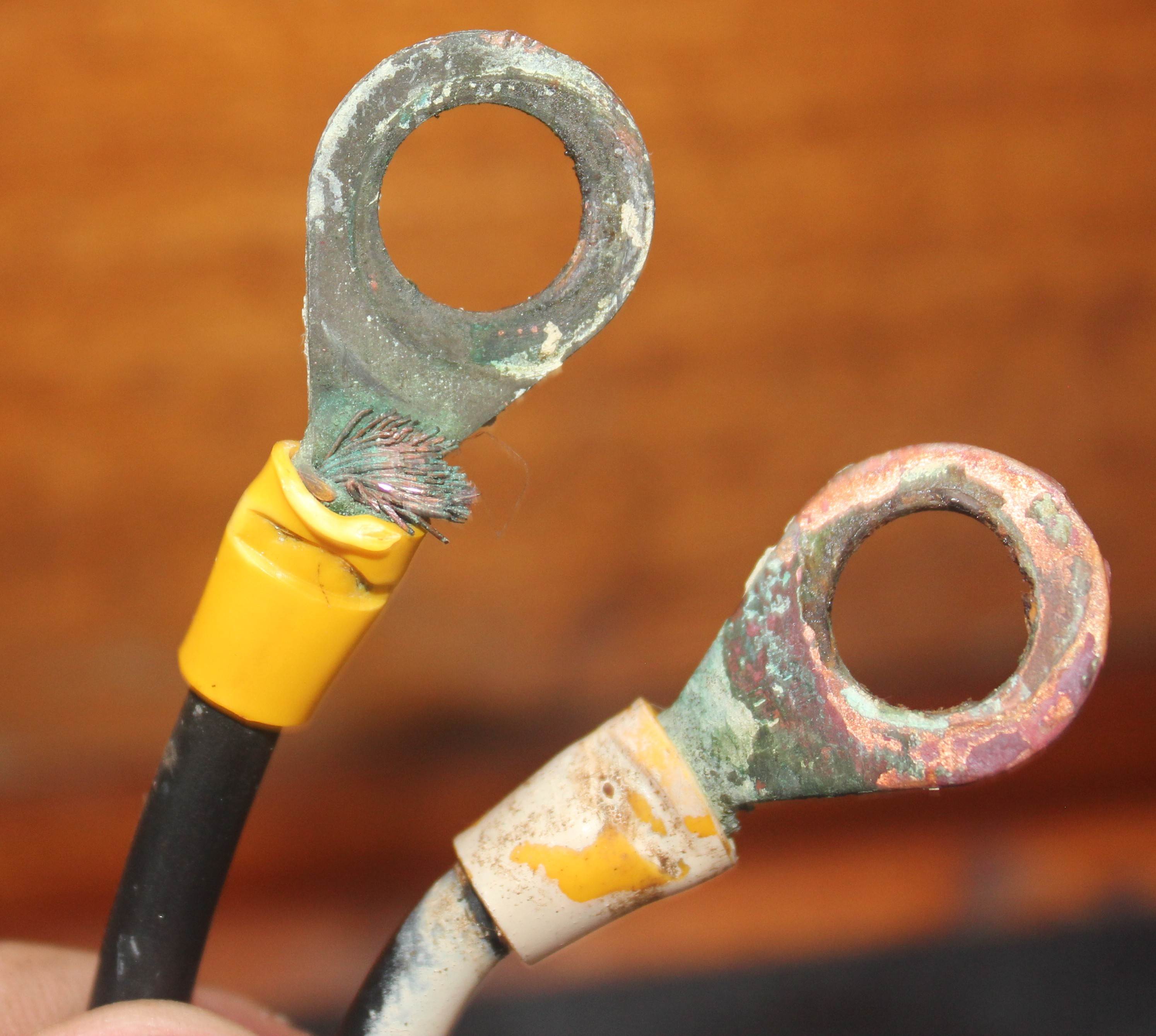
Water commonly enters wiring at an unsealed crimp, terminal block or connector. Capillary action then carries moisture along the conductor beneath the insulation. The cable corrodes internally while its outer sheath remains undamaged.
The first failure occurs where the remaining conductor cross-section becomes too small to carry the load or where vibration breaks weakened strands. Pumps and motors may run intermittently when the cable is moved.
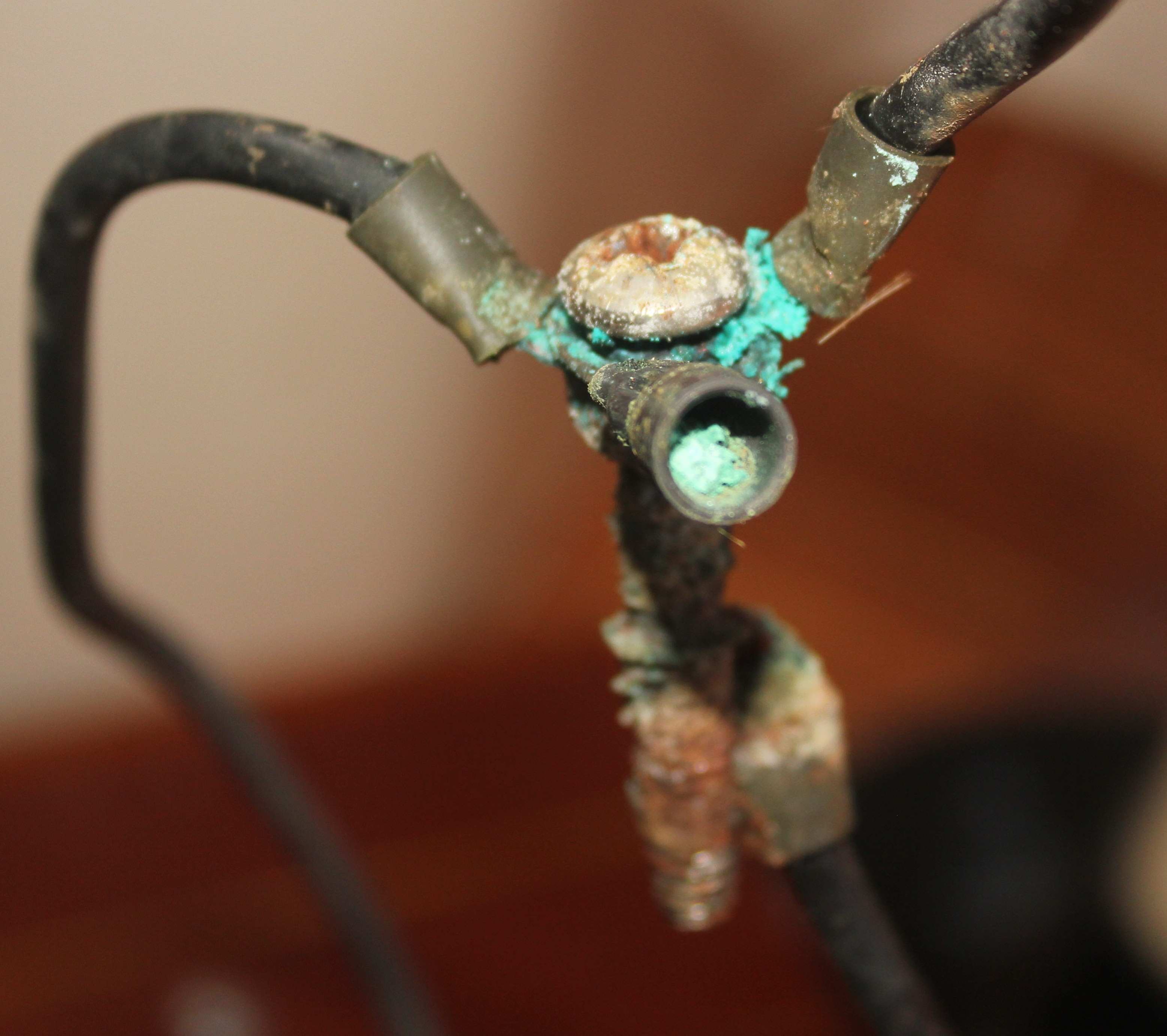
Pull each suspect terminal with controlled force and bend the cable near the crimp. Swelling, stiffness, green staining or blackened copper indicates internal corrosion. Cut back the conductor until clean metal is reached. If corrosion extends beyond the available cable length, replace the cable rather than joining several short repairs in a wet location.
Use tinned marine cable, correctly sized heat-shrink crimp terminals and adhesive-lined sealing at exposed terminations. Position cable entries so water does not run toward the connection. A drip loop below the terminal prevents water following the cable into the equipment.
Common Corrosion
Failure Points on Boats - Bilge-Pump Connections
Bilge-pump wiring operates in the part of the yacht most likely to contain water, salt, oil and cleaning chemicals. Low-mounted connectors corrode before the pump motor fails. The pump then remains mechanically serviceable but cannot start during flooding.
Inspect the positive supply, negative return, float-switch connections, fuse holder and alarm connection. Do not limit the inspection to the pump body. Lift connections above the maximum expected bilge-water level and secure them so they cannot fall back into the bilge.
Replace corroded connectors rather than wrapping them with tape. Use sealed heat-shrink connections and support the cable on both sides of the joint. Test the pump through its automatic and manual circuits after completing the repair.
A second bilge pump connected through the same corroded terminal block, fuse holder or negative conductor is not electrically independent. Separate critical feeds where one connection can disable all dewatering
Common Corrosion
Failure Points on Boats - Negative Busbars and Shared Returns
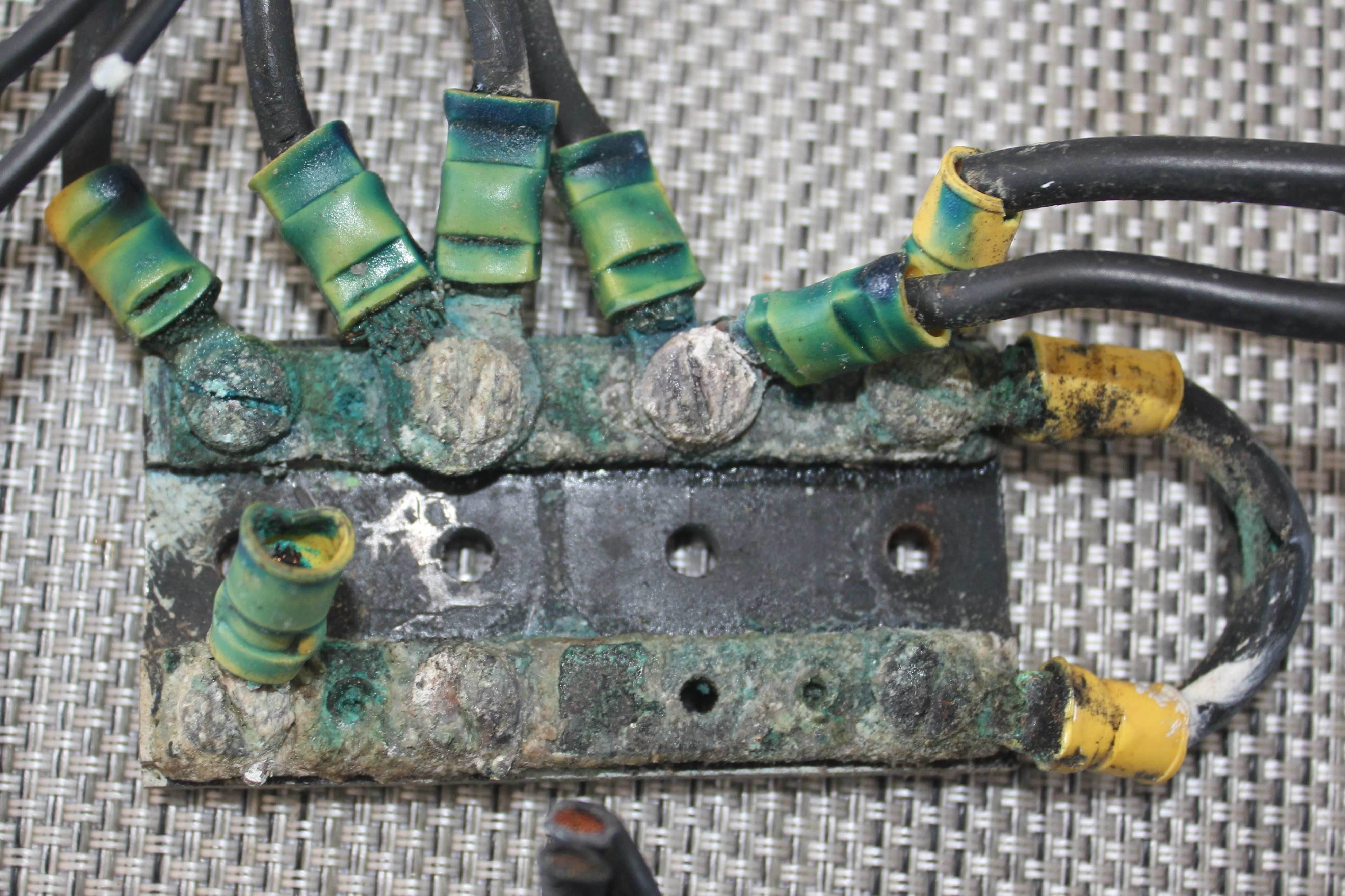
A corroded negative return can disable several systems at once. Shared negative busbars often carry pump, lighting, electronics and charging circuits. One loose or corroded main connection produces unstable voltage throughout the yacht.
Symptoms include instruments switching on when another load operates, pumps changing speed, radio interference and repeated controller resets. These effects are often misdiagnosed as individual equipment failures.
Inspect the main negative conductor, busbar studs, branch terminals and connection to the battery bank. Remove stacked terminals where their number prevents full contact or proper tightening. Fit an additional busbar rather than continuing to add lugs to one stud.
Keep busbars dry and covered. Do not allow condensation, deck leaks or wet gear to reach them. Protect exposed metal after assembly without contaminating the contact surfaces.
Common Corrosion
Failure Points on Boats - Shore-Power Plugs, Sockets and Inlets
Shore-power connections combine high current, moisture and repeated mechanical handling. Corrosion begins at plug pins, socket contacts, cable terminations or the back of the hull inlet. Increased resistance creates heat, which weakens contact pressure and accelerates failure.
The first sign may be a warm plug, charger interruptions, discoloured pins or an intermittent AC supply. Continued use can melt the connector or ignite surrounding material.
Disconnect shore power before inspection. Examine both sides of the connection, including the concealed terminals behind the yacht’s inlet. Replace plugs and sockets with pitted, blackened, loose or heat-damaged contacts. Do not polish severely damaged pins and return them to service.
Prevent water entry by maintaining connector seals, supporting the cable so its weight does not distort the inlet and arranging the lead so water cannot run along it into the connector. Keep unused inlets capped. Do not operate a connection that becomes warm under normal load.
Common Corrosion
Failure Points on Boats - Charger, Inverter, Solar & Wind Controller
Connections
Chargers, inverters and solar controllers can remain operational while their cable terminals corrode. The resulting resistance causes voltage errors, reduced charging output and heat at the connection.
A charger may enter an incorrect charging stage because it measures voltage at its own terminal rather than at the battery. A solar controller may report normal panel voltage while corroded output wiring prevents useful current reaching the bank.
Inspect terminals for heat marks, loose screws, green deposits and damaged cable strands. Confirm voltage at both the equipment and battery under load or charge. A difference identifies loss in the cable or connection.
Mount power electronics away from batteries that vent corrosive gases and away from wet lockers. Maintain airflow, prevent condensation and support heavy cables independently of the equipment terminals.
Common Corrosion
Failure Points on Boats - Engine Starter Motor and Solenoid Terminals
The starter motor and solenoid operate near heat, vibration, oil and seawater, it is the perfect storm for corrosion. Corrosion at the main starter terminal, solenoid control terminal, engine earth strap or battery connection can prevent engine starting.
A click or click-click-click without engine cranking may be caused by voltage loss at a corroded terminal. Repeated start attempts heat the remaining contact and discharge the battery. Hint - After the first or second start attempt fails do a check of terminals and feel if hot. BIG HINT - Do not keep attempting to start, if 1-2 starts fails be aware continuing may create a water or hydro lock situation.
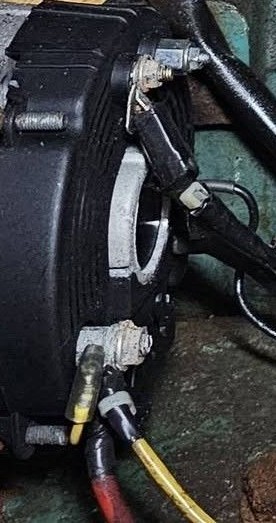
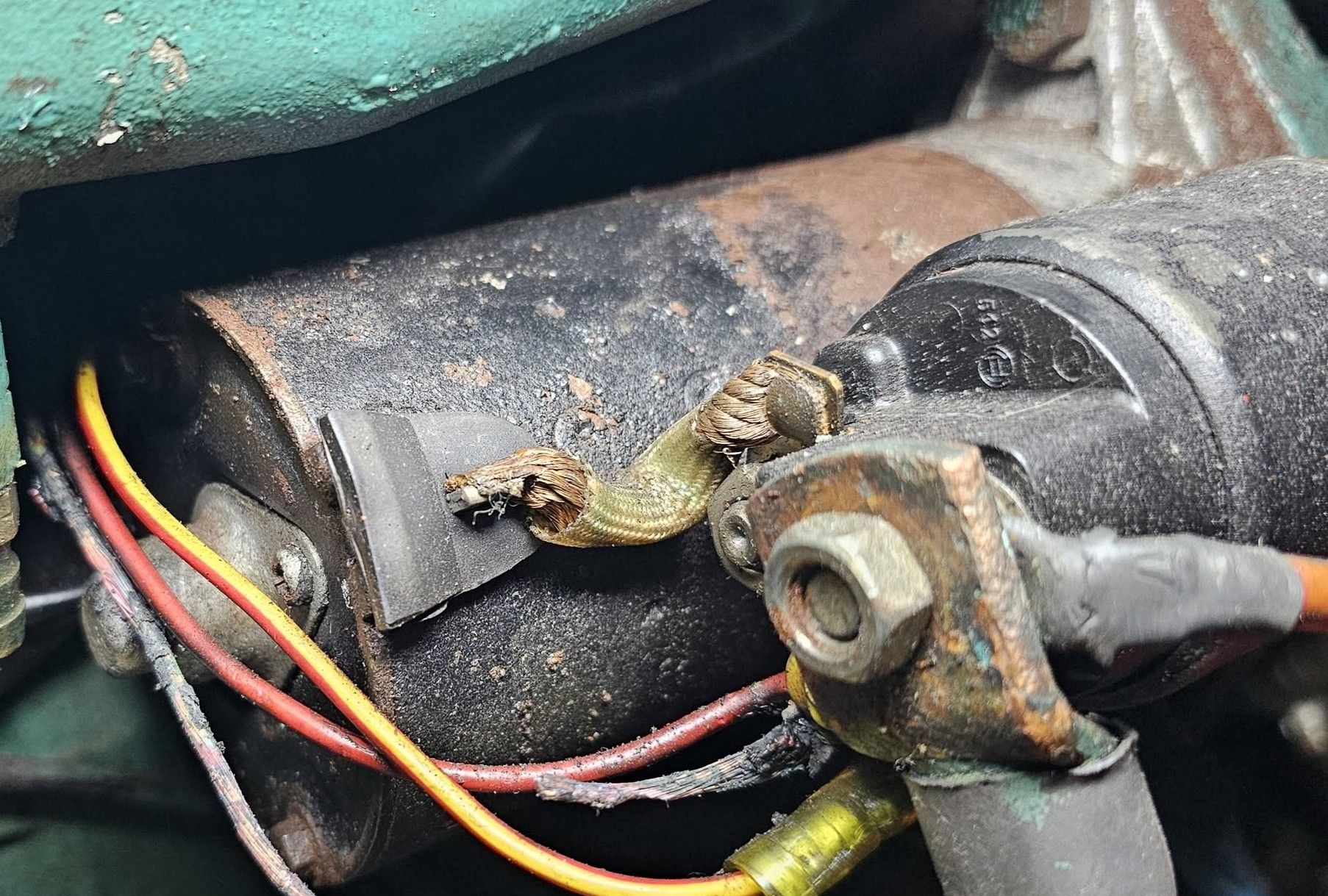 Typical Marine Diesel Starter Motor Terminal Corrosion and other defects, how many can you identify?
The Answers. These would include corroded terminal cable lug, the terminal is overlapping a smaller cable lug reducing contact area, the solenoid terminal bolt is too short for the lug and cannot be properly torqued up, the standard is three threads showing above the nut. Also note the burnt cable in the image.
Inspect the full starting circuit, every terminal including the engine negative or ground connection. Remove corrosion, replace damaged lugs and support cables against vibration. Fit protective terminal covers where contact with tools or engine parts is possible. As a note the corrosion on the motor casing indicates possible other issues
Do not apply protective coatings before the electrical joint has been cleaned and tightened. Coating over an active corrosion layer conceals rather than corrects the fault.
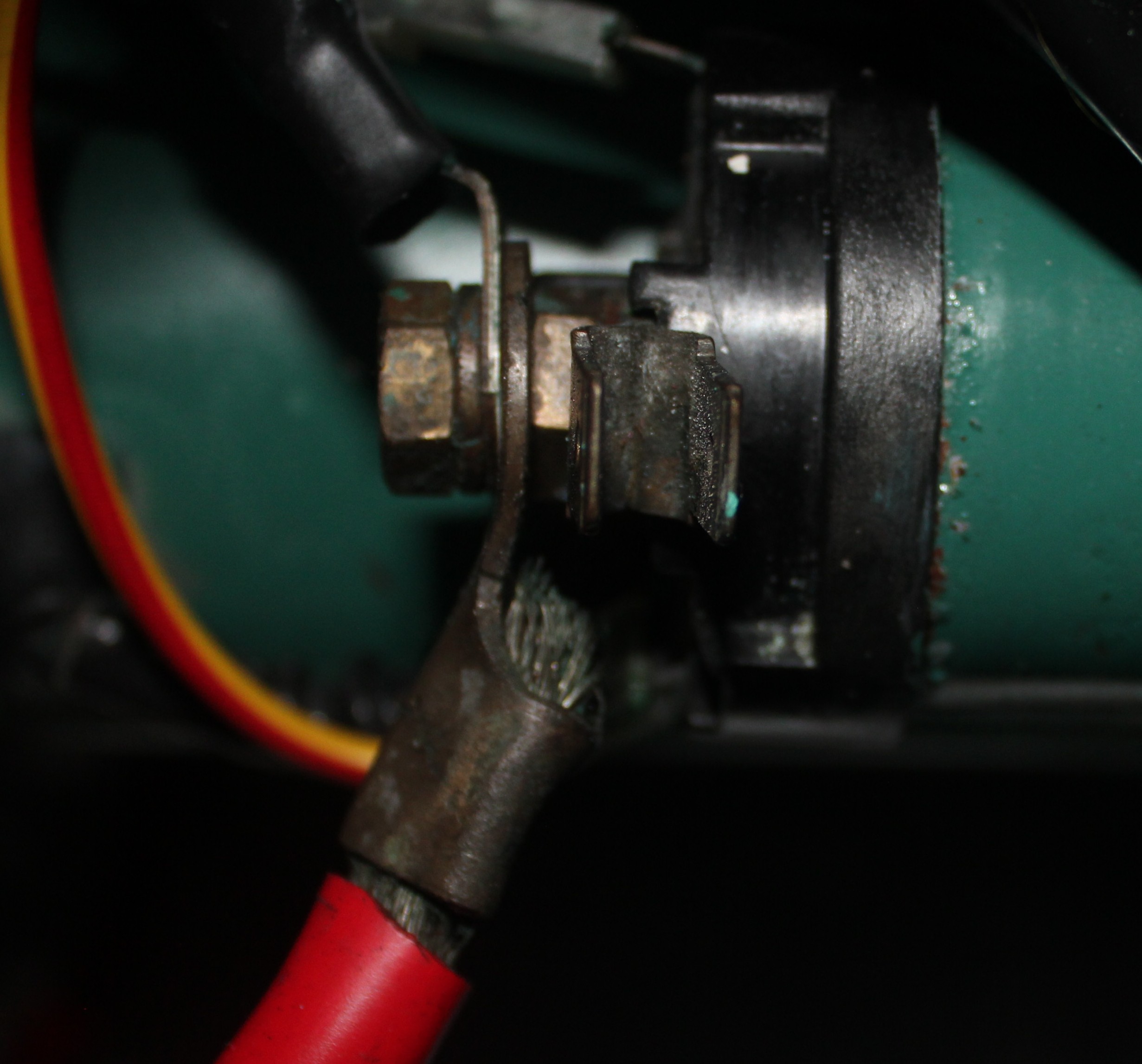
The Answers. These would include poorly made terminal cable lug, the cable to log barrel should be heat shrink covered and a good termination has the cable insulation butted up to the lug barrel. The solenoid terminal bolt is too short for the lug and cannot be properly torqued up, the standard is three threads showing above the nut.
Common Corrosion Failure Points on Boats - Alternator Output and Excitation Connections
An alternator can stop charging because corrosion affects the output terminal, regulator plug, excitation wire, engine earth path or remote voltage-sense connection. The alternator itself may remain serviceable.
Loss of the excitation connection can prevent charging from beginning. Resistance in the output cable reduces charge current and creates heat. Corrosion in a voltage-sense connection can cause undercharging or overcharging, depending on the regulator design
Inspect small control wires as carefully as the main output cable. Replace loose spade terminals, cracked plugs and corroded ring lugs. Confirm charging voltage and current after the repair.
Route wiring away from raw-water pumps, exhaust injection points and coolant connections. A small leak above the alternator can damage windings, bearings and terminals before it becomes visible in the bilge.
Common Corrosion
Failure Points on Boats - Engine Ground Strap
The engine round or earth strap completes the starter and alternator circuits on installations using the engine block as a return path. Corrosion at either end increases resistance and can stop cranking or charging.
The strap can corrode beneath its terminal or inside a braided conductor. Surface appearance does not establish continuity under starter load.
Measure voltage drop across the earth path during cranking. Replace a strap that becomes warm, contains broken strands or shows internal corrosion. Clean the engine contact point to bare conductive metal and protect the completed joint from moisture.
Do not use a small instrument wire as an alternative engine return. The conductor must carry starter current without overheating.
Common Corrosion
Failure Points on Boats - Raw Water Pump Cover and Fasteners
Raw-water pumps operate with seawater and are often mounted where leakage reaches the engine, alternator or electrical connections. Corrosion begins at the cover plate, fasteners, shaft seal area and hose tails.
A corroded cover plate can leak air into the suction side without producing a large external water leak. The pump loses prime, cooling flow falls and the engine overheats. A leaking shaft seal can direct seawater along the pump shaft or onto nearby equipment.
Inspect for salt deposits, green crystals or staining and water tracks. Replace corroded fasteners before their heads fail. Keep a replacement cover gasket or O-ring and inspect the cover surface for scoring.
Correct small leaks when first identified. Salt deposits retain moisture and extend corrosion beyond the original joint.
Common Corrosion
Failure Points on Boats - Heat-Exchanger End Caps and Tube Plates
Heat exchangers contain seawater and coolant separated by metal surfaces and seals. Corrosion commonly begins around end caps, tube plates, drain plugs and dissimilar-metal fasteners.
A small end-cap leak can reduce cooling flow, admit air or direct seawater onto the engine. Internal corrosion can allow seawater and coolant to mix, producing coolant loss, overheating or contamination.
Remove and inspect end caps at the required service interval. Check for pitting, damaged sealing faces, eroded anodes and blocked tubes. Replace seals rather than compensating for a damaged joint by overtightening fasteners.
Use only the specified anode material and confirm electrical contact between the anode and exchanger body. A heavily coated or incorrectly installed anode may remain physically present while providing no protection.
Common Corrosion
Failure Points on Boats - Exhaust Injection Elbows
The exhaust injection elbow combines hot exhaust gas, seawater and deposits. Corrosion and carbon buildup reduce the internal passage before external failure becomes obvious.
The first symptoms include reduced exhaust-water discharge, increased exhaust temperature, loss of engine power and overheating. Internal perforation can allow water to enter the exhaust manifold and engine cylinders.
Inspect the elbow internally when cooling-water flow declines or engine performance changes. External paint and insulation can conceal metal loss. Replace an elbow containing deep corrosion, cracking, restricted passages or internal leakage.
Maintain the raw-water circuit so the elbow receives the designed flow. A partially blocked intake or damaged impeller increases exhaust temperature and accelerates damage.
Common Corrosion
Failure Points on Boats - Seacocks and Through-Hull Fittings
Seacocks and through-hulls remain immersed or exposed to seawater. Corrosion can affect the valve body, ball, spindle, hose tail, fasteners and backing arrangement.
Dezincification can leave some copper-alloy fittings pink, porous and mechanically weak. Crevice corrosion can attack stainless fittings beneath seals and deposits while the visible surface remains polished.
Operate each valve through its full range. Inspect for stiffness, leakage, staining, cracking and movement of the through-hull relative to the hull. Do not apply excessive leverage to a seized valve while afloat.
Use compatible marine materials throughout the assembly. Prevent electrical contact between dissimilar metals where the design does not require it. Keep the valve accessible, dry on the inboard side and free from standing saltwater.
A seacock that cannot be closed is not a minor maintenance defect. Failure of its hose or tail can produce uncontrolled flooding. HINT - Exercise all your valves monthly by operating 5 times open and close, that is what I do!
Common Corrosion
Failure Points on Boats - Hose Clamps Below the Waterline
The screw and housing of a hose clamp often corrode before the visible band. A clamp can look intact from above while the underside has lost section.
Inspect clamps around their full circumference with a mirror. Check the screw, housing and band where they contact the hose. Replace clamps showing pitting, rust, cracking or distortion.
Fit the correct clamp size so the screw housing does not bottom out before the hose is secure. Position clamps over the hose tail and behind its retaining bead. Two clamps require enough hose-tail length for both bands to bear correctly.
Prevent seawater from remaining around the connection. Correct upstream leaks that keep the clamp wet.
Common Corrosion
Failure Points on Boats - Freshwater Pump and Tank Connections
Freshwater leaks can corrode pump terminals, pressure switches, tank straps and nearby electrical equipment. The initiating leak may be small, but repeated pump cycling keeps the area wet.
Inspect the pump head, strainer, quick-connect fittings and pressure switch. Check metal tank straps where moisture can remain trapped between the strap and tank.
Mount pumps so leaks do not drain onto their own electrical connections. Install drip loops in cables and provide airflow around the pump. Replace corroded terminals and correct the hydraulic leak at the same time.
A pressure pump that cycles without an open tap requires investigation. Repeated cycling identifies pressure loss and can expose surrounding equipment to water before a continuous leak develops.
Common Corrosion
Failure Points on Boats - Holding Tanks and Sanitation Fittings
Metal holding tanks can corrode internally, externally or at welds. Stainless steel remains vulnerable to crevice conditions, chloride exposure and deposits. Aluminium can corrode where sewage, cleaning chemicals, wet supports or incompatible metals contact the tank.
The first failure may be a pinhole at the tank bottom, a leaking welded fitting or failure beneath a retaining strap. Sewage then contaminates structural surfaces, wiring and adjacent equipment.
Inspect the tank bottom, supports, fittings, inspection cover and hose connections. Look for staining, deposits, dampness and swelling. Do not assess the tank only from its accessible upper surface.
Keep tank vents clear so pressure does not load weakened seams and fittings. Isolate incompatible metals and prevent wet straps or absorbent supports from remaining against the tank.

Need boat systems help? Buy a copy of my book The Marine Electrical and Electronics Bible, 4th Edition. US based boats can get the US Edition Here. You can also order through Amazon. In Australia order a copy through Boat Books. UK based boats can Order Here. Marine systems are my profession so let me help you.
Common Corrosion
Failure Points on Boats - LPG Locker and Gas-System Components
Saltwater and moisture within an LPG locker corrode cylinder bases, regulators, valves, solenoids, hose fittings and electrical terminals. A regulator vent exposed to water can fail internally.
Inspect the locker drain because a blocked drain holds water around the cylinder and fittings. Check for rust, green deposits, cracked coatings and damaged flexible hoses.
Replace gas components showing corrosion or mechanical damage with parts approved for the installed gas system. Do not clean a corroded regulator and return it to service without verification.
Keep the locker drain open, secure cylinders above standing water and prevent loose metal equipment striking valves or fittings.
Common Corrosion
Failure Points on Boats - Navigation-Network Connectors
Instrument networks use low-voltage power and data connections that are sensitive to small increases in resistance. Moisture at one connector can disable several instruments or corrupt network data.
The first symptoms include intermittent depth readings, lost sensors, autopilot alarms and displays restarting when another device transmits or changes load.
Inspect connectors at mast bases, cockpit displays, steering pedestals and cable joins. Look for damaged O-rings, bent pins, green deposits and water inside plug bodies. A connector can leak because its locking collar is loose even when the cable remains undamaged.
Replace corroded pins and connectors. Do not scrape plated contacts until they fit loosely or expose the base metal. Maintain connector seals, form drip loops and avoid low cable sections that direct water into plugs.
A backup display using the same corroded network backbone does not provide independent navigation data.
Common Corrosion
Failure Points on Boats - Mast Wiring and Deck Glands
Water enters mast wiring through failed masthead seals, cable damage and deck glands. It travels downward inside the cable and corrodes connectors at the mast base or navigation panel.
Failures can remove navigation lights, wind instruments, antennas and deck lighting. A single wet junction box may affect several circuits.
Inspect deck glands, mast-base connectors and cable exits for water tracks and green deposits. Replace cable sections containing internal corrosion. Resealing the upper entry does not restore conductor lost farther down the cable.
Route connectors above deck water and provide drip loops below cable entries. Do not bury mast connections inside inaccessible liners where corrosion can proceed without inspection.
Common Corrosion
Failure Points on Boats - Bonding Connections and Sacrificial Anodes
Bonding conductors and anode connections fail at terminals before the visible anode has been consumed. A loose or corroded connection breaks electrical continuity and leaves underwater metal unprotected.
An anode can remain present but ineffective when it is isolated by paint, scale, thread sealant or corrosion at the attachment surface. Excessive anode loss can also indicate an electrical fault rather than normal protection.
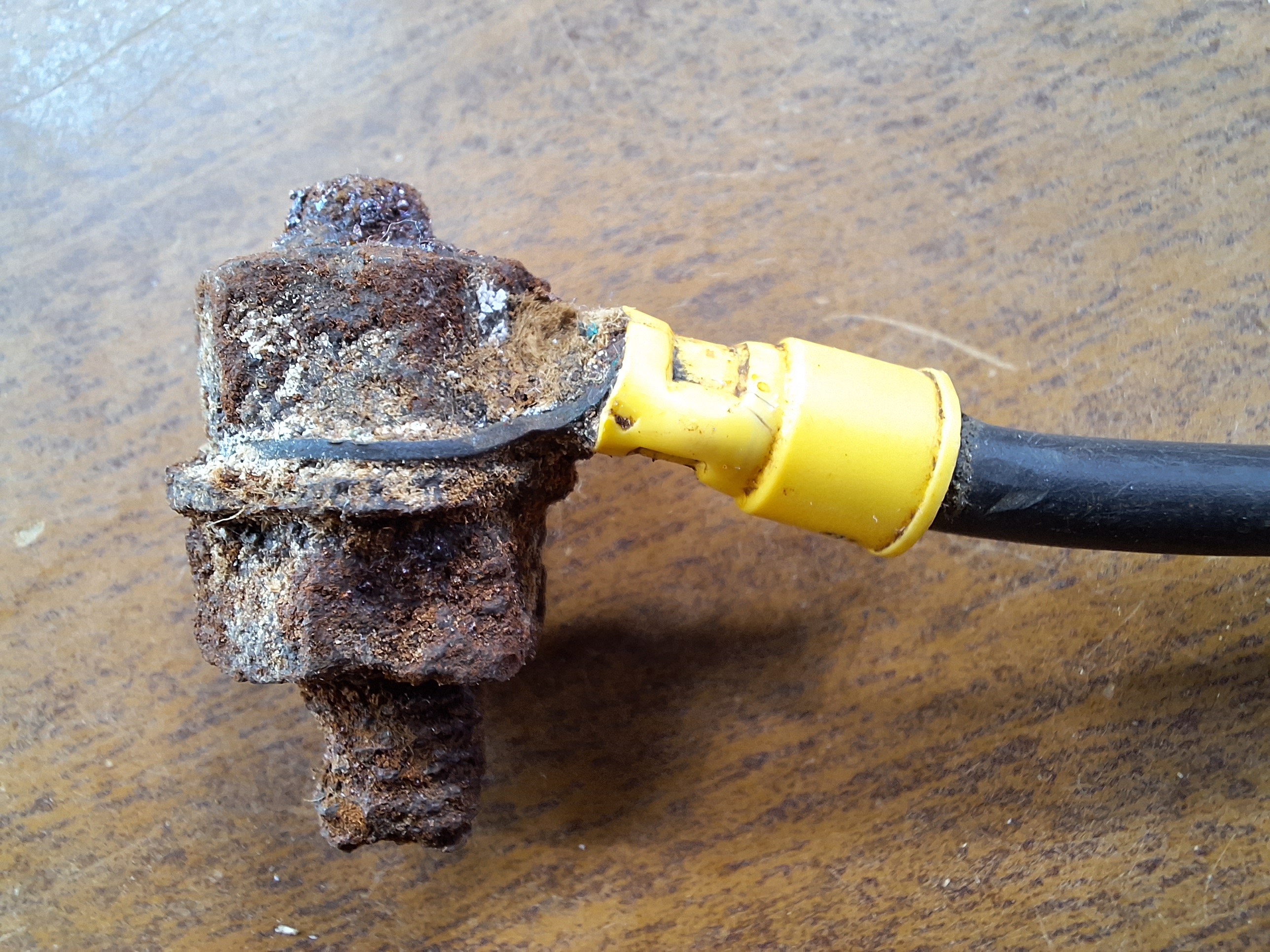
Inspect the conductor, lug, fastener and clean metal contact beneath each connection. Confirm continuity using the method applicable to the installation. Do not paint or seal between the anode and the metal it protects.
Do not connect unrelated metal components into a bonding system without assessing the complete corrosion design. An incorrect connection can create a galvanic path rather than remove one.


Common Corrosion
Failure Points on Boats - Refrigeration Condensers and Cooling Circuits
Air-cooled refrigeration commonly suffers corrosion at fan terminals, controller plugs and compressor connections. Seawater-cooled systems add pump terminals, strainers, hose clamps and condenser surfaces.
A corroded fan connection stops airflow, causing the compressor to run longer and draw more battery power. A corroded seawater-pump terminal stops cooling flow and can produce high-pressure shutdown.
Inspect the cooling method rather than replacing the compressor first. Clean and secure fan, pump and controller connections. Correct condensate drainage so water does not collect beneath electrical components.
Where seawater cooling is installed, inspect the condenser and anodes according to its material and construction. Internal perforation can mix seawater with another circuit or flood the equipment space.
Common Corrosion
Failure Points on Boats - Watermaker Electrical and High-Pressure Connections
Watermakers combine seawater, high-pressure components and electrical equipment. Corrosion begins at feed-pump terminals, pressure switches, solenoids, sensor connectors and metal fittings exposed to leakage.
A corroded feed-pump connection can stop the system. A damaged sensor connection can prevent automatic diversion of product water. Corrosion at a high-pressure fitting can progress beneath deposits where it is not visible.
Rinse external salt deposits with the method permitted by the manufacturer, dry the area and correct the source of leakage. Replace pitted or cracked high-pressure components rather than attempting an external seal repair.
Mount electrical connections away from filter housings and hose joints that are opened during routine service.
Common Corrosion
Failure Points on Boats - Corrosion Triage Order
Inspect corrosion points in the order of the consequence produced by their failure:
- Seacocks, through-hulls and below-waterline hose clamps
- Battery terminals, main fuses, isolation switches and DC busbars
- Bilge-pump power supplies and automatic-switch connections
- Shore-power plugs, sockets and high-current AC terminals
- Engine starting, charging and earth connections
- Raw-water pumps, heat exchangers and exhaust injection elbows
- LPG regulators, solenoids and cylinder connections
- Navigation-network and mast-base connectors
- Freshwater pumps, tank fittings and water-heater connections
- Holding tanks, sanitation fittings and metal supports
- Refrigeration and watermaker electrical connections
- Bonding conductors and sacrificial-anode contacts
This order does not indicate corrosion rate. It establishes which failures require attention first because their consequences include flooding, fire, loss of propulsion, loss of dewatering or loss of navigation.
Common Corrosion
Failure Points on Boats - Preventing Corrosion Outages
Corrosion prevention depends on controlling water entry, salt deposits, dissimilar-metal contact, electrical leakage and inaccessible connections. Protective sprays and coatings provide limited benefit when applied over contamination or loose terminals.
Clean and dry a connection before protecting it. Seal cable entries, provide drip loops and relocate junctions above expected water levels. Support hoses and cables so movement does not break seals. Maintain ventilation where condensation forms. Correct small fluid leaks before they keep surrounding components wet.
Use compatible metals and specified anodes. Do not substitute unverified fasteners or plumbing fittings based only on appearance. Maintain protective coatings, but keep electrical contact faces and anode attachment surfaces conductive where the design requires metal-to-metal contact.
Test equipment under operating load. An unloaded voltage reading can conceal resistance at a corroded joint. Check pumps while running, chargers while producing current and starter circuits during cranking. Temperature rise, voltage drop and intermittent operation identify connection faults before complete outage.
Common Corrosion
Failure Points on Boats - Final Assessment
The first corrosion points to fail are normally small interfaces: battery lugs, fuse contacts, cable crimps, pump terminals, shore-power pins, engine earth straps, hose-clamp screws, raw-water pump fasteners, seacock spindles and network connectors. Their size does not reflect their system consequence.
Prioritise corrosion that can disable dewatering, propulsion, charging, navigation, communications or fire control. Trace every affected circuit or fluid path beyond the visible deposit. A corroded terminal may indicate water travelling through a cable, and a salt deposit may identify leakage from a pump or heat exchanger above it.
Prevention requires dry installation, compatible materials, sealed terminations, accessible isolation, correct anodes and testing under load. Treat the first trace of corrosion as evidence of a water, material or electrical-path problem. Cleaning the deposit without correcting that cause leaves the outage mechanism in place. Common Corrosion Failure Points on Boats for all you need to know.