The Wide Bay Bar Sailing Guide
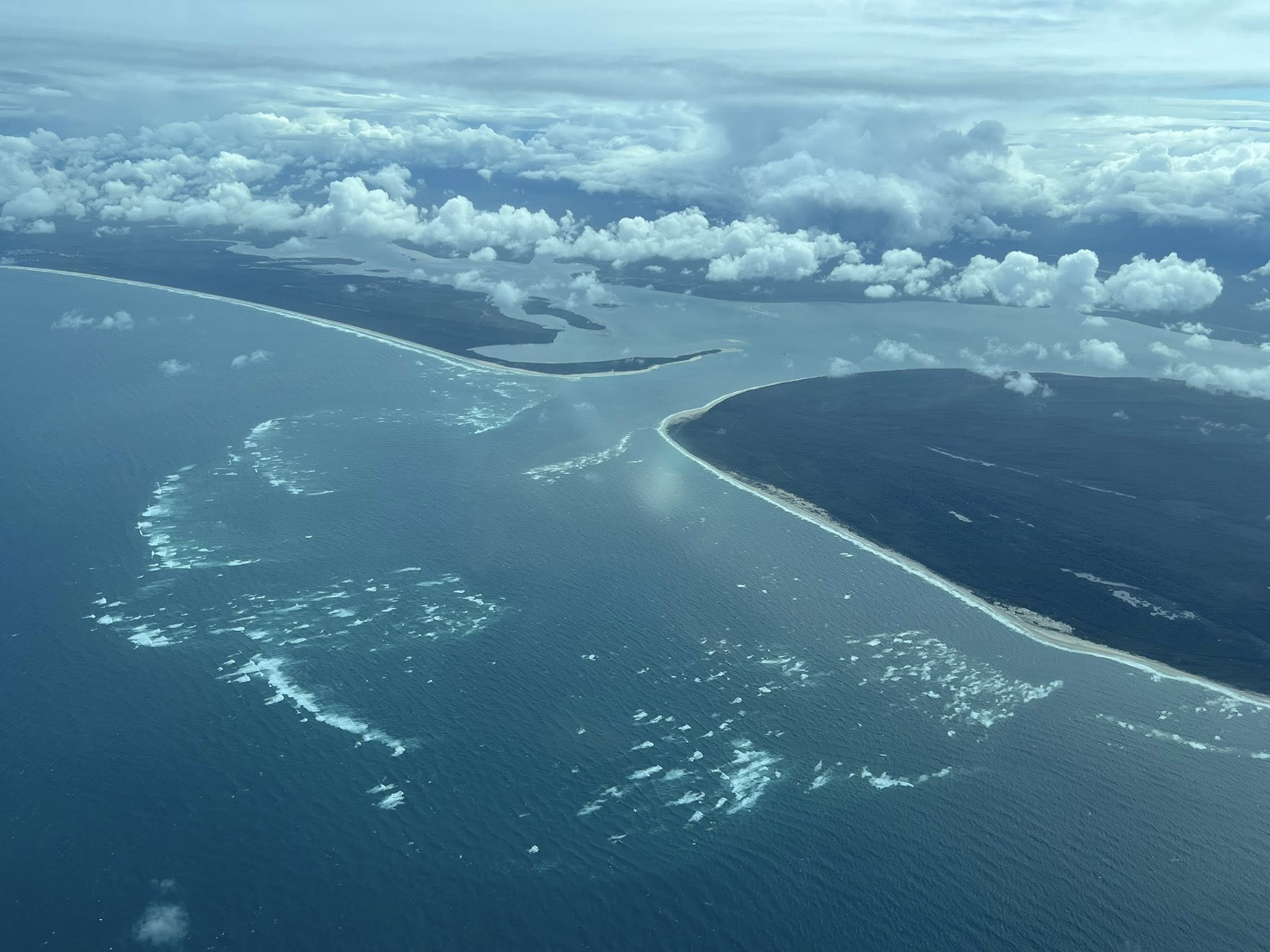
Wide Bay Bar Sailing Guide. The Wide Bay Bar is widely regarded as the most infamous bar on the Queensland coast because it combines shallow, shifting sandbanks with ocean swell and a powerful tidal jet that runs along Inskip Point. The bar’s controlling depths routinely sit in the two‑to‑three‑metre range at LAT, with sections that shoal further after heavy weather. These depths are workable for most cruising yachts only when the tide is lifting the bar and the swell is moderate or lower. The bar’s reputation comes from the speed at which conditions deteriorate when the tide turns; a bar that appears manageable on the last of the flood can become steep, confused and breaking within minutes of the ebb beginning.
The bar is crossed only in daylight and only with the latest official waypoints, as the gutters that form the safe line shift after strong swell events. The banks can move tens of metres in a single season, and the tidal jet along Inskip Point accelerates this change. Even when the offshore swell appears modest, the inner sections can steepen abruptly as the depth decreases, and the final approach to the inner waypoint often produces short, confused seas that require firm helm control. The bar rewards patience and punishes haste; it is a place where timing, not bravado, determines the outcome.
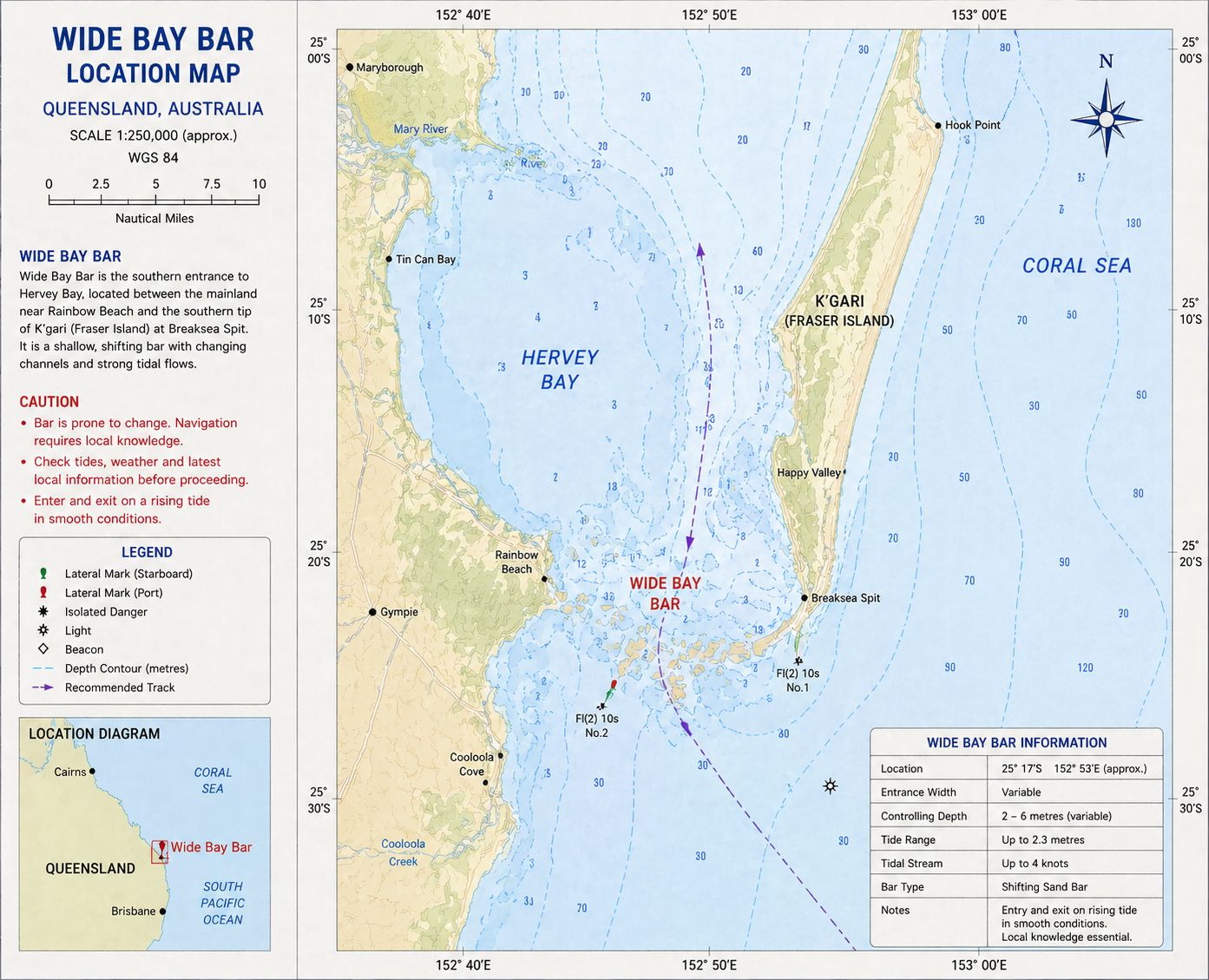
Chart Disclaimer. This chart is a schematic representation for illustrative purposes only and must not be used for navigation. Refer to official hydrographic charts for safe navigation. Be aware ENC charts may differ from official hydrographic charts. Both should be corrected and updated regularly.
Wide Bay Bar Sailing Guide -
Tide and Timing
This section explains why the last of the
flood is the only safe window. Wide Bay
Bar is crossed on the last of the flood because the incoming tide lifts the
controlling sections and flattens the sea state. The final hour of the flood
provides the best combination of depth and stability, and the slowing flow
allows a yacht to maintain control without fighting the outgoing stream. Once
the tide turns, the ebb accelerates down the gutters and meets the incoming
swell, steepening the sea state and creating breaking waves across the line.
Official guidance is unequivocal: Wide Bay Bar is not crossed on the ebb. The
difference between a safe crossing and a dangerous one is often measured in
minutes, and skippers plan their approach so that they are at the outer
waypoint with enough flood remaining to complete the transit without rushing. Read How to Cross a Coastal Bar Safely for useful advice on bar crossing.
Wide Bay Bar Sailing Guide -
Waypoints and Bar Shape
This section describes the shifting nature of the bar and the importance of the official line. The bar’s shape is never fixed. The controlling gutters and shoals shift after strong weather, and the official waypoints are updated accordingly. These waypoints are the only safe line through the bar and must be followed precisely. Cutting corners or following old tracks is dangerous, as the banks can move significantly after a single heavy swell event. Skippers treat the waypoints as a pilotage line, steering to each point accurately and adjusting only for set and drift. Daylight is essential for confirming that the swell is not breaking across the line and that the gutters remain open. The outer approach provides a clear view of the swell lines, while the inner section near Inskip Point reveals the cross‑set created by the tidal jet and the way the swell wraps around the point.
Wide Bay Bar Sailing Guide -
Sea State and Swell
This section explains how swell interacts with the bar and why conditions can change rapidly. The sea state at Wide Bay Bar is shaped by the interaction of ocean swell and the shallow banks that rise abruptly from deeper water. Even when the offshore swell appears manageable, the inner sections can steepen without warning as the depth decreases. Sets often arrive in groups, and the timing between them becomes critical as the vessel commits to the line. The final approach to the inner waypoint frequently produces short, confused seas, and the turn into the Strait can introduce a noticeable cross‑set that requires decisive helm input. Skippers read the water continuously, watching how the swell behaves on the outer banks and along the line, and they do not commit if they see breaking waves across the track or if the sets are too large to time safely. A bar that looks marginal from offshore usually proves worse inside; the conservative decision is made before the first waypoint, not halfway through the crossing.
Wide Bay Bar Sailing Guide -
Northbound and Southbound Considerations
This section explains how the bar fits into broader passage planning. For northbound vessels, Wide Bay Bar is the first gate before entering the tide‑timed navigation of the Great Sandy Strait. A safe crossing sets the tone for the entire transit, and many skippers use the remaining flood to ride northward toward the deeper water near the Tin Can Bay turn‑off, where they can pause and reassess before committing to the Strait’s depth gates. For southbound vessels, the bar is the final gate that must be met with the correct tide height and sea state before committing to open water. Skippers who cannot align their arrival with the last of the flood wait in the deeper water inside the Strait rather than attempting the bar on the ebb. Wide Bay Bar is never treated as a “we’ll see how it looks when we get there” feature; it is a planned event, with tide, swell and daylight all aligned before the vessel moves into position.
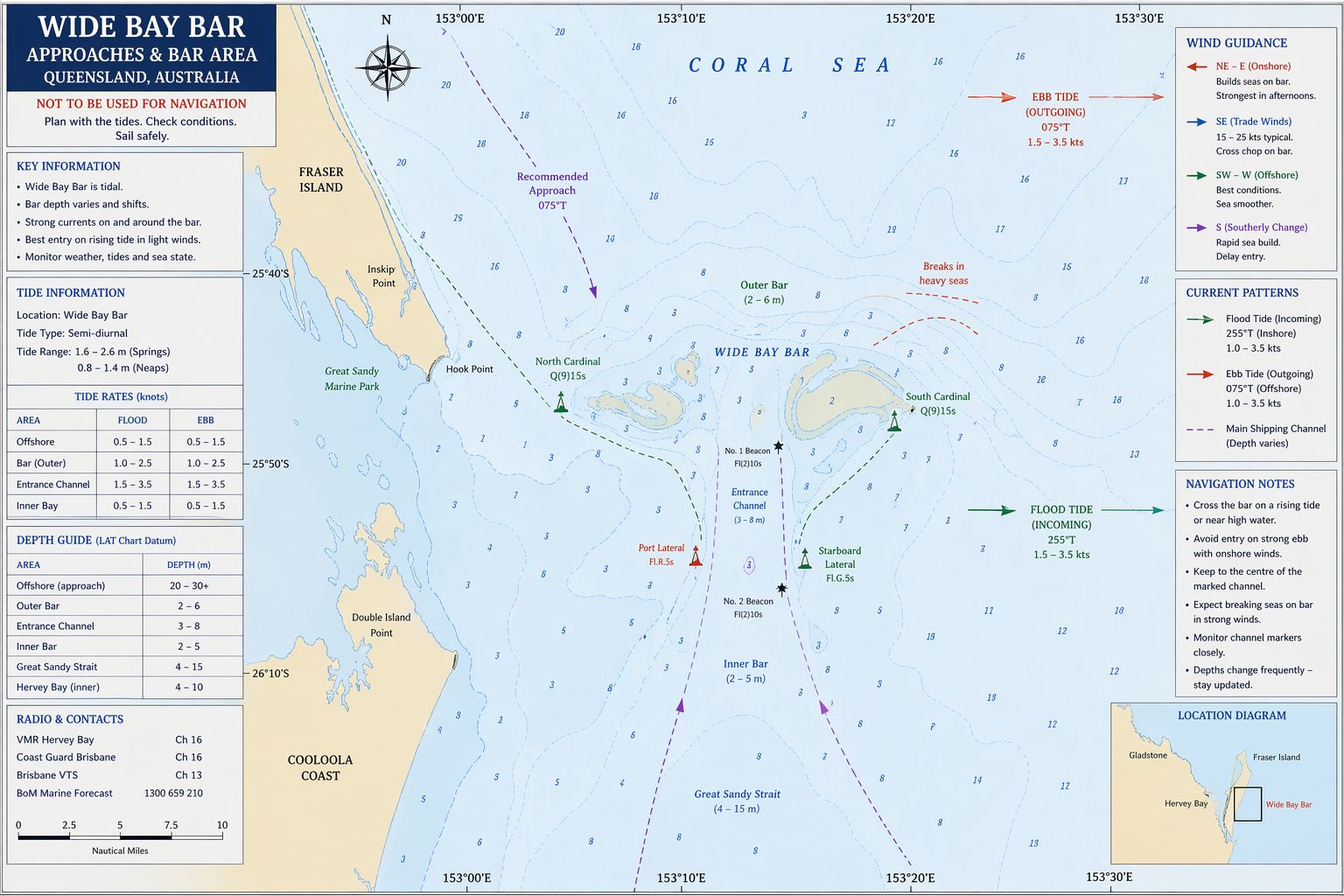
Chart Disclaimer. This chart is a schematic representation for illustrative purposes only and must not be used for navigation. Refer to official hydrographic charts for safe navigation. Be aware ENC charts may differ from official hydrographic charts. Both should be corrected and updated regularly.
Wide Bay Bar Sailing Guide -
Hazards and Constraints
This section highlights the predictable risks that require conservative pilotage. Wide Bay Bar contains several hazards that are entirely manageable when understood and anticipated. The shifting banks create narrow gutters that must be followed precisely, and the sea state can steepen rapidly as the vessel enters the shallower sections. The tidal jet along Inskip Point accelerates the flow and can introduce cross‑set near the inner waypoint, particularly when the swell wraps around the point. Breaking seas on the ebb are common and are avoided entirely. The bar is navigated only in daylight, only with the latest waypoints and only on the last of the flood. Skippers who treat these constraints as non‑negotiable find the bar predictable; those who treat them as suggestions discover why it is infamous.
Wide Bay Bar Sailing Guide -
Official Contacts and Information Sources
This section provides the authoritative sources skippers rely on before committing to the bar. VMR Tin Can Bay is the primary contact for Wide Bay Bar conditions, waypoint confirmation and real‑time observations. Skippers monitor VHF Channel 16 for hailing and then shift to the working channel nominated by VMR for traffic coordination and bar reports. VMR also maintains a telephone service for bar conditions, and most skippers call ahead to confirm the latest waypoint set, the current sea state and any recent changes to the banks. This call is treated as part of the crossing procedure rather than an optional extra, because local volunteers often have the most current information from recent transits.
Maritime Safety Queensland publishes the official waypoint set for Wide Bay Bar and issues Notices to Mariners whenever the bar shifts significantly. These waypoints are updated whenever the gutters move, and MSQ remains the definitive source for the correct line. Skippers check the MSQ bar report before departure and then confirm the details with VMR as they approach the bar. Coast Guard and VMR social channels sometimes carry informal updates and photographs after strong weather, but these are treated as supplementary to, not replacements for, MSQ and direct VMR advice. There is no fixed camera that can be relied upon to assess the bar; the feature is too wide, too dynamic and too shallow for a single static view to be meaningful. The real picture comes from waypoints, radio, phone, daylight and the behaviour of the swell on the banks.
How to call VMR about Wide Bay Bar
This section explains the practical steps and tone of a bar conditions call. The call to VMR Tin Can Bay is made before a vessel commits to the outer waypoint, while there is still time and sea room to wait offshore if the report is unfavourable. Skippers make contact on VHF Channel 16 or by phone, identify their vessel by name and type, state their position and intention to cross Wide Bay Bar, and ask for the latest bar conditions and waypoint confirmation. The tone is calm, concise and professional; the aim is to give VMR enough context to provide meaningful advice. A typical exchange includes the vessel’s draft, the expected crossing time relative to high water, and whether the vessel is northbound into the Strait or southbound to sea. Skippers treat this as a safety briefing, not a formality, and they listen carefully to both the words and the tone of the response.
What to expect when you call VMR
This section prepares skippers for the kind of information and guidance they will receive. When a skipper calls VMR about Wide Bay Bar, they can expect a practical, experience‑based report rather than a scripted response. VMR will usually confirm whether the official waypoints have changed recently, describe the current sea state on the bar, and indicate whether any particular sections are breaking or uncomfortable. They may comment on the swell height and period, the strength of the flood or ebb, and whether recent transits have reported difficulties. In some cases, VMR may advise delaying the crossing if the swell is too large, the tide is wrong or visibility is poor. This advice is not theoretical; it reflects what local crews and recent vessels have experienced on the bar. Discount or ignore their advice at your peril!
Skippers should expect VMR to ask for their vessel name, type, length and draft, as well as their current position and intended direction of travel. They may also be asked to report when they are commencing the crossing and when they are safely inside or outside, allowing VMR to maintain situational awareness and respond quickly if something goes wrong. The call is a two‑way exchange: VMR provides information, and the skipper provides context and follow‑up. Treating this interaction as part of the passage plan, rather than an afterthought, is one of the key differences between a controlled crossing and a stressful one.
Mechanical
and Electrical Repairs Resource
If you are headed somewhere remote consider the need to expand your knowledge base or have an information resource on board. Why not get a copy of my book The Marine and Electrical and Electronics Bible 4th Edition. By and for yachties, with everything from batteries and charging, solar and wind, diesel engines and marine electronics and so much more. Your complete systems guide. 650 pages of practical advice. In Australia and New Zealand order a copy through Boat Books. UK and European boats can buy the UK Edition Here. US and Canadian boats can get the US Edition Order Here. Marine systems are my profession so let me help you. By a liveaboard boat owner for other boat owners


Wide Bay Bar Sailing Guide -
Summary
Wide Bay Bar is infamous because it demands respect, not because it is inherently unmanageable. With the latest waypoints, daylight, a rising tide, a conservative reading of the swell and a clear exchange with VMR, the bar becomes a safe and workable gateway to the Great Sandy Strait. Without those elements, it becomes one of the most dangerous pieces of water on the Queensland coast. The bar does not change its nature for any vessel; the skipper either waits for the right moment or accepts unnecessary risk. The professional choice is always to wait. Wide Bay Bar Sailing Guide for useful information.