Whitsunday Islands Cruising Guide
Whitsunday Islands Cruising Guide. The Whitsunday Islands form the most concentrated, accessible, and predictable cruising ground on Australia’s east coast, offering short passages, sheltered anchorages, and a layout that allows conservative decision‑making in most conditions. For skippers planning a Whitsunday sailing itinerary, the region’s structure is straightforward: a chain of islands protected by the Great Barrier Reef to the east, with reliable overnight anchorages on the western sides and exposed day‑use bays on the eastern coasts. Distances are short, weather patterns are consistent, and navigation is generally forgiving when approached with standard caution.
Despite its popularity, the Whitsundays remain a serious operational environment. The southeast trade winds dominate for much of the year, shaping anchorage selection and influencing sea state across the region. Tidal flow affects narrow passages, fringing reefs require attention, and exposed eastern anchorages can become uncomfortable quickly. This hub page provides a complete, island‑by‑island overview of the Whitsundays, including weather, navigation, anchorage characteristics, and practical notes for yachts. It is designed as the central reference point for your linked subpages and destination guides.
Whitsunday Islands Cruising Guide - Structure
The Whitsundays consist of more than 70 islands, grouped into natural cruising sectors: the Molle Islands near the mainland, the central Whitsunday–Hook Island core, the northern Hayman sector, the eastern islands including Border and Esk, and the southern Lindeman group. Most islands are national park, with only Hamilton Island offering full marina services. The region’s layout allows skippers to plan short, flexible legs, shifting between anchorages as wind direction and strength change.
The Great Barrier Reef lies offshore, reducing ocean swell and creating a relatively calm inner sea. However, strong trade winds can still generate steep chop in open channels, particularly between Hook Island and Whitsunday Island, and along the eastern coasts. Western anchorages remain the most reliable overnight options, while eastern bays are best treated as day stops in light conditions.
Whitsunday Islands Cruising Guide - Whitsunday
Island
Whitsunday Island is the largest in the group and central to most cruising routes. Its western side provides the region’s most dependable overnight shelter, with Cid Harbour offering deep, all‑weather protection from the southeast trades. Cid Harbour is a primary waypoint for yachts entering or leaving the island chain and is often used as a base for routing decisions.
The eastern side is more exposed but contains the region’s most recognisable destinations. Whitehaven Beach is workable only in light winds or offshore conditions, with swell wrapping in during strong trades. Hill Inlet is tidal, shallow, and visually striking, requiring careful timing and conservative entry. Tongue Bay provides workable shelter in moderate southeasterlies and serves as the staging point for the Hill Inlet lookout track.
Secondary islands off Whitsunday include Haslewood Island, offering day‑use anchorages in light conditions, and Teague Island, which is not commonly used by yachts.
Whitsunday Islands Cruising Guide - Hook
Island
Hook Island forms the northern half of the central Whitsunday core and contains several of the region’s most reliable anchorages. Nara Inlet is deep, fjord‑like, and protected from all directions, making it one of the safest overnight stops in the Whitsundays. Macona Inlet offers similar protection with a wider layout and multiple anchoring pockets.
The eastern side of Hook Island is exposed to the trades but contains high‑quality snorkelling and diving sites, including Butterfly Bay, Manta Ray Bay, Luncheon Bay, and Maureen’s Cove. These bays are best visited early in the day or during periods of lighter winds. Fringing reefs require attention, and anchoring is restricted in some areas to protect coral.
Smaller islands around Hook include Dumbell Island, Line Reef islets, and Black Island (Bali Hai), a popular snorkelling stop in settled weather.
Hayman Island and the Northern Sector
Hayman Island sits at the northern end of the Whitsundays and provides a mix of resort infrastructure and practical anchorages. The Hayman Marina offers berths, fuel, and limited services, making it a useful reset point for yachts operating in the northern sector. Blue Pearl Bay, on the island’s western side, is a well‑known snorkelling location workable in moderate conditions.
Nearby islands include Langford Island, known for its sand spit and shallow reef, and Arkhurst Island, which offers limited shelter and is best treated as a day stop. The northern sector is more exposed than the central Whitsundays, and anchorages can become uncomfortable when the trades strengthen.
Whitsunday Islands Cruising Guide - The
Molle Islands
The Molle group lies closest to the mainland and includes South Molle, North Molle, Mid Molle, and several smaller islets. These islands provide reliable staging points for yachts departing Airlie Beach or Shute Harbour. Bauer Bay on South Molle offers workable shelter in moderate conditions, while the western sides of North and Mid Molle provide additional options.
The eastern sides of the Molle Islands are exposed and generally avoided except in light winds. Navigation is straightforward, with wide channels and minimal reef hazards.
Yacht Fishing in the Whitsundays
Fishing from a yacht in the Whitsundays is straightforward and productive, with most crews targeting the common inshore species that thrive around fringing reefs, channel drop‑offs, and island points. Coral trout, sweetlip (grass emperor), Spanish mackerel, queenfish, trevally, and small reef species are the most frequently caught, with pelagics more active around current lines and deeper passages. The western sides of Hook Island, the drop‑offs around the Molle Islands, the passages between Whitsunday and Haslewood Islands, and the current edges near Hayman and Langford are consistent producers. Eastern reef edges can fish well in light conditions, but exposure limits access. Most skippers drift or slow‑troll hardbodies and metal lures along pressure points, then switch to soft plastics or baits near reef edges when conditions allow.
Hamilton Island and Dent Island
Hamilton Island is the primary service hub within the Whitsundays, offering a full‑service marina, fuel, provisioning, restaurants, accommodation, and repair facilities. The marina is well‑protected and accessible in most conditions, though tidal flow at the entrance can be strong. Hamilton Island is the most practical base for crew changes and resupply.
Dent Island lies immediately west of Hamilton and provides several workable anchorages on its western side. The passage between Hamilton and Dent is narrow but well‑marked, with strong tidal flow at peak times. Skippers must account for current when manoeuvring near the marina entrance.
Border Island and the Eastern Group
Border Island sits on the eastern edge of the Whitsundays and offers one of the region’s most reliable eastern anchorages in Cateran Bay, which provides good shelter from southeasterlies. The island’s position makes it a useful waypoint for yachts heading toward the outer reef or returning from offshore passages.
Other eastern islands include Esk Island, Pentecost Island, Deloraine Island, Tancred Island, and Plantation Island. These islands offer limited shelter and are best visited in light conditions. They provide excellent day stops but are not suitable for overnight anchoring in strong trades.
Whitsunday Islands Cruising Guide -Lindeman
Group
The Lindeman Islands lie to the south of the main Whitsunday chain and include Lindeman Island, Shaw, Seaforth, Cole, Maher, Woodleigh, Wigton, and several smaller islands. Shaw Island offers one of the best anchorages in the southern sector at Burning Point, which provides reliable shelter from southeasterlies. Lindeman Island contains several bays workable in moderate conditions, though the area is more exposed than the central Whitsundays.
The Lindeman group is less visited than the northern islands but offers quiet anchorages and straightforward navigation for skippers seeking less crowded waters.
Whitsunday Islands Cruising Guide - Minor
Islands and Islets
The Whitsundays contain numerous smaller islands and islets that are not commonly used by cruising yachts but are part of the region’s geography. These include Bushy Island, Lucas Islands, Anchor Islands, Pine Island, Passage Islet, Grassy Island, Woodleigh Island and numerous unnamed reef cays and rocks
Most of these islands offer no practical shelter and are visited only for day use or snorkelling in light conditions.
Whitsunday Islands Cruising Guide - Weather
The Whitsundays are dominated by the southeast trade winds, strongest from May to September. These winds shape anchorage selection, with western bays providing the most reliable overnight shelter. Eastern anchorages are workable only in light conditions or offshore winds.
During summer, winds become more variable, with northerlies and afternoon sea breezes influencing anchorage choice. The wet season brings squalls, thunderstorms, and reduced visibility, requiring conservative planning.
Tidal range is moderate but significant enough to affect shallow approaches, reef edges, and passages such as Hill Inlet. Strong tidal flow occurs in narrow channels, particularly around Hamilton and Dent Islands.
Whitsunday Islands Cruising Guide - Navigation
Navigation within the Whitsundays is generally straightforward, with well‑charted waters and clear separation between islands. Hazards include fringing reefs, shallow sandbanks, and tidal flow in constricted areas. Most anchorages have sand bottoms with good holding, though coral rubble is present in some bays.
Daylight navigation is recommended for all reef‑adjacent approaches. The region’s short distances allow flexible routing, enabling skippers to adjust plans quickly in response to weather changes.
Mechanical and Electrical Repairs
Resource
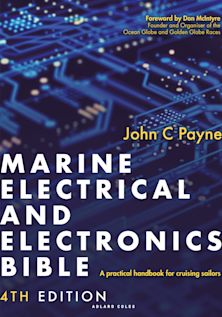
If you need to expand your knowledge or need an information resource on board, why not get a copy of my book The Marine and Electrical and Electronics Bible 4th Edition. By and for yachties, with everything from batteries and charging, solar and wind, diesel engines and marine electronics and so much more. Your complete systems guide. 650 pages of practical advice. Go to Boat Books for a copy or order through Amazon. By an Australian yachtsman for Australian Yachtsmen and Yachtswomen. Increase your skills and independence.

Whitsunday Islands Cruising Guide - Summary
The Whitsunday Islands offer one of Australia’s most accessible and predictable cruising environments, with short passages, reliable shelter, and a wide range of anchorages suitable for most conditions. Understanding the layout of the island groups, the influence of the trade winds, and the characteristics of each anchorage allows skippers to plan safe, efficient routes through the region. With careful attention to weather, tides, and exposure, the Whitsundays provide a practical and rewarding cruising experience for yachts of all sizes. The Whitsunday Islands Cruising Guide for passage planning.