St Helena Sailing Guide
St Helena Sailing Guide. Jamestown on the northwest coast of St Helena is the primary South Atlantic landfall for yachts routing between Cape Town, Ascension Island, Brazil and the Caribbean. It provides a secure mooring field, controlled landing procedures, fuel, water, provisioning and essential marine services in one of the most isolated inhabited islands in the world. The harbour is a working anchorage used by inter‑island craft, supply ships and transiting yachts.
St Helena developed as a strategic mid‑ocean provisioning and repair stop because its volcanic coastline offers the only workable anchorage between the South American and African continents. Its long‑standing maritime infrastructure—mooring fields, landing steps, fuel logistics and supply‑ship operations—anchors its role as the functional reset point for South Atlantic passages.
St Helena Sailing Guide - Routing
Logic
St Helena is chosen when yachts require a secure mid‑ocean stop between Cape Town and Ascension or when the South Atlantic High creates wind angles that make a continuous passage impractical. The island sits at the natural convergence of the southeast trades and the variable wind zones south of 20°S, making it the only dependable staging point for both northbound and southbound routes. Yachts arriving from Cape Town use the island to reset fuel, water and provisions before committing to the long, trade‑wind‑driven leg toward Ascension. Southbound yachts from Ascension use St Helena to re‑establish predictable wind angles before entering the more volatile southern latitudes. Westbound yachts departing for Brazil time their departure to avoid the southern edge of the High, where extended calms are common, while eastbound yachts arriving from Brazil use the island to regain stable conditions before approaching the African coast. St Helena therefore functions as the central operational hinge of the South Atlantic, providing a controlled, predictable stop in an otherwise uninterrupted ocean basin.
- Southbound (Ascension → St Helena → Cape Town). Yachts use St Helena to reset fuel, water and provisions before entering the variable wind zones south of 20°S.
- Northbound (Cape Town → St Helena → Ascension). Helena is the only reliable stop before the long, trade‑wind‑driven leg toward Ascension and the equatorial belt.
- Westbound (St Helena → Brazil). Departures are timed to avoid the southern edge of the South Atlantic High, which can produce extended calms.
- Eastbound (Brazil → St Helena). Yachts use the island to re‑establish predictable wind angles before committing to the Cape Town approach.
St Helena Sailing
Guide - Approaches
Approaches from all directions encounter depths rising abruptly from 2000–100 m, with swell often wrapping around the headlands in strong southerlies. The coastline is steep‑to, with no alternative anchorages, and the approach to Jamestown requires controlled speed and attention to swell behaviour near the landing steps. Visibility is generally good, although haze is common in settled conditions. The mooring field lies in 20–30 m depths, and yachts are assigned moorings on arrival, as anchoring is discouraged due to depth, holding variability and seabed protection.
St Helena Sailing
Guide - Anchorage
The Jamestown mooring field provides the only secure holding area on the island, with 20–30 m depths and volcanic sand and rock beneath. The moorings offer reliable security in all wind directions, although swell can enter the bay in strong southerlies and requires attention when landing. Dinghy access is via the Jamestown Steps, which must be timed carefully in swell. The anchorage is functional, predictable and designed specifically for transiting yachts.
St Helena Sailing Guide - Entry
Formalities
St Helena is a British Overseas Territory with structured yacht‑arrival procedures. Advance notice recommended but not mandatory. Immigration and customs clearance conducted ashore. Health and biosecurity checks may apply. Firearms must be declared. No‑drone rules apply without prior approval. Formalities are efficient and designed for transiting yachts.
St Helena Sailing Guide - Marina
Facilities
There is no marina on St Helena. All yachts use the mooring field and access shore facilities via the landing steps. Water and fuel are delivered by launch or arranged at the wharf when conditions permit. The harbour operates as a practical, controlled anchorage rather than a marina environment, and all movements are coordinated with harbour staff.
St Helena Sailing Guide - Local
Weather
Weather is dominated by the South Atlantic High, which produces consistent southeast trades for much of the year. Swell from the south can affect landing conditions, and the island’s steep topography creates gusts and turbulence near the anchorage. Rainfall is low, visibility is generally excellent and seasonal migration of the High can produce temporary wind shifts. There is no katabatic wind risk in Jamestown, as the island’s terrain does not support the cold‑air pooling required for katabatic formation.
St Helena Sailing Guide - Provisioning
Supermarkets. Jamestown has several small but reliable supermarkets: Solomon’s (Main Street) has fresh produce, meat, dairy, frozen goods, dry stores, household supplies. Thorpe’s Grocery (Main Street) has fresh produce, meat, dairy, frozen goods, dry stores. Star Supermarket (Market Street) has dry stores, frozen goods, limited fresh produce. Stock levels depend on supply‑ship schedules but are generally adequate for reprovisioning.
Markets. St Helena has no permanent produce markets. Local produce is sold through small shops and occasional stalls.
Fish Markets. None but local fish (tuna, wahoo, dorado) is available through small outlets and fishermen’s sales. No formal fish market operates.
St Helena Sailing Guide - Local
Cuisine
Local cuisine reflects Atlantic island traditions: Tuna and Wahoo either grilled or pan‑fried; Plo is a rice dish with fish or chicken. St Helena Fishcakes are seasoned white fish with potato. Curry dishes which are influenced by historical labour migration.
St Helena Sailing Guide - Fuel
Supplies
Diesel is supplied either by launch or at the wharf, depending on sea state. Depths alongside the wharf are typically 6–8 m, and fuel quality meets commercial standards. Transfers may be made directly to deck or via jerry cans when swell limits alongside access. Availability is reliable but should be confirmed with harbour authorities on arrival.
St Helena Sailing Guide - Water Supplies
Potable water is delivered by launch or available at the wharf when conditions allow. Pressure and hose compatibility vary, and yachts often combine direct filling with jerry‑can transfers to manage swell‑affected landing conditions.
Mechanical and Electrical Repairs
Resource
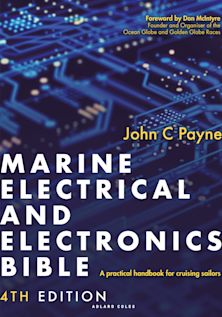
If you are headed somewhere remote consider the need to expand your knowledge base or have an information resource on board. Why not get a copy of my book The Marine and Electrical and Electronics Bible 4th Edition. By and for yachties, with everything from batteries and charging, solar and wind, diesel engines and marine electronics and so much more. Your complete systems guide. 650 pages of practical advice. In Australia and New Zealand order a copy through Boat Books. UK and European boats can buy the UK Edition Here. US and Canadian boats can get the US Edition Order Here. Marine systems are my profession so let me help you. By a liveaboard boat owner for other boat owners

St Helena Sailing Guide - Marine
Services
St Helena offers essential but limited marine services, including diesel mechanics, electrical technicians and small‑scale fabrication. Basic chandlery items are available through hardware stores. Major repairs require routing to Cape Town, which remains the primary South Atlantic service hub.
St Helena Sailing Guide - Local
Customs
Jamestown operates as a working harbour with structured landing procedures. Yachts follow mooring assignments, avoid obstructing supply‑ship operations and maintain clear communication with harbour staff. The environment is practical, orderly and designed to support transiting vessels efficiently.
St Helena Sailing Guide - Summary
St Helena is the central operational stop in the South Atlantic, providing secure moorings, controlled landing, practical provisioning, fuel, water and essential marine services for yachts routing between Cape Town, Ascension, Brazil and the Caribbean. Its predictable procedures and mid‑ocean position make it the critical reset point for all South Atlantic passages. The St Helena Sailing Guide is here to help passage planning.