Santa Catarina
Yacht Cruising Guide
Santa Catarina Yacht Cruising Guide. Santa Catarina is a coast that rewards disciplined offshore navigation and punishes anything casual inshore. The island’s profile is clean and steep‑to offshore, with reliable depths in the 20–30 m band and a predictable approach geometry from both north and south. Everything hazardous lies close to the land: surf beaches, rock shelves, oyster‑farm stakes, drying banks, and the shifting flats that dominate the eastern margins of Baía Norte and Baía Sul.
For yachts, the region is defined by its controlled entries, its fixed air‑draft limits, and the offshore fairways that thread between sandbanks, rock groups, and marked hazards. Baía Norte and Baía Sul are the only viable approaches, each with its own pilotage logic, while the Canal Sul and the Canal de Santa Catarina remain local‑craft routes only. This guide sets out the safe water, the hazards, and the operational truth of the island in a skipper‑to‑skipper format.
Brazil Coast
Sailing Guide - Explainer and Disclaimer
I lived, worked and sailed in Brazil for several years. These pages are extracted from an unpublished cruising guide I wrote several years ago and have since updated from my many personal notes. As this guide started before electronic charting became mainstream, I have included a lot of the GPS waypoint data, Chart requirements and numbers and other navigational information that remains useful. Every effort has been made to check the accuracy. It is the responsibility of skippers and navigators to ensure they have up to date charts on board, as the accuracy of electronic charts is uncertain. It is a challenging coast to sail, but rewarding with great people, food, music and so on and while there are security challenges, with proper precautions will be manageable.
Santa Catarina Yacht Cruising Guide - Regional Hub
Porto Belo. Porto Belo is the northern maritime gateway to Santa Catarina, offering a clean offshore approach, predictable depths, and the first reliable marina and service cluster south of Itajaí. Full pilotage, anchorage geometry, and service notes continue on the Porto Belo page.
Governador Celso Ramos. Governador Celso Ramos is a broken, indented coastline of coves and small bays west of Anhatomirim. It offers sheltered anchorages in settled weather and direct access to the western fairway. Detailed anchorage geometry and local hazards continue on the Celso Ramos page.
Santo Antônio de Lisboa & Sambaqui. Santo Antônio and Sambaqui form the traditional entry anchorages for Baía Norte, lying west of the flats with reliable mud holding and straightforward access to the marinas. Approach notes, tidal handling, and anchorage details continue on the Santo Antônio page.
Florianópolis – Baía Norte. Baía Norte is the operational centre of the island, defined by its bridge sector, fixed air‑draft limits, and western‑side marinas. Full pilotage, marina details, and service notes continue on the Baía Norte page.
Florianópolis – Baía Sul. Baía Sul is a more constrained basin with a narrow northern entrance, extensive eastern flats, and limited anchorage options. Detailed approach geometry and anchorage notes continue on the Baía Sul page.
Ribeirão da Ilha. Ribeirão da Ilha is the only reliable anchorage in Baía Sul, lying west of the oyster‑farm stakes with consistent mud holding. Full anchorage and approach notes continue on the Ribeirão page.
Armação & Campeche. Armação and Campeche form a dramatic surf‑dominated coastline with no anchorages and no safe inshore approach. Routing notes and hazard mapping continue on the Armação page.
Canal Sul & Naufragados Sector. The Naufragados sector marks the southern extremity of the island, where offshore hazards, marked rocks, and the tide‑dependent Canal Sul converge. Full offshore hazard mapping and Canal Sul pilotage continue on the Naufragados page.
Santa Catarina
Yacht Cruising Guide – Coastal Overview
The coast of Ilha de Santa Catarina is best navigated as a clean offshore run, holding a steady line in 20–30 m of water and keeping 1.5–2.0 NM off the land. This offshore band is consistent and hazard‑free, while everything dangerous lies close to the beaches: surf zones, irregular rock patches, oyster‑farm stakes, and the extensive flats that dominate the eastern sides of both Baía Norte and Baía Sul. The island rewards a yacht that stays offshore until fully committed to an approach and punishes one that experiments inshore.
Northern Sector – Ponta das Canas to Ingleses. The northern tip of the island rises steeply from deep water, with 20–25 m lying just outside Ponta das Canas and a rapid rise to <10 m if you close the coast. The beaches of Ingleses and Santinho are surf‑dominated and should never be approached. The offshore line remains clean and consistent, with 14–18 m mid‑shelf and no shoal tongues extending outward.
Northwest Sector – Canasvieiras and Jurerê. Running south along the northwest coast, the offshore water holds steady at 20–22 m, with 14–18 m mid‑bay and 10–12 m if you close the shoreline. The hazards here are not underwater but human: dense small‑craft traffic, fast RIBs, and unlit moorings inshore. Remaining in >14 m keeps you clear of everything.
Approach to Baía Norte. The approach to Baía Norte begins only once abeam of Sambaqui and Santo Antônio de Lisboa. The bay opens wide, but the danger lies on the eastern side, where flats rise abruptly from 10–12 m to <5 m. The safe water is the central corridor in 12–16 m, which leads directly toward the bridge sector.
Baía Norte Bridge Sector. The two navigable bridges, Colombo Salles and Pedro Ivo, form the only viable entry for yachts. The tidal stream accelerates through the gap, and the ebb sets strongly toward the eastern flats. Depths remain 8–12 m through the span, with <6 m near the piers.
Inner Baía Norte. South of the bridges, Baía Norte widens again, but the same pattern holds: a central corridor in 10–14 m, shoaling rapidly toward both shores. The marinas lie on the western side, where depths at the pontoons are 3–4 m.
Western Entrance
Features: Ilha de Anhatomirim, Dredged Channel, and Canal Obstructions
The western entrance becomes unmistakable once Ilha de Anhatomirim comes abeam. The fortress and the Anhatomirim Light (Fl.W.6s), a white metal column 8 m high, stand clearly on the western side. A dredged channel 80 m wide and 6 m deep crosses the shoal north of Ratão Grande, marked with the Brazilian lateral system but not required for yachts.
A reliable anchorage lies 1 NM NE of Anhatomirim in 8 m of mud. Yachts drawing ≤5 m can anchor anywhere between Anhatomirim and Ratão Grande in 6 m of soft mud.
South of Anhatomirim, the entire area between Ratão Grande and the narrows of the so‑called “Canal Norte” is blocked by the Banco Tabuleiro sandbank, rising from 10–12 m to <5 m, with rock heads and the islets Guarazes and Lazareto sitting directly on the bank. This forms the northern physical barrier that prevents any through‑passage between Baía Norte and Baía Sul.
Western Approach
Pilotage: Ponta do Rapa → Alvarado → Ponta Grossa → Anhatomirim → Bridge Sector
The western approach can be made between Ponta do Rapa and Ilha Alvarado, or between Alvarado and Calhau de São Pedro, with 20–25 m offshore and 14–18 m mid‑approach. The shoal off Ponta Grossa extends 0.25 NM into the channel and must be avoided by keeping to the western side.
Inside, the safe water lies mid‑channel between Ponta Grossa and Anhatomirim in 12–16 m. After passing Anhatomirim, alter south into the controlled‑depth channel leading toward the bridge.
On exiting this channel, shape directly toward the centre of the navigable bridge span, keeping the fixed red light and day shape on alignment.
South of the second bridge, on the eastern side, lies the commercial ship anchorage, 0.5 NM below the span, in 7 m of mud. It is exposed in southerly winds.
North of the narrows lies Praia de Fora, where yachts can anchor in 5–8 m of mud. Two black conical top‑marks, 0.4 NM and 0.6 NM NE–E of the bridge end, mark the outer limit of safe water. These marks guard underwater rocks extending to within 0.1 NM of Praia de Fora.
A northern passage (“The Narrows”) can be used at low water by vessels drawing <3 m, but it is not recommended for yachts. The suspension bridge carries 29 m (95 ft) of air draft mid‑channel; the second bridge carries 28.5 m (93.5 ft).
Clarification:
“Canal Norte” vs the Non‑Navigable Canal de Santa Catarina
The so‑called “Canal Norte” between Ponta do Rapa and Ponta da Armação is simply the northern offshore entrance to Baía Sul. The true Canal de Santa Catarina is non‑navigable, with <1.5 m depths, drying banks, shifting mud, and multiple low bridges.
Baía Sul Northern Approach – Full Pilotage (with Ilha do Francês narrowing)
The northern approach to Baía Sul is made through the offshore gap between Ponta do Rapa and Ponta da Armação, with 20–25 m offshore and 14–18 m mid‑gap. Closing either margin brings you into <10 m and rock shelves.
Further south, the passage constricts at Ilha do Francês, 3.75 NM SW of Ponta do Rapa, and Ponta dos Morretes, 0.7 NM farther south. The safe water remains in 12–16 m. Inside, the central corridor carries 10–12 m toward the Hercílio Luz Bridge, which has 8–10 m beneath the span but a fixed air draft that must be confirmed.
Southern Sector –
Armação and Campeche
The south end of the island returns to a clean offshore profile. Running past Ponta do Pasto and Ponta da Armação, the offshore line in 20–30 m remains the safest route, with 14–20 m mid‑shelf and <10 m close in. The surf beaches offer no shelter
Southern Offshore
Approach & Mid‑Channel Hazards
The southern offshore approach is defined by a chain of hazards running north from Ponta dos Naufragados toward the Narrows. The first is Banco da Passagem, a sand bank with <1.8 m over it, lying 0.6 NM NNW of Ponta dos Naufragados in mid‑channel.
Further north lies Ilha dos Cardos, 1.25 NM NNW of Ponta dos Naufragados, surrounded by a mud bank with 2.2 m at its southern end and extending 0.2 NM SSE. The bank is buoyed. The islet carries a red square concrete column light (Fl.R.4s), 4 m high, on its western end, and a white truncated masonry cone on its summit.
North again, Cedro Light (Fl.W.6s), a white conical stone tower 5 m high on Ponta da Enseada at 27°46’S, 48°37’W, stands 3.25 NM NW of Ilha dos Cardos.
The Laje do Cacau group lies 3 NM NNE of Ponta da Enseada, with <1.8 m over the rocks and a light buoy marking the southern side.
Further north, Ilha do Largo, 3.75 NM NNE of Ponta da Enseada, carries a white truncated conical beacon on its summit.
Between Ilha do Largo and the Narrows lies the Meio Canal Light Buoy, moored mid‑channel 3.5 NM north of Ilha do Largo.
Approaching the Narrows, the final hazard is Laje Tipitinga, a group of underwater rocks on the NW side of Banco Tipitinga, which dries. It lies 2 NM south of the Narrows, on the eastern side of the fairway, with the western side marked by a buoy.
The safe water lies consistently in the mid‑channel band, where depths hold 14–20 m, and any deviation toward either margin brings you rapidly into shoaling water or rock groups with <2 m over them.
Canal
Sul Approach – Pilotage
The southern entrance, Canal Sul, is a shallow, winding, tide‑dependent system entered between Ponta dos Naufragados (Fl.W.10s) at 27°50’S, 48°34’W and Ilha da Aracatuba, 0.3 NM SSW. The 10 m white masonry lighthouse on Ponta dos Naufragados is the only reliable visual reference.
Outside the entrance, depths hold 20–25 m, reducing rapidly to <10 m inside. The channel is a maze of sandbanks, rock heads, and shifting shoals. Controlling depths are 3 m at low water and 4.2 m at high water, and even shallow‑draft vessels must proceed with extreme care.
Banco dos Naufragados, lying 0.1–0.2 NM south of Ponta do Frade, breaks heavily in any swell. Laje da Pinheira, with <1.8 m over it, lies 0.55 NM SE of Ilha do Papagaio Pequeno and breaks in easterly winds.
Inside, the channel winds northward with sandbanks rising abruptly from 4–5 m to <2 m, and rock heads scattered unpredictably. Although it is physically possible for vessels drawing up to 3 m at low water and 4.2 m at high water to reach Florianópolis, the route is not suitable for yachts except in exceptional circumstances.
Santa Catarina Yacht Cruising Guide – Coastal Hazards
The hazards of the island follow a single pattern: everything dangerous lies inshore, and everything safe lies offshore. The northern and eastern beaches rise from 20–25 m offshore to <10 m close in, ending in surf. The west coast carries irregular bottom in 10–12 m, unlit moorings, and fast local traffic. Baía Norte’s eastern flats rise from 10–12 m to <5 m, and the ebb sets directly toward them. Baía Sul repeats the pattern, with extensive <5 m flats and oyster‑farm stakes. The Hercílio Luz Bridge adds a structural hazard with 8–10 m beneath the span and <6 m at the edges.
The Canal de Santa Catarina is non‑navigable, with <1.5 m depths, drying banks, shifting mud, and low bridges.
Santa
Catarina Yacht Cruising Guide Canal Sul – Hazards
The Canal Sul entrance is defined by breaking shoals and rock heads. Banco dos Naufragados, lying 0.1–0.2 NM south of Ponta do Frade, breaks in any swell. Laje da Pinheira, with <1.8 m over it, lies 0.55 NM SE of Papagaio Pequeno and breaks in easterly winds. Inside, sandbanks rise from 4–5 m to <2 m in short distances, with rock heads scattered across the bends. The sea state dictates viability, and the channel is not suitable for yachts except in exceptional circumstances.
Santa Catarina Yacht Cruising Guide – Anchorages
All workable anchorages lie on the west side, where the land breaks the swell and the bottom is predictable. Sambaqui offers 6–10 m of sand and mud; Santo Antônio de Lisboa offers 6–9 m of mud. Jurerê, Jurerê Internacional, and Canasvieiras provide fair‑weather anchorages in 8–12 m of sand. In Baía Sul, Ribeirão da Ilha offers 6–10 m of mud. No anchorage exists on the east or south coasts.
Mechanical and Electrical Repairs
Resource
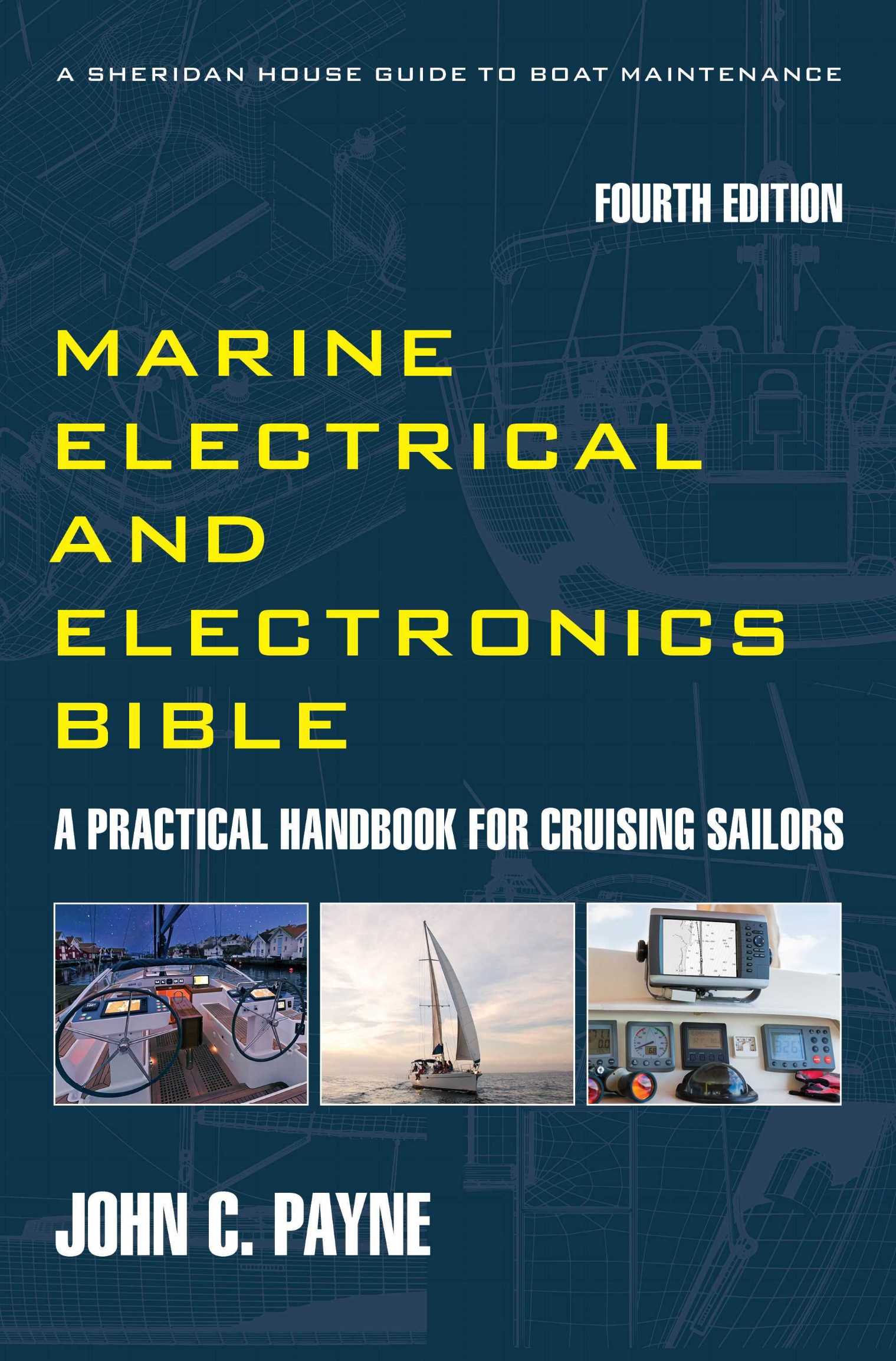
If you are headed somewhere remote consider the need to expand your knowledge base or have an information resource on board. Why not get a copy of my book The Marine and Electrical and Electronics Bible 4th Edition. By and for yachties, with everything from batteries and charging, solar and wind, diesel engines and marine electronics and so much more. Your complete systems guide. 650 pages of practical advice. In Australia and New Zealand order a copy through Boat Books. UK and European boats can buy the UK Edition Here. US and Canadian boats can get the US Edition Order Here. Marine systems are my profession so let me help you. By a liveaboard boat owner for other boat owners

Santa Catarina
Yacht Cruising Guide – Etiquette
Brazilians value warm, personable interaction and expect brief friendly conversation before moving to practical matters, even in working harbours. Greetings are important and should be direct, with steady eye contact and a relaxed manner. Hello is Oi pronounced oy. This is extremely common, warm, and informal. Brazilians use it constantly in shops, marinas, markets, and casual interactions. Thankyou is Obrigado. Pronounced oh‑bree‑GAH‑doo when spoken by a man. And obrigado is the natural form you’ll use everywhere in marinas, markets, fishing harbours, and casual interactions. Please is Por favor, pronounced por fa‑VOR. It is universal, polite, and works in every situation from marinas to markets. People stand closer than in many cultures and use open gestures, which is normal and not intrusive. Politeness is expressed through simple courtesies such as greeting shop staff on entry, acknowledging service workers, and avoiding abrupt or overly transactional behaviour. Patience is essential, as service rhythms can be slower and schedules flexible, especially in coastal towns. Public confrontation is avoided and issues are resolved calmly, with respectful language and a cooperative tone.
Santa Catarina
Yacht Cruising Guide - Summary
Santa Catarina Yacht Cruising Guide. Offshore is safe; inshore is not. The Canal de Santa Catarina is never used. Baía Norte and Baía Sul are the only controlled entries. All anchorages lie on the west side. Heavy repairs require a run to Itajaí or Navegantes. Santa Catarina Yacht Cruising Guide for all you need to know.