Sailing to Lord Howe Island: A
Practical Cruising Guide for Yachts
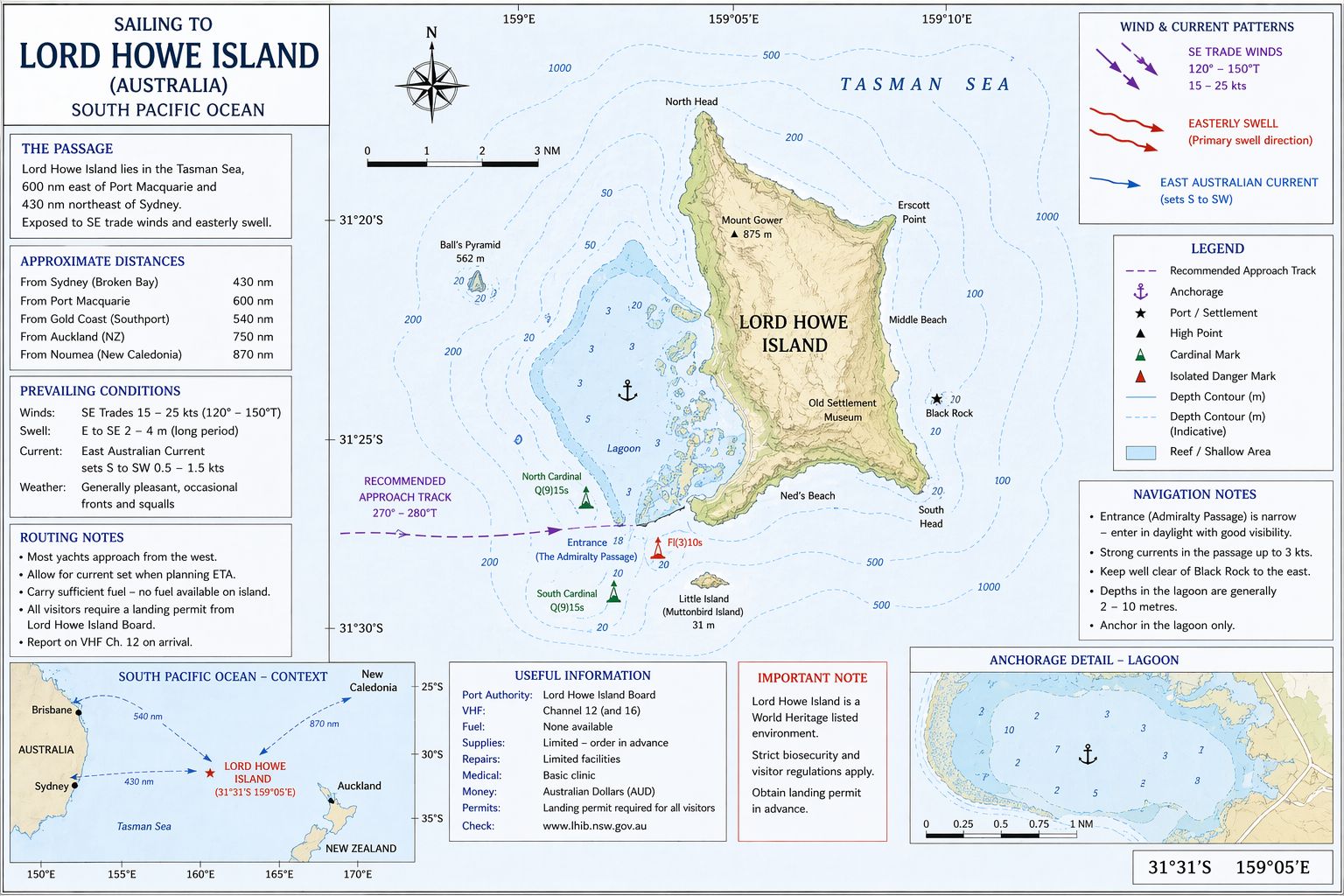
Sailing to Lord Howe Island. Lord Howe Island lies approximately 300 nautical miles east of Australia’s New South Wales coast and is one of the most distinctive and environmentally protected islands in the Tasman Sea. For sailors planning South Pacific passage routes via Lord Howe Island, the island serves as a useful waypoint between Australia, New Zealand, and the Coral Sea. Its volcanic peaks, fringing reef, and lagoon anchorage create a unique but tightly regulated environment for visiting yachts.
The primary anchorage for cruising yachts is the North Passage Lagoon, located on the western side of the island. This lagoon is sheltered by the world’s southernmost coral reef and offers moorings for visiting vessels. There are no marinas, no haul‑out facilities, and no traditional harbour infrastructure. Despite these limitations, Lord Howe Island provides essential services, limited provisioning, and a safe resting point for yachts undertaking long‑distance ocean passages to Lord Howe Island. This Lord Howe Island cruising guide focuses on the practical realities of how to sail to Lord Howe Island, including navigation, entry requirements, weather, provisioning, fuel and water availability, repair options, cultural expectations, and local cuisine.
Sailing to Lord Howe Island
- Navigation and Approach
Offshore Routes and Passage Planning: Reaching Lord Howe Island requires open‑ocean sailing with no intermediate stops. Common approaches include:
- From Australia (Port Macquarie, Coffs Harbour, or Southport): 300–400 nautical miles.
- From Sydney or Pittwater: 350–380 nautical miles.
- From New Zealand (Bay of Islands): 900–1,000 nautical miles.
- From New Caledonia: 700–800 nautical miles.
For sailors researching long‑distance ocean passages to Lord Howe Island, the Tasman Sea’s variable conditions require careful weather routing. The region is influenced by high‑pressure systems, troughs, and occasional strong westerlies.
Sailing to Lord
Howe Island - Approach
The island rises steeply from deep water, with no surrounding shoals beyond the fringing reef. Approaches are generally clear, but the reef system requires precise navigation. The general and commonly understood hazards are as follows:
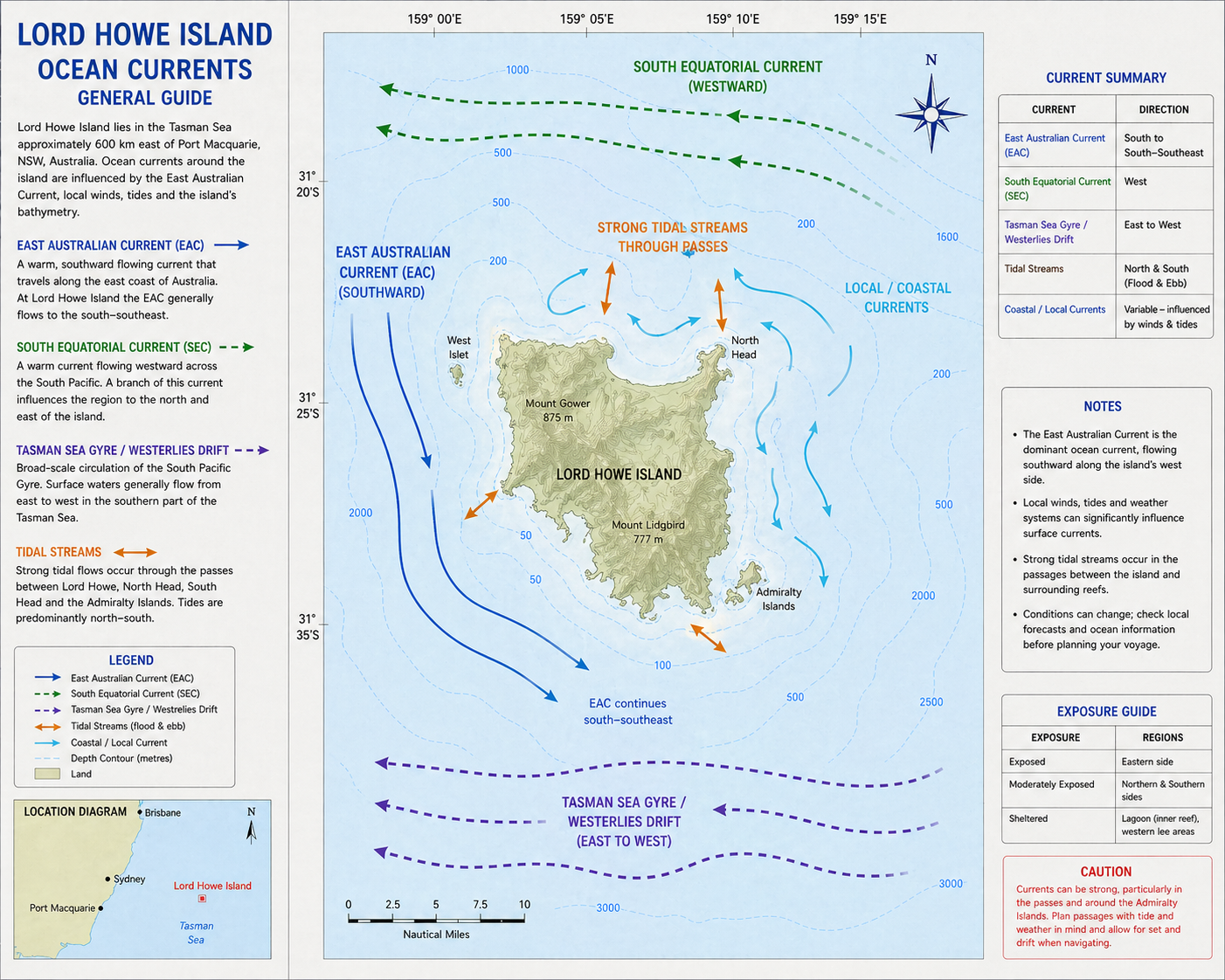
- Strong currents near the island.
- Sudden wind shifts from passing systems.
- Fringing reef around the lagoon.
- Limited safe anchorage outside the lagoon.
- Heavy surge during strong westerlies.
Sailing to Lord
Howe Island - Anchorage
North Passage Lagoon. The only approved anchorage for visiting yachts.
- Access: Via the marked North Passage channel. Entry should be made in good light. The channel is narrow and shallow in places. Strong tidal flow may be present. Night entry is not recommended.
- Depths: 2–5 metres inside the lagoon.
- Bottom: Sand.
- Holding: Moorings only; anchoring is prohibited to protect the reef.
- Swell: Lagoon is well protected from ocean swell.
- Moorings: Must be booked in advance through the Lord Howe Island Board.
About Balls Pyramid
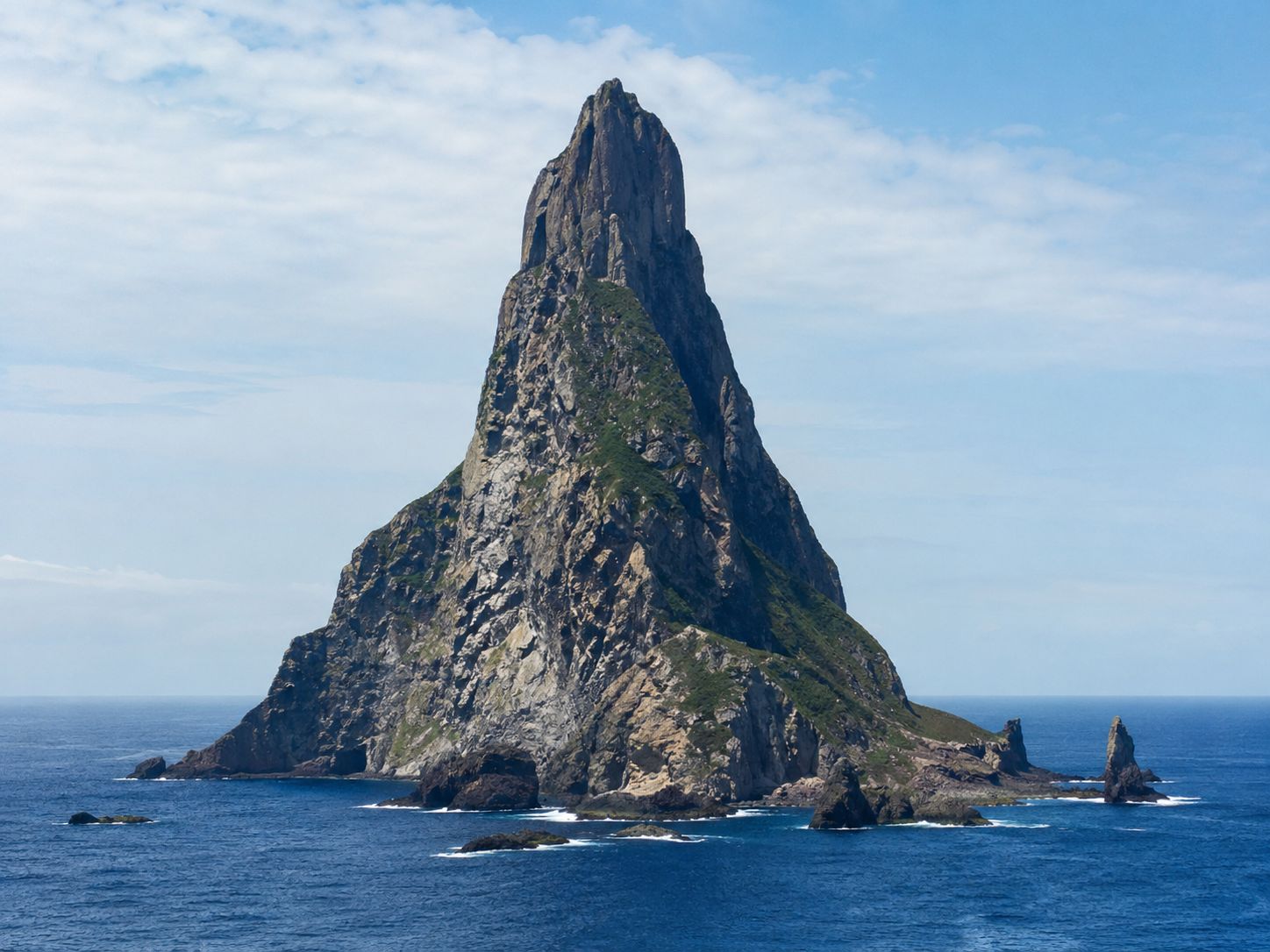
Balls Pyramid is located about 20 km southeast of Lord Howe. Balls Pyramid rises sheer out of the Tasman Sea as a 562‑metre (1,844 feet) basalt spire, the eroded remnant of a volcanic cone that once formed part of the same hotspot chain as Lord Howe Island. It is the tallest sea stack in the world. Its vertical cliffs, constant swell exposure and complete lack of landing sites make it a viewing‑only destination for yachts, with vessels standing off in deep water while the Pyramid throws back refracted swell and wind eddies that can shift abruptly around its flanks. Quite awe inspiring when you first see it. The first time I sailed past on passage and it was truly awe inspiring.
Sailing to Lord
Howe Island - Entry Protocols and Formalities
with Australian maritime and biosecurity regulations. This section is essential for sailors researching Lord Howe Island yacht entry requirements.
Pre‑Arrival
- Submit advance notice to the Lord Howe Island Board.
- Provide vessel details, crew list, last port, and next port.
- Book a mooring in advance; moorings are limited.
- Notify Australian Border Force (ABF) if arriving from overseas.
Arrival Inspection
If arriving from outside Australia, officials may board the vessel or request the crew to come ashore.
- Agencies typically involved:
- Australian Border Force (ABF)
- Biosecurity (DAFF)
- Local Island Board representatives
Inspection Focus
- Vessel documentation.
- Crew passports and visas (if required).
- Food items (strict biosecurity rules).
- Waste management.
- Safety equipment.
Fees and Charges
Expect charges for:
- Mooring fees
- Biosecurity inspection
- Possible customs processing
Sailing to Lord
Howe Island - Restrictions
- Anchoring is prohibited in the lagoon.
- No discharge of any waste.
- No landing at protected sites without permission.
- Strict biosecurity rules apply to all food and plant items.
Sailing to Lord
Howe Island - Local Weather
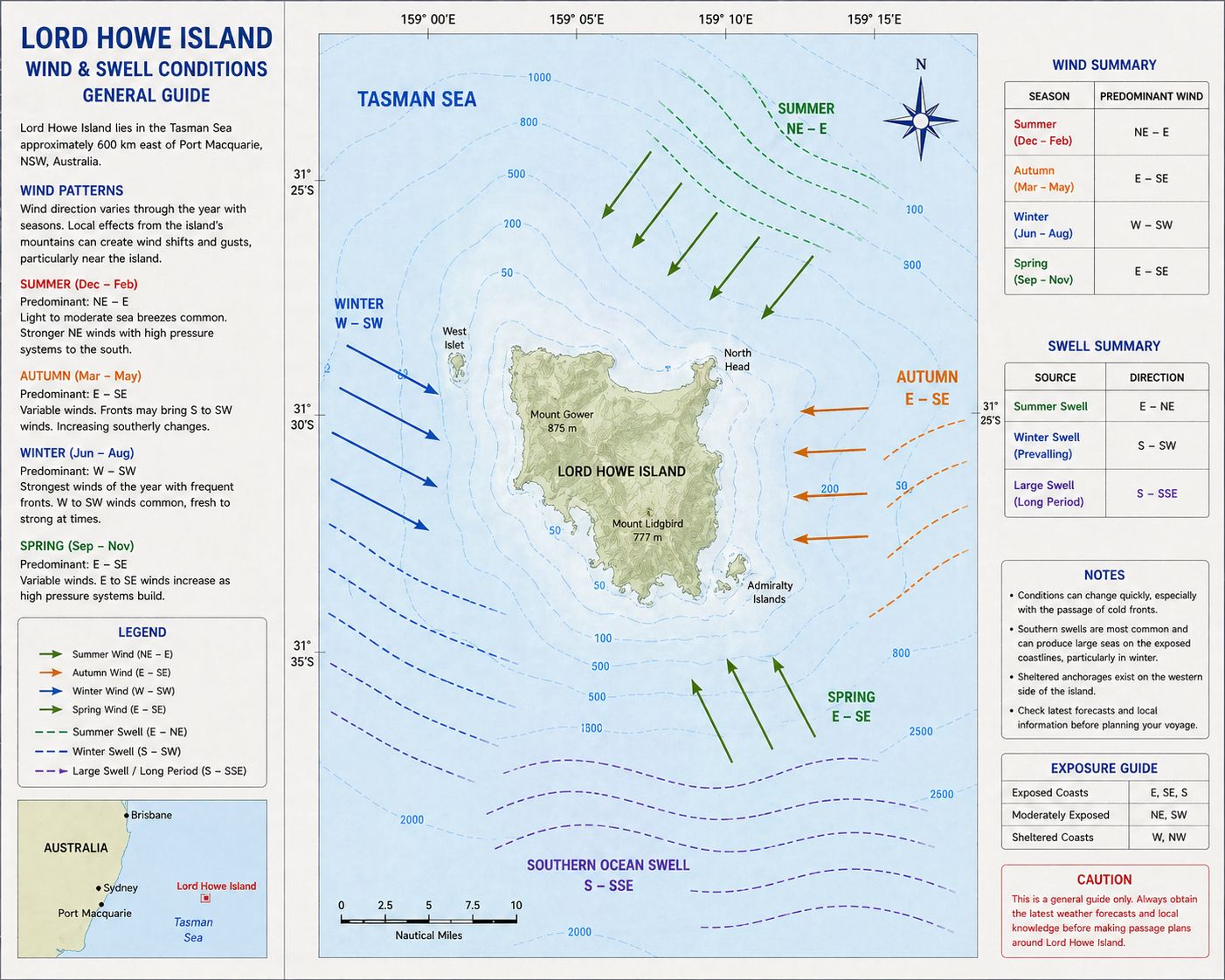
Lord Howe Island’s weather is shaped by its position in the Tasman Sea, sitting between the subtropics and the mid‑latitude westerlies, which gives it a mix of steady trade‑wind patterns and fast‑moving frontal changes. Most of the year is dominated by SE–ESE trade winds, mild temperatures and a relatively stable sea state, but the island also sees strong southerly fronts, rapid wind shifts and occasional heavy swell generated by distant Tasman lows. Summers are warm and humid with lighter winds and afternoon sea breezes, while winters bring cooler air, fresher southerlies and long‑period swell that can affect lagoon access and moorings. For skippers, it’s a region where conditions can remain settled for days yet change quickly when a front approaches, making timing and conservative planning essential.
Sailing to Lord
Howe Island - General Climate
Local weather on Lord Howe Island is driven by the shifting position of the subtropical ridge and the passing systems of the Tasman Sea, creating a pattern that alternates between settled trade‑wind conditions and fast‑moving frontal changes. When the ridge sits to the north, the island experiences stable SE–ESE winds and mild seas, but when Tasman lows or southern fronts track eastward, the ridge weakens, bringing stronger southerlies, rapid shifts and long‑period swell that can affect lagoon access and anchorage comfort. The climate is subtropical maritime, with mild temperatures year‑round, high humidity.
Seasonal Notes
- Summer (December–March) has more stable weather with lighter winds and occasional tropical influences.
- Winter (June–September) has stronger winds, more frequent low‑pressure systems and larger swell events.
Sailing to Lord
Howe Island - Swell
Swell on the approach to Lord Howe Island is one of the defining factors in any passage, with long‑period energy from the Tasman Sea often wrapping around the island and affecting conditions well before you reach the mooring field. Even in settled weather, the island can experience combined swell from distant lows, refracted waves off the southern cliffs and a persistent SE trade‑wind sea, all of which can make the final approach slow and uncomfortable. Skippers time their arrival to avoid strong southerly swell, as it pushes directly into the lagoon entrance and can make the transit across the reef edge unsafe, even when winds are moderate.
- Westerly swell can affect the lagoon entrance.
- Southerly swell impacts exposed coastlines.
- Surge may affect dinghy landings at the jetty.
Sailing to Lord
Howe Island - Provisioning
Provisioning on Lord Howe Island is limited but adequate for most cruising needs. This section supports sailors researching provisioning for cruising yachts on Lord Howe Island.
Supermarkets: Thompson’s Store (Lagoon Road) is the main general store on the island. Dry goods, dairy, frozen foods, household items. Stock depends on supply ship schedules. Joy’s Shop has smaller grocery store with essentials and useful for top‑up provisioning.
Markets: Local produce and limited local fruit and vegetables. Availability varies by season. Some island residents sell produce informally. There is no formal weekly market. Occasional community stalls may appear during peak periods.
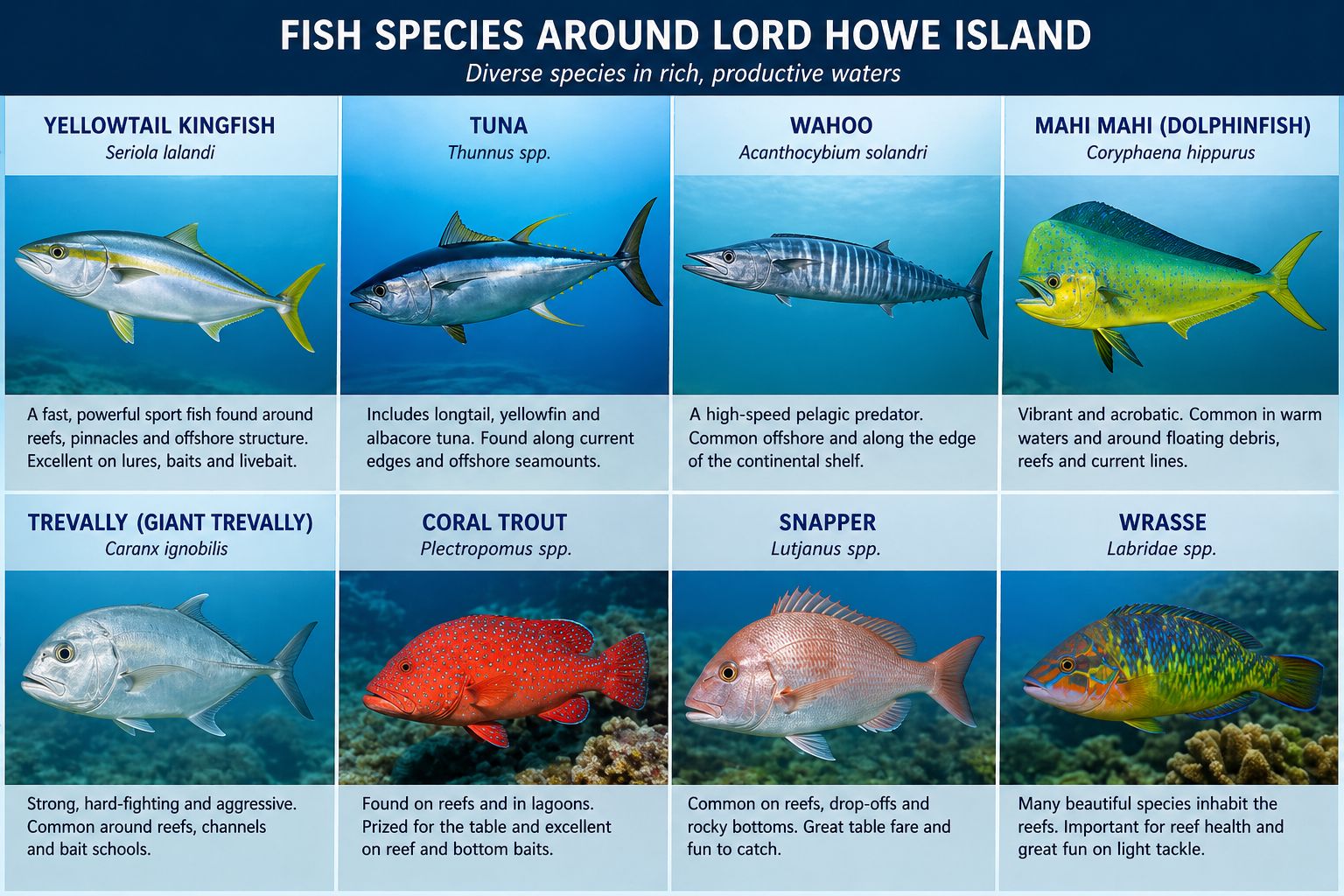
Seafood: Fresh fish available from local fishermen. Species include kingfish, trevally, and tuna. Availability depends on weather and fishing activity.
Diesel and Water Supplies
Diesel Fuel Supply. Fuel availability is essential for sailors researching where to get diesel fuel for yachts on Lord Howe Island. Diesel is available from the island fuel depot and fuel transported by jerry cans from shore. No dockside fueling for yachts. Fuel quality generally good but bring clean jerry cans and a filtering funnel. Supply may be affected by ship schedules. Large quantities require advance notice.
Fresh Water Supply. Water availability is important for boatsplanning fresh water resupply for cruising boats on Lord Howe Island. Municipal water available via jerry cans. Water taps located near the jetty.
Mechanical and Electrical Repairs
Resource
If you are headed somewhere remote consider the need to expand your knowledge base or have an information resource on board. Why not get a copy of my book The Marine and Electrical and Electronics Bible 4th Edition. By and for yachties, with everything from batteries and charging, solar and wind, diesel engines and marine electronics and so much more. Your complete systems guide. 650 pages of practical advice. In Australia and New Zealand order a copy through Boat Books. UK and European boats can buy the UK Edition Here. US and Canadian boats can get the US Edition Order Here. Marine systems are my profession so let me help you. By a liveaboard boat owner for other boat owners

Repairs and Marine Services
Lord Howe Island has limited marine repair capability, relevant for sailors researching repair services for cruising yachts on Lord Howe Island. Small workshops for mechanical repairs, welding and fabrication. Outboard servicing.
Local Cuisine and Regional
Specialties
Food reflects Australian coastal influences with local variations. Common dishes include fresh fish prepared grilled or pan‑fried. Local kingfish is a regional specialty. Island‑style salads using seasonal produce. Homemade breads and pastries from local cafés. Try the locally produced honey.
Sailing to Lord Howe Island - Fishing
Fishing around Lord Howe Island is exceptional, supported by the nutrient-rich waters of the Tasman Sea and the influence of the East Australian Current. The surrounding reefs, drop-offs, and offshore seamounts attract a wide range of species, including yellowtail kingfish, tuna, wahoo, mahi mahi, trevally, and marlin, with excellent pelagic fishing along current edges and temperature breaks. Closer in, the lagoon and reef systems hold species such as coral trout, snapper, and wrasse, often taken over reef structure and sandy patches. Fishing is typically most productive around reef edges, pinnacles, and bait concentrations, with trolling, casting, and bottom fishing all effective depending on location. The area is also subject to strict conservation management, so regulations, seasonal closures, and protected zones must be observed.


Sailing to Lord Howe Island - Summary
Lord Howe Island is a remote and rewarding destination for cruising yachts. The lagoon anchorage, while regulated, provides a safe and scenic resting point for vessels crossing the Tasman Sea or transiting between Australia, New Zealand, and the South Pacific. Yachts can obtain fuel, water, provisions, and limited repair assistance before continuing their passage. Successful visits require preparation, flexibility, and respect for local regulations and environmental protections. For well‑equipped and experienced crews, Lord Howe Island offers a practical and memorable stop in a unique and carefully preserved part of the Pacific. Sailing to Lord Howe Island either for a shakedown cruise or somewhere different, why not sail here.