Qaqortoq Greenland
Sailing Guide
Qaqortoq Greenland sailing guide. Qaqortoq is the primary harbour on the Southwest Greenland coast and the first substantial port after rounding Cape Farewell from the East Coast. The town sits within a sheltered bay system with predictable approaches, stable holding and reliable access to fuel, water and provisioning. Ice conditions are significantly lighter than on the East Coast, though drift ice and bergs can still appear early in the season. The harbour provides secure berthing and is the main consolidation point before continuing north toward Nuuk.
Qaqortoq is used operationally as the first major service port after the Cape Farewell rounding and as the staging point for movements north along the protected inside route. It offers the most complete set of services south of Nuuk, including fuel, water, supermarkets and limited marine support. All movements into and out of Qaqortoq are shaped by local weather, visibility and residual ice drift from offshore.
Routing Logic –
East Coast → Cape Farewell → Qaqortoq
Yachts arriving from Ammassalik or Kulusuk route south along the East Coast in a summer ice window, maintaining a safe offset from the East Greenland Current. The Cape Farewell rounding is taken in stable gradients with manageable sea state, avoiding tight SW–W patterns that produce steep seas. Once around the cape, ice concentration decreases sharply, and yachts shape a northwest track toward Qaqortoq.
Visibility is critical during the rounding due to residual bergs and floes. Fog remains common in light‑wind regimes. Swell reduces after entering the Southwest Coast lee, and conditions stabilise. Landfall at Qaqortoq is planned for daylight with good visibility, as small bergy bits can still drift into the approaches early in the season.
Qaqortoq Greenland
Sailing Guide - Approaches
Approaches to Qaqortoq are straightforward with deep water exceeding 20–30 m in the outer bay. The entrance channel is wide and free of hazards, with predictable marking. Ice is generally minimal, though early‑season drift ice may appear. Visibility is important for identifying small bergy bits. Inside the bay, depths reduce to 6–12 m with good manoeuvring room. Tidal range is modest, and tidal streams are weak. Local winds are shaped by surrounding hills but do not produce severe katabatic effects.
Qaqortoq Greenland
Sailing Guide - Anchorage
Anchoring is possible in several areas within the bay, with depths typically 8–15 m and mud holding. The anchorage is generally secure in settled conditions. Space can be limited due to local vessel movements. Ice drift is minimal compared to the East Coast, but early‑season floes may enter the bay and require monitoring. Most yachts prefer to anchor off and use tenders for shore access when quay space is unavailable.
Qaqortoq Greenland
Sailing Guide - Entry
Qaqortoq is a designated port of entry for Greenland. Customs and Immigration are conducted alongside in the designated area. Yachts arriving from abroad must notify authorities in advance and follow instructions for berthing on arrival. Firearms must be declared and secured according to Greenlandic regulations. There are no known restrictions on communications equipment such as Starlink. Clearance procedures are straightforward and typically efficient.
Qaqortoq Greenland
Sailing Guide - Marinas
Qaqortoq provides two usable quay faces for visiting yachts. Each quay face has charted depths between 4–6 m, with independent bollard lines and direct alongside access. These are commercial quay walls that accept yachts when not occupied by local vessels. Shore power is available on selected quay faces. Potable water is supplied at designated points with stable pressure. Waste disposal is available through harbour facilities. Fuel is accessed separately at the harbour fuel point with adequate depth for yacht‑side refuelling. Short‑term gear handling space is available when the quays are not in commercial use. The basin is sheltered from most gradients, though occasional wash from local traffic occurs. Berth allocation and service access are managed by harbour staff, and availability varies with vessel movements
Qaqortoq Greenland
Sailing Guide - Local Weather
The Southwest Coast experiences more stable conditions than the East Coast. Low‑pressure systems still influence the region, but sea state is reduced due to coastal shelter. Fog is less persistent than on the East Coast but remains possible in light‑wind regimes. Winds are shaped by local topography, with occasional gusts near headlands and Katabatic wind formation. Weather windows for movements north toward Nuuk are selected based on visibility and local gradients.
Qaqortoq Greenland
Sailing Guide - Provisioning
Supermarkets. Qaqortoq is supplied by Brugseni Qaqortoq and Pisiffik Qaqortoq, both carrying dry goods, dairy, bread, fresh produce, frozen foods and packaged items. Stock depends on supply‑ship cycles, with fresh produce strongest immediately after deliveries. Frozen goods, bread and dairy remain consistently available. Alcohol follows local controlled‑sale rules.
Markets. There is no municipal market. Occasional small community sales appear but are irregular and not used for operational provisioning.
Fish Markets. Fresh fish is available from local outlets when landings occur, mainly cod and halibut. Supply varies with weather and fishing activity. Frozen fish and seafood are consistently available in Brugseni and Pisiffik. No wholesale fish market is accessible to yachts.
Qaqortoq Greenland
Sailing Guide - Local Cuisine
Qaqortoq’s cuisine follows South and West Greenland patterns with steady access to local fish, reindeer, lamb and seal, supplemented by Danish staples from regular supply‑ship deliveries. Daily cooking relies on fish, potatoes, onions, barley and simple seasonings, with local households combining fresh, dried and smoked products depending on availability.
Suaasat is the standard soup made from seal, whale, reindeer or lamb with barley, potatoes and onions, prepared in the same form used across Greenland. Mattak is whale skin with attached blubber, eaten raw or lightly boiled in small pieces. Hellefisk (Greenland halibut) is widely used and served raw, dried, smoked or pan‑fried depending on the cut. Torsk (cod) is boiled or pan‑fried with potatoes and minimal seasoning. Uer (redfish) appears when landings occur, usually pan‑fried or baked. Aarluk is smoked or dried salmon, produced locally in small quantities and sold through shops when available. Rensdyrkød (reindeer meat) is roasted or stewed depending on the cut supplied through inter‑settlement distribution. Lammekød (lamb) is more common in southern Greenland and appears regularly in Qaqortoq, typically roasted or stewed with potatoes and onions. Qiporaq is dried seal meat eaten in thin strips. Dried fish from coastal settlements is widely consumed, eaten plain or with spreads. Simple Danish bakery items such as rye bread, rolls, sponge cakes are common due to supermarket supply chains.
Restaurant menus in Qaqortoq reflect the same ingredient base: halibut, cod, redfish, reindeer, lamb, shrimp, dried fish, potatoes, cabbage and Danish bakery products. Preparations remain straightforward due to ingredient constraints and local preference for simple cooking.
Qaqortoq Greenland
Sailing Guide - Fuel
Marine diesel is available at the harbour fuel point with adequate depth for most yachts. Access is straightforward, and refuelling is coordinated with harbour staff. Petrol is available at nearby road stations.
Qaqortoq Greenland
Sailing Guide - Water
Potable water is available on selected quays with reliable pressure and quality suitable for full tank fills. Access is arranged through harbour staff.
Mechanical and Electrical Repairs
Resource
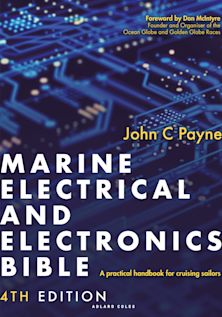
If you are headed somewhere remote consider the need to expand your knowledge base or have an information resource on board. Why not get a copy of my book The Marine and Electrical and Electronics Bible 4th Edition. By and for yachties, with everything from batteries and charging, solar and wind, diesel engines and marine electronics and so much more. Your complete systems guide. 650 pages of practical advice. In Australia and New Zealand order a copy through Boat Books. UK and European boats can buy the UK Edition Here. US and Canadian boats can get the US Edition Order Here. Marine systems are my profession so let me help you. By a liveaboard boat owner for other boat owners

Qaqortoq Greenland
Sailing Guide - Marine Services
Qaqortoq offers limited marine services. Basic mechanical assistance may be available through local contacts, but there are no dedicated diesel, electrical or electronics workshops. No Volvo or Yanmar agents operate locally. Minor repairs and parts sourcing are possible through local suppliers. The nearest full‑service facilities are in Nuuk.
Qaqortoq Greenland
Sailing Guide - Local Customs
Local customs follow Greenlandic norms with emphasis on respect for working harbours and small communities. Hunting activities are part of local life. Yachts are expected to avoid interfering with local operations and to follow guidance from harbour authorities.
Qaqortoq’s population is Kalaallit Inuit, the same Indigenous group found across Greenland, with daily life shaped by coastal settlement, hunting activity and close community networks. Communication is direct and practical, and visiting skippers should treat working quays, hunting gear and shared spaces with the same respect expected elsewhere in Greenland. South Greenland communities place strong value on calm behaviour, personal space and unobtrusive interaction, especially around families and elders. Photography of people or working areas requires clear permission. Community rhythms follow weather, hunting patterns and supply‑ship schedules, so flexibility from visiting crews is standard
Qaqortoq Greenland
Sailing Guide - Summary
Qaqortoq is the primary service port on the Southwest Greenland coast and the first major harbour after rounding Cape Farewell. It offers secure anchorage, reliable provisioning, fuel, water and limited services, making it the key consolidation point before continuing north toward Nuuk. The Qaqortoq Greenland Sailing Guide for all you need to know.