Preveza Greece Sailing Guide
Preveza Greece Sailing Guide. Preveza is located at the entrance to the Ambracian Gulf on the north-west coast of Greece, directly opposite Aktio and forming the southern gateway to the inland gulf basin. The harbour area lies immediately inside a narrow entrance channel which connects the Ionian Sea to the enclosed waters of the Ambracian Gulf. Yacht traffic transiting north–south along the Ionian coast uses this entrance as a routing point when entering or exiting the Lefkada Channel system or moving into the gulf.
The port environment includes a dredged entrance channel, quay berthing along the Preveza waterfront, and extensive marina and yard infrastructure located to the north within the gulf. The Aktio–Preveza immersed tunnel passes beneath the channel connecting the two sides of the entrance and imposes depth and clearance considerations for deep-draught vessels. The operational environment is defined by shallow surrounding waters, dredged navigation tracks, current through the entrance, and cross-traffic between Ionian coastal routes and inland gulf traffic.
Preveza Greece
Sailing Guide - History
The history of Preveza is closely tied to its strategic position at the entrance to the Ambracian Gulf, controlling access between the Ionian Sea and the sheltered inland waters. The area has been of maritime importance since antiquity, particularly in connection with nearby Nicopolis, which was founded by Octavian following the Battle of Actium. This decisive naval engagement between the forces of Octavian and those of Mark Antony and Cleopatra established Roman dominance in the region, and the surrounding coastline became integrated into Roman maritime and administrative networks.
In later periods, the harbour area of Preveza developed as a smaller settlement, gaining importance during the medieval era due to its defensible position and control of the gulf entrance. The town came under the Ottoman Empire in the late 15th century, during which fortifications were constructed to secure the channel and protect maritime access. Control briefly shifted to Venetian forces before returning to Ottoman rule, reflecting the ongoing strategic value of the location.
Preveza became part of the modern Greek state in 1912 following the First Balkan War. Its role continued as a regional port serving the Ionian coast and inland gulf, with development of harbour facilities and maritime services. In the modern era, Preveza has become a significant centre for yachting and marine services due to its proximity to the Lefkada Canal and the sheltered cruising grounds of the Ionian Sea, while retaining its historical function as a controlled access point to the Ambracian Gulf.
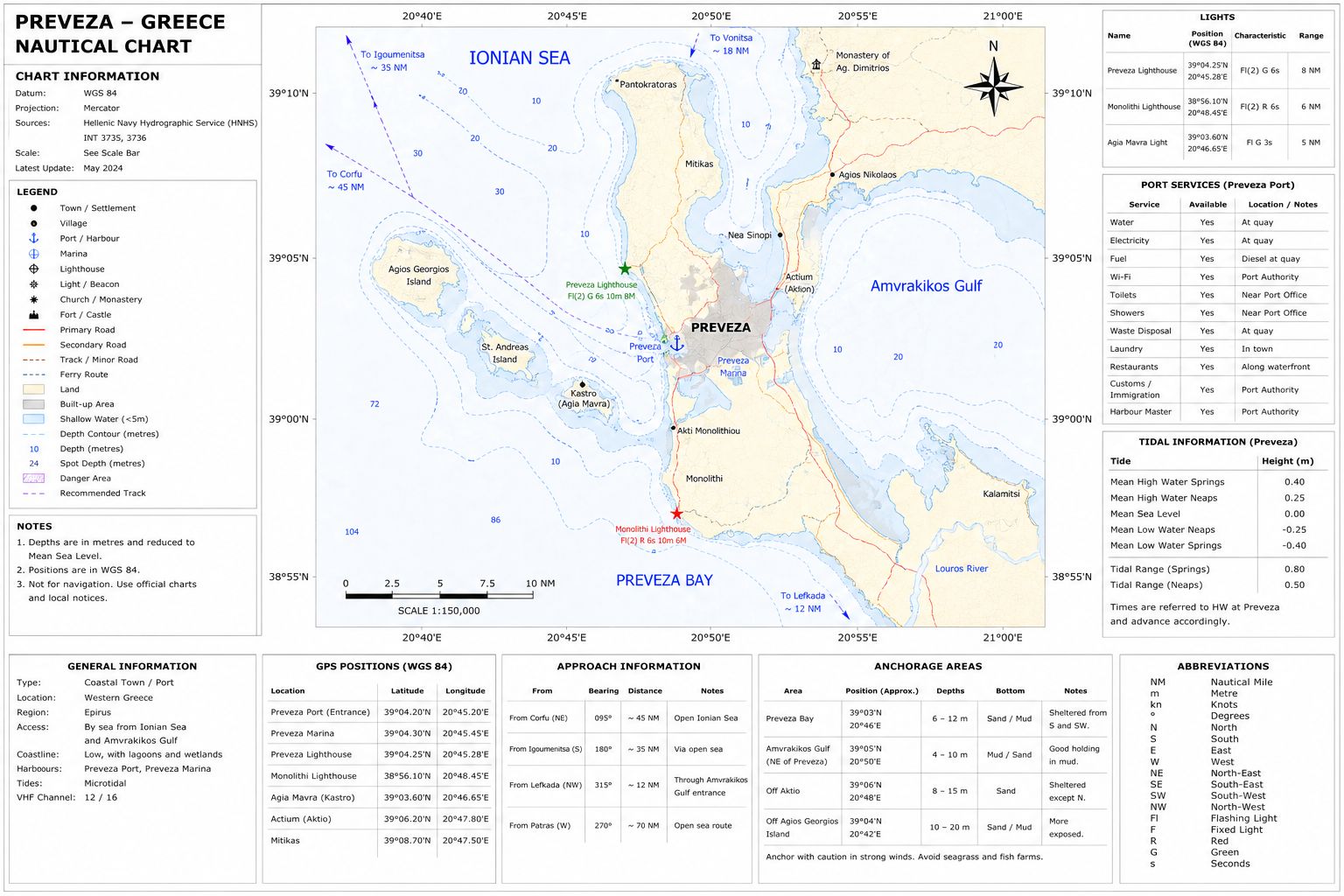
Chart Disclaimer. This chart is a schematic representation for illustrative purposes only and must not be used for navigation. Refer to official hydrographic charts for safe navigation. Be aware ENC charts may differ from official hydrographic charts. Both should be corrected and updated regularly.
Preveza Greece
Sailing Guide - Ocean Currents
and Tides
Currents at Preveza are concentrated at the entrance to the Ambracian Gulf, where water exchange occurs through a narrow, dredged channel linking the gulf to the Ionian Sea. Unlike much of the Greek coastline, this constriction generates a defined and persistent current. Flow direction is typically influenced by wind and pressure differences between the gulf and the open sea, resulting in alternating inflow and outflow rather than a true tidal stream. Current speeds in the channel commonly reach 1–2 knots and can exceed this under strong wind conditions, particularly when sustained northerly or southerly winds drive water level differences.
Outside the channel, current influence reduces rapidly. Within the Ambracian Gulf itself, water movement is weak and largely wind-driven, with minimal surface drift in settled conditions. Along the outer coast in the Ionian Sea, currents are generally negligible for navigation, with only localised set near headlands or in response to prevailing winds.
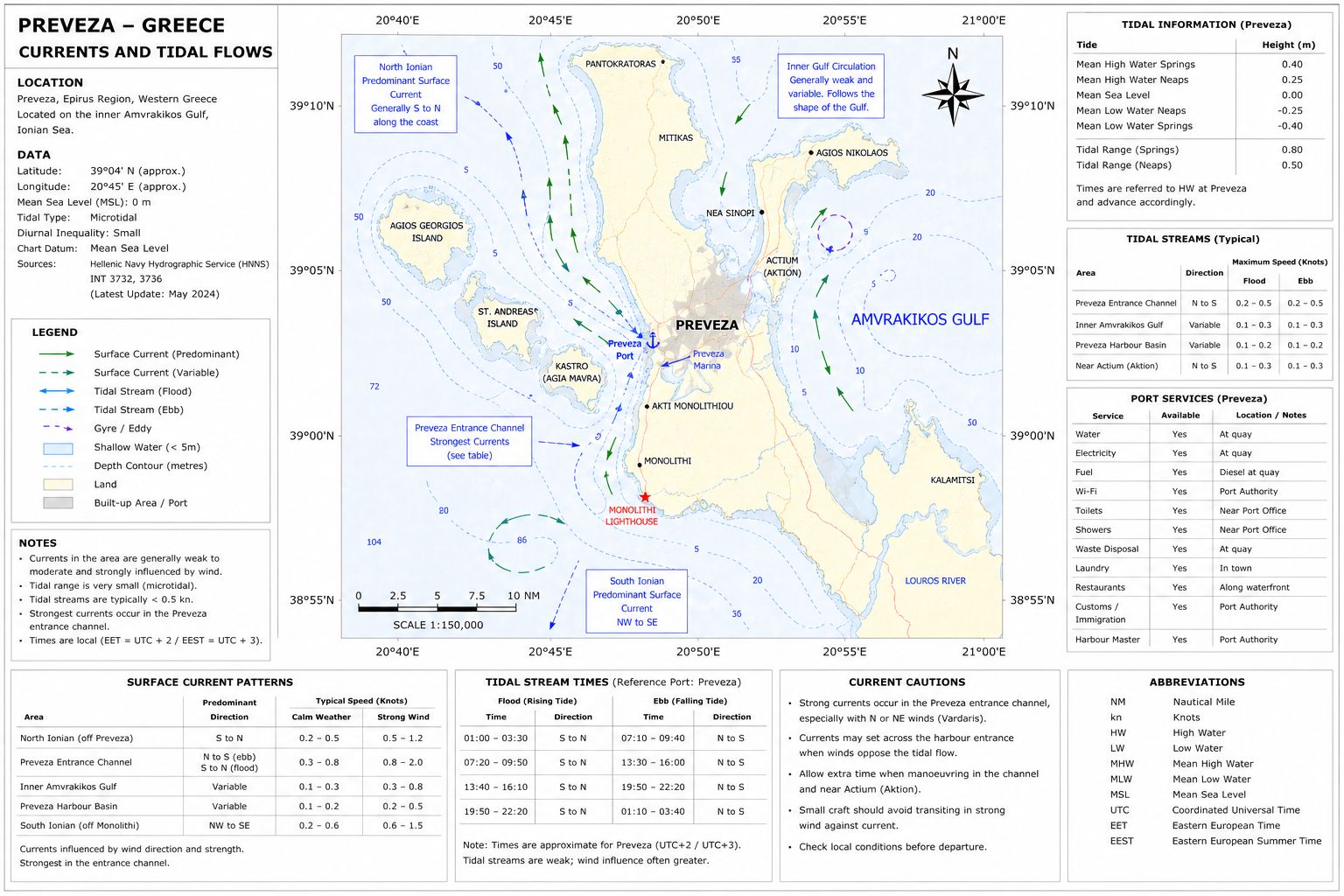
Tidal range is minimal, typically less than 0.3 m, and does not generate significant tidal streams. Water level variation is instead governed by wind setup and barometric pressure. Prolonged winds can raise or lower water levels within the gulf, increasing or decreasing current flow through the Preveza channel accordingly. For navigation, the channel current is the primary operational factor, particularly when transiting under engine or manoeuvring in confined water.
Preveza Greece
Sailing Guide - Weather
Weather at Preveza is influenced by its position on the Ionian coast and its proximity to the enclosed Ambracian Gulf, resulting in a more moderate and less severe regime than the Aegean. Summer conditions are typically stable, with light winds in the morning followed by a developing sea breeze from the northwest to west in the afternoon, commonly reaching 10–15 knots. These winds are generally predictable and ease again toward evening, with good visibility and minimal precipitation.
Outside summer, weather becomes more variable under the influence of passing low-pressure systems in the Ionian Sea. Southerly winds ahead of fronts can build to moderate or strong levels, bringing increased sea state, cloud cover, and rain. Following frontal passage, winds typically shift to the northwest or north with clearer conditions and improved visibility. Winter periods are characterised by more frequent systems, stronger winds from multiple directions, and higher rainfall. Within the Ambracian Gulf, conditions are more sheltered, with reduced sea state compared to the open coast, though wind-driven effects can still influence harbour and channel conditions at Preveza.
The Marine Electrical and Electronics Bible has a complete list of Greek VHF Radio Channel information and weather forecast times for Greece along with NAVTEX UK and Europe and NAVTEX Mediterranean for 490kHz and 518kHz.
Preveza Greece
Sailing Guide - Local Winds
Local wind patterns at Preveza are defined by a diurnal sea-breeze cycle influenced by the Ionian coast and the enclosed Ambracian Gulf. During summer, mornings are typically calm or light offshore, followed by the development of a northwest to west sea breeze from late morning. This wind builds through the afternoon to 10–15 knots, occasionally higher in the outer approaches, before easing toward sunset. The flow is generally aligned along the coastline and through the entrance channel, producing a consistent headwind when entering from seaward in the afternoon.
Within the Preveza channel and harbour approaches, wind can accelerate due to local funneling between the landmasses on either side of the entrance. Gusts are common, particularly when the sea breeze is well established, and can affect low-speed manoeuvring. Inside the Ambracian Gulf, the same pattern persists but with reduced strength and shorter fetch, resulting in flatter water conditions compared to the open coast.
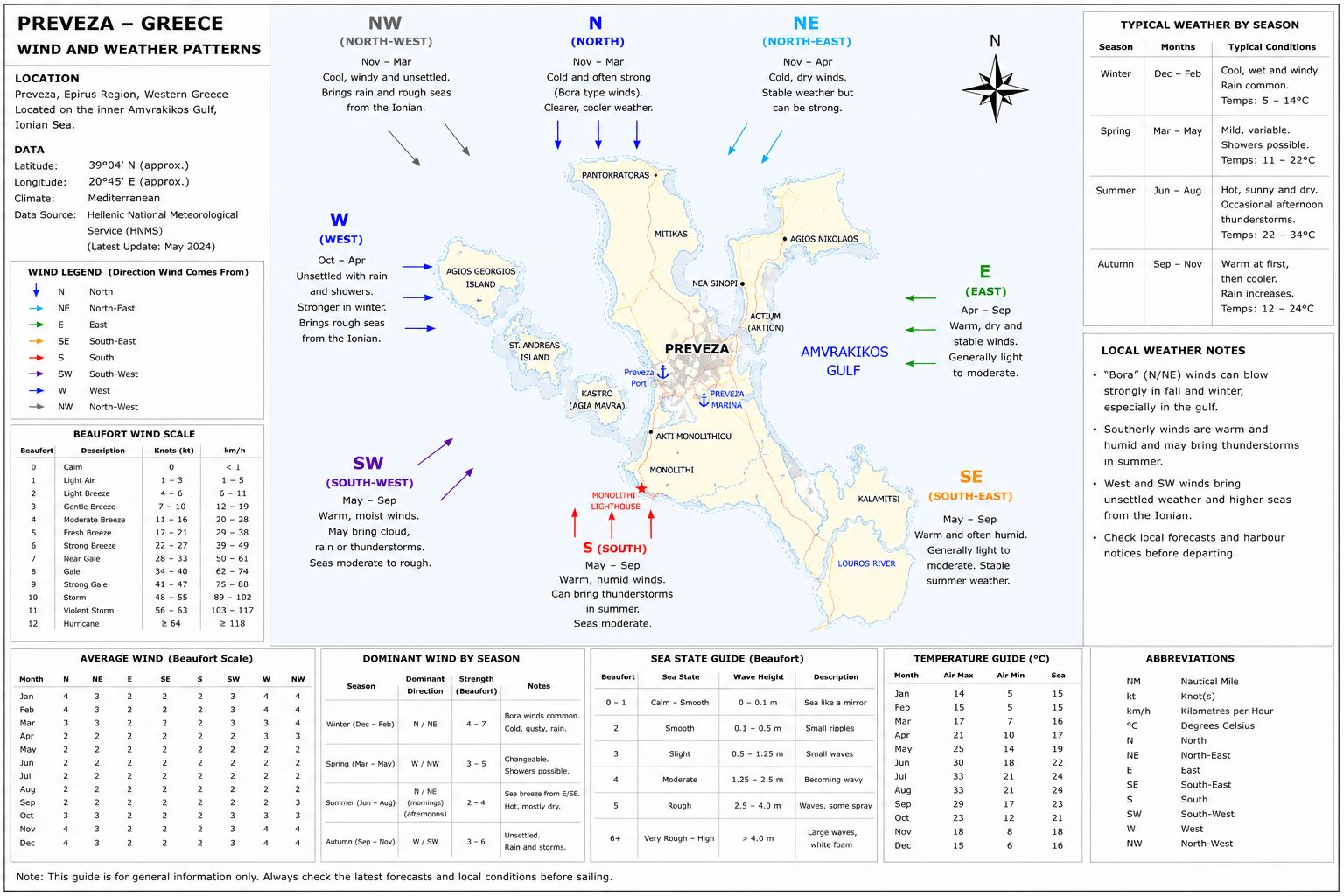
Outside the summer regime, wind patterns are governed by synoptic systems. Southerly winds ahead of low-pressure systems can build rapidly and produce unsettled conditions, while post-frontal northerly or northwesterly winds may follow with stronger gusts. Diurnal effects are less pronounced in these periods, and wind direction and strength can change quickly. For navigation, the predictable summer sea breeze is the dominant factor, particularly in planning transits of the Preveza entrance channel.
Preveza Greece
Sailing Guide - Approaches
Approach to Preveza is from the Ionian Sea toward the narrow entrance channel between Preveza and Aktio. Offshore depths reduce rapidly toward the coastal shelf, with shallow water extending either side of the dredged approach.
The approach track must remain within the marked dredged channel due to extensive shoaling on both sides. Depths within the channel are maintained but reduce sharply outside the marks. Entry alignment is critical, particularly under crosswind or current conditions.
The Aktio–Preveza immersed tunnel lies beneath the channel. Depth over the tunnel is controlled and forms the limiting depth within the entrance. Deep-draught vessels must confirm clearance prior to transit.
Current through the entrance commonly reaches 1 to 2 knots and may run across the track under certain wind conditions. Sea state at the entrance can become short and steep when opposing current and wind occur.
Traffic includes yachts, fishing vessels, and commercial traffic using the gulf. The Lefkada Channel lies to the south and introduces additional vessel movement in the area.
Preveza Greece
Sailing Guide - Navigation
Navigation through the entrance channel is confined to a narrow dredged track with lateral marks defining safe water. Depth reduces rapidly outside the channel and grounding risk is immediate if marks are not followed. Speed control is required due to current and confined width. Cross-set may occur depending on wind direction. Maintaining alignment through the channel is required from initial entry to full transit into the gulf.
Inside the harbour area, depth alongside at the town quay is typically between 2.5 m and 4 m depending on position. Mooring is stern-to using own anchor or laid lines where present. Traffic density is moderate with continuous movement of local vessels and yachts transiting to and from the gulf and Lefkada Channel. Manoeuvring is influenced by current near the entrance and wind along the quay.
Preveza Greece
Sailing Guide - Chart Accuracy
Hydrographic charts accurately depict the entrance channel, dredged depths, and harbour layout. Electronic charts correspond closely to published data. The primary risk is deviation from the dredged channel rather than chart inaccuracy. Shoaling areas outside the channel are well defined but require strict adherence to marks. Depth verification by echo sounder is required during transit.
Preveza Greece
Sailing Guide - Anchorages
Anchorage options at Preveza are varied and generally reliable, benefiting from the shelter provided by the Ambracian Gulf and the surrounding coastline. The primary anchorage areas are located either just outside the entrance channel or within the gulf itself, where conditions are significantly more protected than on the open Ionian coast.
Outside the channel, anchoring is possible off the coast near Preveza, but this is exposed to prevailing winds and sea state, particularly under westerly or southerly conditions. Depths are moderate over sand and mud, with generally good holding, but the area is influenced by traffic entering and exiting the channel and is not suitable for extended stays.
Inside the Ambracian Gulf, anchorage options improve significantly. Immediately beyond the channel, there are areas of good holding in mud in depths typically ranging from 4–10 m, with ample swinging room and reduced sea state. Further into the gulf, multiple sheltered anchorages are available along both shores, offering protection from most wind directions. Holding is generally reliable over mud substrates, and water is relatively flat due to the enclosed nature of the gulf.
In the vicinity of Preveza town, anchoring off the waterfront is possible in designated areas clear of moorings and harbour traffic. Depths are suitable for cruising yachts, and holding is good, though attention must be paid to vessel movement, local moorings, and harbour activity. Wind-driven effects are reduced compared to the outer coast, but gusts can still occur, particularly in the afternoon sea breeze.
Preveza Greece
Sailing Guide - Entry Formalities
Preveza is an official port of entry. Clearance is conducted with Port Police and relevant authorities. Documentation includes vessel registration, passports, crew list, and insurance. TEPAI cruising tax applies. AIS transmission is required where applicable. Drone use is restricted near port and airport areas. Satellite systems including Starlink are subject to national regulation.
Preveza Greece
Sailing Guide - Marina Facilities
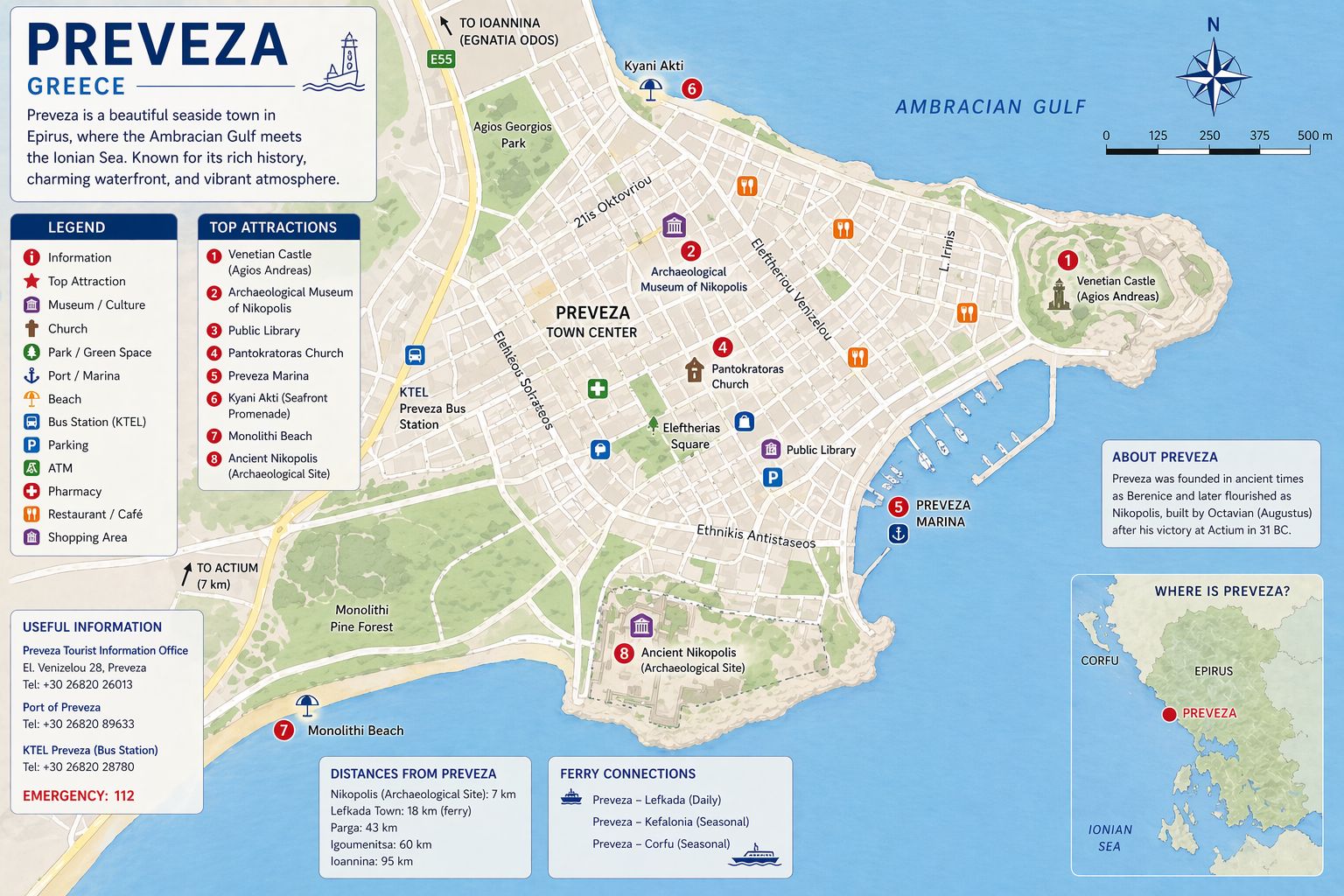
Marina and berthing facilities at Preveza are extensive by regional standards, combining organised marina berthing with a concentration of large-scale boatyards and technical service facilities on both sides of the entrance to the Ambracian Gulf. The area functions as a primary base for cruising yachts in the Ionian, supporting short stays, lay-up, and full refit operations.
The principal in-town facility is Preveza Marina, located adjacent to the waterfront. This provides managed berthing on pontoons and along quays, typically stern-to or alongside depending on allocation. Depths are suitable for cruising yachts, and the marina offers shore power, potable water, and controlled access. Its position allows direct access to provisioning, transport, and local services, making it the primary option for visiting yachts requiring short-term berthing or crew change logistics.
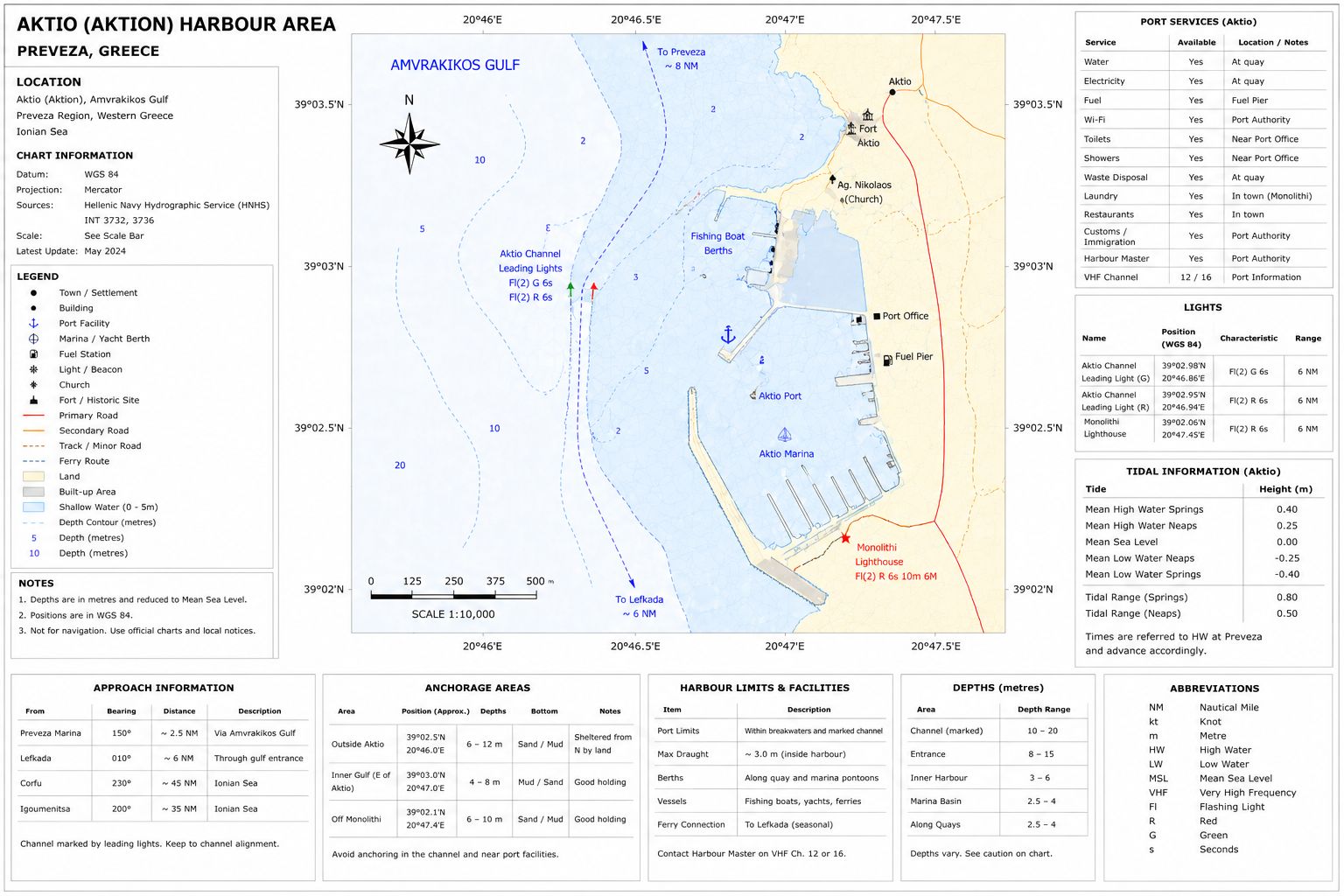
Across the channel at Aktio, Cleopatra Marina and adjacent facilities form a large marine service complex. These include extensive hardstand areas, travel lift capability, and full repair infrastructure. Berthing afloat is available, but the focus is on haul-out, maintenance, and long-term storage. Nearby yards such as Aktio Marina and Ionion Marine A.E. expand this capability, offering engineering, rigging, and hull services at a scale uncommon in most Greek cruising areas.
Additional support is available at smaller facilities such as Margarona Boatyard, which provides haul-out and repair closer to the town side. Along the Preveza waterfront, limited quay berthing is also possible, typically stern-to using the anchor, though space is constrained and influenced by local traffic and harbour activity.
Preveza Greece
Sailing Guide - Provisioning
Supermarkets. Supermarket provisioning in Preveza is located within the town area adjacent to the quay and along the main road network leading north toward the marina and yard zone. AB Vassilopoulos operates within walking distance of the waterfront. Sklavenitis and Lidl operate within short road distance of harbour berthing and are accessed by foot, bicycle, or vehicle depending on berth location. Additional local supermarkets and minimarkets operate within the town grid supplying day-to-day provisioning.
Markets. Produce is supplied through greengrocers and local vendors within Preveza, with agricultural supply sourced from the Epirus region. Available produce includes vegetables, fruit, olive oil, legumes, herbs, and citrus. Supply is continuous through mainland distribution as well as regional production.
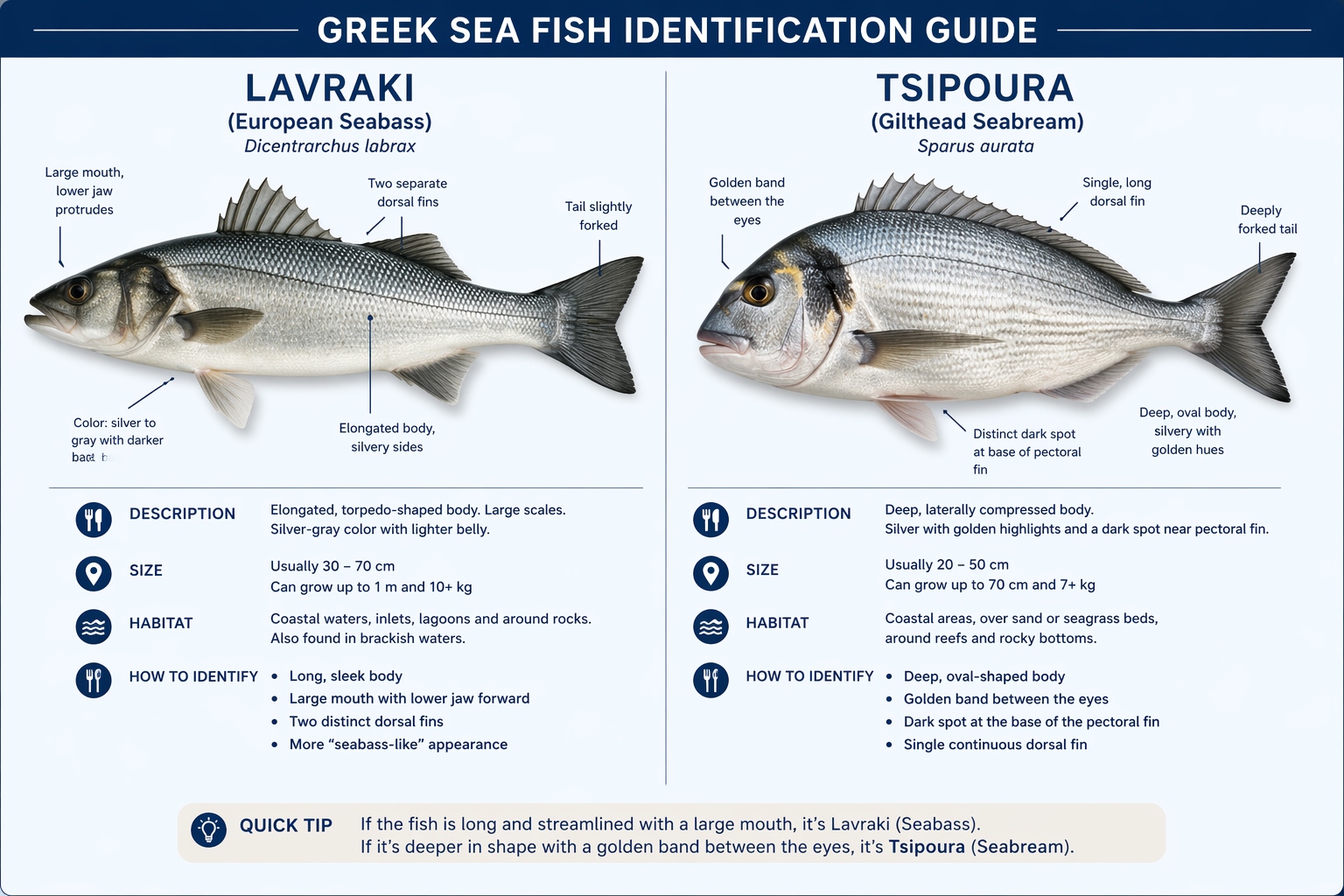
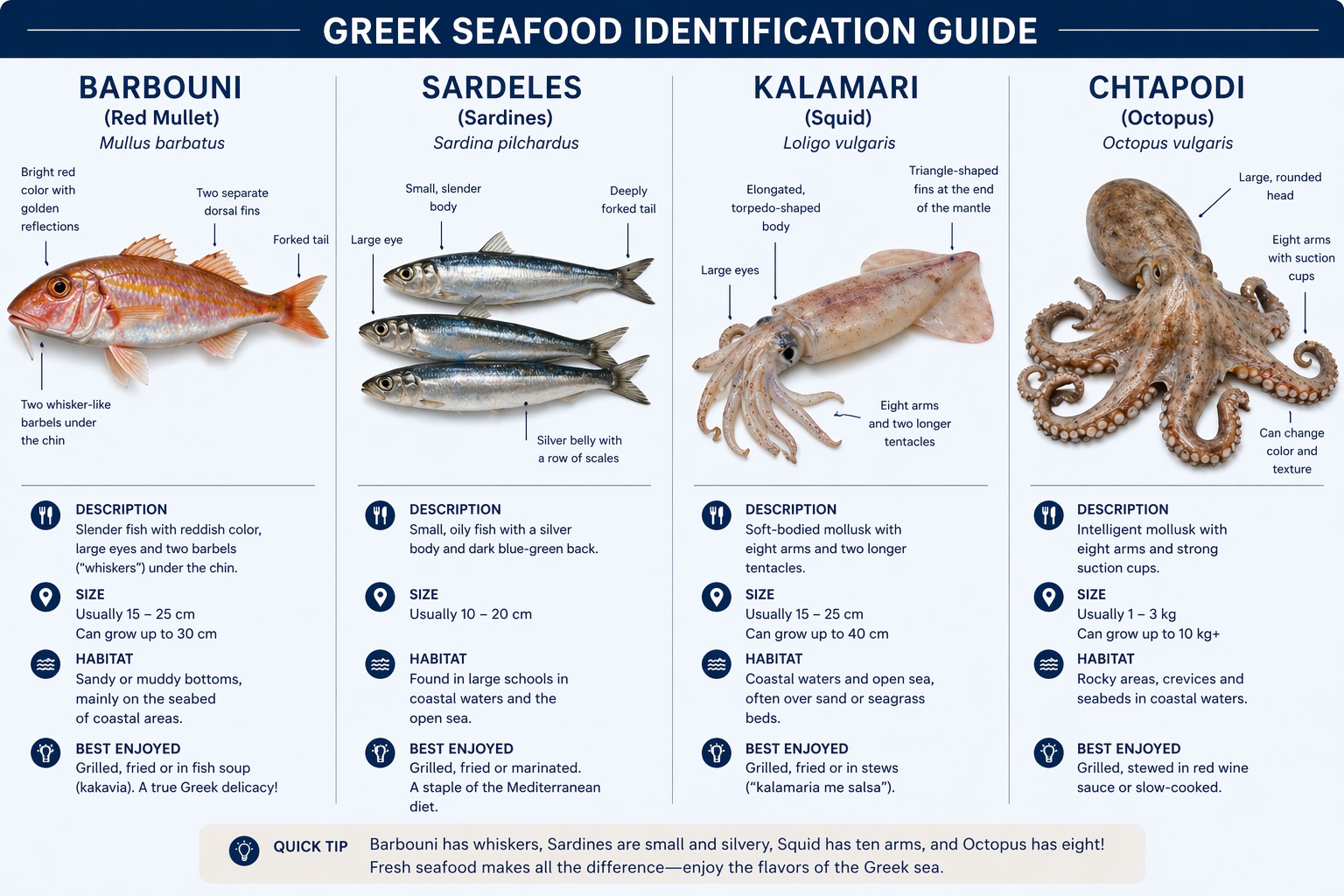
Fish Markets. Fish supply is available through fishmongers and direct sale from fishing vessels operating within the harbour and Ambracian Gulf. Species include tsipoura (gilthead bream), lavraki (sea bass), sardines, shrimp, and cephalopods including squid and octopus. Availability varies with daily catch and weather conditions.
Preveza Greece
Sailing Guide - Local Cuisine
Local produce in Preveza and the wider Epirus region includes olive oil, citrus, peppers, tomatoes, aubergines, legumes, and dairy from sheep and goat milk. Seafood is sourced from the Ambracian Gulf and Ionian Sea, with species including tsipoura (gilthead bream), lavraki (sea bass), sardines, and shrimp. Signature dishes include bourdeto, a fish dish cooked in a pepper-based sauce; savoro, fried fish preserved in vinegar, garlic, and rosemary; and psari psito, whole grilled fish. Seafood preparations also include gavros tiganitos, fried anchovies, and chtapodi psito, grilled octopus. Meat dishes include arnaki psito, roast lamb, and kontosouvli, slow-roasted pork. Vegetable dishes include briam, baked courgette, aubergine, potato, and tomato, and gemista, vegetables stuffed with rice and herbs. Food reflects regional agricultural production and gulf-based fishing supply.
Preveza Greece
Sailing Guide - Local Beverages
Beer, wine, and spirits across the Greek islands are locally produced and widely available through tavernas, small bars, and provisioning outlets. Beer is predominantly lager, with domestic brands including Mythos, Alfa, Fix, and Vergina alongside imported products; and over 100 microbreweries operate on several islands with limited distribution. Wine is region-specific, with white varieties dominant in the islands, including Assyrtiko, Moschofilero, and Roditis, alongside local table wines served in bulk; retsina remains in circulation as a resin-flavoured wine. Distilled products include ouzo (anise-based), tsipouro (grape marc distillate), raki or tsikoudia (Crete), souma (fig or grape distillate in eastern Aegean islands), and kitron (citrus liqueur from Naxos), with alcohol strength typically in the 37–45% range and higher for unregulated local distillations.

Preveza Greece
Sailing Guide - Diesel Fuel
Supplies
Diesel supply in Preveza is available both alongside within marina and yard facilities and from roadside fuel stations in the town area with delivery to the quay. Within the yard and marina zone north of the entrance channel, facilities including Preveza Marine and Cleopatra Marina provide direct fuel supply at dedicated fuel berths or arranged delivery within the facility.
At the Preveza town quay, diesel is obtained from nearby roadside fuel stations and transferred by jerry can or delivered by tanker truck to the waterfront by arrangement with local suppliers. Fuel stations operate within short road distance of the harbour and are accessible on foot for small quantities or by vehicle for bulk transfer.
Supply methods therefore include marina fuel berth delivery, road tanker delivery to quay, and manual jerry can transfer depending on berth location. No fixed high-flow fuel installation exists along the full length of the town quay. Fuel supplied is standard diesel and onboard filtration is required prior to use.
Preveza Greece
Sailing Guide - Water Supplies
Potable water in Preveza is supplied from the municipal network and is available along sections of the town quay and throughout the marina and yard facilities within the Ambracian Gulf. At quay berths in Preveza, water access is provided at fixed connection points where installed, but supply is not continuous along the full waterfront and depends on berth position. Within marina and yard facilities including Preveza Marine and Cleopatra Marina, water is distributed through organised supply points with more consistent pressure and availability. Quay supply may require vessel-provided hoses and fittings, as connections are not standardised. Water pressure varies with demand and may reduce during peak summer periods at town quay locations. Supply is treated municipal water suitable for tank filling, with onboard filtration used as required.
Mechanical and Electrical Repairs
Resource
If you are headed somewhere remote consider the need to expand your knowledge base or have an information resource on board. Why not get a copy of my book The Marine and Electrical and Electronics Bible 4th Edition. By and for yachties, with everything from batteries and charging, solar and wind, diesel engines and marine electronics and so much more. Your complete systems guide. 650 pages of practical advice. In Australia and New Zealand order a copy through Boat Books. UK and European boats can buy the UK Edition Here. US and Canadian boats can get the US Edition Order Here. Marine systems are my profession so let me help you. By a liveaboard boat owner for other boat owners.



Preveza Greece
Sailing Guide - Marine Services
Marine services in Preveza are concentrated in the yard and marina zone immediately north of the entrance channel on both the Preveza and Aktio sides and provide full service capability for cruising yachts. Facilities include Preveza Marine, Cleopatra Marina, Aktio Marina, and Ionion Marine, all operating large travel lifts, hardstand areas, and year-round yard support.
Service capability includes diesel engine maintenance and overhaul, electrical systems, marine electronics installation and diagnostics, plumbing, refrigeration, and general mechanical repair. Authorised support is available locally for Yanmar and Volvo Penta installations. Marine electronics service is available for Raymarine, B&G, and Simrad systems including installation, calibration, and fault diagnosis.
Haul-out capacity includes travel lifts typically in the 50–300 tonne range depending on facility, supporting antifouling, hull repair, osmosis treatment, rigging work, shaft and propeller service, and structural repair. Parts supply is continuous through local distributors and chandlery outlets within the Preveza–Aktio yard cluster.
Preveza Greece
Sailing Guide - Local Etiquette
Interaction is direct and begins with a greeting before transactions. Dress ashore is standard day wear. Meal times are later with evening dining after 20:00. Cash is commonly used in smaller vendors while cards are accepted in larger outlets.
Preveza Greece
Sailing Guide - Summary
Preveza is a controlled entrance port to the Ambracian Gulf defined by a narrow dredged channel and current flow. The location provides access to extensive sheltered waters and full marina and yard infrastructure within the gulf. Navigation is constrained by channel alignment, current, and shallow surrounding areas. The port functions as a primary operational base consistent with a Preveza Greece Sailing Guide and all you need to know.