Port Clinton Sailing Guide for Yachts
The Port Clinton sailing guide. Port Clinton is the most secure all‑weather anchorage in the Shoalwater Bay region and provides deep, protected water, reliable holding and exceptional shelter from all directions. The entrance is wide and straightforward, the depths are generous and the inlet extends several miles inland, forming a series of calm, mangrove‑lined basins that remain settled even in strong south‑easterlies. For skippers transiting the Capricorn Coast, Port Clinton is the primary refuge between the Keppel Islands and Pearl Bay, offering a level of protection unmatched by any other anchorage in the region.
Although Port Clinton is extremely sheltered, the skipper must remain alert to tidal flow, shallow margins and the remoteness of the area. The inlet is part of the Shoalwater Bay Training Area, and access may be restricted during Defence exercises. The shoreline is dominated by mangroves, and the inlet has no facilities, services or landing infrastructure. The anchorage is secure, but the skipper must be fully self‑sufficient and prepared for isolation. Port Clinton is not a difficult anchorage, but it rewards a deliberate approach and an understanding of tidal behaviour.
Port Clinton Sailing Guide - Location
Port Clinton lies on the southern edge of the Shoalwater Bay region, north of Cape Manifold and south of Pearl Bay. The entrance is easily identified by the low, sandy coastline and the distinctive shape of the headlands flanking the inlet. The inlet extends several miles inland, forming a long, narrow waterway with multiple anchorage options. Approximate position: 22°27.0’S 150°44.0’E
Port Clinton Sailing Guide - Approach
The approach to Port Clinton is clear, with 12–20 m of water outside the entrance and a wide, unobstructed line toward the inlet. The skipper can shape a direct approach from the Keppel Islands, Cape Manifold or Pearl Bay, with depths remaining consistent at 10–15 m until nearing the entrance. In strong south‑easterlies, the sea state outside the inlet can be steep, but the entrance itself remains navigable. The shoreline shelves gradually, and the skipper must avoid edging too close to the beaches where depths decrease quickly.
Port Clinton Sailing Guide - Entrance and
Inlet
The entrance to Port Clinton is wide and forgiving, with 6–10 m of water across the barless opening. Once inside, the inlet deepens to 8–15 m, with calm water and minimal swell. The tidal stream is moderate, commonly 1–2 knots, and increases near the bends in the inlet. The shoreline is dominated by mangroves, and the seabed is mostly mud and sand with excellent holding. The inlet remains calm in all wind directions, and the skipper can anchor almost anywhere along the central channel where depths remain consistent.
Port Clinton Sailing Guide - Anchorages
Port Clinton offers multiple anchorage zones, each with reliable shelter and generous depths. The outer anchorage near the entrance provides 6–10 m of depth over sand and mud, with good holding and immediate shelter from swell. This area is suitable for short stops or when arriving late in the day.
Further inside, the central basin offers 8–12 m of depth with excellent protection from all wind directions. The holding is strong, and the inlet remains calm even in gale‑force south‑easterlies. This is the preferred anchorage for most skippers.
The upper reaches of the inlet provide 6–10 m of depth and complete protection, but the channel narrows and the skipper must maintain situational awareness. Tidal flow is more noticeable in this area, and the vessel will lie mostly to the tide rather than the wind.
Port Clinton
Sailing Guide - Wind, Weather and Tide
Port Clinton is one of the most sheltered anchorages on the Capricorn Coast. The inlet remains calm in all wind directions, and the surrounding mangroves eliminate fetch entirely. Tidal flow is moderate, and the vessel will lie to the tide rather than the breeze in most conditions. The inlet is unaffected by swell, and the sea state remains flat even when the sea outside is steep. The primary weather consideration is the remoteness of the area and the need for self‑sufficiency.
Port Clinton
Sailing Guide - Navigation Hazards
The primary hazards in Port Clinton are the shallow margins near the mangroves, the narrowing of the channel in the upper reaches and the potential for Defence closures. The inlet is remote, and the skipper must be prepared for isolation. There are no underwater obstructions, and navigation is straightforward in good visibility. The inlet is tidal, and the skipper must allow for swing and maintain adequate distance from the shoreline.
Shore Access and
Local Conditions
Shore access is limited and generally unnecessary. The harbour is surrounded by mangroves and mudflats, and the presence of crocodiles makes landing inadvisable. The area is remote, uninhabited, and part of a defence training zone, and crews should avoid going ashore unless absolutely required. The landscape is pristine, and the sense of isolation is profound.
Mechanical
and Electrical Repairs Resource
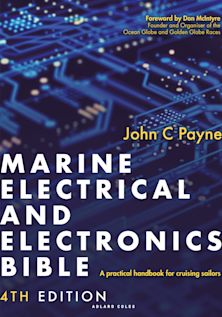
If you are headed somewhere remote consider the need to expand your knowledge base or have an information resource on board. Why not get a copy of my book The Marine and Electrical and Electronics Bible 4th Edition. By and for yachties, with everything from batteries and charging, solar and wind, diesel engines and marine electronics and so much more. Your complete systems guide. 650 pages of practical advice. In Australia and New Zealand order a copy through Boat Books. UK and European boats can buy the UK Edition Here. US and Canadian boats can get the US Edition Order Here. Marine systems are my profession so let me help you. By a liveaboard boat owner for other boat owners

Provisioning and
Supplies
There is no provisioning available at Port Clinton. Yachts must arrive fully stocked with food, water, fuel, and spare parts. The nearest provisioning centres are Port Alma to the south and Rosslyn Bay to the north, both of which offer full resupply options. Port Clinton should be treated as a transit anchorage only, not a place to obtain supplies.
Fuel, Water and
Marine Services
There are no fuel docks, water facilities, or marine services at Port Clinton. Any fuel or water must be carried aboard from previous ports. For repairs, provisioning, or haul‑out, yachts must continue to larger centres such as Gladstone, Rosslyn Bay, or Bundaberg. Port Clinton is a place for shelter, not services.
Port Clinton
Sailing Guide Summary
Port Clinton is the most secure all‑weather anchorage in the Shoalwater Bay region, offering deep, protected water, excellent holding and complete shelter from all wind directions. The approach is straightforward, the entrance is wide and the inlet provides multiple anchorage options. For skippers transiting the Capricorn Coast, Port Clinton is an essential refuge and a reliable stop in all conditions. The Port Clinton sailing guide is here to help.