Palma Mallorca Port Sailing Guide
Palma Mallorca Port Sailing Guide. Palma is the main harbour, marina and technical service centre for Mallorca and the wider Balearic Islands. It lies on the north side of Bahía de Palma, with the city and old quarter immediately behind the waterfront, and it is the busiest yacht base on the island for cruising yachts, superyachts, charter fleets, racing yachts and passage-making vessels. The Port Authority of the Balearic Islands describes Palma as the largest of its five managed ports and note that the port is divided into commercial docks, Poniente quays, marina docks and the West Breakwater.
For cruising yacht skippers, Palma is not just a marina stop. It is the main place in Mallorca for crew changes, repairs, haul-out, provisioning, fuel, water, chandlery, rigging, engineering, electronics and onward passage planning. It also has heavy commercial traffic, that includes ferries, cruise ships, commercial vessels, harbour launches, racing fleets, marina movements, local motorboats and anchored yachts all operate in or near the bay. Arrivals should be made with clear harbour instructions, marina booking confirmation where possible, and allowance for traffic density in the approaches.
Palma Mallorca Port Sailing Guide - History
Palma’s harbour has been used as a western Mediterranean port since antiquity because of the protection offered by the broad bay and the city’s position on the south-west side of Mallorca. Roman, Moorish, Catalan and Spanish control shaped the harbour’s commercial and naval role, while the old city developed directly behind the waterfront. The modern port has grown into a mixed-use harbour handling ferries, cruise ships, commercial traffic, fishing, yacht marinas, racing clubs and repair activity. For a cruising yacht, the historical function remains practical and Palma is still the main protected harbour and maritime service centre on Mallorca.
Palma Mallorca Port Sailing Guide - Currents and Tidal Flow
Tidal range in Palma is small, typically around 0.2–0.4 m, and has little effect on normal yacht navigation. Tidal streams are weak compared with Atlantic harbours, so the main water movement in Palma Bay is wind-driven, pressure-driven or caused by local harbour circulation, ferry wash and sea-breeze effects. A skipper should not plan entry around tide height except for normal draught awareness alongside, but should plan around wind, swell, harbour traffic and visibility.
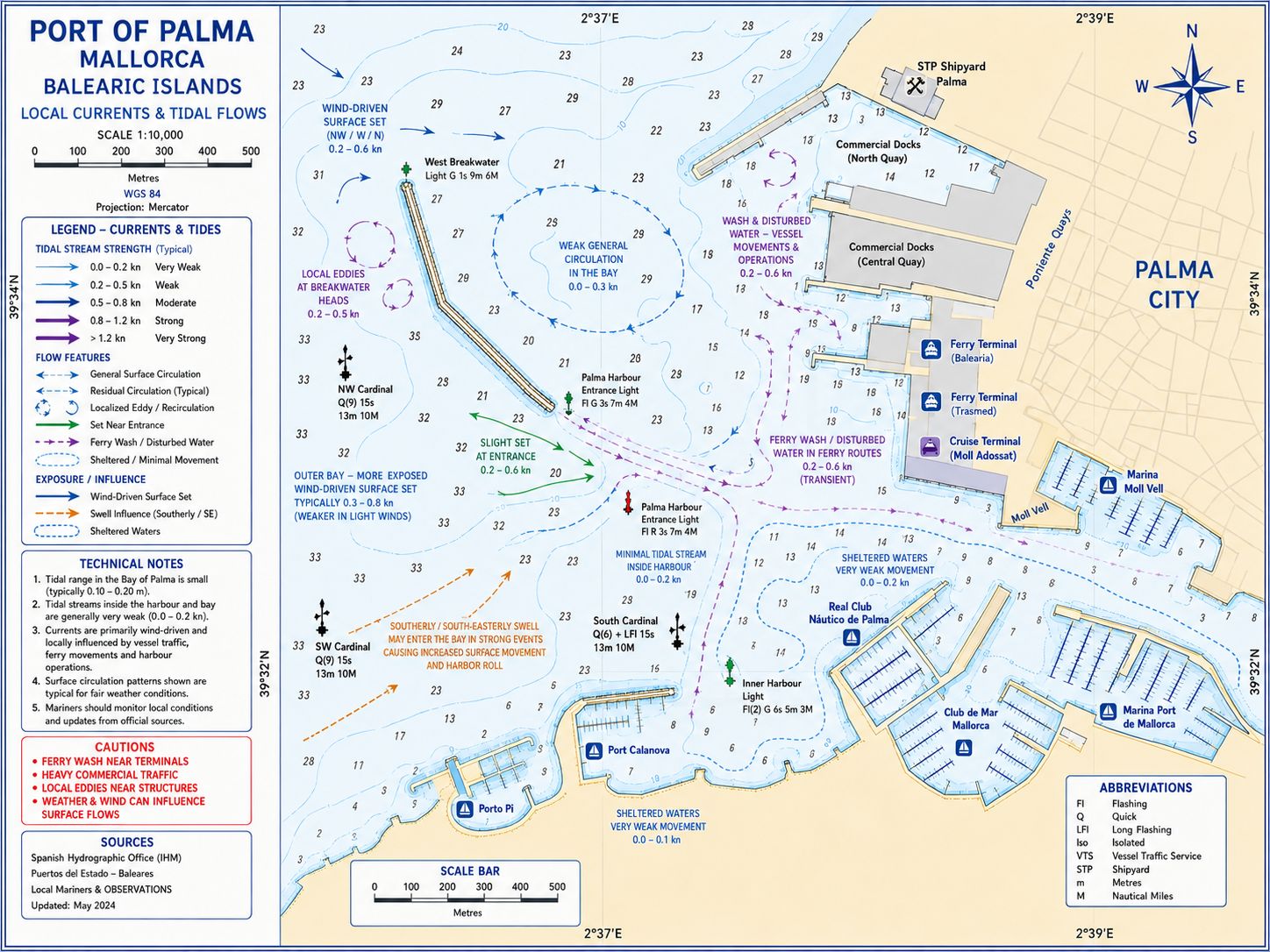
In settled weather, the bay is straightforward, with weak surface drift and local afternoon chop. In southerly or south-easterly weather, swell can enter the bay and make exposed anchorages and marina approaches uncomfortable. Westerly and south-westerly wind can create chop across the bay, while easterly weather may produce cross-sea conditions depending on duration and fetch. Harbour wash is a practical factor near commercial berths, ferry routes and marina entrances.
Palma Mallorca Port Sailing Guide - Weather
Palma has a Mediterranean climate with hot dry summers, mild winters and a long sailing season. Summer weather is generally settled, but the harbour and bay become busy with charter traffic, local yachts, ferries and visiting cruising boats. Afternoon sea breezes are common, and the bay can develop short chop after a calm morning.
The main weather risks for yachts are southerly and south-easterly swell entering the bay, strong local sea-breeze development, thunderstorms in late summer and autumn, and stronger regional systems outside the settled summer pattern. Palma gives good marina shelter, but the open bay anchorages are not all-weather. A yacht intending to remain at anchor should check both wind direction and swell direction, not only the forecast wind speed.
The Marine Electrical and Electronics Bible has a complete list of Spanish VHF Radio Channel information and weather forecast times along with NAVTEX UK and Europe and NAVTEX Mediterranean for 490kHz and 518kHz.
Palma Mallorca Port Sailing Guide - Local
Winds
The regular summer pattern is often light morning wind followed by a sea breeze building into the afternoon. In Palma Bay this commonly produces a south-west to south component, although local effects vary with gradient wind, heating and the shape of the bay. Afternoon breeze can be stronger near headlands and across the open water between the west and east sides of the bay.
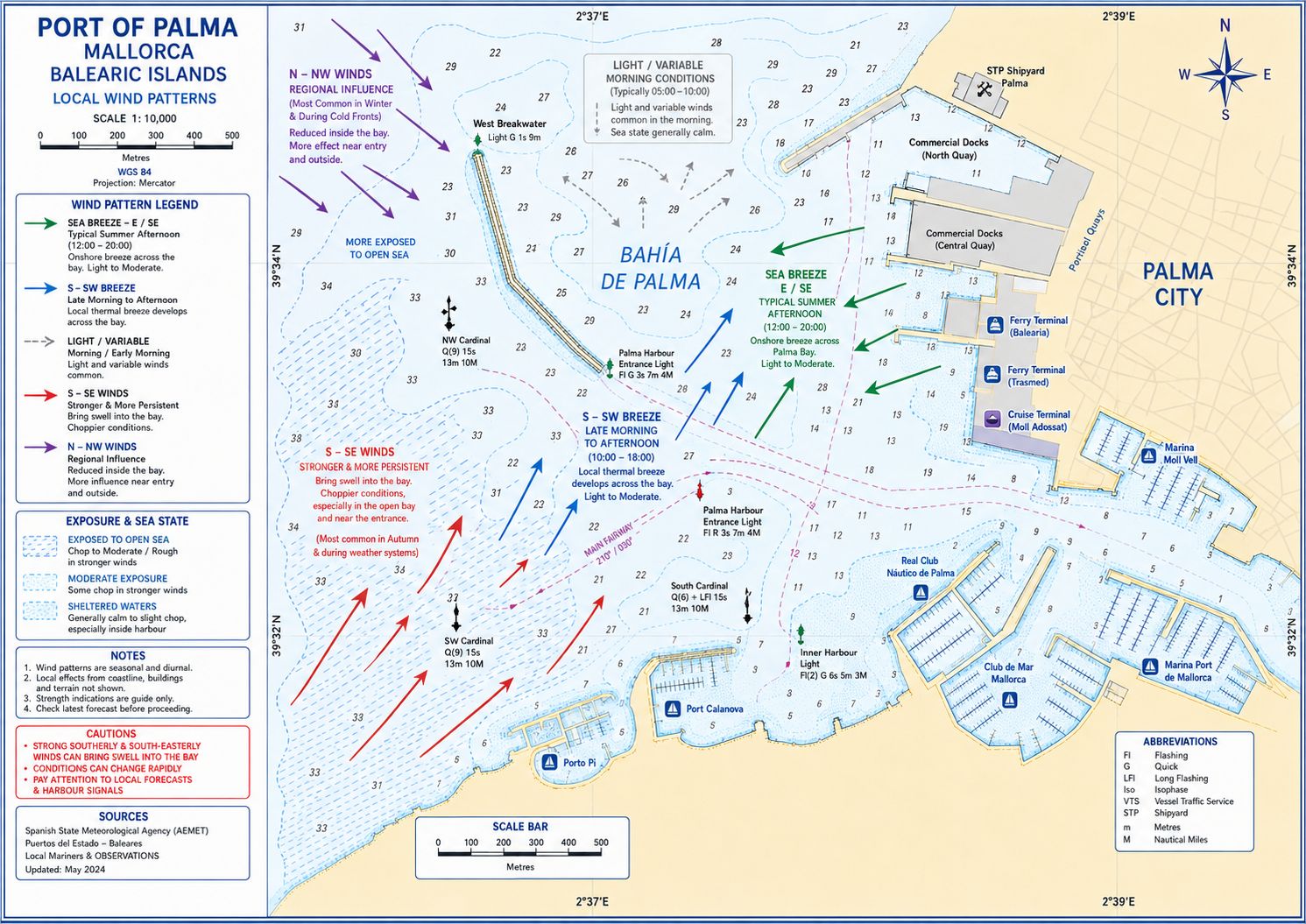
North and north-west systems affecting the exposed north and west of Mallorca are usually reduced in the inner bay, but strong regional weather can still produce gusts, reflected chop and uncomfortable harbour approaches. Easterly and south-easterly weather is more relevant to Palma Bay because it can send swell or disturbed sea into the southern side of the island. Thunderstorm outflows can produce short-lived but sharp wind shifts.
Palma Mallorca Port Sailing Guide - Approaches
Approaches to Palma are made through Bahía de Palma, a large open bay on the south-west coast of Mallorca. From seaward, the bay is broad and generally deep, with the city, cathedral and marina waterfront visible from offshore in clear conditions. The approach is usually straightforward in settled weather, but traffic density is the main operational issue. Ferries, cruise ships, commercial vessels, high-speed craft, marina traffic and local boats all use the area. It is advisable to have AIS operating and also use radar.
From the west, yachts passing around the south-west coast should allow for traffic from Andratx, Puerto Portals and Palma. From the east or south-east, vessels approach from the direction of Cabo Blanco, Colònia de Sant Jordi or Cabrera. From Ibiza or mainland Spain, the final approach normally leads into the bay from the south-west or south. At night, entry should be made using official lights, harbour instructions and current charts, do not rely on visual city lights, as the waterfront is heavily illuminated and can obscure smaller navigation references.
Palma Mallorca Port Sailing Guide - Navigation
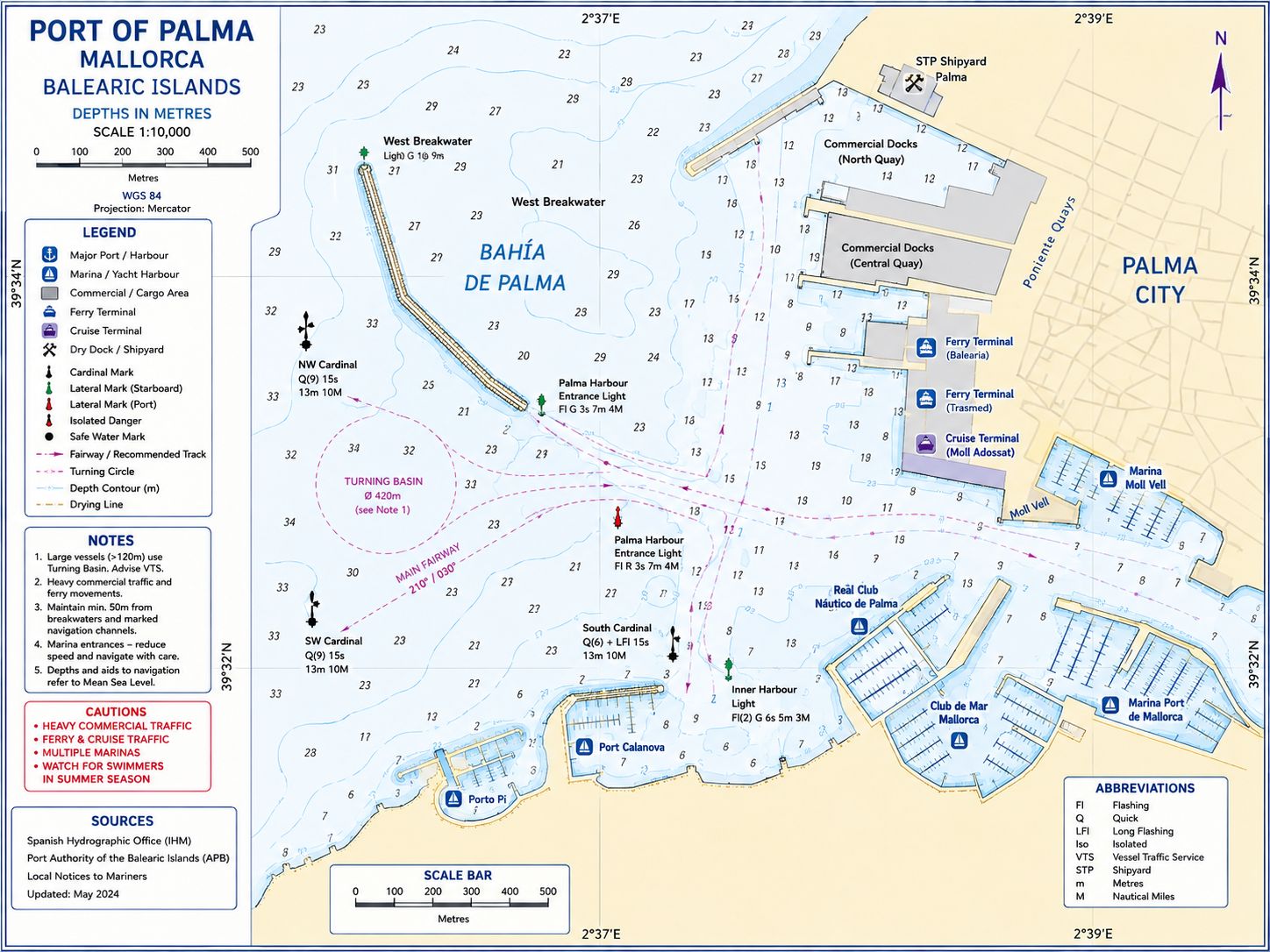
Navigation into Palma requires attention to harbour zoning, commercial traffic and the separate marina basins along the waterfront. The outer approaches through Bahía de Palma are generally deep, with much of the central bay carrying depths well over 20 m and deep water extending close to the main approach routes. Depths shoal gradually toward the inner bay and marina fronts, with common yacht-operating depths of about 5–12 m outside the marina entrances and harbour margins, depending on position. The commercial port, cruise berths and ferry areas have maintained deep-water channels and basins for large vessels, but yachts must keep clear of these manoeuvring areas unless instructed.
Yachts should confirm their allocated marina or berth before closing the inner port. The main yacht facilities are spread along the west and north sides of the harbour, and the correct entrance matters. Marina entrance and fairway depths vary by facility, but visiting yachts will generally be working in depths of about 3–8 m inside marina approaches and berth basins, with deeper water near the commercial harbour and shallower water close to quay edges, small-craft pontoons and older waterfront structures. In strong wind, allow for crosswind, wash and traffic close to berth approaches. At night, use the official harbour lights and marina instructions rather than city lights, which can obscure smaller navigation references.
Palma Mallorca Port Sailing Guide - Chart
Accuracy
Navigation should be based on current official hydrographic charts, updated electronic charts, local notices to mariners, harbour instructions and the your own depth sounder. Electronic charting is useful for route planning and position awareness, but it should not be treated as exact at harbour, quay, reef, marina or anchorage scale. Chart plotters and app charts may not show recent marina changes, dredging, construction works, temporary restrictions, mooring fields, buoy changes, shallow patches or exact seabed type. In anchorages, charts may show general depths but not the precise edge of sand, rock, weed or protected seagrass. Use visual pilotage in good light where possible, confirm depths continuously, and check local harbour or marina instructions before entering confined water. In the Balearic Islands, charted depths should also be cross-checked with Posidonia anchoring restrictions, because electronic charts may not show the exact boundary between legal sand anchoring and protected seagrass.
Palma Mallorca Port Sailing Guide - Entry
Formalities
Palma is one of the main practical entry ports for Mallorca and the Balearic Islands. The Port Authority of the Balearic Islands manages Palma as one of its five ports, making it a primary formal harbour for yachts entering Mallorca. Spain and the Balearic Islands are within the Schengen Area and the EU customs territory, so yachts arriving from another Spanish or Schengen/EU port normally do not complete full border clearance again. Yachts arriving from a non-Schengen port must clear through an authorised port of entry, for practical yacht clearance, the main Balearic entry ports include Palma, Alcudia, Ibiza, Mahon and La Savina. The usual formalities include crew passports handled by the Frontier Police and vessel/customs formalities handled through the appropriate Spanish authorities. Since 10 April 2026, the EU Entry/Exit System records non-EU short-stay entries and exits electronically rather than by passport stamping. Non-EU visitors remain subject to Schengen short-stay limits, normally 90 days in any 180-day period, unless they hold a visa or residence status allowing longer stay. Non-EU flagged yachts may also need to consider Temporary Admission rules for EU waters, commonly allowing private non-EU yachts used by non-EU residents to remain in EU customs territory for up to 18 months without VAT/import duty being due, provided the conditions are met.
Palma Mallorca Port Sailing Guide - Anchorages
Palma itself should be treated primarily as a marina and service port, not as a secure cruising anchorage. The viable anchoring options are in Bahía de Palma and immediately west or east of the port, all weather-dependent and subject to local restrictions, swimming zones, harbour traffic and Posidonia controls. Use good light to identify sand, avoid weed, remain clear of ferry routes and marina approaches, and do not anchor inside harbour-controlled water unless specifically permitted.
Palma Bay Outer Anchorage. This lies outside the main port and marina traffic areas in the open bay. It is a temporary fair-weather anchorage only, normally used in settled conditions when waiting for a marina berth or staging a departure. Depths are commonly around 6–12 m, with sand and patches of weed. Holding is variable depending on where the anchor is dropped. It is exposed to southerly and south-easterly swell and affected by wash from ferries, commercial craft and local traffic. It should not be treated as an overnight anchorage in unsettled weather.
Cala Major/Illetes Anchorage. This lies west of Palma and is one of the closest practical stopping points for a yacht leaving or approaching the city. Anchor in about 4–8 m where clear sand can be found, with weed and rock patches requiring visual selection. It is useful in settled weather and offers partial shelter from northerly land breeze conditions, but it is crowded in summer and exposed to swell from the south and south-east. It is not suitable in strong onshore conditions or when the bay is affected by wash and beach traffic.
Portals Nous/Puerto Portals Roadstead. This can be used outside the marina and swimming areas in settled weather. Depths are typically 5–10 m over sand, weed and occasional rock. It is a waiting or lunch-stop anchorage rather than a secure refuge. The area is busy with marina traffic, tenders, day boats and local craft. Keep well clear of the Puerto Portals entrance and marked beach zones. Holding is best on clean sand, but Posidonia patches must be avoided.
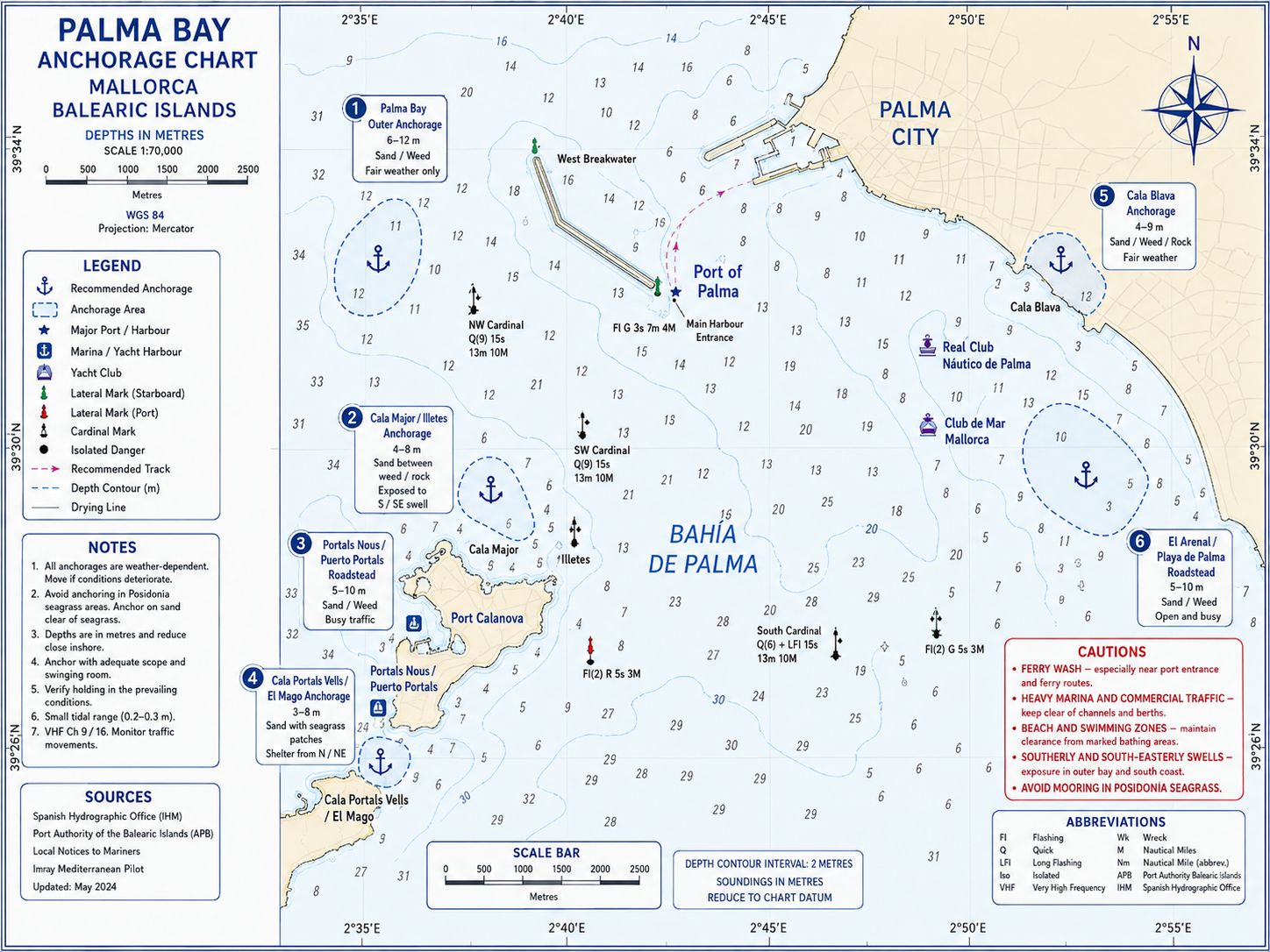
Cala Portals Vells/El Mago. This is a more useful south-west Palma Bay anchorage, about 12 NM west of Palma. It offers anchoring in about 3–8 m over sand with seagrass patches, with good holding when the anchor is placed on clean sand. The outer part of the bay suits larger yachts in about 5–8 m, while the inner coves are shallower, tighter and mainly suitable for smaller craft. It is sheltered from northerly and north-easterly winds but exposed to southerly, south-westerly and south-easterly swell. Several cruising references note sand and seagrass here, and depths around 3–8 m are commonly given for the anchoring area.
Cala Blava/East Palma Bay. This provides fair-weather anchoring on the eastern side of Bahía de Palma, outside beach and swimming areas. Depths are generally around 4–9 m over sand, weed and rock patches. It can be useful in settled northerly or westerly conditions, but it is exposed to south, south-west and south-east weather across the bay. Approach in good light because seabed selection matters and shallow patches extend near the shore.
El Arenal/Playa de Palma Roadstead. This is a temporary fair-weather anchorage only, outside marina, beach and swimming zones. Depths are typically 5–10 m over sand and weed, with extensive shallow water toward the beach. The area is open, busy and subject to swell, wash and local traffic. It is useful only in settled conditions and should not be treated as a protected anchorage. Keep clear of the Club Nàutic S’Arenal entrance and marked bathing areas.
Cala Pi. Lies farther east of Palma Bay on the south coast, is a narrow cala that can be used in settled weather with care. Depths are commonly around 3–6 m inside the usable anchoring area, with sand and weed. It is tight, can be crowded, and is not suitable for strong onshore swell or heavy weather. Entry should be made in good light, and swinging room is limited for larger yachts.
Es Trenc/Es Carbó/Colònia de Sant Jordi sector. This lies well east of Palma and is better treated as a south-coast Mallorca anchorage area rather than a Palma anchorage. Depths are often around 3–7 m over sand and weed depending on position. It gives fair-weather anchoring in clear water but is exposed to southerly swell and has significant environmental controls and Posidonia considerations. It is not a refuge in deteriorating weather.
Palma Mallorca Port Sailing Guide - Marina
and Berthing Facilities
Palma has the densest marina and berthing infrastructure in Mallorca and is the main yacht-service harbour in the Balearic Islands. The port contains commercial docks, ferry berths, cruise berths, yacht clubs, marinas, repair quays and superyacht berths, so visiting yachts should arrive with a confirmed berth and marina instructions. The outer harbour and commercial areas are deep-water port waters, with published port information indicating maintained commercial depths in the 9–12 m plus range depending on berth and basin, while the yacht marinas generally operate in shallower but still adequate depths for cruising yachts. Yachts should always confirm current depths with the marina because dredging, berth allocation, construction work and local silting can change practical draught limits.
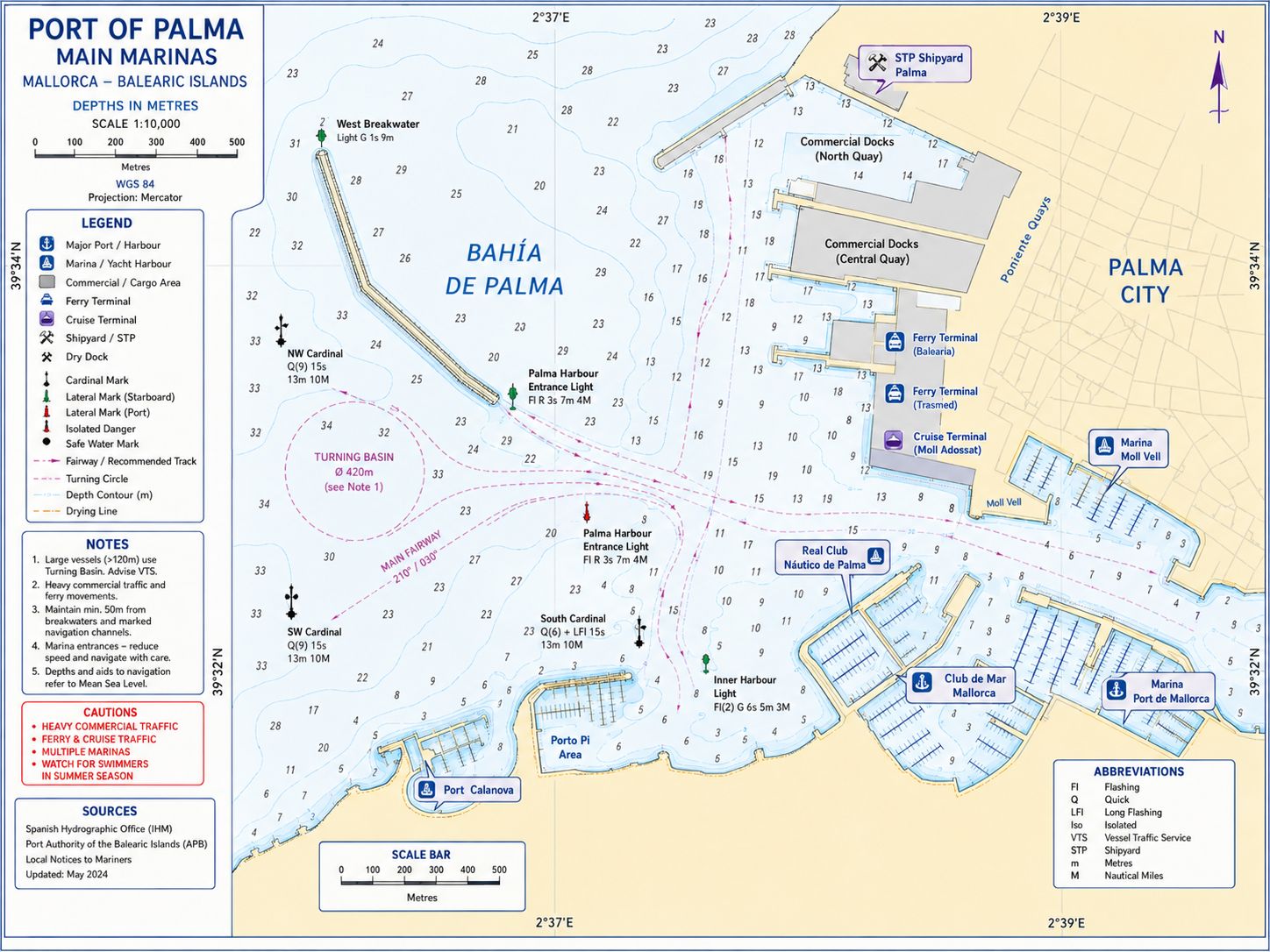
Real Club Náutico de Palma. This is one of the main yacht clubs in the inner Palma waterfront area and is used by cruising yachts, racing yachts and visiting vessels during major regattas. It lies close to the city centre and Santa Catalina provisioning area. This marina has approximately 900–1,000 berths, with the visiting capacity varying by season and event calendar. There is a maximum visiting length of 20 m and draught of 4.5 m, while other marinas have berths for larger vessels. The advice is always confirm the exact available berth before arrival. Practical operating depths in the fairways and berth basins are generally suitable for ordinary cruising yachts, commonly around 3–5 m, but berth-specific depths matter close to pontoons and quay edges. VHF contact is commonly listed as Channel 9, with some listings also referencing additional club channels.
Marina Port de Mallorca. This lies on the Paseo Marítimo between Real Club Náutico and Club de Mar. It is a dedicated yacht marina with 200 berths for boats from 12 m to 50 m and modern pontoons, water, power, security and marina services. The marina’s own information states that it has a water surface area of 73,530 m², a berthing area of 27,800 m², 4 pontoons and an outer jetty, and berths for boats from 12–50 m. Published marina guides give a maximum draught around 4–5 m, while another local listing gives a 3.5 m maximum depth, so yachts drawing over about 3 m should confirm the allocated berth and approach depth directly before arrival. The marina is useful for city access, provisioning, chandlery and technical work, but it is exposed to wash and traffic effects from the wider harbour
Club de Mar Mallorca. This lies toward the western and Porto Pi end of Palma harbour and is one of the main large-yacht and superyacht berthing facilities in the port. The club’s own mooring information states 543 moorings, including more than 70 berths for superyachts, megayachts and gigayachts, with capacity for vessels from 40 m to 170 m in its large-yacht sector. Published superyacht listings give maximum draught around 9 m, and other marina summaries place practical draughts in the 3–9 m range depending on berth. Standard yacht berths include water, electricity, wastewater suction, Wi-Fi, fuel access, dock staff and security. For visiting yachts, the important point is that Club de Mar has both ordinary yacht berths and very large yacht berths, so draught and manoeuvring water are berth-specific and should be confirmed with the marina before entering.
STP Shipyard Palma. This is the primarily a repair, refit and service facility rather than a normal cruising marina, but it is one of Palma’s most important berthing points for yachts requiring technical work. STP’s states that it has 53 berths for craft up to 100 m LOA and 7.5 m draught, in a sheltered zone of Palma port, and a current listing gives 53 moorings, maximum length 120 m and maximum draught 7.50 m. The facility is best considered for booked yard work, refit, haul-out, engineering, rigging, survey, paint, antifouling and service stops rather than casual overnight berthing. Access, berthing, contractor entry and haul-out arrangements should be organised in advance.
Marina Moll Vell. This is a central Palma waterfront marina oriented toward larger yachts and premium berthing near the old town and cathedral side of the port. Its own berth page states 26 berths for yachts and sailing boats from 15 m to 40 m, with maximum draught of 5 m. Other marina listings describe it as having up to 80 berths for yachts to about 45 m with maximum draught 5 m, so use the marina’s direct allocation as the controlling information. The berths are close to the city centre and useful for owners, guests and yachts requiring immediate Palma access, but space is limited and should be booked well ahead.
Port Calanova. This lies west of central Palma, outside the main commercial harbour, and is a practical small-to-medium yacht marina and sailing-school harbour on the western side of Palma Bay. The marina’s own information states 172 moorings for boats from 6 m to 25 m LOA, all with power, water and Wi-Fi, and 24-hour shoreside team support. Published notes describe deep-water access, but an older cruiser report gives marina draught varying from 0.9 m to 5 m, which indicates that berth position is important. It is suitable for yachts that fit its size and draught limits, but deeper yachts should confirm the exact berth depth.
Puerto Portals. This is outside Palma proper but is often relevant to a Palma Bay berthing plan because it lies immediately west of Palma and is a major marina on the south-west coast. It has 639 berths for yachts between 8 m and 60 m, with published harbour-basin depth of at least 3 m, fuel, water, power, Wi-Fi, travel-lift and repair support. For a yacht cruising Palma Bay, it can be used as an alternative to the central Palma marinas, especially if heading west toward Andratx or east back into the bay. Larger or deeper yachts should confirm berth depth and turning room, because “at least 3 m” does not mean every berth is suitable for every draught.
Commercial and port-authority berths. These in Palma are not normal cruising-yacht berths unless specifically allocated. The commercial harbour handles ferries, cruise ships and cargo traffic, and port information gives deep commercial and cargo depths well beyond normal yacht requirements. These areas are for authorised traffic and should be avoided by yachts unless entering under instruction. One port data listing gives Palma channel depths around 9.4–10 m, anchorage depths around 14–15.2 m, cargo pier depths around 18.6–19.8 m, and oil berth depths around 15.5–16 m, which illustrates the contrast between the commercial harbour and the yacht marinas.
For a visiting cruising yacht, the practical sequence is to book the marina first, confirm maximum draught and berth depth, obtain arrival instructions, call on the marina’s stated VHF channel before entering its basin, keep clear of ferries and cruise traffic, and expect wash and crosswind near the inner harbour. For ordinary cruising yachts, Real Club Náutico, Marina Port de Mallorca, Club de Mar, Moll Vell and Port Calanova are the principal Palma berthing options, while STP is the main booked repair/refit berth facility and Puerto Portals is the closest major alternative west of Palma Bay.
Palma Mallorca Port Sailing Guide - Provisioning
Palma has the strongest supermarket and yacht-provisioning supply in Mallorca. For yachts berthed around Real Club Náutico de Palma, Marina Port de Mallorca, STP, Club de Mar and the central waterfront, the most useful supply areas are Santa Catalina, Paseo Marítimo, Plaça de l’Olivar, Avingudes, Porto Pi, Carrer d’Aragó, General Riera and the Mercapalma wholesale area.
Supermarkets.
- Mercadona has multiple Palma branches and is one of the main ordinary provisioning options for cruising yachts. Useful branches include city and waterfront-accessible stores around Santa Catalina, Avingudes, Carrer d’Aragó and wider Palma. Standard Mercadona hours in Spain are commonly Monday to Saturday, about 09:00–21:30, with most stores closed Sundays and public holidays; individual store hours should be checked locally.
- Eroski and Eroski City have multiple Palma branches, including smaller urban stores closer to marina-side districts. They are practical for routine provisioning from the central marinas, with larger stores requiring taxi or delivery for heavy stock-up. Many branches operate broadly from morning to evening, with some Sunday or holiday opening depending on store format and season.
- Carrefour operates larger supermarket and hypermarket formats in Palma, including the Carrefour Palma area around General Riera and other city locations. A Carrefour Palma listing gives opening around 09:00–22:00, with the General Riera centre about 2–3 km from the central marina waterfront depending on berth position.
- Lidl and Aldi offer lower-cost bulk provisioning and dry stores, but most Palma branches require taxi, car or delivery from the marina waterfront. Typical Spanish supermarket opening patterns are around 09:00–21:30/22:00, with some Lidl and Aldi stores opening Sundays or public holidays depending on location and season. Lidl, Eroski and Aldi are among the chains most likely to open on Sundays, while Mercadona and Carrefour often close on Sundays.
- El Corte Inglés in Palma is useful for higher-end food, wine, delicatessen items and department-store supply. The main city stores are accessible by taxi from the marina waterfront and can be useful for provisioning and non-food items. Sunday and holiday trading can vary, El Corte Inglés and major shopping areas in central Palma have broader opening than many ordinary supermarkets.
- Hiper Centro, Supercor, DIA, local minimarkets, bakeries, butchers and neighbourhood grocery stores fill the gaps for routine top-ups. Around Santa Catalina and the marina side of Palma, smaller supermarkets, bakeries and specialist food shops are often more practical on foot than larger out-of-town stores.
Specialist yacht provisioning is well developed in Palma to service the Superyacht industry. Bespoke Provisioning is listed at Calle Cardinal Rosell 182 C/M Local C, Mercapalma, Palma, and supplies meat, seafood, produce and yacht provisions direct to vessels. Ashore Marine operates as a Palma yacht-provisioning supplier covering fish and seafood, fruit and vegetables, meat, poultry, dairy, wine and drinks. Frutas Ramón operates from Santa Catalina Market, supplies fruit, vegetables and gourmet products, and states yacht delivery is available; it notes Santa Catalina Market is close to the main marinas and normally open from about 07:15 to 14:00.

Markets
- Mercat de l’Olivar is Palma’s main central produce and food market, located at Plaça de l’Olivar 4, 07002 Palma de Mallorca. Official market information gives opening hours of Monday to Friday 07:00–14:30, partial opening from 14:30–20:00, and Saturday 07:00–15:00, with gastronomy open Monday to Saturday until 16:00; Sunday is closed. From the central marina waterfront, it is usually about 2–3 km depending on berth position, so it is walkable for light loads but better by taxi for yacht provisioning.
- Mercat de Pere Garau. This is a major neighbourhood produce and food market at Plaça Pere Garau, east of the old centre. It is larger and more local in character than Santa Catalina. The covered market operates Monday to Saturday, Monday 06:00–14:30, Tuesday 06:00–15:00, Wednesday 06:00–14:30, Thursday 06:00–15:00, Friday 06:00–15:00 and Saturday 06:00–16:00. The larger outdoor market is held on Tuesday, Thursday and Saturday, when extra stalls set up around the square. If you like fresh rabbit or poultry, this is the place. Try the excellent local sausages, in particular "llonganisa" and "botifarro". Pork is the feature in local cuisine. You have to get down there early for best choice for the best quality.
- Mercat de Santa Catalina is the most practical market for many yachts berthed around Real Club Náutico, Marina Port de Mallorca, STP and Club de Mar, because Santa Catalina sits close to the marina side of the city. It as a short walk from the port. Typical operating hours are morning to early afternoon, commonly about 07:00/07:15–14:00, with individual stalls varying.
- Mercapalma is Palma’s wholesale food and logistics market area rather than a normal harbour-side shopping market. It is relevant because yacht provisioners and wholesale suppliers operate from or through this area, including Bespoke Provisioning at Mercapalma.
Key Produce. This includes Mallorcan tomatoes, peppers, potatoes, onions, citrus, figs, grapes, melons, almonds, olives, olive oil, herbs, leafy greens, seasonal vegetables, local cheeses, sobrasada, honey and bakery goods. Local specialty produce for a yacht galley includes Mallorcan olive oil, almonds, sobrasada, ensaimada, pa amb oli ingredients, local cheeses, olives, citrus, tomatoes and island wines. Organic and specialist produce is available through some Santa Catalina and Olivar stalls, but stall-by-stall availability varies by season and day.
Fish Markets
- Mercat de l’Olivar Fish Market is the main central fish-market option in Palma and one of the best places for yacht seafood provisioning. It forms part of Mercat de l’Olivar at Plaça de l’Olivar 4. Official hours for the market are Monday to Friday 07:00–14:30 / 15:00 depending on source, partial afternoon opening for some sections, and Saturday 07:00–15:00; the market notes occasional opening of some fish shops on Monday, which is important because fish supply can be reduced after the weekend.
- Mercat de Santa Catalina Fish Stalls are the closest practical fish-market source for yachts in the central marina area. Santa Catalina is close to the marina waterfront. Morning shopping is best. Stall opening varies, but the market operates mainly in the morning to early afternoon, with market opening from about 07:15 to 14:00.
Alternative fish sources include Iscapalma, is a wholesale fish company recommended for large yacht orders, and specialist yacht provisioners such as Bespoke Provisioning and Ashore Marine, both of which supply seafood direct to yachts by arrangement.
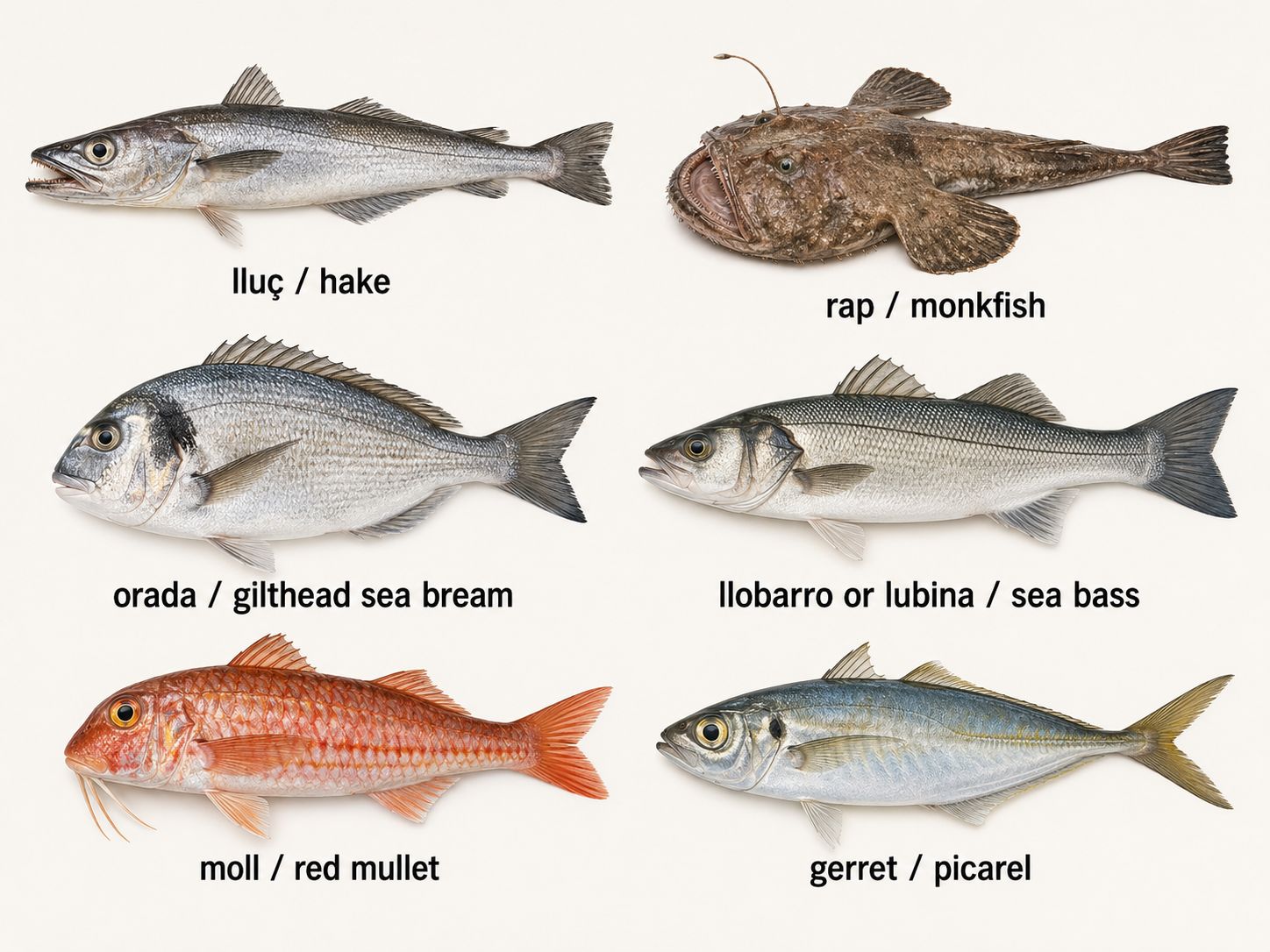
Main Seafood Species. This includes lluç/hake, rap/monkfish, orada/gilthead sea bream, llobarro or lubina/sea bass, moll/red mullet, gerret/picarel, sardina/sardine, seitó or boquerón/anchovy, calamar/squid, sípia or sepia/cuttlefish, pop or pulpo/octopus, gamba/prawn, escamarlà/langoustine, and seasonal shellfish. Availability depends on landings, weather, season, market day and supplier ordering.
Palma Mallorca Port Sailing Guide - Local
Cuisine
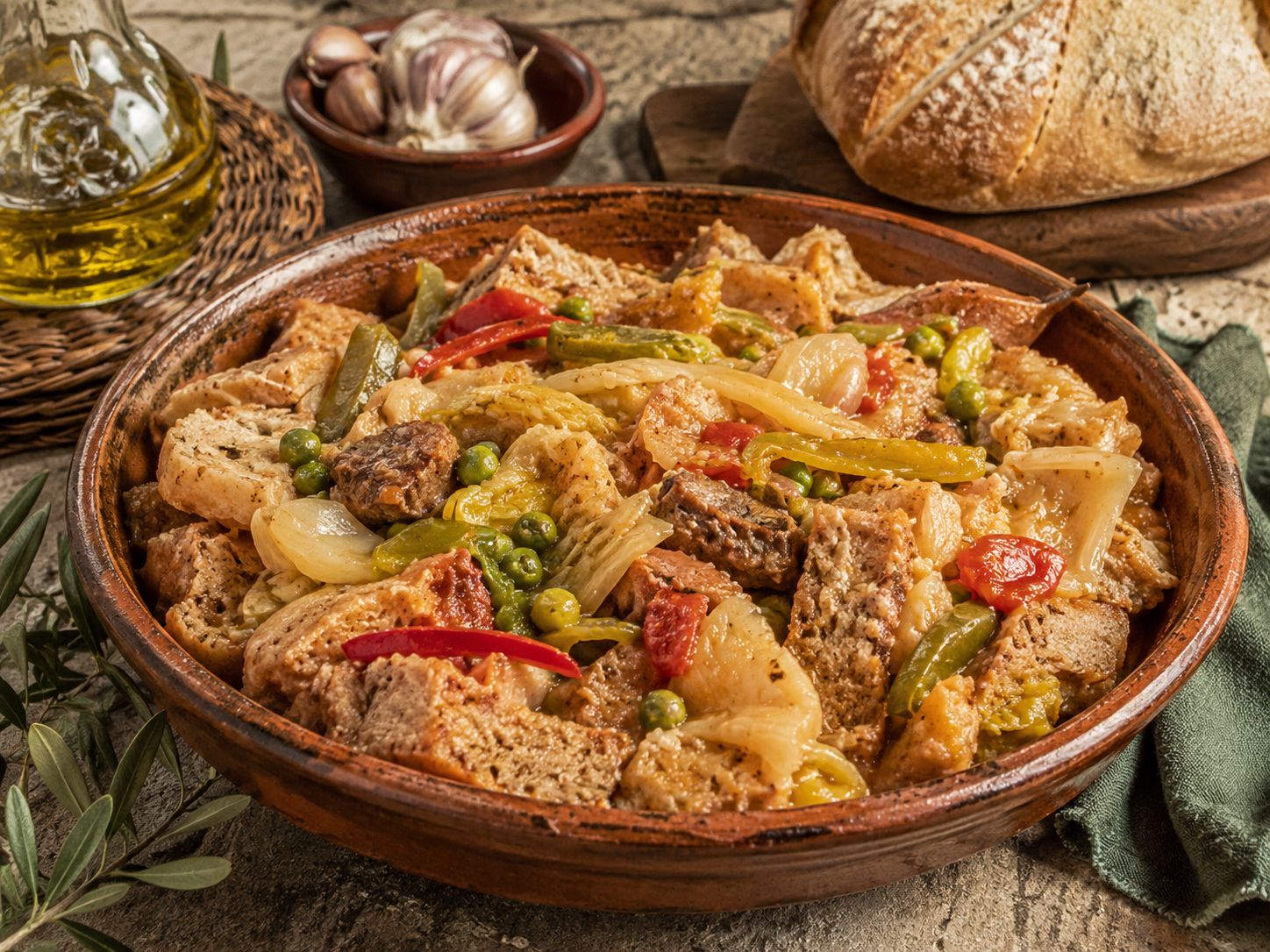
Palma Mallorca Port Sailing Guide. Stopping in Palma gives access to the main Mallorcan food products and dishes. Local dishes include tumbet, frito mallorquin, sopas mallorquinas, arròs brut, pa amb oli, grilled fish, seafood rice, calamari, octopus, lamb, pork dishes and vegetable stews. Sobrasada is a soft cured pork and paprika sausage used on bread, with eggs, in cooking or paired with honey and cheese. Ensaimada is the island’s spiral pastry, made with enriched dough and traditionally lard, sold plain or filled. For yacht provisioning, the most practical local products are Mallorcan olive oil, sobrasada, cheese, almonds, olives, bread, tomatoes, ensaimada, citrus and local wine.
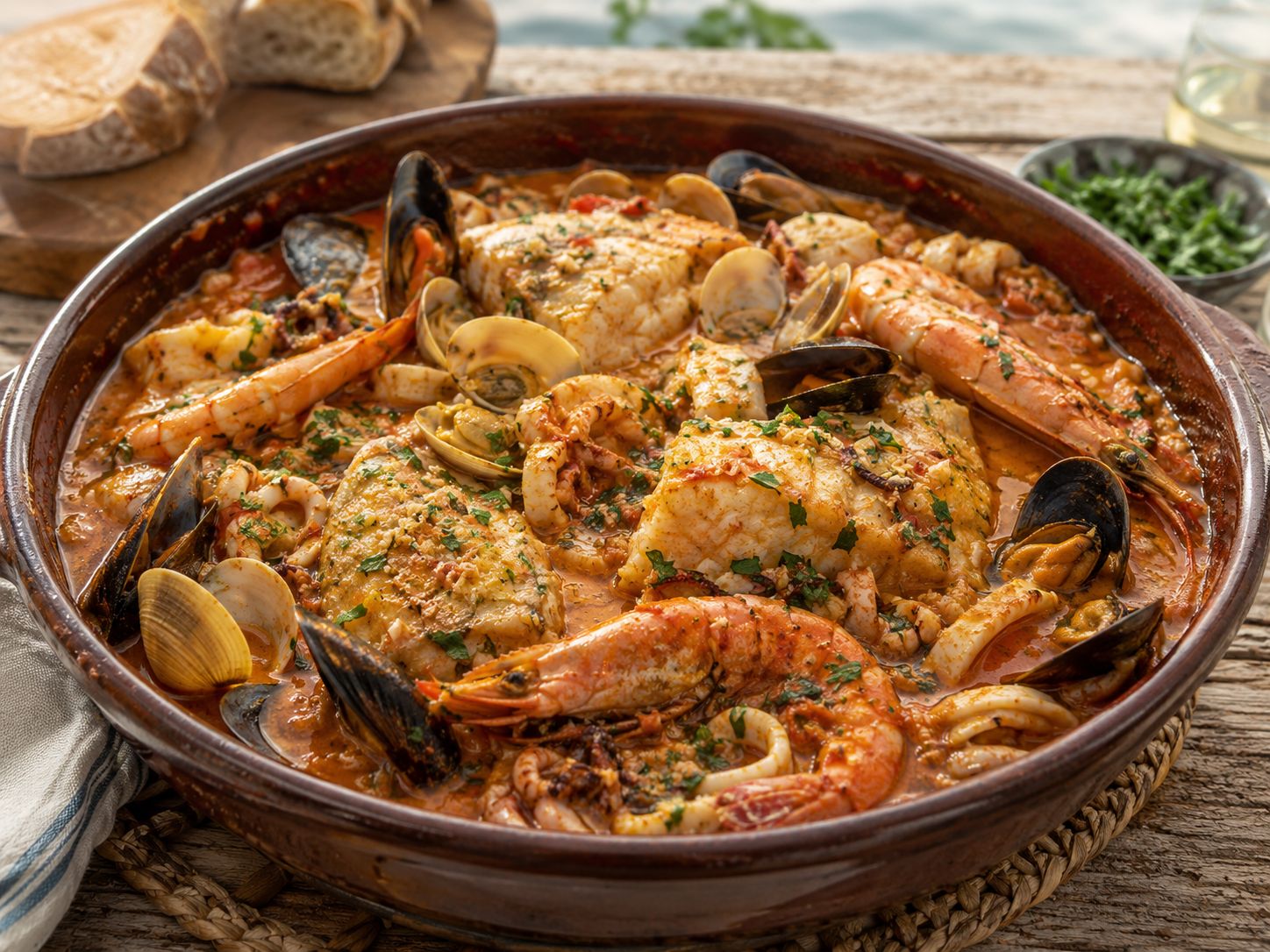
My absolute favorite seafood dish in Spain is Zarzuela de pescado y marisco which is a Catalan-style fish and seafood stew that is also found in Mallorca and the wider Balearic Islands, especially in seafood restaurants. It is usually made with a mix of fish and shellfish such as lluç/hake, rap/monkfish, prawns, mussels, clams, squid or cuttlefish, cooked with sofrito, wine or brandy, fish stock and a picada of nuts, garlic and parsley. Absolutely wonderful with bread to dunk in the sauce and an ice cold beer or two. If you have the chance try it out.
Palma Mallorca Port Sailing Guide - Local
Beverages
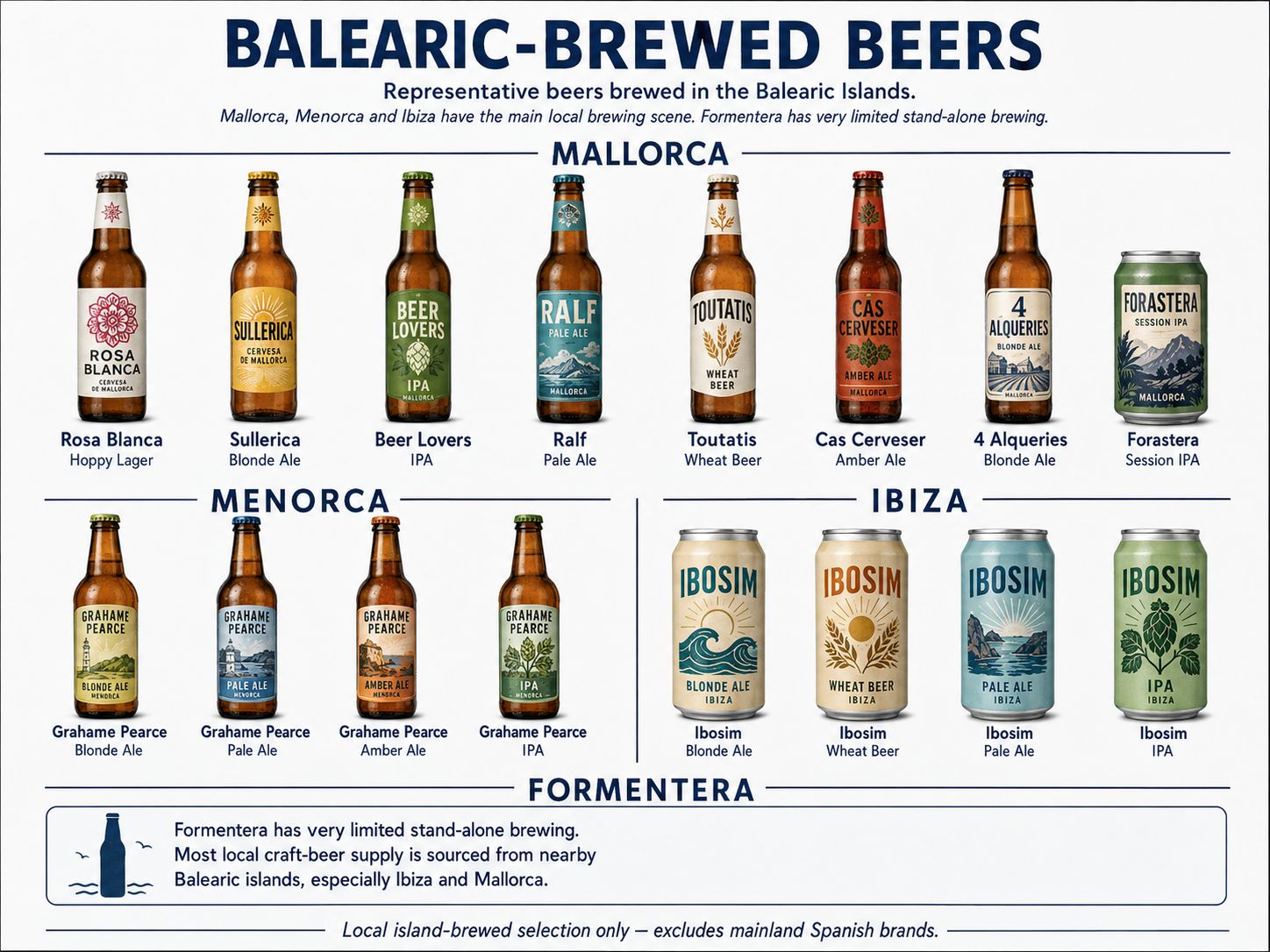
Palma Mallorca Port Sailing Guide also considers boat drinks and sundowners and Palma has the widest beverage supply on Mallorca. Local drinks include Mallorcan wines, hierbas mallorquinas, vermouth, local spirits, craft beers, coffee, bottled water and soft drinks. Hierbas mallorquinas is a traditional aniseed-based herbal liqueur made in sweet, mixed and dry styles and commonly served as a digestif. Local and island-brewed beers may include Rosa Blanca, Sullerica, Beer Lovers, Ralf, Toutatis, Cas Cerveser, 4 Alqueries and Forastera, depending on stockist and season.
Palma Mallorca Port Sailing Guide - Diesel
Fuel Supplies
Diesel is available in the Palma port and marina area, but access depends on the specific marina, berth, vessel size and operating hours. Marina Port de Mallorca states that fuel supply is available at STP, and the broader harbour area has extensive yacht service infrastructure. Because Palma is a major port, fuel planning should still be done in advance. Confirm opening hours, draught, payment method, whether alongside fuelling is possible for your boat size, and whether booking is required during busy periods.
Palma Mallorca Port Sailing Guide - Water
Supplies
Potable water is available at serviced marina berths and many quay facilities, but it should be confirmed with the marina when booking. Marina Port de Mallorca lists drinking-water points among its services. Water is normally marina-based. If remaining at anchor in Palma Bay, treat the anchorage as a no-water stop unless a marina berth, tender landing and filling arrangement has been organised. During summer, tank management matters because marina availability may be limited. Boats departing Palma for Cabrera, the east coast calas, the north-west coast or Menorca should leave with full tanks.
Mechanical and Electrical Repairs
Resource
If you are headed somewhere in the Mediterranean or Spain or somewhere more remote consider the need to expand your knowledge base or have an information resource on board. Why not get a copy of my book The Marine and Electrical and Electronics Bible 4th Edition. with everything from batteries and charging, solar and wind, diesel engines and marine electronics and so much more. Your complete systems guide. 650 pages of practical advice. In Australia and New Zealand order a copy through Boat Books. UK and European boats can buy the UK Edition Here. US and Canadian boats can get the US Edition Order Here. Marine systems are my profession so let me help you DIY and save some valuable technician callout rates. This is by a cruising yachtsman and liveaboard boat owner for other boat owners.


Palma Mallorca Port Sailing Guide - Marine
Services
Palma is the main marine-service centre for Mallorca and the wider Balearic Islands. Services include diesel engine repair, generator service, electrical work, marine electronics, rigging, sailmaking, refrigeration, stainless fabrication, GRP repair, painting, antifouling, chandlery, haul-out, hardstanding, diving services and safety equipment. The main service concentration is around STP Shipyard Palma, Moll Vell, Club de Mar, Marina Port de Mallorca, Real Club Náutico de Palma, Can Valero and the Palma industrial estates.
For diesel engines, Mecanautica y Servicios Asensio S.L. is an official Volvo Penta service centre in Mallorca, with offices at Club Marítimo San Antonio de la Playa and Club Nàutic El Arenal. It specialises in sale, maintenance and repair of Volvo Penta diesel engines and has been an official service centre since 2000. Berthon Spain is an official Yanmar dealer in Palma de Mallorca, offering Yanmar parts, routine servicing, rebuilds and engine replacements from its Palma base near the main marinas. Marine Engineering Palma is also listed by Yanmar as a recreational marine subdealer for sales, service and parts at Carrer Poima 13B, Palma de Mallorca. Precision Marine Engineering is listed by Yanmar as a subdealer at Poima 27, Polígono de Can Valero, and advertises service for Yanmar, John Deere, Northern Lights and Lugger.
For multi-brand diesel and generator work, Dynamic Marine Diesel in Can Valero, Palma services diesel marine engines and generators and lists support for Caterpillar, Cummins, John Deere, Mase, Onan, Yanmar, Perkins and Scania. Heavy Seas provides marine engineering and electrical service in Mallorca, states that it is a certified Volvo Penta service provider, and is listed as a qualified service for Yanmar. Camber Marine advertises marine mechanics, diagnostics, maintenance and repair for marine engines, especially Volvo Penta, and also carries out electrical and electronics work including Raymarine autopilots. For Vetus, local supply is available through MPPalma, which lists Vetus marine diesel engines, bow thrusters and boat systems.
Palma Mallorca Port Sailing Guide - Marine Electronics
For marine electronics, Palma has strong support. Tallamar Marine Electronics installs and repairs yacht electronics in Palma and is listed by B&G as a dealer/service contact in Palma de Mallorca. Estay Electronics in Palma works with Furuno, MaxSea, B&G, Simrad, Raymarine, KVH, Cobham, Intellian, Raytheon, Jotron and other marine electronics brands. Dahlberg S.A. represents B&G, Simrad, Furuno, Sailor, C-MAP and TimeZero for marine electronics. Enaval was founded in Palma and provides yacht electrical and electronic equipment installationt, technical advice and repair, listing brands including Raymarine, Sperry Marine, Raytheon Anschütz, Furuno, Sailor, KVH and Simrad. Palma Marine Electric & Electronics lists support for brands including B&G, Simrad, Victron Energy, Fisher Panda, Furuno, Mastervolt, Icom and KVH. My book The Marine Electrical and Electronics has a service company listing with others.
Palma Mallorca Port Sailing Guide - Local
Etiquette
Palma is busy, professional and service-oriented. Use clear communication with marina offices, fuel docks, harbour staff, customs, police, market sellers and contractors. Spanish is widely used, while Catalan/Mallorcan place names also appear on signs and official material. Basic greetings and patient communication are useful, especially in summer when berth pressure and service demand are high. Do not occupy fuel docks longer than necessary, block fairways, assume fishing or working quays are available, or enter marina basins without instructions. In the city, swimwear is not appropriate away from beaches and marina showers. In markets and small shops, order politely and wait your turn. In the anchorage, keep noise down, avoid generator nuisance, respect swinging room and follow Posidonia anchoring rules.
Palma Mallorca Port Sailing Guide - Summary
Palma Mallorca Port Sailing Guide and Palma is the main yacht harbour, provisioning centre and marine-service base for Mallorca and the Balearic Islands. It offers strong marina infrastructure, fuel, water, chandlery, repair trades, markets and technical support, but it is also a busy commercial and yacht port requiring careful entry and berth planning. Skippers should confirm marina instructions, manage traffic in Palma Bay, avoid prohibited anchoring areas and use the port as the main resupply point before moving to less serviced parts of the island. This page is the harbour-level guide for the Palma Mallorca port sailing guide and all you need to know.