Newcastle Cruising Guide for Yachts – A Deep Harbour Entry
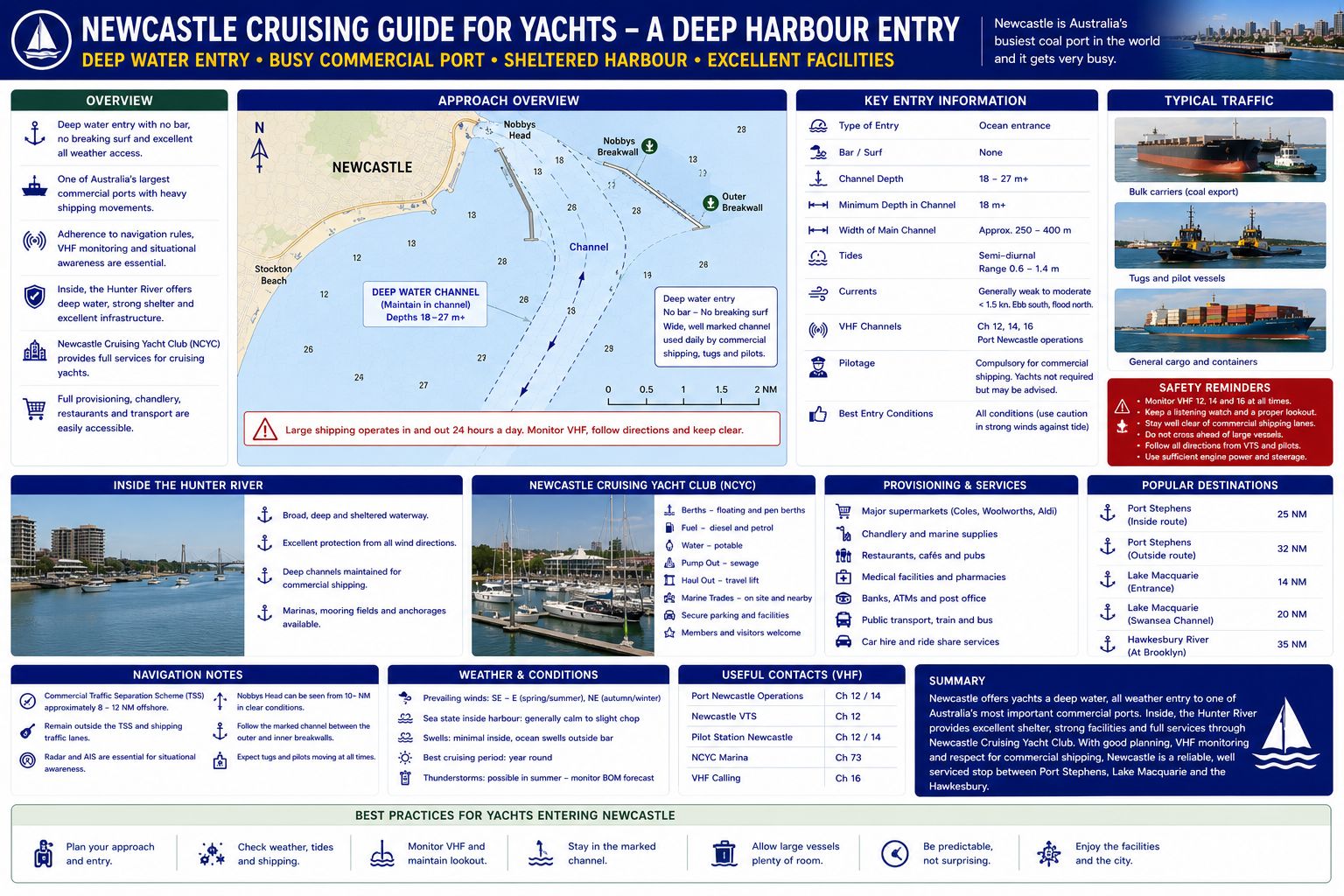
The Newcastle cruising guide for yachts begins at the entrance to one of Australia’s largest commercial ports, a deep‑water harbour with no bar, no breaking surf and a wide, well‑marked channel used daily by bulk carriers, tugs and pilot vessels. Unlike the river ports to the north, Newcastle offers a straightforward, all‑weather entry, but the presence of large commercial shipping demands strict adherence to navigation rules, VHF monitoring and situational awareness. The entrance is deep, open and forgiving, but the scale of vessel movements means yachts must treat the approach with the same discipline used in major international harbours.
Once inside, the Hunter River opens into a broad, sheltered waterway with deep channels, marinas, mooring fields and excellent protection from all wind directions. Newcastle Cruising Yacht Club (NCYC) forms the operational heart of the recreational boating community, offering berths, fuel, water, pump‑out, haul‑out and marine trades. The city itself provides full provisioning capability, supermarkets, chandlery, restaurants and easy access to transport. For yachts transiting between Port Stephens and Lake Macquarie or the Hawkesbury, Newcastle is a reliable, well‑serviced stop with deep water, strong infrastructure and a clear operational rhythm shaped by commercial shipping. Newcastle is the busiest coal port in the world and it gets very busy.
Newcastle Cruising
Guide for Yachts – Approach
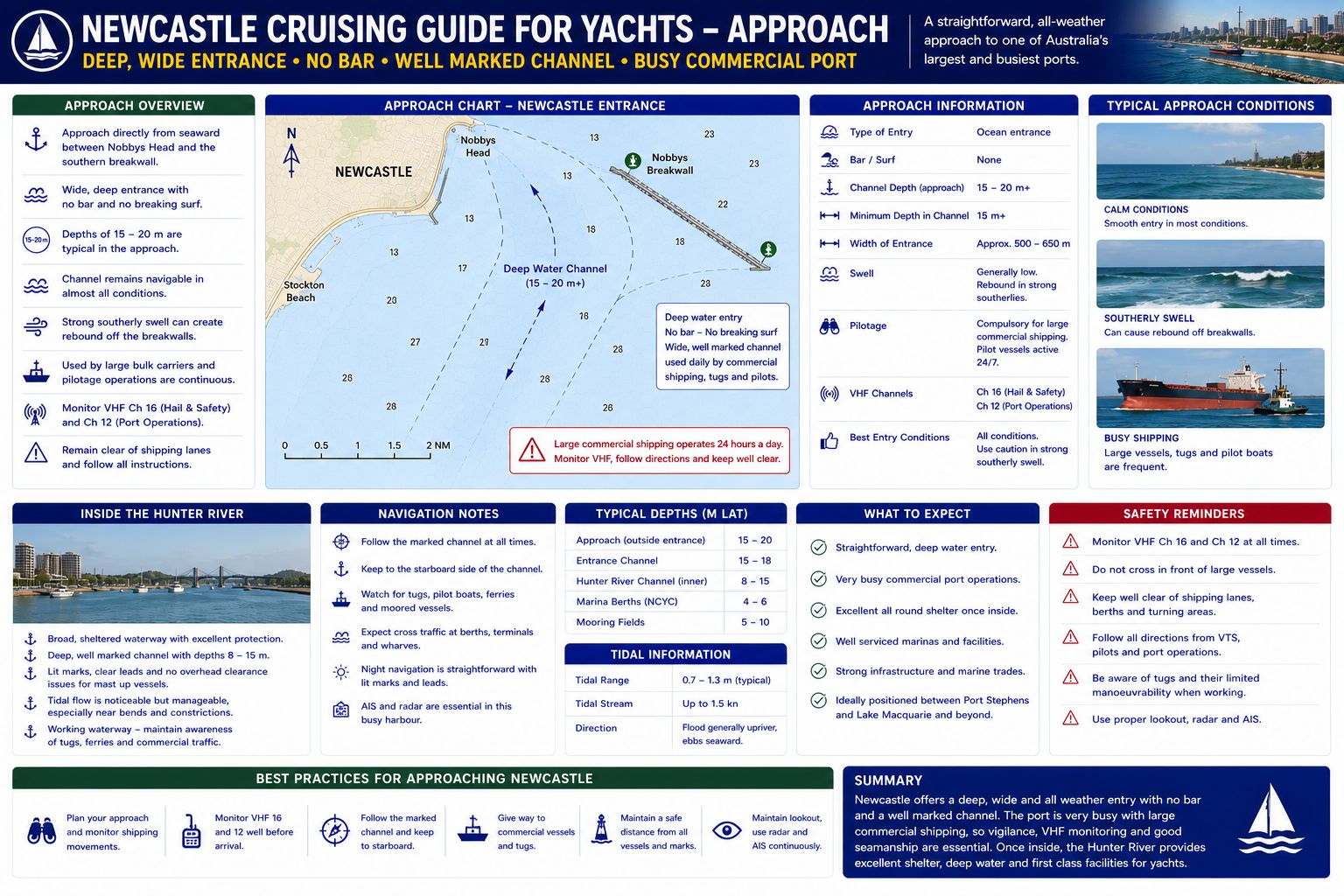
Newcastle is approached directly from seaward through a wide, deep entrance between Nobbys Head and the southern breakwall. Depths of 15–20 m are typical in the approach, and the channel remains navigable in almost all conditions. There is no bar, and swell rarely affects the entrance, although strong southerly swell can create rebound off the breakwalls. The entrance is used by large bulk carriers, and pilotage operations are continuous, so yachts must maintain a listening watch on VHF 16 and 12 and remain clear of shipping lanes.
Once inside, the Hunter River widens into a deep, well‑marked channel with depths commonly between 8–15 m. Navigation is straightforward, with lit marks, clear leads and no overhead clearance issues for mast‑up vessels. Tidal flow is noticeable but manageable, particularly near the bends and constricted areas. The river is a working waterway, and skippers should maintain awareness of tugs, ferries and commercial traffic.
Newcastle Cruising
Guide for Yachts – Marinas, Fuel, Water
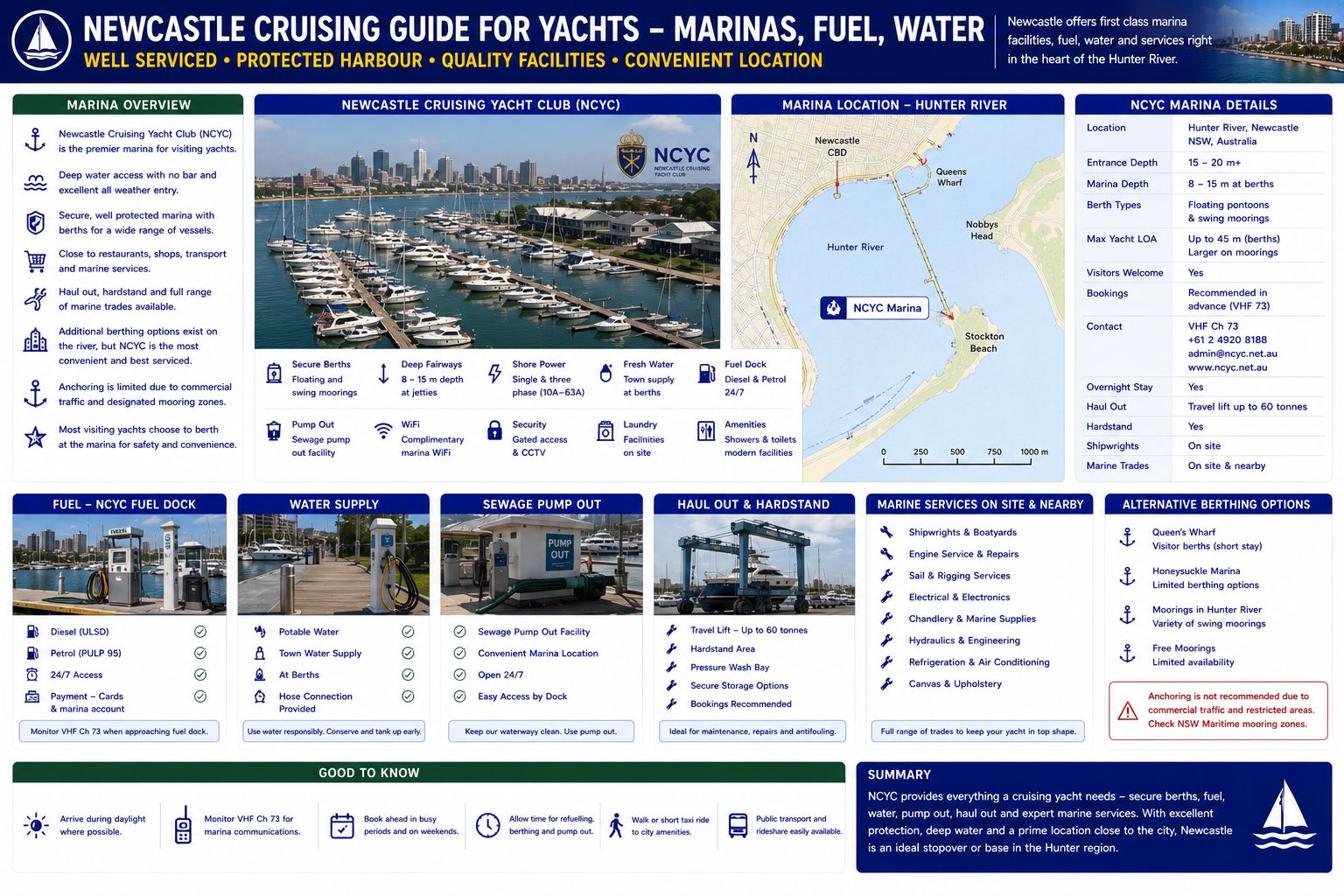
Newcastle Cruising Yacht Club (NCYC) is the primary marina for visiting yachts. It offers secure berths, deep fairways, shore power, fresh water, a fuel dock supplying diesel and petrol, and a sewage pump‑out facility. The marina is well‑protected from all wind directions and sits close to restaurants, shops and marine services. NCYC also provides haul‑out capability and access to a range of marine trades, making it a practical base for repairs and maintenance.
Additional berthing options exist along the river, but NCYC is the most convenient and best‑serviced location for cruising yachts. Anchoring is limited due to commercial traffic and designated mooring zones, and most visiting yachts choose to berth at the marina for safety and convenience.
Mechanical and Electrical Repairs
Resource
If you are headed somewhere remote consider the need to expand your knowledge base or have an information resource on board. Why not get a copy of my book The Marine and Electrical and Electronics Bible 4th Edition. By and for yachties, with everything from batteries and charging, solar and wind, diesel engines and marine electronics and so much more. Your complete systems guide. 650 pages of practical advice. In Australia and New Zealand order a copy through Boat Books. UK and European boats can buy the UK Edition Here. US and Canadian boats can get the US Edition Order Here. Marine systems are my profession so let me help you. By a liveaboard boat owner for other boat owners

Newcastle Cruising Guide for Yachts – Marine Services
Newcastle supports a full suite of marine trades, including mechanics, electricians, riggers, refrigeration technicians, sailmakers and shipwrights. Haul‑out facilities are available through NCYC and nearby yards, and chandlery is accessible through local marine suppliers. The city’s industrial base ensures good availability of technical services, and many skippers use Newcastle as a repair stop during longer coastal passages.
Newcastle Cruising
Guide for Yachts – Provisioning
Supermarkets: Woolworths Newcastle West is the primary provisioning point for visiting yachts, offering a full supermarket range including fresh produce, dry stores, bakery items, frozen goods and alcohol. Coles Marketown provides a second full‑range supermarket option with similar capability and is well suited to larger provisioning runs or crews seeking specific brands. Aldi Newcastle West adds further depth for bulk dry stores and value‑focused provisioning, giving skippers multiple strong supermarket options within a short taxi or rideshare distance of the marina.
Markets: The Newcastle City Farmers Market supplies seasonal fruit and vegetables, local meats, baked goods, honey and regional specialty items, making it ideal for topping up fresh stores before departure. Around the city, independent butchers, bakeries, fruit shops and organic food outlets provide additional access to high‑quality fresh produce, allowing skippers to source specific items without relying solely on the major supermarkets.
Seafood Markets: The Newcastle Fish Market offers fresh local fish, prawns and seasonal catch landed by the regional fleet. For crews wanting high‑quality seafood without leaving the harbour precinct, the fish market remains the most convenient and reliable option.
Newcastle Cruising
Guide for Yachts – Operational Factors
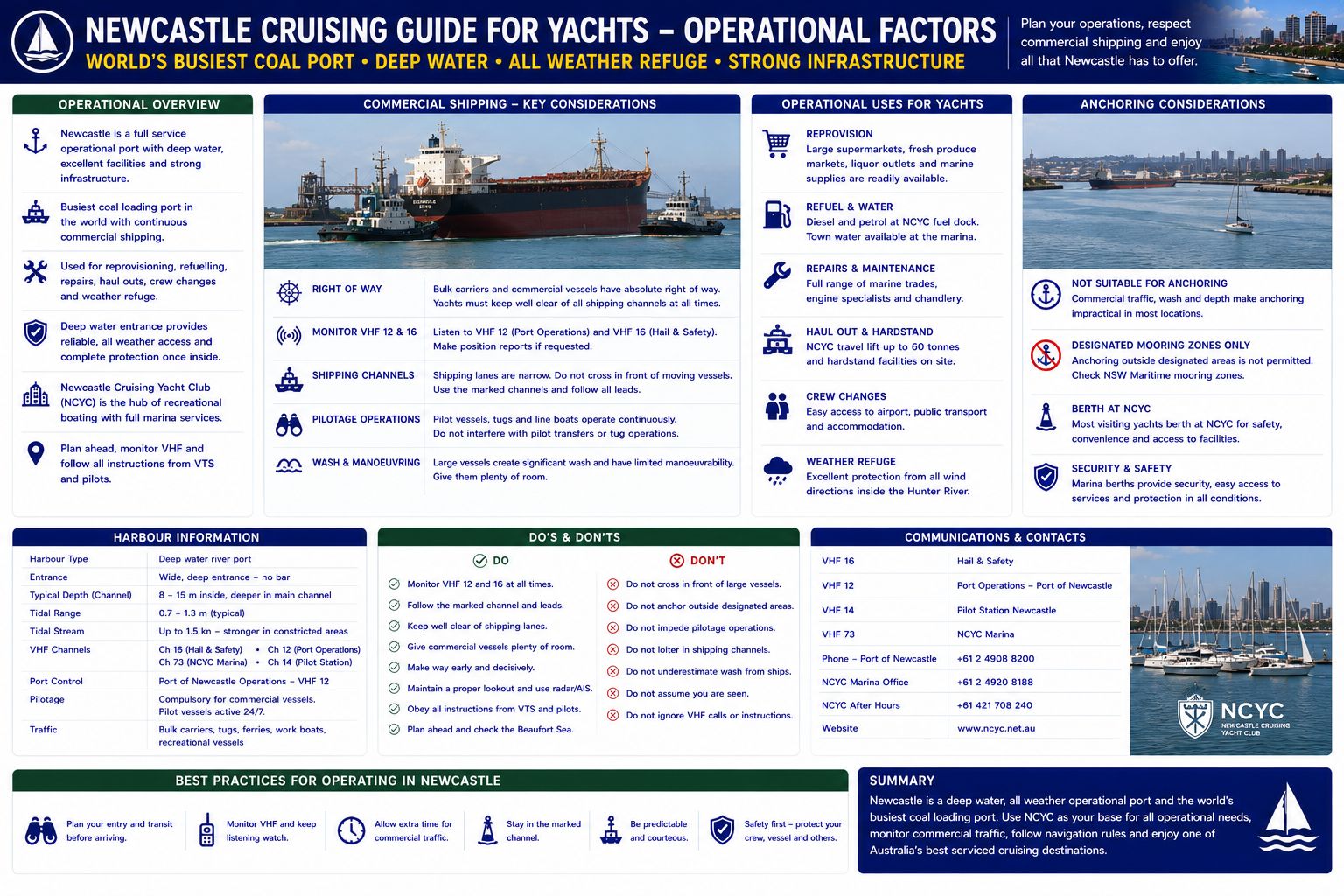
Newcastle is best used as a full‑service operational port. Skippers routinely enter the harbour to reprovision, refuel, take on water, complete repairs, conduct haul‑outs, manage crew changes or wait out weather in complete protection. The deep‑water entrance makes Newcastle a reliable all‑weather refuge, and the presence of NCYC provides a strong recreational boating infrastructure.
The primary operational consideration is commercial shipping. Bulk carriers have absolute right of way, and their manoeuvring space is limited. Yachts must remain clear of shipping channels, monitor VHF 12 and 16, and avoid obstructing pilotage operations. The harbour is large, but the shipping lanes are narrow, and tugs operate with limited visibility when working alongside vessels.
Newcastle is not suitable for anchoring outside designated areas, and skippers should plan to berth at NCYC. The river is deep and wide, but commercial traffic and wash make anchoring impractical in most locations.
Newcastle Cruising
Guide for Yachts – Weather and Swell
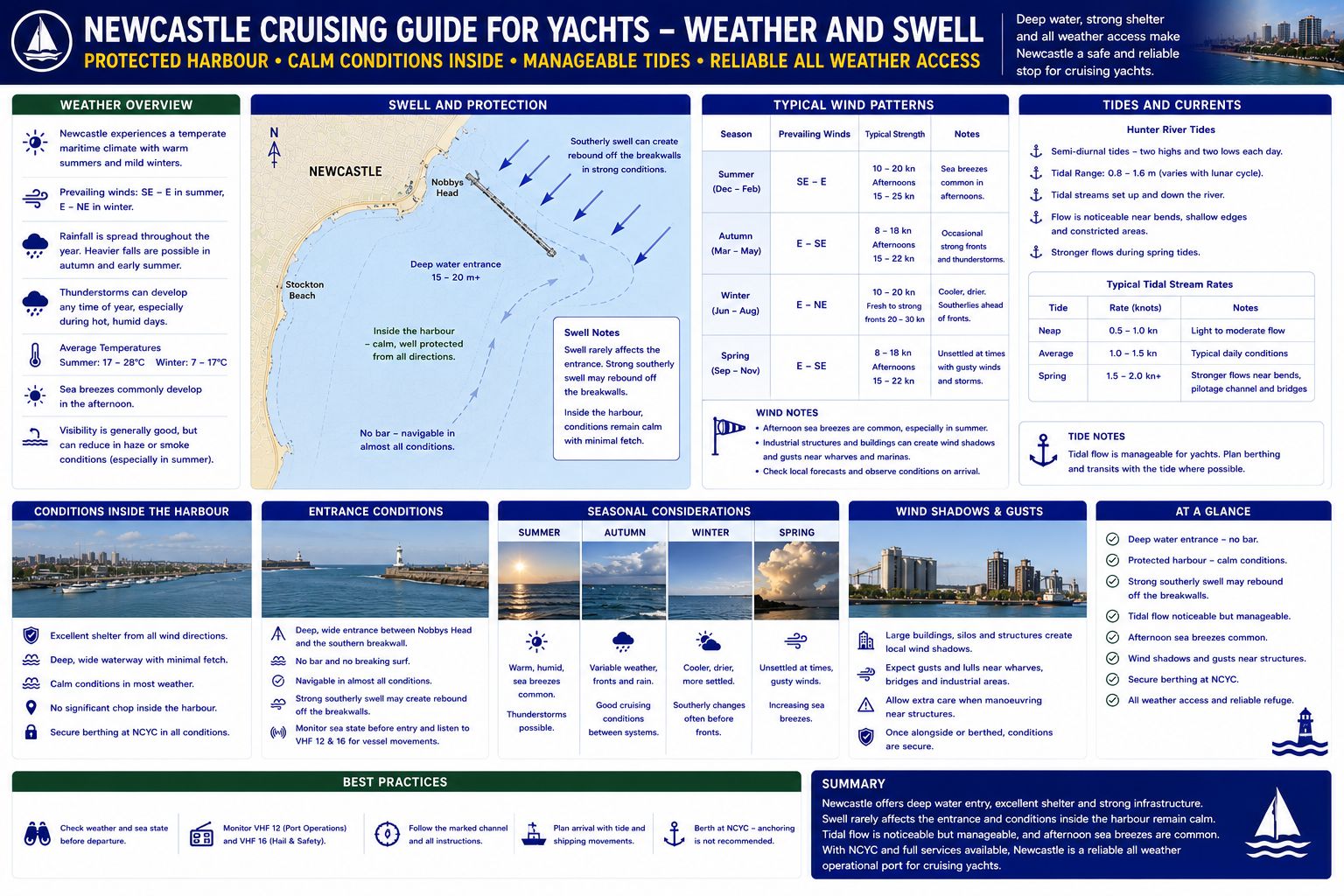
Newcastle is protected from swell once inside the entrance. The heads remain navigable in most conditions, although strong southerly swell can create rebound off the breakwalls. Inside the harbour, conditions are calm, with minimal fetch and excellent shelter. Tidal flow is noticeable but manageable, and the river’s width prevents the formation of significant chop. Afternoon sea breezes are common, and the harbour’s industrial layout can create wind shadows and gusts near buildings and structures, but anchoring and berthing remain secure.


Newcastle Cruising
Guide for Yachts – Summary
The Newcastle cruising guide for yachts ends with a clear operational message: this is a deep‑water, bar‑free commercial harbour with excellent marina facilities, full provisioning, fuel, water, pump‑out, haul‑out and marine trades. The entrance is safe in almost all conditions, and the harbour provides complete protection from swell and weather. For yachts transiting between Port Stephens, Lake Macquarie and the Hawkesbury, Newcastle is a practical, well‑serviced stop for rest, repairs and reprovisioning, provided skippers maintain strict awareness of commercial shipping and follow harbour protocols. Newcastle Cruising Guide for Yachts with important information.