Mooloolaba Sailing Guide
The Mooloolaba sailing guide. Mooloolaba is one of the most important all‑weather harbours on the southern Queensland coast and a key tactical waypoint for yachts moving between Brisbane, the Great Sandy Strait, and the offshore routes toward Bundaberg and the Coral Sea. The harbour sits behind a well‑engineered entrance channel that provides reliable access in a wide range of conditions, making it a preferred refuge during strong southerly systems and a dependable staging point for vessels preparing to cross the Wide Bay Bar. For sailing yachts, Mooloolaba offers secure marina berthing, comprehensive provisioning, and a full suite of marine services, all within a protected environment that remains calm even when conditions offshore are unsettled.
The town is built around the Mooloolah River, with marinas, shipyards, and waterfront facilities lining the sheltered waterways. The river is busy, with fishing vessels, and recreational traffic from kayaks, tourist boats, recreational fishing boats and so on. Despite the activity, the depths are consistent, and the bar approach is straightforward when handled with consideration to tide and sea state.
Mooloolaba Sailing
Guide - Approach
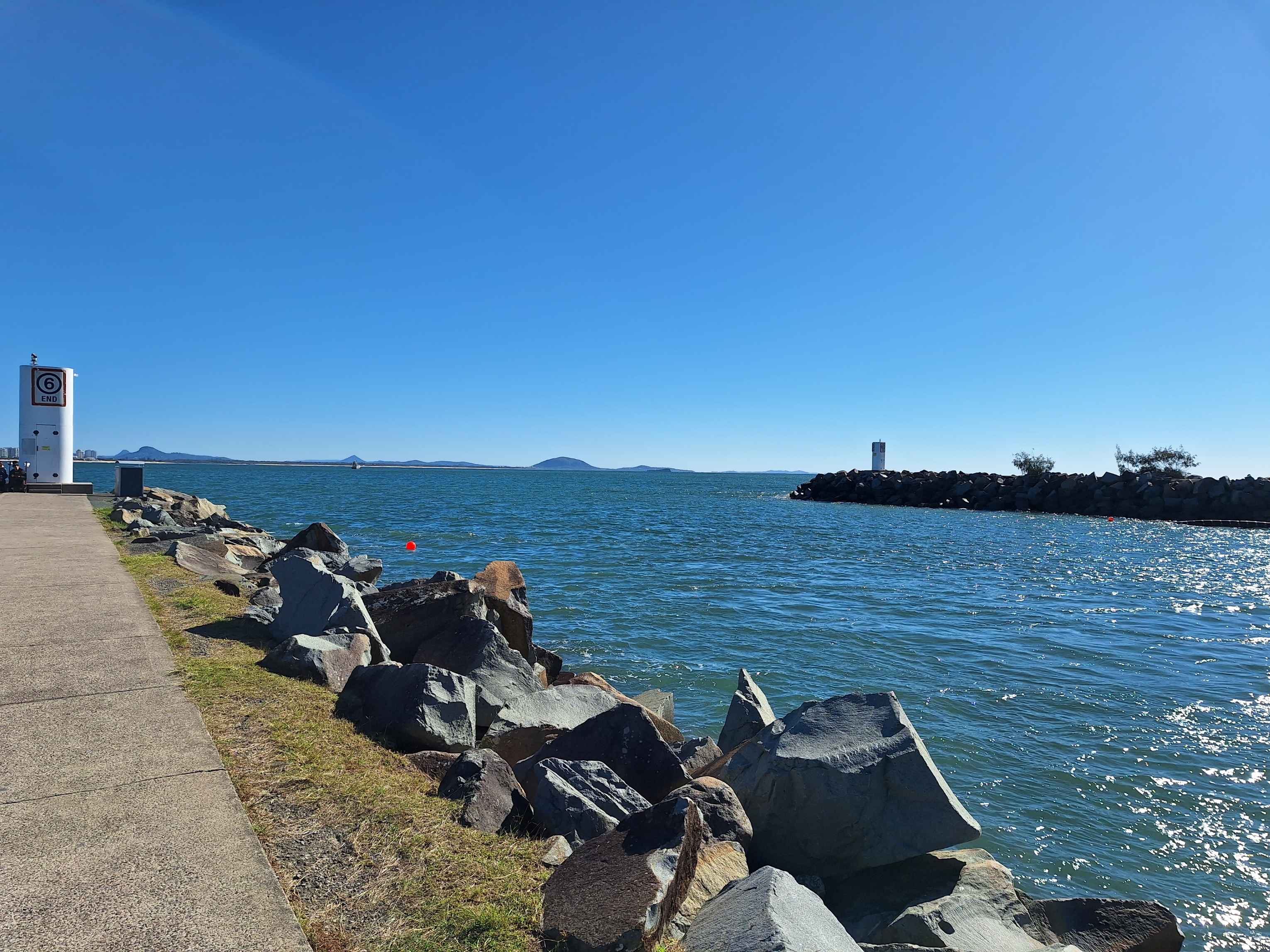
The approach to Mooloolaba
begins offshore in a region of open coastline where swell, wind, and tide
interact to shape the entrance conditions. The river entrance is
marked by a pair of breakwaters that extend into the sea, forming a narrow but well‑defined
channel. In settled weather, the approach is simple, with the leads providing
clear guidance into the river. In strong easterly or southeasterly swell, the
entrance can become turbulent, with breaking waves forming across the outer
section of the channel. Yachts must assess conditions carefully before
committing to entry, particularly during periods of large swell or strong
onshore winds. Once inside the
breakwater, the water calms immediately, and the river provides a protected
environment with consistent depths. The channel is
narrow in places, and traffic density can be high, especially on weekends and
during holiday periods. Skippers must maintain situational awareness and be
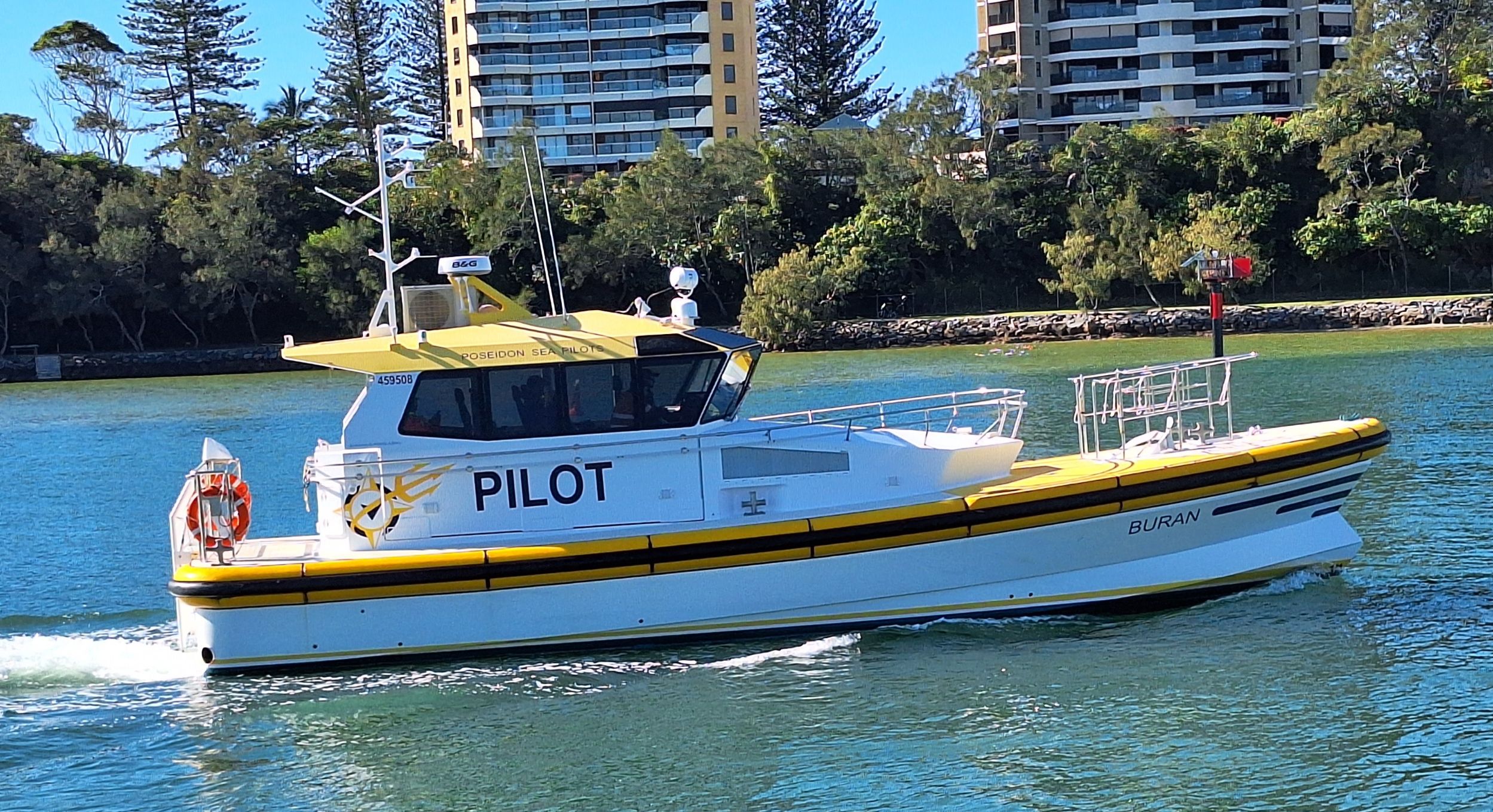
prepared for close‑quarters manoeuvring as the Brisbane Pilot base is located
here and also a very active trawler fleet which may also be entering or leaving. Read about How to Cross a Coastal Bar Safely here.
Mooloolaba Sailing
Guide - Entry Protocols
Mooloolaba is not an Australian port of entry. International yachts must clear customs and biosecurity at Brisbane, Bundaberg, Gladstone, or another designated port before proceeding to Mooloolaba. Domestic yachts have no entry requirements beyond standard harbour regulations. Queensland law requires everyone in the open areas of any boat to wear a lifejacket when crossing a designated coastal bar. This applies regardless of vessel size and is part of the updated rules that took effect on 1 December 2024. Open area is defined as any deck or cockpit not fully enclosed by solid, fixed structures. On most yachts, the cockpit is considered an open area, so the rule applies to crew on deck during a bar crossing. The rule applies at every designated coastal bar in Queensland (e.g., Mooloolaba, Wide Bay, Southport, Seaway, etc.). It applies during the entire crossing, not just the approach. It applies regardless of conditions, either calm or rough and it applies to all ages. The lifejacket must be a compliant PFD meeting the current Queensland standard (AS 4758). As a note for foreign yachts you might want to check age and condition of PFD's as local rules apply regardless of the flag at your stern.
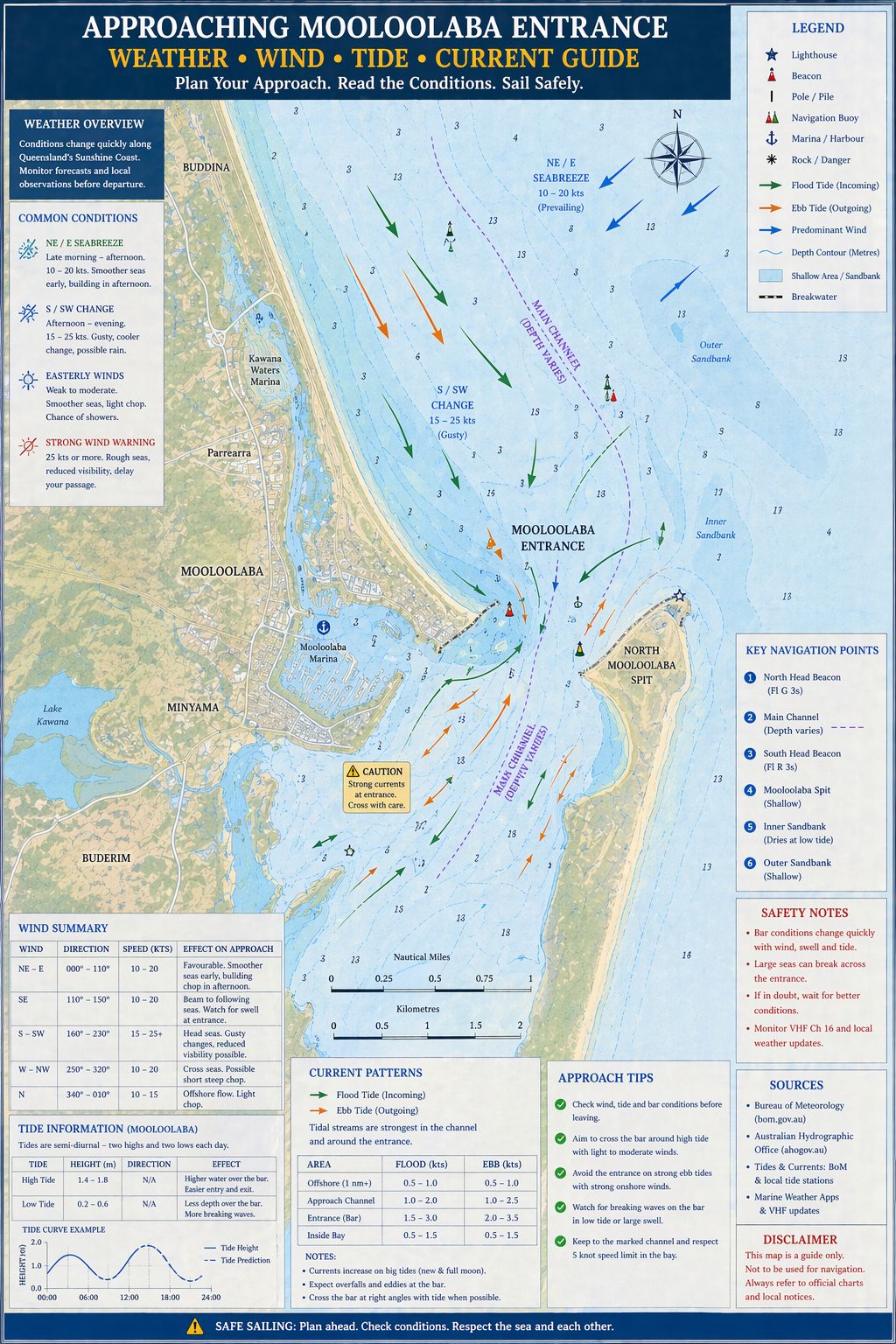
Chart Disclaimer. This chart is a schematic representation for illustrative purposes only and must not be used for navigation. Refer to official hydrographic charts for safe navigation. Be aware ENC charts may differ from official hydrographic charts. Both should be corrected and updated regularly.
Mooloolaba Sailing
Guide - Navigation
The Mooloolah River is a busy
waterway with marina, fishing trawler base, private pontoons, and commercial
facilities lining both banks. The channel is well‑marked and dredged, though
depths can vary near the entrance after heavy weather. Inside the river, tidal
flow is moderate and rarely affects handling significantly. The primary
navigational considerations are vessel traffic, narrow fairways, and the need
to maintain predictable movements in confined spaces. Fishing vessels and commercial
operators use the river extensively. Recreational traffic, including small powerboats and personal watercraft, adds
to the complexity.
Mooloolaba Sailing
Guide - Planning
- Check Notices to Mariners: Queensland Notices to Mariners are published by Maritime Safety Queensland (MSQ), and the official source is the Queensland Government’s Notices to Mariners portal. This is where you check all bar conditions, hazards, dredging updates, buoy changes, and pilotage‑area notices. For example recent MSQ notices include shoaling alerts and temporary virtual marks for the Mooloolah River entrance, showing how quickly conditions can change.
Mooloolaba Sailing Guide - The Bar Camera
The Mooloolah River bar camera is viewed through the Queensland Government’s official coastal bar camera system, which provides a live video feed of the entrance so skippers can assess swell, breaking waves, and bar shape before committing to an approach. The live feed is part of the Queensland Government coastal bar camera network, operated under the QLD Traffic/Transport and Main Roads system. It provides real‑time visual conditions of the Mooloolah River entrance at Point Cartwright. The camera is positioned to show the outer bar, the leads, and the break walls, giving a clear view of wave sets and breaking patterns. This allows a view of wave sets across the bar, breaking patterns on the eastern and western sides, cross‑sets pushing across the leads, vessel traffic entering/exiting and general visibility and sea state.
- Watch multiple wave sets before deciding to approach or leave the river.
- Look for breaking waves across the white sector of the leads, a sign to delay entry.
- Check for cross‑swell wrapping around Point Cartwright.
- Combine the camera with daily check of MSQ Notices to Mariners and local VHF reports for a complete picture.
About The Mooloolaba
Bar Crossing
I have crossed this bar a few times now. Mooloolaba’s entrance is a swell‑affected, shifting sand bar that can stand up rather quickly in easterly or northeasterly conditions. The leads are clear, but the final approach is narrow, with breaking seas possible across the bar even when conditions look manageable offshore.
Practical yacht‑handling guidance: Assess from outside: Hold off in safe water and watch several wave sets. If you see breaking waves across the leads, do not attempt the entrance.
- Favour a Rising Tide: Best crossed in settled weather on a rising tide, ideally near the top. Avoid ebb tide with any swell. Best done on an early morning high tide before the wind comes up.
- Commit with Power: Once aligned on the leads, maintain positive, steady throttle to keep control and prevent broaching. Don’t surf down waves, match speed to stay on the back of a wave if possible.
- Stay Centred: The channel edges shoal quickly. Hold the leads precisely; don’t drift toward the break water walls.
- Expect Cross‑sets: NE swell can push you sideways near the entrance. Anticipate and correct early.
- Inside Surge: Even after crossing safely, expect surge and tight manoeuvring in the basin, especially in fresh onshore winds.
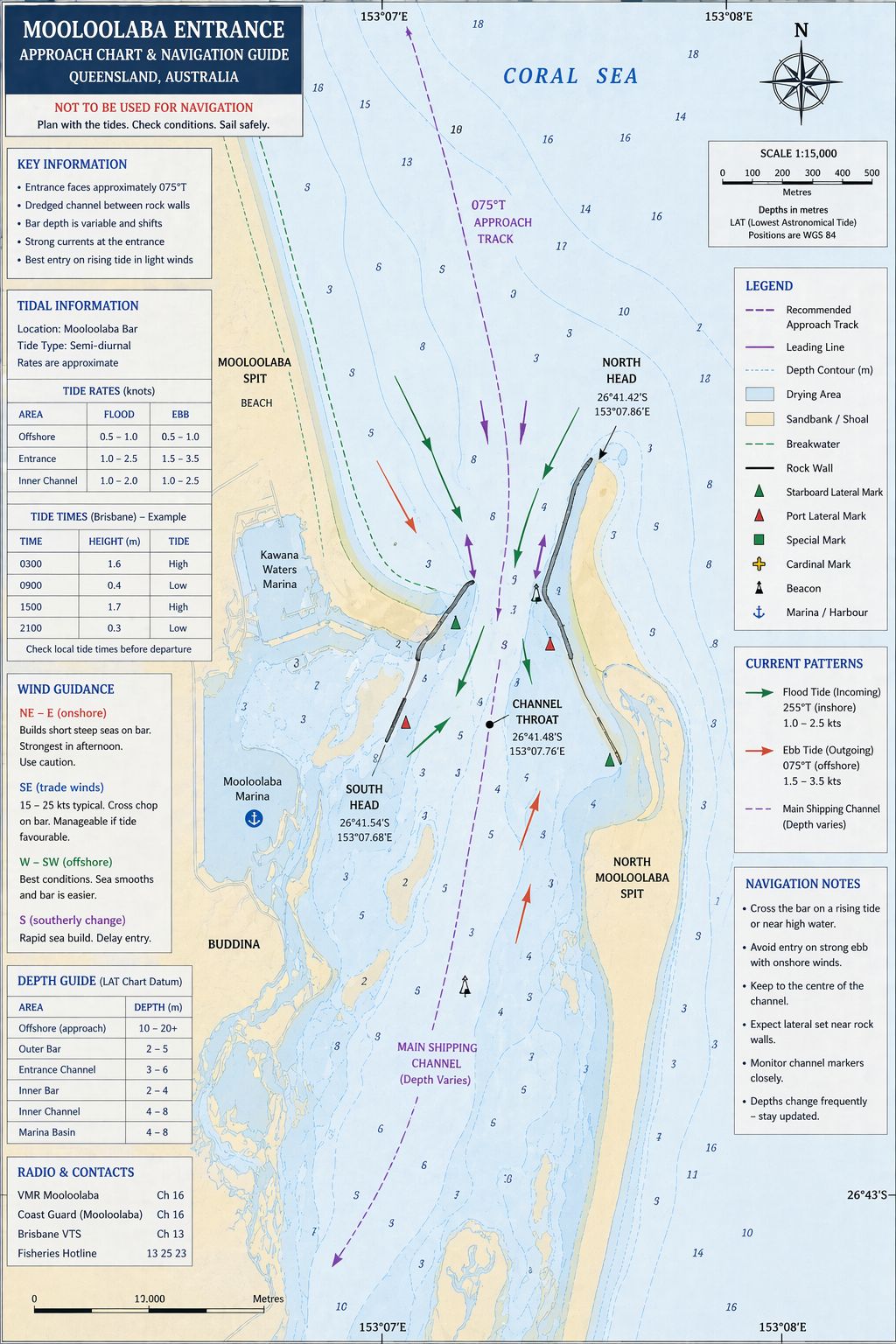
Chart Disclaimer. This chart is a schematic representation for illustrative purposes only and must not be used for navigation. Refer to official hydrographic charts for safe navigation. Be aware ENC charts may differ from official hydrographic charts. Both should be corrected and updated regularly.
Wind Directions for
Crossing
Best Wind Directions for Crossing
- Light offshore winds (e.g. Westerly, South westerly): Helps flatten the swell at the entrance and reduce wave steepness
- Calm or variable winds: When winds are light and variable, conditions are generally more predictable. This is often the safest window for crossing.
Winds to Avoid
- Strong onshore winds (e.g. Easterly, Northeasterly): These push swell directly into the river mouth, increasing wave height and making the bar more dangerous.
- Southeasterly winds: Common in the region, but they can drive swell into the entrance and cause breaking waves, especially at low tide.
Mooloolaba Lead
Light System
Mooloolaba uses a simple two‑sector lead‑light system to guide vessels across the bar and through the entrance channel. It is designed to keep you precisely on the dredged line, and any deviation shows up immediately in the colour change. The lead‑light arrangement is as follows:
- Front lead: Low white light on the eastern retraining wall.
- Rear lead: Higher white light set back behind it.
- Alignment: When the two white lights line up vertically, you are on the centre of the entrance channel.
Sector Behaviour (what you see)
- White over white (in line): Safe channel. Stay exactly on this line.
- Red sector (if you drift south/port): You are too far to port; steer starboard to regain the leads.
- Green sector (if you drift north/starboard): You are too far to starboard; steer port to regain the leads.
Practical Factors
- Pick up the leads well outside the entrance so you’re already aligned before reaching the bar.
- Keep the two white lights perfectly in line, make small helm corrections only.
- If you see any colour, correct immediately; the channel edges shoal fast.
Once inside the break water walls, the leads become less relevant and you transition to visual navigation.
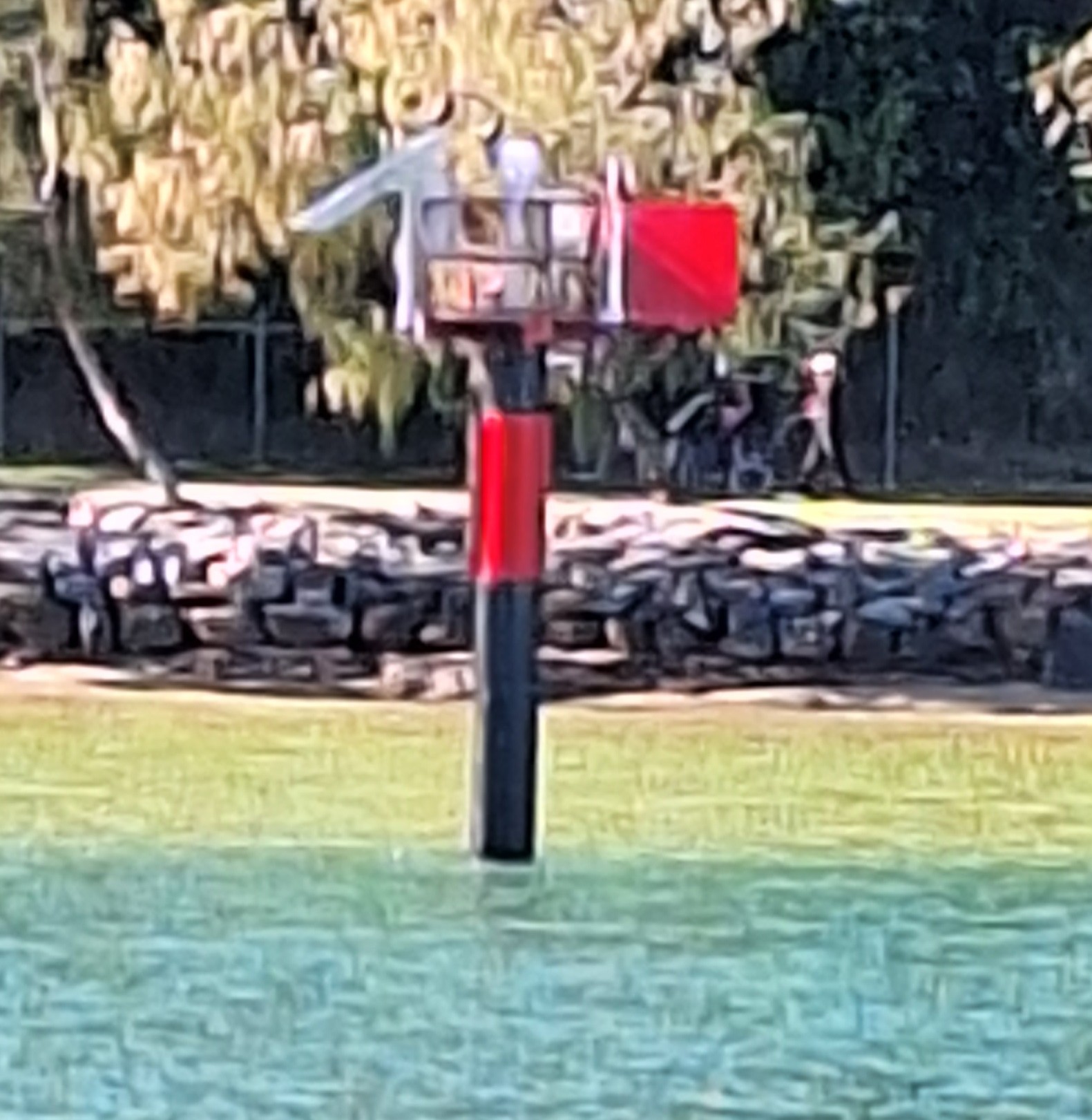
Mooloolaba Coast Guard
The local Coast Guard for the Mooloolaba area is Coast Guard Mooloolaba (QF6), one of Queensland’s busiest volunteer marine‑rescue units. They’re the primary response organisation for the Mooloolah River entrance, the offshore areas off Point Cartwright, and the wider Sunshine Coast region. They perform among many things, but include Bar‑crossing advice and local condition updates, Radio monitoring on VHF (including distress channels)
They also post a video early each morning on Facebook showing current bar condition.
VHF Radio channels: VHF 6 then 21, 67, 73 or nominated channel. They maintain a continuous watch and respond quickly to bar‑related incidents. They often have the most current, practical knowledge of the bar’s behaviour. - They can advise on set patterns, shoaling, and recent incidents and they’re the ones who respond when things go wrong, so they appreciate skippers calling early rather than late. They will also be watching you on a camera as you cross, try not to give them too much drama.
Initial Call Example
“Coast Guard Mooloolaba, this is
yacht [Vessel Name]
One mile east of the entrance, three persons on board.
Request current bar conditions and any recent reports.”
Committing to the Bar Crossing - Call Example
“Coast Guard Mooloolaba, [Vessel
Name] commencing bar entry now.
"Three persons on deck, all wearing lifejackets.”
After Bar Clearance
“Coast Guard Mooloolaba, [Vessel
Name] safely inside.
Request log‑off.
If conditions deteriorate or you need assistance
“Coast Guard Mooloolaba, [Vessel
Name].
We are [location], experiencing [issue], request assistance.”
Mooloolaba Sailing
Guide - Marinas
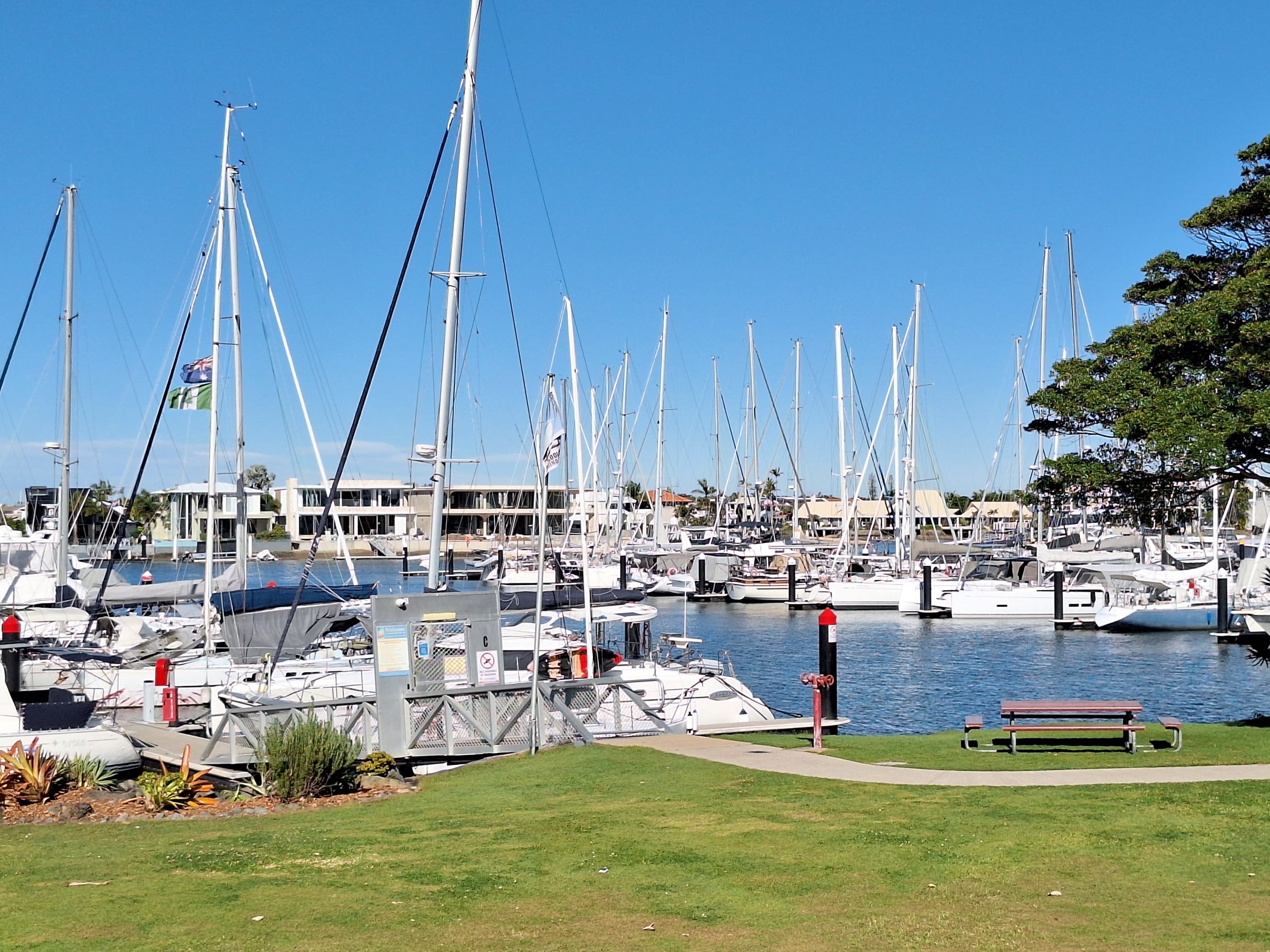
Mooloolaba offers several marina facilities, with the largest and most commonly used being the Mooloolaba Marina and the Wharf Marina. Both provide secure berths, deep water, and reliable access in most conditions. The marinas are well‑protected from wind and swell, and the river environment ensures calm but tidal water at all times. The Mooloolaba Marina is really nice, has really good shower and clean toilet facilities, laundrette, BBQ, vending machine and so on. The Mooloolaba Yacht Club is small and just close by for a cold one when it is open. It is an easy walk to the Mooloolaba beachfront with a lot of great eateries or for breakfast and coffee. Nearby is some really good seafood outlets and great fish and chips.
Mooloolaba Sailing
Guide - Provisioning
The marina here is very good place to stop with great provisioning options.
Supermarkets. IGA and Foodworks are not too far from the Mooloolaba Marina. The nearest Coles is at Mooloolaba Central on Venning Street. For Woolworths, your closest options are Kawana Waters (Buddina) and Mountain Creek or a ride share to Maroochydore Sunshine Plaza Shopping Centre with a very bog outlet. There is also a great Asian food market adjacent to Coles called Hanaro.
Markets: Weekend markets like Fisherman’s Road Sunday Markets Maroochydore opens 06:00 and is a large community market featuring fresh produce, crafts, food stalls, and local goods. Excellent for weekend provisioning.
Markets. The Mooloolaba Fish Market is close and excellent, straight off the trawler seafood. Really excellent fish and chips here also at two places.
Mooloolaba Sailing
Guide – Fuel and Water
Fuel is available at the marina fuel berths, with diesel and petrol supplied in a protected environment that allows safe refuelling in all weather. Water is available on all pontoons, and the supply is suitable for tank fills and washdowns.
Mechanical and Electrical Repairs
Resource
If you are headed somewhere remote consider the need to expand your knowledge base or have an information resource on board. Why not get a copy of my book The Marine and Electrical and Electronics Bible 4th Edition. By and for yachties, with everything from batteries and charging, solar and wind, diesel engines and marine electronics and so much more. Your complete systems guide. 650 pages of practical advice. In Australia and New Zealand order a copy through Boat Books. UK and European boats can buy the UK Edition Here. US and Canadian boats can get the US Edition Order Here. Marine systems are my profession so let me help you. By a liveaboard boat owner for other boat owners


Mooloolaba Sailing
Guide – Services
I have taken my boat out at Lawries Boat Services and they are well organised and professional, Jenny at the front desk is very helpful. The trip up requires high tide when transiting the Kawana canal, and the access to the travel lift is tight, and if required to come in stern first, the yard staff very helpful. Coastal Diesel and Marine is located here and appear to have a good reputation and are Volvo agents. DIY capability is also possible at Lawries.
Marine services in Mooloolaba are fairly extensive, and usual there also some unreliable with questionable competence, so ask the marina or yard for recommendations on who to engage. We also used a surveyor for our insurance survey while at Lawries. Can highly recommend Drew Sayer of Fore and Aft Surveyors. A boat builder and a boat owner and sailor, he is able to apply context to surveys which is helpful. Tel 0419 042 558.
Mooloolaba Sailing
Guide – Summary
Mooloolaba is one of the most reliable and practical harbours on the Queensland coast. It has secure marinas, comprehensive provisioning, and strong marine‑service network make it an essential waypoint for yachts moving between Brisbane and the Great Sandy Strait. For crews preparing to continue north toward Wide Bay Bar or south toward Moreton Bay, Mooloolaba provides a dependable and well‑equipped base. I hope this Mooloolaba Sailing Guide assist you in passage planning.