Masan Sailing
Guide for Yachts
Masan Sailing Guide for Yachts. Masan sits on the southern coast of South Korea inside Masan Bay and forms a large harbour system shaped by long breakwaters, dredged channels, commercial wharves, fishing basins, and sheltered inner ports. The coastline is protected by Geoje Island and the Goseong Peninsula which reduces swell and provides stable approach conditions. Depths are consistent across the approach channels with dredged sections supporting commercial vessels. This Masan sailing guide for yachts sets out the operational details for approaches, berthing, fuel, provisioning, and local procedures for skippers entering the region.
Masan is a major commercial port within Changwon City and is fully open to civilian traffic. The harbour is well protected in all directions and has long been a significant port for trade and industry with deepwater access and established maritime infrastructure. Yachts use designated marina areas or commercial wharves depending on availability. The provisioning footprint is centred on Masan and the wider Changwon urban area with extensive supermarkets, markets, and fish markets.
Masan Sailing
Guide for Yachts - Approaches
Approaches to Masan from the Korea Strait carry 20 to 40 metres offshore and shoal gradually toward the bay entrance. Vessels enter through Kadok Channel then Pudo Channel before reaching the entrance to Masan Harbour. Masan Bay is approached through Pudo Channel with depths from 13 metres or through Tong Channel with depths from 11 metres. Inner harbour depths range from 5 to 12 metres depending on basin. Traffic consists of commercial vessels, fishing craft, and harbour service boats. They follow predictable tracks. AIS improves situational awareness across the bay.
Masan Sailing
Guide for Yachts - Primary Harbours
Masan Port. Main harbour for the city. Approach depths are 10 to 14 metres. Inner harbour carries 5 to 8 metres. Commercial wharves dominate the layout with workable space for visiting yachts in designated areas.
Secondary Basins. Small inner basins carry 3 to 5 metres and are used by local fishing boats. Access is straightforward with minimal cross traffic.
Anchorage. Anchoring inside Masan Bay is limited due to traffic patterns and commercial activity. Suitable anchorages exist outside the main channel in 10 to 20 metres over mud. Most yachts proceed directly to harbour berths.
Masan Sailing
Guide for Yachts - Entry Formalities
Masan is not a first‑entry port for foreign yachts. Initial clearance is normally completed at Busan or Jeju. Once cleared into South Korea, domestic arrival in Masan requires no additional customs or immigration procedures. Local harbour authorities may request vessel details when arranging berthing.
Masan Sailing
Guide for Yachts - Local Weather
Masan experiences mild winters, warm summers, and moderate humidity. Winter brings occasional northerly winds but conditions remain manageable due to the bay’s protection. Summer is warm with periods of haze, fog, and heavy rain. Typhoon season runs from July to September, though Masan Bay is considered one of the safest typhoon anchorages on the south coast. Spring and autumn offer the most stable conditions. Tidal streams are weak across the bay and rarely exceed 1 knot.
- Spring brings stable winds and clear visibility.
- Summer brings humid conditions and occasional typhoons.
- Autumn is settled with light winds.
- Winter brings northerly winds and cooler temperatures.
Masan Sailing
Guide for Yachts - Provisioning
Supermarkets. Lotte Mart Masan. Large format supermarket with vegetables, fruit, meat, seafood, dairy, bakery, frozen food, noodles, sauces, dry goods, household supplies, and imported goods. Homeplus Masan. Full service supermarket with wide produce selection, meat, seafood, bakery, frozen items, packaged foods, rice, noodles, sauces, snacks, beverages, and household goods. E Mart Changwon. Large supermarket serving the wider Masan area with vegetables, fruit, meat, seafood, dairy, bakery, frozen food, noodles, sauces, dry goods, snacks, and imported items. Convenience stores including CU, GS25, and 7 Eleven are located throughout the city and carry packaged meals, drinks, snacks, bread, milk, eggs, and basic dry goods.
Markets. Masan Jungang Market. Large central market with vegetables, fruit, dried goods, and household items. Changwon Central Market. Major market serving the wider region with vegetables, fruit, herbs, tofu, dried goods, sauces, and prepared foods. Small greengrocers across Masan carry vegetables, fruit, tofu, pickled goods, dried goods, and basic pantry items.
Fish Markets. Masan Fish Market (Odong‑dong). One of the most famous fish markets in the region. Primary seafood hub with a public retail section selling fresh fish, shellfish, crustaceans, and seasonal local catch. Daily landings include mackerel, tuna, sardines, crab, shrimp, clams, oysters, octopus, squid, and seaweed products. Coastal Vendors. Small stalls near the harbour selling mackerel, squid, cuttlefish, anchovies, clams, and seasonal species. Town Fish Shops. Long established fishmongers across Masan selling whole fish, fillets, and processed seafood.
Masan Sailing
Guide for Yachts - Local Cuisine
Local cuisine in Masan is defined by southern Korean coastal ingredients with a strong emphasis on monkfish, bay caught fish, shellfish, and chili based stews. Agujjim is the signature Masan dish and is prepared from monkfish braised with garlic, bean sprouts, and chili seasoning. Maeuntang is prepared as a spicy fish stew using mixed fish, vegetables, and chili broth and is common in small kitchens near the harbour. Hoe is served as raw sliced fish with dipping sauces and reflects the daily landings at Masan Fish Market. Ganjang gejang is prepared from raw crab marinated in soy sauce and appears seasonally when crab landings are strong. Jogae gui is prepared as grilled shellfish using clams, scallops, and oysters sourced from the wider Changwon and Geoje grounds. Local bakeries produce milk bread and filled buns that form part of everyday provisioning.
Masan Sailing
Guide for Yachts - Local Customs
Local customs in Masan follow quiet and orderly Korean etiquette where brief greetings, small bows, and respectful distance are expected. Money and small items are given and received with both hands and staff in shops and markets prefer clear requests without bargaining. Shoes are removed when entering homes and some traditional restaurants and a raised floor at the entrance signals this. Photography of people or working areas is asked for politely and naval or security zones are never photographed. Voices are kept low in public spaces and alcohol is common but public drunkenness is poorly regarded. Tipping is not part of local practice and payment is made directly at the counter. Simple English is understood in larger shops but slow clear speech and written numbers remain the most reliable approach.
Masan Sailing
Guide for Yachts - Fuel Supplies
Fuel is available at commercial wharves in Masan Port. Alongside depths are 5 to 7 metres. Fuel is dispensed by hose from fixed pumps. Petrol is purchased ashore in approved containers.
Masan Sailing
Guide for Yachts - Water Supplies
Potable water is available at designated taps in Masan Port. Some pontoons provide direct hose connections depending on berth allocation.
Mechanical
and Electrical Repairs Resource
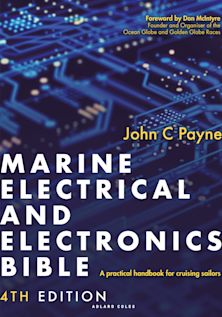
If you are headed somewhere remote consider the need to expand your knowledge base or have an information resource on board. Why not get a copy of my book The Marine and Electrical and Electronics Bible 4th Edition. By and for yachties, with everything from batteries and charging, solar and wind, diesel engines and marine electronics and so much more. Your complete systems guide. 650 pages of practical advice. In Australia and New Zealand order a copy through Boat Books. UK and European boats can buy the UK Edition Here. US and Canadian boats can get the US Edition Order Here. Marine systems are my profession so let me help you. By a liveaboard boat owner for other boat owners
.

Masan Sailing
Guide for Yachts - Marine Services
Masan has extensive marine services including mechanical, electrical, and chandlery support due to its role as a major commercial port. More extensive services including haul out facilities are located in Busan.
Masan Sailing
Guide for Yachts - Summary
Masan provides a large harbour system with reliable depths, straightforward approaches, and a complete provisioning footprint. Fuel and water are accessible in the main harbour. This Masan sailing guide for yachts provides the operational detail required for safe movement along the southern Korean coastline. Masan Sailing Guide for Yachts for all you need to know.