Marine Toilet
Joker Valve Troubleshooting - Operation, Failure and Replacement
Marine toilet joker valve troubleshooting. A marine toilet joker valve is an elastomer non-return valve fitted within the toilet discharge path. It allows waste and flush water to move away from the bowl while restricting return flow from the discharge hose. Its condition affects bowl clearance, pumping effort, sanitation odour and the quantity of waste remaining inside the toilet. A failed valve can allow the discharge hose contents to drain back into the bowl after flushing. The valve is a service component and does not replace a seacock, vented loop or correctly installed holding-tank system.
Joker-valve symptoms overlap with faults elsewhere in the sanitation installation. A full holding tank, blocked tank vent, scaled discharge hose, incorrectly positioned Y-valve or closed seacock can produce the same pumping resistance and backflow. Replacing the valve without inspecting the downstream system can therefore leave the original fault in place. Diagnosis begins by tracing the waste route from the toilet bowl to the holding tank or lawful discharge connection. The complete route must be isolated and depressurised before the valve housing is opened.
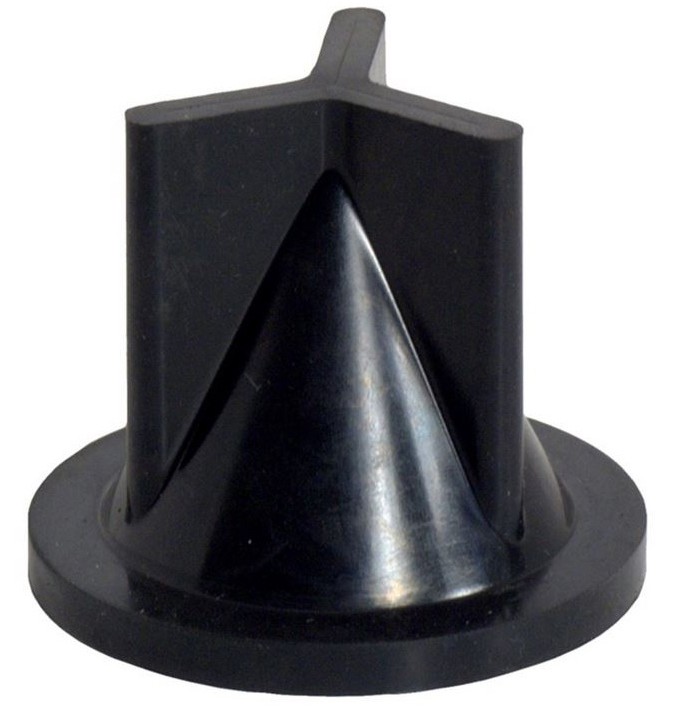
The origin of the term “joker valve” is not formally documented. The name is generally associated with the traditional three-pointed shape of its flexible outlet, which resembles a jester’s cap and is a modified duckbill valve. Its technical function is that of an elastomer non-return valve in the marine toilet discharge line.
Marine Toilet
Joker Valve Troubleshooting Overview
The joker valve sits at or close to the toilet’s discharge outlet. In a manual toilet, it is commonly installed inside the discharge elbow connected to the pump body. In an electric toilet, it may be located within the discharge port, pump outlet or macerator assembly. Its exact dimensions, flange shape, material and orientation depend on the toilet manufacturer and model.
The valve restricts sewage and flush water from returning after each pump stroke or electric flush cycle. It also maintains part of the hydraulic separation between the bowl and the contents of the discharge hose. The valve cannot contain pressure created by a blocked vent or overfilled holding tank. It also cannot prevent flooding caused by siphoning through an incorrectly routed hose or open seacock.
Marine Toilet
Joker Valve Troubleshooting Physical Description
A joker valve is normally moulded from flexible elastomer. The inlet end has a flange or collar that seals between the toilet body and discharge fitting. The outlet end narrows into a slit, cross-slit or shaped opening that separates when waste is pumped through it and closes when flow stops. The valve is sometimes described as a duckbill valve, aortic valve, backflow valve, check valve or discharge non-return valve. These terms describe the same operating principle but do not establish dimensional compatibility. A valve that fits one manual toilet may not fit an electric toilet from the same manufacturer.
The sealing slit must remain flexible enough to close after each discharge cycle. Age, chemical attack, scale, paper, heat and prolonged deformation can leave the opening partly expanded. Once the slit remains open, waste retained in the discharge hose can return to the toilet. The flange forms part of the discharge-joint seal. It must sit flat within the housing without folds, debris or distortion. A displaced flange can leak sewage outside the toilet even when the valve opening functions correctly.
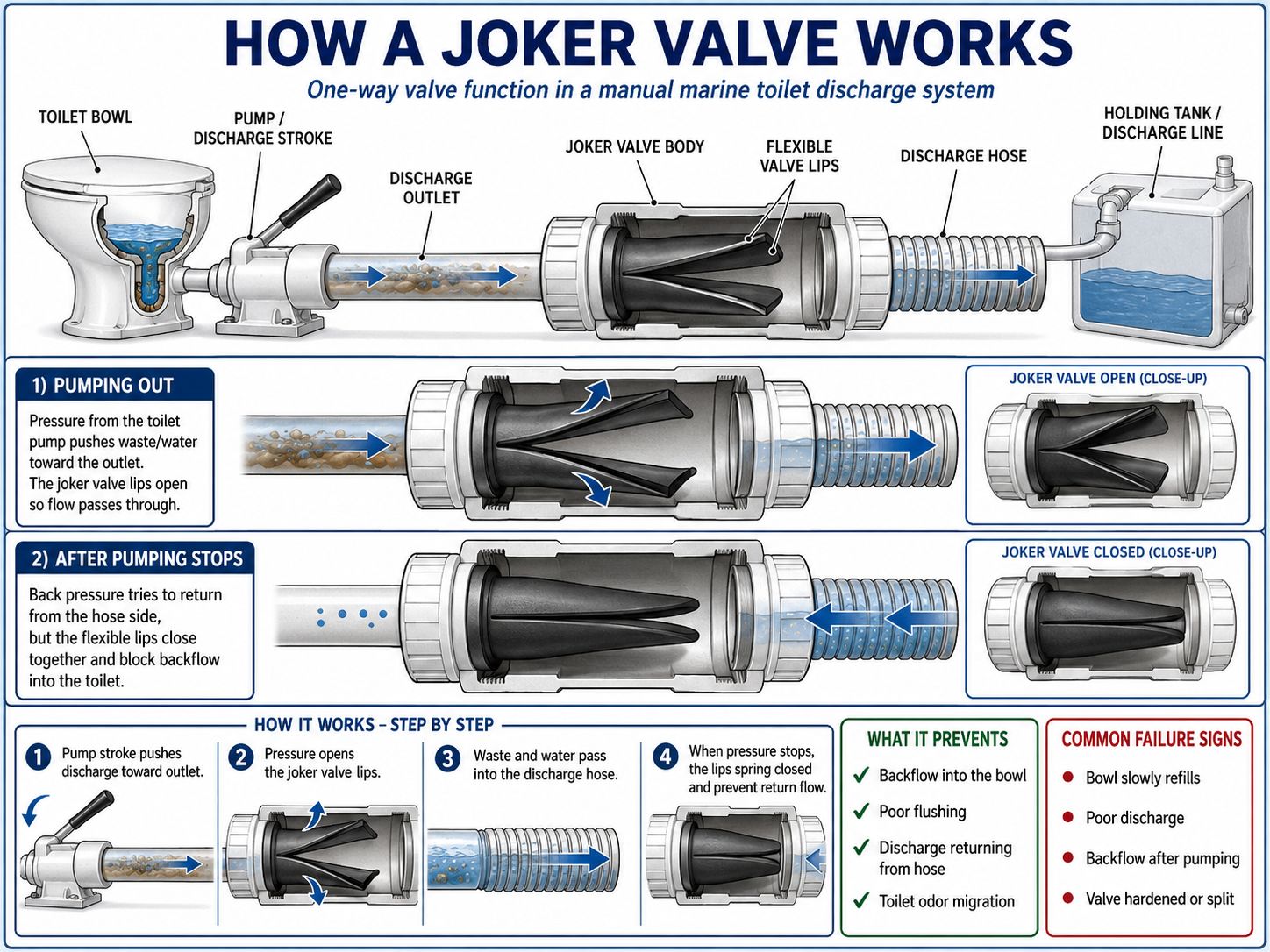
The valve has no electrical connection, spring or external control. Its action depends on material elasticity and pressure difference across the valve. Pump pressure opens it in the discharge direction. Reverse pressure pushes the slit toward its closed position, but excessive back pressure can deform the valve or force waste through it. The component can remain hidden within the discharge elbow while its condition deteriorates. External inspection of the toilet does not confirm valve condition. Removal is required to inspect the slit, flange, surface and flexibility.
Marine Toilet
Joker Valve Troubleshooting - Functional Description
During operation of a manual marine toilet, the pump moves waste from the bowl through the pump chamber and toward the discharge elbow. Pressure created by the discharge stroke opens the joker valve. Waste then enters the discharge hose and travels to the holding tank or the selected discharge route. When the pump stroke ends, discharge pressure falls. The valve slit closes and restricts the contents of the hose from moving back into the pump and bowl. A serviceable valve therefore reduces the volume returning after flushing.
The valve does not create the complete pump seal. Manual toilets also use piston seals, inlet valves, outlet flap valves and control valves. Loss of suction or inability to draw flush water may originate from these components rather than the joker valve. An electric toilet can use a macerator or discharge pump to move waste through the valve. A foreign object or fibrous material can lodge in the macerator before reaching the valve. Material passing through the macerator can then collect at the valve slit or within a scaled discharge fitting.
Backflow control is required because marine toilet discharge hoses often rise above the toilet before reaching the holding tank. Waste remaining in the raised hose creates a return head toward the bowl. The joker valve restricts that reverse movement. A discharge hose with a long rise retains more liquid than a short direct run. The valve therefore experiences repeated reverse pressure after every flush. Correct hose routing and adequate flushing reduce the amount of solid waste remaining against it.
The joker valve is not an anti-siphon device. Where the toilet or discharge connection lies below the heeled waterline, the installation requires the applicable vented loop, seacock and hose routing. Closing the toilet’s dry-bowl control also does not replace hull isolation. The valve is not designed to control holding-tank pressure. A blocked tank vent can pressurise the discharge system as the toilet pumps into the tank. This pressure can force waste back through the valve, damage the pump or produce leakage at a hose or fitting.
Marine Toilet
Joker Valve Troubleshooting - Installation
Identify the toilet manufacturer, model and valve part number before dismantling the system. Do not select the replacement from appearance alone. Similar valves can have different flange diameters, lengths, materials and slit arrangements.
- Close the toilet inlet seacock and any overboard discharge seacock. Isolate electrical power to an electric toilet or macerator. Confirm that the holding tank is not full and that its vent is open.
- Pump or remove as much liquid from the bowl as the system permits. Expect sewage to remain in the discharge hose, especially where the hose rises above the toilet. Place a container and absorbent material beneath the discharge elbow before loosening it.
- Wear gloves and eye protection. Ventilate the compartment. Keep sanitation tools separated from freshwater, galley and general cleaning equipment.
- Support the discharge hose before removing the elbow. A sanitation hose can be stiff, heavy and difficult to move. Its weight can crack a plastic fitting or pull against tank connections when released.
- Loosen the hose connection only where removal of the elbow requires it. Do not twist the toilet body or use the hose as leverage. A hose hardened by age or scale may require replacement rather than forceful removal.
- Remove the discharge fitting according to the toilet design. Retain the correct screws and note their installed position. Fasteners passing into plastic housings require controlled hand pressure during reassembly.
- Observe the old valve’s orientation before removal. The flanged inlet sits against the toilet or pump side, while the slit end faces the downstream discharge hose. A reversed valve obstructs flow and can prevent the bowl from clearing.
- Clean the valve housing and discharge elbow. Remove paper, scale and waste deposits without scratching the sealing surfaces. Inspect the plastic fitting for cracks, distortion and damaged screw holes.
- Install the replacement valve without grease, sealant or chemical treatment unless the toilet manufacturer specifies their use. Petroleum products can damage some valve materials. Sealant can prevent the flange seating and introduce fragments into the discharge path.
- Seat the flange evenly around the complete housing. The valve must not fold, twist or become trapped between misaligned components. Refit the discharge elbow and tighten its fasteners evenly.
- Do not overtighten screws fitted into a plastic pump body or toilet base. Excess torque can crack the housing or strip the threads. A leaking joint is dismantled and inspected rather than tightened until the plastic deforms.
- Refit the discharge hose fully onto its hose tail and position the clamps over the correct part of the fitting. Confirm that the hose weight is supported independently of the toilet outlet.
- Restore the seacock position and electrical supply required for testing. Flush with clean water and inspect the joint during operation. Allow the system to stand, then check whether water or waste returns to the bowl.
Marine Toilet
Joker Valve Troubleshooting
Waste returning to the bowl is the primary joker-valve symptom. The return can begin immediately after pumping or appear gradually as the discharge hose drains back. The quantity depends on the hose length, vertical rise, tank pressure and condition of the valve. Do not replace the valve before confirming that the holding tank has capacity and its vent is open. A full tank or blocked vent can force waste back through a serviceable valve. Check the following conditions in the following order:
- Holding-tank level
- Holding-tank vent
- Y-valve position if fitted
- Discharge seacock position
- Discharge-hose restriction
- Joker-valve physical condition
- Toilet pump valves and seals
This sequence prevents dismantling the toilet when the restriction lies farther downstream.
Waste Returning to
the Bowl
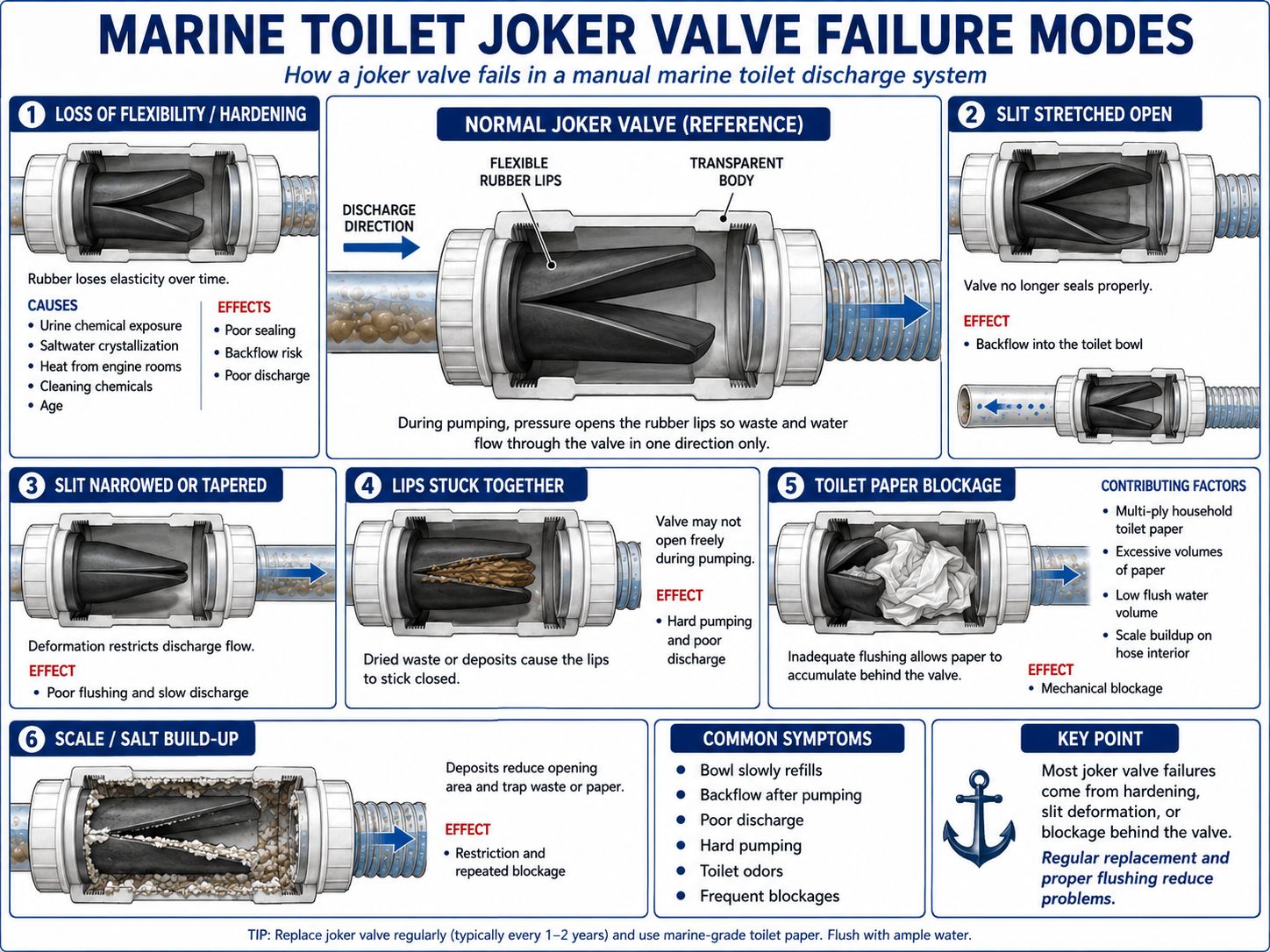
Return flow after pumping commonly indicates that the joker-valve slit no longer closes. Remove and inspect the valve for deformation, scale, paper, cuts and loss of flexibility. A small amount of clean water can return from the toilet’s internal passages depending on its design. Sewage, discoloured water or a rising bowl level indicates reverse flow from the discharge side. Replace a valve that remains open, hardened, split, swollen or distorted. Cleaning cannot restore material elasticity. If a new valve fails to stop backflow, inspect the discharge-hose rise, tank vent and tank pressure. Do not install several new valves without locating the downstream cause.
Toilet Becomes
Hard to Pump
Increasing manual-pump resistance can result from a blocked joker valve, but it can also indicate scale within the hose, a closed Y-valve, a closed discharge seacock or a full holding tank.
- Stop pumping when resistance increases. Additional force raises pressure against the toilet body, hose connections and tank fittings.
- Disconnect the discharge side only after the system is isolated and depressurised. Inspect the valve opening and the bore of the discharge elbow. A valve blocked with paper or scale requires removal and inspection.
- Do not force a rod through the bowl toward the valve. The rod can damage pump components, invert the valve or puncture the discharge hose.
Toilet Pumps but
the Bowl Does Not Clear
A valve held closed by scale or foreign material can restrict discharge. A collapsed hose, blocked tank inlet or failed pump valve can produce the same result.
- Remove the joker valve and check whether the discharge elbow and downstream hose pass low-pressure water while disconnected. Do not apply unrestricted dock-water pressure to a sanitation hose.
- If the downstream hose remains blocked, divide the system at existing service connections and test each section. Replace heavily scaled hose rather than clearing only a narrow opening through it.
Repeated Paper
Blockages (Very Common Issue)
Paper can collect at a valve that has lost its full opening or at a discharge elbow narrowed by scale. Replacing the valve may restore flow, but the blockage will recur if the hose remains restricted.
- Inspect the downstream hose for mineral and urine-scale deposits. Flex removed hose carefully and observe whether hard deposits detach from the wall.
- Control the amount of paper entering the toilet and use enough flush water to move waste through the complete hose route. Do not leave solids standing inside a long discharge hose.
- Wipes, sanitary products, paper towels and cleaning cloths require physical removal. They do not break down within the valve or hose.
Odour Around the
Toilet
A joker valve can reduce waste backflow but does not provide a complete gas seal. Odour can originate from permeated hose, a leaking discharge joint, standing waste in a low hose section, a blocked tank vent or leakage around the toilet base.
- Inspect the valve flange and discharge elbow for residue. Check the hose surface and connections. A clean valve does not correct permeated sanitation hose.
- Do not use strong chemicals to conceal odour. Bleach, concentrated acids, caustic drain cleaner and incompatible toilet products can damage the joker valve and other elastomer seals.
Leakage at the
Discharge Elbow
Leakage after valve replacement commonly results from a folded flange, debris on the sealing surface, a cracked elbow, distorted housing or uneven fastener tension.
- Isolate the toilet and dismantle the joint. Do not continue tightening plastic components.
- Inspect the replacement valve for correct dimensions. An incorrect flange thickness can prevent the elbow seating against the housing.
- Replace damaged screws, fittings or housings with parts intended for the toilet model. Do not enlarge plastic fasteners or apply an external sealant patch to a sewage joint.
New Joker Valve
Fails Soon After Installation
Early failure requires investigation of the complete discharge system. Possible causes include the following:
- Incorrect valve
- Reversed installation
- Overtightened housing
- Chemical attack
- Heavy scale
- Excess toilet paper
- Foreign material that shouldn’t be in the toilet
- Blocked tank vent
- Full holding tank
- Excessive discharge-hose back pressure
- Misaligned discharge elbow
Remove the failed valve and record its condition. A slit forced permanently open indicates back pressure or retained material. A swollen or softened valve indicates chemical incompatibility. A cut or torn valve indicates foreign material, sharp deposits or installation damage.
Marine Toilet Joker Valve Troubleshooting - Electric Toilet
Trips the Circuit Breaker
A blocked joker valve can stall an electric discharge pump or macerator. The resulting current rise can open the circuit breaker or fuse.
- Isolate electrical power before opening the pump or discharge housing. Remove the blockage and inspect the macerator, impeller, shaft and seals.
- Do not fit a larger fuse or breaker. The specified circuit protection limits wiring and motor damage.
- After repair, measure voltage at the toilet while it operates. Low voltage can reduce motor speed and increase blockage risk
Marine Toilet Joker Valve Troubleshooting - Toilet Bowl Fills
with Seawater
Continuous clean seawater entering the bowl is not primarily a joker-valve fault. Investigate the inlet valve, wet-and-dry control, inlet seacock, vented loop and hose routing.
- Close the inlet seacock immediately. A toilet below the heeled waterline can flood the yacht through the inlet system.
- The joker valve is installed on the waste-discharge side and does not control seawater entering through the flush-water inlet.
Marine Toilet Joker Valve Troubleshooting - Bowl Fills While
the Yacht is Heeled Over
Waste or seawater appearing during heel indicates that the system’s relationship to the waterline has changed. Inspect vented loops, seacocks, discharge routing and tank location.
A new joker valve does not make an incorrectly routed below-waterline installation safe. Hose loops must account for the heeled waterline, not only the upright condition at the berth.
Buy the Complete
Systems Guide
Need boat systems help? Buy a copy of my book The Marine Electrical and Electronics Bible, 4th Edition. US based boats can get the US Edition Here. You can also order through Amazon. In Australia order a copy through Boat Books. UK based boats can Order Here. Marine systems are my profession so let me help you.


Marine Toilet Joker Valve Troubleshooting - Valve Inspection
and Replacement Criteria
Replace the joker valve when inspection finds the following conditions:
- A slit that remains open
- Hardened or brittle material
- Cuts or cracking
- Swelling
- Permanent deformation
- Damaged flange
- Embedded scale
- Chemical deterioration
- Backflow that remains after downstream faults are cleared
Replacement interval depends on toilet use, valve material, chemicals, flush-water source and discharge-system condition. Use operating symptoms and the toilet manufacturer’s maintenance interval.
- Carry at least one correct replacement valve aboard. Remote cruising requires additional valves where the toilet depends on a model-specific part not available locally.
- Store replacement valves in labelled packaging away from heat, sunlight, fuel, oil and cleaning chemicals. An unlabelled rubber valve cannot be assumed compatible with the installed toilet.
Marine Toilet
Joker Valve Troubleshooting - Summary
The marine toilet joker valve controls reverse flow at the toilet discharge but does not replace the holding-tank vent, seacocks or anti-siphon installation. Backflow, hard pumping and poor bowl clearance require inspection of the complete discharge route before the valve is replaced. Correct service requires system isolation, controlled dismantling, model-specific parts and testing after reassembly. These procedures form the basis of marine toilet joker valve troubleshooting and all you need to know.