Lingkas Sailing Guide
Lingkas sailing guide. with approaches navigation anchorage provisioning and local services as part of the Tarakan harbour zone in North Kalimantan. It is a coastal district on the southwestern side of Tarakan Island and forms part of the main harbour zone serving North Kalimantan. The shoreline is shaped by mangrove systems, shallow approaches and tide‑dependent channels that merge directly into the wider Tarakan port area. Offshore conditions are influenced by the southern Sulu Sea and the northern Makassar Strait, with seasonal variation in swell, visibility and current strength. Yachts do not anchor at Lingkas itself but use the established outer anchorage for Tarakan.
The district supports administrative facilities, residential areas and small commercial zones. Lingkas contains local shops, markets and waterfront activity, but all maritime services, fuel access, formalities and vessel movements are handled through Tarakan’s main port. For yachts operating in the region, Lingkas functions as part of the broader Tarakan harbour environment rather than a separate destination.
Lingkas Sailing Guide - Approaches
Lingkas is approached through the same marked channels used for Tarakan. These channels are shallow, tide‑dependent and bordered by mangrove edges and mudflats. Offshore depths fall from 50 m to 20 m and then to 5–10 m near the island. The main approach carries 6–12 m depending on tide and position. All navigation follows Tarakan’s commercial routes, with no separate access channel for Lingkas.
Lingkas Sailing Guide - Navigation
Navigation is shaped by strong tidal currents, sediment movement and continuous ferry and cargo activity within the Tarakan harbour zone. Currents reach 3–4 kn during spring tides and influence vessel alignment when manoeuvring near anchored shipping. Floating debris is common after heavy rain. Radar returns are affected by low‑lying terrain and by the density of anchored vessels. AIS coverage is strong due to commercial operations. Lingkas has no independent navigational requirements beyond those of Tarakan.
Chart Accuracy and Source Disclaimer – Indonesia
Chart accuracy across Indonesia is inconsistent, with most non‑commercial regions still based on pre‑1970s lead‑line surveys that provide approximate depths, generalised reef edges, and sparse or single‑point soundings. Official ENC coverage improves only in major commercial ports, while offshore islands, reef systems, and remote bays across Sumatra, Java, Kalimantan, Sulawesi, Nusa Tenggara, Maluku, and Papua rely on outdated or incomplete data. Navionics and C‑Map offer reasonable coastline shape and usable macro‑routing but suffer from interpolated contours, missing shoals, and reef offsets of 20–150 m in many areas. Garmin BlueChart inherits the same limitations. Satellite imagery (Google, Bing, ESRI, SASPlanet) provides the most accurate depiction of reef and shoal edges, typically within 3–10 m, and is essential for anchorage selection and approach planning.
Skippers should treat all charted depths outside commercial ports as approximate and rely on a combination of ENC cross‑checking, satellite‑based reef reading, visual navigation, and drone reconnaissance for safe entry into anchorages. All chart information referenced in this guide is derived from publicly available Indonesian hydrographic products, international ENC datasets, and third‑party electronic chart packages. These sources vary in age, survey method, positional accuracy, and datum consistency. No guarantee is made regarding the completeness, reliability, or currency of any charted depth, contour, hazard, or navigational feature. Mariners are responsible for verifying all information against the latest official notices, updated charts, and on‑scene conditions. Electronic charts, satellite imagery, and user‑generated data must not be relied upon as sole sources of navigational information. Safe navigation requires continuous visual assessment, prudent seamanship, and independent confirmation of all charted features.
Lingkas Sailing Guide - Anchorage
No anchorage exists at Lingkas. Yachts anchor in the designated outer anchorage for Tarakan where depths of 8–15 m provide mud holding. The anchorage lies clear of ferry lanes but remains exposed to wash from passing traffic. Lingkas waterfront areas are unsuitable for anchoring due to shallow water, tidal flats and local vessel activity.
Lingkas Sailing Guide - Entry
Formalities
Lingkas is not a port of entry. All clearance procedures occur at Tarakan’s main port offices. Yachts must complete arrival reporting to Immigration, Customs and Quarantine at Tarakan. No formalities are conducted in Lingkas.
Lingkas Sailing Guide - Berthing
Facilities
Lingkas has no dedicated yacht berthing. Small‑craft wharves exist but are used by local vessels and are not suitable for yachts. All berthing access is through Tarakan’s small‑craft wharves, with 2–4 m depth depending on tide. Shore power is limited, potable water is available at selected points and fuel is obtained by jerry can from nearby stations.
Lingkas Sailing Guide - Local
Weather
Lingkas experiences the same weather patterns as Tarakan, with year‑round rainfall and peaks during the northwest monsoon from December to March. The southeast trade season from May to September brings steadier winds and lower rainfall. Squalls occur at any time of year, and heavy rain reduces visibility to 1–2 NM. Localised gusts occur near mangrove‑lined headlands.
Lingkas Sailing Guide - Provisioning
Supermarkets. There are none but they are present in Tarakan. Indomaret and Alfamart are there along with many small grocery stores. Supermarket provisioning for Lingkas is obtained from Transmart Tarakan, Hypermart Tarakan and multiple Indomaret and Alfamidi outlets across the wider Tarakan area.
Markets. Pasar Lingkas is local wet market with fresh vegetables, tropical fruit. Again opens at 05:00. Pasar Beringin (Tarakan) is 10 minutes from Lingkas in central Tarakan and is a larger market with more variety. Pasar Batu is also in Tarakan.
Fish Markets. Lingkas waterfront vendors handle small‑scale daily landings. Tarakan Fish Market remains the primary fish market for the island.
Lingkas Sailing Guide - Local
Cuisine
Local cooking follows the North Kalimantan pattern of coastal seafood and Malay‑influenced dishes. Ikan bakar is widely served in waterfront stalls, and amplang fish crackers are produced throughout the region.
Lingkas Sailing Guide - Fuel
Supplies
Lingkas has diesel onshore but not in a form directly usable by yachts. Pertamina stations in the Tarakan urban area supply automotive diesel only, with no wharf‑side hose service and no facility for direct refuelling. All fuel must be moved by jerry can from the roadside to small‑craft landings, typically by motorbike carrier. Fishing‑fleet depots and offshore‑sector suppliers maintain their own controlled tanks but do not supply visiting yachts. Bottle‑level fuel in the coastal districts is unsuitable for yacht tanks. Major refuelling must be completed via jerry‑can logistics or at a designated facility outside commercial‑port restrictions.
Lingkas Sailing Guide - Water
Supplies
Lingkas provides no yacht‑suitable potable water at anchor, and none of its shoreline landings, small jetties, or fishing‑fleet zones maintain hose points for visiting vessels. Municipal supply is low‑pressure and inconsistent, unsuitable for high‑volume yacht tank loading. Mangrove‑edge and estuarine water is unusable due to sediment load, tidal turbidity, and runoff from the Tarakan urban zone. Communal taps behind the waterfront offer only jerry‑can uplift, with availability varying under local rationing and fishing‑fleet demand. No workshops, fishing bases, or yards maintain surplus storage for external supply, and no tanker delivery service operates for yachts. Yachts must arrive fully provisioned and plan for zero water uplift in Lingkas.
Mechanical and Electrical Repairs
Resource
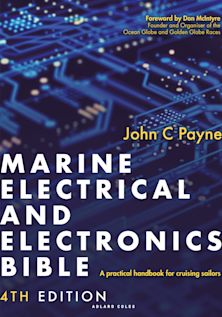
If you are headed somewhere remote consider the need to expand your knowledge base or have an information resource on board. Why not get a copy of my book The Marine and Electrical and Electronics Bible 4th Edition. By and for yachties, with everything from batteries and charging, solar and wind, diesel engines and marine electronics and so much more. Your complete systems guide. 650 pages of practical advice. In Australia and New Zealand order a copy through Boat Books. UK and European boats can buy the UK Edition Here. US and Canadian boats can get the US Edition Order Here. Marine systems are my profession so let me help you. By a liveaboard boat owner for other boat owners.

Lingkas Sailing Guide - Marine
Services
Mechanical, electrical, electronics and general repair workshops operate across Tarakan, with Lingkas hosting small local workshops. Haul‑out facilities are located in Balikpapan and Surabaya. Volvo and Yanmar agents operate in major Indonesian ports.
Lingkas Sailing Guide - Local
Customs
Lingkas’s coastal communities expect quiet, respectful behaviour when crews come ashore, especially around the compact residential lanes behind the shoreline and the fishing‑boat districts. Elders should be greeted first, voices kept low near homes, and modest clothing worn at all times, including shoulders and knees covered. Photography of people, homes, boats, and mosque compounds requires direct permission. Alcohol must remain completely out of sight in public spaces. Crews must avoid obstructing fishing‑boat and work‑boat movements at dawn and dusk, and approach local leaders, senior fishermen, or harbour‑area supervisors when requesting access, assistance, or shore‑side arrangements
Lingkas Sailing Guide - Summary
Lingkas forms part of the Tarakan harbour zone and does not function as an independent maritime destination. All approaches, anchorage, formalities and marine services are handled through Tarakan. The district provides local provisioning and small‑scale waterfront activity, with yachts using the established outer anchorage and small‑craft wharves in Tarakan for access. Lingkas Sailing Guide for all you need to know.