Lavrio Greece
Sailing Guide
Lavrio Greece Sailing Guide. Lavrio is located on the south-east coast of Attica on the Aegean side of Greece at approximately 37°43′N 24°03′E. The port lies east of Cape Sounion and functions as a commercial and ferry port with adjacent marina infrastructure. It is a primary departure point for the Cyclades and is positioned directly at the entrance to the Cycladic wind system.
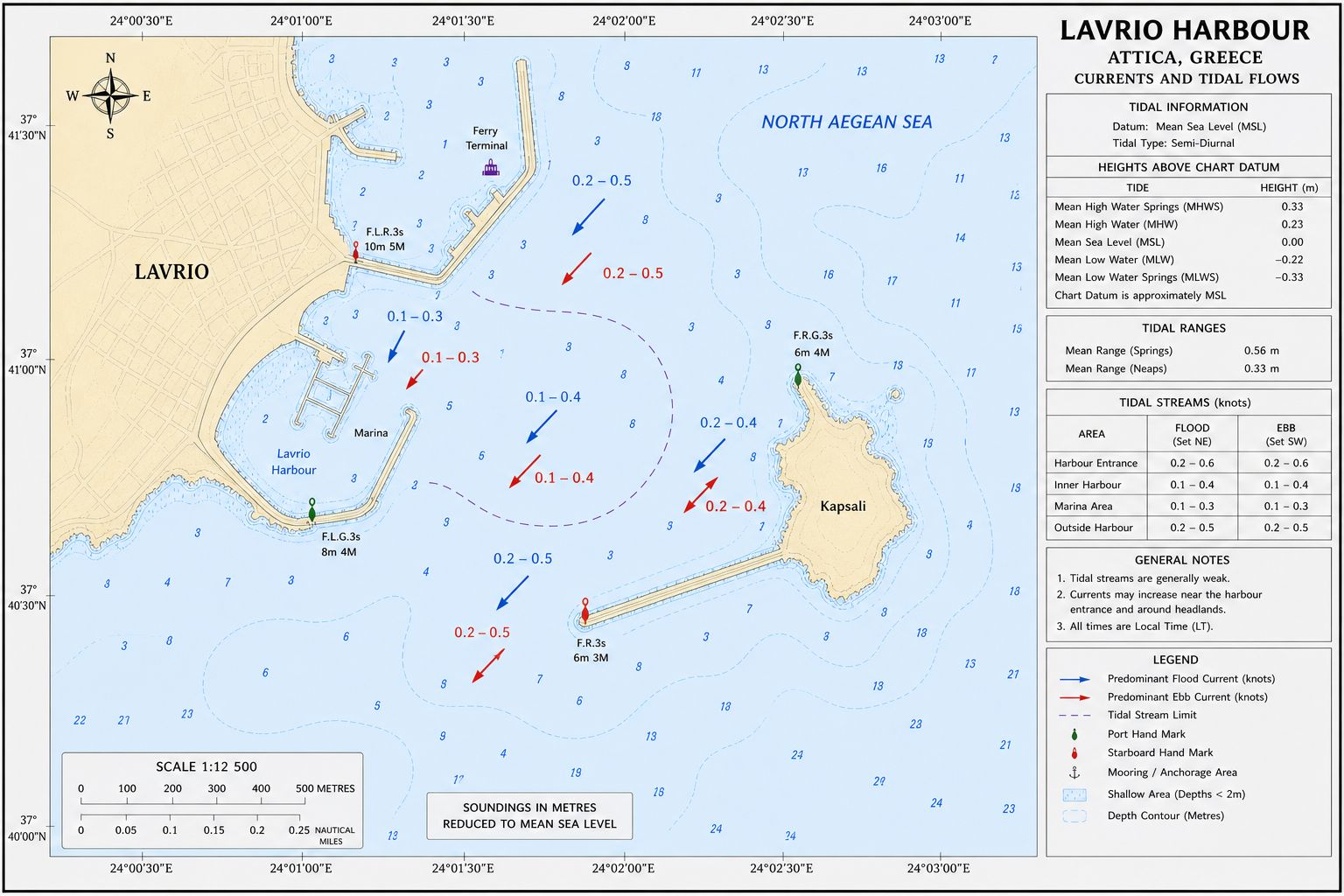
The operating environment is semi-exposed with transition from Saronic Gulf conditions to open Aegean. Wind strength increases markedly east of Cape Sounion. The coastline is open with limited natural shelter outside harbour structures. Depths are maintained within port limits and increase rapidly offshore. Tidal influence is negligible.
Lavrio Greece
Sailing Guide History
The history of Lavrio is closely tied to its rich mineral resources and maritime role in ancient Greece. In antiquity, the area was known for its extensive silver mines, which were worked from the 6th century BC and became a major source of wealth for Athens. The revenue from these mines funded the construction of the Athenian fleet, playing a decisive role in the Greek victory over Persia, particularly at the Battle of Salamis in 480 BC.
After periods of decline during the Roman and Byzantine eras, Lavrio saw a major revival in the 19th century when mining operations were re-established on an industrial scale. This led to the growth of the modern town as a mining and port centre. The mining industry continued into the 20th century before eventually declining, after which Lavrio transitioned into a commercial port and yachting base. Today, it serves as an important gateway to the Cyclades and retains its historical identity linked to both mining and maritime activity.
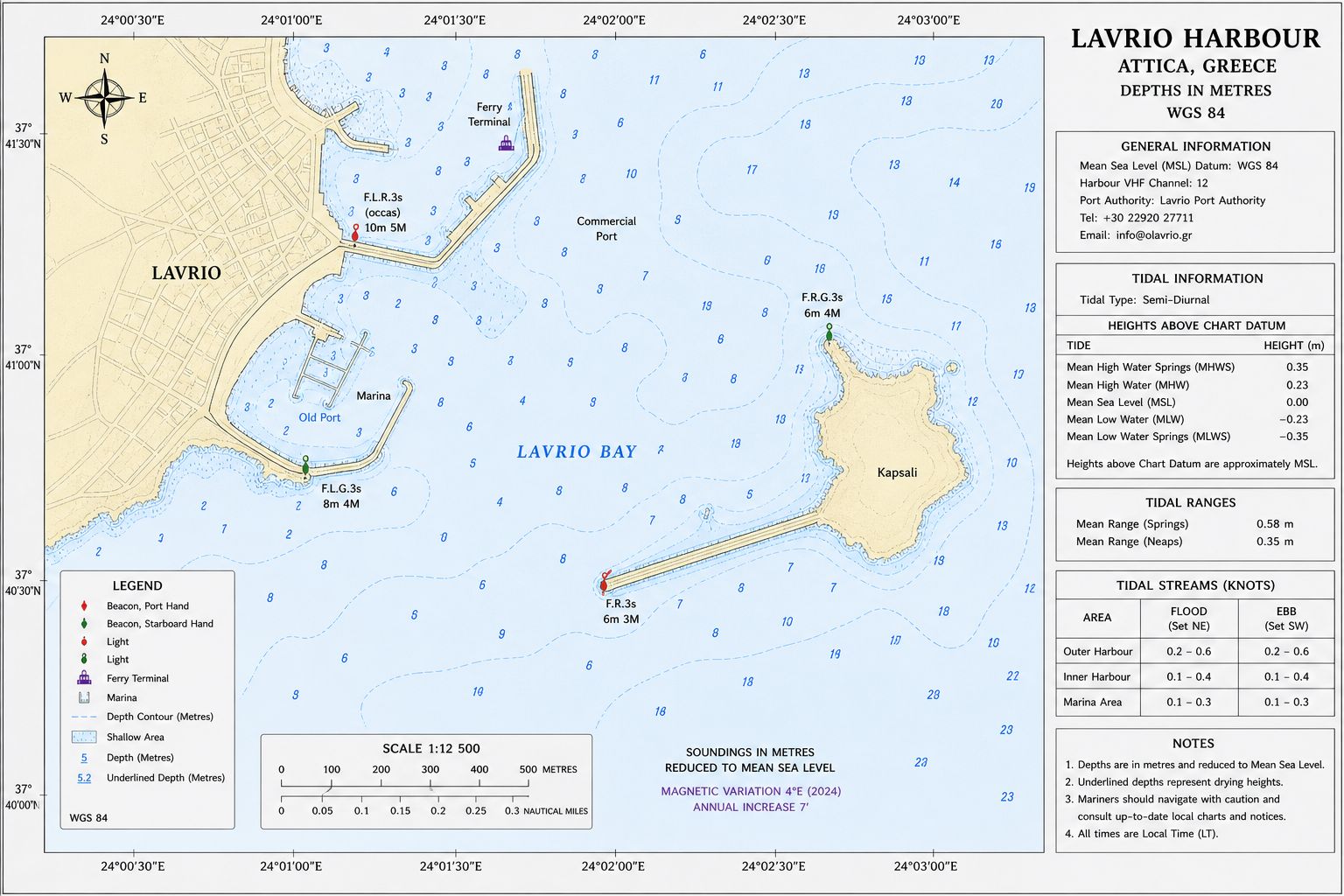
Chart Disclaimer. This chart is a schematic representation for illustrative purposes only and must not be used for navigation. Refer to official hydrographic charts for safe navigation. Be aware ENC charts may differ from official hydrographic charts. Both should be corrected and updated regularly.
Lavrio Greece
Sailing Guide - Approaches
Approach is from the Saronic Gulf or directly from the Aegean with offshore depths generally 30–80 m, reducing to 10–20 m within 1–2 NM of port limits and 5–10 m in harbour approaches. Sea state varies significantly depending on approach sector. West of Cape Sounion conditions are moderate. East of the cape, Meltemi (N–NE) produces strong winds and steep, short-period seas. The cape acts as a wind acceleration point with increased wind strength and turbulence. Tidal range is typically 0.2–0.4 m with no operational tidal stream. Hazards include ferry traffic, commercial vessel movement, and wind acceleration near Cape Sounion. Sea state can increase rapidly when rounding the cape.
Lavrio Greece
Sailing Guide - Navigation
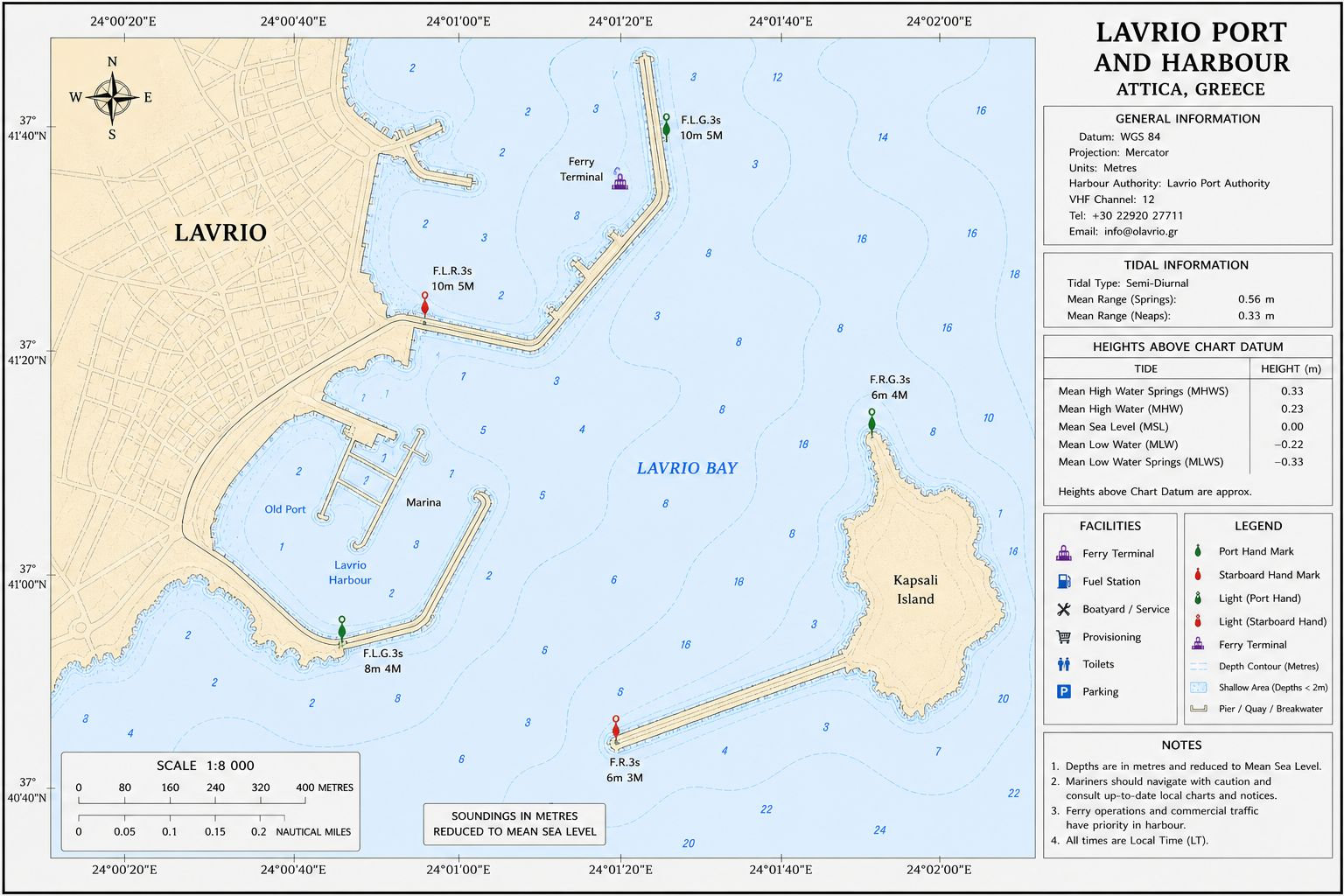
Approach is from the S or SE across the Aegean Sea in clear water with depths 50–100 m offshore, shoaling to 20–30 m within 1 NM of the coast. The coastline is well defined with no significant off-lying dangers on the direct approach. Lavrio harbour lies immediately north of Cape Sounion and is easily identified. The approach channel is straightforward with depths 10–20 m, reducing to 5–8 m inside the harbour.
The entrance is wide and clear but subject to crosswinds, particularly in strong northerlies. Traffic is moderate to heavy, with ferries and commercial vessels operating regularly. No major shoals on the main approach, but shallow areas exist near harbour margins and along breakwaters. Strong winds and local sea state around Cape Sounion can affect approach conditions. Night entry is straightforward with standard navigation lights and chart use. Fishing gear including nets and lines may be present outside port limits and near coastal areas.
Lavrio Greece
Sailing Guide - Chart Accuracy
Charts issued by the Hellenic Navy Hydrographic Service are accurate and reflect current harbour layout. ENC data aligns with official charts. Local berth allocations and temporary restrictions are controlled by harbour authority and may not be charted.
Lavrio Greece
Sailing Guide - Anchorages
- Lavrio Outer Harbour (south of main port) has anchoring in 5–10 metres over mud and sand, good holding; used for short stays or waiting, maintain clearance from ferry and commercial traffic
- Ergatis Bay (W of Lavrio) has anchoring in 4–8 metres over sand and mud, good holding; shelter from N–E, exposed S; suitable in settled conditions
- Thorikos Bay (N of Lavrio) has anchoring in 5–12 metres over sand with weed patches, variable holding; shelter from S–SW, exposed N–E; ample swinging room
- Pounta Zeza Bay (E of Lavrio) has anchoring in 6–12 metres over sand, good holding; primary shelter from N–NW (Meltemi), exposed S–E; commonly used refuge
- Cape Sounion area (S of Lavrio, near Temple of Poseidon) has anchoring in 6–15 metres over sand and weed, moderate holding; exposed, weather dependent, suitable only in settled conditions
No organised mooring fields. Anchoring within the main harbour is restricted by port operations.
Lavrio Greece
Sailing Guide - Entry Formalities
Lavrio is the primary designated port of entry and supports full clearance procedures for visiting yachts. Vessels arriving from outside Greece or the Schengen Area may clear in directly at Lavrio, subject to standard Greek entry requirements. Clearance is conducted through the local Port Authority (Limenarchio), with customs and immigration formalities handled in accordance with national procedures. All vessels must ensure that the Greek cruising tax (TEPAI) is valid and paid prior to or on arrival. Required vessel documentation, including registration papers and insurance, must be available. Non-EU vessels must hold a DEKPA cruising log or Transit Log, completed and presented for endorsement as required. Passports and crew documentation are subject to inspection, and clearance procedures should be completed promptly after arrival. For departures to non-Schengen countries, exit formalities are also conducted at Lavrio. As with all Greek ports of entry, procedures are formal but straightforward, with compliance dependent on correct documentation and adherence to reporting requirements on arrival and departure.
Lavrio Greece
Sailing Guide - Marina Facilities
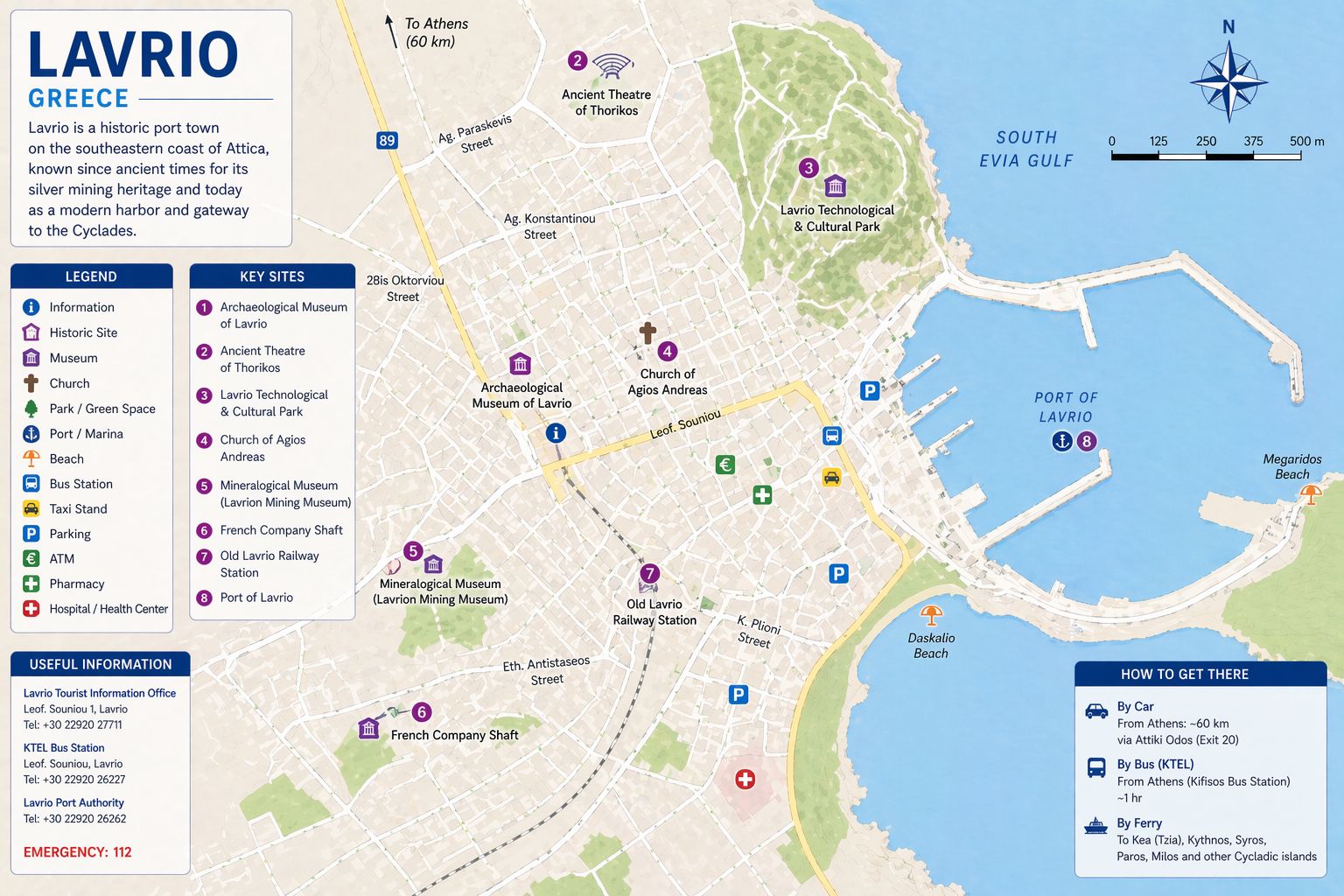
Lavrio is a major yachting base with multiple marina and quay berthing options.
The principal facility is Lavrio Olympic Marine, located just south of the commercial harbour. It is a full-service marina with finger pontoons and stern-to berths, depths typically 3–6 m, and comprehensive services including water, electricity, fuel dock, security, haul-out (travel lift), and repair facilities.
Within Lavrio harbour itself, yachts can berth on town quays and inner harbour walls, generally stern-to or alongside, with depths 5–8 m. Mooring is by own anchor or laid lines depending on berth location. Space is influenced by ferry and commercial traffic.
In addition to Lavrio Olympic Marine, the Lavrio area has a small number of additional named marina / harbour facilities, though most are more limited in scale:
- Lavrion Marina. This refers to the main Lavrio harbour marina area within the commercial port. It functions as a yachting base with quay berthing, water, electricity, and fuel available, but without the full infrastructure of a purpose-built marina.
- Thoriko Marina. A smaller marina/harbour facility located just north of Lavrio. It is more limited, used primarily by local vessels and small craft rather than as a full-service yachting marina.
Lavrio Greece
Sailing Guide - Local Weather
Karpathos has a dry, wind-dominated Mediterranean climate, strongly influenced by its position in the southeast Aegean. Summers (June–September) are hot, very dry, and consistently windy, with temperatures typically 26–34°C and almost no rainfall. The Meltemi (northerly Etesian wind) is a defining feature, often persistent for days, keeping humidity moderate and visibility excellent. The windiest period is mid-June to late September, with July and August the peak months, when average wind speeds are highest and conditions are consistently breezy to strong.
Spring and autumn are transitional, with temperatures 18–28°C and more variable conditions. Winds alternate between northerly and southerly systems, with occasional unsettled weather and brief rainfall. Winter (November–March) is mild but more unstable, with temperatures 12–18°C and most of the annual rainfall occurring during this period. Weather is influenced by S–SW low-pressure systems, bringing rain, reduced visibility, and periods of stronger winds and swell. Overall, Karpathos is characterised by very low annual rainfall (around 300–350 mm), high sunshine, and persistent wind exposure, making it one of the windiest islands in Greece
The Marine Electrical and Electronics Bible has a complete list of Greek VHF Radio Channel information and weather forecast times for Greece along with NAVTEX UK and Europe and NAVTEX Mediterranean for 490kHz and 518kHz.
Lavrio Greece
Sailing Guide - Local Winds
Local winds are dominated by the Meltemi (N–NE) from June to September, typically 15–25 knots, frequently increasing to 25–35 knots, especially around Cape Sounion where acceleration occurs. Gusts and crosswinds are common on approach to Lavrio harbour.
Wind strength is influenced by the Attica peninsula and nearby islands, creating funneling effects and localised gusts. Conditions can be stronger in open water south of Lavrio and slightly reduced inside the harbour. There is little diurnal variation during strong Meltemi periods, with winds often persisting day and night. In lighter conditions, a weak sea breeze pattern may develop. Outside summer, winds are more variable, with S–SW systems 15–30 knots during frontal passages and occasional strong northerly flows following fronts.
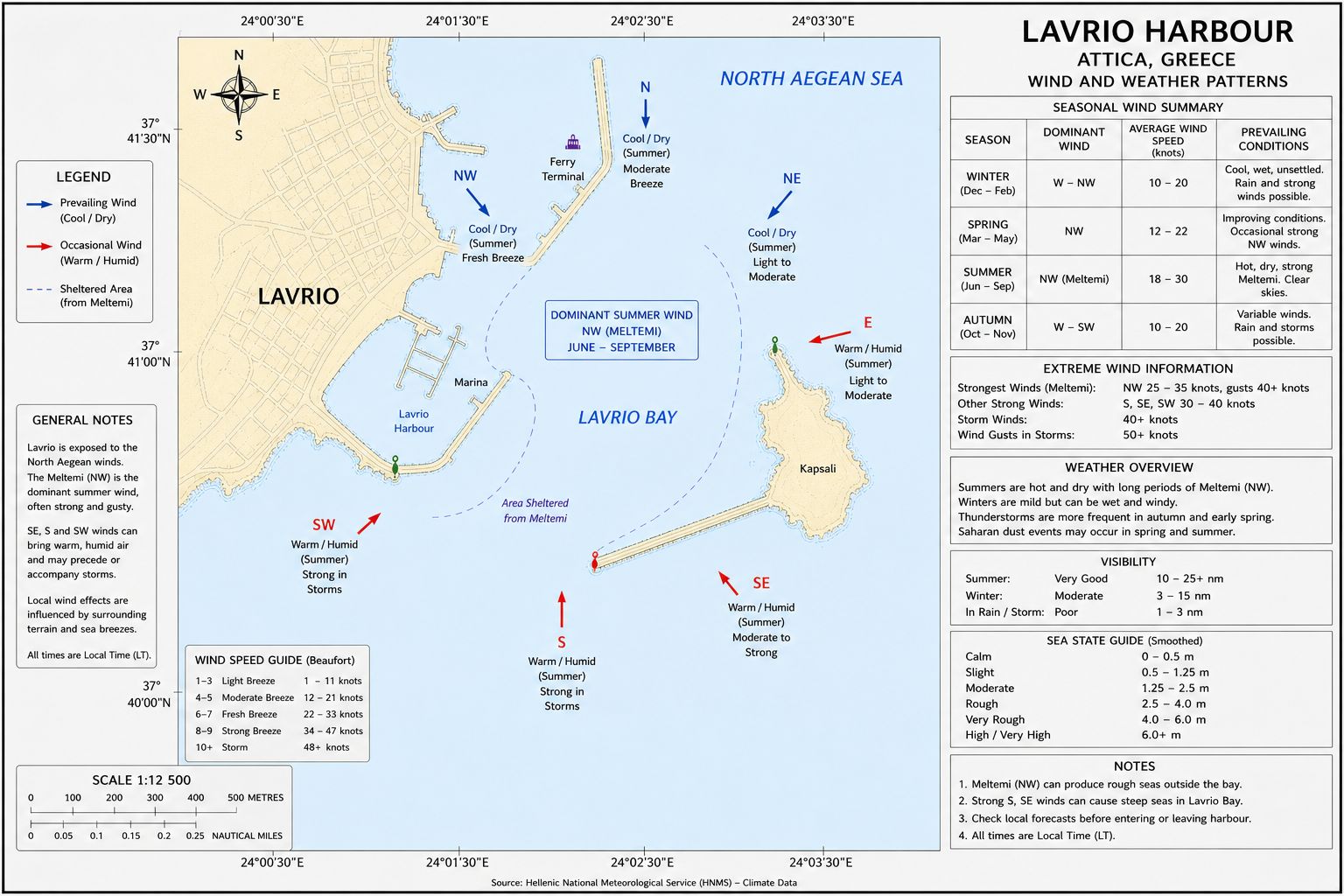
The Meltemi is a strong, dry northerly wind that dominates the Aegean in summer, accelerating through channels and between islands to produce steep, short seas. It is most persistent in July and August, often blowing for several days with little diurnal variation, creating fast north‑to‑south passages and challenging return routes. Its strength is shaped by pressure gradients between the Balkans and Anatolia, with local acceleration zones around major island gaps
Lavrio Greece Sailing Guide - Provisioning
Supermarkets. Provisioning in Lavrio is comprehensive. The main outlets are AB Vassilopoulos Lavrio, My Market Lavrio, and Bazaar Supermarket Lavrio, all located within approximately 0.5–1.5 km of the harbour and marinas. Additional local supermarkets and numerous minimarkets operate throughout the town centre and near the port.
Markets. Local produce is available through greengrocers in Lavrio. A weekly Laiki Agora (farmers’ market) operates in Lavrio, typically once per week (commonly mid-week, subject to seasonal variation). Local products include olive oil, vegetables, herbs (oregano, thyme), honey, and regional cheeses.
Fish Markets. There is no large central fish market. Fresh fish is sold through fishmongers in Lavrio near the harbour area, supplied by daily catch. Common seafood includes tsipoura (gilthead sea bream), lavraki (European sea bass), sardeles (sardines), gavros (anchovies), kalamari (squid), htapodi (octopus), garides (prawns), and barbouni (red mullet). Availability depends on weather and fishing activity.
Lavrio Greece
Sailing Guide - Local Cuisine
Cuisine in Lavrio reflects Attica and wider mainland Greek traditions, with a strong coastal influence and proximity to Athens. Signature dishes include Fresh grilled fish – Tsipoura (sea bream), lavraki (sea bass), and seasonal local catch, simply prepared. Kalamari and htapodi – Squid and octopus, grilled or stewed. Kakavia – Traditional fisherman’s fish soup, using mixed local fish. Saganaki (seafood) – Shrimp or mussels in tomato and feta sauce. Greek mezze – Small dishes including olives, cheeses, dips, and seafood. Lamb and meat dishes – Grilled or slow-cooked, typical of mainland cuisine. Greek salads – Tomato, feta, olive oil, and herbs.
Lavrio Greece
Sailing Guide – Beverages
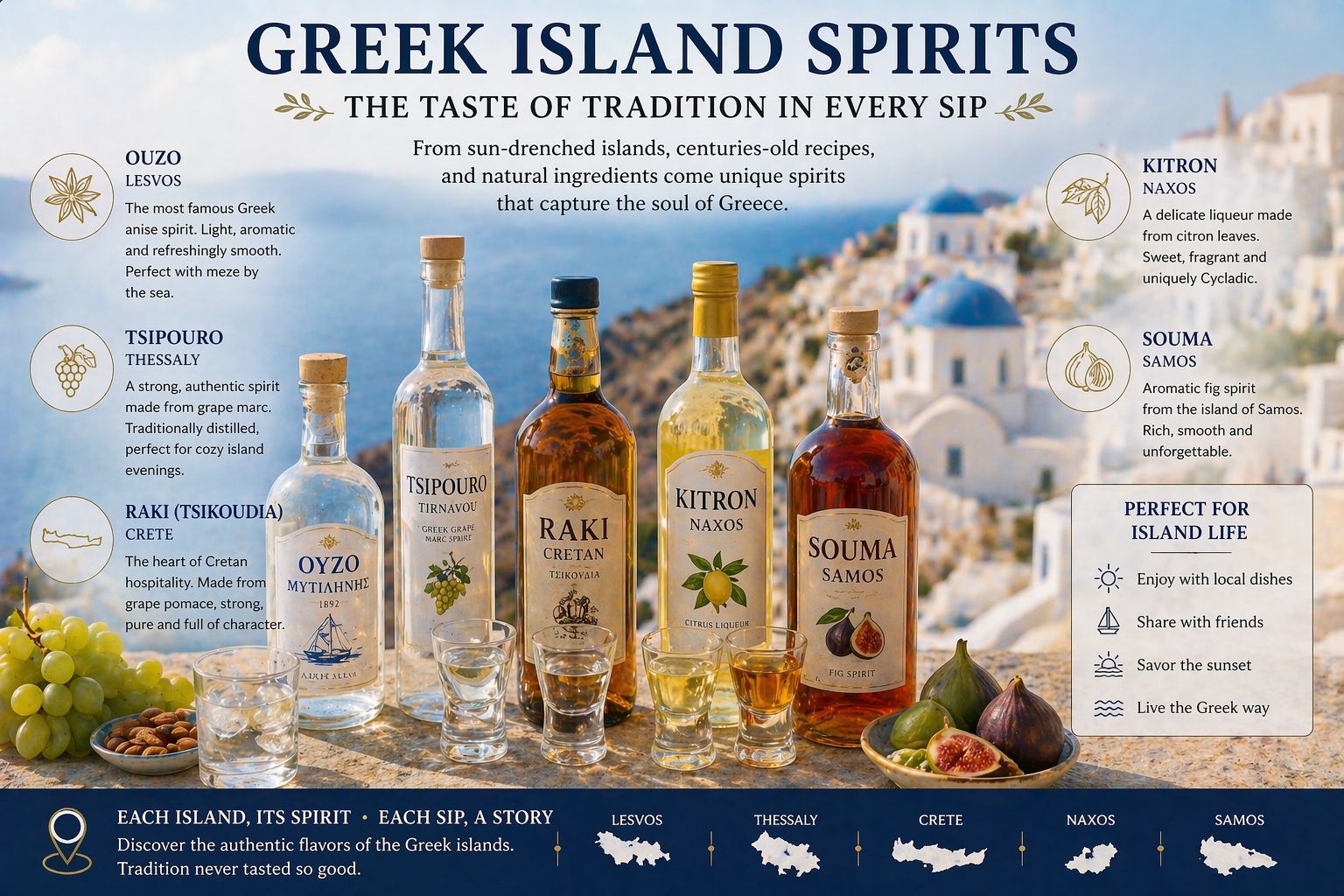
Beer, wine, and spirits across the Greek islands are locally produced and widely available through tavernas, small bars, and provisioning outlets. Beer is predominantly lager, with domestic brands including Mythos, Alfa, Fix, and Vergina alongside imported products; and over 100 microbreweries operate on several islands with limited distribution. Wine is region-specific, with white varieties dominant in the islands, including Assyrtiko, Moschofilero, and Roditis, alongside local table wines served in bulk; retsina remains in circulation as a resin-flavoured wine. Distilled products include ouzo (anise-based), tsipouro (grape marc distillate), raki or tsikoudia (Crete), souma (fig or grape distillate in eastern Aegean islands), and kitron (citrus liqueur from Naxos), with alcohol strength typically in the 37–45% range and higher for unregulated local distillations.
Lavrio Greece
Sailing Guide - Fuel Supplies
Fuel is available at multiple points in Lavrio. The primary supply is within Lavrio Olympic Marine, which has a dedicated fuel dock supplying diesel and petrol directly alongside. Within Lavrio harbour, fuel can also be arranged by road tanker delivery to the quay, coordinated through local distributors (commonly EKO, Shell, or BP). Delivery is made by hose alongside and depends on berth access and traffic. Fuel availability is reliable and well-established, making Lavrio one of the main refuelling points for vessels operating between Athens and the Cyclades.
Lavrio Greece
Sailing Guide - Water Supplies
Water is widely available in Lavrio. Within Lavrio Olympic Marine, supply is provided via pressurised shore connections at all berths, with reliable pressure and continuous availability. In Lavrio harbour, water is available from municipal supply points along sections of the town quay. Connection is made directly from shore taps using onboard hoses and fittings. Coverage is not continuous and pressure can vary, particularly during peak summer demand. Water is potable but commonly treated onboard before drinking. Availability is generally reliable across both marina and harbour berths.
Mechanical and Electrical Repairs
Resource
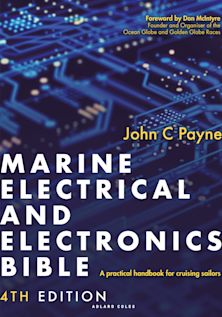
If you are headed somewhere remote consider the need to expand your knowledge base or have an information resource on board. Why not get a copy of my book The Marine and Electrical and Electronics Bible 4th Edition. By and for yachties, with everything from batteries and charging, solar and wind, diesel engines and marine electronics and so much more. Your complete systems guide. 650 pages of practical advice. In Australia and New Zealand order a copy through Boat Books. UK and European boats can buy the UK Edition Here. US and Canadian boats can get the US Edition Order Here. Marine systems are my profession so let me help you. By a liveaboard boat owner for other boat owners.


Lavrio Greece
Sailing Guide - Marine Services
Lavrio is a major marine service centre for the Athens and Cyclades region. The primary facility is Lavrio Olympic Marine, which provides full haul-out capability with travel lifts, hardstand, and extensive repair yards for maintenance, refit, and structural work. Comprehensive technical support is available, including authorised Yanmar and Volvo Penta service agents, along with specialists in diesel engines, generators, and mechanical systems. Electrical and marine electronics services are well established, with Raymarine and other major brands supported through local authorised or regional agents.
Lavrio Greece
Sailing Guide - Local Etiquette
Interaction is direct and formal on first contact, with a greeting expected before any request or transaction. Conversation tone is measured and transactional, with limited small talk unless initiated locally. Personal space is closer than in northern Europe, but physical contact is minimal unless familiarity is established. Shore behaviour is conservative in non-tourist areas, particularly near churches and village centres where modest dress and low noise are expected.
Lavrio Greece
Sailing Guide - Summary
Lavrio is a transition port between Saronic and Cycladic conditions with significant wind acceleration at Cape Sounion. Harbour access is straightforward with marina infrastructure available. Anchorage options are limited and exposure dependent. Provisioning and marine services are well established. Lavrio Greece Sailing Guide for all you need to know.