Ilha Grande Yacht
Cruising Guide
Ilha Grande yacht cruising guide. Ilha Grande sits off the southern coast of Rio de Janeiro state and forms a large, sheltered cruising area with multiple anchorages, deep water close to shore and predictable movement in most conditions. The island’s steep terrain and enclosed bays reduce swell and provide consistent protection, making it a practical operating area for yachts moving between Rio de Janeiro and the São Paulo coastline.
For vessels arriving from the north, Ilha Grande is the first reliable anchorage network after the exposed Cabo Frio and Rio approaches. For vessels arriving from the south, it is the final sheltered region before committing to the longer, more exposed São Paulo coastline. All marina and technical support is located on the mainland at Angra dos Reis, with the island functioning as an anchorage‑only destination. They say there is an island here for very day of the year, so that is more than 365 of them to visit and explore.
Brazil Coast
Sailing Guide Explainer
I lived, worked and sailed in Brazil for several years. These pages are extracted from an unpublished cruising guide I wrote several years ago and have since updated. As this guide started before electronic charting became mainstream, I have included a lot of the GPS waypoint data, Chart requirements and numbers and other navigational information that remains useful. Navigators should ensure they have up to date charts on board, and the accuracy of electronic charts is uncertain. It is a challenging coast to sail, but rewarding with great people, food, music and so on and while there are security challenges, with proper precautions will be manageable.
Ilha Grande Yacht
Cruising Guide - Approaches
Approaches from the east, south and west are clear with 12–18 m depths outside the island. Hazards include unlit fishing gear, local ferry traffic and reduced visibility during frontal systems. Sea state is generally moderate inside Baía da Ilha Grande due to shelter from the island and surrounding landforms. Tidal range is small, and currents are weak, with minor set near headlands. Entry into the bay maintains 12–18 m until well inside, with shoaling only near beaches and inner coves.
Ilha Grande Yacht
Cruising Guide - Navigation and Pilotage
Ilha Grande (23°07,1’S, 044°16,9’W). Navigation inside the bay is straightforward with 8–12 m in most channels and deep water close inshore. Pilotage requires attention to ferry routes between Angra dos Reis and Vila do Abraão, small fishing boats operating at low speed and unlit gear near the shoreline. Night entry is workable in settled conditions but requires reduced speed due to fishing activity and limited lighting on small craft. Manoeuvring in narrow coves requires awareness of gusts from steep terrain and 5–8 m depths in inner pockets. Visibility can drop during frontal rain bands and humid morning haze.
Ilha Grande Yacht
Cruising Guide - Anchorage
The island’s shape, topography and deep indentations create a network of sheltered basins, narrow coves and open‑water roadsteads that behave differently depending on wind direction, swell and sea‑breeze cycles. Most anchorages are sand or sand‑mud, with predictable holding. Depths follow the typical Costa Verde pattern: 8 to 12 metres in outer basins, 5 to 8 metres in mid‑bay anchorages, and 3 to 5 metres in the inner coves.
Abraão. Abraão is the island’s primary settlement and the most active anchorage. The bay is large, with 8 to 12 metres in the outer section and 5 to 8 metres closer in. Holding is reliable in sand and mud. Traffic includes ferries, dive boats and water taxis, so yachts anchor outside the ferry lanes. Movement is noticeable during peak hours, but nights are calm. It is the best anchorage for shore access, provisioning and crew changes.
Enseada de Palmas. Palmas is a wide, open bay on the northern side of the island with 8 to 12 metres in the centre and 5 to 8 metres closer to the beach. It is exposed to northerly winds but well protected from southerlies. Holding is good in sand. The bay is popular with day‑boats, but space is ample. Swell can enter during strong northerlies, making it less suitable for overnight stays in those conditions.
Lagoa Azul. Lagoa Azul is a shallow, clear‑water anchorage between Ilha Grande and smaller surrounding islets. Depths are 5 to 8 metres over sand patches between coral. It is a high‑traffic snorkelling zone with constant small‑boat movement. Holding is good, but space is limited. Not recommended for overnight anchoring due to traffic and exposure to wind shifts.
Saco do Céu. Saco do Céu is one of the most protected anchorages on the island. The inner basin is almost landlocked, with 3 to 5 metres over mud and excellent holding. It is sheltered from all wind directions and unaffected by swell. The mangrove edges create calm conditions even during strong sea breezes. It is one of the best overnight anchorages on Ilha Grande, especially during unsettled weather.
Freguesia de Santana. This anchorage sits near the historic church and is used by day‑boats and snorkelling operators. Depths are 5 to 8 metres over sand. Holding is good, but traffic is heavy during the day. Nights are quiet. It is exposed to northerly winds but protected from southerlies.
Praia do Aventureiro. Aventureiro is an exposed anchorage on the ocean side of the island. Depths are 8 to 12 metres over sand. Swell enters from the south and southeast, and the anchorage is only suitable in calm conditions. It is not a reliable overnight stop. It is used mainly by yachts transiting the southern coast of the island.
Praia de Dois Rios. Dois Rios is another ocean‑side anchorage with 8 to 12 metres over sand. It is exposed to swell and wind from the south and east. Conditions can be uncomfortable even in moderate swell. It is a fair‑weather stop only and not recommended for overnight anchoring unless conditions are settled.
Enseada de Araçatiba. Araçatiba is a deep, sheltered bay on the western side of the island. Depths are 8 to 12 metres in the outer bay and 5 to 8 metres closer in. Holding is good in sand and mud. The bay is protected from southerlies and easterlies but can receive some northerly breeze. It is a reliable overnight anchorage with predictable movement.
Provetá. Provetá is a working fishing village with a deep anchorage. Depths are 10 to 15 metres in the centre, reducing to 5 to 8 metres closer in. Holding is good, but the bay is open to northerly winds. It is not as calm as Araçatiba or Saco do Céu but is a useful stop for shelter from southerlies.
Enseada das Estrelas. This is a quiet, protected bay adjacent to Saco do Céu. Depths are 5 to 8 metres over mud. Holding is excellent, and the bay is sheltered from all directions. It is one of the calmest overnight anchorages on the island and is used by yachts seeking quiet conditions away from traffic.
Sitio Forte. Sitio Forte is a narrow, deep inlet with 8 to 12 metres in the entrance and 5 to 8 metres inside. Holding is good in mud. The inlet is protected from all wind directions and is suitable for overnight anchoring. Space is limited, and yachts must anchor with care to avoid swinging into the shoreline.
Ilha Grande Yacht
Cruising Guide - Entry Formalities
Formalities are completed on the mainland at Angra dos Reis. Brazil requires arrival clearance with Immigration (Federal Police), Customs (Receita Federal) and the Port Captaincy (Capitania dos Portos). Quarantine inspection is not routine but may occur if declared. Firearms must be declared. Starlink is permitted but must not interfere with regulated frequencies. No clearance facilities exist on Ilha Grande.
Ilha Grande Yacht
Cruising Guide - Marina Facilities
There are no marinas on Ilha Grande. All berthing is at anchor. Marina access is available on the mainland at Angra dos Reis.
Ilha Grande Yacht
Cruising Guide - Local Weather
Local weather is shaped by southerly frontal systems, sea‑breeze cycles and summer convection. Frontal passages bring southerly winds, rain and reduced visibility, with rougher conditions outside the island but limited impact inside protected bays. Sea breezes build from late morning, producing onshore winds and occasional gusts in narrow coves. Summer months bring convective squalls with rapid wind shifts and heavy rain. Morning humidity can produce haze that reduces visibility until mid‑morning.
Ilha Grande Yacht
Cruising Guide - Provisioning
Supermarkets. SuperPrix Angra dos Reis. full‑range supermarket with fresh produce, bakery, dairy, meat and frozen goods. Zona Sul Angra dos Reis has imported goods, bakery, deli and packaged items. Bramil Angra dos Reis is a general supermarket with reliable dry goods and frozen items. Mundial Angra dos Reis has a broad stock of staples, fruit, vegetables and packaged goods. Mini‑markets in Vila do Abraão have basic dry goods, fruit, vegetables and bread; suitable for short‑term needs only.
Ilha Grande Yacht
Cruising Guide - Local Cuisine
Local cuisine is based on coastal fish, cassava, rice, beans and plantain. Moqueca capixaba is a fish stew prepared with annatto and herbs, while moqueca baiana uses dendê oil and coconut milk. Peixe grelhado is grilled fish served with rice, beans and salad. Bobó de camarão is a shrimp and cassava purée. Caldeirada is a mixed fish and shellfish broth. Farofa is toasted cassava flour served as a side. Acarajé is a black‑eyed bean fritter filled with shrimp. Vatapá is a thick paste of bread, shrimp, peanuts and coconut milk. These dishes reflect the regional availability of fish, shellfish, cassava and tropical produce.
Saco do Ceu. Reis e Magos (23°06,04’S, 044°12,00’W) As if the anchorage wasn’t perfect it has wonderful restaurant. Surrounded with palm trees and rainforest, it is famous for its Moquecas and paellas which fill two easily. Also local cocktail specialty is “caipimel” vodka, maracuja and mel. Try one or two, bliss!. It used to be run by Eliana Lyrio, she had art objects, and even live classical music but long since changed. it now functions as a straightforward coastal seafood restaurant serving traditional Ilha Grande dishes with reliable tender access from the inner basin.
Ilha Grande Yacht Cruising Guide - Dive Sites
The southwest corner has a Parque Est. Marinho do Eventureiro (Marine Park) delineated in line from Pta dos Meros to Praia Parnaioca.
- Naufragio (Wreck) Pinguino. 23°07,1’S, 044°16,9’W
- Naufragio (Wreck) California. 23°09,6’S, 044°21’W
- Ilha dos Meros. 23°12,8’S, 044°21,4’W
- Ilha de Jorge Grego. 23°13,2’S, 044°02,3’W
Ilha Grande Yacht
Cruising Guide - Fuel Supplies
Fuel is available only on the mainland at Angra dos Reis. Diesel and gasoline are dispensed from marina fuel docks with 3–5 m alongside. Turnover is high, and fuel quality is reliable.
Ilha Grande Yacht
Cruising Guide - Water Supplies
Potable water is available at marinas in Angra dos Reis and Bracuhy, dispensed from dockside taps with 3–5 m alongside. Pressure and supply are stable.
Mechanical
and Electrical Repairs Resource
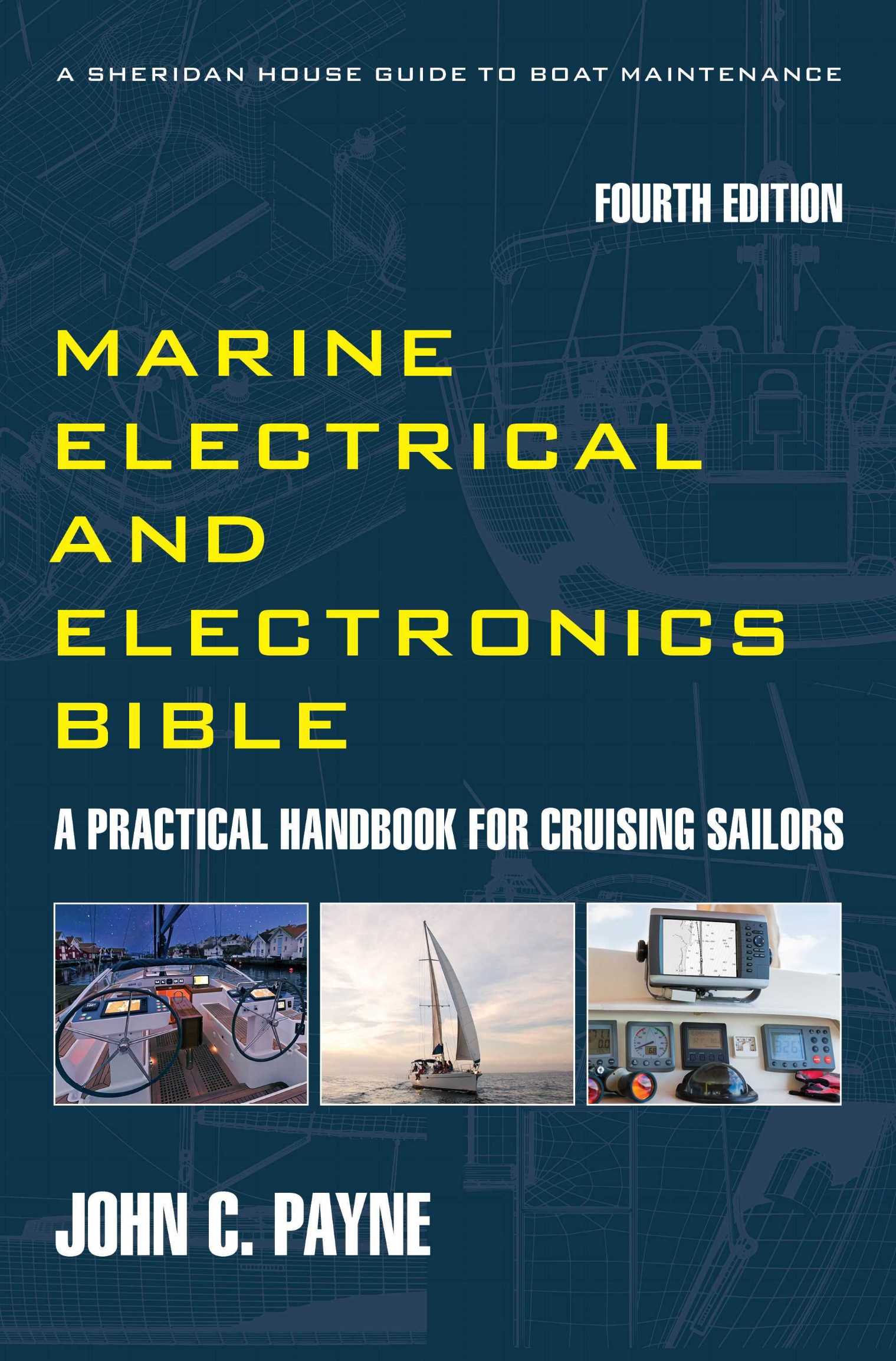
If you are headed somewhere remote consider the need to expand your knowledge base or have an information resource on board. Why not get a copy of my book The Marine and Electrical and Electronics Bible 4th Edition. By and for yachties, with everything from batteries and charging, solar and wind, diesel engines and marine electronics and so much more. Your complete systems guide. 650 pages of practical advice. In Australia and New Zealand order a copy through Boat Books. UK and European boats can buy the UK Edition Here. US and Canadian boats can get the US Edition Order Here. Marine systems are my profession so let me help you. By a liveaboard boat owner for other boat owners

Ilha Grande Yacht
Cruising Guide - Marine Services
Marine services are located at Marina Verolme, Marina Bracuhy and Marina do Frade. Facilities include diesel engine repair, electrical work, marine electronics, rigging, divers and chandlery. Volvo Penta and Yanmar agents operate in the region. Haul‑out and yard facilities are available at multiple sites
Health Alert
The local nasty is called the Borrachudo Bug. The borrachudo is a small black fly (Simuliidae family) that breeds in clean, fast‑flowing freshwater, especially rainforest streams that empty directly into beaches and mangrove edges. It is not a mosquito. It flies silently, bites aggressively during daylight hours and is most active in humid, windless conditions. The bite produces a strong local reaction in most people, with swelling, heat and itching that can last several days. The insect is extremely common in Ilhabela, which is famous across Brazil for its borrachudo density due to the island’s steep rainforest slopes and hundreds of freshwater streams. The same pattern appears in Paraty, Saco do Céu, Saco do Mamanguá, Juatinga, and the Ilha Grande interior bays, where freshwater meets sheltered, wind‑protected anchorages.
Ilha Grande Yacht
Cruising Guide - Local Customs
Local behaviour is informal but respectful. Keep noise low at anchor, avoid landing on private jetties without permission and follow environmental rules regarding waste and protected areas. Avoid anchoring near active fishing gear.
Ilha Grande Yacht
Cruising Guide - Summary
Ilha Grande provides a sheltered anchorage network with 8–12 m depths, reliable holding and consistent protection. All services, fuel, water and formalities are handled on the mainland at Angra dos Reis, making the island an anchorage‑only cruising area supported by nearby full‑service facilities. Ilha Grande Yacht Cruising Guide for all you need to know