Hobart Cruising Guide for Sailing Yachts
Hobart cruising guide for sailing yachts. Hobart is the primary service and logistics hub for southern Tasmania and the most reliable place for a yacht to reset fuel, water, LPG, provisions, and repairs before entering the more exposed cruising grounds south of Storm Bay. The River Derwent provides deep, predictable access in almost all conditions, and the city’s marina network offers full facilities within short walking distance of supermarkets, hardware stores, and marine trades. For any vessel preparing to cruise the D’Entrecasteaux Channel, the Tasman Peninsula, Maria Island, or the remote South Coast, Hobart functions as the central staging point where all operational needs can be met efficiently.
The approach via Storm Bay is exposed and often dictates the timing of arrival or departure, but once inside the Derwent the environment becomes sheltered and straightforward. Navigation upriver is simple, commercial traffic is predictable, and all marinas lie downstream of the Tasman Bridge, eliminating clearance concerns. Hobart’s combination of deep‑water access, reliable facilities, and comprehensive marine support makes it the most practical reset location in Tasmania, and the final full‑service port before committing to long stretches of coastline with no fuel, water, or provisioning.
Hobart Cruising Guide for Sailing Yachts
- Regional Context
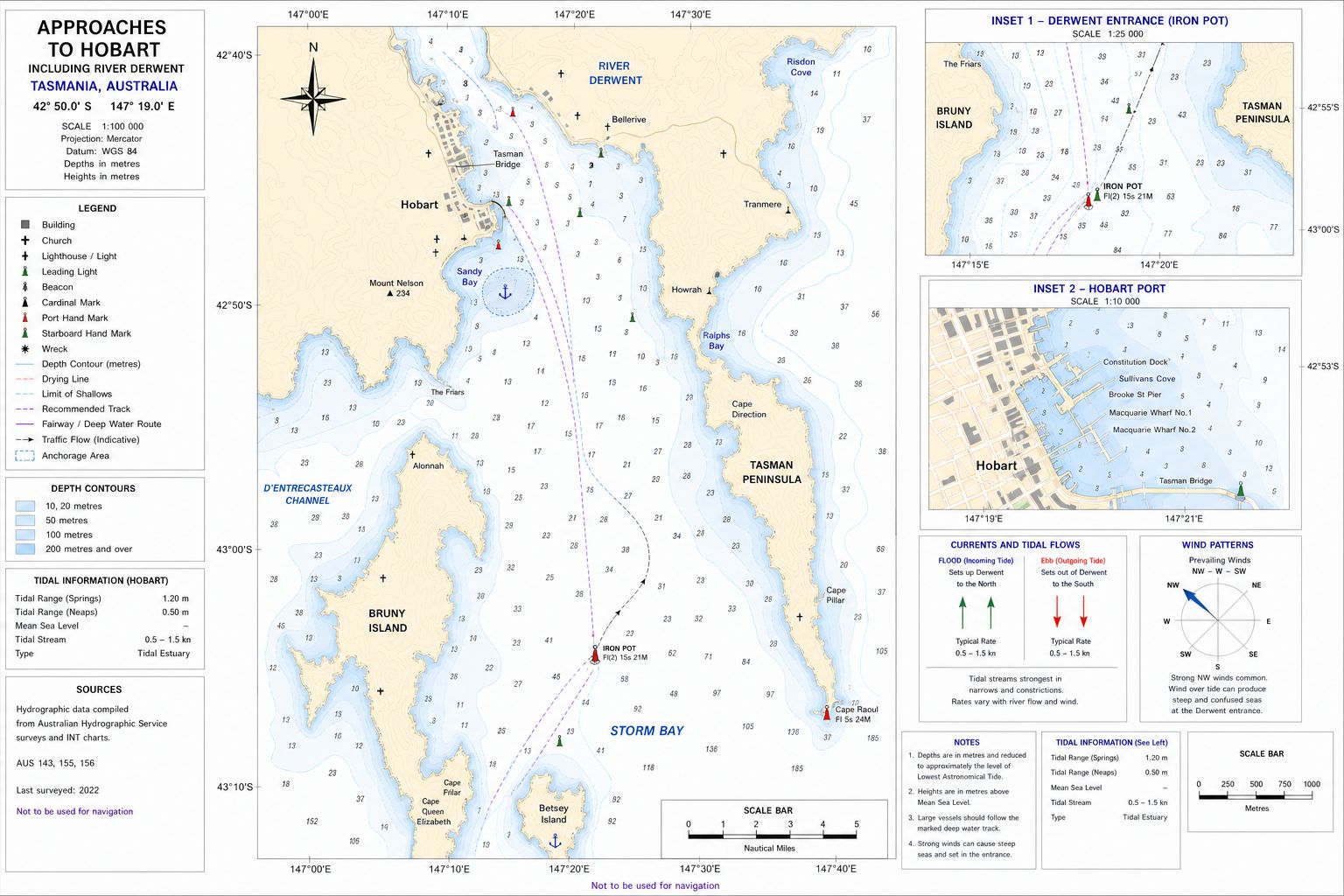
Hobart is a Port of Entry. Hobart sits at the head of the River Derwent and serves as the operational centre for all southern Tasmanian cruising. It is the only port in the region offering full provisioning, fuel docks, LPG, water, chandlery, haul‑out facilities, and technical support. Any yacht planning to cruise beyond Storm Bay will rely on Hobart as the last comprehensive resupply point before entering areas where services become limited or disappear entirely. The Derwent River provides deep, sheltered access to Hobart with minimal navigational hazards. Strong sea breezes and katabatic winds from Mount Wellington can produce sudden gusts. The river is a reliable all‑weather approach, though commercial traffic and racing fleets require situational awareness.
Hobart Cruising Guide for Sailing Yachts
- Approach via Storm Bay
The approach to Hobart begins in Storm Bay, which is exposed to westerly and southerly systems and can be rough when weather is running through the Southern Ocean. Conditions ease significantly once inside the Derwent, but the entrance demands respect. The Iron Pot and its surrounding shoals are well‑marked, yet swell and tide can create confused water around the headland, so most skippers maintain a conservative offing. Once past the Iron Pot, the Derwent opens into a wide, deep channel with straightforward navigation and predictable commercial traffic. AIS simplifies interactions with larger vessels, and visibility is generally good. The run upriver is uncomplicated. The river narrows slightly near the Tasman Bridge, but all marinas lie downstream, so there are no clearance issues for visiting yachts. The final approach into the city is sheltered, with minimal tidal influence and deep water close to shore.
Hobart Cruising Guide for Sailing Yachts
- River Derwent Navigation
The Derwent is quite easy to navigate, but wind effects are significant. Westerlies and nor’westers funnel down the valley, producing sharp gusts that can complicate docking in exposed berths. Afternoon sea breezes from the southeast can also build strongly. Despite this, the river remains safe and predictable, with no hidden hazards in the main channel. Anchoring options near the city are limited, so most yachts use marinas rather than attempt to anchor in the upper estuary.
Hobart Cruising Guide for Sailing Yachts
- Marina Options
Hobart’s marina network is extensive, and each location serves a different operational purpose.
- Kings Pier Marina. This is the most convenient for provisioning, sitting directly behind Salamanca and the CBD. It is central and practical but can be exposed to wash and wind.
- Constitution Dock. This is iconic but best suited to short stays or race‑related visits such as The Sydney Hobart Yacht Race. It is relatively exposed and can be uncomfortable in strong winds.
- Derwent Sailing Squadron (DSS) and the Royal Yacht Club of Tasmania (RYCT). These are in Sandy Bay offer sheltered berths, reliable facilities, fuel docks, and easy access to supermarkets. These are the preferred bases for most cruising yachts.
- Bellerive Yacht Club. This is located on the eastern shore provides quiet, protected berths, though provisioning requires a short walk or rideshare.
- Prince of Wales Bay Marina. This is the centre for repairs and haul‑outs, with multiple marine trades on site. It is the best choice for technical work, rigging, engine repairs, and major maintenance.
All marinas are accessible in all tides and conditions, and none require special pilotage.
Hobart Cruising Guide for Sailing Yachts
- Fuel, Water, LPG
Hobart is the most reliable refuelling point in southern Tasmania. DSS and RYCT both have fuel docks offering diesel and unleaded with deep water and easy access. These are the preferred refuelling locations for yachts preparing for long passages down the Channel or toward the South Coast.
Water is available at all marinas and is clean and reliable. LPG bottle exchange is available at multiple service stations around Sandy Bay and the CBD, and marina staff can direct crews to the nearest outlet. Hobart is the best place to reset all consumables before entering more remote cruising grounds.
Hobart Cruising Guide for Sailing Yachts
- Provisioning
Supermarkets: The Woolworths and Coles in Sandy Bay are the closest major supermarkets to DSS and RYCT, and both are within walking distance. Kings Pier Marina is closest to the Hobart CBD Woolworths, which is a short walk up Liverpool Street. Fresh produce, meat, dairy, dry goods, and specialty items are all readily available, and stock levels are consistent year‑round. For higher‑quality produce or specialty ingredients, Salamanca Fresh and the Hill Street Grocer in South Hobart are excellent options. Alcohol is easy to source from bottle shops near all marina precincts.
Markets: Farm Gate Market (Hobart CBD) is Hobart’s dedicated weekly farmers’ market and the closest thing to a classic, traditional fresh‑produce market. It focuses on Tasmanian growers and producers, with seasonal vegetables, fruit, meat, seafood, dairy, honey, bread, and small‑batch specialty items. It is widely regarded as the city’s authentic paddock‑to‑plate market. Salamanca Market (Salamanca Place) although famous for crafts and artisan stalls, Salamanca Market also includes Tasmanian produce, baked goods, honey, seafood, and specialty foods. It is one of Hobart’s oldest and most iconic markets and remains a major source of local produce every Saturday. Hobart also hosts a number of smaller neighbourhood and pop‑up markets that include fresh produce, but these vary by season and weekend. They are part of the broader “hidden markets” scene described in local guides.
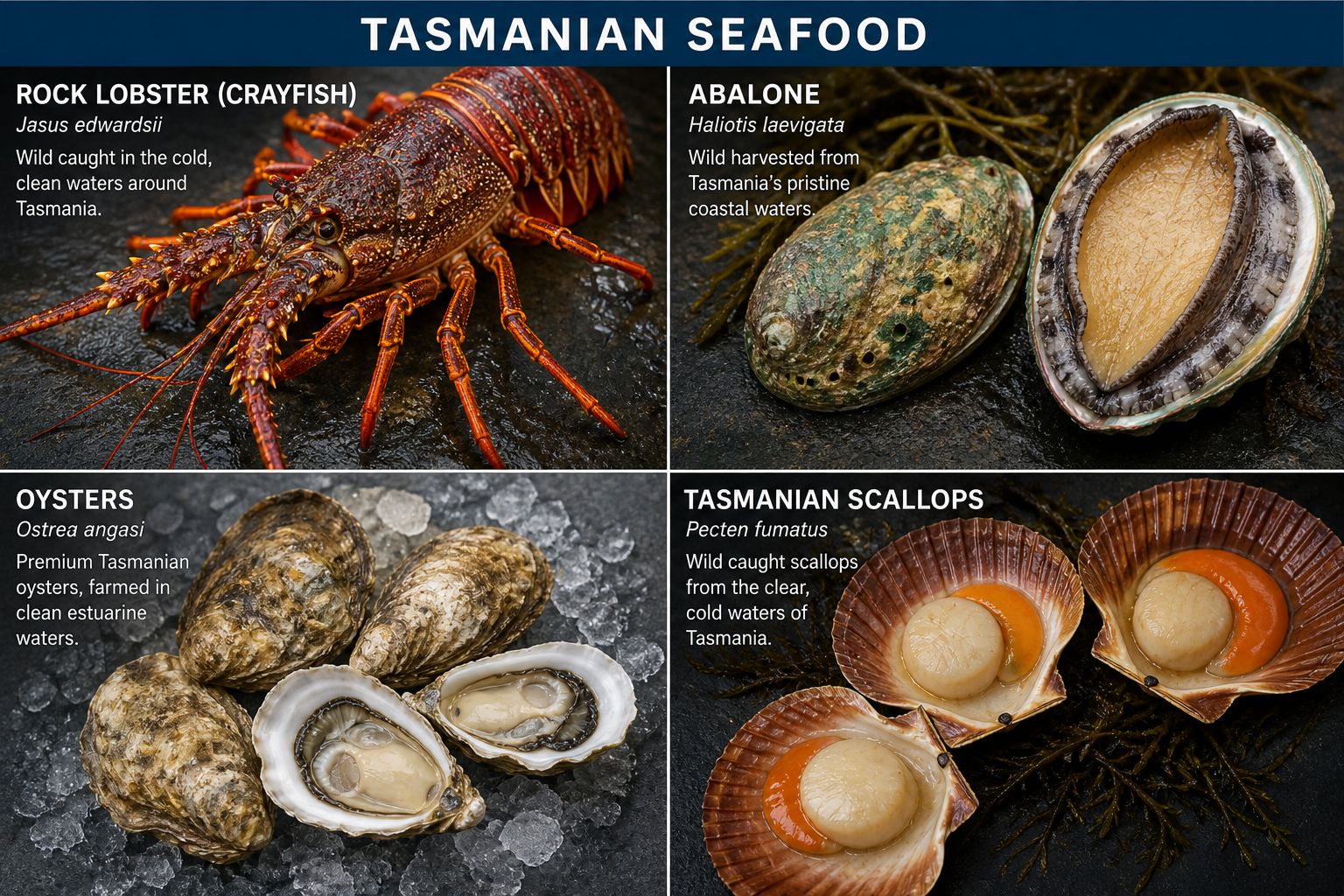
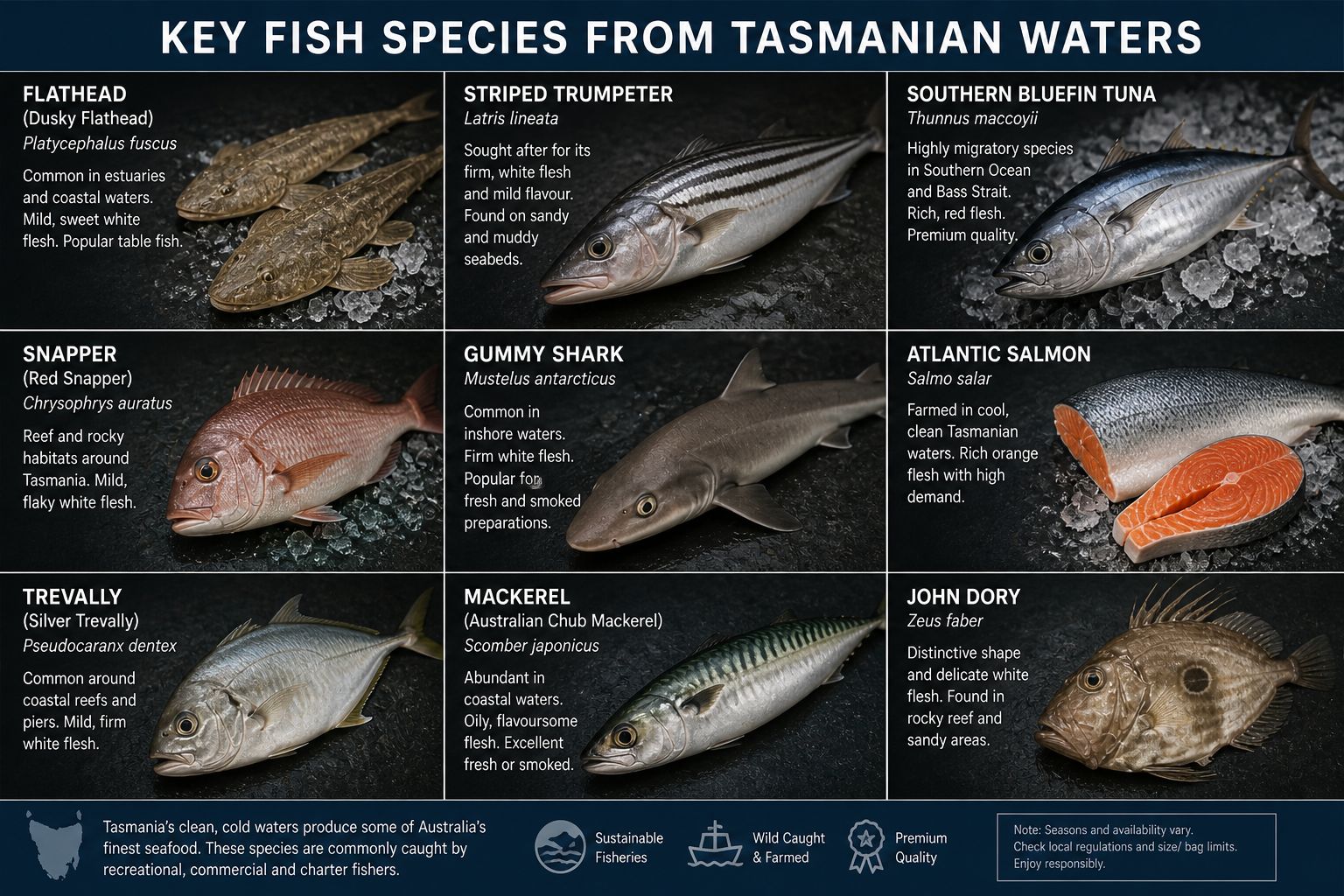
Seafood. In Hobart there is no single central fish market; seafood supply is distributed across several reliable outlets. The primary public market source is Salamanca Market, held weekly on the waterfront, where fresh local seafood and prepared products are sold directly by vendors. For consistent retail supply, The Seafood Shop (Tassal Salamanca) provides fresh Tasmanian salmon and related products, while Salamanca Fresh operates as a full-service provisioning outlet with a dedicated seafood counter stocking a range of local species. Additional supply is tied to the working harbour around Constitution Dock, where seafood is landed and distributed, though access is less formalised.
Wild-caught seafood is landed through ports in southern Tasmania and the wider state, including catches from the Southern Ocean, Tasman Sea, and Bass Strait. Key species include rock lobster (crayfish), abalone, oysters, scallops, and various finfish such as flathead and striped trumpeter. Hobart’s waterfront and nearby processing facilities act as a distribution and export hub, particularly for high-value species.
Aquaculture is also significant, especially salmon farming in sheltered waters such as the Derwent Estuary, Huon River, and D’Entrecasteaux Channel. Mussels and oysters are farmed in multiple estuarine locations around Tasmania. For provisioning, seafood available in Hobart should be considered locally sourced, high-quality, and largely tied to Tasmanian fisheries and marine farming rather than imports.
Tasmanian Beverages
Tasmania has developed a strong reputation for both craft beer and whisky production, driven by high-quality water, a cool maritime climate, and locally sourced ingredients. The beer sector includes established producers such as Cascade Brewery, Australia’s oldest operating brewery, and Boag's Brewery, both producing a range of lagers and ales widely available across the state. In parallel, Tasmania has become internationally recognised for single malt whisky, led by distilleries such as Lark Distillery and Sullivans Cove Distillery, the latter having received global awards for premium single cask releases. Production is typically small-scale and quality-focused, with whisky maturation benefiting from the island’s stable climate.

Mechanical and Electrical Repairs
Resource
If you are headed somewhere remote in Tasmania then consider the need to expand your knowledge base or have an information DIY resource on board. Why not get a copy of my book The Marine and Electrical and Electronics Bible 4th Edition. By and for yachties, with everything from batteries and charging, solar and wind, diesel engines and marine electronics and so much more. Your complete systems guide. 650 pages of practical advice. In Australia and New Zealand order a copy through Boat Books. UK and European boats can buy the UK Edition Here. US and Canadian boats can get the US Edition Order Here or through Amazon. Marine systems are my lifelong profession so let me help you. By a liveaboard boat owner for other boat owners.

Hobart Cruising Guide for Sailing Yachts
- Marine Repairs
Hobart is the strongest marine service centre in Tasmania. Prince of Wales Bay hosts riggers, mechanics, electricians, shipwrights, chandlers, and haul‑out facilities. This is the best location in the state for significant maintenance or emergency repairs. Chandlery options are strong, with suppliers carrying engine spares, filters, belts, pumps, electrical components, and safety gear. For yachts arriving from long passages or preparing for remote cruising, Hobart is the most capable service hub available.
Hobart Cruising Guide for Sailing Yachts
- Weather
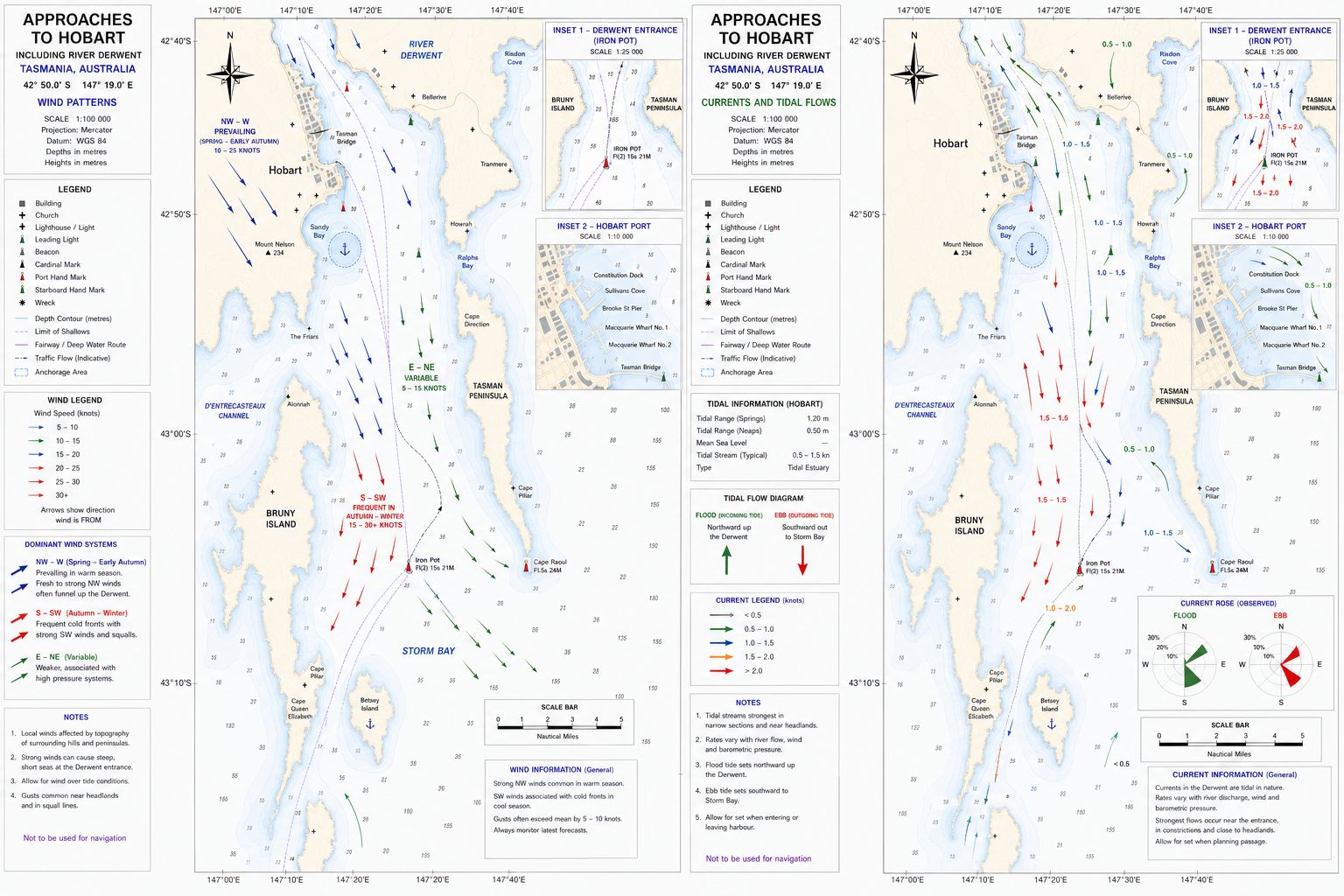
Hobart’s weather is shaped by the Derwent valley and the surrounding hills. Westerlies can accelerate down the river, producing sudden gusts, while southerly changes can arrive quickly through Storm Bay. Despite this, the city’s marinas remain safe in almost all conditions, and the river provides sheltered water for manoeuvring. Storm Bay is the main weather gate. Conditions there dictate whether a yacht can safely enter or depart Hobart. Once inside the Derwent, the environment becomes significantly more forgiving.


Hobart – Weather
Forecast Schedules & VHF Broadcasts
Southern Tasmania’s marine weather is broadcast by Tas Maritime Radio on a fixed daily schedule, with all announcements made first on VHF Ch 16, then transferred to the appropriate working channel depending on region. Hobart and Storm Bay fall under the Southeast Coast broadcast zone.
These skeds include: Coastal Waters Forecasts, Coastal Observations, Notices to Mariners (morning and midday skeds) and Urgent NTMs only in the evening sked
1. Daily Weather Broadcast Times (Tas Maritime Radio)
Tas Maritime Radio broadcasts three times daily, every day of the year:
- 0745 hrs: Full weather forecast, coastal observations, and Notices to Mariners.
- 1345 hrs: Full weather forecast, coastal observations, and Notices to Mariners.
- 1733 hrs: Weather forecast and urgent Notices to Mariners only.
These times apply statewide, including Hobart, Storm Bay, and the Southeast Coast.
2. VHF Channels for
Hobart & Southeast Coast
For the Southeast Coast, including Hobart, Storm Bay, the Derwent, and the approaches to the Tasman Peninsula:
- VHF Channel 67. This is the designated working channel for all Tas Maritime Radio weather broadcasts in the Southeast Coast region.
How it works: Announcement made on VHF Ch 16. Vessels are instructed to switch to Ch 67 for the actual broadcast. This applies to all three daily skeds.
3. HF Options (Useful
Offshore or South of South West Cape)
Tasmanian Maritime Radio also broadcasts on MF/HF for vessels offshore or in remote southern waters:
- 4125 kHz (announcement)
- 6215 kHz (announcement)
- 4146 kHz (working frequency)
- 6227 kHz (working frequency)
HF is particularly useful when rounding South West Cape, Maatsuyker Island, or operating in Port Davey where VHF coverage can be patchy.
4. Bureau of
Meteorology Marine Forecast Cycle
The Bureau of Meteorology issues updated Coastal Waters Forecasts for Tasmania on a regular cycle, with warnings broadcast hourly on HF and repeated during Tas Maritime Radio skeds. Key points:
- Marine weather warnings broadcast every hour on HF
- Coastal Waters forecasts repeated every four hours
- Tas Maritime Radio skeds include the latest BOM forecast at the time of broadcast
For Hobart, the relevant BOM zone is: “Lower Derwent / Southeast Coast – Storm Bay to South East Cape”
5. What You Actually
Hear in the Hobart Area
A typical Hobart-area broadcast on VHF Ch 67 includes:
- Current wind, sea, and swell observations
- Coastal Waters Forecast (Southeast Coast)
- Strong Wind / Gale / Storm Warnings
- Any active weather warnings
- Notices to Mariners (morning and midday skeds)
- Urgent NTMs only at 1733 hrs
This is the most reliable way to stay ahead of weather changes when operating in Storm Bay, the Derwent, or preparing for passages to the Channel or Tasman Peninsula.
Hobart Cruising Guide for Sailing Yachts
- Departure Planning
Hobart is the natural staging point for the D’Entrecasteaux Channel, the Tasman Peninsula, Maria Island, Recherche Bay, and the South Coast. For yachts heading south, Hobart is the final opportunity to take on fuel, water, LPG, and provisions. Beyond Southport, services disappear entirely, and the coastline becomes remote and exposed.
Hobart Cruising Guide for Sailing Yachts
- Summary
Hobart is the most important resupply and repair centre in Tasmania. It offers deep, safe approaches, reliable marinas, full provisioning, fuel docks, water, LPG, and comprehensive marine trades. The city’s layout makes everything accessible on foot or via short taxi rides, and the Derwent provides sheltered conditions once inside Storm Bay. For cruising yachts, Hobart is not just a destination but a logistical reset point, the place to refuel, restock, repair, and prepare before committing to the more exposed and remote cruising grounds that define southern Tasmania. The Hobart cruising guide for sailing yachts has a lot of useful information.