Hinchinbrook Channel Sailing Guide
Hinchinbrook Channel Sailing Guide. Hinchinbrook Channel is one of the most distinctive navigation environments on the Queensland coast. The channel runs between the mainland and Hinchinbrook Island, forming a long, narrow, tidal waterway with mangrove banks, shallow edges, and limited manoeuvring room. For sailing yachts, it provides a protected route in trade‑wind conditions, but it requires disciplined navigation, accurate tide planning, and awareness of local hazards.
For coastal cruisers moving between Townsville and Cairns, the channel serves as a sheltered alternative to the offshore route. Lucinda and Cardwell provide access points at either end, and the channel’s anchorages allow for controlled staging before continuing north or south. Understanding the tidal gates, depth constraints, and anchorage layout is essential for safe transit.
Hinchinbrook Channel Sailing Guide Approach
The southern approach begins at Lucinda, where the long sugar‑loading jetty forms the primary visual reference. The jetty extends several kilometres offshore and must be given wide clearance. Depths around the jetty vary, and strong tidal flow can create turbulence near the pylons. The entrance to the channel lies west of the jetty and is marked by navigation aids leading into the mangrove‑lined waterway.
The northern approach begins near Cardwell, with the entrance marked by shallow banks and mangrove edges. Depths are generally adequate for yachts following the marked route, but the area is sensitive to tide height, and arrivals should be timed accordingly.
Hinchinbrook Channel Sailing Guide - Entry Protocols
Hinchinbrook Channel is not an Australian port of entry. International yachts cannot clear customs or biosecurity here. All foreign‑flagged vessels must clear at Cairns, Townsville, Bundaberg, Brisbane, Gladstone, Darwin, or another designated port before entering the channel. Domestic yachts have no entry protocols beyond standard navigation rules.
Hinchinbrook Channel Sailing Guide - Navigation
The channel is narrow, shallow at the edges, and strongly tidal. Depths in the centre are generally adequate, but the margins dry at low tide, and the channel can become visually confusing due to uniform mangrove shorelines. Key operational considerations:
- Tidal flow can be strong, especially during springs. Wind‑against‑tide conditions create short chop in the wider southern section.
- Depth management is essential. Some sections require mid‑tide or above for safe transit, particularly near the northern entrance.
- Limited manoeuvring room means yachts must maintain predictable handling and avoid drifting toward the mangrove edges.
- Debris (logs, branches) is common after heavy rain or flooding.
- Sandbanks shift seasonally, especially near the southern entrance and around the mid‑channel bends.
Navigation marks are reliable, but careful chartwork is required due to the channel’s length and uniform appearance.
Hinchinbrook Channel Sailing Guide - Anchorages
Hinchinbrook Channel has several practical anchorages for yachts transiting the waterway. These anchorages are functional rather than scenic and are used primarily for tide timing and overnight staging. Popular and more common anchorages include:
- Scraggy Point. Good holding in mud, protected from trade‑wind conditions.
- Haycock Island area. Suitable in settled weather, adequate depth at mid‑tide and above.
- Gayundah Creek. Protected anchorage used for staging before exiting north or south.
Holding is generally good in mud, but tidal flow must be considered when setting anchor. The channel is not suitable for anchoring outside designated areas due to shallow margins and limited swing room.
Entering the
Channel from Lucinda
The southern entrance requires attention to the sugar jetty. The structure extends far offshore, and yachts must avoid passing beneath it. The marked channel leads west of the jetty and into the mangrove system. Depths are adequate at mid‑tide and above, but the area can be shallow at low tide.
Once inside, the channel becomes narrow and protected. Tidal flow remains the primary factor affecting handling. The southern section is wider and more forgiving than the northern end.
Exiting the
Channel at Cardwell
The northern entrance is shallower and more tide‑dependent. Yachts should plan to exit at mid‑tide or above to ensure adequate depth. The approach to Cardwell is straightforward once clear of the mangrove edges, with the town and jetty forming clear visual references.
The area north of the channel opens into Hinchinbrook Island waters, with access to Missionary Bay and the offshore route toward Cairns.
Hinchinbrook Channel Sailing Guide - Marinas
There are no marinas inside Hinchinbrook Channel. The nearest berthing options are:
- Port Hinchinbrook (Cardwell). Limited functionality; access depends on dredging status and tide height.
- Lucinda. There is no marina, only commercial and fishing infrastructure.
Hinchinbrook Channel Sailing Guide - Provisioning
Provisioning is done outside the channel.
- Cardwell provides basic provisioning, including a supermarket, small grocers, and limited fresh produce. Suitable for topping up but not for full offshore provisioning.
- Ingham (near Lucinda) provides more comprehensive provisioning, including Coles and Woolworths, fresh‑food outlets, and seafood retailers. This is the preferred provisioning point for yachts preparing for longer legs north or south.
Seafood is available from local suppliers in both Cardwell and Ingham, with prawns, reef fish, and seasonal species commonly stocked. Orders can be packed in ice if arranged in advance.
Hinchinbrook Channel Sailing Guide - Marine Services
There are no fuel or water facilities inside Hinchinbrook Channel.
Nearest options are:
- Lucinda. Limited fuel availability; primarily for commercial vessels.
- Cardwell. Fuel available at service stations; jerry‑can transport required.
Ingham. Ingham sits inland from the Hinchinbrook Channel and functions as the service hub for yachts moving between Lucinda, Cardwell, and the Palm Island group. While it isn’t a coastal anchorage town, it is the nearest full‑service centre for crews provisioning after time in the Channel or before heading north toward Mission Beach and Dunk Island
Mechanical and Electrical Repairs
Resource
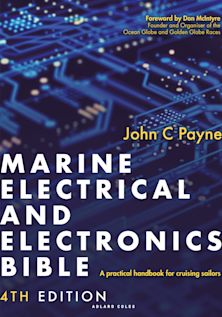
If you are headed somewhere remote consider the need to expand your knowledge base or have an information resource on board. Why not get a copy of my book The Marine and Electrical and Electronics Bible 4th Edition. By and for yachties, with everything from batteries and charging, solar and wind, diesel engines and marine electronics and so much more. Your complete systems guide. 650 pages of practical advice. In Australia and New Zealand order a copy through Boat Books. UK and European boats can buy the UK Edition Here. US and Canadian boats can get the US Edition Order Here. Marine systems are my profession so let me help you. By a liveaboard boat owner for other boat owners

Hinchinbrook Channel Sailing Guide - Fishing
Fishing in the Hinchinbrook Channel is shaped by its mangrove walls, deep gutters, and strong tidal flow, giving yachts one of the most productive estuarine systems on the Queensland coast. The drains and creek mouths fire on the last of the ebb and first of the flood, producing barramundi, mangrove jack, fingermark, and threadfin salmon as bait spills off the flats. Deeper holes along the main channel hold grunter and blue salmon, while the rock bars near the northern end regularly produce queenfish and trevally when the tide accelerates. The sand flats around the southern entrance see good numbers of flathead and small GTs on clear neaps. Crocodiles are common throughout, so dinghy crews keep casting sessions tight and avoid working too close to mangrove edges. Overall, the Channel rewards tide timing, working drains and structure, and staying mobile rather than sitting at anchor.
Hinchinbrook Channel Sailing Guide - Summary
Hinchinbrook Channel provides a protected, tide‑dependent route between Lucinda and Cardwell. The channel is narrow, shallow at the edges, and strongly tidal, requiring disciplined navigation and accurate tide planning. Anchorages are functional and used for staging rather than extended stays. Provisioning, fuel, water, and marine services are located outside the channel, primarily in Ingham and Cardwell. For yachts moving along the Queensland coast, Hinchinbrook Channel is a reliable sheltered passage when approached with appropriate planning and awareness. The Hinchinbrook Channel Sailing Guide for all you need to know.