Far North
Queensland Cruising Guide for Yachts
Far North Queensland Cruising Guide for Yachts. Far North Queensland is a long, exposed, reef‑controlled cruising coast where the SE trade winds, tidal gates, reef passes and Coral Sea swell shape every passage. Weather is driven by the subtropical ridge and fast‑moving Tasman and Coral Sea systems, producing long‑period swell that can wrap into anchorages even in moderate winds. Skippers treat this region as one where clean weather windows, conservative routing and accurate tide planning are essential, especially when navigating the Great Barrier Reef’s inner and outer routes.
Provisioning, water, diesel and marine services are concentrated in Townsville, Cairns, Port Douglas and Cooktown, with only light resupply options elsewhere. Once north of Cooktown, the coast becomes progressively remote, and yachts operate self‑sufficiently for long stretches. Distances are significant, anchorages vary from deep mainland bays to isolated coral cays, and the region rewards skippers who plan ahead and move only on favourable forecasts.
Far North
Queensland Cruising Guide for Yachts – FNQ Navigation
Far North Queensland presents navigation challenges that demand constant attention. The inner route requires precise reading of reef edges, bommies, shoals and drying banks, with visibility, sun angle and sea state all influencing how safely a yacht can interpret the water. Tidal gates, narrow passes and shallow bars must be timed exactly, and long stretches of coastline offer no diversion options if conditions deteriorate. Offshore routes are more direct but fully exposed to Coral Sea swell and weather systems, and transitions between inner and outer passages rely on charted cuts in the reef that must be approached with care.
Keep a bow watch for bommies (Bomboras).
Bommies is a common cruising term (especially in the Pacific and Australia) referring to isolated coral heads that rise abruptly from the seabed, often from deep water to just below, or just above, the surface. Bommies are one of the biggest navigational hazards in reef environments because they can be hard to see in poor light, they are scattered unpredictably across lagoon floors, they are steep‑sided, rising from 20–30 m to 1 m in seconds, they are uncharted or inaccurately charted. A single bommie can ruin a keel, rudder, or prop or even worse.
Far North Queensland Cruising Guide for Yachts – Weather in FNQ
Weather across FNQ is dominated by the SE trade‑wind regime, the shifting subtropical ridge and the influence of Coral Sea lows, producing a pattern of strong trades, long‑period swell and rapid changes when the ridge weakens. The trades can blow hard for days, funnelling between headlands and wrapping into anchorages that appear protected on the chart. Swell often arrives from distant systems and can affect reef entrances even when local winds are moderate. Seasonal humidity, thunderstorms and occasional troughs add further variability, and skippers rely on clean, stable windows to move between regions, especially north of Cooktown where shelter becomes limited and distances increase.
Townsville &
Magnetic Island Region
Townsville is the primary service centre for the central FNQ coast, with full provisioning, fuel, water and repairs, and it forms the natural staging point for passages north toward Hinchinbrook or south toward the Whitsundays. The Magnetic Island anchorages provide varying shelter from the trades and are commonly used as a reset point before longer coastal runs.
Hinchinbrook
Channel & Cardwell Region
Hinchinbrook Channel offers all‑weather protection, deep mud holding and predictable tidal flow, with movements timed around slack water. The channel’s sheltered nature makes it a reliable pause point before continuing north toward Mission Beach and Cairns.
Mission Beach
& Dunk Island Region
This section includes the Family Island Group that comprises Dunk Island, Bedarra Island and Wheeler Island, with Mission Beach providing only light provisioning and shore access. Most anchorages here are fair‑weather only, exposed to swell and the SE trades, and skippers treat the region as a short‑hop zone between Hinchinbrook and Cairns.
Mechanical
and Electrical Repairs Resource
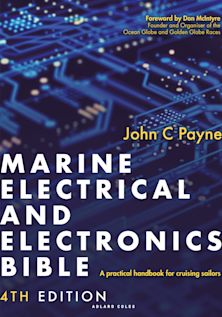
If you are headed somewhere remote consider the need to expand your knowledge base or have an information resource on board. Why not get a copy of my book The Marine and Electrical and Electronics Bible 4th Edition. By and for yachties, with everything from batteries and charging, solar and wind, diesel engines and marine electronics and so much more. Your complete systems guide. 650 pages of practical advice. In Australia and New Zealand order a copy through Boat Books. UK and European boats can buy the UK Edition Here. US and Canadian boats can get the US Edition Order Here. Marine systems are my profession so let me help you. By a liveaboard boat owner for other boat owners

Cairns &
Trinity Inlet Region
Cairns is the major northern service hub, offering full provisioning, diesel, water, haul‑out and marina berths. The region includes Cairns itself along with nearby island anchorages such as Double Island, Green Island, Fitzroy Island and the Frankland Islands, each offering varying levels of shelter from the trades and Coral Sea swell. Cairns is the primary departure point for offshore reef cruising and for passages north toward Port Douglas and Cooktown.
Port Douglas &
Low Isles Region
Port Douglas provides marina access, provisioning, fuel and water, making it the northernmost full‑service port before Cooktown. The region’s anchorages, including Low Isles, require careful attention to tidal flow and the narrowing of the inner reef route as yachts progress north.
Cooktown &
Endeavour River Region
Cooktown is the last practical resupply point before the remote northern coast, with the Endeavour River offering secure anchoring and marina berths. The region includes Cooktown itself along with nearby island groups such as the Hope Islands and Eagle Island, which provide useful staging points before the longer run to Lizard Island.
Lizard Island
Region
The Lizard Island area includes Lizard Island, Watson’s Bay, Mrs Watson’s Beach and the tidal Blue Lagoon, forming the premier all‑weather anchorage north of Cooktown. It is the final dependable stop before the remote northern coastline and the exposed sections around Cape Melville.
Cape Melville
& Flinders Group Region
This remote, trade‑dominated section includes Cape Melville, the Flinders Group, Stanley Island, the Forbes Islands and the Claremont Isles, all offering varying levels of shelter depending on wind direction and swell. Anchorages here are weather‑dependent, and movements are timed carefully around conditions.
Princess Charlotte
Bay Region
Princess Charlotte Bay is a large, shallow system with strong tidal influence and limited protection. The region includes Princess Charlotte Bay, the Piper Islands, Restoration Island, Portland Roads and Lockhart River, all requiring careful depth and tide planning. This is a remote, self‑sufficient cruising area with no marine services.
Cape York &
Torres Strait Region
The northernmost section of Queensland includes Escape River, Shelburne Bay, Seisia and Thursday Island, forming the final network of anchorages before Torres Strait. Strong tidal streams, shallow bars and narrow channels define the region, with Thursday Island providing fuel, water, limited provisioning and essential marine services.
Far North
Queensland Cruising Guide for Yachts - Summary
Far North Queensland is a long, exposed, reef‑dominated cruising coast where weather windows, tidal gates, reef navigation and self‑sufficiency define every passage. Full provisioning, water, diesel and marine services are concentrated in Townsville, Cairns, Port Douglas and Cooktown, with only light options elsewhere. North of Cooktown, yachts operate independently for long stretches, using Lizard Island as the final reliable anchorage before the remote northern coast. This hub page links each region to its detailed guide, giving skippers a structured overview for planning safe, conservative and efficient passages through FNQ. This Far North Queensland Cruising Guide for Yachts is here to help.