Falkland Islands Sailing Guide
Falkland Islands Sailing Guide. The Falkland Islands form the primary high‑latitude landfall in the southwest South Atlantic, used by yachts routing between South Georgia, the South American coast and the mid‑ocean chain leading north toward St Helena and Ascension. The archipelago’s position east of Patagonia and north of the Scotia Sea makes it the natural consolidation point for vessels operating in the sub‑Antarctic region.
The islands are a British Overseas Territory, administered locally by the Falkland Islands Government under the authority of the UK, with a stable civil infrastructure, reliable maritime services and predictable procedures. Stanley on East Falkland is the operational centre, providing the only fully serviced harbour in the region and acting as the logistical hub for all yacht movements.
Falkland Islands Sailing Guide
- Routing Logic
The Falklands are selected when yachts require a controlled, well‑serviced landfall after operating in the high‑latitude weather systems around South Georgia or the South Orkney Islands, or when routing east from Patagonia into the open South Atlantic. The islands sit at the northern edge of the Southern Ocean frontal zone, where westerly systems dominate and produce long‑period swell, rapid weather changes and strong gradient winds. Yachts arriving from South Georgia use the Falklands to reset fuel, water and provisions before committing to the longer, more stable leg toward St Helena. Vessels arriving from the Beagle Channel or the Patagonian coast treat the Falklands as the first reliable offshore harbour after clearing the lee of South America. The islands therefore function as the western hinge of the South Atlantic high‑latitude network, providing a secure operational base before yachts transition into the mid‑ocean trade‑wind regime.
Falkland Islands Sailing Guide
- Approaches
Approaches to the Falklands encounter depths rising from 3000–50 m, with long‑period swell from the west and southwest shaping sea state. The outer coasts are exposed, with steep‑to volcanic and sedimentary cliffs and limited shelter. Approaches to Stanley are straightforward in settled conditions, with 20–40 m depths outside the entrance and a well‑defined channel leading into the harbour. Fog is common in early summer, and frontal systems can reduce visibility rapidly. Traffic consists of fishing vessels, inter‑island craft and supply ships, and yachts maintain controlled speed while monitoring port movements.
Falkland Islands Sailing Guide - Navigation Note
Offshore oil development in the North Falkland Basin has reactivated following the 2025 final investment decision on the Sea Lion field, and yachts approaching from the north must account for FPSO operations, support‑vessel traffic and expanding exclusion zones. The field lies well offshore but introduces new navigational constraints, including mandatory safety zones around the FPSO and subsea infrastructure, increased night lighting and radar clutter, and regular movements of supply and anchor‑handling vessels. Updated Admiralty charts reflect the evolving footprint, and yachts routing north of the islands should maintain wide separation from all marked installations and monitor local notices for temporary exclusion areas. Essential to keep radar on and AIS also on.
Falkland Islands Sailing Guide
- Anchorages
The Falklands offer numerous anchorages, but most are exposed to swell or wind shifts and require careful assessment of weather windows. Stanley Harbour provides the only fully protected anchorage with reliable holding and predictable access. Outlying anchorages in East and West Falkland are workable in settled conditions but are not substitutes for Stanley’s infrastructure. The islands’ geography demands conservative anchoring decisions, with yachts prepared to relocate if conditions deteriorate.
Falkland Islands Sailing Guide
- Entry Formalities
Entry formalities in the Falkland Islands are shaped by the territory’s status as a British Overseas Territory, administered locally by the Falkland Islands Government under the authority of the UK. Yachts report on approach to Stanley Harbour, anchor or berth as directed, and complete immigration and customs ashore with local officials who operate under this BOT framework. Procedures are clear, efficient and designed for offshore vessels, with predictable timelines and straightforward documentation requirements. Biosecurity controls apply to protect the islands’ environment, and once clearance is complete, movements ashore are unrestricted. The governance structure ensures a stable, civilian‑run system with no military overlay, making the Falklands one of the most reliable and professionally administered high‑latitude ports in the South Atlantic.
Falkland Islands Sailing Guide
- Marina and Harbour Facilities
Stanley provides the only harbour infrastructure in the archipelago, with moorings, berthing options and controlled access to fuel, water and services. Depths in the harbour range from 5–12 m, with good holding and protection from all directions. The harbour functions as a working port supporting fishing fleets, research vessels and supply ships, and yacht movements are coordinated accordingly. There is no marina in the recreational sense, but the harbour provides all essential facilities.
Falkland Islands Sailing Guide
- Local Weather
Weather in the Falklands is shaped by the Southern Ocean’s westerly systems, which bring strong winds, rapid shifts and long‑period swell. Westerlies dominate year‑round, with frequent frontal passages producing unsettled conditions. Summer brings longer daylight hours but retains the same frontal rhythm. Fog is common in early summer, and visibility can deteriorate quickly. There is no katabatic wind risk in the Falklands, but the islands’ exposure to Southern Ocean systems demands conservative planning and careful monitoring of approaching fronts.
Falkland Islands Sailing Guide
- Provisioning
Provisioning in the Falklands is supported by a stable, civilian supply chain that draws from the UK, South America and regional fishing fleets, giving Stanley the strongest provisioning footprint in the high‑latitude South Atlantic. The settlement has several named supermarkets, including the Falklands Supermarket and West Store, both of which carry consistent stocks of fresh produce, meat, dairy, frozen goods and dry stores. Deliveries arrive on a predictable shipping cycle, and stock levels remain stable year‑round, with only minor variation during periods of heavy demand from fishing fleets or research vessels. Fresh produce is imported and generally of good quality, with availability far higher than at any other island south of St Helena.
Local produce is limited but present in small quantities, including seasonal vegetables grown on East Falkland and occasional locally raised beef and lamb sold through the same outlets. Fresh fish enters the retail chain when local vessels land catch, and availability depends on weather and fishing schedules rather than market cycles. There is no central fish market, but fish is sold through established retail channels and occasionally direct from local operators. The provisioning environment is predictable, civilian‑run and significantly more capable than any other high‑latitude island, making Stanley the preferred reprovisioning point for yachts operating between South Georgia, Patagonia and the mid‑ocean chain toward St Helena.
Falkland Islands Sailing Guide
- Local Cuisine
Local cuisine reflects the islands’ agricultural and fishing traditions, with beef, lamb and fish forming the core of most dishes. Meals are practical and shaped by the islands’ supply chains, with a mix of imported goods and local produce. The Falklands have a real, functioning food culture with one dish that is universally recognised across the islands. The Falklands do have a signature dish, and it’s one that actually matters in provisioning logic because it appears in local shops, cafés, and community events. Falklands Calamari (Loligo squid) is the islands’ defining dish. The Falklands’ fishing fleet lands large quantities of Loligo squid, and this species underpins both the economy and the local food culture. The most recognisable preparation is. Falklands calamari is fresh Loligo squid, lightly battered or pan‑fried, served with chips or simple sides. It’s not a tourist invention; it’s what locals actually eat, and it’s what appears in the West Store, Falklands Supermarket, and local cafés when fresh catch is available. Secondary but culturally important dishes, these aren’t “signature” in the same way, but they are genuinely Falklands‑specific. Mutton & lamb dishes. The islands have a long sheep‑farming tradition, and local lamb is widely available. Roasts, stews, and pies made with Falklands lamb are common. Beef from local farms. Local beef is also part of the food culture, though lamb is more iconic. Rock cod (Patagonian toothfish) when available. Not an everyday dish, but when landed, it’s a premium local product.
Falkland Islands Sailing Guide
- Fuel Supplies
Fuel is available in Stanley at commercial standards, with transfers made at designated points in the harbour. Depths alongside range from 5–7 m, and access is coordinated with port authorities. Availability is reliable, and yachts typically refuel fully before departing for St Helena or South Georgia.
Falkland Islands Sailing Guide
- Water Supplies
Potable water is available at the harbour and can be transferred directly to deck or by container depending on berth and conditions. Pressure and hose compatibility vary, but supply is reliable.
Mechanical
and Electrical Repairs Resource
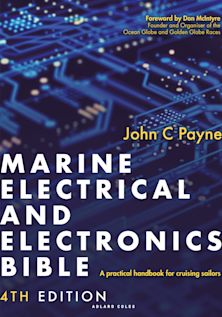
If you are headed somewhere remote consider the need to expand your knowledge base or have an information resource on board. Why not get a copy of my book The Marine and Electrical and Electronics Bible 4th Edition. By and for yachties, with everything from batteries and charging, solar and wind, diesel engines and marine electronics and so much more. Your complete systems guide. 650 pages of practical advice. In Australia and New Zealand order a copy through Boat Books. UK and European boats can buy the UK Edition Here. US and Canadian boats can get the US Edition Order Here. Marine systems are my profession so let me help you. By a liveaboard boat owner for other boat owners

Falkland Islands Sailing Guide
- Marine Services
Stanley offers the most capable marine‑services footprint in the high‑latitude South Atlantic, including diesel mechanics, electrical technicians, welding and fabrication, electronics support and chandlery. Larger repairs can be handled locally or routed to South America depending on scope. The islands’ long association with fishing fleets and research vessels ensures a stable technical base.
Falkland Islands Sailing Guide
- Local Customs
The Falklands operate as a practical, orderly working harbour environment. Yachts follow port instructions, avoid obstructing commercial operations and maintain clear communication with harbour staff. The environment is functional and designed to support offshore vessels efficiently.
Falkland Islands Sailing Guide
- Summary
The Falkland Islands are the primary high‑latitude landfall in the southwest South Atlantic, providing secure anchorage, reliable provisioning, fuel, water and marine services for yachts routing between South Georgia, Patagonia and the mid‑ocean chain toward St Helena and Ascension. Their BOT governance, stable infrastructure and strategic position make them the essential western anchor of the South Atlantic high‑latitude network. The Falkland Islands Sailing Guide is here to help.