Euboea Greece Sailing Guide
Euboea Greece Sailing Guide. Euboea, also known as Evia, is the second-largest island in Greece and extends along the eastern mainland coast between the northern Aegean and the central Greek mainland. The island is separated from the mainland by the narrow Evripos Strait at Chalcis and by a series of wider gulfs and channels further north and south. Euboea occupies a major position within Greek coastal cruising routes, providing numerous harbours, anchorages, fishing ports, and weather shelter options for yachts transiting between the Sporades, northern Aegean, Cyclades, and the Saronic Gulf regions. The coastline is extensive and highly varied, ranging from exposed Aegean-facing shores to comparatively protected western channels and gulfs.
For cruising yachts Euboea presents a combination of sheltered inland passages, open-sea coastal legs, strong tidal current areas, and seasonal Meltemi exposure. The western side bordering the Evoikos Gulf provides relatively protected cruising conditions with numerous harbour options and mainland support facilities, while the eastern coastline faces the open Aegean and experiences significantly greater swell and wind exposure. The island supports substantial year-round population centres, commercial ports, shipyards, fishing fleets, and agricultural activity, resulting in reliable provisioning, fuel access, and marine services across much of the region. Navigation around Euboea requires careful weather planning, particularly near the Evripos Strait where tidal current flow becomes operationally significant for all vessel traffic.
Euboea Greece
Sailing Guide - History
The history of Euboea extends from prehistoric settlement through all major periods of Greek maritime development. Archaeological evidence indicates habitation from the Neolithic and Bronze Age periods, with the island becoming an important centre during the Mycenaean era due to its strategic position between mainland Greece and the Aegean Sea. In antiquity Euboea contained several powerful city-states including Chalcis and Eretria, both of which developed extensive maritime trade networks and established colonies throughout the Mediterranean. The island played a major role in early Greek seafaring, commerce, shipbuilding, and regional political conflict, particularly during the Classical period when rivalry between Chalcis and Eretria influenced wider Greek affairs.
During the Byzantine, Venetian, and Ottoman periods Euboea remained strategically important due to its control of coastal navigation routes and access through the Evripos Strait at Chalcis. Venetian fortifications, castles, and harbour structures were constructed at key locations along the island to protect maritime trade and naval operations. Under Ottoman administration the island continued to support agriculture, fishing, shipping, and regional commerce until becoming part of the modern Greek state following the Greek War of Independence. In modern times Euboea has remained a significant maritime and commercial region with active ferry services, fishing fleets, industrial ports, and coastal shipping activity supporting both mainland Greece and Aegean island transport networks.
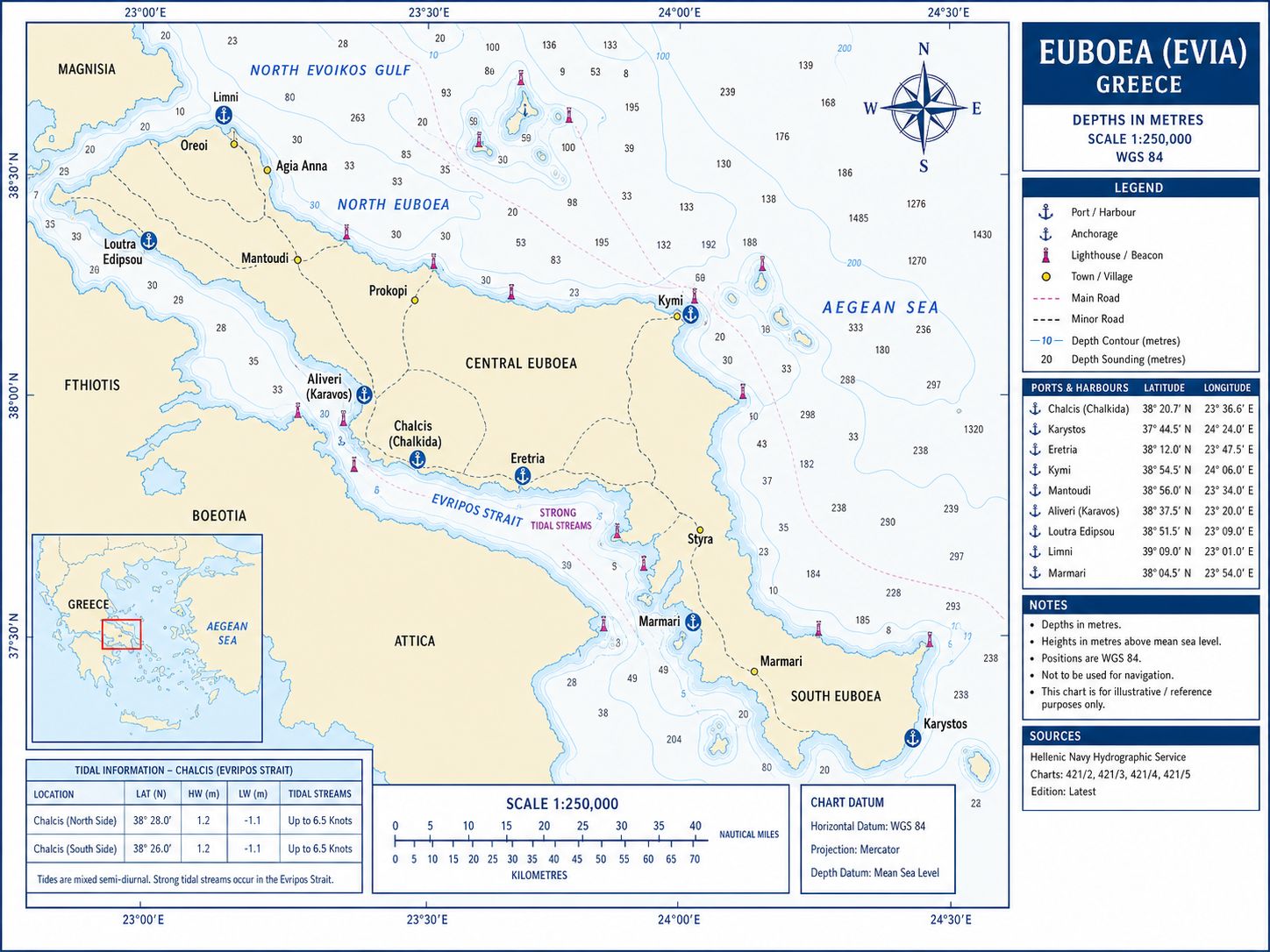
Chart Disclaimer. This chart is a schematic representation for illustrative purposes only and must not be used for navigation. Refer to official hydrographic charts for safe navigation. Be aware ENC charts may differ from official hydrographic charts. Both should be corrected and updated regularly.
Euboea Greece
Sailing Guide - Ocean
Currents and Tidal Flow
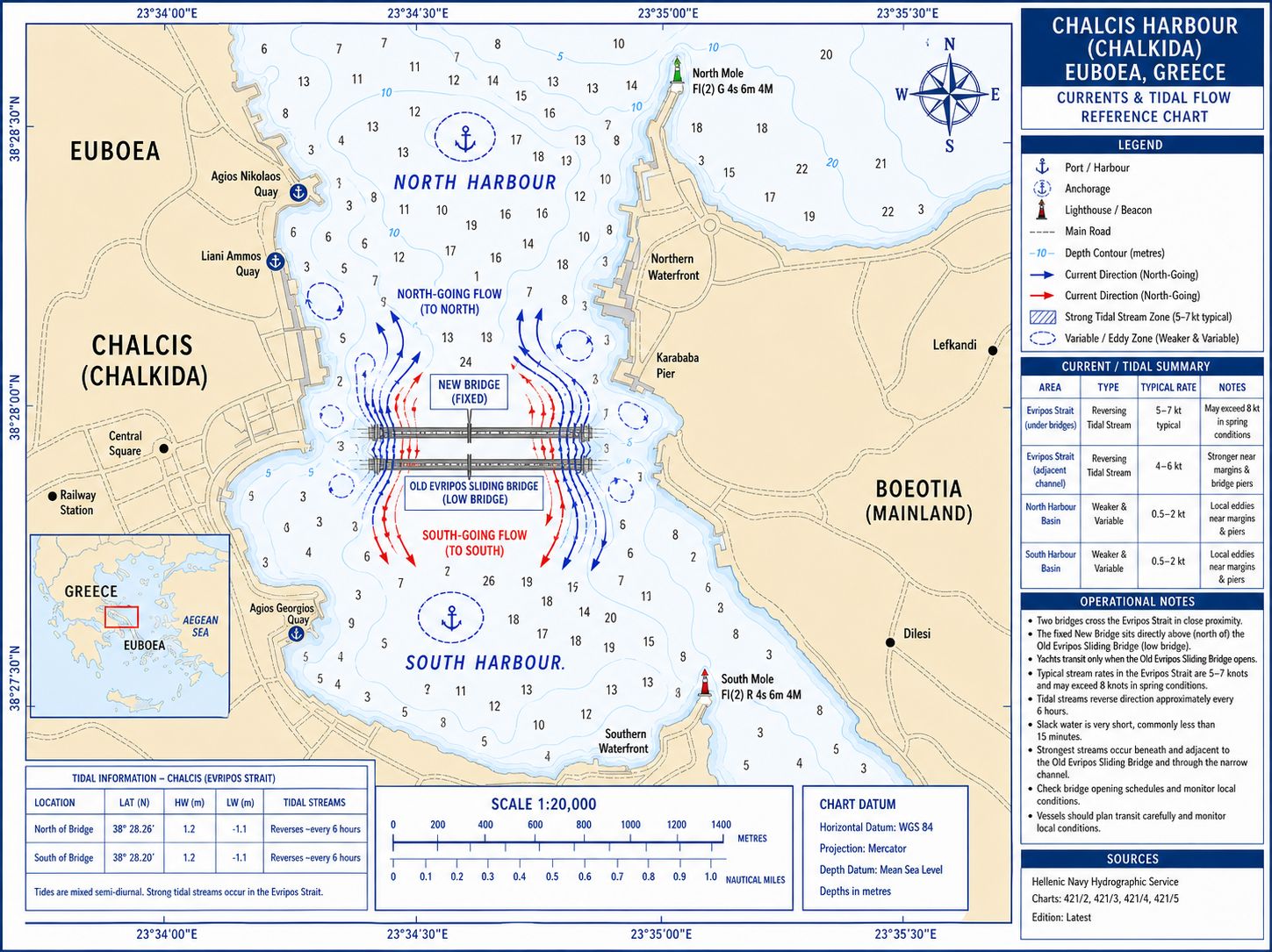
The waters surrounding Euboea contain some of the strongest and most operationally significant tidal streams in Greek coastal waters. The most critical area is the Evripos Strait at Chalcis where tidal currents regularly reach 5–7 knots and may exceed 8 knots during spring flow conditions. Current direction reverses approximately every 6 hours, although timing is irregular due to the differing tidal cycles between the North and South Evoikos Gulfs. Slack water periods are short, commonly lasting less than 15 minutes, and are the normal transit window for cruising yachts. Strong eddies, standing waves, and localized turbulence develop beneath the bridge and along the channel margins during peak flow. Commercial traffic and bridge opening schedules are coordinated around these current reversals.
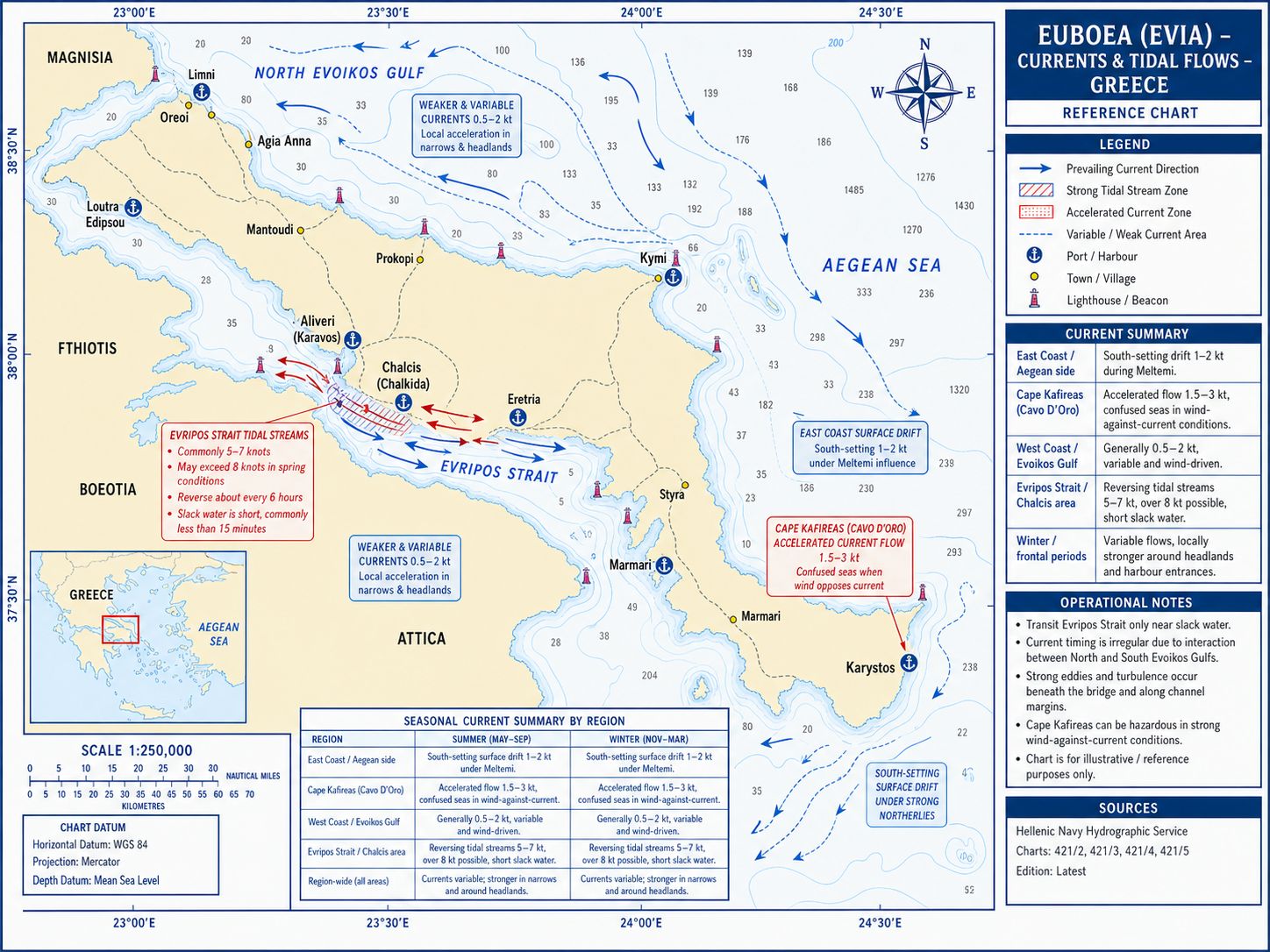
Elsewhere around Euboea, tidal range is generally between 0.2 and 0.5 metres with weaker coastal current flow typically ranging from 0.5–2 knots depending on wind strength and local geography. Along the eastern Aegean-facing coastline, prolonged northerly Meltemi conditions commonly generate a south-setting surface current of approximately 1–2 knots, particularly around exposed capes and offshore headlands. Accelerated flow and confused sea conditions occur near Cape Kafireas where opposing wind and current can produce steep breaking seas hazardous to smaller vessels. Within the North and South Evoikos Gulfs current flow is normally weaker and variable, although localized acceleration occurs in narrow channels, harbour entrances, and around prominent headlands during strong wind events.
Euboea Greece
Sailing Guide - Weather
The climate of Euboea varies considerably between the protected western Evoikos Gulf coast and the exposed eastern Aegean-facing coastline. Summers are generally hot, dry, and stable with prolonged clear conditions from May through September. Daytime summer temperatures commonly range from 28°C to 36°C depending on location and elevation, while sea temperatures remain warm into late autumn. The western side of the island experiences more moderate sea conditions due to mainland sheltering, whereas the eastern coastline is directly exposed to open Aegean swell, stronger wind fetch, and heavier sea states during northerly weather systems. Visibility is generally excellent during summer, although occasional dust haze from the south may reduce offshore visibility.
The dominant seasonal weather influence is the northerly Meltemi pattern affecting the Aegean from June through September. Strong northerly winds frequently accelerate along the eastern coast and around major capes including Cape Kafireas where severe sea conditions can develop rapidly. Sustained Meltemi periods commonly produce steep short-period seas and difficult coastal passages along exposed eastern sectors. The western Evoikos Gulf side remains comparatively protected with more manageable sea states and reduced wind strength. Winter conditions bring frontal systems crossing the eastern Mediterranean with strong southerly and south-westerly winds, heavy rain, thunderstorms, and occasional gale-force conditions. Mountainous terrain along the island interior also produces localized katabatic gusts, wind funneling, and rapid short-term weather variation in narrow channels and coastal valleys.
The Marine Electrical and Electronics Bible has a complete list of Greek VHF Radio Channel information and weather forecast times for Greece along with NAVTEX UK and Europe and NAVTEX Mediterranean for 490kHz and 518kHz.
Euboea Greece
Sailing Guide - Local Winds
Local wind patterns around Euboea are heavily influenced by the island’s length, mountainous terrain, and exposure to both the Aegean Sea and the Evoikos Gulf system. During the main cruising season the dominant wind regime is the northerly Meltemi which affects the eastern coastline and southern passages with significantly greater strength than the more sheltered western side. Sustained summer northerlies of 20–30 knots are common in exposed eastern waters, while gusts exceeding 35 knots frequently occur around major headlands and channel constrictions. The eastern coast experiences continuous open-water fetch from the Aegean, generating steep short-period seas during prolonged Meltemi events.
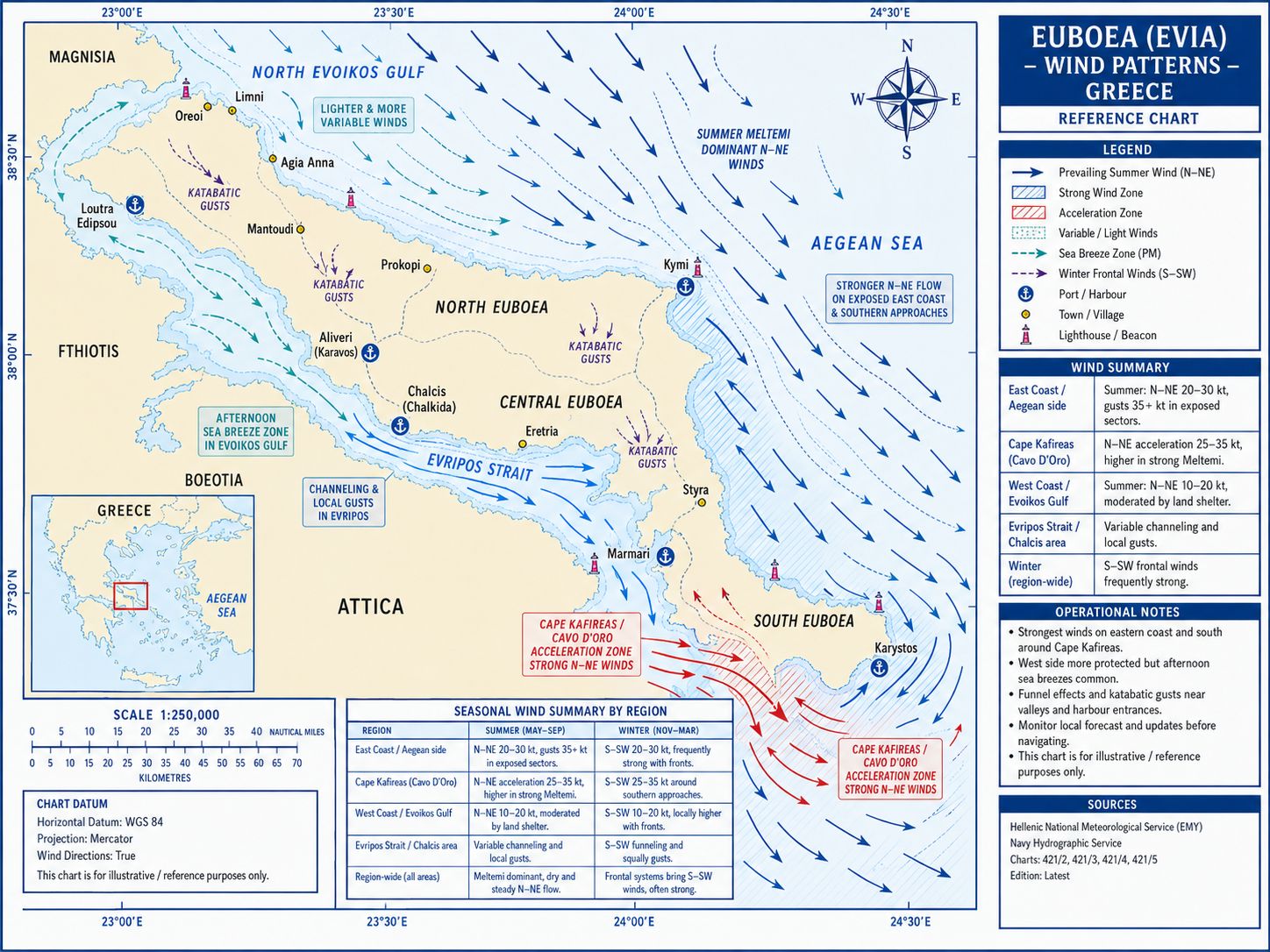
Wind acceleration zones are operationally significant around Cape Kafireas, the southern approaches between Euboea and Andros, and within narrow sections of the Evoikos Gulf. Funnel effects between mountain ranges and coastal valleys frequently produce localized gusts substantially above forecast wind strength. On the western side of the island conditions are generally lighter due to mainland sheltering, with afternoon sea breezes commonly supplementing prevailing northerly flow. During winter and transitional seasons strong southerly and south-westerly winds accompany Mediterranean frontal systems, producing heavy swell and confused seas along exposed coastlines. Katabatic winds descending from the island’s mountainous interior can also create abrupt overnight gusts and variable wind direction near anchorages and harbour entrances.
Euboea Greece
Sailing Guide - Approaches
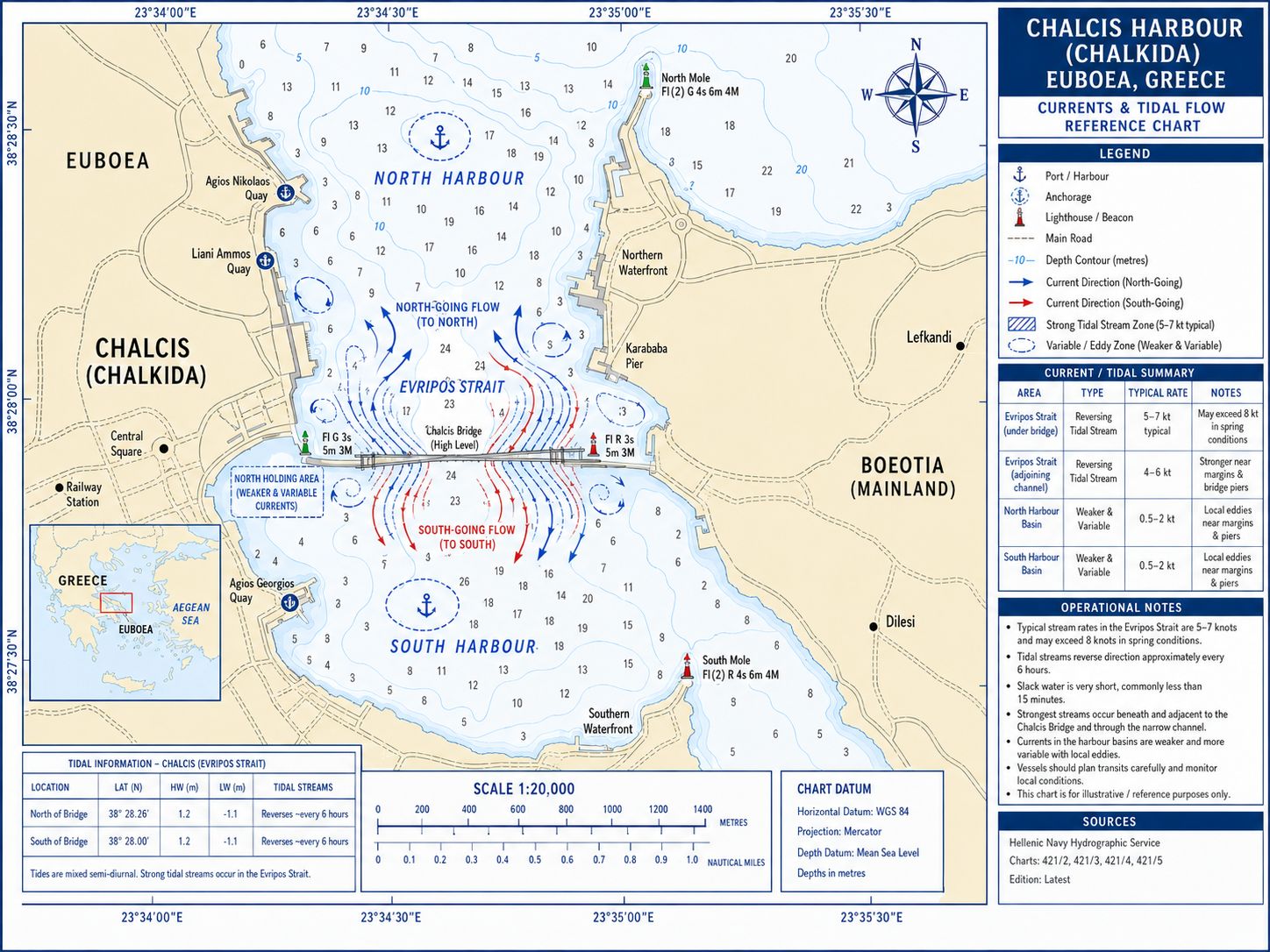
Chalcis. Approaches to Chalcis are made through the North or South Evoikos Gulf depending on direction of transit. Navigation is straightforward in good visibility, however passage through the Evripos Strait is highly tidal and operationally restricted. Currents regularly reach 5–7 knots and transit is normally conducted only near slack water during bridge opening periods. Commercial traffic, ferries, and fishing vessels operate continuously within the channel. Approaches from both north and south are generally deep with no major offshore dangers outside marked channel areas.
Karystos. Karystos lies on the southern coast of Euboea facing the Petalioi Gulf and southern Aegean routes. Approaches are open and uncomplicated in settled weather with good offshore depths. Strong northerly Meltemi conditions frequently accelerate around nearby Cape Kafireas producing steep seas and difficult conditions south-east of the harbour. The harbour entrance itself remains identifiable from offshore with adequate depths for cruising yachts. Crosswinds may affect final harbour entry during strong northerly conditions.
Eretria. Eretria is approached through the sheltered South Evoikos Gulf with relatively protected water compared with the exposed eastern coastline. Offshore shoaling is gradual and navigation is uncomplicated in daylight. Local ferry traffic and fishing vessels operate near the harbour area. Northerly winds are generally moderated by mainland and coastal sheltering, although afternoon sea breezes may strengthen harbour crosswinds.
Kymi. Kymi is located on the exposed eastern coast facing the Aegean Sea. Approaches are deep offshore but open to northerly swell and Meltemi sea state. Strong north and north-east winds commonly generate difficult conditions near the harbour entrance and along the adjacent coastline. Harbour identification is straightforward in clear weather, though swell rebound and surge may affect manoeuvring during strong conditions.
Marmari. Marmari lies on the southern western coast opposite Rafina and is approached through comparatively protected waters west of Cape Kafireas. Ferry traffic between Marmari and the mainland is frequent and requires monitoring near the harbour entrance. Offshore depths are adequate with gradual shoaling into the harbour basin. Northerly winds can funnel through the surrounding terrain and affect manoeuvring close to the quay.
Loutra Edipsou. Approaches to Loutra Edipsou on the north-western coast are generally sheltered within the North Evoikos Gulf. Navigation is straightforward with moderate offshore depths and limited navigational hazards. The harbour area supports ferry and local commercial traffic. Thermal spring discharge areas near the waterfront occasionally produce localized water discoloration but do not normally affect navigation.
Aliveri. Aliveri and Karavos harbour are approached through the South Evoikos Gulf with relatively sheltered conditions. Industrial port activity, cargo traffic, and fishing vessels operate within the harbour approaches. Offshore depths are generally adequate and navigation is uncomplicated in settled conditions. Strong northerlies may create short steep chop within exposed sections of the gulf.
Limni. Limni is located on the western coast facing the North Evoikos Gulf and provides comparatively protected approaches in most weather conditions. Offshore depths reduce gradually toward the harbour with no major offshore hazards. The harbour is small and manoeuvring space becomes restricted during summer occupancy. Southerly weather occasionally introduces swell into the outer harbour area.
Euboea Greece
Sailing Guide - Navigation
Chalcis. Navigation into Chalcis is governed by the Evripos Strait and associated bridge transit procedures. Entry timing is controlled by strong reversing tidal currents which commonly reach 5–7 knots and may exceed 8 knots during peak flow periods. Transit is normally conducted only near slack water during scheduled bridge openings. The navigation channel is narrow with commercial traffic, ferries, fishing vessels, and strong eddies present throughout the strait. Yachts normally stage in holding areas north or south of the bridge awaiting transit clearance. Accurate timing and engine reliability are operationally critical.
Evripos Strait is crossed by two bridges at Chalcis. The southern High Bridge has a published clearance of approximately 34.5 m. The central Old Evripos sliding bridge is treated operationally as an opening bridge for yachts; no practical closed-clearance figure should be relied upon for sailing vessels. Yacht transit is made only when the bridge opens, with passage timing controlled by the Port Authority, current conditions, and night opening procedures
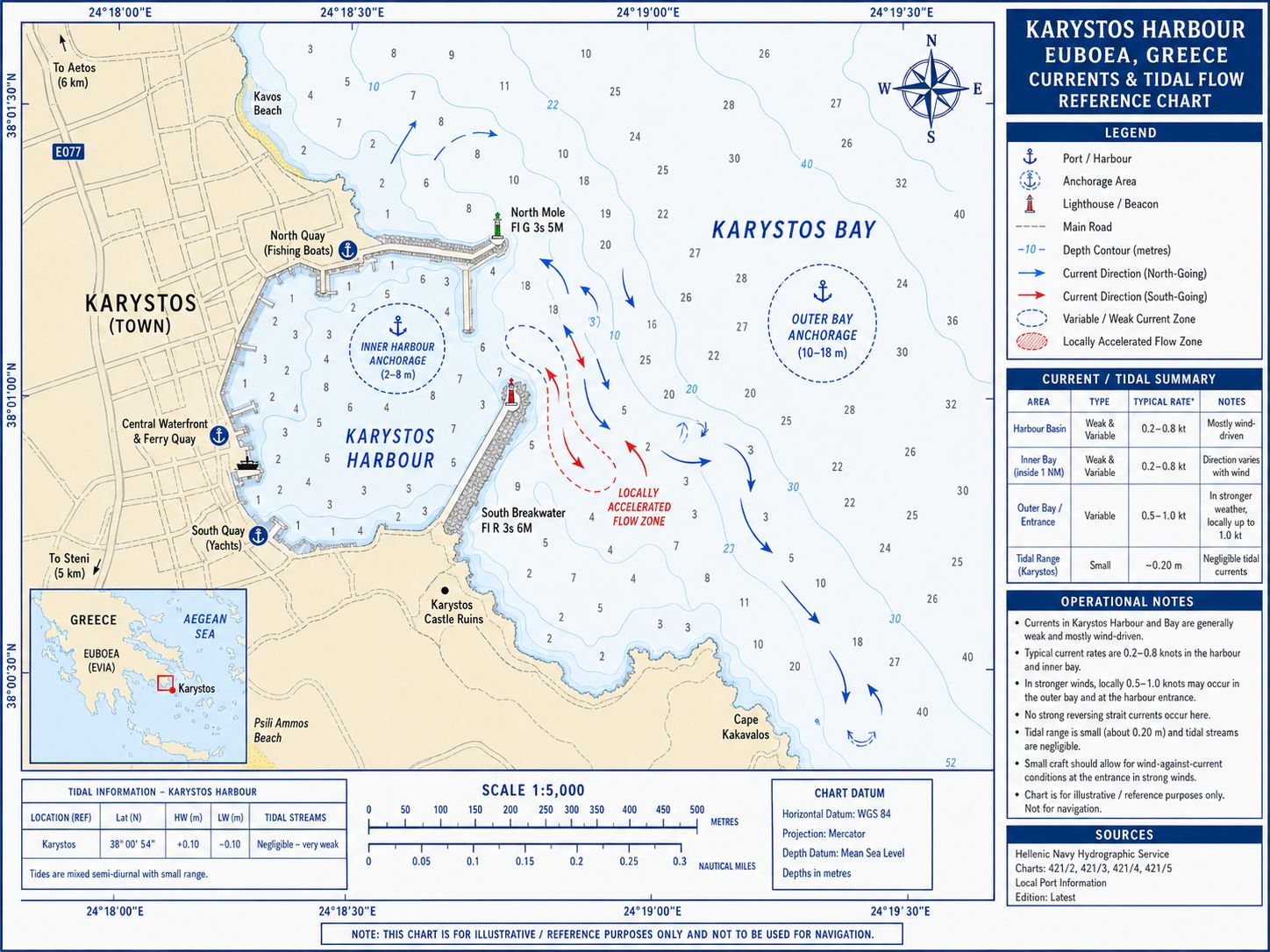
Karystos. Navigation into Karystos Harbour is generally straightforward with a wide harbour entrance and adequate depths for cruising yachts. Strong northerly Meltemi conditions may create crosswinds and steep seas outside the harbour approaches, particularly around Cape Kafireas. Inside the harbour basin depths are generally suitable for stern-to berthing along the town quay. Local fishing vessels and ferries operate within the harbour area and require manoeuvring clearance.
Eretria. Navigation into Eretria takes place within the comparatively sheltered South Evoikos Gulf. Harbour entry is uncomplicated in normal conditions with gradual shoaling toward the town quay. Berthing is generally stern-to along the waterfront with mud holding in anchoring areas. Ferry traffic and local fishing activity require monitoring near the harbour entrance. Afternoon sea breezes may affect low-speed manoeuvring during summer.
Kymi. Kymi Harbour is exposed to northerly and north-easterly Aegean conditions and navigation may become difficult during strong Meltemi periods. Swell rebound and surge can affect harbour entry and quay berthing in unsettled weather. Offshore depths are deep with rapid shoaling near the harbour works. Commercial ferries operate from the port and generate wash within the confined harbour basin.
Marmari. Navigation into Marmari is normally straightforward with adequate approach depths and sheltered western coastal conditions. Ferry traffic between Marmari and Rafina is frequent and dominates harbour movements. Crosswinds may develop near the harbour entrance during stronger northerly conditions. Berthing is generally stern-to along the quay with variable available space during summer.
Loutra Edipsou. Navigation into Loutra Edipsou is relatively protected within the North Evoikos Gulf. The harbour entrance is open and easily identifiable with moderate depths throughout the basin. Ferry movements and local fishing activity occur regularly within the port. Berthing space may become restricted during summer due to local traffic and visiting yachts.
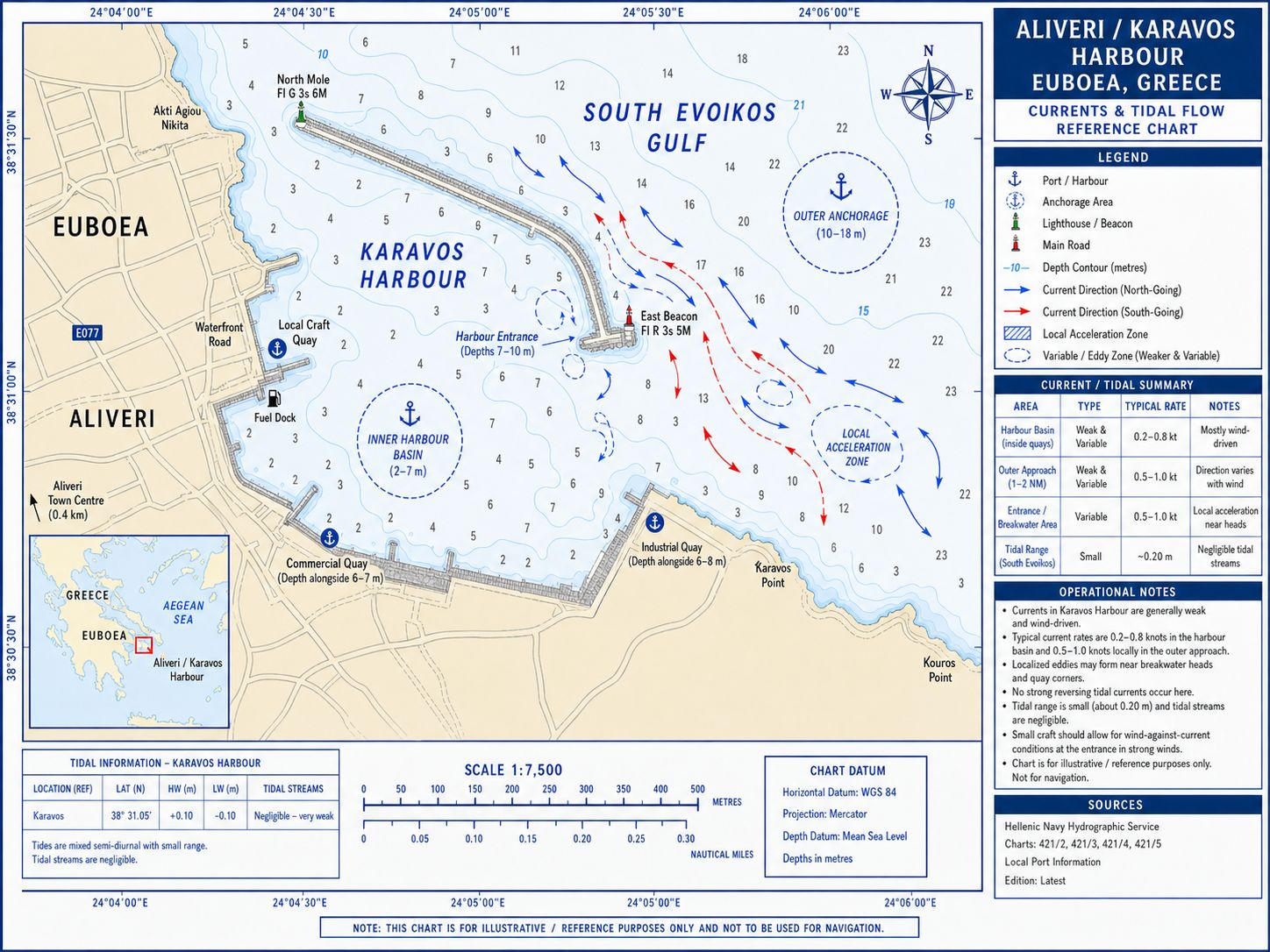
Aliveri. Navigation into Aliveri and Karavos Harbour involves operating within an active industrial and commercial port environment. Cargo traffic, workboats, and fishing vessels use the harbour regularly. Approach depths are generally adequate although commercial berth areas should remain clear. Wind-driven chop may develop across exposed sections of the South Evoikos Gulf during northerly conditions.
Limni. Navigation into Limni is conducted through a small harbour entrance on the western coast of Euboea. Depths reduce gradually toward the town quay and manoeuvring space can become limited when the harbour is busy. The harbour provides good shelter in prevailing northerly conditions although southerly swell may enter the outer basin during winter systems. Stern-to berthing is commonly used along the waterfront.
Euboea Greece
Sailing Guide - Chart
Accuracy
Hydrographic charts accurately depict coastline, bathymetry, and harbour layouts. Electronic charts align with official data. Special attention is required in the Euripus Strait due to current effects. Depth soundings are reliable but should be verified when anchoring.
Euboea Greece
Sailing Guide - Anchorages
Euboea anchorage options are extensive on the western side and limited on the eastern coast. There are no all-weather anchorages, but sheltered gulfs provide significant protection.
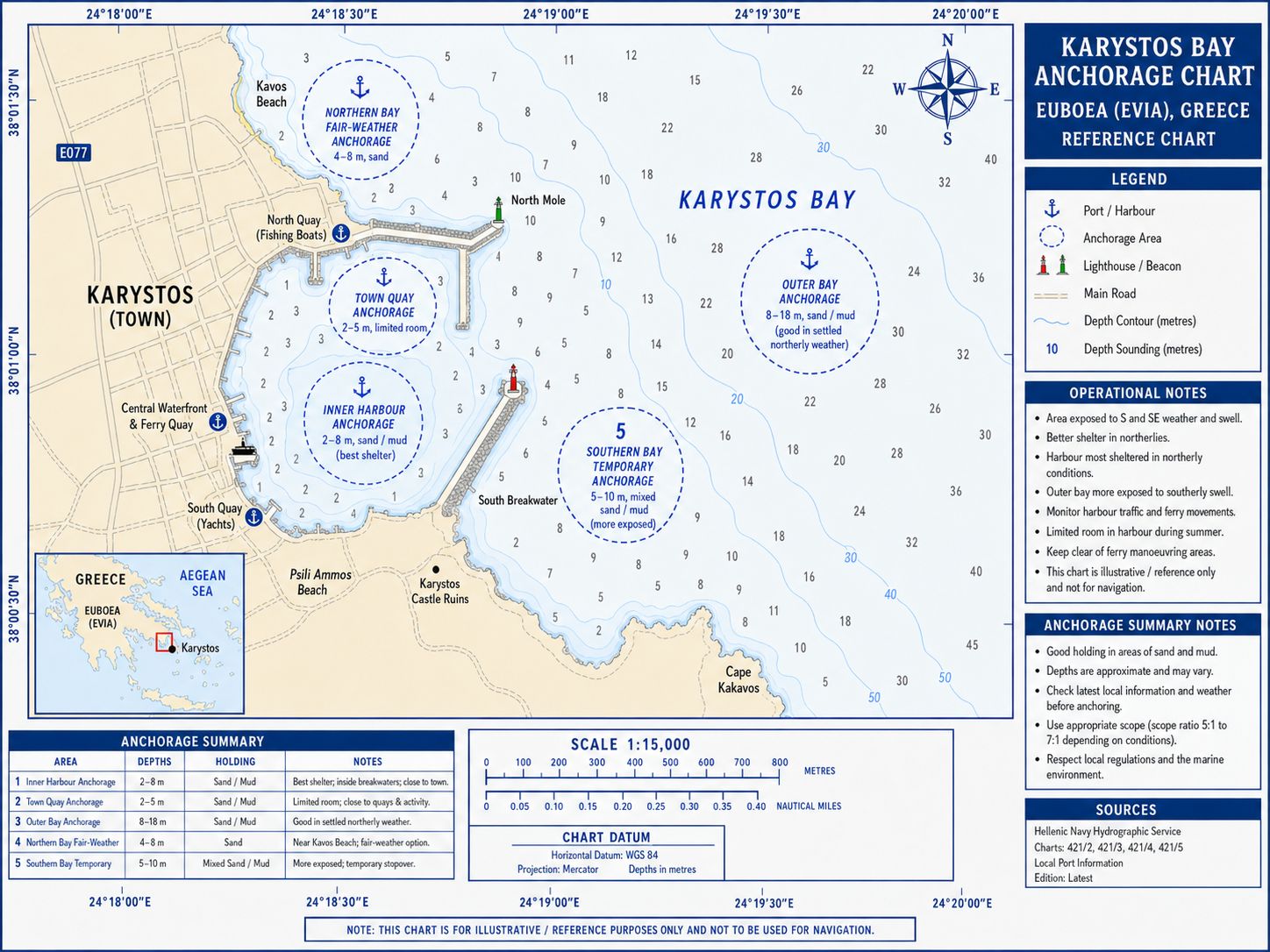
Karystos Bay. Karystos Bay on the southern coast of Euboea is one of the principal all-weather anchorage areas around the island. Depths generally range from 4–12 metres over sand and mud with reliable holding. The bay provides good shelter from northerly Meltemi conditions but is exposed to southerly weather systems and swell entering from the south-east. Multiple anchoring positions exist along the waterfront and outer bay depending on vessel size and weather conditions.
Marmari Anchorage. Anchoring is available north and south of Marmari Harbour in depths of approximately 4–10 metres over sand and mud. Shelter is generally good in northerly conditions due to mainland and coastal protection. Ferry wash and local traffic may affect comfort near the harbour entrance. The anchorage becomes exposed during strong southerly weather.
Eretria Bay. Eretria provides sheltered anchoring within the South Evoikos Gulf. Depths are typically 3–8 metres over mud with good holding. The bay offers good protection from prevailing northerly winds and moderate sea states due to mainland sheltering. Harbour traffic and seasonal yacht density may restrict available anchoring room close to the town waterfront.
Aliveri / Karavos Anchorage. Anchoring near Karavos Harbour is possible in depths of 5–10 metres over mud and sand. The area provides moderate shelter within the South Evoikos Gulf although industrial traffic and harbour operations require care regarding manoeuvring space. Northerly winds may generate short steep chop across exposed sections of the gulf.
Limni Anchorage. Limni offers relatively protected anchoring on the western coast within the North Evoikos Gulf. Depths commonly range from 4–8 metres over mud with good holding. Shelter is generally effective in northerly weather although southerly systems may introduce swell into the outer anchorage. Space may become limited during summer due to local and visiting vessel activity.
Loutra Edipsou Anchorage. Anchoring off Loutra Edipsou is available in depths of approximately 5–12 metres over mud and sand. The area provides moderate protection inside the North Evoikos Gulf and is suitable in settled summer conditions. Ferry activity and harbour wash may affect comfort close to the port entrance.
Petalioi Gulf Anchorages. The waters between southern Euboea and the Petalioi Islands contain numerous sheltered anchorages in depths generally ranging from 4–15 metres over sand and mud. These areas provide some of the most protected cruising conditions near southern Euboea during northerly weather. Shelter varies according to wind direction and individual bay orientation.
North Evoikos Gulf Coastal Anchorages. Numerous temporary anchorages exist along the western Euboea coastline inside the North Evoikos Gulf. Small bays and coastal indentations commonly provide anchoring in 4–10 metres over mud, sand, or mixed weed bottom. Conditions are generally protected from Aegean swell but exposed to localized southerly weather systems.
South Evoikos Gulf Coastal Anchorages. The western side of southern Euboea contains multiple coastal anchoring locations suitable for short stays and overnight shelter during stable conditions. Bottom composition is predominantly mud and sand with generally good holding. Sea breezes and localized chop develop during summer afternoons but overall conditions remain more protected than the eastern Aegean coast.
Eastern Aegean Coast Anchorages. Anchorages along the eastern coast of Euboea are comparatively limited due to exposure to Meltemi conditions and open Aegean swell. Temporary fair-weather anchoring is possible in selected bays and coves including areas near Kymi and northern coastal inlets, generally in depths of 5–15 metres over sand and weed. These locations are operationally weather-dependent and unsuitable during sustained northerly conditions.
Euboea Greece
Sailing Guide - Entry
Formalities
Entry formalities follow standard Greece procedures for visiting yachts. This is not a designated port of entry for international clearance, and there are no customs or immigration facilities on the island. Vessels arriving from outside Greece or the Schengen Area must first clear into the country at an official port of entry before proceeding to this port. Direct arrival from a non-Schengen country is not permitted. The Greek cruising tax (TEPAI) must be valid and paid, and the vessel’s cruising log (DEKPA for non-EU vessels, or transit log where applicable) should be up to date and available for inspection if requested by port authorities or coastguard.
Euboea Greece
Sailing Guide - Marina
Facilities
Chalcis. Chalcis provides extensive town quay berthing on both sides of the Evripos Strait with stern-to and side-to mooring available depending on vessel size and traffic conditions. Depths alongside commonly range from 2–5 metres. Due to strong tidal currents and commercial traffic, berth allocation and manoeuvring require careful timing. The harbour supports year-round commercial, fishing, and cruising yacht activity.
Karystos. Karystos has one of the larger yacht-capable harbour facilities on southern Euboea with substantial town quay berthing inside a protected harbour basin. Stern-to mooring is standard with depths generally between 2.5–5 metres alongside. The harbour supports fishing vessels, cruising yachts, and seasonal charter traffic.
Eretria. Eretria provides town quay berthing along the waterfront within the sheltered South Evoikos Gulf. Stern-to berthing is commonly used with depths generally between 2–4 metres. Shelter is good in normal summer conditions.
Kymi. Kymi Harbour functions primarily as a ferry and commercial port with additional berthing space for fishing vessels and visiting yachts. Berthing is available along sections of the quay subject to ferry operations and harbour traffic. Depths are generally adequate for larger cruising yachts, commonly exceeding 4 metres alongside. Exposure to northerly swell and harbour surge can affect comfort during strong Meltemi conditions
Marmari. Marmari provides town quay and harbour berthing with regular ferry operations linking the port to Rafina. Stern-to berthing is standard with depths typically between 2–4 metres. Shelter is generally good in northerly conditions. Harbour traffic becomes heavy during summer and manoeuvring space may be limited.
Loutra Edipsou. Loutra Edipsou offers town quay berthing and local harbour facilities suitable for cruising yachts in the North Evoikos Gulf. Depths alongside generally range from 2–4 metres. The harbour provides reasonable shelter in prevailing summer weather and supports fishing vessels, ferries, and seasonal yacht traffic.
Aliveri / Karavos Harbour. Karavos Harbour at Aliveri operates primarily as an industrial and commercial port with additional local fishing and recreational vessel berthing. Yacht berthing is possible in designated areas subject to commercial traffic requirements. Depths are generally adequate throughout the basin.
Limni. Limni provides small-scale town quay berthing within a protected harbour basin on the western coast of Euboea. Stern-to mooring is standard with depths commonly between 2–3.5 metres. Harbour space is limited and fills quickly during summer periods.
Euboea Greece
Sailing Guide - Provisioning
Chalcis.
Supermarkets. AB Vassilopoulos, Sklavenitis, My Market and Lidl
Produce Markets. Chalcis Municipal Market, is a local waterfront fruit and vegetable stalls. The market area also contains bakeries, cheese shops, butchers, and dry goods suppliers useful for cruising yacht provisioning. Trading activity is generally strongest during morning hours, particularly from Tuesday through Saturday.
Weekly farmers markets in Chalcis operate as traditional laiki agora street markets supplying locally grown produce and regional food products directly from producers and small traders. Product availability varies seasonally but commonly includes tomatoes, cucumbers, peppers, eggplants, potatoes, onions, citrus, grapes, melons, olives, greens, herbs, legumes, nuts, honey, olive oil, and local cheeses. Additional stalls commonly sell fresh fish, eggs, bread, olives, cured meats and herbs
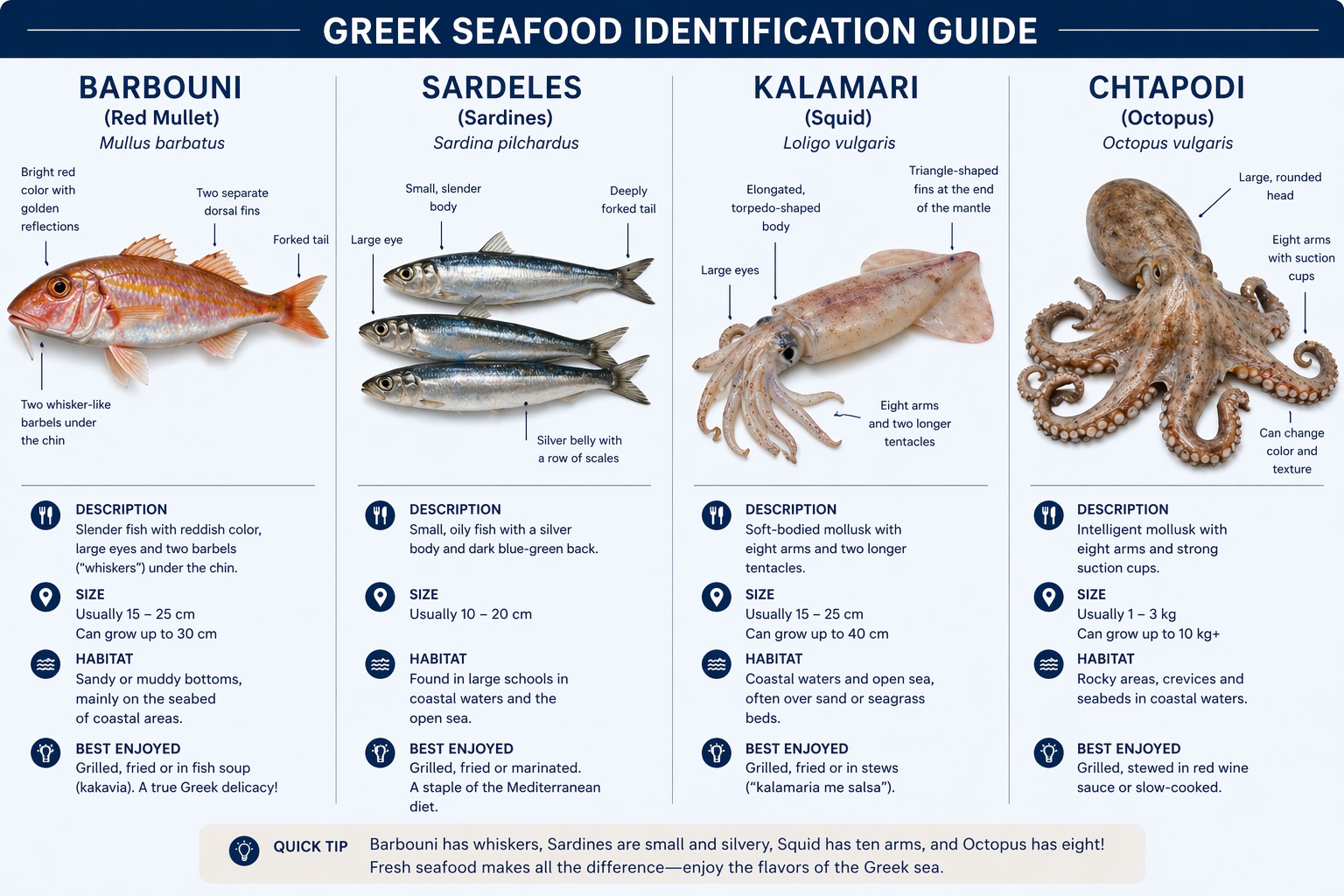
Fish Supply. Chalcis Fish Market. The market functions through a combination of dedicated fishmongers, harbour-side seafood retailers, and direct supply from local fishing boats unloading near the waterfront and commercial harbour areas. Daily availability varies according to weather, season, and fishing activity. Commonly available seafood includes sardines, anchovies, sea bream, red mullet, sea bass, squid, octopus, cuttlefish, shrimp, and seasonal shellfish. Fish supply depends on daily catches from the Evoikos Gulf fleet and weather conditions
Karystos.
- Supermarkets. AB Vassilopoulos, Kritikos Supermarket and local mini markets
- Produce Markets. Karystos fruit and vegetable stores and weekly local produce market
- Fish Supply. Karystos harbour fishing fleet, Local fishmongers near waterfront and daily fresh seafood unloading in harbour
Eretria.
- Supermarkets. Kritikos Supermarket. AB Vassilopoulos and local grocery stores
- Produce Markets. Local greengrocers along waterfront, and seasonal produce stalls
- Fish Supply. Local fishing boats, small seafood retailers and harbour fish sales
Kymi.
- Supermarkets. Sklavenitis, Kritikos Supermarket and local grocery stores
- Produce Markets. Kymi produce shops and local agricultural suppliers
- Fish Supply. Kymi fishing harbour, fresh fish retailers and seasonal seafood suppliers
Marmari.
- Supermarkets. Kritikos Supermarket, local mini markets and grocery stores near ferry port
- Produce Markets. Marmari fruit and vegetable shops, seasonal roadside produce vendors
- Fish Supply. Marmari fishing vessels, harbour seafood sales and local tavern seafood suppliers
Loutra Edipsou.
- Supermarkets. AB Vassilopoulos, Kritikos Supermarket and local mini markets
- Produce Markets. Local produce stores and a weekly farmers market
- Fish Supply. North Evoikos fishing fleet suppliers, harbour fish retailers and seafood shops near waterfront
Aliveri / Karavos Harbour.
- Supermarkets. Sklavenitis, AB Vassilopoulos and My Market
- Produce Markets. Aliveri produce stores and local agricultural markets
- Fish Supply. Karavos fishing harbour, Seafood retailers, Daily fish deliveries from local fleet
Limni.
- Supermarkets. Kritikos Supermarket, Local grocery stores and mini markets near harbour
- Produce Markets. Limni greengrocers and seasonal produce stalls
- Fish Supply. Local fishing boats, harbour seafood supply and small fish retailers near waterfront
Euboea Greece
Sailing Guide - Local
Cuisine
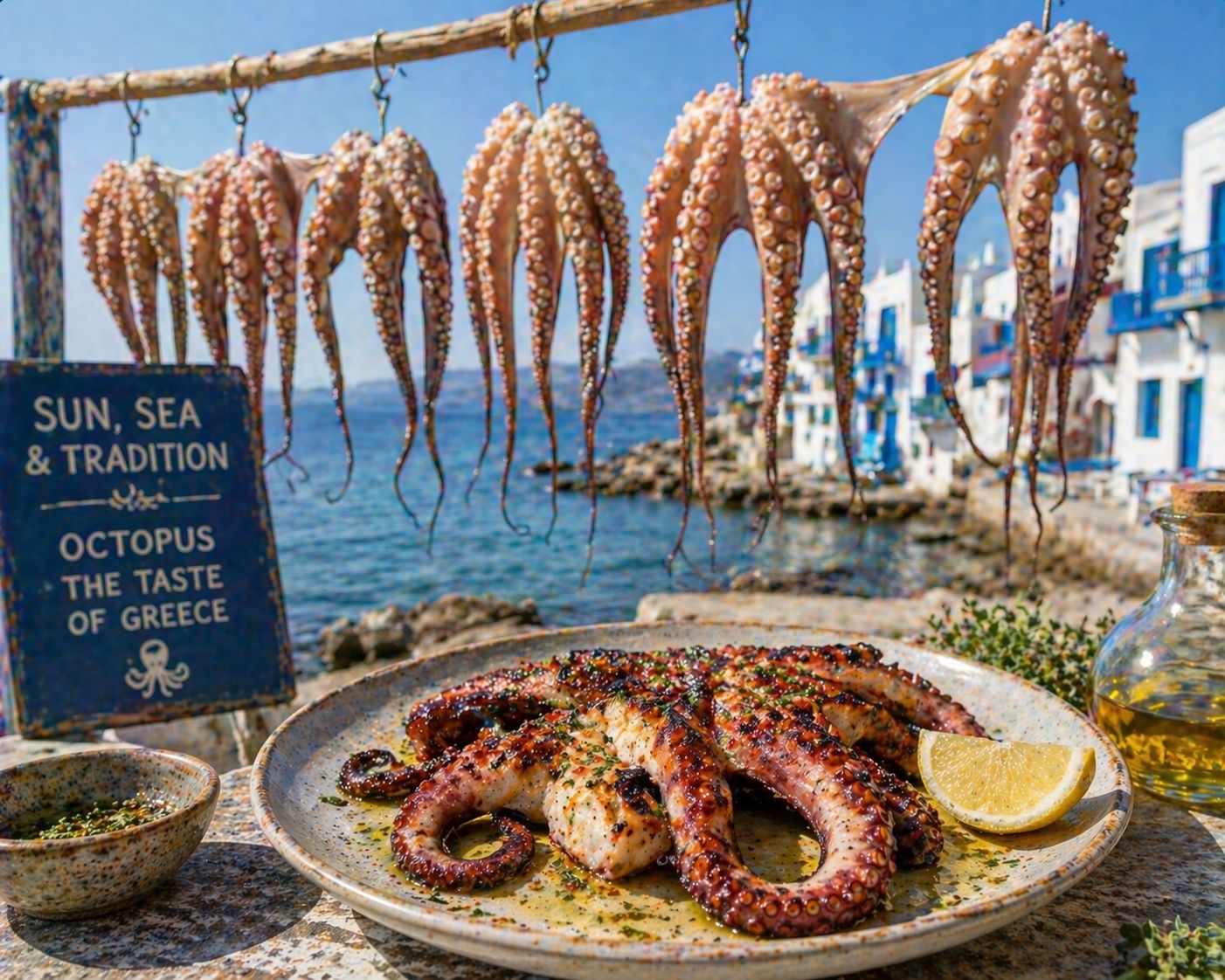
Local cuisine in Euboea varies between coastal fishing towns, mountain villages, and agricultural regions, with strong emphasis on seafood, olive oil, goat and lamb dishes, seasonal vegetables, legumes, cheeses, and locally produced wine. Coastal harbour towns including Chalcis, Karystos, and Kymi commonly serve grilled fish, octopus, squid, sardines, anchovies, shrimp saganaki, and kakavia fish soup sourced from the Evoikos Gulf and Aegean fishing fleets. Traditional mainland dishes including lamb with herbs, goat stew, kokkinisto beef, fasolada bean soup, and oven-baked vegetables are widely prepared throughout the island.
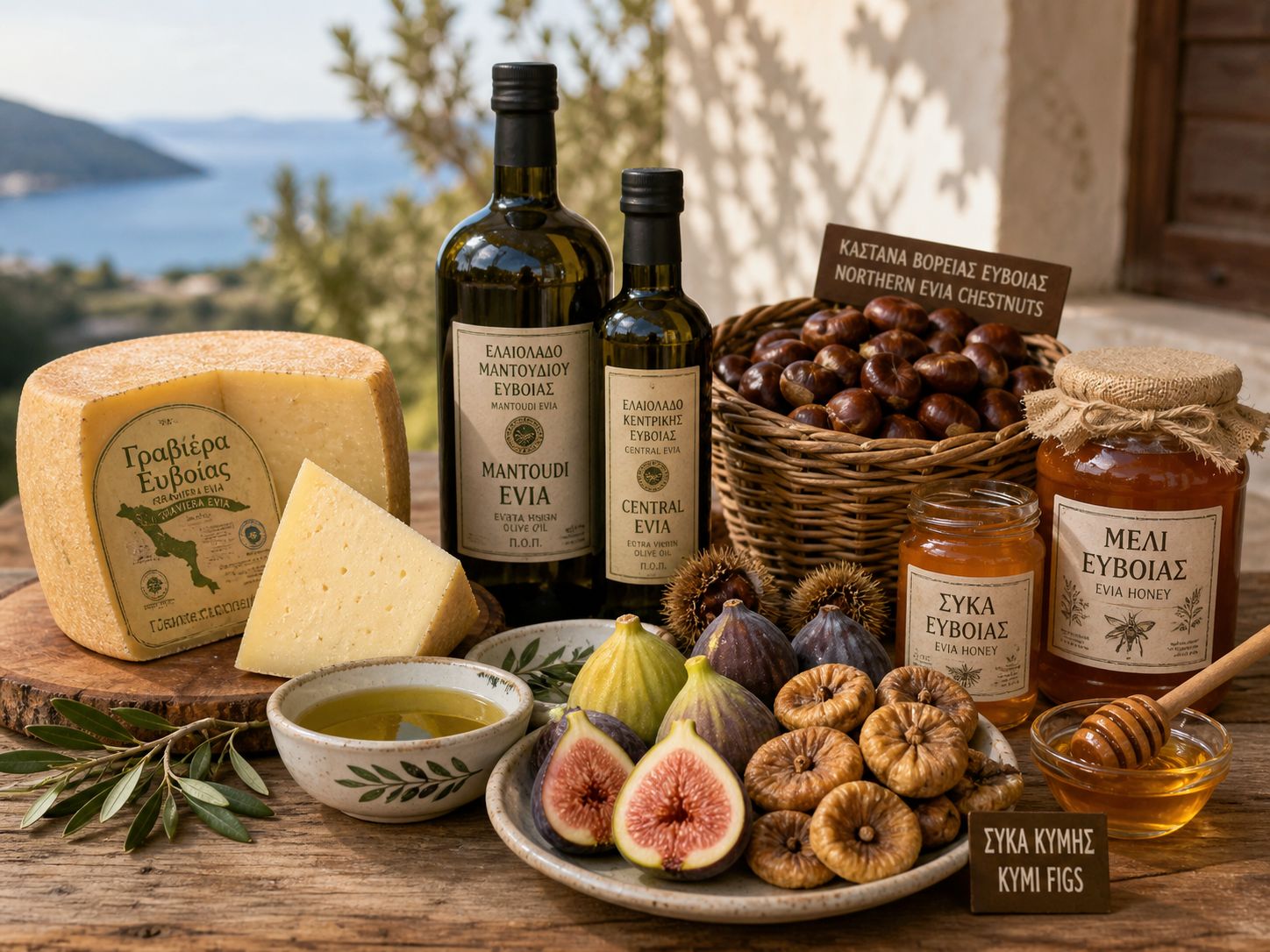
Regional specialties include Evia graviera cheese, local honey, figs, olives, olive oil, mountain herbs, and hand-made pies including spanakopita and hortopita filled with wild greens. Northern Euboea is known for chestnuts and forest products, while southern regions produce wine, citrus, and olive products. Tavernas commonly serve moussaka, souvlaki, dolmades, grilled meats, fried zucchini, local sausages, and fresh village salads using regional produce. Euboea Greece Sailing Guide has a lot of practical and useful information, and anything about food is essential.
Euboea Greece
Sailing Guide - Local Products
Euboea has several regionally specific food products strongly associated with the island and its subregions.
- Kymi Figs. The area around Kymi is known throughout Greece for dried figs with Protected Designation of Origin status. These are among the island’s best-known export products and are commonly used in desserts, preserves, and onboard provisioning due to long storage life.
- Northern Euboea Chestnuts. Mountain regions in northern Euboea produce significant chestnut harvests used in roasting, sweets, spoon preserves, and flour products. Chestnut production is particularly associated with upland villages and forested inland areas.
- Evia Honey. Pine honey and thyme honey produced from the island’s forest and mountain regions are widely regarded within Greece. Northern forest regions produce darker pine honey while southern areas produce lighter thyme varieties.
- Mantoudi and Central Evia Olive Oil. Olive cultivation across the island produces strong-flavoured extra virgin olive oil used extensively in local cooking. Smaller regional producers are common rather than large industrial brands.
- Evia Graviera Cheese. Local graviera-style hard cheese produced from sheep and goat milk is common across inland agricultural regions and used in pies, baked dishes, and table service.
- Seafood from the Evoikos Gulf. The waters between Euboea and the mainland are known for sardines, anchovies, squid, octopus, and sea bream supplied to harbour towns including Chalcis and Karystos.
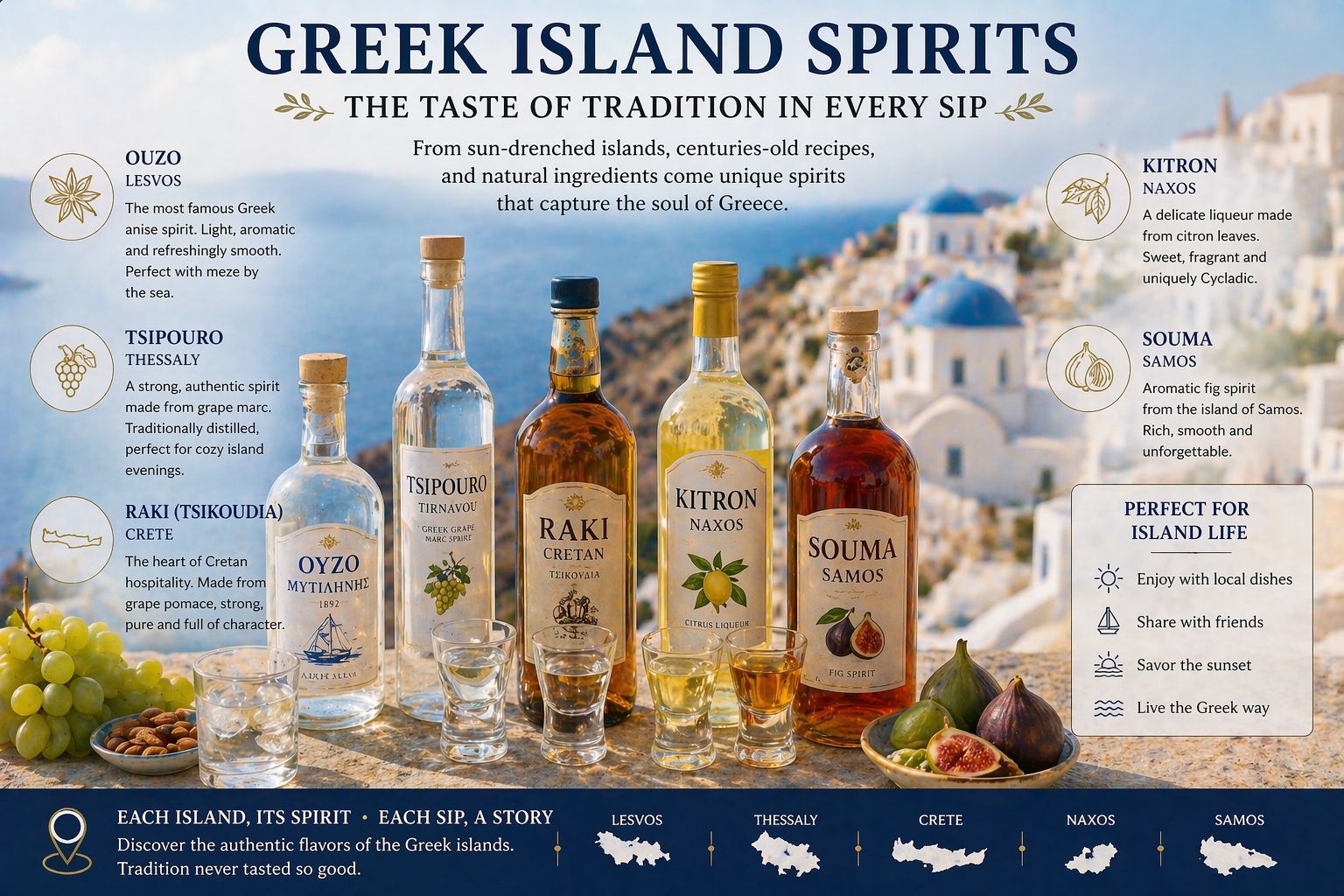
- Tsipouro and Local Wines. Small-scale wine and tsipouro production occurs throughout the island, particularly in southern agricultural districts. These are commonly supplied through tavernas and local producers rather than major commercial export labels.
Euboea Greece
Sailing Guide - Local
Beverages
Local beverages in Euboea include regional wines, locally distilled tsipouro, ouzo, pine and thyme honey liqueurs, and small-scale agricultural spirits produced throughout the island. Southern Euboea produces white and red table wines from local vineyards, while tsipouro is commonly distilled in inland agricultural districts using grape pomace from regional wine production. Retsina is also widely available throughout harbour towns and tavernas.
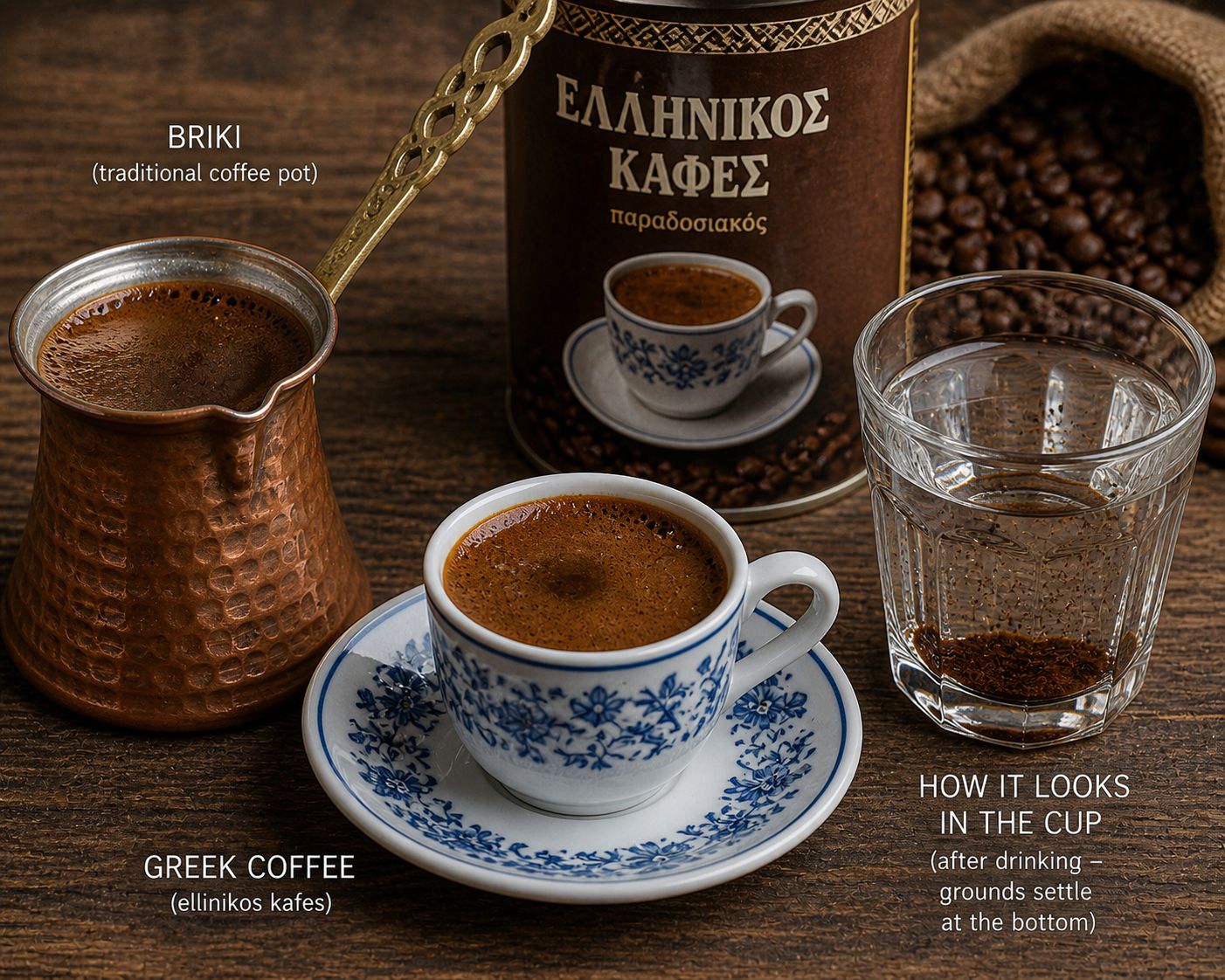
Non-alcoholic beverages commonly include Greek coffee, frappé iced coffee, mountain tea made from local herbs, fresh citrus juices, and herbal infusions sourced from upland regions of the island. Pine honey and thyme honey products from northern Euboea are frequently used in drinks, desserts, and traditional sweet beverages.
Euboea Greece
Sailing Guide - Diesel Fuel
Supplies
- Chalcis. Diesel fuel is available by road tanker delivery to harbour quays on both sides of the Evripos Strait. Multiple fuel stations operate within the town area and can supply yachts directly. Advance booking is recommended during summer due to harbour congestion and bridge timing restrictions.
- Karystos. Fuel delivery is available directly to the town quay by tanker truck. Several fuel stations operate close to the harbour and support cruising yachts, fishing vessels, and local commercial traffic. Jerry can refilling is also practical within walking distance of the quay.
- Eretria. Diesel supply is available through local fuel stations servicing the waterfront area. Tanker delivery can normally be arranged to berthed yachts during the cruising season. No dedicated marina fuel dock exists.
- Kymi. Fuel is available near the commercial harbour area through local fuel suppliers servicing ferries, fishing vessels, and visiting yachts. Road tanker delivery to the quay is generally possible by arrangement.
- Marmari. Diesel fuel is available from fuel stations near the ferry harbour with tanker delivery available to yachts berthed on the town quay. Fuel supply is reliable year round due to ferry and commercial vehicle activity.
- Loutra Edipsou. Fuel is supplied through local fuel stations within the town area. Tanker delivery to harbour berths may be arranged during the cruising season. Jerry can transfer is straightforward due to short distance from harbour to fuel outlets.
- Aliveri / Karavos Harbour. Diesel supply is available through commercial fuel distributors servicing the industrial harbour and surrounding town area. Fuel truck delivery to vessels is normally available due to active commercial port operations.
- Limni. Fuel availability is more limited than larger Euboea ports. Diesel is available through local roadside fuel stations with jerry can transfer commonly used by visiting yachts. Direct tanker delivery may be possible by prior arrangement during summer
Euboea Greece
Sailing Guide - Water
Supplies
- Chalcis. Potable water is available on sections of the harbour quays on both sides of the Evripos Strait. Supply is generally reliable year round due to permanent municipal infrastructure. Additional bottled water and bulk supplies are available from nearby supermarkets and provisioning stores.
- Karystos. Water connections are available along parts of the town quay and harbour berthing areas. Supply is normally adequate during the cruising season although pressure may reduce during peak summer demand. Bottled water is widely available from supermarkets near the harbour.
- Eretria. Potable water is available from quay supply points servicing visiting yachts along the waterfront berthing areas. Additional bottled and bulk drinking water supplies are available within walking distance of the harbour.
- Kymi. Water supply is available within the commercial harbour area and from town-side quay connections. Supply reliability is generally good due to permanent local population and ferry operations. Bottled water is readily obtainable from local supermarkets.
- Marmari. Potable water is available along sections of the harbour quay servicing ferries, fishing vessels, and visiting yachts. Supermarkets and grocery stores near the waterfront provide bottled drinking water and bulk provisions.
- Loutra Edipsou. Water is available from harbour quay outlets and municipal supply points near the waterfront. Supply is generally reliable year round. Bottled drinking water is widely available from supermarkets and mini markets close to the harbour.
- Aliveri / Karavos Harbour. Potable water is available within the commercial harbour area and from municipal services supporting industrial and fishing operations. Visiting yachts can normally obtain water from quay access points by arrangement.
- Limni. Water supply is available near the town quay although connections and hose access may be limited during busy periods. Bottled water and additional supplies are available from local grocery stores and supermarkets within the town area
Mechanical and Electrical Repairs
Resource
If you are headed somewhere remote consider the need to expand your knowledge base or have an information resource on board. Why not get a copy of my book The Marine and Electrical and Electronics Bible 4th Edition. By and for yachties, with everything from batteries and charging, solar and wind, diesel engines and marine electronics and so much more. Your complete systems guide. 650 pages of practical advice. In Australia and New Zealand order a copy through Boat Books. UK and European boats can buy the UK Edition Here. US and Canadian boats can get the US Edition Order Here. Marine systems are my profession so let me help you. By a liveaboard boat owner for other boat owners.



Euboea Greece
Sailing Guide - Marine
Services
- Chalcis. Chalcis offers the strongest marine service base on Euboea, with basic chandlery, engine and electrical contractors, minor repairs, and local technical support available around the harbour and town.
- Karystos. Karystos provides basic marine support, including minor mechanical assistance, small chandlery supplies, gas exchange, and local repair contacts.
- Eretria. Eretria has limited marine services suitable for short stays, basic supplies, and minor contractor assistance available locally.
- Kymi. Kymi has basic port support linked to ferry and fishing activity, with limited repairs, and general local supplies available near the harbour.
- Marmari. Marmari provides basic yacht support through the ferry harbour area, limited repair assistance, and local provisioning access.
- Loutra Edipsou. Loutra Edipsou offers basic harbour support, with minor repairs, and general supplies available from the town.
- Aliveri / Karavos Harbour. Karavos has practical commercial-port support, with mechanical assistance, and industrial contractors available, but it is not a yacht marina service centre.
- Limni. Limni has limited yacht services, with only minor local repair assistance.
Euboea Greece
Sailing Guide - Local
Etiquette
Noise should be kept low overnight near waterfront housing and tavernas. Rubbish should be placed only in harbour bins, and black water, grey water, oil, fuel residue, or bilge discharge should not be released inside harbours or anchorages. Casual dress is normal around the waterfront, but swimwear away from beaches and quayside bathing areas is generally avoided in shops, cafés, and town streets.
Euboea Greece
Sailing Guide - Summary
Euboea provides a diverse cruising area with extensive anchorage options along sheltered western coasts and exposed eastern waters. The Euripus Strait is the primary navigational constraint requiring careful timing. Infrastructure is widely available with multiple ports supporting provisioning and services. Navigation conditions vary significantly across the island. The Euboea Greece sailing guide has everything you need to know.