Dokos Greece Sailing Guide
Dokos Greece Sailing Guide. Dokos lies east of Hydra within the Argolic Gulf and is uninhabited, with no permanent settlement or shore infrastructure. The island presents a low, rugged profile with steep rocky shores, minimal vegetation, and limited visual features from seaward aside from its indented bays. There are no ports, quays, or services of any kind, and all vessel operations are conducted at anchor. The surrounding waters deepen rapidly, with generally clear seabed visibility typical of the eastern Mediterranean Sea.
Dokos is used exclusively as an anchorage location, most notably in Skintos Bay on the south coast, which provides partial shelter depending on wind direction. The island’s position within the Saronic/Argolic cruising area places it on common passage routes between Hydra, the Peloponnese mainland, and nearby islands. Exposure is significant outside sheltered bays, and conditions are directly influenced by regional wind patterns rather than local modification. With no services, no provisioning, and no support facilities, Dokos should be treated as a remote anchorage requiring full vessel self-sufficiency.
Dokos Greece
Sailing Guide - History
Dokos has a documented history extending back to the Early Bronze Age and is associated with one of the oldest known shipwrecks, dated to around 2200–2000 BC, indicating its role in early Aegean maritime trade routes. The island’s position between the Peloponnese and nearby islands placed it along established coastal navigation corridors used for the movement of goods such as ceramics and raw materials. Archaeological evidence suggests intermittent settlement or use rather than continuous habitation, with activity focused on maritime transit rather than development of permanent infrastructure.
In later periods, including Classical, Byzantine, and Ottoman eras, Dokos remained marginal and sparsely used, primarily for grazing and limited seasonal occupation. Unlike nearby Hydra, it did not develop into a population or trade centre. The island has remained uninhabited in modern times, with no urbanisation or port construction, preserving its role as an undeveloped landmass within a historically active but regionally focused maritime area.
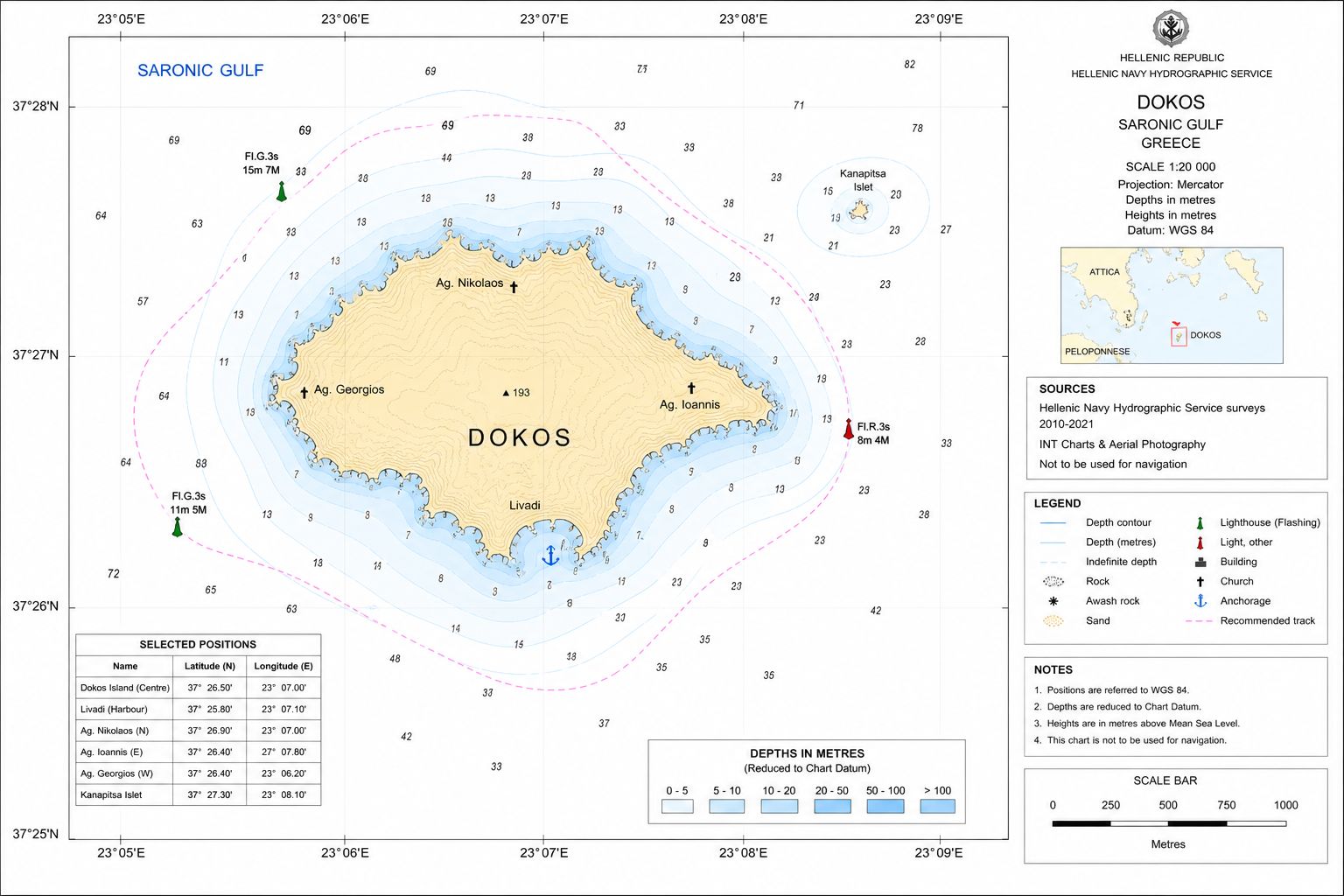
Chart Disclaimer. This chart is a schematic representation for illustrative purposes only and must not be used for navigation. Refer to official hydrographic charts for safe navigation. Be aware ENC charts may differ from official hydrographic charts. Both should be corrected and updated regularly.
Dokos Greece
Sailing Guide - Ocean Currents
and Tidal Flow
Local tidal range around Dokos is negligible, typically less than 0.3 m, and tidal streams have no operational significance. Water movement is driven primarily by wind and regional circulation within the Argolic Gulf and adjacent Saronic Gulf. In settled conditions, current is weak and variable, generally below 0.3 kn, with no consistent directional flow.
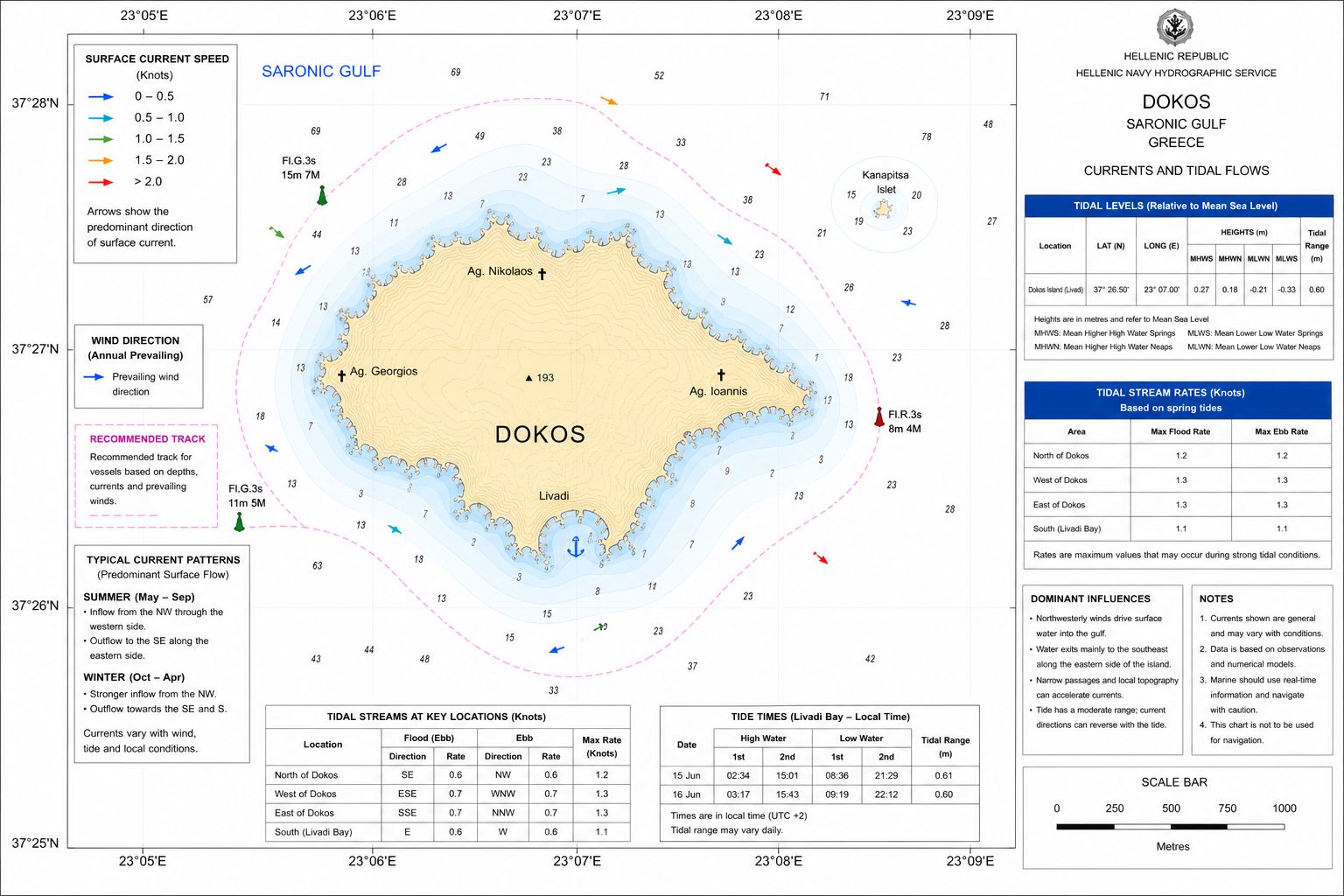
Under stronger wind regimes, particularly northerlies, a wind-driven surface set can develop along the island’s coasts, with localized acceleration around headlands and through the channels between Dokos and nearby landmasses, including toward Hydra. In southerly conditions, a short-period counter-set may form within the gulf. Within Skintos Bay, current is minimal, though light eddies can occur due to wind interaction with surrounding terrain. There are no tidal races, overfalls, or standing waves; any surface movement is wind-induced and should be treated as secondary to prevailing wind and sea state.
Dokos Greece
Sailing Guide - Weather
Summer has high pressure over the region, producing clear skies, high visibility, and minimal precipitation. Winds are generally lighter and more variable than the central Aegean, with northerly flows extending into the area but often reduced in strength. A diurnal sea-breeze cycle is common in settled conditions, with light onshore flow developing late morning, peaking in the afternoon, and easing after sunset.
Outside the summer period, weather becomes more variable under passing synoptic systems. Autumn and winter bring frontal activity moving west to east, with winds shifting through southerly sectors ahead of fronts, often accompanied by cloud, reduced visibility, and rainfall, followed by westerly to northerly winds after passage. Short-duration strong wind events can occur with these systems, particularly in exposed positions within the gulf. Temperatures remain moderate year-round, but cloud cover and unsettled intervals increase significantly in winter. Overall, weather is less severe than the open Aegean but remains fully exposed to regional systems with limited shelter effect from surrounding land.
The Marine Electrical and Electronics Bible has a complete list of Greek VHF Radio Channel information and weather forecast times for Greece along with NAVTEX UK and Europe and NAVTEX Mediterranean for 490kHz and 518kHz.
Dokos Greece
Sailing Guide - Local Winds
Local wind patterns around Dokos are governed by the Saronic and Argolic Gulf regime and are generally less intense than the central Aegean Meltemi core, but still structured by seasonal northerlies. In summer, prevailing winds are N to NE, typically 10–20 kn, building from late morning, peaking mid to late afternoon, and easing after sunset. Strength is moderated by surrounding landmasses including Hydra and the Peloponnese, though localized acceleration occurs in channels and around headlands, with short gusts above mean wind speed. In settled conditions, a sea-breeze cycle can overlay the gradient flow, producing variable direction shifts near the coast.
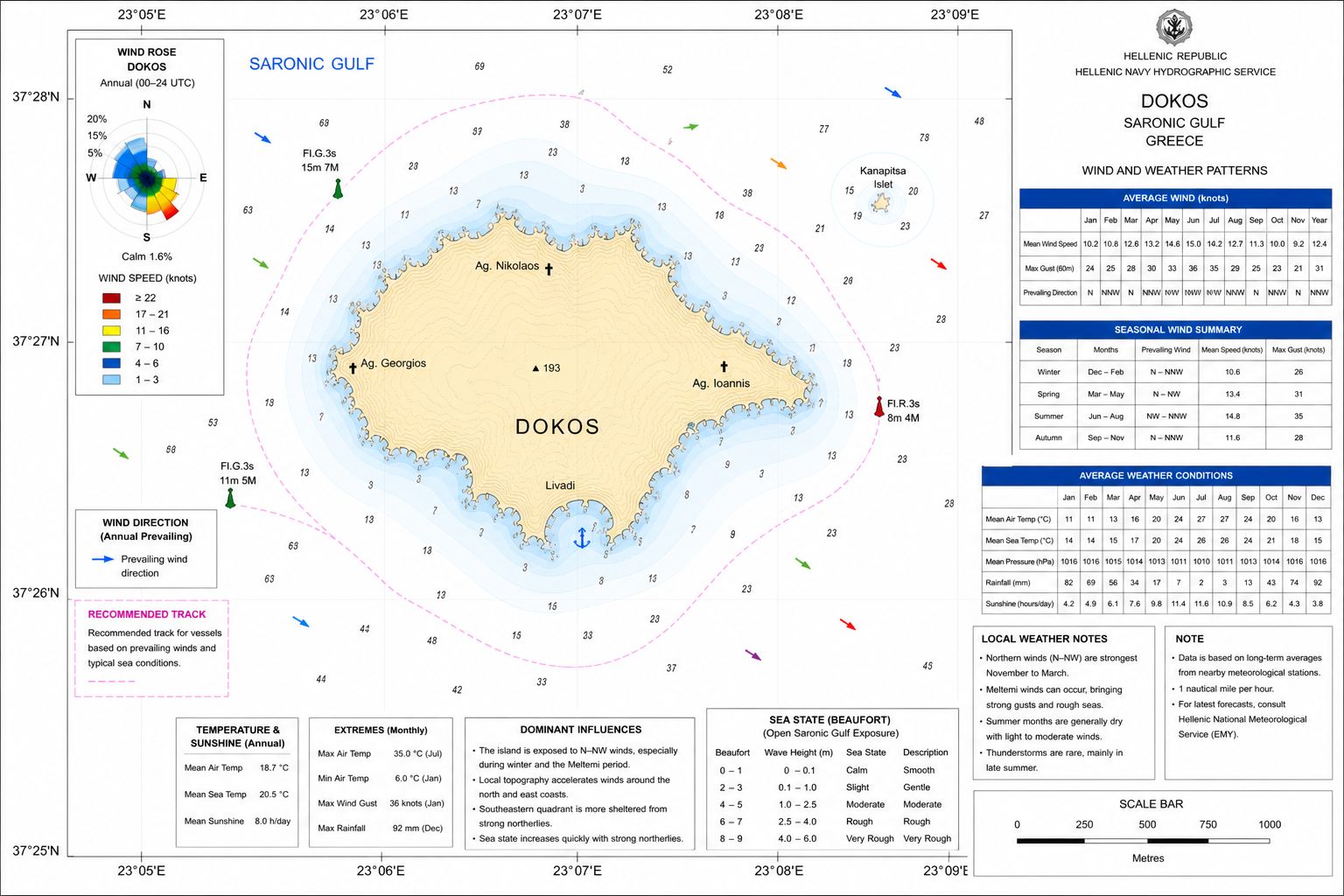
In Skintos Bay on the south coast, northerly winds are partially shielded, resulting in reduced mean wind strength but with intermittent gusts descending off surrounding slopes. Southerly winds, although less frequent in summer, have direct fetch into the bay and produce more consistent pressure and wave development. Outside the summer period, wind direction becomes variable under passing systems, commonly SE–SW ahead of fronts and W–NW following, with occasional short-duration strong winds. Wind behaviour is primarily gradient-driven with local deflection rather than complex terrain effects.
The Meltemi is a strong, dry northerly wind that dominates the Aegean in summer, accelerating through channels and between islands to produce steep, short seas. It is most persistent in July and August, often blowing for several days with little diurnal variation, creating fast north‑to‑south passages and challenging return routes. Its strength is shaped by pressure gradients between the Balkans and Anatolia, with local acceleration zones around major island gaps.
Dokos Greece
Sailing Guide - Approaches
Approaches to Dokos are conducted entirely in open water with no formal harbour or navigation infrastructure. The island is low and rocky with limited visual definition at distance, becoming more distinct on closing range. There are no charted off-lying dangers of significance on the main approach lines, but the coastline is steep-to with isolated rocks and uneven seabed close inshore. Depths increase rapidly to 20–40 m and then deeper, allowing a direct approach toward the intended anchorage with minimal need for offshore holding patterns.
The primary objective is Skintos Bay on the south coast, approached visually. Maintain a clear offing when running along the coast, then turn in on a controlled heading toward the centre of the bay, avoiding the rocky margins on either side. Depths reduce progressively from 20 m to anchoring depths of approximately 5–10 m toward the inner part of the bay. Under northerly winds, expect reduced sea state on approach due to partial land shelter, but with localized gusts descending off the surrounding slopes. In southerly conditions, a direct sea can develop into the bay, affecting final approach and anchoring control. There are no aids to navigation; entry is by eye in daylight conditions, with continuous depth monitoring and visual assessment of seabed and clearance.
Dokos Greece
Sailing Guide - Navigation
Dokos has no harbour; navigation is into open anchorage, primarily Skintos Bay on the south coast. Final approach is conducted visually in daylight. From offshore, close the coast on a controlled heading toward the centre of the bay, maintaining adequate offing from both headlands, which are rocky and steep-to. Depths reduce rapidly from 20–30 m outside to 10–12 m on entry, then to typical anchoring depths of 5–10 m further inside. There are no aids to navigation or transit marks; maintain mid-bay alignment and avoid the margins where isolated rocks and uneven seabed are present.
Dokos Greece
Sailing Guide - Chart Accuracy
Hydrographic charts provide accurate coastline and depth representation for Dokos. Electronic charts align well with official data. Minor nearshore hazards may not be fully detailed and require visual confirmation.
Dokos Greece
Sailing Guide - Anchorages
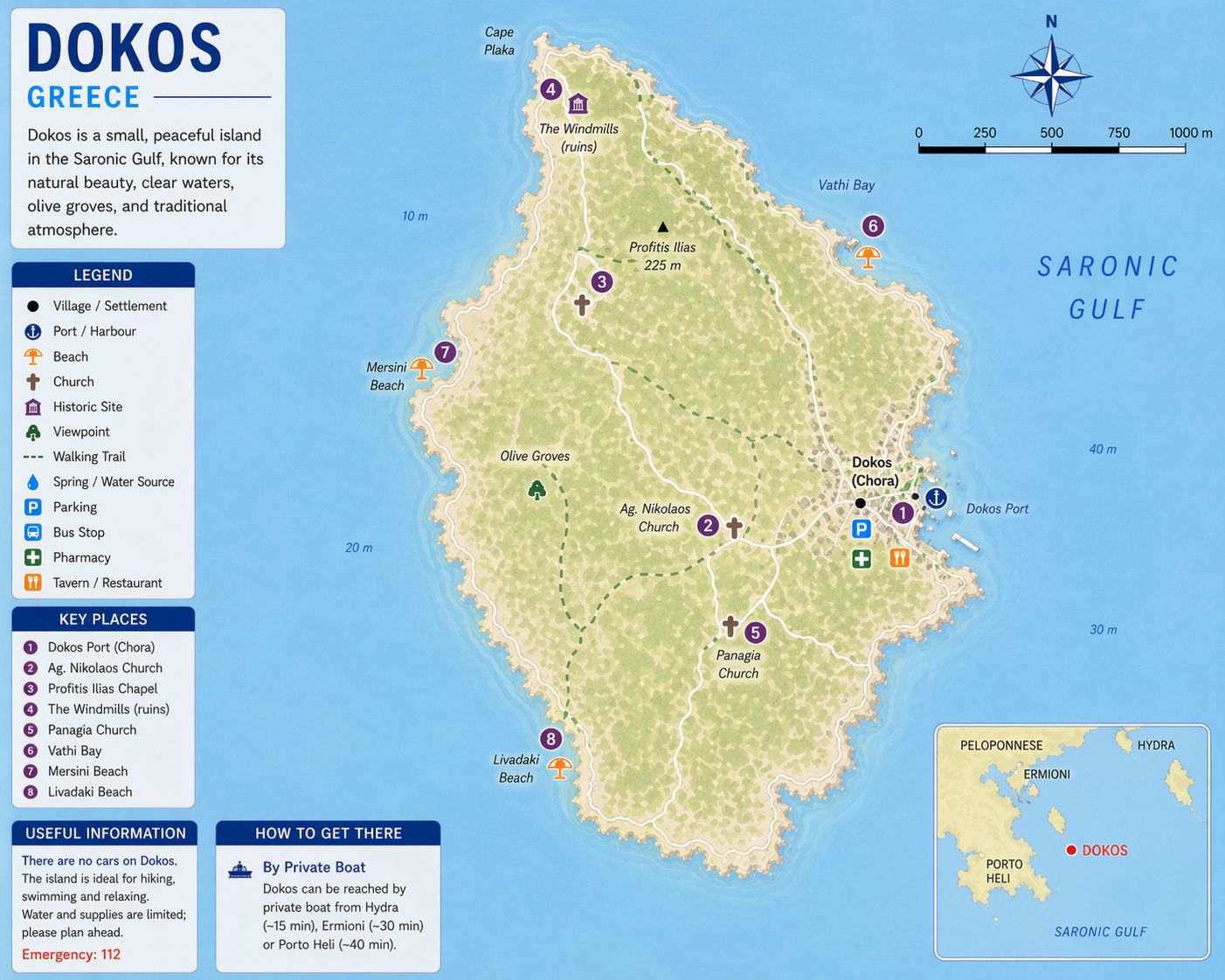
Dokos anchorage is the primary use of the island. Anchoring at Dokos is limited to open bays with no infrastructure, the primary location being Skintos Bay on the south coast. This is the only anchorage offering consistent shelter, particularly from northerly winds. Depths typically range from 5–10 m in the inner bay, increasing quickly toward the entrance. The seabed is mixed sand and weed; anchor placement should target sand patches for reliable holding. Shelter is partial and adequate in N–NE conditions, but exposed to S–SE where fetch builds directly into the bay.
Secondary anchorage options are situational and weather-dependent. Small indentations along the east and north coasts can be used in settled conditions or with southerly winds, but these are exposed to northerlies and provide no protection from swell wrap. Depths drop off rapidly, often limiting anchoring to a narrow band close to shore with variable holding. There are no all-weather anchorages anywhere on the island, and no protection from strong wind shifts. All anchorages should be treated as temporary, with continuous monitoring of wind direction and sea state and readiness to relocate as conditions change.
Dokos Greece
Sailing Guide - Entry Formalities
This is not a designated port of entry for international clearance, and there are no customs or immigration facilities on the island. Vessels arriving from outside Greece or the Schengen Area must first clear into the country at an official port of entry before proceeding to this port. Direct arrival from a non-Schengen country is not permitted. The Greek cruising tax (TEPAI) must be valid and paid, and the vessel’s cruising log (DEKPA for non-EU vessels, or transit log where applicable) should be up to date and available for inspection if requested by port authorities or coastguard. Clearance must be completed at nearby ports such as Hydra or Porto Heli.
Dokos Greece
Sailing Guide - Marina Facilities
There are no marina or harbour facilities on Dokos. No quay, pontoon, or berthing infrastructure exists. All vessel operations are conducted at anchor. No mooring systems are installed.
Dokos Greece
Sailing Guide - Provisioning
Provisioning on Dokos is non-existent. The island is uninhabited and has no shops, markets, or supply points of any kind. There are no opportunities to obtain food, water, fuel, or any consumables ashore. All provisioning must be completed in advance at nearby ports such as Hydra or mainland locations within the Argolic Gulf. Dokos should be treated as a remote anchorage only, with full self-sufficiency required for the duration of the stay.
Dokos Greece
Sailing Guide - Local Cuisine
There are no food establishments on Dokos. No cuisine is available on the island. So time to go to your favorite on board recipes and get busy in the galley.
Dokos Greece
Sailing Guide - Local Beverages
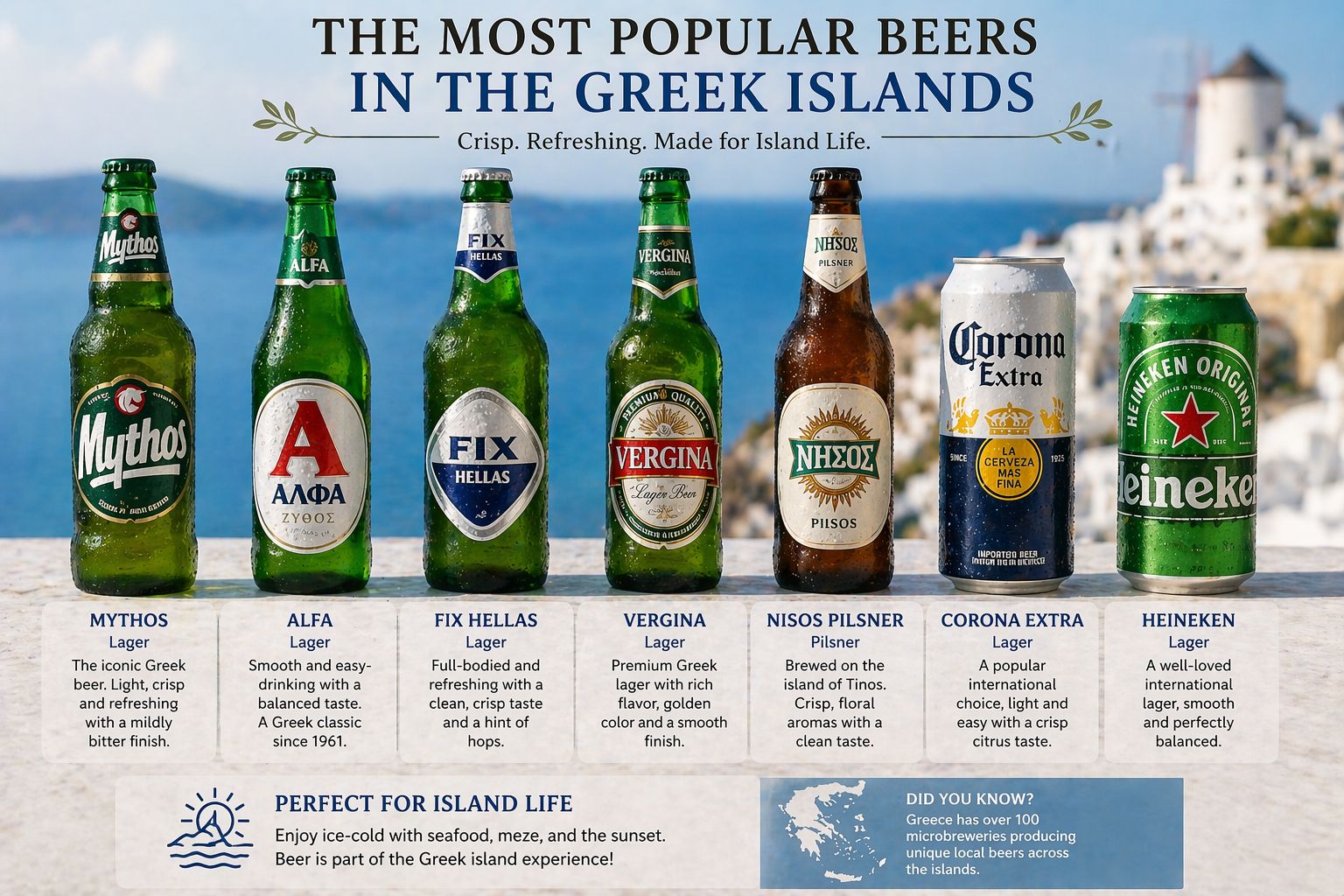
There are no beverage supply facilities on Dokos. Bring your own is the order of the day. By now you have stocked up on some quite acceptable Greek beers.
Dokos Greece
Sailing Guide - Diesel Fuel
Supplies
There is no fuel supply on Dokos. Fuel must be obtained at nearby ports such as Hydra or Porto Heli prior to arrival.
Dokos Greece
Sailing Guide - Water Supplies
There is no potable water supply on Dokos.
Mechanical and Electrical Repairs
Resource
If you are headed somewhere remote consider the need to expand your knowledge base or have an information resource on board. Why not get a copy of my book The Marine and Electrical and Electronics Bible 4th Edition. By and for yachties, with everything from batteries and charging, solar and wind, diesel engines and marine electronics and so much more. Your complete systems guide. 650 pages of practical advice. In Australia and New Zealand order a copy through Boat Books. UK and European boats can buy the UK Edition Here. US and Canadian boats can get the US Edition Order Here. Marine systems are my profession so let me help you. By a liveaboard boat owner for other boat owners.



Dokos Greece
Sailing Guide - Marine Services
There are no marine services on Dokos. No repair, maintenance, or technical support is available. All marine services must be conducted at nearby ports including Hydra, Ermioni, or Porto Heli.
Dokos Greece
Sailing Guide - Local Etiquette
Dokos is uninhabited and operates as a natural anchorage area. Basic anchoring etiquette at Dokos is practical and space-based, much like any other anchorage, which means anchor with adequate clearance from existing vessels, accounting for swing radius and depth. Do not anchor over another vessel’s chain or restrict its ability to swing. Set and confirm holding before leaving the vessel unattended. Keep noise to normal levels, particularly early morning and evening. Use shore access points without blocking others, and avoid leaving equipment or tenders where they obstruct landing areas. All waste is to be retained onboard and nothing is to be discharged ashore or into the water.
Dokos Greece
Sailing Guide - Summary
Dokos provides anchorage-only operations within a sheltered gulf environment with no infrastructure or services. Navigation is straightforward with limited hazards and moderate wind conditions. Anchorage selection is dependent on wind direction with Skintos Bay providing the primary shelter. All provisioning, fuel, and services must be arranged prior to arrival, consistent with a Dokos Greece Sailing Guide for all you need to know.