Chrissi Greece
Sailing Guide
Chrissi Greece Sailing Guide. Chrissi is a small uninhabited island located approximately 8 nautical miles south of Ierapetra on the southern side of Crete in the Libyan Sea. The island is low lying, with extensive sandy beaches, shallow turquoise water, and areas of exposed limestone and cedar forest. Chrissi forms part of a protected Natura 2000 environmental zone and has no permanent settlement, marina infrastructure, or harbour facilities. During the summer season the island receives heavy day-trip excursion traffic from Crete, while outside the tourist season it remains largely isolated and undeveloped. For cruising yachts the island functions primarily as a temporary anchorage destination in settled weather rather than a port of refuge.
The surrounding waters of Chrissi are generally clear with good visibility, although extensive shallow areas, reef patches, and sandbars require careful navigation when approaching the coastline. Depths shoal gradually from offshore, particularly along the northern side where most vessels anchor. Holding is predominantly sand with scattered weed patches. The island is fully exposed to southerly weather systems and any strong Libyan Sea swell can make conditions untenable. In stable northerly Meltemi conditions the northern anchorages provide comparatively calm overnight shelter, though strong katabatic gusts can descend from Crete during the evening and early morning hours.
Chrissi Greece
Sailing Guide - History
The recorded history of Chrissi is closely linked to the maritime trade routes operating between Crete, North Africa, and the eastern Mediterranean. Archaeological evidence indicates intermittent occupation during the Minoan and Roman periods, primarily associated with fishing, salt collection, shell extraction, and small-scale trade activity. The island’s position south of Crete placed it along established coastal navigation routes used by merchant vessels moving through the Libyan Sea. Remains of ancient structures, cisterns, pottery fragments, and tombs have been identified on the island, indicating periodic seasonal settlement rather than permanent habitation.
During the Venetian and later Ottoman periods the island remained sparsely populated and was mainly utilised by fishermen, sponge divers, and coastal traders operating from nearby Ierapetra. The island’s cedar forest was historically valued for timber and fuel, although overexploitation and environmental pressures gradually reduced its extent. In modern times Chrissi has remained uninhabited and protected due to its ecological significance, particularly its rare juniper cedar woodland, fragile dune systems, and marine habitats. Today the island is managed under strict environmental protection regulations limiting development, vehicle access, construction activity, and overnight visitation in certain areas.
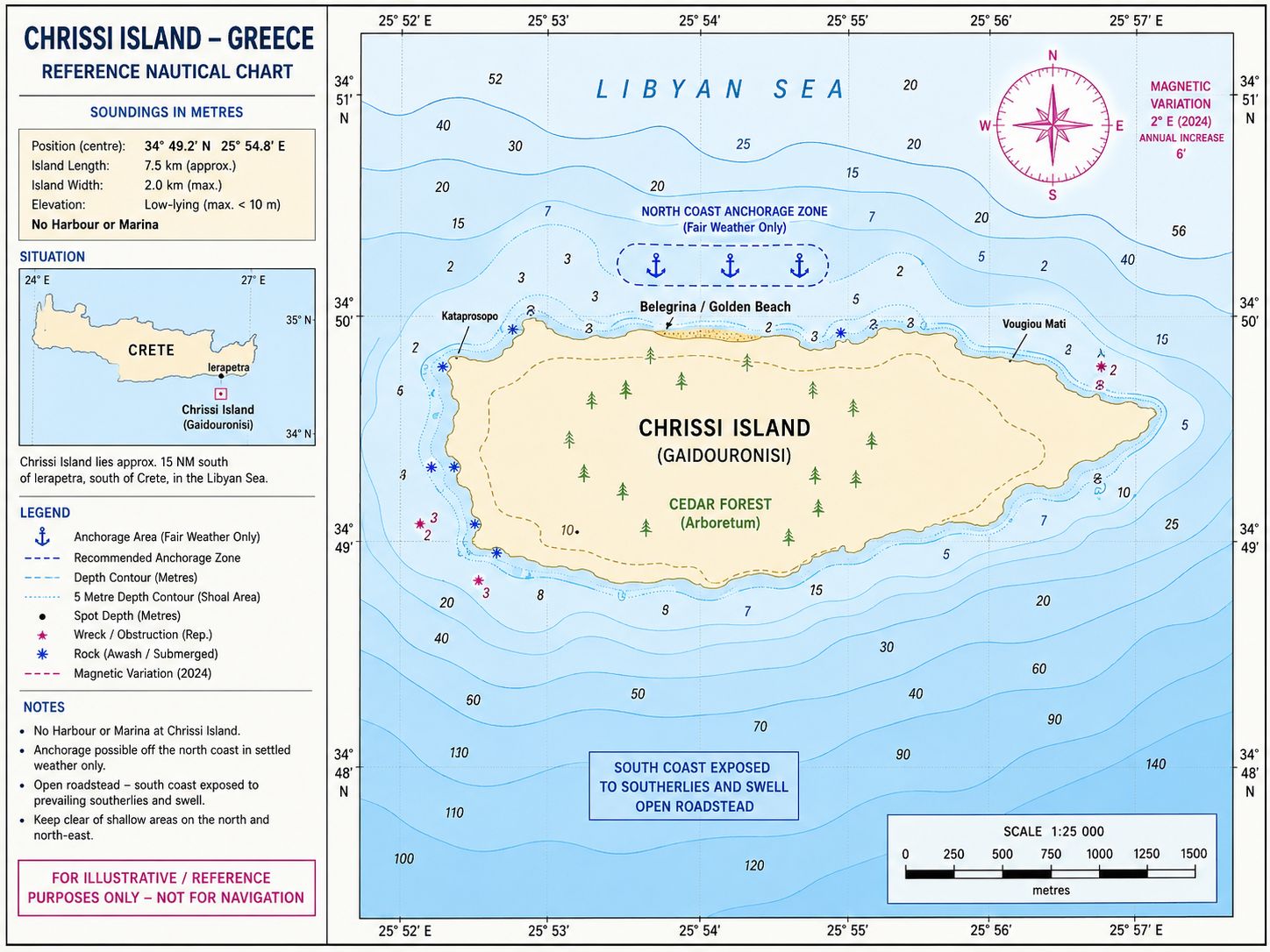
Chart Disclaimer. This chart is a schematic representation for illustrative purposes only and must not be used for navigation. Refer to official hydrographic charts for safe navigation. Be aware ENC charts may differ from official hydrographic charts. Both should be corrected and updated regularly.
Chrissi Greece
Sailing Guide - Ocean Currents and Tidal Flow
The waters surrounding Chrissi are influenced primarily by regional wind-driven circulation within the Libyan Sea rather than significant tidal exchange. Tidal range in this area is minimal, commonly less than 0.3 metres, and tidal streams are generally weak and operationally insignificant for most yacht navigation. Current direction and sea state are instead dominated by prevailing wind systems, particularly prolonged northerly Meltemi conditions during summer which generate a consistent south-setting surface drift between Crete and Chrissi. During stronger northerly episodes accelerated flow can develop around the eastern and western extremities of the island, with confused seas forming where opposing wind waves interact with local seabed contours and shallow reef areas.
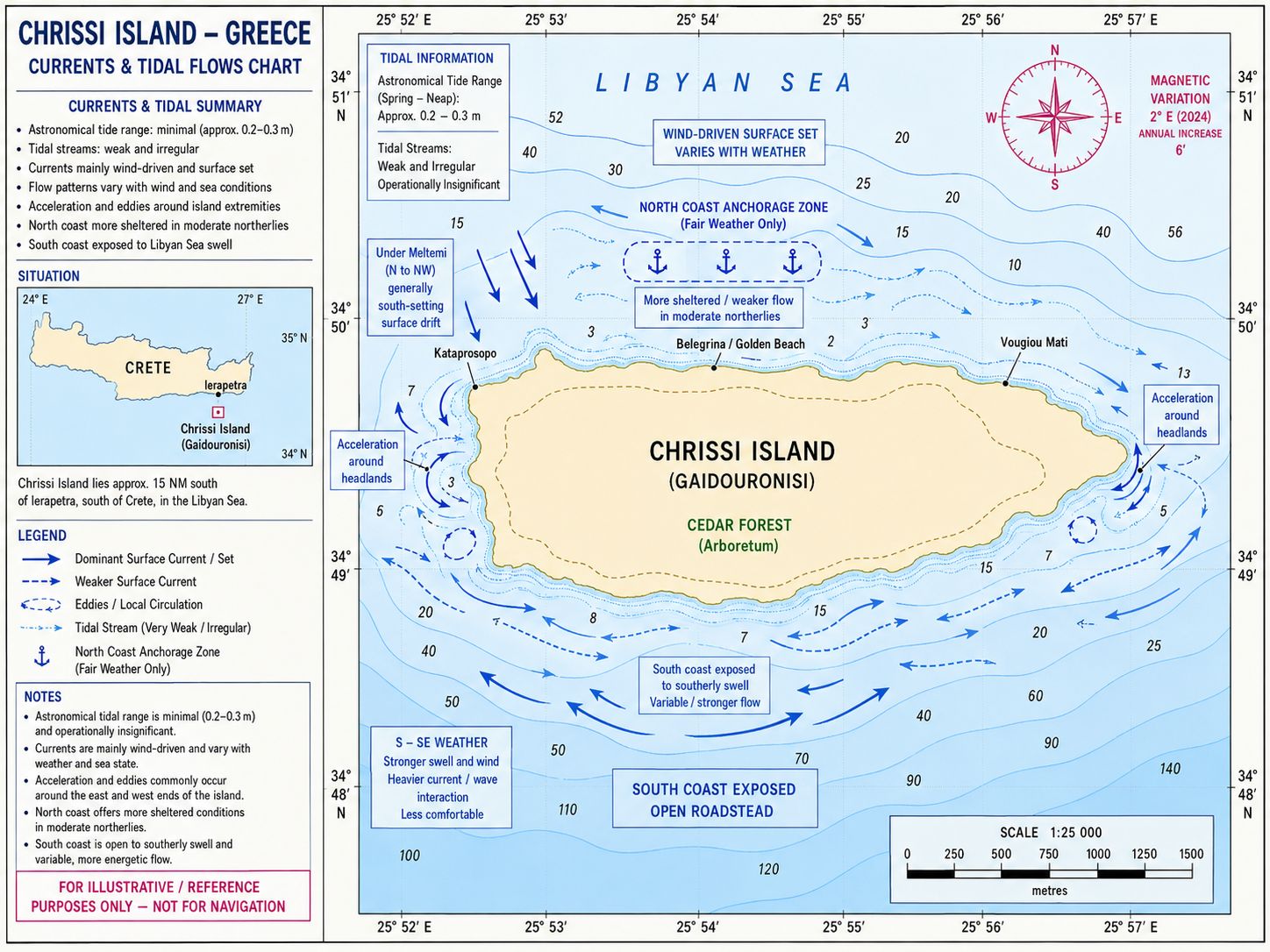
Southerly and south-easterly weather systems in the Libyan Sea can rapidly alter local current behaviour and generate heavy residual swell across the island’s northern anchorages despite relatively low local wind strength. Wave refraction around the shallow northern shelf frequently creates cross motion and rolling conditions at anchor, particularly overnight when wind direction shifts occur along the southern coast of Crete. Following prolonged strong winds, sediment movement and shifting sand patches may alter shallow approach areas close to the beaches. Offshore depths increase rapidly south of the island, allowing significant open-sea swell energy to reach the coastline with little attenuation during unsettled weather patterns.
Chrissi Greece
Sailing Guide - Weather
The climate of Chrissi is dry eastern Mediterranean with long hot summers, limited rainfall, and mild winters. From May through September conditions are dominated by stable high-pressure systems with frequent clear skies and strong solar exposure. Summer daytime temperatures commonly range between 28°C and 35°C, while sea surface temperatures remain warm through late autumn. Rainfall during the cruising season is infrequent, although occasional dust haze from North Africa can reduce visibility across the Libyan Sea. The island has no significant terrain or elevation, resulting in little protection from wind or sea conditions in any direction.
The primary seasonal weather influence is the northerly Meltemi pattern affecting the Aegean and extending into southern Cretan waters during summer. Although generally weaker south of Crete than in the central Aegean, prolonged northerly flows can still generate steep wind waves and uncomfortable anchorage conditions along the northern coast of the island. Southerly systems originating from the Libyan Sea are less frequent but operationally more significant, producing heavy swell, reduced holding comfort, and rapid deterioration in exposed anchorages. During winter and transitional seasons frontal systems moving east across the Mediterranean can bring strong south-easterly winds, thunderstorms, and rapidly changing sea states with limited local shelter available.
The Marine Electrical and Electronics Bible has a complete list of Greek VHF Radio Channel information and weather forecast times for Greece along with NAVTEX UK and Europe and NAVTEX Mediterranean for 490kHz and 518kHz.
Chrissi Greece
Sailing Guide - Local Winds
The local wind regime around Chrissi is dominated by the regional northerly Meltemi circulation during the main cruising season from late spring through early autumn. Prevailing winds are typically north to north-west, frequently strengthening during the afternoon and easing overnight. Wind acceleration commonly develops in the channel between Chrissi and the southern coast of Crete due to funneling effects created by the terrain of eastern Crete. Gust strengths near the island can exceed forecast values, particularly during sustained high-pressure gradients over the Aegean. The northern coast anchorages receive some lee protection in moderate northerlies, although short steep wave development can still occur in open areas exposed to the Libyan Sea fetch.
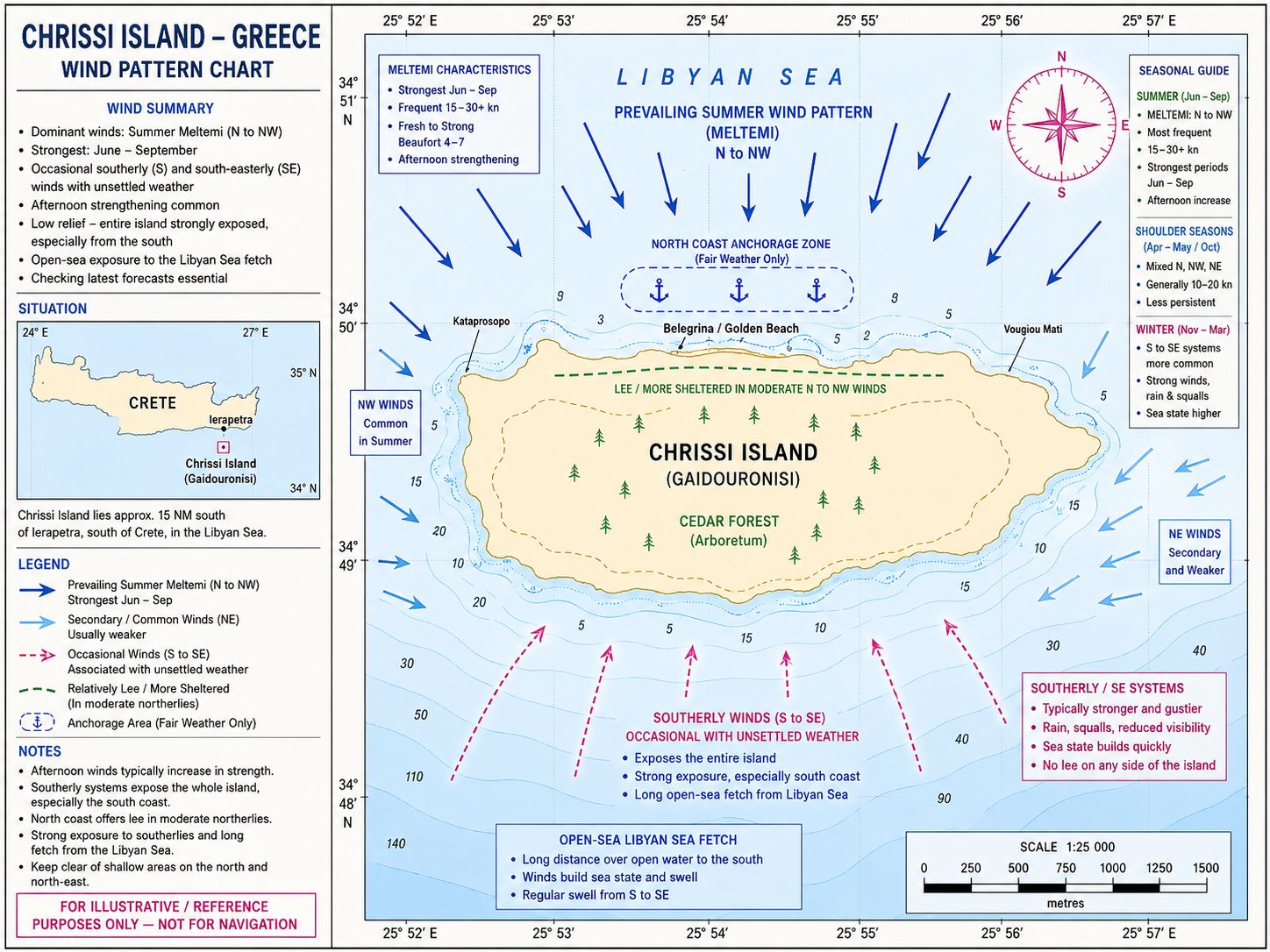
Katabatic wind activity descending from the mountainous terrain near Ierapetra can produce sudden overnight gusts and localized directional shifts, particularly during otherwise stable weather conditions. Easterly and south-easterly winds are less common but generate more hazardous sea conditions due to the absence of natural protection south of the island. Even moderate southerly airflow can quickly establish uncomfortable swell conditions across the anchorages and beach landing areas. During seasonal transition periods variable winds and isolated thunderstorms may occur with rapid short-term wind shifts, while winter systems can produce prolonged gale conditions from the south-west through south-east sectors with heavy open-water sea states around the island.
Chrissi Greece
Sailing Guide - Approaches
Approaches to Chrissi are generally straightforward in settled weather with clear offshore water and minimal commercial traffic, although the island is surrounded by extensive shallow areas requiring continuous depth monitoring during final approach. Most yachts arrive from Ierapetra on a southerly crossing of approximately 8 nautical miles. Offshore depths south of Crete increase rapidly to well over 100 metres before shoaling abruptly near Chrissi. Visual navigation is normally effective in good light due to the clarity of the water, with sand patches, reef edges, and weed beds often visible from the vessel. Approaches after sunset are not recommended due to limited navigation lighting, absence of harbour infrastructure, and difficulty identifying shallow reef systems surrounding the island.
The northern side of the island provides the primary yacht approach area and anchorage access. Depths gradually reduce from 20 metres to anchoring depths of approximately 4–8 metres over sand. Numerous isolated shoal patches extend offshore along sections of the northern coastline, particularly toward the north-eastern and north-western extremities. Wide offing should be maintained around both ends of the island until visual confirmation of safe water is established. During strong northerly conditions steep short seas can develop in the channel between Chrissi and Crete, while southerly weather creates significant swell exposure on all sides of the island. No all-weather refuge, marina, fuel dock, or protected harbour exists on Chrissi, and vessels should retain sufficient sea room and departure options if weather conditions deteriorate.
Chrissi Greece
Sailing Guide - Navigation
Chrissi has no harbour, marina, or engineered port infrastructure, and all yacht operations are conducted at open anchorages along the coastline. Navigation into the main anchorage areas is normally undertaken along the northern side of the island where depths provide workable anchoring conditions and some protection from prevailing northerly weather. Final approach should be conducted at slow speed with continuous visual monitoring due to scattered reef patches, isolated rock shelves, and areas of weed extending from the shoreline. Water clarity is generally excellent in settled conditions, allowing visual identification of sand channels and shallow hazards. Most anchorages shelve gradually from offshore depths of 10–15 metres into sandy holding areas between 4 and 8 metres.
Chrissi Greece
Sailing Guide - Chart Accuracy
Hydrographic charts accurately depict coastline and bathymetry. Electronic charts align with official data. Caution is required for shallow areas extending from the shoreline. Depth soundings should be verified when anchoring.
Chrissi Greece
Sailing Guide - Anchorages
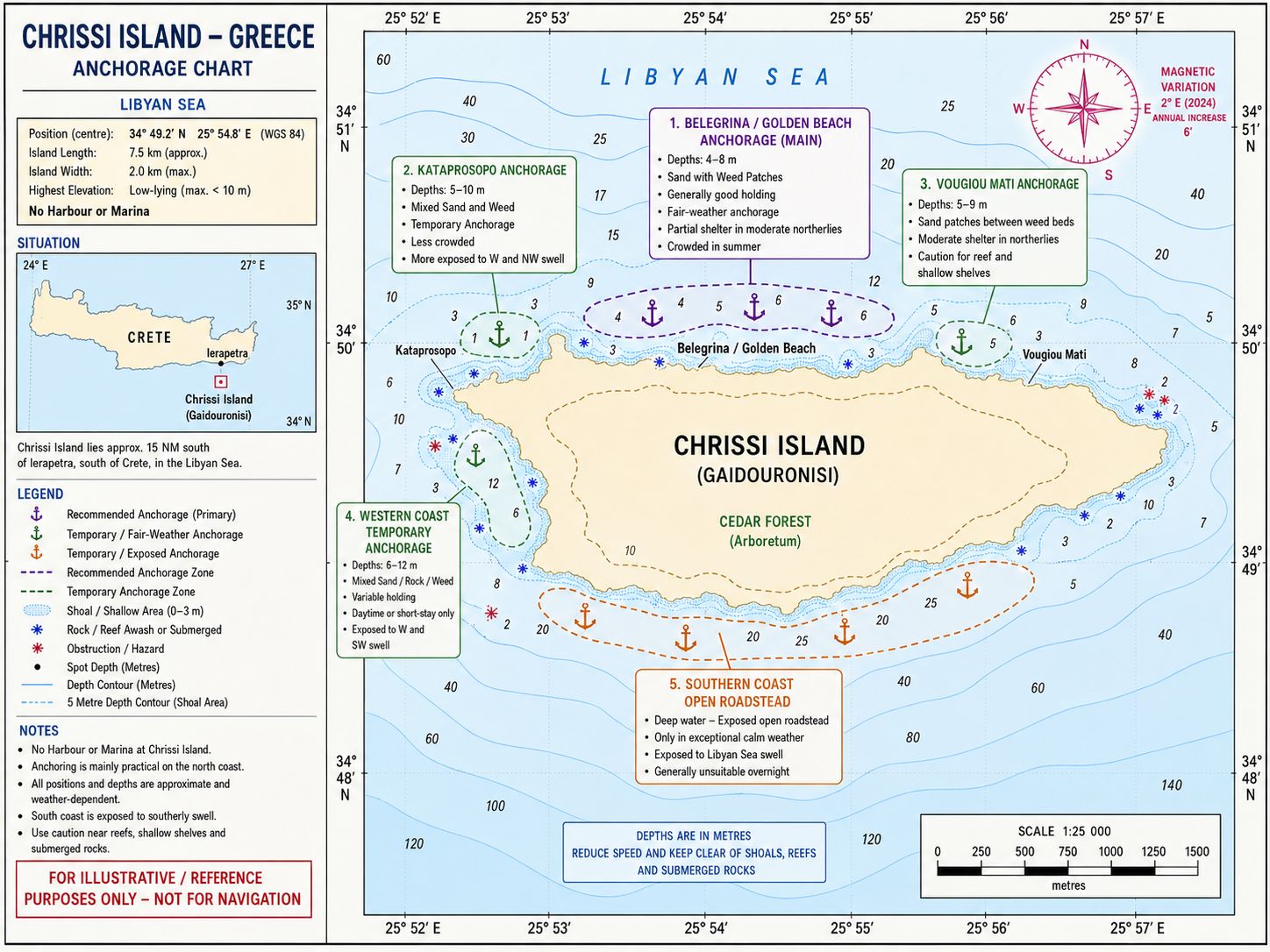
Chrissi anchorage options are limited and weather dependent. There are no all-weather anchorages.
- Belegrina/Golden Beach Anchorage. Located on the northern coast of Chrissi, this is the primary anchorage used by visiting yachts. Anchoring depths range from approximately 4–8 metres over predominantly sand with scattered weed patches. Holding is generally good in clean sand. The area provides partial shelter from moderate northerly conditions but remains open to residual swell and becomes uncomfortable in sustained Meltemi conditions. Heavy excursion boat traffic and swimming activity occur during summer daylight hours. Best approached in strong overhead light due to isolated shallow coral and rock patches extending offshore.
- Kataprosopo Anchorage. Situated toward the north-western side of the island, this anchorage offers temporary shelter in settled northerly weather. Depths are generally 5–10 metres over mixed sand and weed. Holding quality is variable depending on bottom composition. The anchorage is less crowded than the main northern beach area but more exposed to west and north-west swell penetration. Suitable primarily for short daytime stays or overnight anchoring in stable weather forecasts.
- Vougiou Mati Anchorage. Located on the north-eastern sector of the island, this area provides anchoring opportunities in clear sand patches between weed beds at depths of approximately 5–9 metres. Shelter from northerly conditions is moderate but the anchorage remains exposed to easterly sea state development. Reef areas and shallow shelves extend irregularly offshore and require careful visual navigation during approach. Swell reflection from nearby shallow banks can create rolling conditions overnight.
- Western Coast Temporary Anchorage. Several small temporary anchoring positions exist along the western shoreline of the island in settled weather. Depths increase rapidly close offshore with limited protection from prevailing conditions. Bottom composition varies between sand, rock, and weed with inconsistent holding. These locations are generally used only for short daytime stops when northern anchorages are congested. Exposure to west and south-west swell makes them unsuitable in unstable weather.
- Southern Coast Open Roadstead. The southern side of the island is largely unsuitable for routine anchoring due to steep offshore depth gradients, poor shelter, and full exposure to the Libyan Sea. Temporary anchoring may be possible in exceptionally calm weather using deep-water anchoring techniques, but swell conditions can develop rapidly even under light winds. No practical protection exists from southern sector weather and overnight use is generally avoided by cruising yachts.
Chrissi Greece
Sailing Guide - Entry Formalities
Entry formalities follow standard Greece procedures for visiting yachts. This is not a designated port of entry for international clearance, and there are no customs or immigration facilities on the island. Vessels arriving from outside Greece or the Schengen Area must first clear into the country at an official port of entry before proceeding to this port. Direct arrival from a non-Schengen country is not permitted. The Greek cruising tax (TEPAI) must be valid and paid, and the vessel’s cruising log (DEKPA for non-EU vessels, or transit log where applicable) should be up to date and available for inspection if requested by port authorities or coastguard.
Chrissi Greece
Sailing Guide - Marina Facilities
There are no marina or berthing facilities. No harbour infrastructure exists.
Chrissi Greece
Sailing Guide - Provisioning
Chrissi has no permanent settlement, shops, supermarkets, fuel facilities, or commercial provisioning infrastructure. There are no freshwater supplies, chandlery services, repair facilities, or regular produce markets on the island.
- Supermarkets. No provisioning facilities exist. Supplies must be obtained from Crete.
- Markets. No markets operate. No local produce supply exists.
- Fish Markets. No fish market exists. No reliable local supply
Chrissi Greece
Sailing Guide - Local Cuisine
No food cuisine infrastructure exists. The island is uninhabited, so no tavernas or restaurants. Best get the favourite recipes out and create something on board.
Chrissi Greece
Sailing Guide - Local Beverages
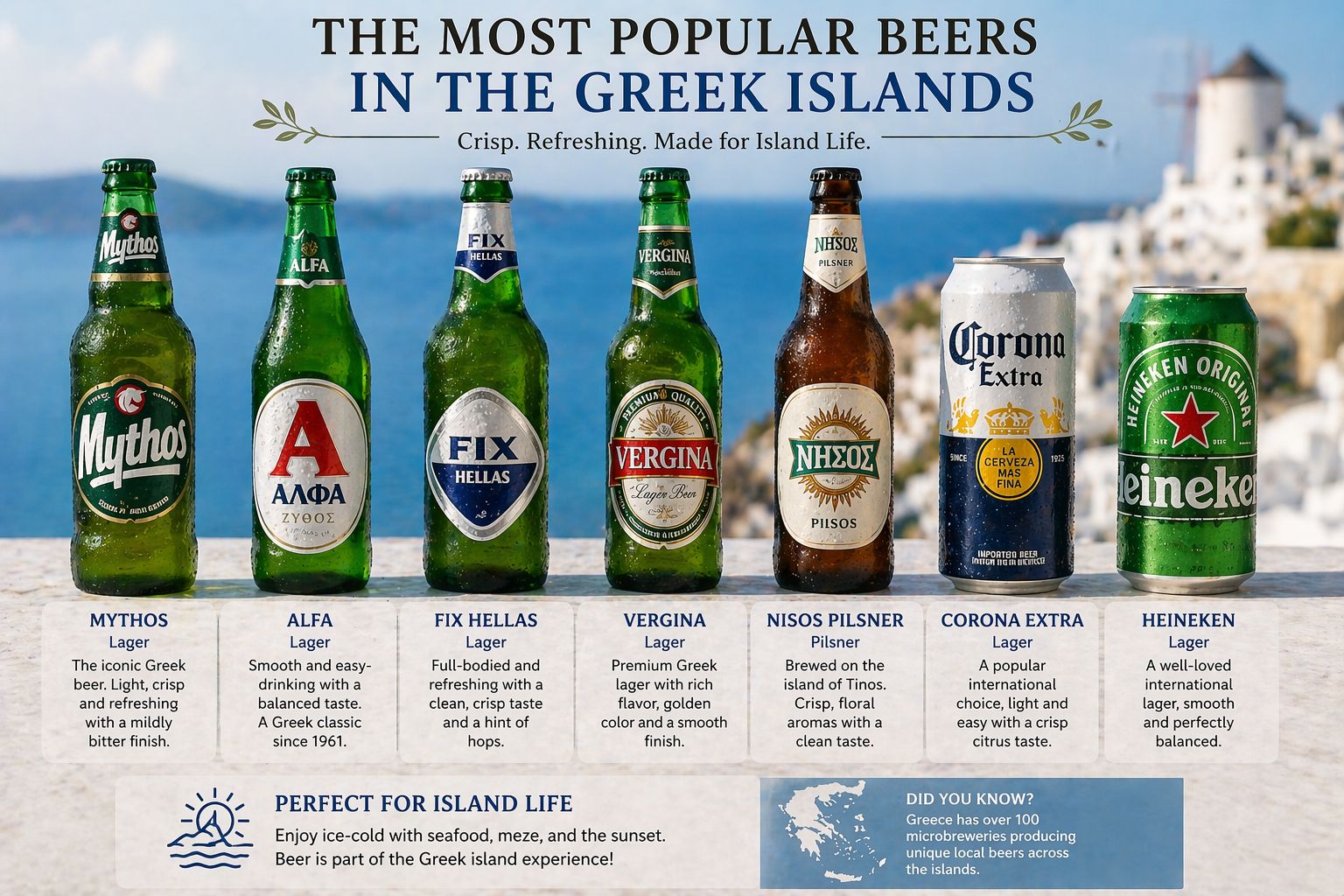
No beverage supply exists. All provisions must be carried onboard. Lots of great Greek beers and spirits to choose from
Chrissi Greece
Sailing Guide - Diesel Fuel Supplies
No diesel supply exists. Fuel must be sourced from Crete or elsewhere
Chrissi Greece
Sailing Guide - Water Supplies
No potable water supply exists. All water must be carried onboard or made on board if you have a watermaker.
Mechanical and Electrical Repairs
Resource
If you are headed somewhere remote consider the need to expand your knowledge base or have an information resource on board. Why not get a copy of my book The Marine and Electrical and Electronics Bible 4th Edition. By and for yachties, with everything from batteries and charging, solar and wind, diesel engines and marine electronics and so much more. Your complete systems guide. 650 pages of practical advice. In Australia and New Zealand order a copy through Boat Books. UK and European boats can buy the UK Edition Here. US and Canadian boats can get the US Edition Order Here. Marine systems are my profession so let me help you. By a liveaboard boat owner for other boat owners.



Chrissi Greece
Sailing Guide - Marine Services
No marine services exist. Full-service marine repair capability requires transit to Crete or elsewhere and thsi hopefully is where my book helps you DIY solve the problems.
Chrissi Greece
Sailing Guide - Local Etiquette
Chrissi is a protected island with environmental restrictions. Anchoring should avoid sensitive seabed areas. Landing and activity may be regulated. Conduct should minimise environmental impact.
Chrissi Greece
Sailing Guide - Summary
Chrissi provides limited open roadstead anchorage with significant exposure to swell and wind. Protection is dependent on wind direction with no all-weather shelter. Infrastructure is absent, requiring full self-sufficiency. Navigation is straightforward but requires attention to shallow areas and environmental restrictions. The Chrissi Greece Sailing Guide for all you need to know.