Choosing a Sailboat for Liveaboard
Choosing a Sailboat for Liveaboard. Choosing a boat for living aboard full time should start with use, not appearance. A sailboat that looks suitable at the dock or that online photograph may be wrong for the way it will actually be used. Why? because full-time living on board depends on berth space, storage capacity, water capacity, fuel capacity, battery capacity, engine access, deck safety, anchoring gear, ventilation, galley function, and the ability to maintain the boat without stripping the interior apart. In my experience, the correct boat is the one whose size, systems, condition, cost, motion, and handling match the person who must live on it, sail it, berth it, repair it, and pay for it.
A liveaboard boat is not only accommodation. It is also a hull, rig, engine room, workshop, power system, water system, toilet system, galley, navigation platform, and emergency shelter. On my boat, I would rather have a smaller boat with sound structure, reliable systems, dry lockers, quality electrical wiring, good access to everything, and is you are lucky a known maintenance history than a larger boat with hidden issues (many were found on my boat after purchase), tired rigging and sails, poor engine condition, tank issues, leaking windows, and improperly installed electrical wiring. The choice must be made from inspection, measurement, survey, and intended use, not from cabin cushions, sales photographs, or marina talk. A broker has to rely one what information a seller provides, and while many blame a broker, the seller is the one to be wary of, not unlike someone offloading a lemon of a vehicle. Caveat Emptor or Buyer Beware.
Choosing a Sailboat for Liveaboard - Intended
Use Comes First
The first decision is how the boat will be used. A boat for marina living can have different priorities from a boat used for coastal cruising, offshore passages, remote anchorages, or seasonal liveaboard use. A marina-based liveaboard may place more weight on berth comfort, shore power, heating, cooling, laundry access, and interior storage. A cruising liveaboard needs stronger emphasis on anchoring gear, sailing balance, diesel reliability, battery charging, water storage, spare parts, deck safety, dinghy handling, weather protection, and the ability to repair systems away from shore support.
In my past experience, many poor boat choices start when the buyer chooses the layout before defining the operating life. Just because it looks nice doesn’t mean it actually is. A wide aft cabin, large saloon, or separate shower may look useful, but those features are less important if the boat cannot carry enough water, ventilate properly, recover its anchor, reef easily, motor reliably, or keep the batteries charged. A liveaboard boat must be judged as a complete operating platform. The basic question is not whether the boat feels comfortable during a viewing; the question is whether it can support the full daily load of living, sailing, maintaining, cooking, storing, washing, repairing, and surviving weather.
Choosing a Sailboat for Liveaboard - Monohull
or Catamaran
A monohull and a catamaran create different lives aboard. A monohull normally has narrower interior volume, deeper bilges, more heel under sail, and a more familiar haul-out and marina profile. A catamaran usually provides more living space, better separation between cabins, less heel, larger deck area, and good solar mounting area, but it also brings higher marina costs, wider berth requirements, different haul-out limitations, more windage, and often two engines or more duplicated systems. Neither choice is automatically better; each creates a different maintenance, handling, cost, and berthing problem.
I have always found that monohulls suit people who accept movement, heel, smaller living space, and deeper storage in exchange for a narrower boat, simpler marina access, and often lower purchase and ownership costs. Catamarans suit people who need more deck and cabin space, a flatter living platform, and better separation between crew, but the running costs and berthing limits must be understood before purchase. A catamaran’s extra space can hide the fact that there are still pumps, two engines, batteries, toilets, steering gear, seacocks, rigging, and hull fittings to maintain. A monohull’s smaller space can also become a problem if the boat does not have enough storage, ventilation, tankage, and working access for full-time use.
Choosing a Sailboat for Liveaboard – Space
Control
On a small boat, every item must justify its space, I learnt this the hard way when I had a 34-foot boat and just had too much on board. The galley, berth, heads, chart table, cockpit locker, engine compartment, water tanks, batteries, and food storage are all close together. This can work well for one disciplined person or a couple who keep systems simple and avoid clutter. It becomes harder when wet weather, guests, pets, tools, spare parts, bulky bedding, safety gear, and long-term food storage are added.
On a larger boat, the problem changes. The space is better, but the equipment becomes heavier and more expensive. A large mainsail, anchor, chain, dinghy, battery bank, windlass, furling gear, pumps, standing rigging, and engine installation all require more strength, more power, more money, and more planning. I would not choose a larger boat unless I could also manage the cost and labour of keeping the larger boat in safe condition as well a sailing it short handed or solo.
Choosing a Sailboat for Liveaboard - Size:
30 Feet or 50 Feet
Boat size controls almost every part of full-time living. A 30-foot sailboat can be cheaper to buy, berth, haul, paint, rig, insure, and maintain, but the limits on storage, water, battery capacity, workshop space, tankage, privacy, and spare parts become obvious when living aboard. But don’t be deterred if you want to get afloat and get going smaller is often easier, I know people who find a 32-foot boat is fine and people who sailed from UK to Australia on a 26-foot engineless boat. A 50-foot boat can carry more water, fuel, solar, batteries, ground tackle, food, tools, and personal gear, but the loads are higher, berthing is more expensive, sails are heavier, systems are larger, and failures cost more to correct. Size is not only comfort; size is also load, cost, access, and risk.
There is an old maxim that is that the cost of a boat double for every 5 feet in length. The maxim is directionally true, but the real multiplier is usually more than 2× every 5 feet once you include total ownership cost, not just purchase price. There are reasons behind the “double every 5 feet” rule which come out of three realities of yacht design. Volume scales with the cube of length. A 40‑footer isn’t 25% bigger than a 32‑footer, it is often 50–70% more internal volume. Systems scale with boat size as larger boats need larger engines, bigger deck winches, more batteries, more rigging, larger and more expensive sails and so it goes on. Labour scales with yacht complexity as a 45‑footer takes more hours to build, maintain, and refit than a 35‑footer.
Choosing a Sailboat for Liveaboard - Budget
and Real Ownership Cost
The purchase price is only one part of the cost. A boat that looks affordable can become expensive when standing and running rigging, sails, batteries, skin fittings, seacocks, pumps, gas installation, electrical wiring, electronics upgrades, safety gear, and hull treatment such as antifouling are added. In my experience, the cheapest boat is not the lowest advertised price; it is the boat with the fewest serious faults for the intended use.
A full-time liveaboard budget must include survey, haul-out, insurance, marina or mooring fees, registration, antifouling, engine servicing, fuel, gas, electrical upgrades, safety equipment, rigging inspection, sail repair, ground tackle, tools, spares, and emergency repairs. Older boats often need money spent immediately before they can be used safely. Newer boats can still need correction if they have been poorly maintained, lightly built, heavily chartered, or fitted with unsuitable systems. The budget must also allow for the fact that some faults are not visible until the boat is used in rain, heat, swell, cold, current, or prolonged anchoring
Ownership cost is the real multiplier and this is where the maxim becomes understated. Annual cost categories that scale sharply with length:
- Sails: The sail area increases with the square of mast height so big jumps.
- Rigging: The wire diameter, turnbuckles, chainplates all scale upwards
- Engine: The engine size increases as you move up.
- Marina fees: These are charged by the metre or foot and there is linear increase.
- Insurance: This is strongly tied to hull value and has an exponential effect.
- Haul‑outs: Travel‑lift capacity jumps at 12 m, 15 m, 18 m.
“Don’t buy the biggest boat you can afford but buy the biggest boat you can afford to maintain.” and that’s absolutely true.
Choosing a Sailboat for Liveaboard - New
Boat, Old Boat, Project Boat, or Ready-to-Go Boat
A new boat may provide newer systems, cleaner electrical wiring, modern layouts, current generation equipment, and fewer unknowns, but it is not automatically ready for full-time living. New boats can still need additional solar, battery capacity, storm gear, ground tackle, ventilation, storage changes, safety equipment, tools, spares, and commissioning corrections. A new boat also loses value and may include systems that are difficult to repair without dealer support.
An older boat can be a good liveaboard if the structure is sound, the rig condition is good, the diesel is reliable, the wiring is understandable, and the plumbing can be inspected. Older boats often have stronger practical layouts, deeper storage, and simpler systems, but age can also mean corrosion, saturated cores and osmosis, chainplate issues, leaking ports, old fuel tanks, brittle hoses, and old and poorly installed electrical work. I do not judge an old boat by age alone. I judge it by structure, maintenance history, access, system condition, and the cost of making it safe.
A project boat is different from an older boat. A project boat is a boat that cannot yet do the required job without major work. That work may include structural repair, engine replacement, rigging, sails, wiring, tanks, deck leaks, osmosis treatment, interior rebuild, seacock replacement, or complete systems renewal. A project boat may suit a person with time, tools, skills, workspace, and money, but it is a poor choice for someone who needs to move aboard quickly and live normally.
A ready-to-go boat should mean more than clean cushions and a polished hull. It should mean recent standing rigging where required, serviceable sails, a known diesel service record, working steering, safe gas installation, reliable bilge pumps, sound seacocks, clean water systems, safe wiring, good batteries, suitable ground tackle, and a hull and deck confirmed by survey. In my past experience, the words “ready to go” should be tested by inspection, not accepted from the seller.
Choosing a Sailboat for Liveaboard - Buying
a Cheap Project Boat Without the Skills to Finish It
Buying a project boat because it is cheap is one of the easiest ways to lose time, money, and momentum before ever going cruising. A low purchase price can hide the real cost of structural repair, diesel work, rigging, wiring, plumbing, tank replacement, deck leaks, osmosis treatment, sail replacement, joinery, painting, antifouling, safety gear, and survey corrections. In my past experience, a project boat is only economical when the owner already has the trade skills, tools, workspace, time, and judgement to complete the work without paying retail labour rates for every possible fault. Without those skills, the cheap boat usually becomes an expensive training platform, and the owner pays in both money and lost sailing time.
The main problem is not only the work itself. It is the sequence or order of work, the hidden faults found after dismantling, the need to redo old repairs, and the cost of correcting one system before another system can be tested. A leaking deck can lead to rotten core, damaged wiring, stained linings, mould, and failed fasteners. A tired diesel can lead to engine removal, shaft work, fuel tank cleaning, exhaust replacement, control cable replacement, battery upgrades, and cooling system repairs. Old wiring can lead to panel replacement, new batteries, new charging systems, fault tracing, corrosion removal, and reinstallation of pumps, lights, instruments, and safety circuits.
Choosing a Sailboat for Liveaboard - Boat builder or go Cruising
The late and great yacht designer Joe Adams once said to me that one had to decide whether one wanted to be a boat builder or actually get afloat and go cruising. I have always found that this is the correct test for a cheap project boat. If the aim is to learn boatbuilding, spend weekends in a shed, rebuild systems, stive for perfection in cabinetry and most everything else and accept a long period before launch, then a project boat may have a purpose, although relationship failures are common with this. I have met more than one project boat builder widow! If the aim is to live aboard, go sailing, enjoy and anchorage, cruise to lovely destinations, and build seamanship, then a project boat with no matching skills can become the wrong vessel before it ever leaves the yard. Look at any online forum, they are full of people with almost no background in any technical field that then decide they are going to design, experiment or reinvent systems based on what is hearsay. The DIY attitude goes far beyond the standard systems, and it is an expensive way to go. Many of these activities are framed as ways to save money.
A project boat should be priced against the completed cost, not the purchase cost. That means adding realistic figures for haul-out, yard storage, tools, materials, contractor labour, survey items, rigging, sails, engine work, electrical work, plumbing, safety gear, antifouling, insurance requirements, and the cost of living somewhere else while the boat is not usable. I would also count the time cost because a year spent rebuilding a cheap boat is a year not spent learning anchorages, weather, navigation, sail handling, and the normal daily systems of cruising. A cheap boat is only cheap if it reaches safe operating condition quickly and economically; otherwise, it is simply an unfinished boat with a low entry price.
Choosing a Sailboat for Liveaboard - Survey
and Inspection
A professional survey is important, but the buyer also needs to understand what is being inspected. Hull moisture, osmosis, keel attachment, rudder bearings, chainplates, deck core, mast step, standing rigging, seacocks, skin fittings, fuel tanks, water tanks, wiring, engine mounts, exhaust system, steering, gas system, and safety equipment all matter for full-time living. A survey report should not be treated as a formality for insurance only. It is a working document that helps define the real cost of ownership.
I would also inspect the boat as a living space. That means checking where bedding gets damp, how lockers ventilate, whether the galley can be used at sea, whether the heads smells, whether the engine can be serviced, whether batteries are accessible, whether the bilge is clean and understandable, whether the cockpit drains properly, and whether heavy gear can be stowed low and secure. A boat can pass a basic viewing and still be a poor liveaboard platform if it is wet, cramped, badly ventilated, or impossible to maintain.
Choosing a Sailboat for Liveaboard - Daily Living
Layout matters, but only after the boat’s operating role and condition are understood. A liveaboard layout needs a usable berth, safe galley, practical heads, workable table, dry storage, engine access, tool storage, battery access, and secure handholds. Large open spaces may look appealing but can be unsafe at sea if there are no bracing points. Small traditional interiors can work well if there are good sea berths, deep storage, strong handholds, and ventilation.
I would pay close attention to galley position, heads access, wet locker space, companionway safety, and the ability to move below when the boat is heeled or rolling. A galley that is pleasant at anchor may be poor at sea if the cook cannot brace safely. A large bed may be uncomfortable underway if there is no lee cloth or support. A beautiful saloon may become wasted space if it cannot hold tools, spares, books, food, safety gear, and daily equipment securely. Live on the boat before you decide to rebuild a galley! Galley reconstruction is a very expensive and time consuming commitment!
Choosing a Sailboat for Liveaboard - Systems
and Access
A liveaboard boat must be maintainable. Engine access, filter access, belt access, impeller access, seacock access, pump access, tank access, wiring access, and steering gear access are not minor details. A boat with hidden systems can turn small repairs into major dismantling tasks. I have always found that poor access increases cost, delay, frustration, and the chance that maintenance will be avoided.
The diesel engine should be inspected for service history (if you are lucky enough to have one that is!), engine oil leaks, engine smoke colour, engine cooling performance, exhaust condition, engine mount condition, shaft alignment, fuel system condition, raw-water flow, alternator output, and access for normal service. The electrical system should be checked whether it’s installed to any standard or regulations (I find that almost all old boats are not and a result of DIY). Check if it is wired in tinned copper, schematic diagrams with labelled circuits, battery condition and age, charging sources, solar capacity, shore power safety, corrosion, and cable quality. Plumbing should be checked for hose age, smell, clamps, seacocks, tank condition, pump operation, toilet function, venting, and isolation valves. These systems determine whether living aboard is manageable or constantly interrupted by faults. More on that later!
Choosing a Sailboat for Liveaboard - Tankage,
Power, and Storage
Water, power, and storage define liveaboard independence and autonomy. Small tanks can work in a marina but become limiting at anchor. A small battery bank may support lights and instruments but struggle with refrigeration, pumps, fans, computers, autopilot, and charging devices. Limited storage may be acceptable for weekends but poor for tools, spares, wet-weather gear, food, cleaning gear, medical equipment, safety equipment, and personal belongings.
I would examine where the boat carries weight. Water, fuel, batteries, chain, tools, spares, canned food, books, and personal gear are heavy. Poor weight distribution affects trim, sailing performance, motion, and safety. A boat that looks spacious empty may become slow, wet, or badly trimmed when loaded for full-time living. The correct liveaboard boat must be able to carry the real load, not the display load.
Choosing a Sailboat for Liveaboard - Marina,
Mooring, and Haul-Out Limits
The boat must fit the places where it will be kept and serviced. Length, beam, draft, air draft, displacement, keel type, and hull form affect marina availability, haul-out cost, travel-lift capacity, hardstand access, bridge clearance, mooring suitability, and anchorage choice. A deep-draft monohull may have fewer shallow-water options. A wide catamaran may have fewer marina berths and more limited haul-out options.
In my experience, many buyers think about the dream anchorage before they think about the lift-out yard. That is a mistake. Every liveaboard boat eventually needs antifouling, anodes, skin fitting checks, rig work, engine work, insurance inspections, and emergency repairs. If the boat is difficult or expensive to haul out, that difficulty becomes part of ownership.
Choosing a Sailboat for Liveaboard - The
Risk of Buying Too Much Boat
Buying too much boat is a common liveaboard problem. A larger boat may give more comfort, but it also increases sail loads, marina costs, haul-out costs, maintenance costs, cleaning time, insurance cost, and physical effort. If the owner cannot handle the boat, afford the upkeep, or maintain the systems, the extra size becomes a liability.
I would choose the smallest boat that safely and practically meets the intended use, rather than the largest boat the budget can buy. The correct boat should be manageable in wind, affordable when faults appear, and simple enough to understand deeply. A liveaboard skipper must know the boat well enough to notice change: a new smell, a different bilge sound, a slow pump, a charging fault, a loose fitting, a damp locker, or a change in engine note. That level of familiarity is harder when the boat is too complex for the owner.
Mechanical and
Electrical Repairs Resource
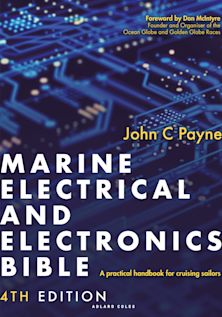
LEARN EVERYTHING ABOUT ALL OF YOUR BOAT SYSTEMS! If you are headed somewhere remote consider the need to expand your knowledge base or have an information resource on board. Why not get a copy of my book The Marine Electrical and Electronics Bible 4th Edition. By and for yachties, with everything from batteries and charging, solar and wind, diesel engines and marine electronics and so much more. Your complete systems guide. 650 pages of practical advice. In Australia and New Zealand order a copy through Boat Books. UK and European boats can buy the UK Edition ORDER HERE. US and Canadian boats can get the US Edition ORDER HERE. Marine systems are my profession so let me help you. By a liveaboard boat owner for other boat owners

Choosing a Sailboat for Liveaboard - Final
Selection
The final choice should come from intended use, survey findings, condition, access, cost, handling, tankage, storage, power, safety, and maintenance reality. A 30-foot monohull, a 50-foot monohull, and a cruising catamaran can all work as full-time liveaboard boats when matched correctly to the owner and the operating plan. The wrong boat is usually the one bought for space, price, or appearance while ignoring structure, systems, access, and cost. In my past experience, the best liveaboard boat is not the perfect boat. It is the boat whose short comings and faults are known and can be lived with, whose systems can be understood, whose maintenance can be afforded, and whose handling suits the people on board. Choosing a boat for living on a sailboat full time is therefore a technical decision first and an accommodation decision second. Choosing a Sailboat for Liveaboard for all you need to know.