Astypalaia Greece Sailing
Guide
Astypalaia Greece Sailing Guide. Located in the southeastern Aegean Sea between the Cyclades and the Dodecanese, Astypalaia forms a natural transition between the two regions. The island has a distinctive butterfly shape, with two larger landmasses connected by a narrow isthmus, creating varied coastal conditions and multiple bays. Approaches are generally clear in open water, but the island is exposed to prevailing Aegean wind systems, with long fetch in multiple directions and rapidly developing sea state under sustained winds.
For a cruising yacht, Astypalaia offers a combination of harbour berthing and anchorage options, with the main port at Pera Gialos providing quay space and limited shelter depending on wind direction. Additional anchorages are found around the island, particularly along the isthmus and in selected bays offering directional protection. Conditions are strongly influenced by the summer Meltemi, with northerly winds dominating and creating exposure on open coasts while leaving lee areas usable. The island functions as a stopover and staging point between regions, with moderate infrastructure and variable protection depending on location and weather.
Astypalaia Greece Sailing
Guide History
The history of Astypalaia reflects its position between the Cyclades and the Dodecanese, acting as a transitional point in Aegean maritime routes. The island has been inhabited since prehistoric times, with evidence of early Cycladic and later Dorian settlement. In antiquity, Astypalaia functioned as an independent city-state with maritime links across the Aegean, supported by its natural harbours and strategic location along east–west trading routes.
During the Hellenistic and Roman periods under the Roman Empire, the island remained a minor but active maritime settlement. It later became part of the Byzantine Empire, during which defensive structures were developed to counter piracy and regional instability. Control passed to Venetian rule in the medieval period, followed by incorporation into the Ottoman Empire, with the island maintaining a small population engaged in fishing and limited trade.
Astypalaia was integrated into the modern Greek state in 1947 following the Dodecanese Incorporation. The main settlement developed around the fortified hilltop castle (Chora), reflecting the island’s defensive history and maritime orientation. Today, the island retains its historical structure and function as a small Aegean community, with port activity centred on local transport, fishing, and visiting vessels.
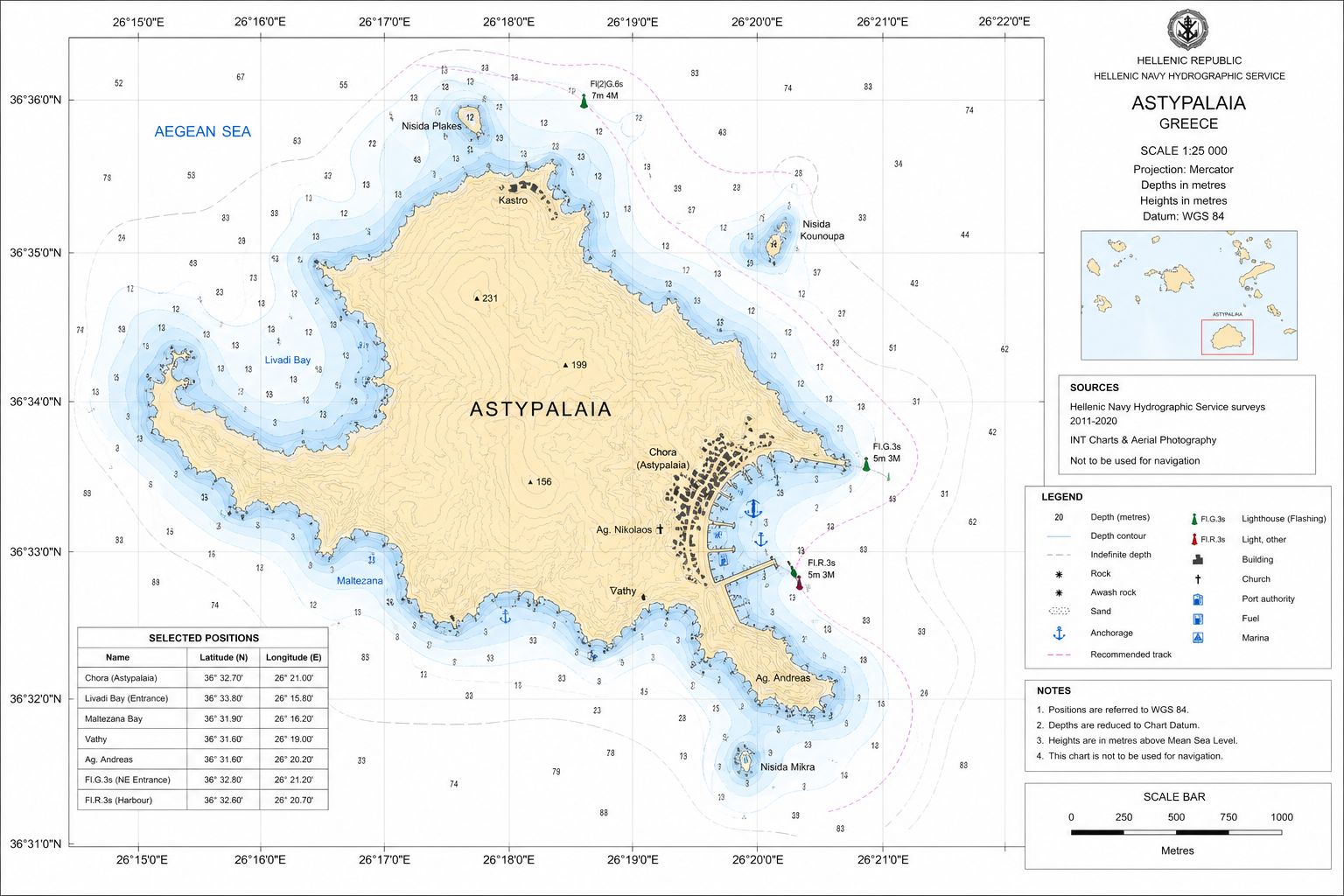
Chart Disclaimer. This chart is a schematic representation for illustrative purposes only and must not be used for navigation. Refer to official hydrographic charts for safe navigation. Be aware ENC charts may differ from official hydrographic charts. Both should be corrected and updated regularly.
Astypalaia Greece Sailing
Guide Ocean Currents and Tidal Flow
Currents around Astypalaia are generally weak but can become locally significant due to the island’s position between the Cyclades and the Dodecanese, where regional Aegean circulation interacts. There is no dominant continuous current; flow is primarily wind-driven. Under sustained northerly Meltemi conditions, a south to southwest set can develop along exposed coasts, while southerly systems produce a reverse northward drift. Local acceleration may occur around headlands and through the narrow isthmus area where seabed contours and coastal geometry can increase current speed and create turbulence.
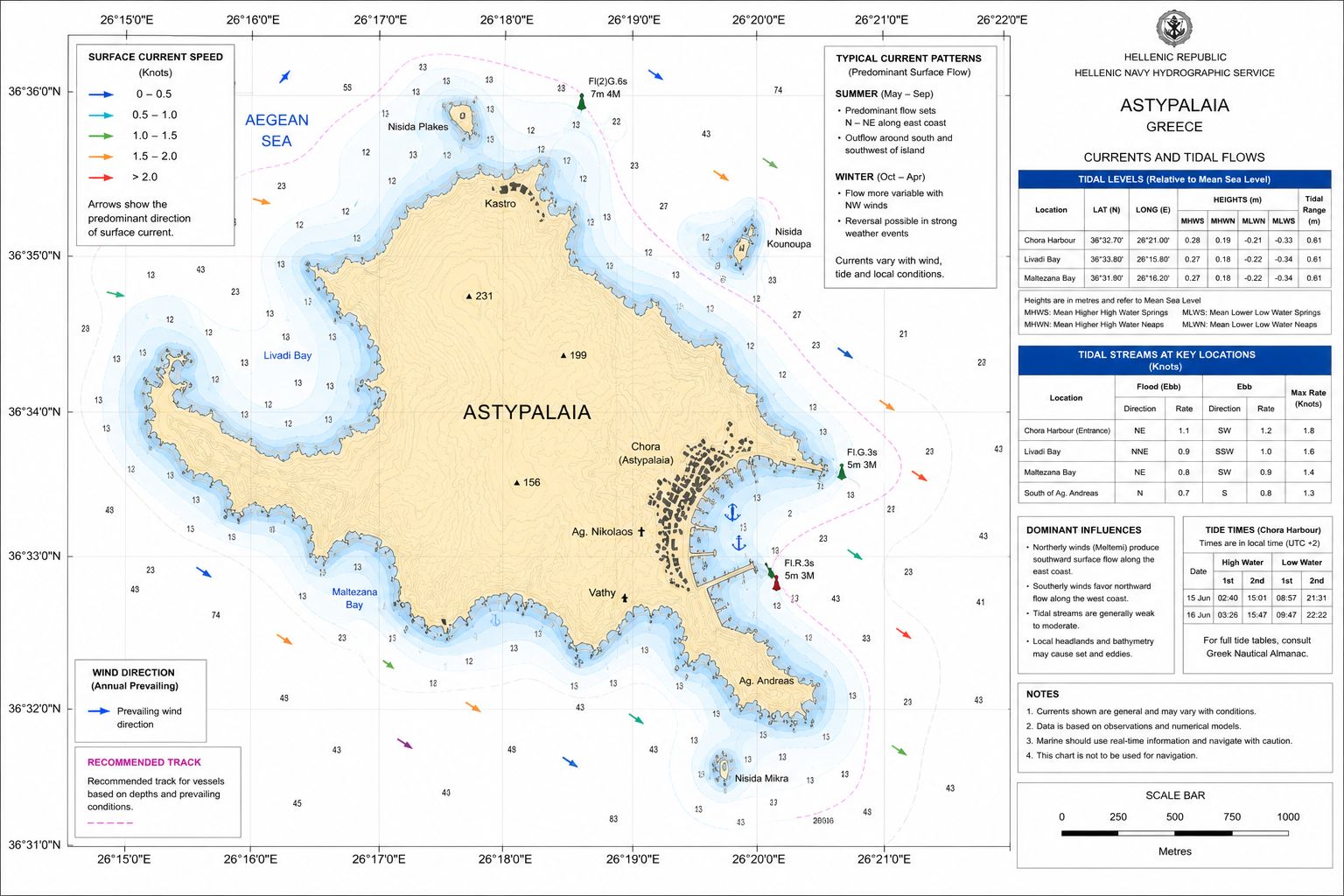
Tidal influence is negligible, with a microtidal range typically less than 0.3 m and no defined tidal streams affecting navigation. Water level variation is instead controlled by wind setup and atmospheric pressure. Within bays and harbour areas, current effects are minimal, though wind-driven surge and reflected wave action can influence conditions alongside and at anchor. For navigation, wind direction and resulting sea state are the primary operational factors rather than tidal flow.
Astypalaia Greece Sailing
Guide Weather
Local weather patterns at Astypalaia are dominated by its exposed position between the Cyclades and the Dodecanese, with direct influence from Aegean pressure systems and minimal shelter from surrounding landmasses. Summer conditions are controlled by the Meltemi, a persistent northerly to north-northwesterly wind that establishes for extended periods. Wind speeds commonly range from 15–25 knots and can exceed this during stronger events, producing continuous wind-driven sea state and short, steep waves on exposed coasts. Visibility is generally good, with stable, dry conditions and limited cloud cover.
Outside the summer regime, weather becomes more variable and often less predictable. Spring and autumn bring alternating northerly and southerly flows associated with passing systems, with rapid wind shifts, squalls, and periods of reduced visibility in rain. Southerly winds ahead of low-pressure systems can generate heavier sea states due to longer fetch across the open Aegean and eastern Mediterranean, while post-frontal conditions typically return to northerly flow with improved visibility. Winter is characterised by more frequent frontal passages, stronger winds from multiple directions, and increased precipitation. For navigation and anchoring, wind direction and persistence remain the primary operational factors, with limited shelter available depending on location around the island.
Astypalaia Greece Sailing
Guide Local Winds
Local wind patterns at Astypalaia are dominated by the Meltemi during summer, with a persistent northerly to north-northwesterly flow across the Aegean. This is a gradient wind rather than a diurnal sea-breeze system, typically sustained over multiple days at 15–25 knots, with stronger episodes exceeding this range. The island’s distinctive shape, with two larger landmasses connected by a narrow isthmus, produces local acceleration and channeling effects, particularly across the central section where wind can increase in strength and become gusty.
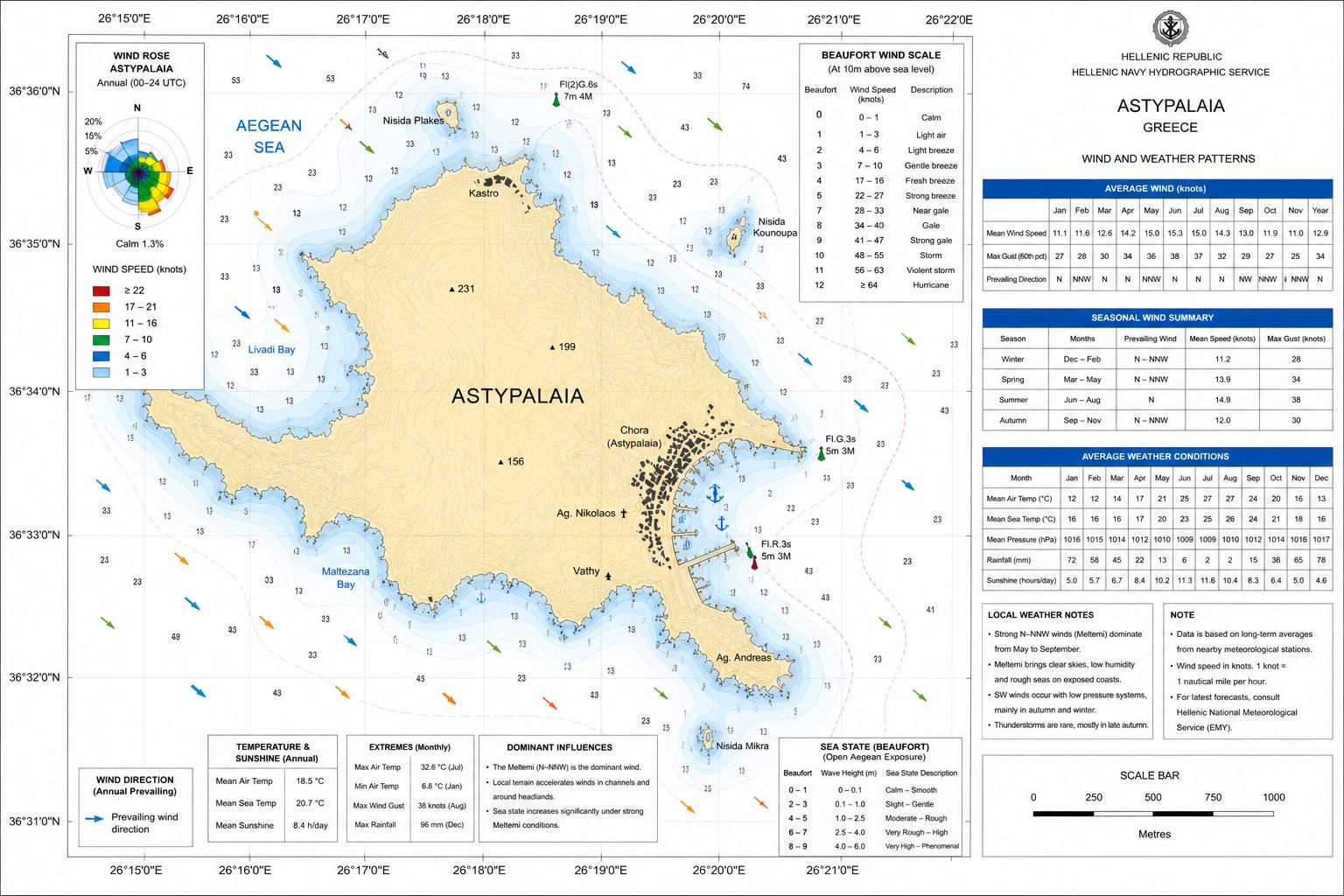
Along exposed northern and eastern coasts, wind strength remains consistent with the prevailing flow, generating steep, short-period seas. In contrast, the southern and western sides provide lee conditions under northerlies, though wind can descend in gusts from higher ground, creating variable and sometimes turbulent conditions near shore and within anchorages. Around the main harbour at Pera Gialos, wind is partially modified by surrounding terrain and structures, but gusts and directional shifts are common, especially during stronger Meltemi events.
Outside summer, wind patterns are governed by passing synoptic systems. Southerly and southwesterly winds ahead of low-pressure systems can build rapidly and are often stronger and less predictable, with higher gust factors and longer-period swell. Following frontal passage, winds typically shift to west or northwest before easing. Diurnal variation is limited when gradient winds are established, with only minor overnight reduction. For navigation, wind acceleration around the isthmus and exposure of individual bays are the key local factors affecting sea state and berth conditions.
Astypalaia Greece Sailing Guide Approaches
Approach to Astypalaia from the west or east involves open Aegean conditions with depths exceeding 50 metres. Meltemi winds produce steep seas and reduced comfort during approach. Entry to Skala harbour is through a narrow channel into the lagoon with depths reducing from approximately 10 metres to 4–5 metres. Alignment with the entrance channel is required. Hazards include rock projections near the entrance and reduced manoeuvring space within the channel.
Astypalaia Greece Sailing
Guide Navigation
Navigation into the main port at Astypalaia (Pera Gialos) is straightforward in clear conditions but requires attention to wind effects and confined space. The harbour lies on the eastern side of the island beneath the main settlement (Chora), with an open approach from the east and southeast. Offshore waters are generally clear of hazards, but care is required when closing the coast due to scattered rocks and irregular seabed contours near the shoreline.
There is no formal dredged channel; entry is made directly into the harbour basin, maintaining a controlled speed and allowing for traffic movements. Depths in the entrance are adequate for cruising yachts but reduce progressively toward the quay. Manoeuvring space is limited, particularly during peak season when multiple vessels and ferries are operating. Ferry traffic has priority and generates wash and turbulence, which can affect control during approach and berthing.
Wind is the primary operational factor. Northerly Meltemi winds can produce gusts descending into the harbour, creating crosswind conditions on entry and alongside. Southerly winds, while less frequent, introduce swell directly into the harbour, reducing shelter and increasing surge. Berthing is typically stern-to using anchor or laid moorings where available, and approach planning should account for wind direction, available space, and the need for immediate control within a confined basin.
Astypalaia Greece Sailing
Guide Chart Accuracy
Hydrographic charts provide accurate representation of coastline and lagoon structure. Electronic charts align with official data but may lack detail in shallow areas near the entrance. Visual navigation is required when transiting the entrance channel.
Astypalaia Greece Sailing
Guide Anchorages
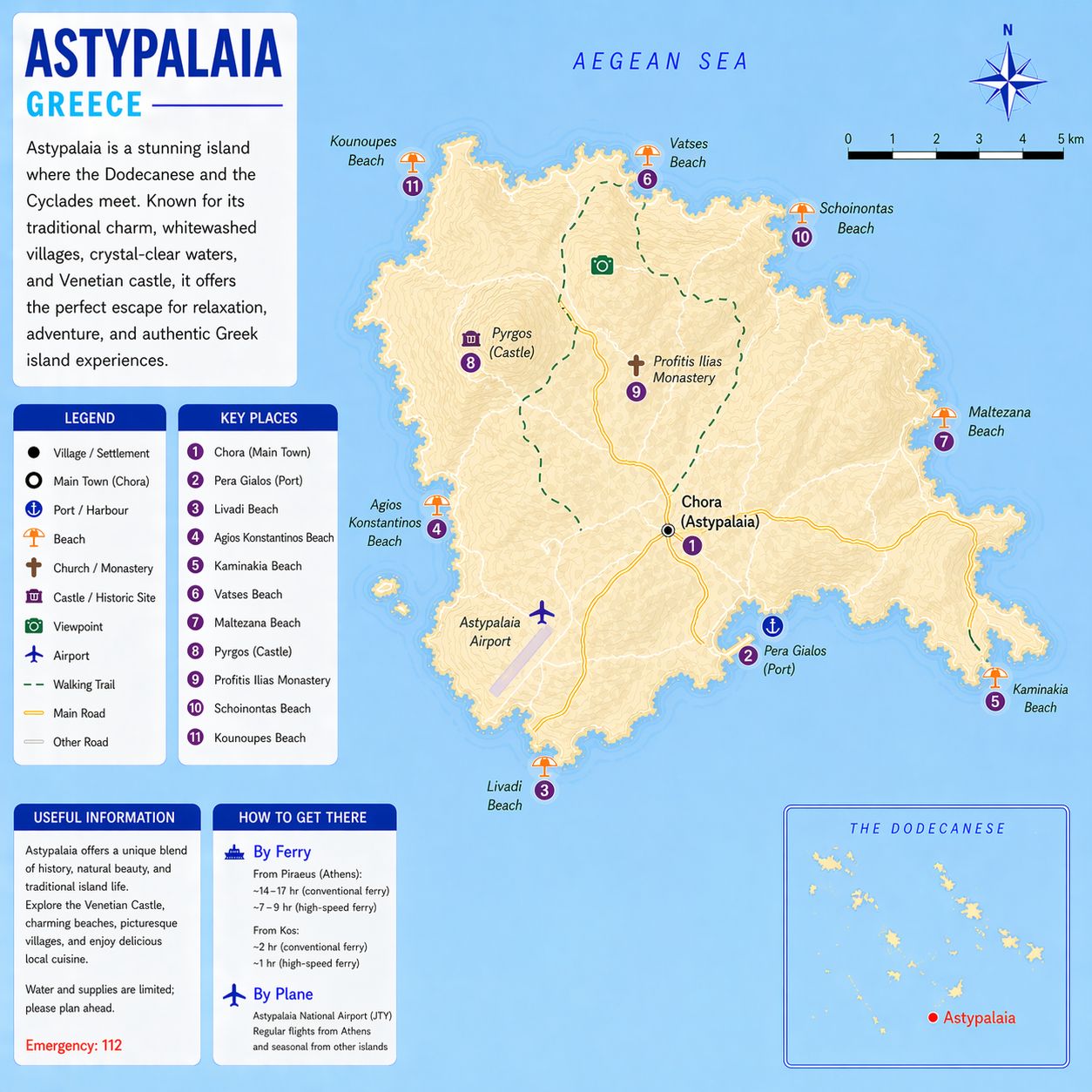
Astypalaia anchorage options include both lagoon and outer bays.
- The lagoon provides anchoring in 4–10 metres over mud with good holding and protection from Meltemi winds.
- Outer bays provide anchoring in 6–15 metres over sand or mixed seabed but are exposed to prevailing winds.
No outer anchorage provides full protection under all conditions.
Astypalaia Greece Sailing
Guide Entry Formalities
Astypalaia is not a primary port of entry. Clearance is typically conducted at larger nearby ports unless specifically arranged.
Astypalaia Greece Sailing
Guide Marina Facilities
Marina facilities at Astypalaia are limited, with berthing centred on the main harbour at Pera Gialos rather than a dedicated marina. The harbour consists of quay berthing only, with no pontoons or organised marina infrastructure. Depths alongside are generally suitable for cruising yachts but vary along the quay and reduce toward the inner basin, requiring careful approach and positioning.
Berthing is typically stern-to using laid moorings where available, or by deploying the anchor. Space is restricted and influenced by ferry movements, which take priority and require clear access to the main berths. Manoeuvring room is limited, particularly in peak season, and vessels should be prepared to reposition as required.
Shelter within the harbour is moderate and dependent on wind direction. The basin offers relative protection under prevailing northerly conditions, though gusts can descend into the harbour from surrounding terrain, affecting control during berthing. Southerly winds introduce swell directly into the harbour, creating surge alongside and reducing comfort.
Astypalaia Greece Sailing
Guide Provisioning
Supermarkets. Provisioning for vessels sailing Astypalaia Greece is available through local supermarkets in Skala including Kritikos Supermarket Astypalaia and smaller grocery outlets within walking distance of the harbour. These supply packaged goods, fresh produce, meat, and bottled water. Operating hours are extended during the season. Supply is delivered via ferry and availability is generally consistent but limited compared to larger islands.
Markets. Fresh produce supply on Astypalaia is limited and handled through small supermarkets and local grocery shops rather than formal markets. There is no central produce market or scheduled market activity. Fruit and vegetables are available in modest quantities, with stock supplied by regular ferry deliveries and supplemented by small amounts of seasonal local production. Selection and quality vary depending on delivery cycles and time of year, with reduced range outside peak season. Most produce outlets are located in Pera Gialos and Chora within short distance of the harbour, making access straightforward on foot.
Fish Markets. There is no formal fish market. Availability depends on small-scale local fishing activity, with catch landed at Pera Gialos and distributed through tavernas or occasionally sold in small quantities via local shops. There is no guaranteed daily supply, and selection varies according to season, weather, and fishing effort. Purchasing is typically by enquiry rather than through fixed outlets, with the best opportunity shortly after landings.
Astypalaia Greece Sailing
Guide Local Cuisine
Cuisine reflects a combination of Cycladic and Dodecanese supply chains. Fish is prepared as psari psito using available species such as tsipoura and lavraki. Small fish are served as gavros tiganitos. Baked fish is prepared as psari sto fourno. Meat dishes include souvlaki, gyro, and kontosouvli, with slow-cooked dishes such as kokkinisto and stifado. Local dishes include pouggia Astypaleas (filled pastry) reflecting regional preparation. Vegetable dishes include horiatiki salata, gemista, and briam. Bread is served as psomi.
Astypalaia Greece Sailing
Guide Local Beverages
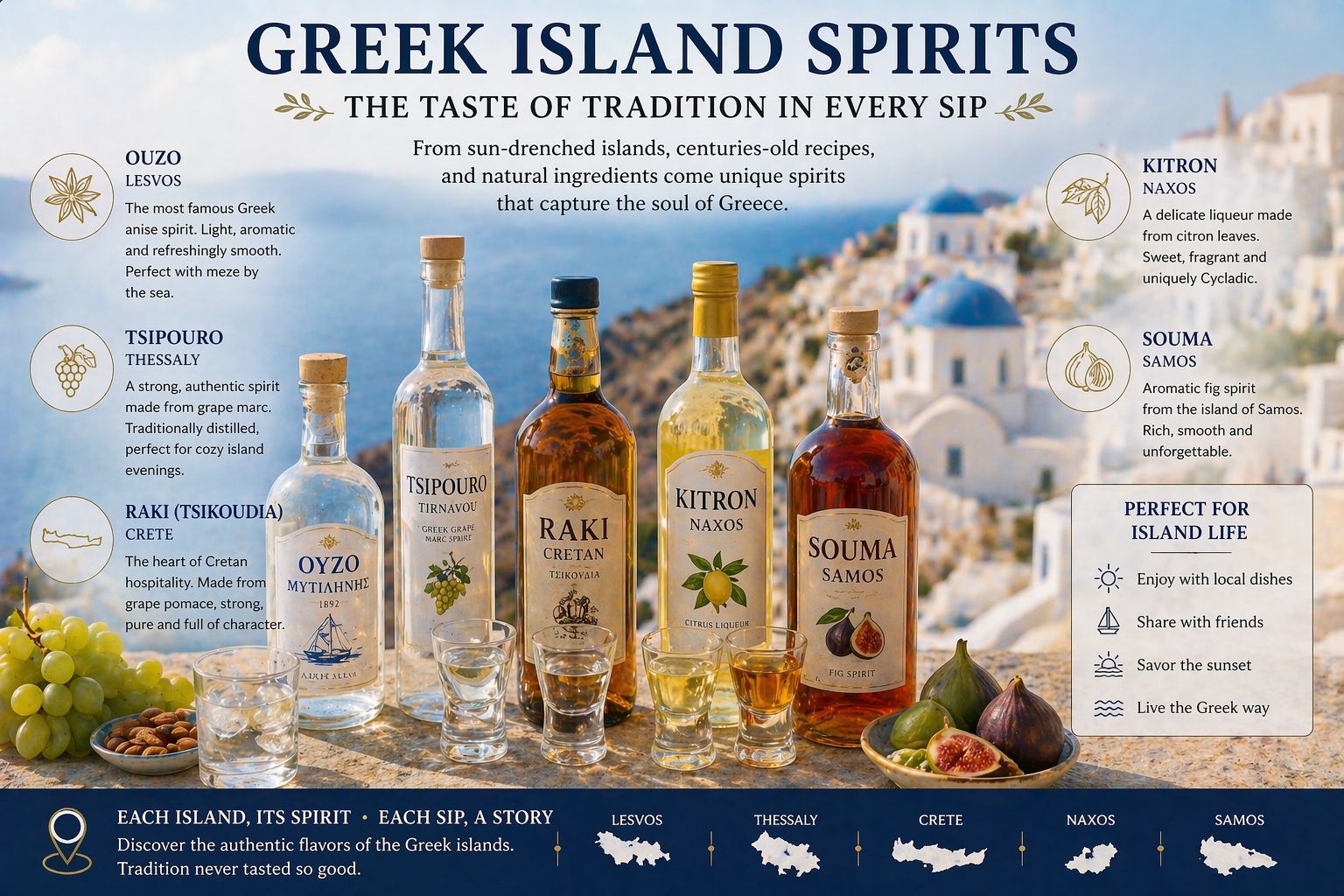
Alcoholic options include a typical selection of Greek beers includes Alpha, Mythos, and Fix, basic table wines, and spirits such as ouzo and tsipouro, supplied through retail outlets and served in tavernas. There is no large-scale local production or specialist beverage sector on the island, and product range remains standard rather than regionally distinct
Astypalaia Greece Sailing
Guide Diesel Fuel Supplies
Diesel fuel supply on Astypalaia is limited. Refuelling is typically arranged from a roadside fuel station located near the main harbour area at Pera Gialos. Fuel is delivered to the quay by jerry can or small vehicle, with no formal dockside bunkering service available. Availability depends on local operating hours and delivery logistics, and quantities are generally suitable for top-up rather than full refuelling. Advance arrangement is advisable, particularly during peak season or when larger volumes are required. There are no guarantees of immediate supply on arrival.
Astypalaia Greece Sailing
Guide Water Supplies
Potable water supply on Astypalaia is available at the main harbour in Pera Gialos but is limited and not consistently reliable. Water points are located along sections of the quay, allowing direct connection for yachts, though pressure and flow rate can vary and may be reduced during peak summer demand. Supply is dependent on local resources and supplemented by delivered water, so interruptions can occur.
Mechanical
and Electrical Repairs Resource
If you are headed somewhere remote consider the need to expand your knowledge base or have an information resource on board. Why not get a copy of my book The Marine and Electrical and Electronics Bible 4th Edition. By and for yachties, with everything from batteries and charging, solar and wind, diesel engines and marine electronics and so much more. Your complete systems guide. 650 pages of practical advice. In Australia and New Zealand order a copy through Boat Books. UK and European boats can buy the UK Edition Here. US and Canadian boats can get the US Edition Order Here. Marine systems are my profession so let me help you. By a liveaboard boat owner for other boat owners.


Astypalaia Greece Sailing
Guide Marine Services
Limited marine services are available in Astypalaia. Basic mechanical and electrical repair can be arranged locally, though capability is limited. No authorised service agents for major engine or electronics brands are located on the island. Chandlery supply is limited to basic consumables. For major repairs or parts, vessels must relocate to larger ports such as Kos or Rhodes.
Astypalaia Greece Sailing
Guide Local Etiquette
Local etiquette reflects a small island community with established residential patterns. Dress standards in town areas are conservative. Behaviour in public areas is expected to align with local norms. Taverna service is table-based with ordering required when seated. Religious sites require appropriate dress and conduct. Waste disposal is conducted through municipal collection systems.
Astypalaia Greece Sailing
Guide Summary
Astypalaia provides a protected harbour environment within its lagoon with reduced exposure compared to surrounding Aegean waters. Navigation requires attention to entrance channel alignment and wind conditions outside the harbour. Anchorage and berthing options are more reliable than smaller islands but still dependent on weather conditions. Provisioning and services are moderate with reliance on larger regional ports, consistent with an Astypalaia Greece Sailing Guide for all you need to know.