Amorgos Greece
Sailing Guide
Amorgos Greece Sailing Guide. Amorgos is located in the south-eastern Cyclades of the Aegean Sea within Greece at approximately 36°50′N 25°55′E. The island lies east of Naxos and south of Donousa, forming part of the outer Cycladic arc with direct exposure to open Aegean conditions. The principal harbour is Katapola on the west coast, with additional harbour at Aegiali on the north-west coast.
The operating environment is fully exposed Aegean with strong Meltemi influence and negligible tidal range. The coastline is steep and mountainous with limited natural shelter and rapid depth increase close to shore. Wind acceleration occurs along the island’s length and around headlands, increasing local wind strength above regional forecasts.
Amorgos Greece
Sailing Guide – History
Amorgos has a long and layered history within the Cyclades, with evidence of settlement dating back to the Early Bronze Age. In antiquity, the island was home to several independent city-states, including Minoa, Arkesini, and Aegiali, which developed as small but active maritime and trading centres in the Aegean Sea. Amorgos was known for agriculture, fishing, and textile production, and its position along regional sea routes contributed to its economic importance.
During the Classical and Hellenistic periods, the island came under the influence of larger powers, including Athens, before later being incorporated into the Roman and Byzantine Empires. In the Byzantine era, Amorgos developed fortified inland settlements to defend against piracy, a recurring threat throughout the Aegean. The island later passed under Venetian control and subsequently became part of the Ottoman Empire, during which time it remained relatively isolated but continued agricultural and maritime activity.
Amorgos was incorporated into the modern Greek state in the 19th century following the Greek War of Independence. Its rugged terrain and limited natural resources restricted large-scale development, preserving much of its traditional character. Today, the island retains a strong historical identity, with visible remains from multiple periods and a continued connection to maritime life and regional trade routes.

Amorgos Greece
Sailing Guide - Approaches
Approach is from open water with offshore depths generally exceeding 100 m, reducing rapidly to 20–30 m within 1 NM of the coast and 5–10 m approaching harbour limits. There are no constrained pilotage channels. Sea state is dominated by Meltemi (N–NE), which produces strong, sustained winds and steep, short-period seas. Wind strength is frequently elevated around Amorgos due to its position in the outer Cyclades and lack of upwind shelter.
Southerly winds occur less frequently but generate longer-period seas affecting south-facing coasts. Tidal range is typically 0.2–0.4 m with no operational tidal stream. Wind-driven drift is the primary factor affecting vessel control. Hazards include strong wind acceleration, exposed approach sectors, ferry traffic, and reduced manoeuvring margins in high wind conditions.
Amorgos Greece
Sailing Guide - Navigation
Navigation to Amorgos is conducted in open waters of the Cyclades, with generally accurate charts and clear offshore approaches. The island is long, narrow, and mountainous, making it highly visible from distance and easy to identify on approach. Offshore depths are typically 100–300 m, shoaling steeply toward the coast, with limited shallow shelves.
There are no major off-lying hazards on standard approach routes, but the coastline is predominantly rocky, with isolated reefs and shoals close inshore, particularly around headlands and within smaller bays. Careful navigation is required when closing the land, especially in reduced visibility or strong wind conditions.
The main pilotage areas are the two principal ports. Katapola Harbour on the west coast is the primary harbour, entered through a wide bay with depths of 10–20 m in the approach, reducing to 3–6 m alongside. Aegiali Harbour to the north-west offers an alternative, with similar approach depths of 10–20 m and inner harbour depths of 3–5 m.
Anchorages around the island are generally deep and exposed, with limited protection except in the main bays. Depths at anchor are typically 5–15 m, with variable holding in sand, sand and weed, or rock. The island is exposed to the full effect of the Meltemi, and strong northerly winds can create significant sea state and challenging conditions, particularly on the east coast.
Electronic navigation is reliable but should be supported by visual pilotage and continuous lookout for fishing activity and local traffic. Overall, navigation is straightforward offshore but requires careful pilotage, wind awareness, and anchorage selection due to exposure and steep coastal profiles. Fishing gear including nets and lines may be present near shore and is not consistently marked.

Amorgos Greece
Sailing Guide - Chart Accuracy
Charts issued by the Hellenic Navy Hydrographic Service are accurate for approaches and harbour areas. ENC data aligns with official charts. Local moorings, laid ground tackle, and anchoring density may not be fully represented.
Amorgos Greece
Sailing Guide - Anchorages
Amorgos provides several anchorages with variable shelter. No anchorage provides full protection across all wind directions.
- Katapola Bay provides anchoring in 4–10 m over sand and mud with good holding and partial shelter depending on position within the bay.
- Aegiali Bay provides anchoring in 5–12 m over sand with good holding and improved shelter compared to open coast areas.
- South coast anchorages provide depths of 5–15 m over sand and rock with variable holding and exposure to prevailing winds.
- East coast anchorages are generally exposed and untenable under Meltemi conditions.
Amorgos Greece
Sailing Guide - Entry Formalities
Amorgos operates under Greek national and Schengen procedures. Customs and immigration clearance is required for arrivals from outside Schengen areas. Vessel and crew documentation must be available. Harbour authority control applies within port limits. Drones are regulated under Greek aviation rules. Communications equipment must comply with national regulations. Waste discharge is controlled.
Amorgos Greece
Sailing Guide - Marina Facilities
Berthing on Amorgos is limited and based on small harbour infrastructure rather than marinas, with the two principal ports providing the only practical options. At Katapola Harbour, yachts berth along the quay, typically stern-to using anchors or occasionally alongside where space permits. Depths are generally 3–6 m alongside, with deeper water in the outer harbour. The bay itself is well sheltered from the Meltemi, making it the most reliable berthing location on the island. Basic services such as water and electricity may be available on parts of the quay, though supply is limited.
Aegiali Harbour offers a secondary option, also with quay berthing in depths of 3–5 m, but is more exposed to northerly winds and can become uncomfortable in strong Meltemi conditions. Space is limited and manoeuvring can be constrained when busy. There are no purpose-built marinas, pontoons, or laid mooring systems on Amorgos, and no haul-out or yard facilities. Anchorages outside these harbours are generally deep and exposed, with limited protection and variable holding.
Amorgos Greece
Sailing Guide - Local Weather
Weather on Amorgos is typical of the central Cyclades, with hot, dry summers and highly stable conditions during the main cruising season. From late spring through early autumn, weather is dominated by the Meltemi, bringing clear skies, excellent visibility, and minimal rainfall. Temperatures are consistently high in summer, while the persistent northerly winds help moderate heat but also create moderate to rough sea conditions in exposed waters. The island’s elongated and mountainous form results in strong contrasts between exposed and sheltered areas, with the west coast and main bays offering relative protection compared to the more exposed east coast.
Outside the summer period, conditions become more variable, with southerly and easterly systems bringing cloud, rain, and longer-period swell. Winter weather can include strong winds and unsettled seas. Overall, Amorgos experiences predictable but often windy summer conditions, with significant exposure to open Aegean weather patterns.
The Marine Electrical and Electronics Bible has a complete list of Greek VHF Radio Channel information and weather forecast times for Greece along with NAVTEX UK and Europe and NAVTEX Mediterranean for 490kHz and 518kHz.
Amorgos Greece
Sailing Guide - Local Winds
Wind on Amorgos is dominated in summer by the Meltemi, typically north to north-west at 20–30 knots, with frequent periods exceeding 30 knots and strong gusts. The island is one of the more exposed locations in the Cyclades, and the wind can be persistent for several consecutive days, producing short, steep seas in surrounding waters.
Local effects are pronounced due to the island’s long, mountainous profile. Wind accelerates around headlands and through channels, particularly between Amorgos and nearby islands, while valleys and inlets can create gusts and sudden directional shifts. The east coast is fully exposed to northerly winds and often experiences the strongest conditions, whereas the west coast, including Katapola, lies in the lee and provides more reliable shelter.

Wind strength typically builds through the afternoon under thermal influence and moderates overnight, though strong Meltemi periods can maintain elevated wind speeds continuously. Outside summer, winds become more variable, with southerly and easterly systems bringing unsettled conditions and longer-period swell.
The Meltemi is a strong, dry northerly wind that dominates the Aegean in summer, accelerating through channels and between islands to produce steep, short seas. It is most persistent in July and August, often blowing for several days with little diurnal variation, creating fast north‑to‑south passages and challenging return routes. Its strength is shaped by pressure gradients between the Balkans and Anatolia, with local acceleration zones around major island gaps.
Amorgos Greece
Sailing Guide - Provisioning
Supermarkets. Provisioning on Amorgos is centred on Katapola, where several small supermarkets and minimarkets provide a basic but reliable range of supplies including fresh produce, meat, dairy, dry goods, and beverages. Stock is replenished via regular ferry connections, though range and volume are limited compared to larger islands. Additional options are available at Aegiali, where smaller stores support routine resupply, but with a more restricted selection. Bakeries, butchers, and greengrocers operate in both Katapola and Aegiali, providing daily fresh goods. Local produce includes vegetables, herbs, honey, olive oil, and small-scale dairy products. Bread and pastries are baked daily and readily available.
Markets. There is no central market; provisioning is distributed across individual retailers. Availability reflects island logistics and seasonality, with consistent but limited supply.
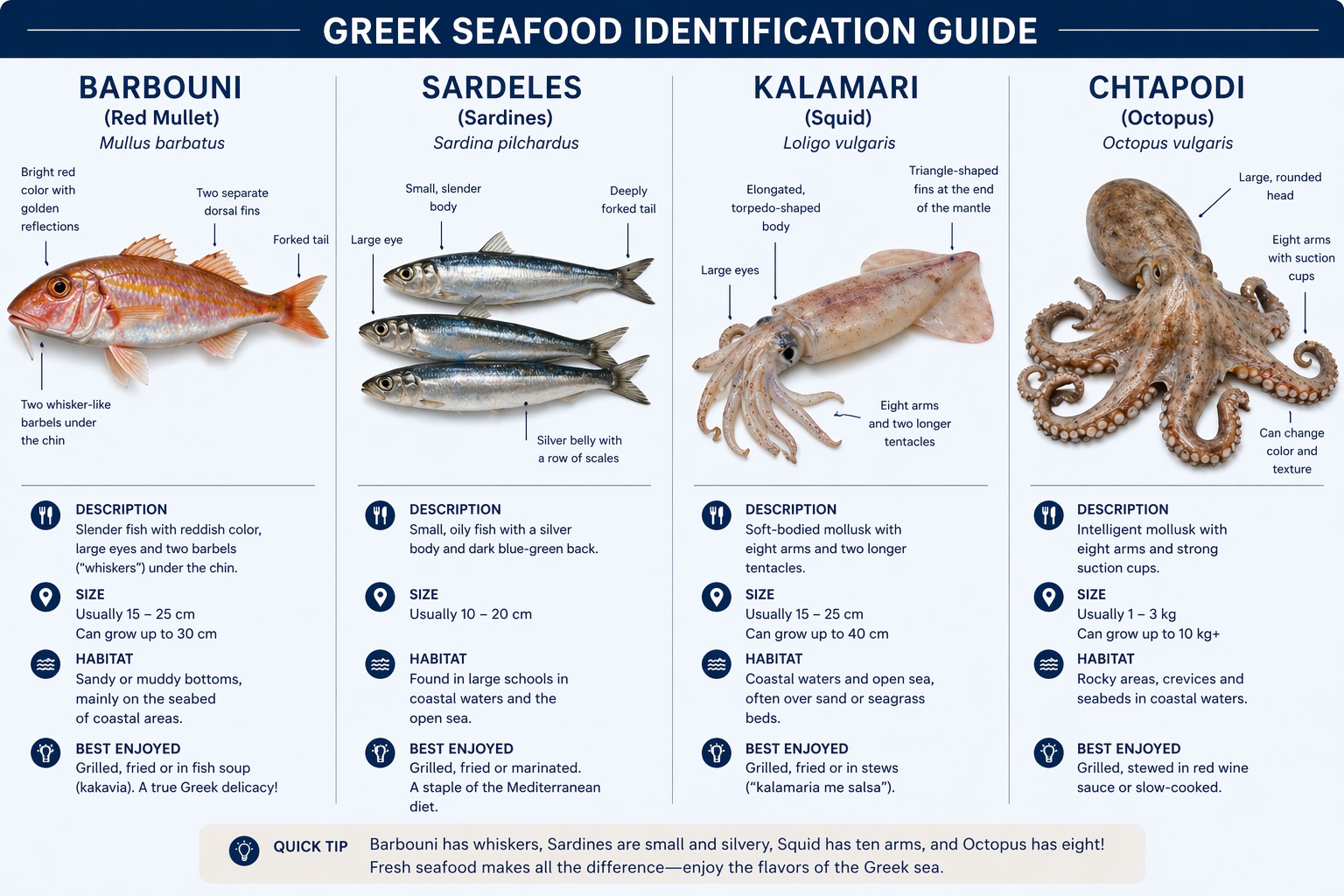
Fish Markets. Fish is supplied locally through fishermen and small vendors, particularly around Katapola Harbour. Availability varies with catch but typically includes seabass, seabream, squid, and octopus, with best selection in the morning.
Amorgos Greece
Sailing Guide - Local Cuisine
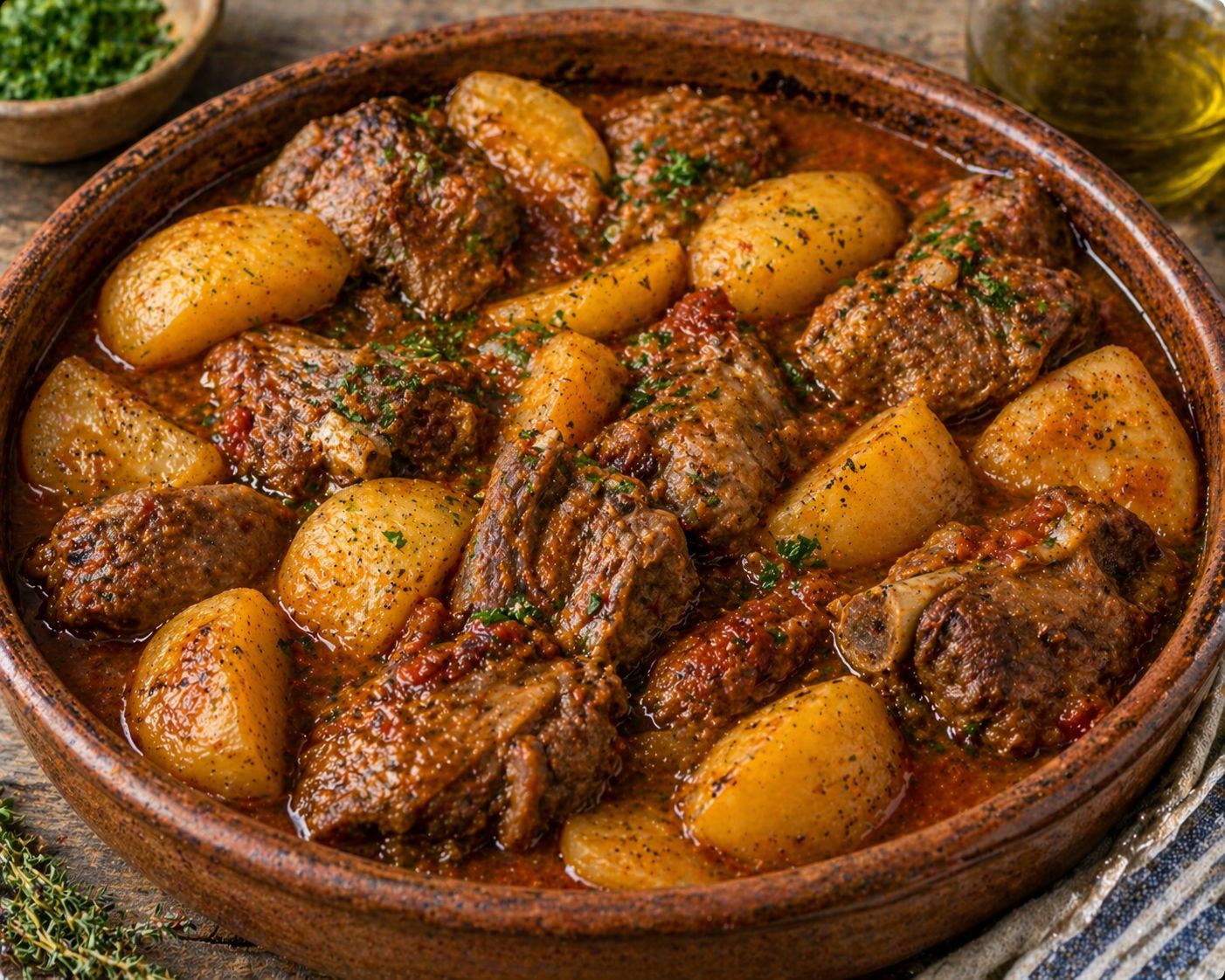
Cuisine on Amorgos is traditional Cycladic, simple and product-driven, with a few clearly identifiable local specialities rather than a broad regional range. The island is particularly known for patatato, a slow-cooked goat dish prepared with potatoes, tomato, olive oil, and spices, traditionally cooked for extended periods to produce a rich, tender result. Another distinctive dish is xidato, where meat, often goat or pork and is cooked with vinegar, garlic, and herbs, giving a sharp, characteristic flavour.
Seafood is present but secondary to meat dishes, typically prepared as grilled fish such as lavraki and tsipoura with olive oil and lemon, or in simple preparations reflecting local catch. Chickpeas are a staple, most notably in revithada, a slow-baked chickpea dish cooked with olive oil and herbs. Local products include olive oil, herbs, honey, and small-scale cheeses, all used across both savoury dishes and simple desserts.
Amorgos Greece
Sailing Guide - Beverages
Beer, wine, and spirits across the Greek islands are locally produced and widely available through tavernas, small bars, and provisioning outlets. Beer is predominantly lager, with domestic brands including Mythos, Alfa, Fix, and Vergina alongside imported products; and over 100 microbreweries operate on several islands with limited distribution. Wine is region-specific, with white varieties dominant in the islands, including Assyrtiko, Moschofilero, and Roditis, alongside local table wines served in bulk; retsina remains in circulation as a resin-flavoured wine. Distilled products include ouzo (anise-based), tsipouro (grape marc distillate), raki or tsikoudia (Crete), souma (fig or grape distillate in eastern Aegean islands), and kitron (citrus liqueur from Naxos), with alcohol strength typically in the 37–45% range and higher for unregulated local distillations.
Amorgos Greece
Sailing Guide - Fuel Supplies
Fuel supply on Amorgos is limited and arranged by delivery, with refuelling primarily conducted at Katapola Harbour via road tanker to the quay. There is no dedicated fuel dock or marina fuel berth, and all supply must be organised locally, usually with advance notice. Availability is generally reliable due to ferry-linked supply chains, but can be affected by demand during peak season or weather-related delays. Berthing space and harbour exposure may influence timing and positioning during refuelling operations. Secondary supply may be arranged at Aegiali Harbour, though this is less consistent and should be confirmed in advance. Petrol and LPG (bottled gas) are available ashore in limited quantities through local stations and suppliers.
Amorgos Greece
Sailing Guide - Water Supplies
Water supply on Amorgos is available but limited, with primary access at Katapola Harbour via quay connections. Supply is drawn from local municipal systems, often supplemented by desalination, and availability can vary depending on demand, particularly during peak summer periods. Pressure is generally moderate but not always consistent, and access may be controlled or metered. Water is suitable for onboard use but can be high in mineral content, making filtration advisable for drinking. Secondary supply may be available at Aegiali Harbour, though this is less reliable and should not be assumed. No water is available at anchorages around the island. Overall, Amorgos provides basic water resupply capability, adequate for topping up tanks with planning, but not for unrestricted full replenishment.
Mechanical and Electrical Repairs
Resource
If you are headed somewhere remote consider the need to expand your knowledge base or have an information resource on board. Why not get a copy of my book The Marine and Electrical and Electronics Bible 4th Edition. By and for yachties, with everything from batteries and charging, solar and wind, diesel engines and marine electronics and so much more. Your complete systems guide. 650 pages of practical advice. In Australia and New Zealand order a copy through Boat Books. UK and European boats can buy the UK Edition Here. US and Canadian boats can get the US Edition Order Here. Marine systems are my profession so let me help you. By a liveaboard boat owner for other boat owners.


Amorgos Greece
Sailing Guide - Marine Services
Marine services on Amorgos are very limited, centred mainly around Katapola. Basic support is available for minor mechanical, electrical, and general maintenance through small local workshops and technicians, suitable for routine repairs and troubleshooting only. Chandlery supply is minimal, with only essential consumables available. There are no haul-out, yard, or refit facilities on the island, and no capacity for major repairs or specialised technical work. Spare parts and equipment are typically sourced from larger Cyclades centres such as Naxos, with delivery via ferry
Amorgos Greece
Sailing Guide - Local Customs
Interaction is direct and formal on first contact, with a greeting expected before any request or transaction. Conversation tone is measured and transactional, with limited small talk unless initiated locally. Personal space is closer than in northern Europe, but physical contact is minimal unless familiarity is established. Shore behaviour is conservative in non-tourist areas, particularly near churches and village centres where modest dress and low noise are expected.
Amorgos Greece
Sailing Guide - Summary
Amorgos is an exposed outer Cycladic location with strong Meltemi influence and limited shelter. Harbour access is available but wind affected. Anchorages provide partial protection depending on position and conditions. Provisioning and services are basic with reliance on nearby islands for support. Amorgos Greece Sailing Guide for all you need to know.