Sailing in Jamaica
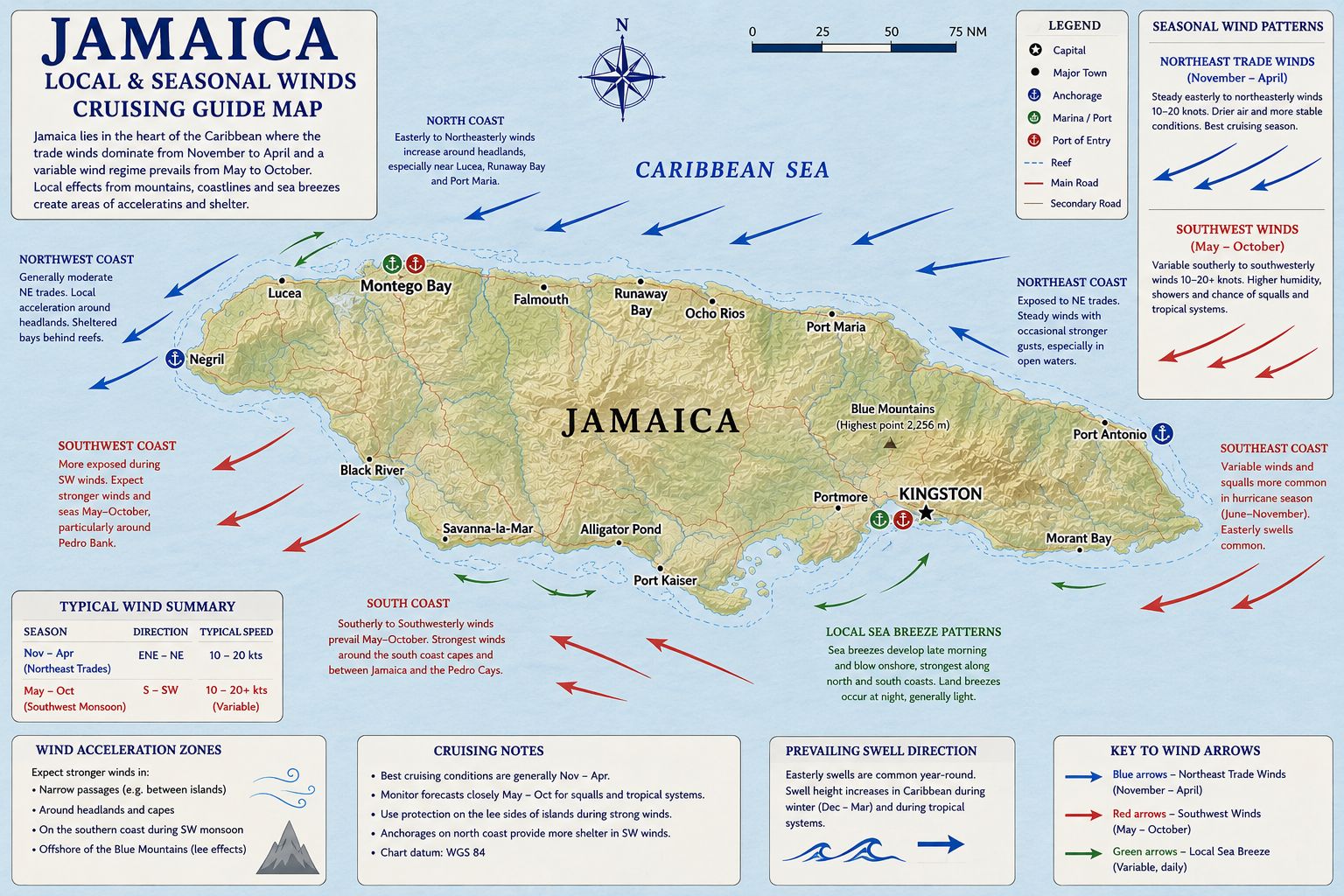
Sailing in Jamaica. Jamaica is the largest English‑speaking island in the Caribbean and a high‑relief, mountainous landmass with deep bays, rugged headlands, and a coastline shaped by prevailing northeast trades. Navigation is straightforward along the southern and western coasts, where deep water lies close to shore, while the northern coast presents more exposure to swell and stronger winds.
The island’s marine infrastructure is concentrated in Montego Bay, Ocho Rios, Port Antonio, and Kingston, with marinas and yacht clubs providing fuel, water, berths, and limited technical support. Provisioning is strong in major towns, with large supermarkets and local markets supplying fresh produce, meat, and packaged goods. Jamaica functions as a standalone cruising destination and a strategic waypoint for yachts moving between Cuba, the Cayman Islands, and the eastern Caribbean.
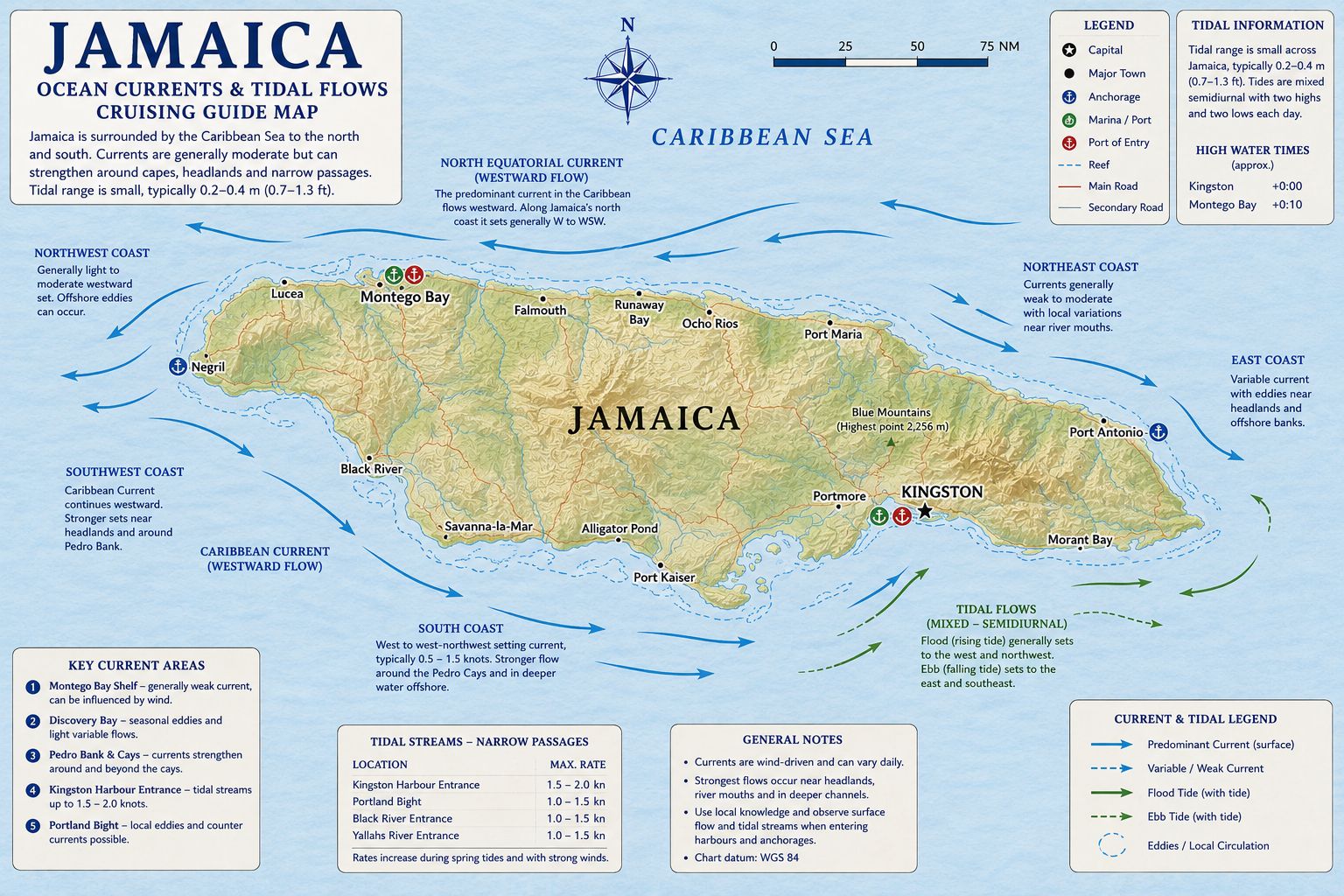
Sailing in Jamaica - Approaches
Approaches to Jamaica vary by coast. The north coast is exposed to Atlantic swell, with strong trade‑wind acceleration zones around major headlands. Entrances to Montego Bay, Ocho Rios, and Port Antonio are well marked, with deep water and clear visual cues. The south coast offers calmer conditions and deep‑water approaches into Kingston Harbour, one of the largest natural harbours in the Caribbean. The west coast around Negril provides simple approaches with long sand shelves and minimal hazards. Coral heads and shallow patches exist near some river mouths and reef edges, but visibility is generally good in settled conditions. Night approaches are feasible into major ports due to reliable navigation lights and wide channels.
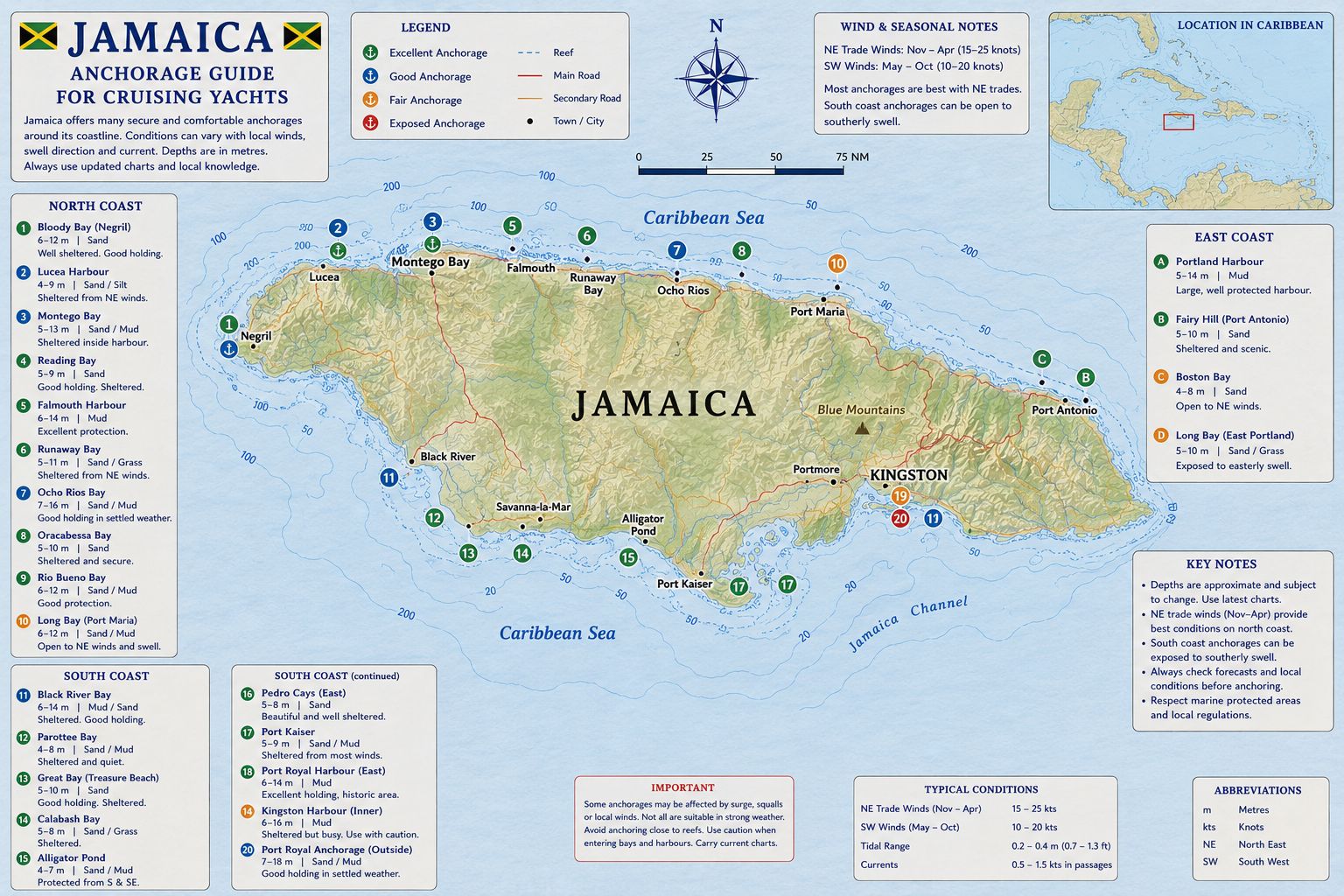
Sailing in Jamaica - Anchorages
Jamaica’s anchorages are concentrated around major towns and protected bays. Montego Bay offers anchoring outside the marina in 10–20 m over sand with good holding and reliable shelter. Port Antonio provides one of the most secure anchorages on the island, with deep water, strong protection, and easy access to shore facilities. Ocho Rios offers anchoring in settled conditions outside the cruise‑ship basin, though swell can enter during strong trades. Kingston Harbour provides extensive anchoring options in deep, sheltered water, though traffic and industrial activity require careful positioning. The west coast near Negril offers calm‑weather anchoring in 5–10 m over sand, with exposure increasing during winter swell.
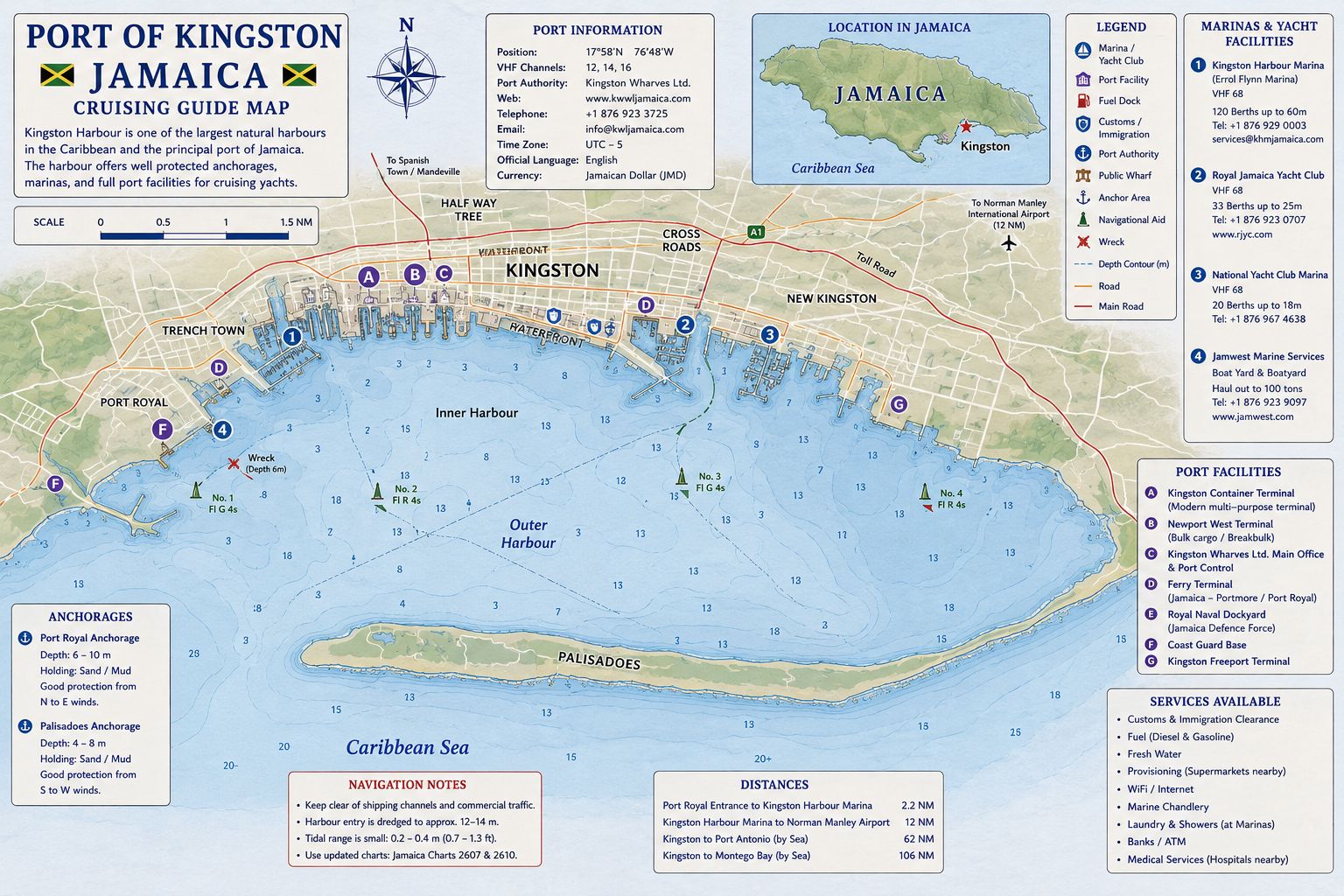
Sailing in Jamaica - Marinas
Marina infrastructure is strongest in Montego Bay, Port Antonio, and Kingston. Montego Bay Yacht Club provides berths, fuel, water, power, Wi‑Fi, and access to local contractors for mechanical and electrical work. Errol Flynn Marina in Port Antonio offers secure berths, fuel, water, power, customs and immigration clearance, and limited technical support. Royal Jamaica Yacht Club in Kingston provides berths, fuel, water, and access to the city’s extensive services. Ocho Rios offers limited dockage primarily for short stays. Overall, Jamaica’s marinas support routine needs but lack large‑scale repair capability, with major work typically handled in the Cayman Islands or the United States.
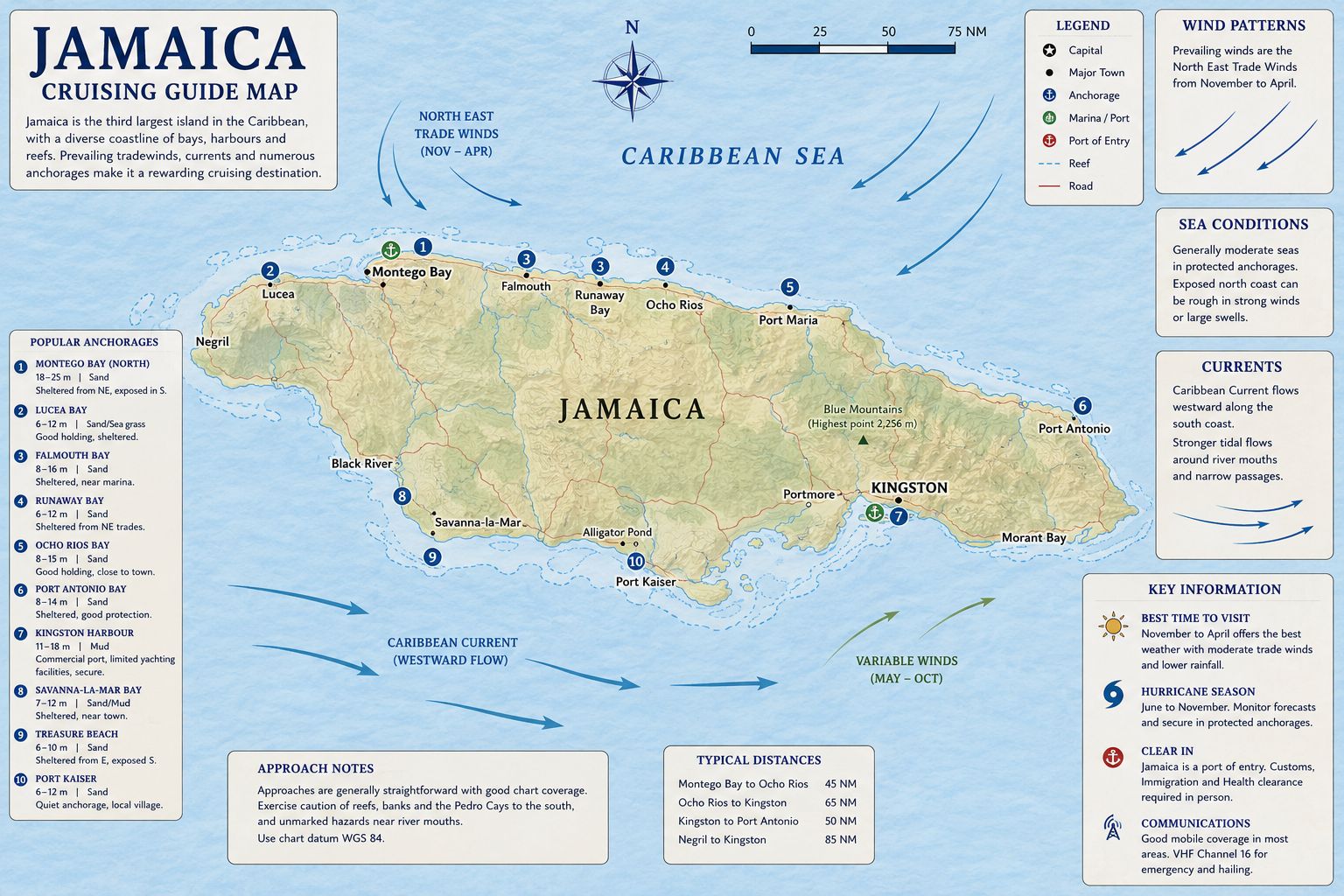
Sailing in Jamaica - Local Weather
Weather follows the northeast trade‑wind pattern, with 15–22 kn winds and stronger gusts along the north coast. The island’s high mountains create localised acceleration zones and katabatic drainage winds at night, particularly on the northern and eastern coasts. The south coast remains more sheltered, with lighter winds and calmer seas. Jamaica lies within the hurricane belt, and seasonal monitoring is essential during late summer and autumn. Winter cold fronts can bring northerly swell that affects anchorages on the north and west coasts.
The Marine
Electrical and Electronics Bible 4th Edition
The latest edition of my book has a complete Caribbean Island communications guide in Chapter 34.35. Caribbean VHF Channels with Island by Island coverage of all weather forecast sources, VHF nets and more. This also covers virtually every cruising location globally from the Pacific to the Mediterranean for VHF weather forecasts and channels.
Sailing in Jamaica - Provisioning
Supermarkets. These include the Joong Supermarket and Wholesale, and nearby is the Hi-Lo Food Store and the Progressive Foods Supermarket all in the Port Henderson area. In the Montego Bay area, there is Manelli.
Markets. There are several markets that include the Coronation Farmers Market in Kingston. Loads of good and inexpensive farm produce. The Musgrave Market in Portland has farm produce fruits and vegetables, meat and seafood.
Seafood Market. The seafood market in Montego Bay is worth a trip and the Red Rose Fish Market is closest to the marina.
Sailing in Jamaica
The national dish of Jamaica is Ackee and Saltfish. Local cuisine in Jamaica is defined by bold seasoning, slow cooking, and the use of local spices and herbs. Key dishes include jerk chicken and pork marinated with Scotch bonnet peppers, allspice, thyme, and scallions; curried goat simmered with potatoes and spices; steamed fish with okra, carrots, and peppers; escovitch fish fried and topped with vinegar‑based pepper sauce; ackee and saltfish sautéed with onions, peppers, and tomatoes; and patties filled with beef, chicken, or vegetables. Side dishes include rice and peas cooked with coconut milk, fried plantains, festival, and bammy made from cassava. Street food and market stalls provide fresh, affordable meals across the island.
It would be impractical to talk about Jamaica without mentioning its world-famous Blue Mountain Coffee. Purchasing some to savor during your voyage to the next island is highly recommended.
Sailing in Jamaica - Fuel Supplies
Fuel is available at marinas in Montego Bay, Port Antonio, and Kingston, with reliable diesel and petrol supply. Ocho Rios offers limited fuel access suitable for smaller vessels. Yachts requiring full refuelling typically use Montego Bay or Kingston due to consistent availability and deeper access.
Sailing in Jamaica - Water Supplies
Water is available at all major marinas, with dockside fills and reliable supply. Yachts at anchor typically collect water by jerry can or arrange dockside fills when berths are available. Water makers are common among visiting yachts due to variable availability outside major ports.
Mechanical
and Electrical Repairs Resource
If you are headed somewhere remote consider the need to expand your knowledge base or have an information resource on board. Why not get a copy of my book The Marine and Electrical and Electronics Bible 4th Edition. By and for yachties, with everything from batteries and charging, solar and wind, diesel engines and marine electronics and so much more. Your complete systems guide. 650 pages of practical advice. In Australia and New Zealand order a copy through Boat Books. UK and European boats can buy the UK Edition Here. US and Canadian boats can get the US Edition Order Here. Marine systems are my profession so let me help you. By a liveaboard boat owner for other boat owners.

Sailing in Jamaica - Marine Services
Marine services are concentrated in Montego Bay and Kingston, with mechanical, electrical, diesel, and fiberglass support available through local contractors. Port Antonio offers limited technical assistance suitable for routine maintenance. There are no haul‑out facilities capable of handling large yachts, and major repairs are typically carried out in the Cayman Islands, Florida, or Trinidad.
Sailing in Jamaica - Customs
Jamaica requires customs and immigration clearance at designated ports, including Montego Bay, Port Antonio, Kingston, and Ocho Rios. Anchoring restrictions apply near coral and seagrass zones, and yachts must use designated areas where provided. Waste disposal is controlled, and yachts must use approved facilities. Dinghy speeds must remain low near beaches, docks, and swimming areas.
Sailing in Jamaica


Sailing in Jamaica - Summary
Jamaica offers a mix of deep‑water approaches, protected anchorages, and marina‑supported cruising centred on Montego Bay, Port Antonio, and Kingston. The island provides strong provisioning, reliable fuel and water, and essential marine services, supported by a coastline shaped by predictable trade‑wind conditions. Jamaica functions as both a standalone cruising destination and a strategic waypoint for yachts moving between the western and eastern Caribbean, offering clear water, varied anchorages, and dependable support where infrastructure exists. Sailing in Jamaica for all you need to know