Sailing in
Bermuda
Sailing in Bermuda is a reasonable passage and always a welcome sight. Bermuda is a British Overseas Territory, and is an archipelago of 7 islands and around 170 islets named after the Spanish explorer Juan de Bermuduez who discovered it in 1505. It was settled in 1609 by shipwrecked colonists headed for Virginia. It is often referred to as the shipwreck capital of the world and sailors thought the place was inhabited by demons. The capital is Hamilton and the country is a popular shipping flag of convenience. It is a popular tourist destination and famous for coral reef snorkeling.
Bermuda lies roughly 600 nm east of the US East Coast and is surrounded by an extensive reef system that forms a near‑continuous barrier. Approaches from all directions rise abruptly from deep ocean to reef shelves in the 10–20 m range, and all navigation into the island group is channel‑dependent. Visiting yachts are required to make early contact with Bermuda Radio, which controls vessel movements through the approved entrances. The island has limited natural anchorages, and most yachts use St. George’s Harbour or marina berths in Hamilton. Weather is shaped by the Bermuda–Azores High, Atlantic frontal systems and seasonal tropical activity, producing significant variation in wind direction and sea state.
Sailing in Bermuda
- Approaches
Approaches to Bermuda are straightforward in open ocean but become highly constrained at the reef line. Depths remain over 3,000 m until the final approach, where the seabed rises sharply to reef shelves between 10–20 m. The Southwest Channel is the primary commercial and yacht route, offering controlled depths of 12–20 m and clear lateral marking. Town Cut at St. George’s is the main yacht entrance, with depths of 6–8 m and a narrow alignment that can experience strong cross‑winds. North Rock provides a deep‑water northern approach but leads directly to the reef line and requires strict adherence to charted routes.
Tidal range is generally 0.8–1.0 m, and tidal streams in the cuts are usually below 1 kn, although wind‑driven set can be significant during winter systems. Swell from the Atlantic affects all exposed approaches, particularly during frontal passages. Coral heads outside the marked channels are unmarked and must be avoided; navigation outside the channels is prohibited.
Sailing in Bermuda
- Anchorage
St. George’s Harbour is the primary anchorage for visiting yachts, with depths between 5–12 m in mud and sand. Holding is generally reliable, although strong northerly winds during winter systems can produce chop and reduce comfort. Hamilton Harbour offers limited anchoring opportunities, with most space occupied by moorings; depths range from 6–12 m, and the seabed can be mixed mud and debris, reducing holding reliability. Anchoring outside designated areas or on reef structures is not permitted anywhere in Bermuda.
Sailing in Bermuda
- Entry Formalities
All vessels must contact Bermuda Radio on VHF before arrival and maintain communication until cleared to proceed through Town Cut or the designated approach channel. Clearance is completed in St. George’s, where Customs, Immigration and Health officers conduct formalities. Passports and vessel registration documents are required, and a cruising permit fee is payable on arrival. Firearms must be declared and surrendered or secured under authority control. Pets require advance veterinary documentation. Communications equipment such as Starlink is generally permitted but may be subject to regulatory review. Harbour authorities may inspect safety equipment, and vessels may not proceed beyond the clearance area until formally released.
Sailing in Bermuda
- Marina Facilities
Bermuda’s marina infrastructure is limited and concentrated in three areas: St. George’s, Hamilton, and the Royal Naval Dockyard. Depths, access constraints and service capability vary significantly, and none of the facilities operate as full‑service yards.
In St. George’s, visiting yachts have access to a small marina and government docks located close to the customs wharf. Depths in this area range from 3 m to 5 m, and berths are suitable for short‑stay use. Services are basic, with shore power, potable water and limited onshore support. There is no haul‑out capability for yachts of cruising size, and mechanical assistance is minimal.
Hamilton provides the island’s main marina berths. Depths in the Hamilton waterfront area vary between 3 m and 6 m depending on berth position and tidal state. Berths offer shore power, potable water and access to limited repair services, including small‑scale mechanical and electrical work. Chandlery supply is available nearby, but the range is narrow compared to mainland ports. Hamilton does not have a travel‑lift or haul‑out facility for yachts, and any structural or major mechanical work cannot be carried out locally.
At the Royal Naval Dockyard, berthing is available along sections of the commercial waterfront, with depths generally between 4 m and 6 m. Facilities are basic, with shore power and water available in some locations. Technical support is limited, and there is no yacht‑grade haul‑out capability. Dockyard berths are suitable for temporary mooring rather than extended maintenance.
Across all three locations, Bermuda does not provide a full‑service marine yard. Haul‑out options are restricted to small‑vessel lifts unsuitable for most cruising yachts. Visiting skippers should plan for only minor repairs and routine servicing while in Bermuda, with any major work deferred to mainland ports.
Sailing in Bermuda
- Local Weather
Weather is dominated by the Bermuda–Azores High during spring and summer, producing stable conditions with SE–SW winds of 10–20 kn. Winter brings frequent Atlantic frontal systems with strong NW–NE winds of 20–30 kn and rough seas. Hurricane season runs from June to November, with associated risk of tropical storms. Atlantic swell is common on exposed coasts throughout the year, while harbours remain generally protected. Fog is rare.
The Marine
Electrical and Electronics Bible 4th Edition
The latest edition of my book has a complete Caribbean Island communications guide in Chapter 34.35. Caribbean VHF Channels with Island by Island coverage of all weather forecast sources, VHF nets and more. This also covers virtually every cruising location globally from the Pacific to the Mediterranean for VHF weather forecasts and channels.
Sailing in Bermuda
- Provisioning
Bermuda is particularly known for a few locally grown fruits and vegetables such as pawpaws, loquats, and Bermudian onions. As for the vegetables, Bermuda is notable for its onions, which have historically been a major export product for the island
Supermarkets. There are a number of provisioning sources and supermarkets that include major ones like MarketPlace opposite the cathedral. There is a Maxi Mart in Hog Bay. Lindo’s Family Foods has a good range of fresh produce and a good fish and meat section. Supermart stock former Waitrose products from the UK and carry a big meat selection, along with seafood. St. George’s has Somers Supermarket, which carries a smaller range
Markets. Market at the waterfront is very upmarket and high gourmet quality with prices to match. Harrington Hundreds is very upmarket and has a good bakery. There is a limited amount of local produce to buy with some fruit, vegetables and eggs available, one source is Wadson’s Farm. Small independent vendors appear occasionally in Hamilton and St. George’s, but quantities are limited and irregular, and they are not suitable for planned provisioning.
Seafood Markets. Fresh fish is in some markets such as Lindo’s and can be found at T.S Fisheries who sell direct from their boat fleet. Friday is the busiest day for buying fish from roadside and dockside vendors and do try the lionfish when available. Fish is sold directly by local fishers at small docks in Hamilton and St. George’s. Sales depend entirely on weather and catch conditions, and there is no fixed schedule or guaranteed availability.
Sailing in Bermuda
- Local Cuisine
The national dish is Bermuda Fish Chowder which has fish, potato, tomato puree, vegetables, herbs and spices. Bermuda’s main dishes are built around local fish and preserved staples. Hoppin’ John combines black‑eyed peas and rice cooked with salt pork. Cassava pie is prepared from grated cassava mixed with eggs and baked around a poultry filling. Salt cod breakfast uses dried cod served with potatoes, bananas and hard‑boiled eggs. Spiny lobster is available in season and is usually boiled or grilled. Local pelagic species such as wahoo and rockfish are used in simple pan‑fried or baked preparations. One specialty, Bermuda fish cake, a patty made from salted codfish and potatoes, is a staple during Easter holiday
Sailors are also urged to explore the traditional "Rum Swizzle", Bermuda's national drink. This cocktail is made with Gosling's Black Seal Rum, fruit juices and is perfect for a balmy Bermuda evening onboard
Sailing in Bermuda
- Fuel Supplies
Fuel is available at designated docks in St. George’s, Hamilton and Dockyard, where diesel and petrol are dispensed via standard dockside pumps. Supply is generally reliable but may be disrupted following severe weather or storms.
Sailing in Bermuda
- Water Supplies
Potable water is available at marinas through dockside connections. Bermuda relies heavily on rainwater collection, so water availability may be limited during dry periods. Water quality is typically good.
Mechanical
and Electrical Repairs Resource
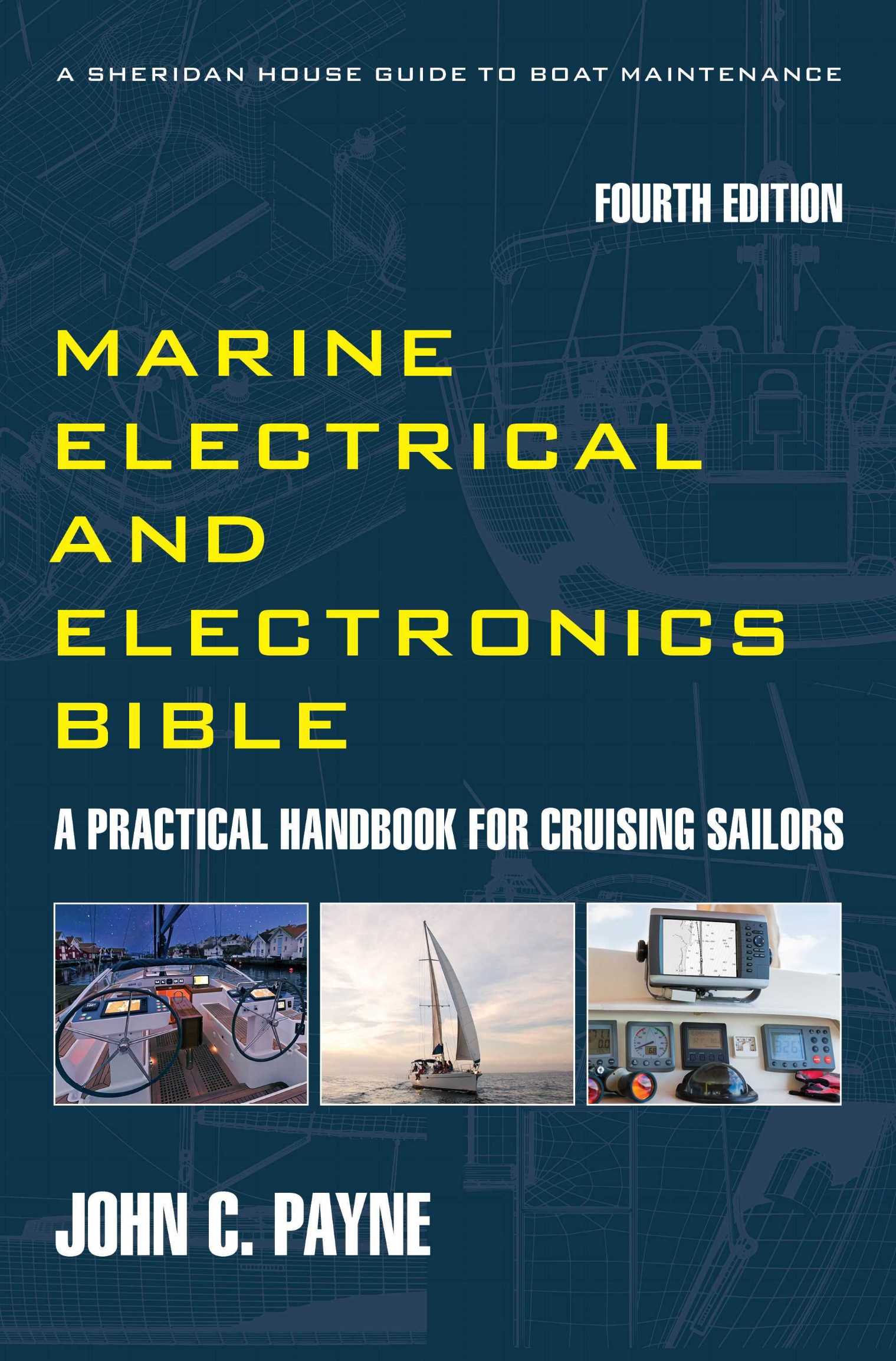
If you are headed somewhere remote consider the need to expand your knowledge base or have an information resource on board. Why not get a copy of my book The Marine and Electrical and Electronics Bible 4th Edition. By and for yachties, with everything from batteries and charging, solar and wind, diesel engines and marine electronics and so much more. Your complete systems guide. 650 pages of practical advice. In Australia and New Zealand order a copy through Boat Books. UK and European boats can buy the UK Edition Here. US and Canadian boats can get the US Edition Order Here. Marine systems are my profession so let me help you. By a liveaboard boat owner for other boat owners
Sailing in Bermuda
- Marine Services
Marine services are modest. Hamilton offers basic diesel engine repair, electrical work, refrigeration support and marine electronics assistance, along with small chandlery outlets. St. George’s provides limited mechanical help but no major haul‑out capability. There are no large service yards, and availability of authorised Volvo Penta or Yanmar technicians varies and should be confirmed locally.
Sailing in Bermuda
- Local Customs
Local behaviour is formal and reserved, and clear communication is expected. Dress standards are conservative away from beaches. Marine‑park regulations prohibit anchoring on reefs and restrict fishing. Private moorings are common and must not be used without permission. Compliance with environmental rules is strictly enforced.


Sailing in Bermuda - Summary
Bermuda is a controlled‑entry, reef‑protected North Atlantic destination requiring precise navigation and adherence to Bermuda Radio instructions. Anchorages are limited, with St. George’s serving as the primary option. Marina facilities and marine services are modest, while provisioning is adequate in Hamilton. Weather is shaped by Atlantic systems with significant seasonal variation, and environmental regulations are strictly applied. Sailing in Bermuda for all you need to know.