Sailing Turks and Caicos
Sailing Turks and Caicos is well worth the effort. Turks and Caicos is an archipelago of low-lying coral islands in the Atlantic Ocean comprises 7 larger islands and around 100 small islets and more. It has a 1000 year history with the Taino and Lucayan people being the indigenous population until colonization in 1512. Christopher Columbus made landfall here in his inaugural Caribbean cruise in 1492 and set his seaboots on Grand Turk that same year. It has been a popular pirate enclave in past years. The French, Spanish and the English have controlled the islands and the British still do so.
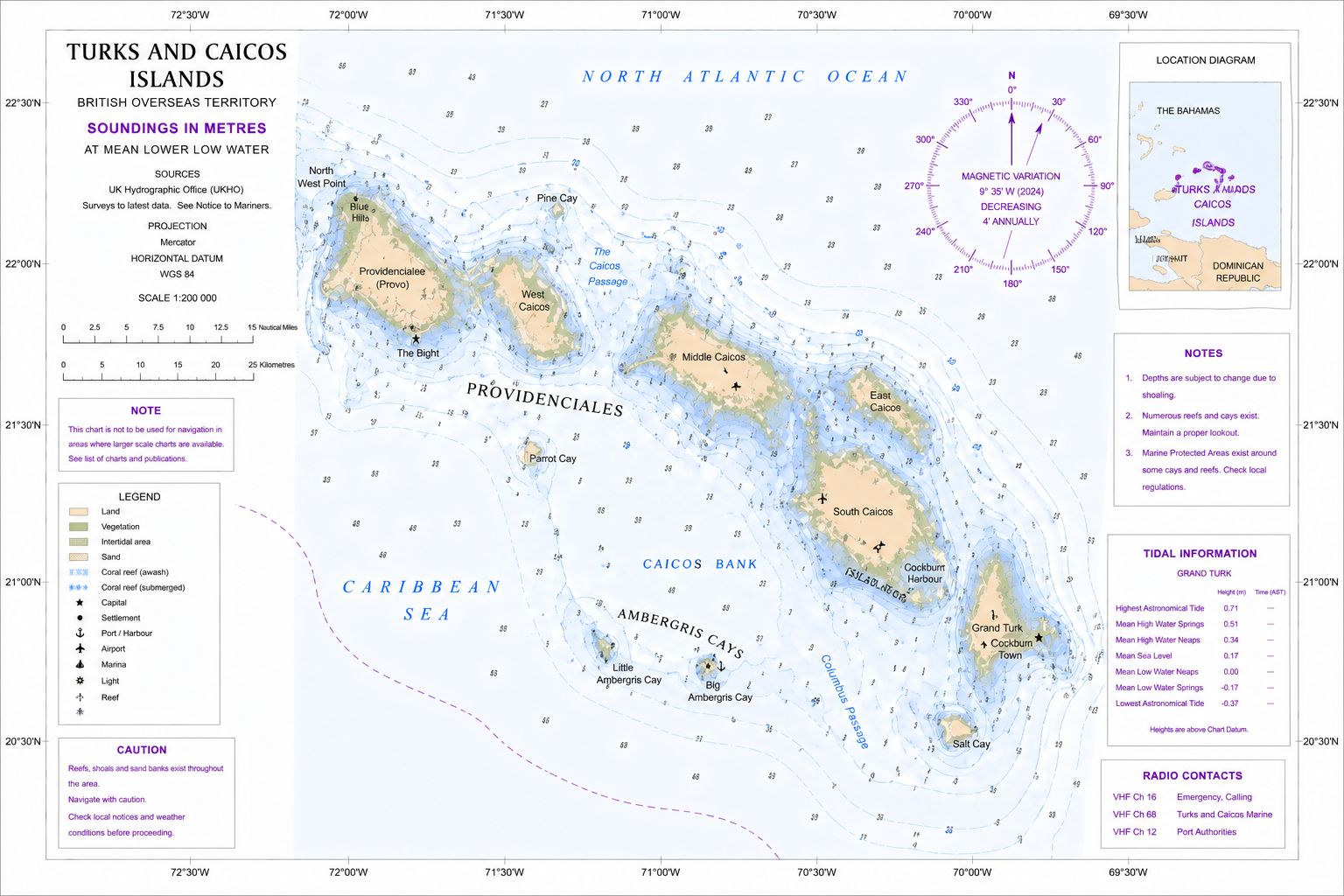
The Turks and Caicos Islands form a broad archipelago of low‑lying limestone cays, shallow banks, and reef systems positioned southeast of the Bahamas and north of Hispaniola. The territory divides naturally into two distinct cruising environments: the Turks Islands to the east, consisting of Grand Turk and Salt Cay, and the Caicos Islands to the west, which include Providenciales, North Caicos, Middle Caicos, South Caicos, East Caicos, and West Caicos. Navigation across the region requires disciplined depth awareness due to the extensive Caicos Bank, while the Turks Islands offer deep‑water approaches and simple offshore routing.
Sailing Turks and Caicos
The arid climate and thin soil of Turks and Caicos are not conducive for large scale agriculture, which explains why over 90% of food is imported. Most imports come from Florida, due to its close proximity, but there are also weekly shipping schedules from Asia and Europe. The timing of these weekly shipments plays a key role in ensuring freshness and availability, so it's crucial for sailors to plan their resupply and provisioning strategy accordingly. Imported goods dominate due to the challenges faced in agriculture; nonetheless, the islands' distinctive food culture thrives. Other popular local cuisine ingredients include lobster, crab, and fish, often prepared with locally grown spices and flavors. The islands also produce a variety of fruits such as papaya, guava, and citrus fruits. The local cuisine is a blend of traditional Caribbean flavors with influences from the Bahamas and other nearby islands. The territory serves as a strategic waypoint for yachts moving between the Bahamas, the Dominican Republic, and the northern Caribbean.
Sailing Turks and
Caicos - Approaches
Approaches vary significantly between the Turks and Caicos groups. The Turks Islands offer deep‑water access with minimal hazards, with Grand Turk approached through a wide, unobstructed channel leading to the anchorage off Cockburn Town. Salt Cay requires settled conditions due to exposure to northerly swell, but depths remain predictable and colour changes clearly mark the reef edges. The Caicos Islands require more detailed navigation, particularly when entering the Caicos Bank. Providenciales is accessed through marked channels leading to Blue Haven Marina on the eastern end or Turtle Cove Marina on the northern coast, both offering reliable depth and clear guidance. The Caicos Bank demands good light and continuous depth monitoring due to coral heads and sand bores scattered across the platform. South Caicos and West Caicos offer deeper approaches with fewer hazards, though reef shelves lie close to shore. Weather windows are essential when crossing the Turks Island Passage or Caicos Passage due to open‑ocean exposure.
Sailing Turks and
Caicos - Anchorages
Anchorages across the territory reflect the contrast between deep‑water islands and shallow‑bank cruising. In the Turks Islands, Grand Turk provides anchoring in 8–15 m over sand with reliable holding and straightforward dinghy access to Cockburn Town. Salt Cay offers anchoring in 6–12 m over sand in calm weather, though exposure increases with northerly swell. In the Caicos Islands, Providenciales offers sheltered anchorages at Sapodilla Bay and Taylor Bay in 3–6 m over sand, with good holding and protection from prevailing trades. West Caicos provides anchoring in settled conditions with clear sand patches and excellent visibility. The cays east of Providenciales offer additional anchorages in 3–10 m over sand, though exposure varies with wind direction. South Caicos provides anchoring outside the harbour in 8–15 m over sand with predictable shelter. North Caicos and Middle Caicos offer limited anchoring due to shallow water and extensive mangrove systems, with only calm‑weather options along the northern beaches
Sailing Turks and
Caicos - Marina Facilities
Marina infrastructure is concentrated almost entirely on Providenciales, which hosts the territory’s full‑service yacht facilities. Blue Haven Marina provides deep‑water berths, fuel, water, power, Wi‑Fi, and access to haul‑out and technical contractors, making it the primary operational base for visiting yachts. Turtle Cove Marina offers sheltered berths with water, power, fuel access, and proximity to provisioning and shore services. South Bank Marina provides additional berths and technical support for mid‑sized yachts. The Turks Islands offer only small‑scale dock facilities, with Grand Turk providing limited berths and basic services suitable for short stays. South Caicos maintains a small marina supporting local fishing vessels and visiting yachts, offering limited fuel and water depending on supply. There are no marinas on North Caicos, Middle Caicos, East Caicos, or West Caicos.
Sailing Turks and
Caicos - Local Weather
Weather across the Turks and Caicos follows the northeast trade‑wind pattern, with 15–22 kn winds and moderate seas outside the reef. The Caicos Bank remains calm in normal trades but becomes choppy in stronger wind periods. Winter cold fronts can bring northerly swell that affects exposed anchorages, particularly on the northern coasts of Grand Turk, Salt Cay, and Providenciales. The territory lies within the hurricane belt, and seasonal monitoring is essential during late summer and autumn. Gusts can accelerate around reef gaps and headlands during strong trade‑wind events.
The Marine
Electrical and Electronics Bible 4th Edition
The latest edition of my book has a complete Caribbean Island communications guide in Chapter 34.35. Caribbean VHF Channels with Island by Island coverage of all weather forecast sources, VHF nets and more. This also covers virtually every cruising location globally from the Pacific to the Mediterranean for VHF weather forecasts and channels.
Sailing Turks and
Caicos - Provisioning
Much food is imported from Florida in US and there is a local produce industry so you can store up a little. Given it is a luxury tourism destination gluten free and organic along with other high end specialty foods are available.
Sailing Turks and Caicos and the North Caicos is called the garden island and they farm sugar cane, peppers, tomatoes, lettuce, herbs, and tropical fruit that includes papayas, melons and bananas. Middle Caicos produces tomatoes, peppers, melons, bananas, sugar cane and papaya. On Providenciales herbs and tomatoes are grown including a hydroponics enterprise with tomatoes, cucumbers and basil. Despite this reliance on imports, the islands do produce some local fruits. Sapodillas which celebrated for their sweet, grainy texture, grow well in the local soil; likewise, the prickly pear cactus bears a delicious fruit which is highly sought after. Citrus fruits, particularly grapefruit, oranges, and lemons also fare well in this climate. The islands' vegetable production is primarily focused on growing okra, bell peppers, onions, and hot peppers - necessary ingredients for the local cuisine. They also have a major salt making industry here.
North Caicos
North Caicos is called the garden island and they farm sugar cane, peppers, tomatoes, lettuce, herbs, and tropical fruit that includes papayas, melons and bananas. Middle Caicos produces tomatoes, peppers, melons, bananas, sugar cane and papaya. On Providenciales herbs and tomatoes are grown including a hydroponics enterprise with tomatoes, cucumbers and basil.
Supermarkets. The major supermarket in Providenciales is the Graceway IGA located in the Graceway Plaza complex not too far from the Turtle Cove marina
Markets. There is The Community and Farmers Market in Providenciales which is a reasonably economical provisioning source. Produce gets imported from other Caribbean Island countries such as Jamaica, Haiti and the Dominican Republic.
Seafood Markets. Check out the Provo Seafood fish market at Five Cays. You can find supplies at several Providenciales locations and several small fish markets are scattered around the island. In the downtown area near the Town Center Mall fishermen often sell fresh seafood from the coolers in the back of trucks and this is up to half the price of supermarkets, and just as fresh.
Sailors who enjoy fishing can also do this but it's crucial to understand local fishing regulations - some species, like the Nassau grouper, are protected due to overfishing. Try the Conch fritters. Try the boiled fish and grits for breakfast. Also try the Blue Crab and Rice. The Island Fish Fry happens every Thursday from 5:30pm to 9:30pm at PTV Stubbs Diamond Plaza, Providenciales. Conch is a major thing here and has the world's only commercial Conch farm which helps conserve the rapidly dwindling wild conch population.
South Caicos
There are just three small grocery stores with basic supplies and they tend to be more expensive than Providenciales. Grand Turk is very much cruise ship orientated with most restaurants located in Cockburn Town. Graceway Grand Turk is the largest grocery store on Grand Turk and is open seven days a week. Salt Cay has limited supplies and besides investing in some salt here there is some basics at Netty’s in Balfour Town located near Deane’s Dock.
Grand Turk
Supermarkets. Graceway Grand Turk, formerly known as Cee's Grocery. It is the largest supermarket on the island and is located in Cockburn Town. Graceway Grand Turk operates seven days a week, with hours from 7:00 AM to 8:00 PM Monday through Saturday, and 7:00 AM to 6:00 PM on Sundays. The store offers a wide range of fresh produce, meat, canned goods, household products, and prepared deli foods. It also stocks cold drinks, essential groceries, and pet food. The supermarket is air-conditioned and provides a comfortable shopping experience. In addition to Graceway, there are smaller local shops and markets scattered around Grand Turk that offer fresh local produce and basic grocery items. These smaller markets are ideal for quick purchases and local specialties but do not provide the extensive selection found at Graceway Grand Turk. Salt Cay has limited supplies and besides investing in some salt here there is some basics at Netty’s in Balfour Town located near Deane’s Dock.
Markets. Grand Turk does not have a formal farmers market, but local vendors sometimes sell fresh fruits and vegetables at informal roadside stands or small market stalls, especially on weekends. These stands offer seasonal produce sourced from nearby islands or local gardens, providing fresh local flavors and ingredients. Most fresh produce provisioning is done through the main supermarket or these smaller local shops and stands rather than a dedicated farmers market.
Seafood Market. Grand Turk features a local fish market near the cruise port area where fishermen bring in daily catches including snapper, grouper, conch, lobster, and other local fish. This public beachfront fish market is a popular spot for fresh seafood purchases and offers a direct connection to the island's fishing community. The market is typically active in the mornings when the catch is brought in.
Sailing Turks and
Caicos - Local Cuisine
The national dish of Turks and Caicos is Conch. Christopher Columbus made landfall here in his inaugural Caribbean cruise in 1492. Local cuisine across the Turks and Caicos centres on seafood, particularly conch prepared as fritters, salad, or in creamy chowder; grilled snapper and grouper served with rice, peas, and plantains; and lobster in season. Stewed chicken, jerk dishes, and Caribbean curries are common, along with johnny cakes and baked breads. Imported U.S. and Caribbean products shape the broader food landscape, particularly on Providenciales, where restaurants and shops offer a mix of local and international dishes. The outer islands rely more heavily on local seafood and simple preparations.
Buy some Pepperjoy hot sauce if you see it. The varieties include Wild Wheeland, Deadly Ghost and Blue Hills Breeze.
When sailing in the Caribbean, it's only fitting to indulge in the local rum. The Turks Head Brewery produces a variety of local beers and spirits, and a visit to their facilities is a good afternoon ashore.
Sailing Turks and
Caicos - Fuel Supplies
Fuel availability is strongest on Providenciales, with diesel and petrol available at Blue Haven Marina, Turtle Cove Marina, and South Bank Marina. Supply is reliable and suitable for full refuelling. Grand Turk and South Caicos offer limited fuel suitable for smaller vessels, with availability varying by season and demand. There are no fuel facilities on North Caicos, Middle Caicos, East Caicos, or West Caicos.
Sailing Turks and
Caicos - Water Supplies
Water is available at all major marinas on Providenciales, with dockside fills and reliable supply. Grand Turk and South Caicos offer limited water access at small docks. Yachts at anchor often rely on water makers due to variable availability outside Providenciales. The outer islands provide no formal water facilities.
Mechanical
and Electrical Repairs Resource
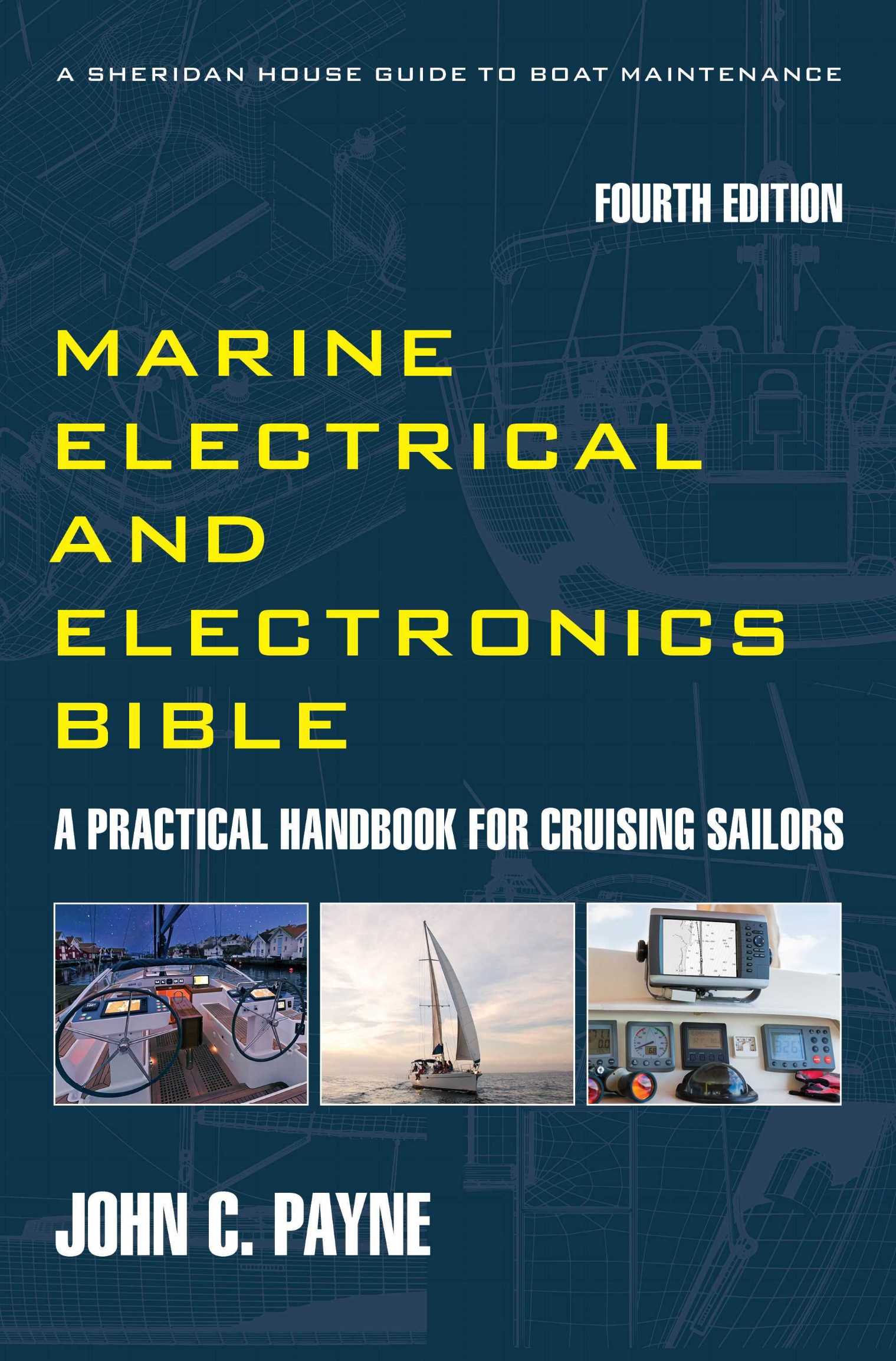
If you are headed somewhere remote consider the need to expand your knowledge base or have an information resource on board. Why not get a copy of my book The Marine and Electrical and Electronics Bible 4th Edition. By and for yachties, with everything from batteries and charging, solar and wind, diesel engines and marine electronics and so much more. Your complete systems guide. 650 pages of practical advice. In Australia and New Zealand order a copy through Boat Books. UK and European boats can buy the UK Edition Here. US and Canadian boats can get the US Edition Order Here. Marine systems are my profession so let me help you. By a liveaboard boat owner for other boat owners
Sailing Turks and
Caicos - Marine Services
Marine services are concentrated on Providenciales, with haul‑out, mechanical, electrical, diesel, fiberglass, and rigging support available through contractors associated with Blue Haven Marina and South Bank Marina. Turtle Cove provides small‑scale services suitable for routine maintenance. Grand Turk and South Caicos offer minimal technical support, primarily for local fishing vessels. The remaining islands have no marine services.


Sailing Turks and
Caicos - Summary
The Turks and Caicos Islands offer a combination of deep‑water approaches, shallow‑bank navigation, and marina‑supported cruising centred on Providenciales. The Turks Islands provide quiet, low‑infrastructure anchorages with simple navigation, while the Caicos Islands deliver the territory’s operational capability. North Caicos and Middle Caicos remain remote and lightly serviced, suitable for experienced skippers seeking calm‑weather anchorages and self‑sufficient cruising. South Caicos provides a functional harbour and limited resupply capability. The region functions as a key waypoint between the Bahamas and the northern Caribbean, offering clear water, predictable trade‑wind sailing, and reliable support where infrastructure exists. Sailing Turks and Caicos for all you need to know