Boat Toilet Holding Tank
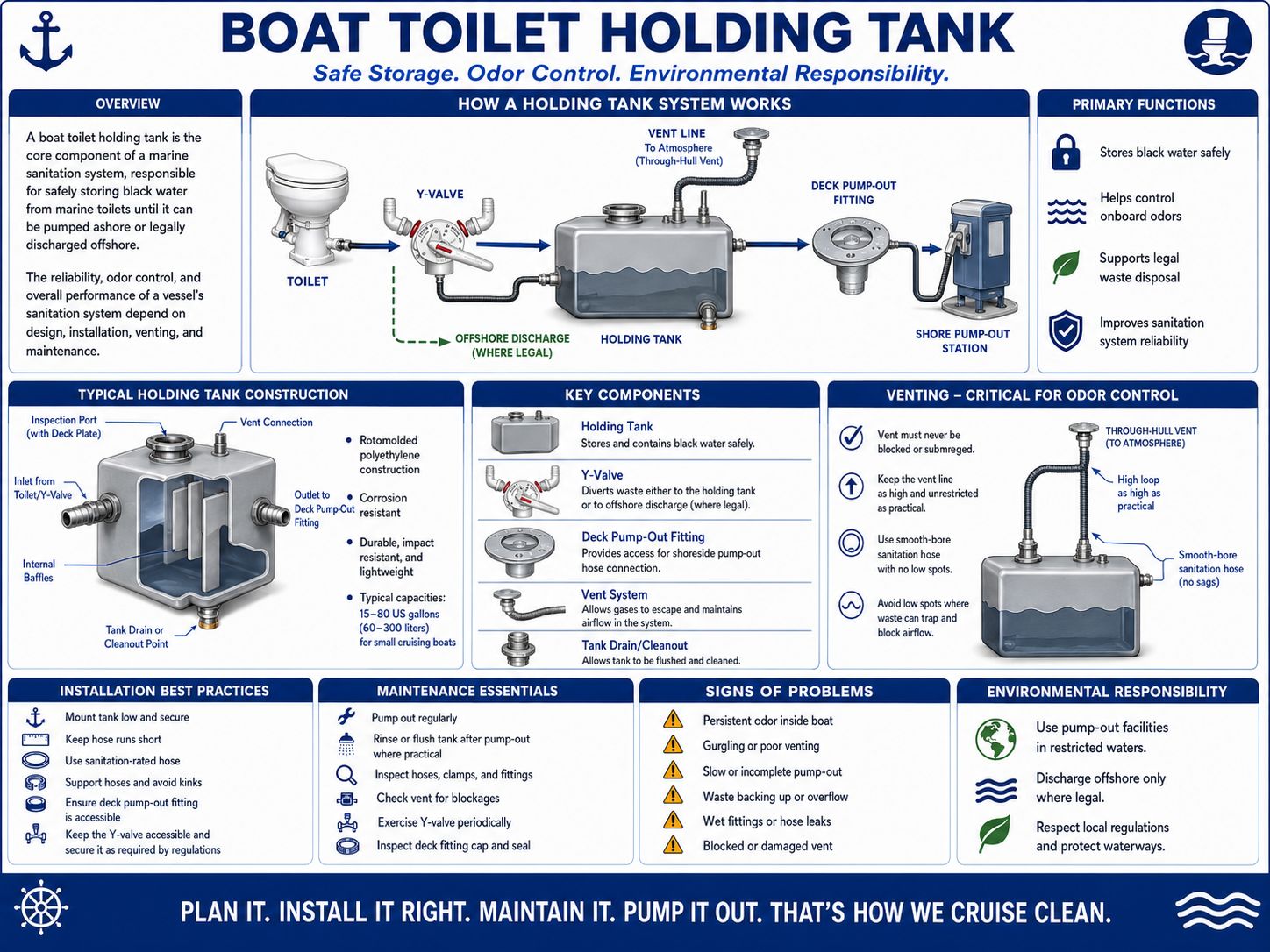
A boat toilet holding tank is the core component of a marine sanitation system, responsible for safely storing black water generated by marine toilets until it can be pumped ashore or legally discharged offshore. The reliability, odor control, and overall performance of a vessel’s toilet system depend heavily on how well the holding tank is designed, installed, vented, and maintained.
This article provides a comprehensive technical examination of black water holding tanks used on boats, covering the materials, plumbing configurations, installation considerations, operational behavior, maintenance routines, and common troubleshooting challenges.
Boat Toilet Holding Tank Function
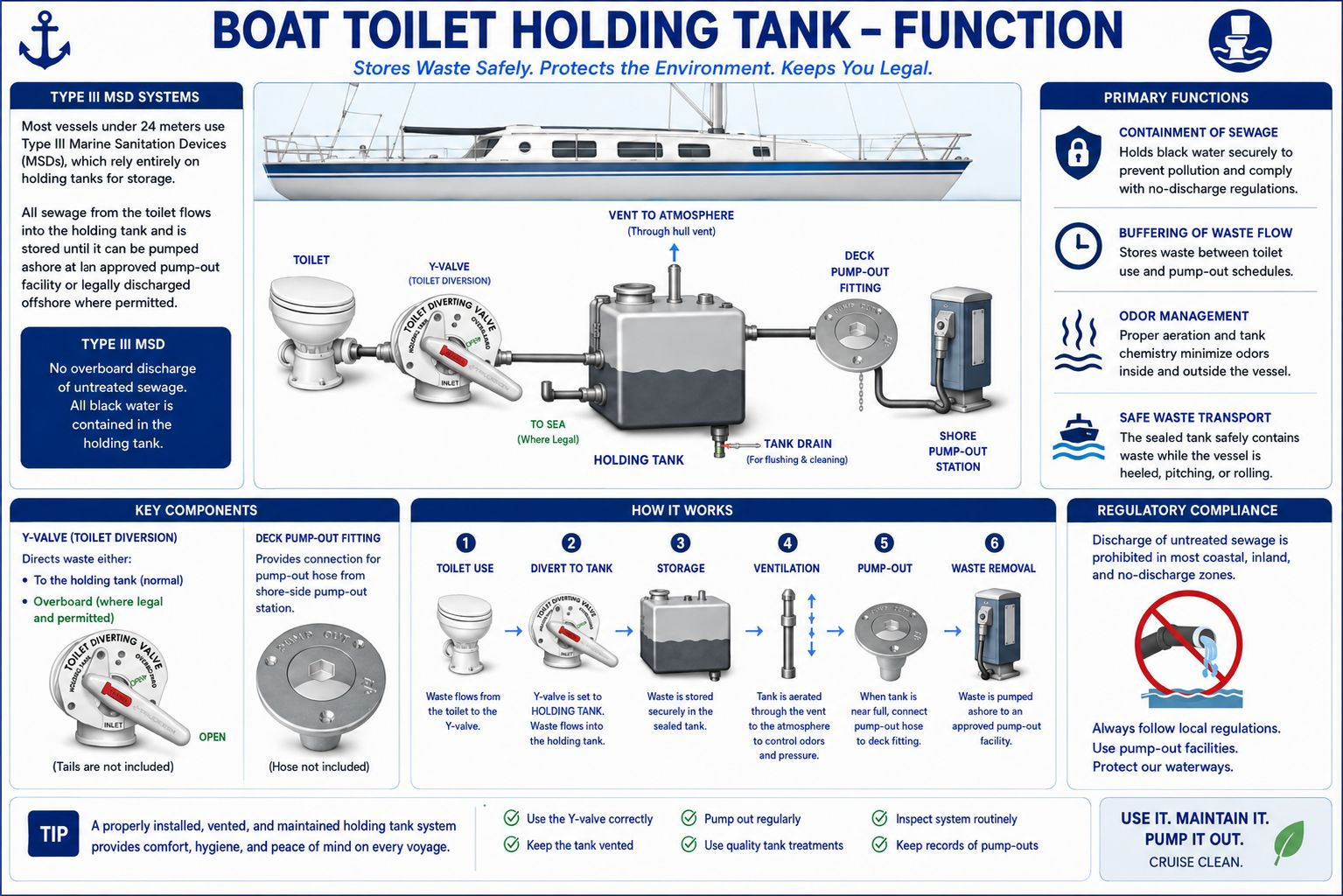
Most vessels under 24 meters use Type III Marine Sanitation Devices (MSDs), which rely entirely on holding tanks for storage. The holding tank fulfils several critical sanitation and regulatory functions:
- Containment of sewage (black water) to prevent pollution and comply with no-discharge regulations.
- Buffering of waste flow between toilet use and pump-out schedules.
- Odor management through proper aeration and tank chemistry.
- Safe waste transport while the vessel is heeled, pitching, or rolling.
Construction, Materials, and Design
Features
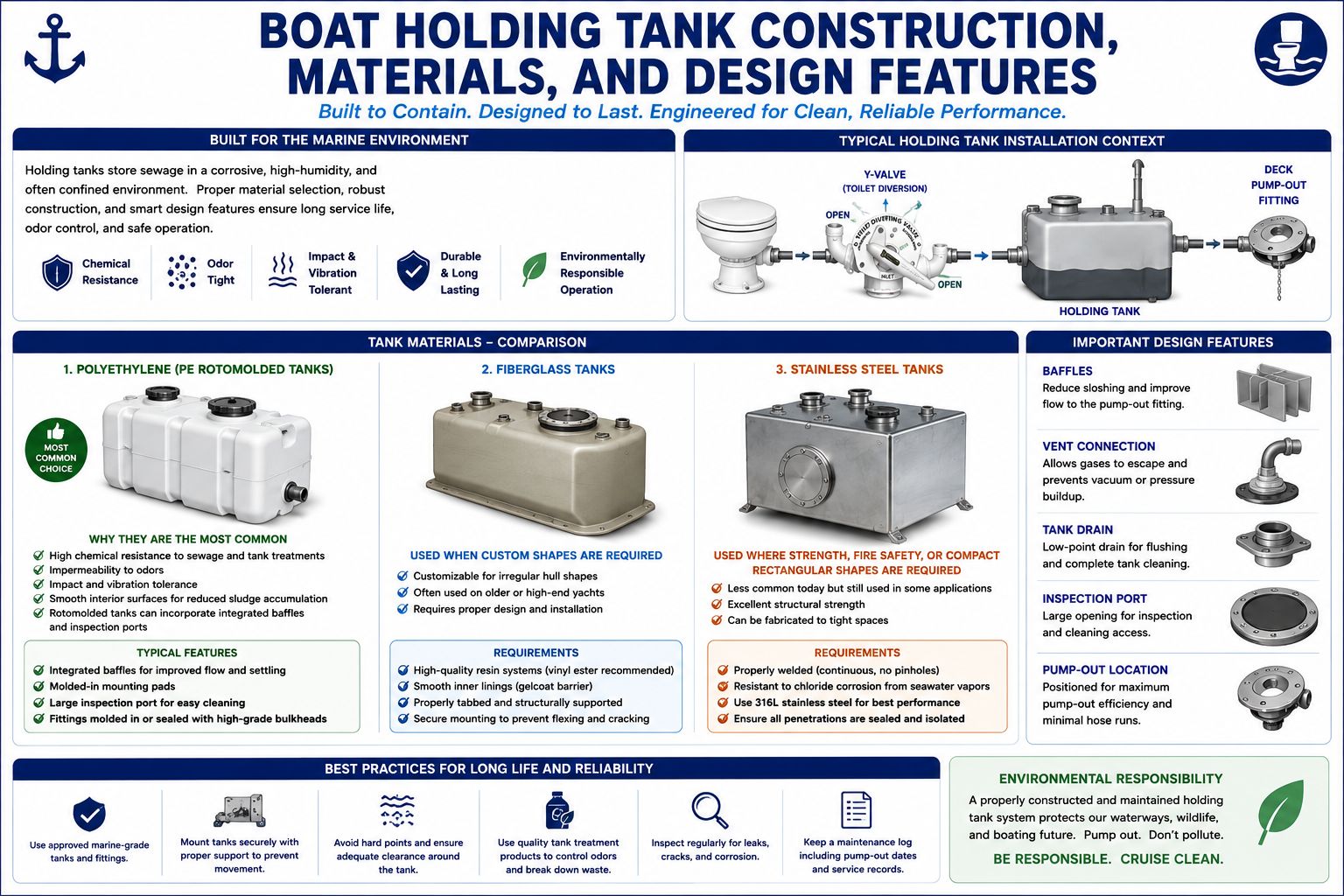
Holding tanks are engineered to store sewage in a demanding marine environment. Key material choices include:
Polyethylene (PE Rotomolded Tanks). The most common choices are due to:
- High chemical resistance
- Impermeability to odors
- Impact and vibration tolerance
- Smooth interior surfaces for reduced sludge accumulation
- Rotomolded tanks can incorporate integrated baffles and inspection ports.
Fiberglass Tanks. Customizable for irregular hull shapes; often used on older or high-end yachts. The require the following:
- High-quality resin systems
- Smooth inner linings
- Reinforced mounting to prevent cracking
Stainless Steel Tanks. Less common today but still used where fire resistance or compact rectangular shapes are required. They must have the following:
- Properly welded
- Resistant to chloride corrosion when exposed to seawater vapors
Boat Toilet Holding Tank Features
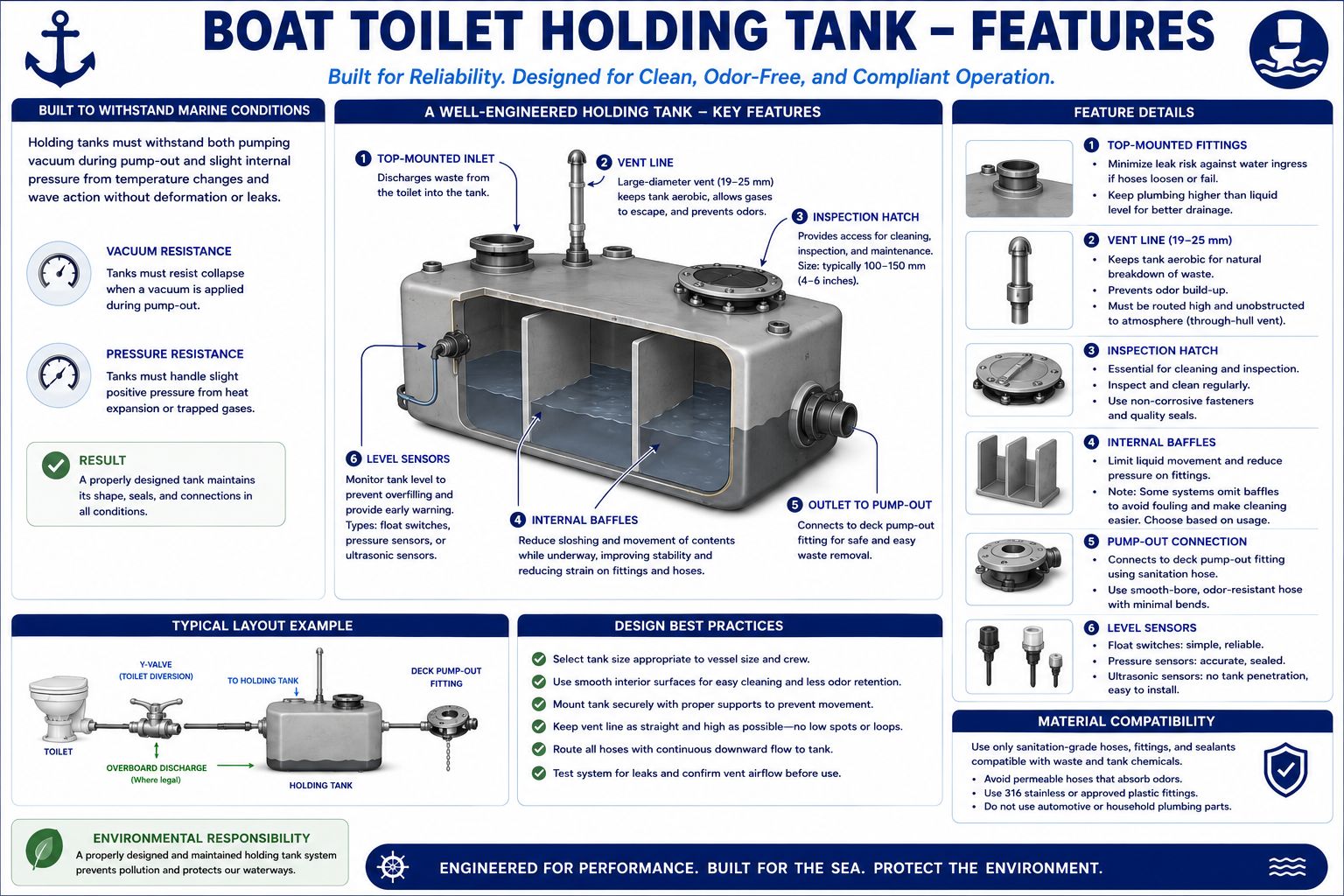
Tanks should be capable of withstanding both pumping vacuum and slight internal pressure without deformation. A well-engineered holding tank includes the following:
- Top-mounted inlet and outlet fittings to minimize leak risks
- Large-diameter vent line (19–25 mm) for aerobic conditions
- Inspection hatch for cleaning and access
- Internal baffles to limit movement of contents underway
- Level sensors (float, pressure, or ultrasonic)
Plumbing Configuration and Flow Paths
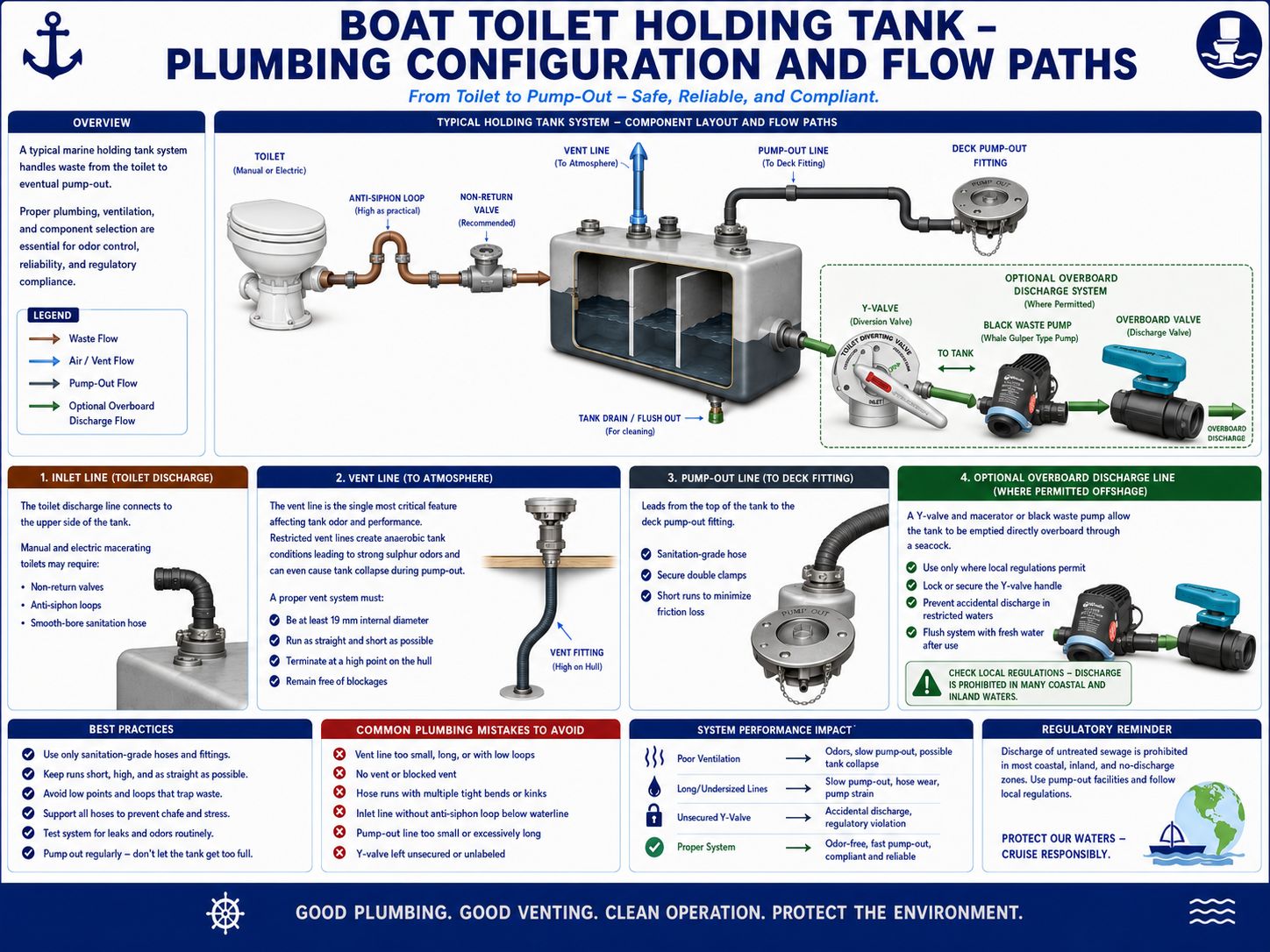
A typical marine holding tank system handles waste from the toilet to eventual pump-out. Components include the following:
Inlet Line. The toilet discharge line connects to the upper side of the tank. Manual and electric macerating toilets may require:
- Non-return valves
- Anti-siphon loops
- Smooth-bore sanitation hose
Vent Line. The vent line is the single most critical feature affecting tank odor and performance. Restricted vent lines create anaerobic tank conditions leading to strong Sulphur odors and can even cause tank collapse during pump-out.
- A proper vent system must have the following:
- Be at least 19 mm internal diameter
- Run as straight and short as possible
- Terminate at a high point on the hull
- Remain free of blockages
Pump-Out Line. Leads from the top of the tank to the deck pump-out fitting. This line requires:
- Sanitation-grade hose
- Secure double clamps
- Short runs to minimize friction loss
Optional Overboard Discharge Line. Where permitted offshore, a Y-valve and macerator pump allow the tank to be emptied directly overboard through a seacock. Regulations usually require that this bypass be secured to prevent accidental discharge in restricted waters.
Mechanical and Electrical Repairs
Resource
If you are headed somewhere remote consider the need to expand your knowledge base or have an information resource on board. Why not get a copy of my book The Marine and Electrical and Electronics Bible 4th Edition. By and for yachties, with everything from batteries and charging, solar and wind, diesel engines and marine electronics and so much more. Your complete systems guide. 650 pages of practical advice. In Australia and New Zealand order a copy through Boat Books. UK and European boats can buy the UK Edition Here. US and Canadian boats can get the US Edition Order Here. Marine systems are my profession so let me help you. By a liveaboard boat owner for other boat owners

Installation Best Practices
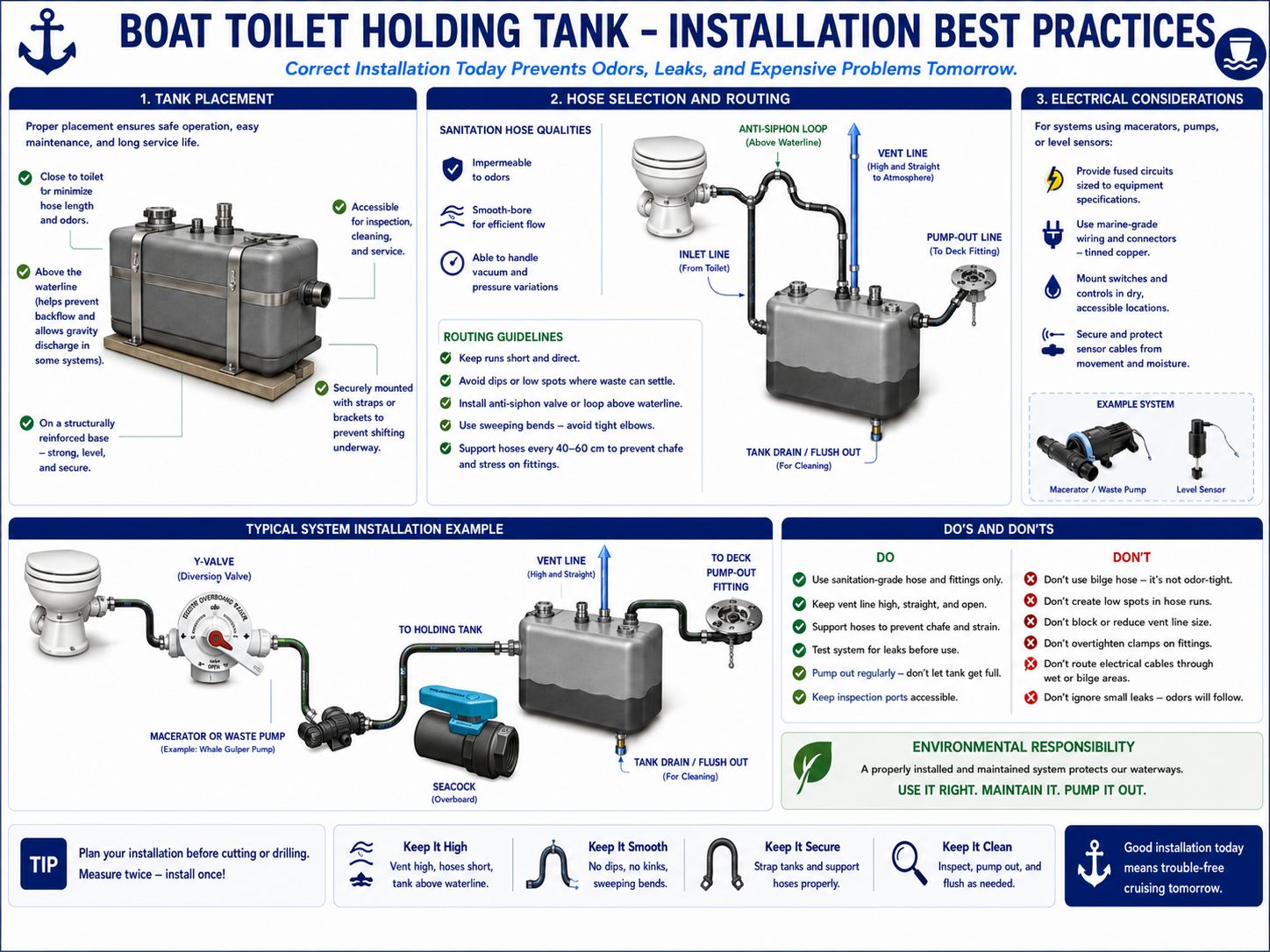
Correct holding tank installation is essential for long-term performance, preventing leaks, odors, or operational issues.
Tank Placement. Tanks must be securely mounted with straps or brackets to prevent shifting underway. The ideal locations are:
- Above the waterline (allows gravity discharge in some systems)
- Close to the toilet to minimize hose length
- Accessible for inspection and service
- On a structurally reinforced base
Hose Selection and Routing. Sanitation hose must have the following qualities:
- Impermeable to odors
- Smooth-bore
- Able to handle vacuum and pressure variations
Routing guidelines:
- Keep runs short
- Avoid dips where waste can settle
- Install anti-siphon valves above waterline
- Use sweeping bends instead of tight elbows
Electrical Considerations. For systems using macerators or level sensors:
- Provide fused circuits
- Use marine-grade wiring and connectors
- Mount switches in dry, accessible locations
Tank Operation and User Behavior
A holding tank’s performance is strongly influenced by how it is used.
Freshwater vs Seawater Flush
- Freshwater flushing significantly reduces odors because of the following:
- It prevents salt crystallization (a precursor to odors)
- It avoids introducing marine bacteria into the tank
- Seawater flushing may require more frequent cleaning and treatment.
Proper Toilet Technique
Users should be aware of the following:
- Pump manual toilets sufficiently to clear lines
- Avoid flushing wipes, sanitary items, or grease
- Use only marine-safe toilet paper (see article on toilet paper)
- Leave the bowl in “dry mode” in heavy seas
Tank Capacity Management
Avoid filling the tank to the brim. Monitoring systems help maintain safe margins. Running out of capacity can cause the following:
- Backflow through the toilet
- Vent line wetting and blockage
- Pressure spikes during pump-out
Tank Operation Maintenance and Cleaning
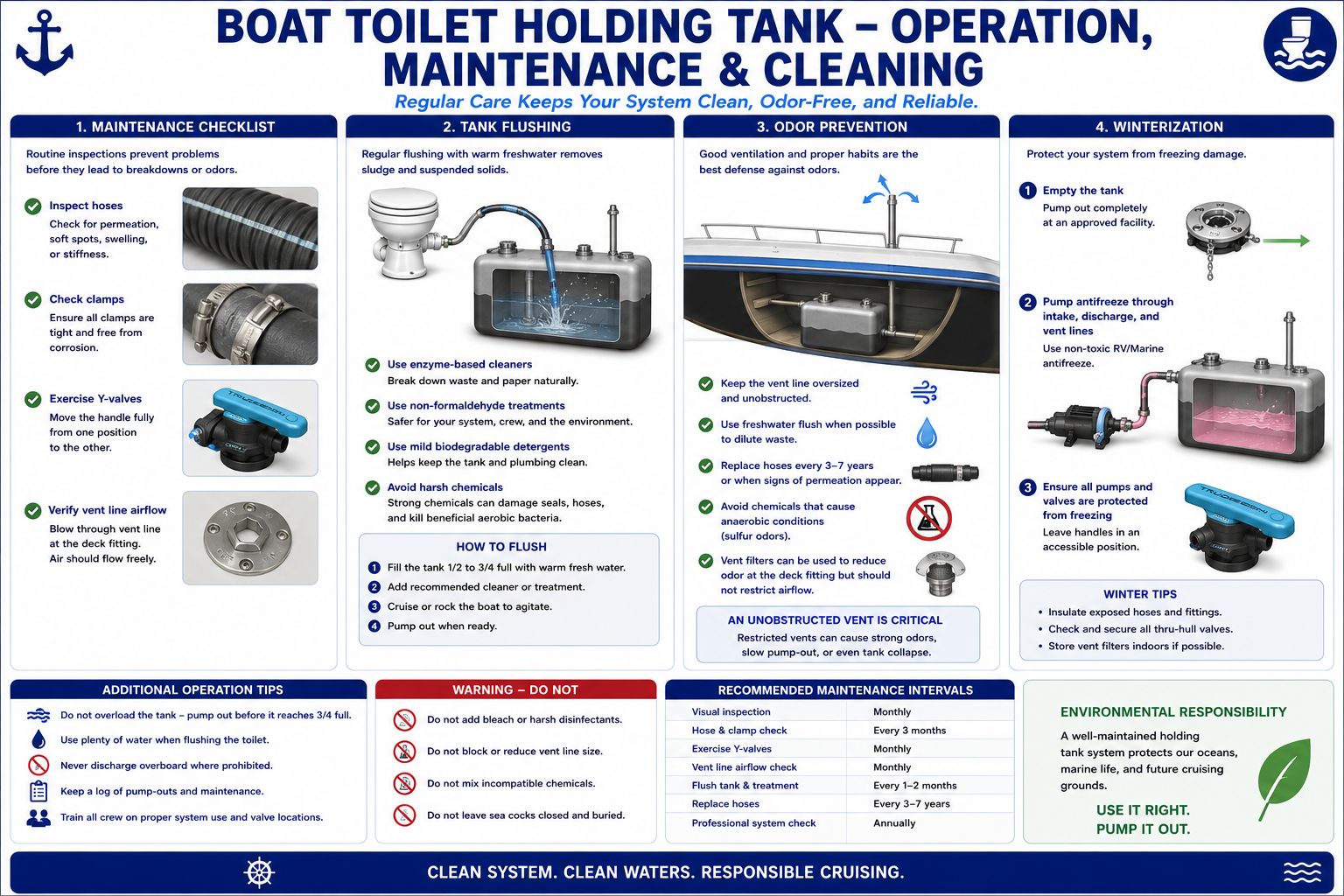
Maintenance and Cleaning
- Inspect hoses for permeation or stiffness
- Check clamps for corrosion
- Exercise Y-valves monthly
- Verify vent line airflow
Tank Flushing
Regular flushing with warm freshwater removes sludge and suspended solids. Use the following:
- Enzyme-based cleaners
- Non-formaldehyde treatments
- Mild biodegradable detergents
- Avoid harsh chemicals that damage seals or kill aerobic bacteria.
Odor Prevention
Key odor control strategies include the following:
- Keeping the vent line oversized and unobstructed
- Using freshwater flush when possible
- Replacing hoses every 3–7 years
- Avoiding chemicals that cause anaerobic conditions
- Vent filters can be used but should not restrict airflow.
Winterization
- Empty the tank
- Pump antifreeze through intake, discharge, and vent lines
- Ensure all pumps and valves are protected from freezing
Troubleshooting Holding Tank Problems
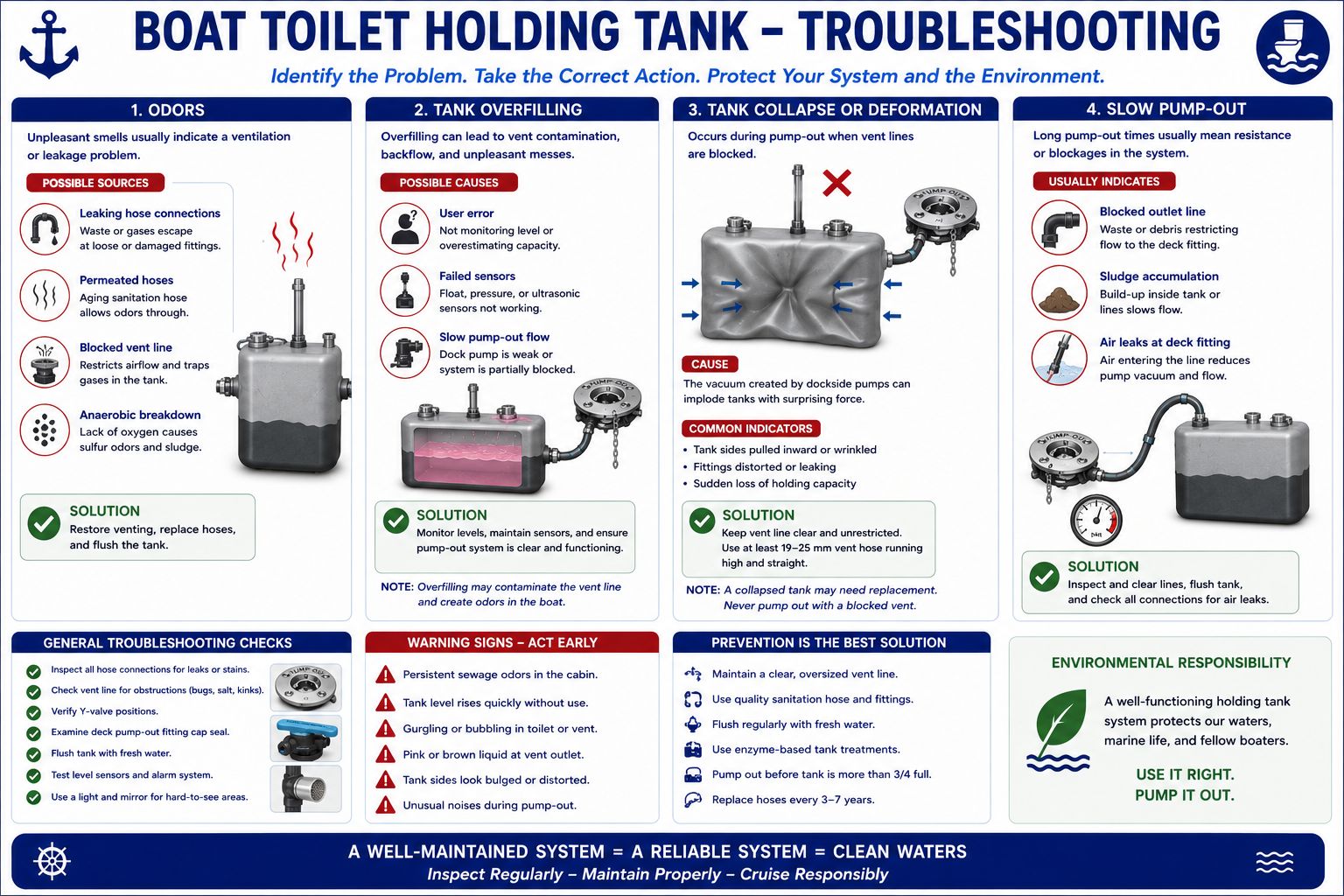
Odors. These have the following sources:
- Leaking hose connections
- Permeated hoses
- Blocked vent line
- Anaerobic breakdown
Solution: restore venting, replace hoses, flush tank.
Tank Overfilling. Caused by user error, failed sensors, or slow pump-out flow. May result in vent contamination.
Tank Collapse or Deformation. Occurs during pump-out when vent lines are blocked. The vacuum created by dockside pumps can implode tanks with surprising force.
Slow Pump-Out
- Usually indicates the following:
- Blocked outlet line
- Sludge accumulation
- Air leaks at deck fitting


Boat Toilet Holding Tank
A boat toilet holding tank is a critical component of any marine sanitation system, responsible for reliably storing sewage in demanding offshore environments. With correct design, robust materials, proper venting, sound installation, and thoughtful user behavior, holding tanks can operate for many years with minimal odor, reduced maintenance demands, and full regulatory compliance. Understanding how these tanks function and how to care for them is essential knowledge for boat owners, and anyone involved in vessel operation or maintenance. Your boat toilet holding tank is crucial to onboard comfort and safety.