Boat Shower Systems on a Sailboat
A boat shower system on any cruising yacht and sailboat is a key comfort feature, providing freshwater washing capability in a compact and often challenging environment. Unlike household showers, marine shower systems must operate reliably under varying pressures, limited water supply, constant motion, and constraints on drainage. Proper design ensures efficient water delivery, controlled temperature, safe drainage, and prevention of grey-water contamination.
This article provides an in-depth technical examination of marine shower systems, including their components, installation methods, operational considerations, and maintenance practices. The boat shower system is classified as part of the gray water systems. Boat shower systems conserve water and manage wastewater efficiently. Modern setups use compact sump pumps, multiple inlet ports, and filters to drain shower, sink, or galley water. Advanced recirculating designs recycle heated water through filtration, minimizing resource use while maintaining comfort. Most systems integrate automatic drainage, odor control, and energy-saving features, ensuring sustainable hygiene onboard.
Boat Shower System Basics
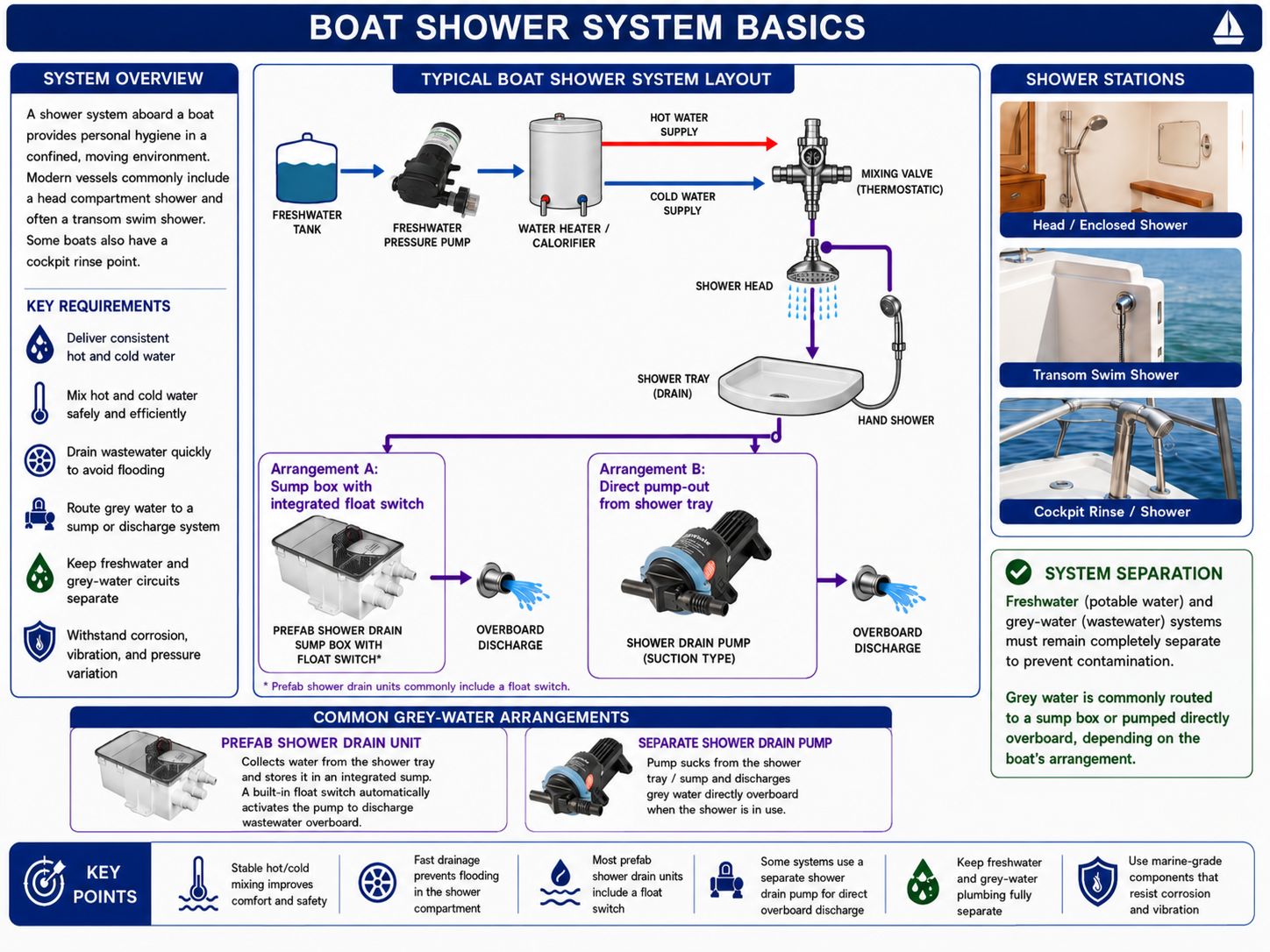
A shower system aboard a boat provides personal hygiene in a confined, moving environment. Modern vessels often include multiple shower stations heads compartment, transom swim shower, and occasionally foredeck or cockpit rinse points. These are key requirements:
- Deliver a consistent flow of freshwater
- Mix hot and cold water safely and efficiently
- Drain wastewater quickly to avoid flooding the wet room
- Route grey water to a sump or holding tank
- Avoid contamination between freshwater and grey-water circuits
- Withstand corrosion, vibration, and pressure variations
Boat Shower System - Freshwater
Supply
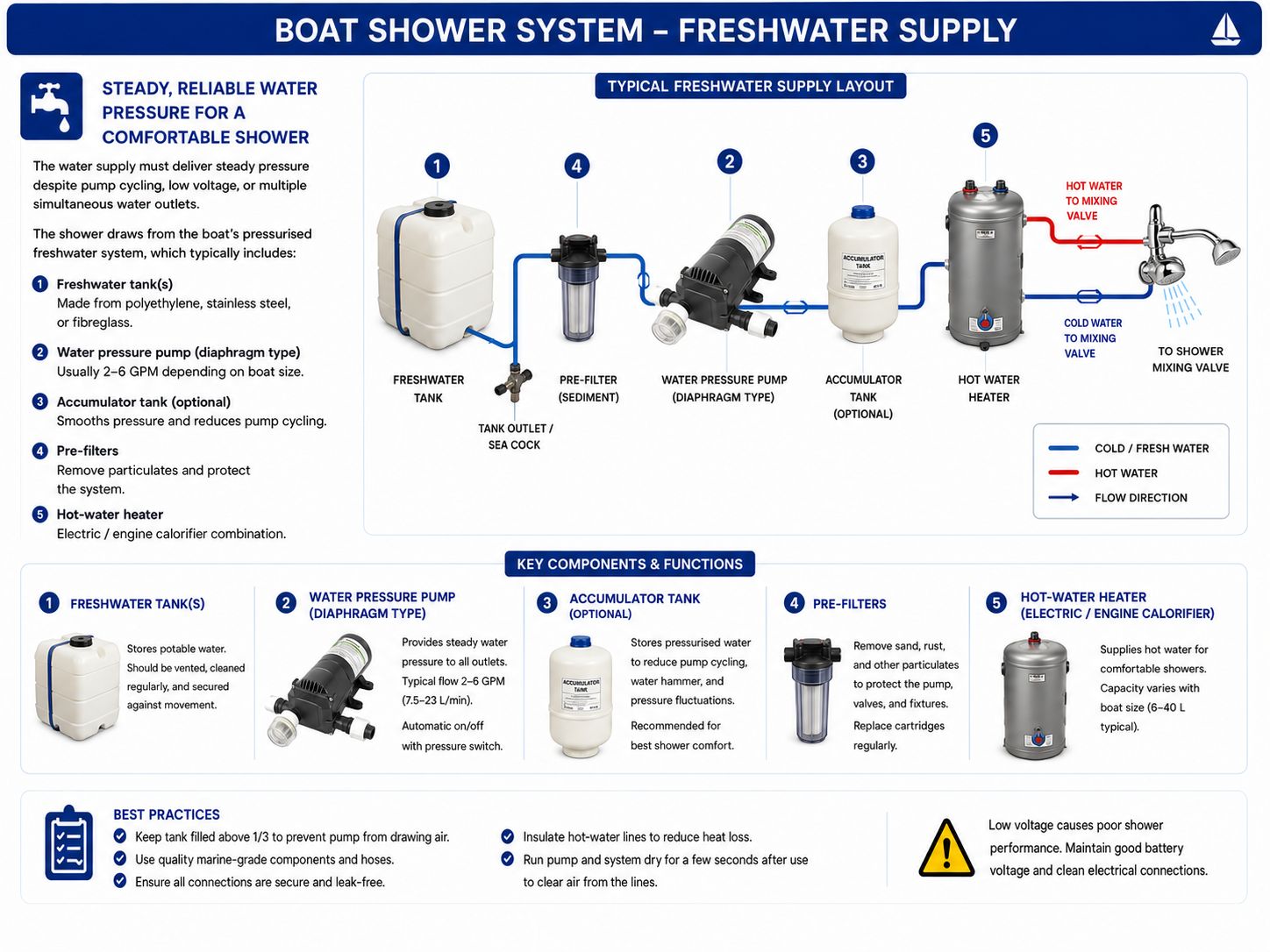
The supply must deliver steady pressure despite pump cycling, low voltage, or multiple simultaneous water outlets. The shower draws from the boat’s pressurised freshwater system, which typically includes:
- Freshwater tank(s) made from polyethylene, stainless steel, or fibreglass
- Pressure pump (diaphragm type, usually 2–6 GPM depending on boat size)
- Accumulator tank (optional) to smooth pressure cycling
- Pre-filters to remove particulates
- Hot-water heater (electric/engine calorifier combination)
Boat Shower System - Controls
The shower mixer blends hot and cold water, controlling flow and temperature. Marine-grade mixing valves must withstand high humidity, salty environments, and occasional stagnant water periods. Common types include:
- Single-lever mixing valves (most common)
- Thermostatic mixing valves ensuring stable, scald-free temperature
- Dual-handle hot/cold valves on older yachts
Boat Shower System - Shower
Head
Vessels typically use the following:
- Handheld shower wands with flexible hoses (have on my boat)
- Fixed overhead shower heads on larger yachts
- Transom deck showers with retractable hoses
- Combination sink tap/faucet and retractable handheld shower units (have on my boat)
Important characteristics include low flow rate (2–5 L/min), corrosion-resistant fittings, and variable spray settings to reduce water consumption. My experience is very hard to get shower rates below around 5l/min
Boat Shower System - Shower Drain System
Boat showers cannot drain directly overboard or into the bilge for hygiene and odour reasons. They use a dedicated shower sump system, also used for other grey-water sources. The sump typically includes:
- A compact sealed tank
- A float switch or electronic sensor
- A diaphragm or submersible pump
- Internal strainer to catch hair and debris
- Vent/check valve to prevent backflow
The sump discharges to an above-waterline hull fitting or into a grey-water holding tank (on larger vessels but increasingly becoming mandatory on all vessels).
Boat Shower System - Grey Water
Plumbing
Wastewater from the shower drains through:
- A drain fitting in the shower pan
- Flexible hose (often 25–32 mm)
- A strainer to catch hair and soap scum
- The sump pump (I installed a Whale Gulper pump) and discharge hose
This system must be designed to prevent overflowing, backflow during heeling, and accumulation of stagnant water. The sump discharges to an above-waterline hull fitting or into a grey-water holding tank (on larger vessels).
Mechanical and Electrical Repairs
Resource
If you are headed somewhere remote consider the need to expand your knowledge base or have an information resource on board. Why not get a copy of my book The Marine and Electrical and Electronics Bible 4th Edition. By and for yachties, with everything from batteries and charging, solar and wind, diesel engines and marine electronics and so much more. Your complete systems guide. 650 pages of practical advice. In Australia and New Zealand order a copy through Boat Books. UK and European boats can buy the UK Edition Here. US and Canadian boats can get the US Edition Order Here. Marine systems are my profession so let me help you. By a liveaboard boat owner for other boat owners

Boat Shower System Installation
Shower Pan and Drain Location. The drain must be located as follows:
- At the lowest point of the shower tray
- Connected to a properly sized hose
- Easily serviceable if soap scum or hair accumulate and block the drain
- Slight forward or aft inclination of a vessel can impact drainage efficiency.
Pump and Sump Placement
The grey-water sump should be located as follows:
- Below the shower drain to allow gravity feed
- Above bilge water level
- In an accessible location for filter cleaning
- With minimal hose length to reduce flow restrictions
- Electric pumps must be wired with marine-grade tinned wire and protected by circuit breakers.
Freshwater Line Routing
Hot and cold lines should comprise the following:
- Use quality PEX, reinforced PVC, or marine-grade rubber hose
- Avoid low areas that trap stagnant water
- Be insulated to retain heat and reduce condensation
- Be protected from chafe and vibration
- Thermostatic valves require stable pressure, so accumulator tanks are beneficial.
Hot-Water Heater Integration
Marine water heaters (calorifiers) heat water using the following configurations:
- Engine coolant loop
- 240/120V shore or generator power
- Thermal insulation for heat retention
- Shower systems should incorporate mixing valves if water-heater temperatures exceed safe limits (50–60°C).
Boat Shower System – Operation
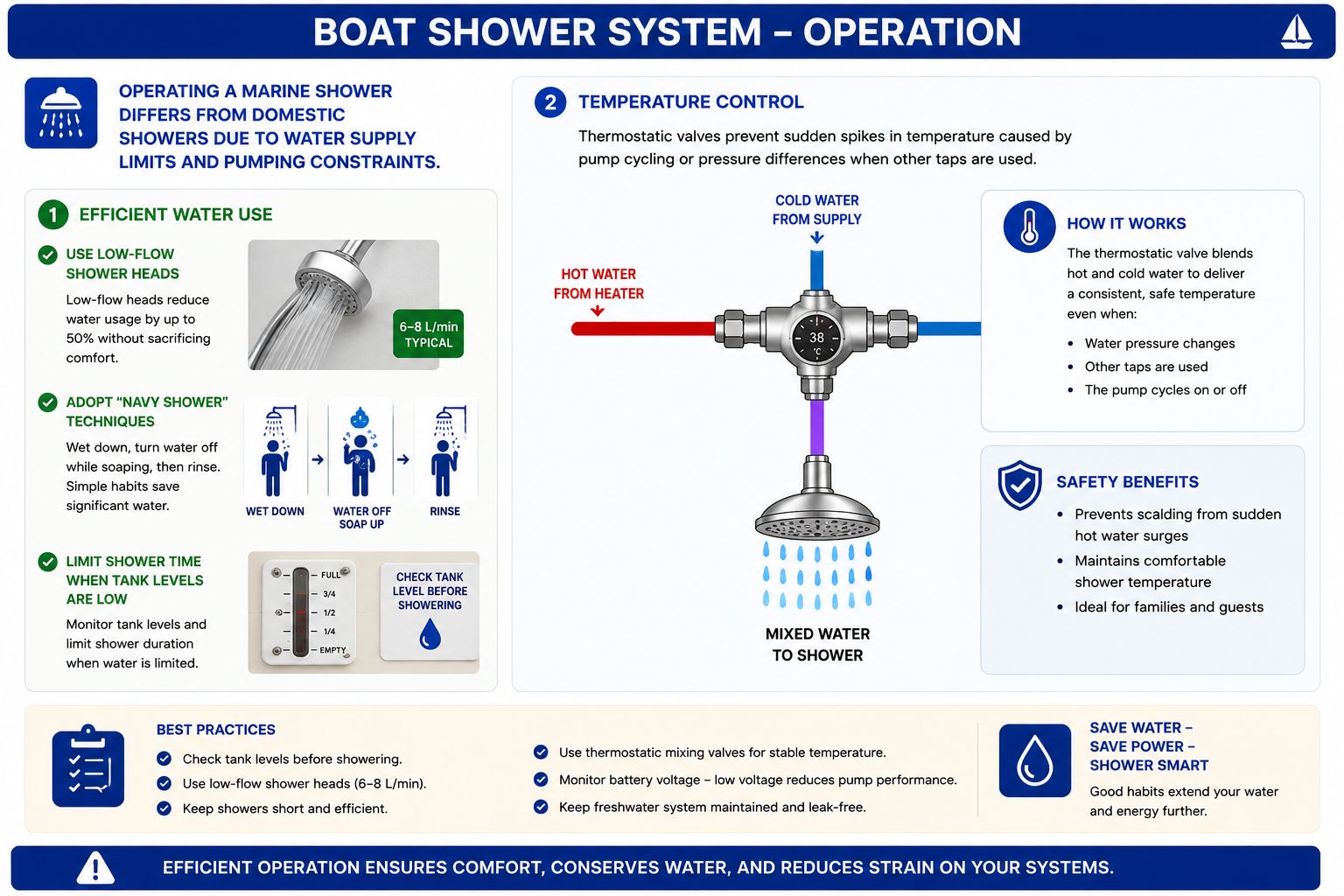
Operating a marine shower differs from domestic showers due to water supply limits and pumping constraints.
- Efficient Water Use
- Use low-flow shower heads
- Adopt “navy shower” techniques (water on/off intermittently)
- Limit shower time when tank levels are low
Temperature Control. Thermostatic valves prevent sudden spikes in temperature caused by pump cycling or pressure differences when other taps are used.
Managing Multiple Shower Outlets
Larger vessels may have multiple showers, requiring:
- Larger freshwater pumps
- Larger accumulator tanks
- Higher-capacity grey-water sumps
Maintenance Requirements
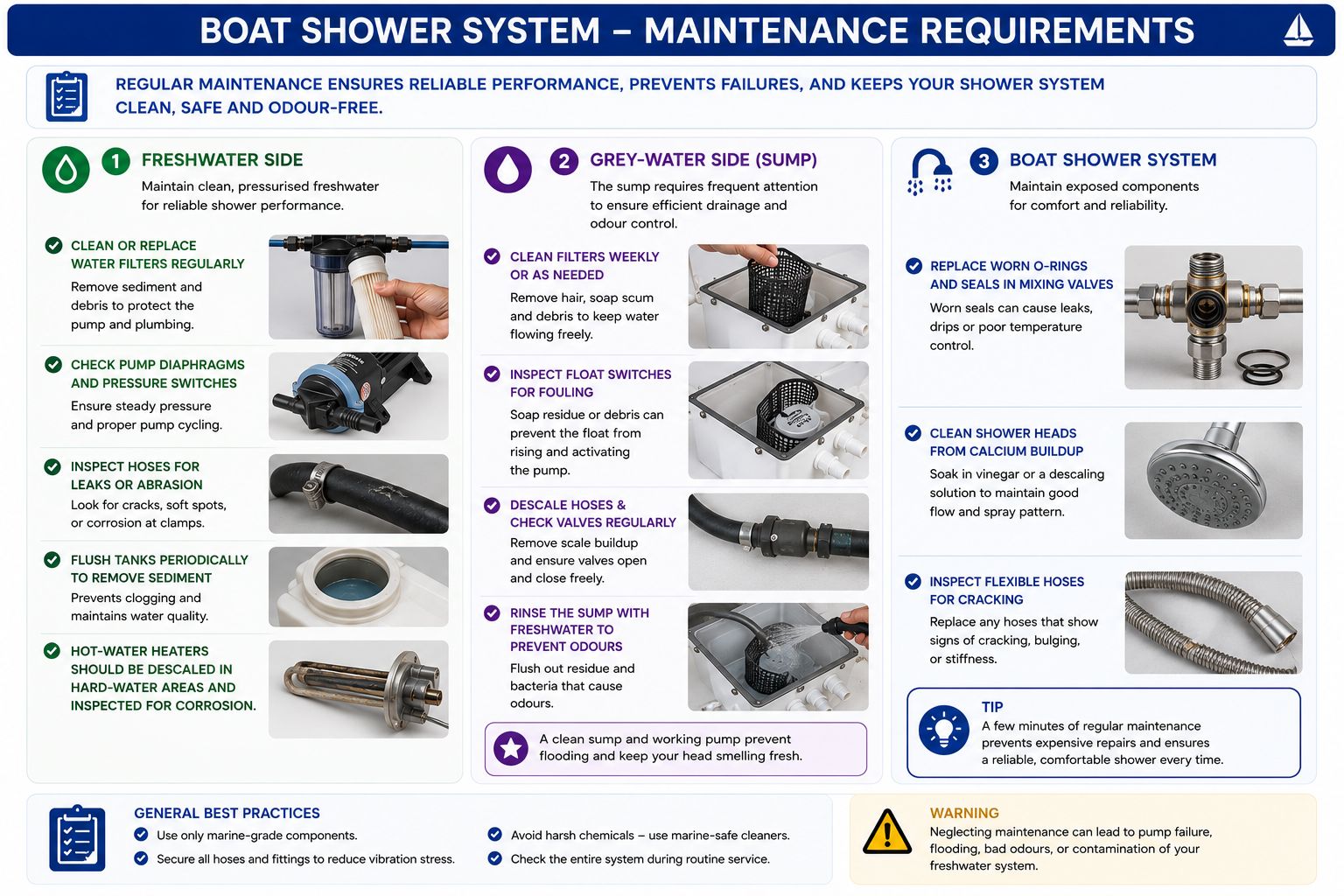
Freshwater Side
- Clean or replace water filters regularly
- Check pump diaphragms and pressure switches
- Inspect hoses for leaks or abrasion
- Flush tanks periodically to remove sediment
- Hot-water heaters should be descaled in hard-water areas and inspected for corrosion.
Grey-Water Side
The sump requires frequent attention:
- Clean filters weekly or as needed
- Inspect float switches for fouling by soap residue
- Descale hoses and check valves regularly
- Rinse the sump with freshwater to prevent odours
Boat Shower System
- Replace worn O-rings and seals in mixing valves
- Clean shower heads from calcium buildup
- Inspect flexible hoses for cracking
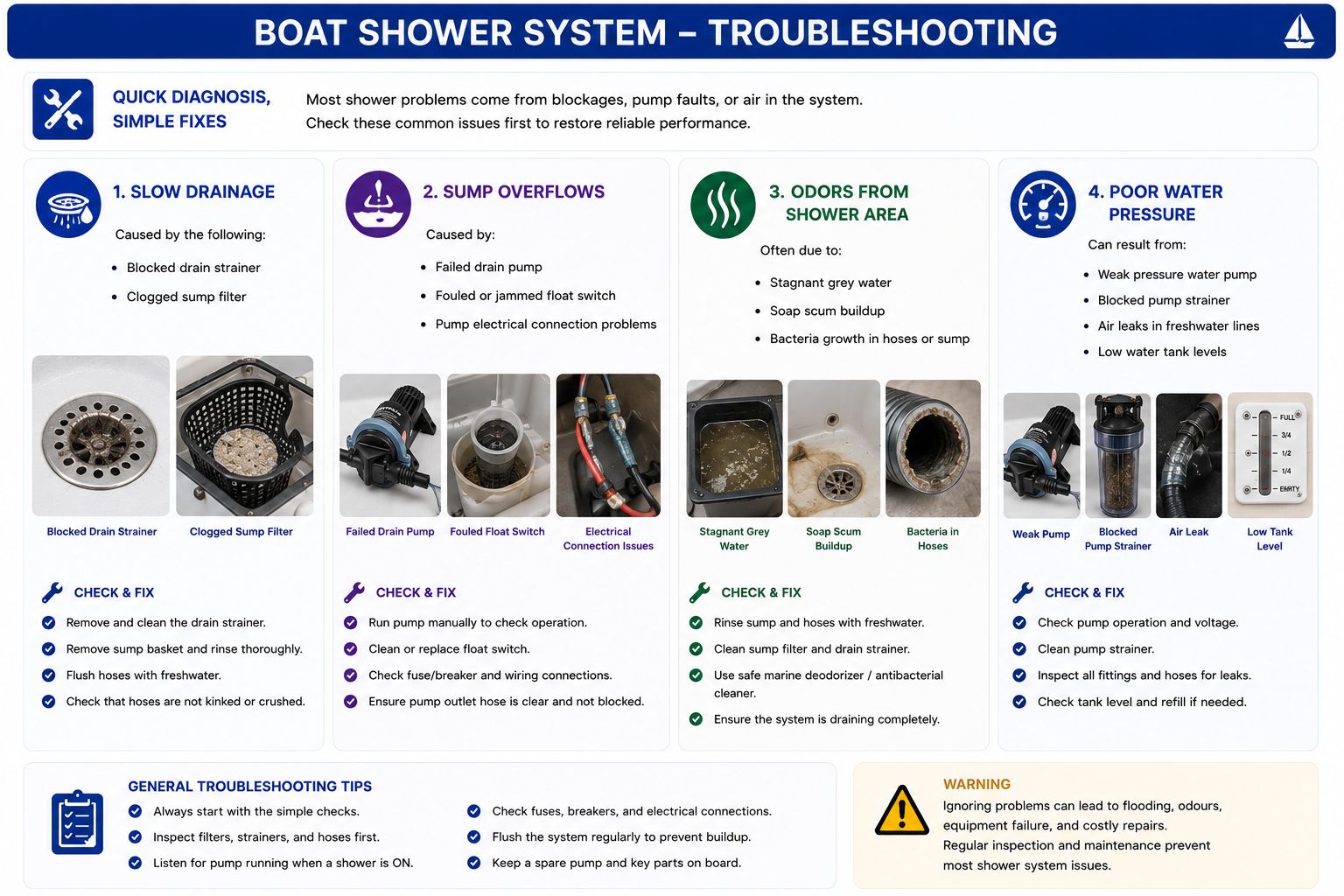
Boat Shower System - Troubleshooting
Slow Drainage. Caused by:
- Blocked drain strainer
- Kinked hoses
- Clogged sump filter
Sump Overflows. Caused by:
- Failed pump
- Fouled float switch
- Electrical connection problems
Odors from Shower Area. Often due to:
- Stagnant grey water
- Soap scum buildup
- Bacteria growth in hoses or sump
Poor Water Pressure. Can result from:
- Weak pump
- Air leaks in freshwater lines
- Dirty filters
- Low tank levels


Boat Shower System Summary
The boat shower system integrates multiple freshwater and grey-water subsystems, each requiring careful engineering and regular maintenance. Proper design ensures reliable drainage, controlled temperature, water efficiency, and minimal odor, even in the cramped and dynamic environment of a vessel at sea. By understanding the components, operational characteristics, and maintenance needs of marine shower systems, boat owners and technicians can ensure long-lasting performance and comfort onboard. Are you happy with your Boat Shower System, have you done the maintenance.