Tenerife Yacht Cruising
Guide
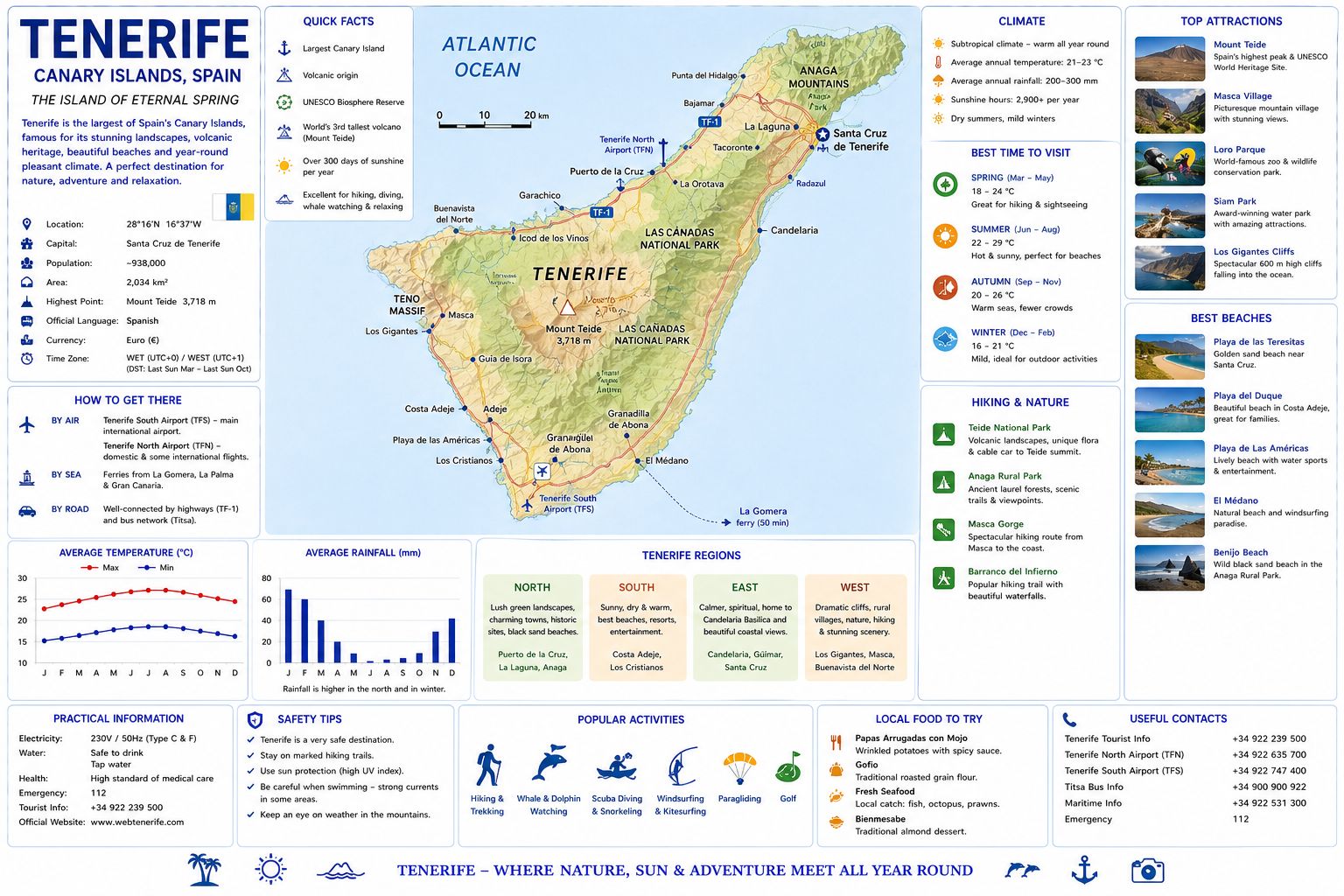
Tenerife yacht cruising guide. Tenerife is the largest island in the Canary archipelago and one of the most operationally significant for yachts moving between the eastern and western islands or preparing for Atlantic passages. The island rises steeply from deep water, with the high mass of Teide creating strong wind acceleration zones, abrupt gusting and rapid changes in sea state. The coastline alternates between engineered harbours, steep volcanic cliffs and open bays exposed to long‑period swell from the north and northwest. The NE trade‑wind regime dominates for most of the year, and the island’s height produces some of the most pronounced lee effects and gust zones in the region. Tenerife’s operational value lies in its combination of large‑scale marina infrastructure, predictable access, strong provisioning and a distribution of ports that support both technical work and movement between islands.
Santa Cruz de Tenerife functions as the island’s primary harbour and technical centre, with a large sheltered basin, deep‑water access and full‑service capability. The marina sits adjacent to the commercial port, ensuring consistent supply chains and reliable access to fuel, water and marine services. The southern coast, including Marina San Miguel and Marina del Sur, provides sheltered berthing with stable conditions and straightforward approaches, while the western coast at Los Gigantes offers access in settled weather but is more exposed to swell. Across the island, the combination of harbour distribution, weather patterns and service availability makes Tenerife a key operational waypoint for yachts moving through the Canary Islands.
Tenerife Yacht Cruising
Guide - Approaches
Depths around Tenerife remain above 50 m until close to the coastline, shoaling to 20–25 m on approach to Santa Cruz and 15–20 m off the southern harbours. The entrance to Santa Cruz maintains published depths of 12–14 m, with deep‑water access maintained by commercial traffic. Approaches to Marina San Miguel show depths of 10–12 m outside the breakwater, with a dredged entrance channel published at 8–10 m. Approaches to Marina del Sur at Las Galletas show depths of 10–12 m outside and 7–9 m in the entrance. Approaches to Los Gigantes are affected by swell reflection from the cliffs, with depths of 15–20 m close in and a published entrance depth of 6–8 m. The northern coastline is exposed to long‑period swell, and approaches to Santa Cruz can experience cross‑set and confused seas during heavy swell events, though the harbour entrance remains workable. Approaches to the southern harbours are more predictable, with reduced swell and stable wind patterns.
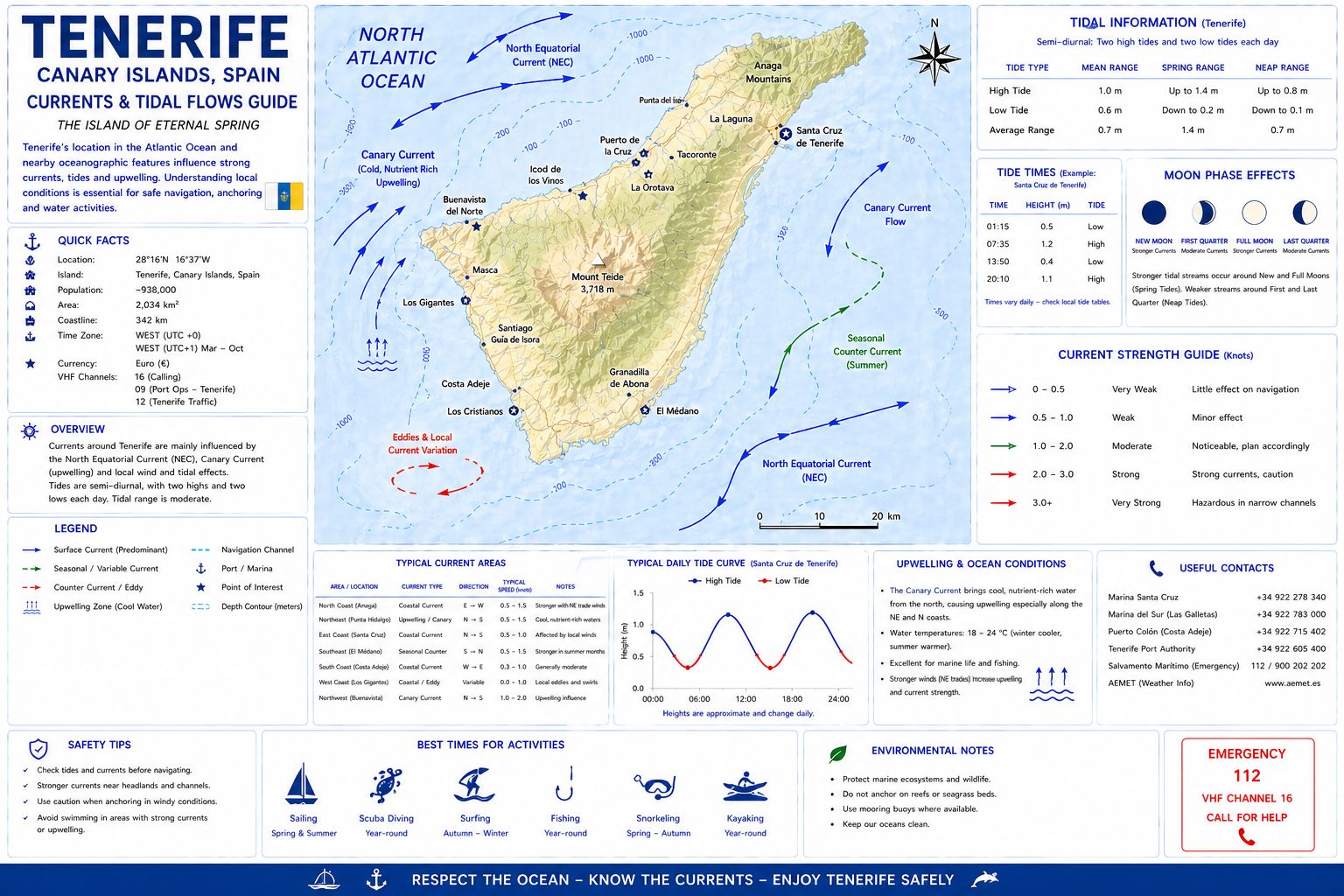
Tenerife Yacht Cruising Guide - Ocean Currents and Tidal Flows
Tenerife Yacht Cruising
Guide - Anchorage
Anchoring around Tenerife is limited by exposure, swell and seabed composition. Depths along the northern and eastern coasts fall from 20 m to 10–12 m close in, but long‑period swell creates persistent rolling. The anchorage off Las Teresitas lies in 10–12 m over sand with moderate shelter but is affected by swell in northerly conditions. The southern coast offers more settled water with depths of 10–15 m over sand, though swell wrap remains common. The western coast has limited anchoring due to depth and swell, with depths of 15–20 m close to the cliffs and variable holding. Most yachts rely on the island’s marina network rather than anchorages, as the harbours provide predictable shelter and avoid the persistent roll that affects exposed bays.
Tenerife Yacht Cruising
Guide - Entry Formalities
Entry procedures follow Spanish and Canary Islands regulations. Yachts present vessel registration, passports and crew list at the harbour office. Schengen rules apply. Firearms must be declared, and pets require EU‑compliant veterinary documentation. Waste‑management rules are enforced, and some ports require black‑water containment. Formalities are efficient, particularly in Santa Cruz, where yacht traffic is routine and staff are accustomed to handling vessels moving through the archipelago.
Tenerife Yacht Cruising
Guide - Marina Facilities
Santa Cruz de Tenerife has an entrance depth of 12–14 m and a marina basin with 3–5 m alongside, providing deep, sheltered berths and full‑service capability including mechanical, electrical and rigging services, haul‑out facilities and marine electronics support. Marina San Miguel on the southern coast has an entrance depth of 8–10 m and basin depths of 3–4 m, offering sheltered berthing, fuel, water and technical support. Marina del Sur at Las Galletas has an entrance depth of 7–9 m and basin depths of 3–4 m, providing sheltered berthing and basic services. Los Gigantes on the western coast has an entrance depth of 6–8 m and basin depths of 3–4 m but is affected by swell and surge in northerly conditions. These marinas provide reliable access, predictable shelter and consistent supply chains.
Tenerife Yacht Cruising
Guide - Local Weather
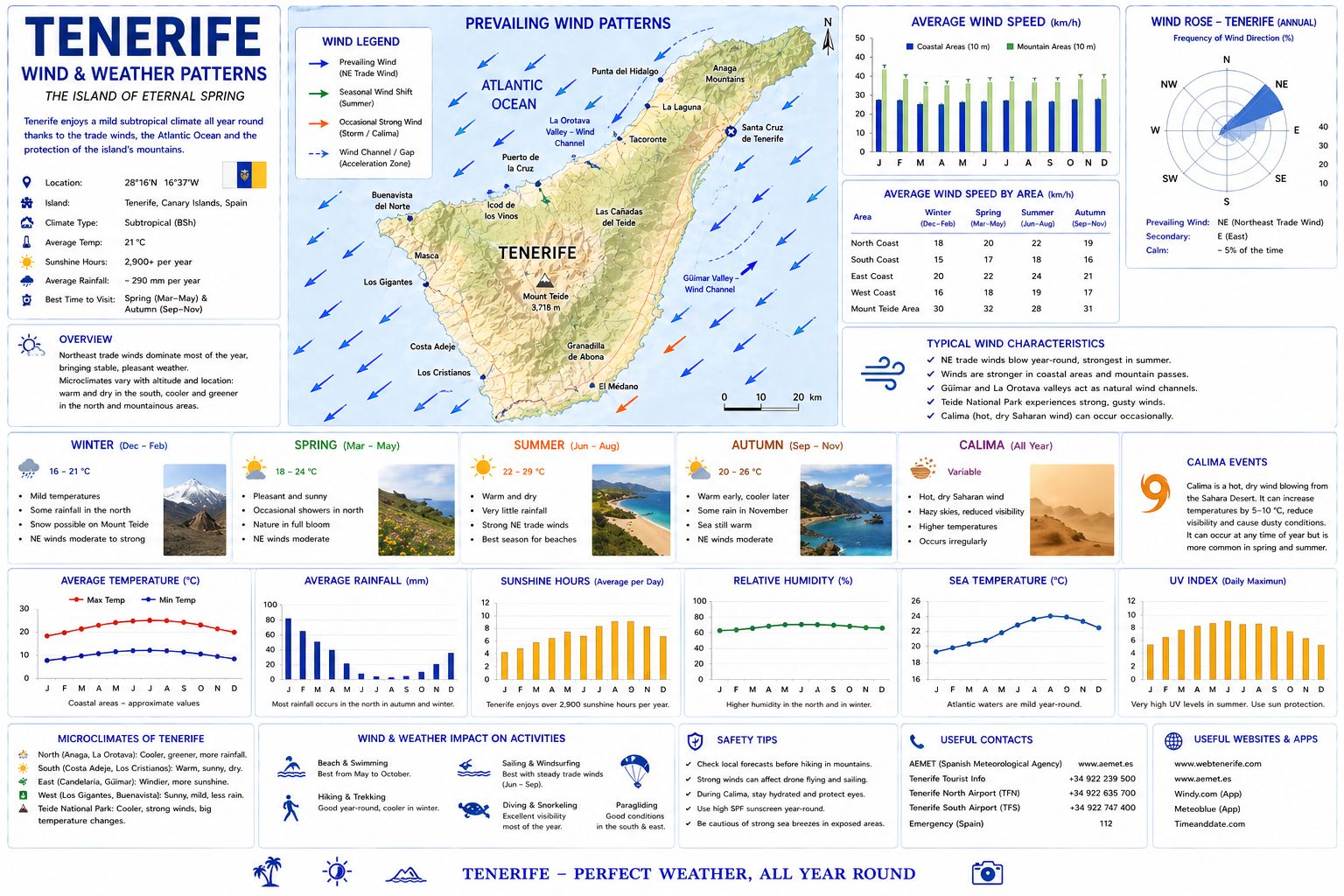
Weather is dominated by the NE trade‑wind regime, with strong acceleration zones on the eastern and southeastern coasts and heavy gusting on the western side as wind spills over the high ground. Sea state is shaped by long‑period swell from the north and northwest, which can persist for days after distant Atlantic systems. Winter introduces more variable winds and occasional southerly systems. Haze from Saharan dust events can reduce visibility and affect approaches.
Tenerife Yacht Cruising
Guide - Provisioning
Supermarkets. Hiperdino Santa Cruz stocks fresh produce, meat, dairy, bakery, dry goods, long‑life items and bulk formats; Mercadona Santa Cruz stocks fresh produce, bakery, dairy, meat and packaged dry goods; Carrefour Añaza stocks dry goods, long‑life items, oils, tins, beverages and international products; Hiperdino Costa Adeje and Hiperdino Los Cristianos stock fresh produce, dairy, meat and dry goods in smaller volumes; local specialty products across all outlets include Canarian potatoes, gofio, island cheeses, honey and olive oil.
Markets. Mercado de Nuestra Señora de África in Santa Cruz contains stalls selling vegetables, fruit, herbs, pulses, cheeses, cured meats, gofio, honey and island potatoes; the Municipal Market of La Laguna contains vegetables, fruit, herbs, cheeses and regional products; the Adeje Farmers’ Market contains vegetables, fruit and regional items on scheduled trading days.
Fish Markets. The fish hall of Mercado de Nuestra Señora de África sells tuna, vieja, sardines, mackerel, octopus and seasonal Atlantic species; the fish section of the Municipal Market of La Laguna sells tuna, vieja, sardines, mackerel and octopus; fish counters in Los Cristianos and Los Abrigos sell locally landed tuna, vieja and mixed Atlantic species.
Tenerife Yacht Cruising
Guide - Local Cuisine
Local cuisine in Tenerife is based on coastal fish, preserved staples, and simple island preparations. Papas arrugadas are small local potatoes boiled in heavily salted water and served with mojo rojo (red pepper, garlic, oil, vinegar) or mojo verde (coriander, garlic, oil, vinegar). Cherne, vieja, and sama are common coastal fish served grilled or pan‑fried with minimal seasoning. Atún en adobo is tuna marinated in vinegar, garlic, oregano, and paprika, then fried. Caldo de pescado is a clear fish broth made from local species with potatoes and onions.
Ropa vieja is a chickpea‑based stew with shredded beef or chicken, onions, peppers, and tomatoes. Conejo en salmorejo is rabbit marinated in garlic, paprika, wine, and vinegar, then stewed. Gofio escaldado uses toasted maize flour mixed with fish stock to form a thick paste eaten with onions or fish. Potaje de berros is a watercress stew with potatoes, maize, and beans. Dairy includes queso fresco and queso semicurado, often from goat’s milk. Local fruit includes bananas, papaya, and seasonal citrus. Regional products include gofio, island cheeses and really nice honey.
Tenerife Yacht Cruising
Guide - Fuel Supplies
Fuel is available in Santa Cruz, Marina San Miguel and Marina del Sur, with stable supply and straightforward access. Swell occasionally affects fuelling at exposed harbours, but the major ports remain operational in most conditions.
Tenerife Yacht Cruising
Guide - Water Supplies
Potable water is available at all marinas and fuel docks, with consistent quality and no rationing.
Mechanical
and Electrical Repairs Resource
If you are headed somewhere remote consider the need to expand your knowledge base or have an information resource on board. Why not get a copy of my book The Marine and Electrical and Electronics Bible 4th Edition. By and for yachties, with everything from batteries and charging, solar and wind, diesel engines and marine electronics and so much more. Your complete systems guide. 650 pages of practical advice. In Australia and New Zealand order a copy through Boat Books. UK and European boats can buy the UK Edition Here. US and Canadian boats can get the US Edition Order Here. Marine systems are my profession so let me help you. By a liveaboard boat owner for other boat owners


Tenerife Yacht Cruising
Guide - Marine Services
Santa Cruz provides full‑service yards with haul‑out capability, mechanical and electrical workshops, rigging specialists, marine electronics technicians and chandleries. Marina San Miguel offers technical support, while other marinas provide basic services.
Tenerife Yacht Cruising
Guide - Local Customs
Harbour operations are structured and predictable, with clear authority control and enforced waste‑management rules. Environmental restrictions apply in protected areas.
Tenerife Yacht Cruising
Guide - Summary
Tenerife is a major operational waypoint in the Canary Islands, offering deep‑water access, extensive marina infrastructure, strong provisioning and predictable weather patterns shaped by the NE trades. Approaches are influenced by acceleration zones and long‑period swell, anchorages are limited by exposure, and marinas provide the most reliable shelter. The island supports both inter‑island movement and Atlantic passage preparation. Tenerife Yacht Cruising Guide for all you need to know.