Sal Palmeira Yacht Cruising Guide
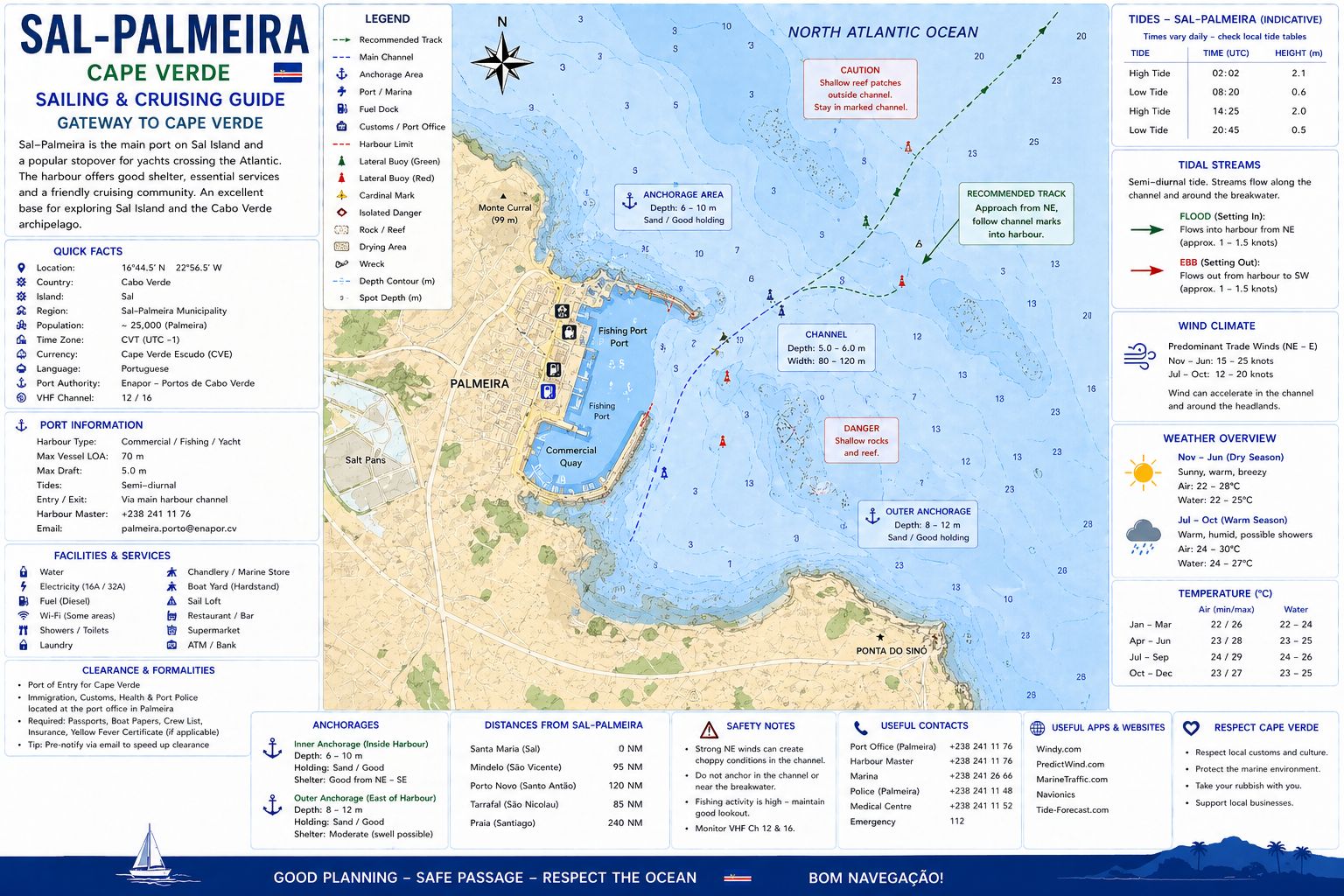
Sal Palmeira yacht cruising guide. Palmeira, on the west coast of Sal, is one of the primary entry ports for yachts arriving in Cape Verde from the northeast Atlantic. It is a simple, functional harbour with a secure anchorage, basic provisioning, and reliable access to fuel and water. The port is used mainly as a clearance point and short‑stay waypoint before yachts continue to Mindelo or depart westbound.
The coastline around Palmeira is low and rocky, with deep water close to shore and minimal natural shelter outside the harbour. The island lies within the NE trade‑wind belt, producing predictable wind patterns and moderate sea states. Palmeira is a technical stop rather than a service hub, with facilities concentrated around the harbour.
Sal Palmeira Yacht
Cruising Guide - Approaches
Approaches to Palmeira are straightforward, with deep water exceeding 40–60 m until close to the harbour entrance. The approach from the north or west is clear, with the harbour entrance carrying 6–10 m. The coastline south of the harbour has isolated rocks and shallow patches extending offshore; yachts should maintain at least 0.5–1 NM off until aligned with the entrance.
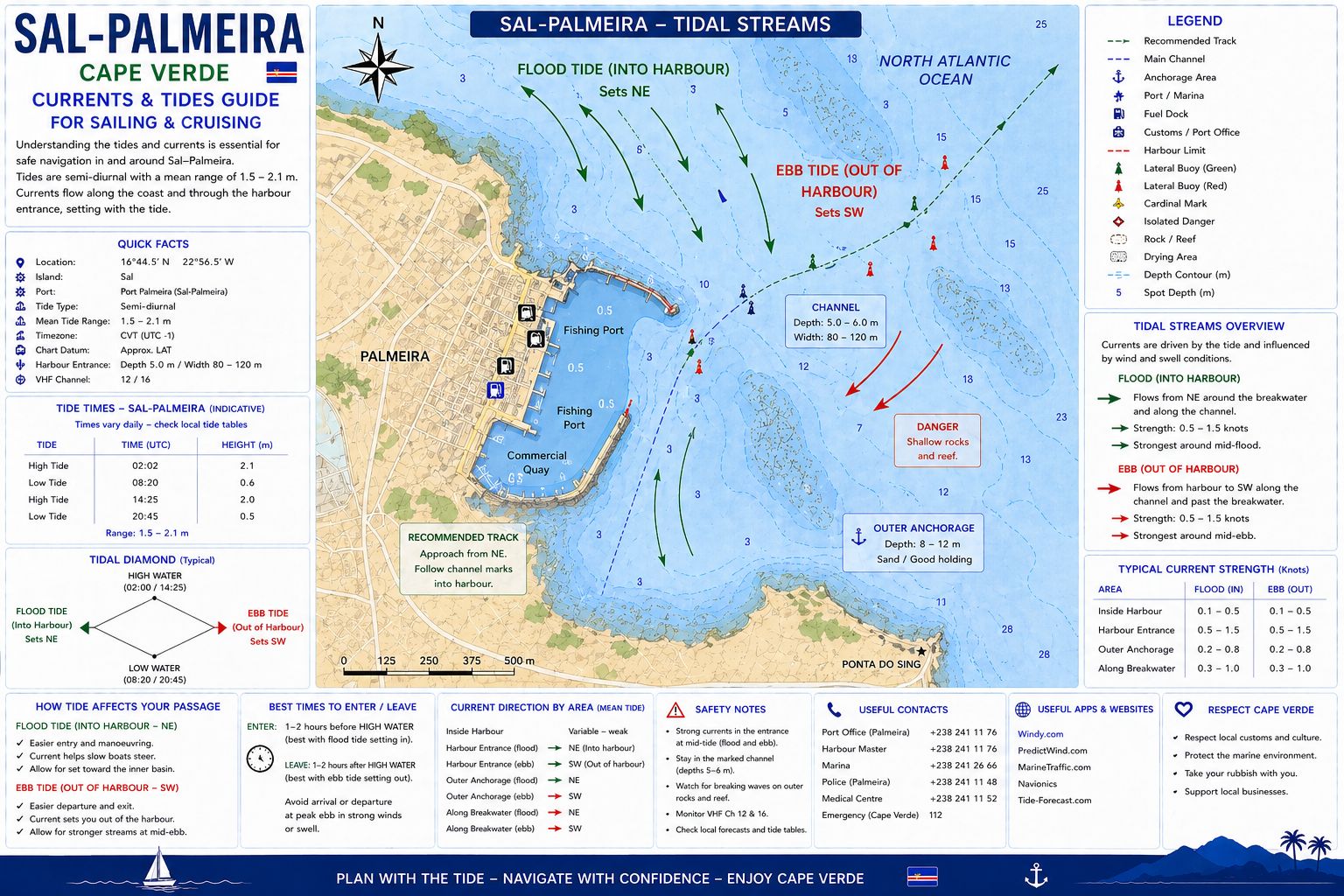
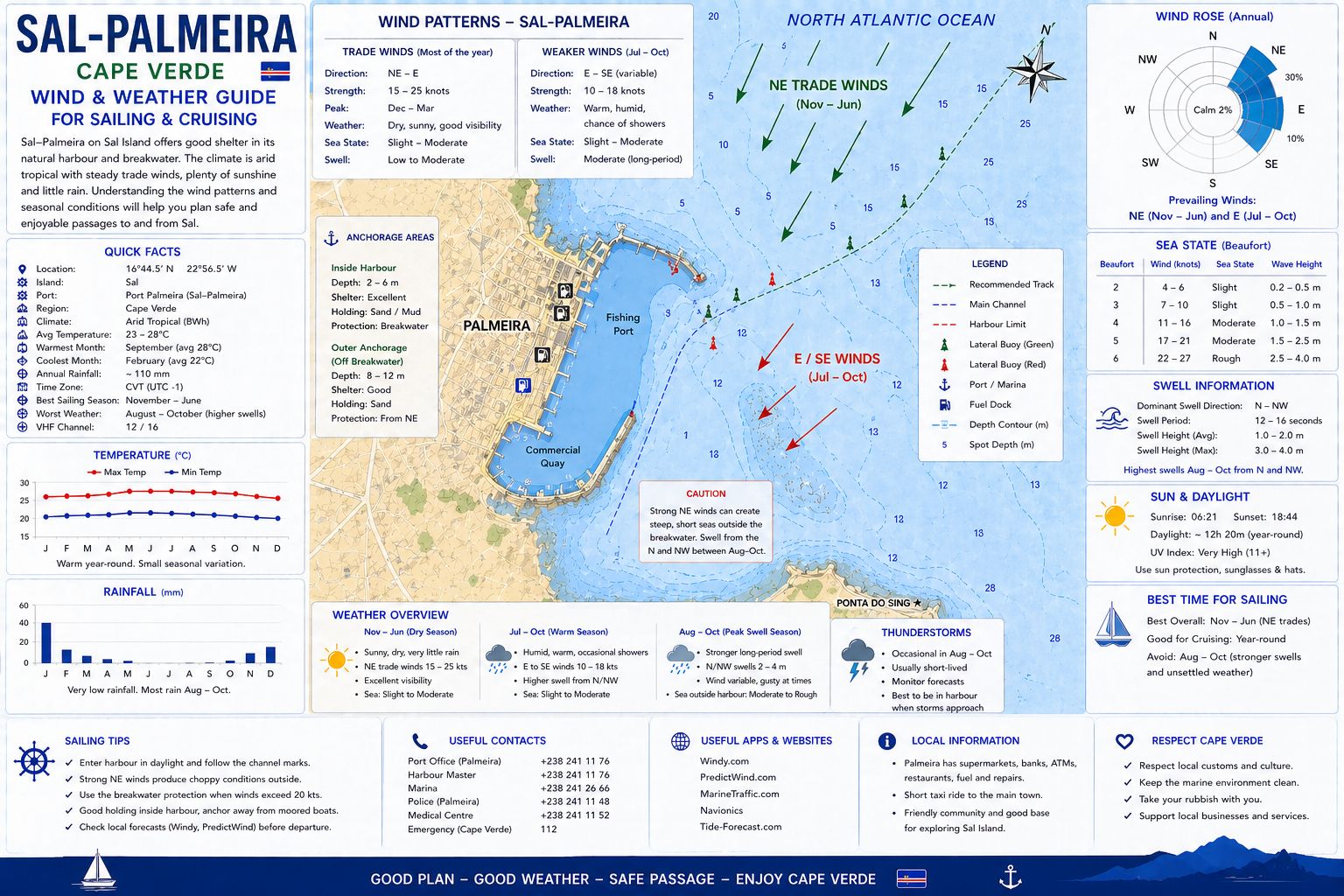
NE trade winds of 18–25 kn are common, with short‑period chop outside the harbour. Swell from the north and northwest can wrap into the bay but rarely closes the entrance. Tidal range is small, and currents are weak, with occasional set near the entrance during strong winds. Night approaches are possible with harbour lighting, though first‑time arrivals are better timed for daylight.
Sal Palmeira Yacht Cruising Guide - Ocean Currents and Tides
Sal Palmeira Yacht
Cruising Guide - Anchorage
The anchorage lies immediately outside the harbour in 6–12 m over sand with good holding. It is exposed to strong trade‑wind gusts but remains secure with adequate scope. Swell wrap from the northwest can create roll but does not generally compromise holding. The seabed slopes gradually, allowing anchoring further offshore in 12–18 m if required. Dinghy access is via the small harbour steps or the fishing quay.
Sal Palmeira Yacht
Cruising Guide - Entry Formalities
Palmeira is an official clearance port. Yachts must report to Polícia Marítima and Immigration on arrival. Passports, vessel documents, and crew lists are required. Firearms must be declared. Pets require valid veterinary documentation. There are no restrictions on Starlink or other communications equipment. Clearance is typically completed within working hours, with fees payable in local currency or euros.
Sal Palmeira Yacht Cruising Guide - Marinas
There is no marina in Palmeira. Yachts anchor outside the harbour and come ashore by dinghy. Fuel and water are available from the quay via jerry cans or delivery by arrangement. Depths inside the small harbour are 2–4 m and unsuitable for most yachts. There are no berthing pontoons or haul‑out facilities. Repairs are limited to informal local assistance.
Sal Palmeira Yacht
Cruising Guide - Local Weather
Weather is dominated by the NE trade‑wind regime, typically 18–25 kn in season, with higher gusts during the afternoon. Swell from the north and northwest is common but generally manageable. Rainfall is minimal. Harmattan dust from the African mainland can reduce visibility and coat decks during winter months. Sea state outside the harbour is moderate, with short chop in strong trades.
Sal Palmeira Yacht
Cruising Guide - Provisioning
Supermarkets. Palmeira has small minimarkets suitable for basic top‑ups only. Mini Mercado Palmeira, Mercado Central Palmeira, and several small family‑run shops provide dry stores, bottled water, limited fresh produce, and basic household goods. Larger supermarkets are located in Espargos, including Fragata Supermercado and Casa do Pão, accessible by taxi. Fresh produce availability varies with supply shipments.
Markets. There is no formal central market in Palmeira. Small produce stalls operate intermittently, offering limited fruit and vegetables depending on availability. For broader selection, the Espargos Municipal Market is the primary option.
Fish Markets. Local fishermen sell fresh catch directly at the harbour steps in the morning. Species include tuna, wahoo, and coastal fish. There is no structured fish market; supply depends on daily landings
Sal Palmeira Yacht
Cruising Guide - Local Cuisine
Local dishes include cachupa (maize and bean stew), grilled tuna, wahoo, and simple seafood preparations. Grogue (local sugarcane spirit) is widely available. Cuisine is practical and based on local catch and staples.
Sal Palmeira Yacht
Cruising Guide - Fuel Supplies
Diesel is available from the harbour via jerry cans or delivery by arrangement. Supply is generally reliable but dependent on local stock levels. There is no dedicated yacht fuel dock.
Sal Palmeira Yacht
Cruising Guide - Water Supplies
Potable water is available at the harbour and dispensed via hose or jerry cans. Water is desalinated and reliable year‑round. Pressure varies.
Mechanical and Electrical Repairs
Resource
If you are headed somewhere remote consider the need to expand your knowledge base or have an information resource on board. Why not get a copy of my book The Marine and Electrical and Electronics Bible 4th Edition. By and for yachties, with everything from batteries and charging, solar and wind, diesel engines and marine electronics and so much more. Your complete systems guide. 650 pages of practical advice. In Australia and New Zealand order a copy through Boat Books. UK and European boats can buy the UK Edition Here. US and Canadian boats can get the US Edition Order Here. Marine systems are my profession so let me help you. By a liveaboard boat owner for other boat owners


Sal Palmeira Yacht
Cruising Guide - Marine Services
Marine services are minimal. Basic mechanical assistance may be available from local workshops. There are no authorised Volvo, Yanmar, or major engine agents. Chandlery stock is extremely limited. Yachts requiring significant repairs should route to Mindelo.
Sal Palmeira Yacht
Cruising Guide - Local Customs
Harbour authorities enforce waste‑disposal rules. Dinghies should be secured when left ashore. Local etiquette is straightforward, with no specific cultural sensitivities beyond standard courtesy. The harbour area is busy with fishing activity; yachts should avoid obstructing working vessels.
Sal Palmeira Yacht
Cruising Guide - Summary
Palmeira is a functional clearance port and short‑stay waypoint in Cape Verde. Approaches are simple, anchorage is secure, and basic provisioning, fuel, and water are available. Marine services are minimal, and yachts requiring technical support should continue to Mindelo. Palmeira serves as a practical entry point before repositioning within the archipelago or departing westbound. Sal Palmeira Yacht Cruising Guide for all you need to know.